PA/EVOH/PP High Barrier Retort Film
HSQY PA/EVOH/PP high barrier retort film is a multilayer coextruded flexible packaging film developed for thermally processed food packaging where oxygen barrier, puncture resistance, heat sealing and post-retort package integrity are important.
The current listed structure is PA/EVOH/PA/TIE/PP/PP/PP. EVOH provides the primary oxygen and aroma barrier, PA contributes toughness and puncture resistance, while PP layers provide moisture resistance, thermal performance and the sealing side of the package.
Film thickness ranges from approximately 0.045mm to 0.35mm, with widths from 160mm to 2600mm. Thickness, roll width, color, roll specification and multilayer structure can be customized according to the food product, retort process, packaging machine and required barrier level.
Retort suitability must be confirmed for the exact film grade. Maximum temperature, sterilization time, pressure, food composition, sealing conditions and post-retort barrier performance should be validated before commercial production.
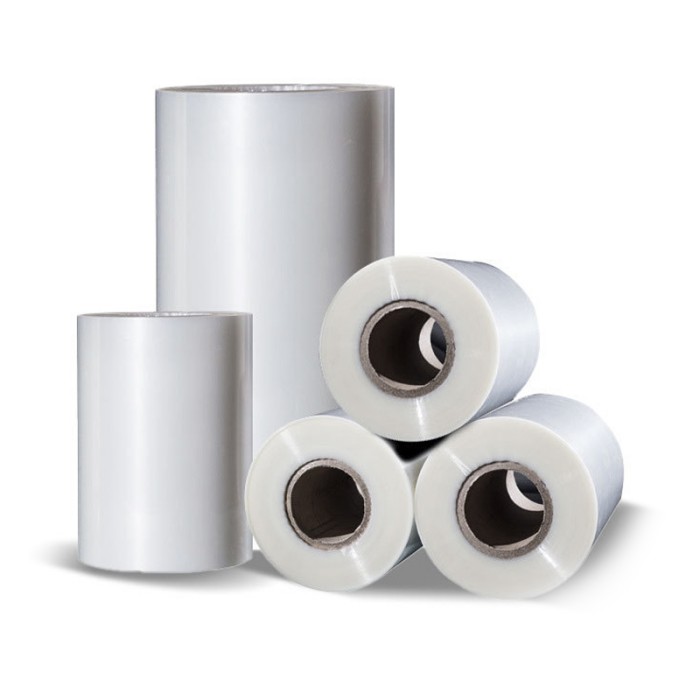
High Barrier Retort Film Images

PA/EVOH/PP High Barrier Retort Film

High Temperature Retort Packaging Film

Clear High Barrier Retort Film
What Is PA/EVOH/PP Retort Film?
PA/EVOH/PP retort film is a multilayer flexible packaging structure that combines several polymers to withstand demanding food-processing and storage conditions.
Retort packaging is filled and hermetically sealed before being exposed to elevated temperature and pressure during thermal sterilization. The package therefore needs to retain seal integrity, mechanical strength, barrier performance and dimensional stability throughout the complete heating and cooling cycle.
Unlike a standard vacuum packaging film, a retort film must be engineered around the actual sterilization conditions. Polymer grade, layer ratio, tie resin, total film thickness and sealing layer can all affect whether the final package survives the required retort cycle.
PA/EVOH/PP Retort Film Specifications
| Property |
Specification |
| Product |
PA/EVOH/PP High Barrier Retort Film |
| Current Structure |
PA / EVOH / PA / TIE / PP / PP / PP |
| Structure Type |
7-layer high barrier coextruded structure according to the currently listed layer sequence |
| Thickness |
0.045mm-0.35mm (45-350μm), customized |
| Width |
160mm-2600mm, customized |
| Color |
Clear; customized colors subject to specification |
| Oxygen Barrier |
EVOH provides the primary high oxygen and aroma barrier; grade-specific OTR should be confirmed |
| Mechanical Layer |
PA for strength, toughness and puncture resistance |
| Functional / Seal Layers |
PP layers for moisture resistance, thermal performance and heat sealing according to grade |
| TIE Layer |
Adhesive tie resin used to maintain interlayer adhesion between dissimilar polymers |
| Retort Temperature |
Must be confirmed for the exact film grade, food product, cycle time and pressure; no validated maximum is provided in the current source specification |
| Typical Application |
Thermally processed and sterilized food packaging subject to complete package validation |
| Customization |
Thickness, width, roll specification, color, multilayer structure and barrier level |
How the PA/EVOH/PP Structure Works
| Polymer |
Main Function |
Benefit in Retort Packaging |
| PA / Nylon |
Mechanical strength, toughness and puncture resistance |
Helps the package resist flexing, sharp food edges and mechanical stresses during processing and handling |
| EVOH |
High oxygen, gas and aroma barrier |
Helps reduce oxygen ingress and protect oxygen-sensitive foods after thermal processing |
| PP |
Heat resistance, moisture resistance and sealing performance according to PP grade |
Provides a retort-compatible functional and sealing side when the correct PP formulation is selected |
| TIE |
Interlayer adhesion |
Helps maintain the multilayer structure and reduce delamination risk when properly designed |
Why EVOH Is Important in Retort Film
EVOH is primarily used to reduce oxygen transmission through the package. This is important for foods that may experience oxidation, color change, aroma loss or flavor deterioration during extended storage.
EVOH barrier performance is influenced by humidity. During retort processing, the film is exposed to both high temperature and moisture, so the complete layer design is critical. PP and other surrounding polymer layers help protect the EVOH and control moisture exposure.
Barrier data should therefore be evaluated after the intended retort process rather than relying only on pre-retort film measurements.
Retort Temperature, Time and Pressure
Commercial retort processes use elevated temperature and pressure to thermally sterilize sealed food packages. Different foods and sterilization systems use different temperature-time combinations.
Industry terminology may refer to lower-temperature semi-retort processes, conventional retort around the 120°C range and higher-temperature retort processes above this range. These general processing categories should not be interpreted as verified limits for every HSQY film grade.
Before selecting the film, provide the maximum retort temperature, sterilization time, pressure profile, cooling process and required number of cycles. HSQY should confirm compatibility against the exact production specification.
Critical Retort Film Performance Requirements
| Parameter |
Why It Matters |
| Maximum Retort Temperature |
Determines whether the polymers, tie layers and sealing layer remain stable during sterilization |
| Retort Time |
Longer exposure can increase thermal and moisture stress on the multilayer film |
| OTR After Retort |
Confirms whether the oxygen barrier remains suitable after thermal sterilization |
| WVTR |
Indicates resistance to water-vapor transmission under specified conditions |
| Seal Strength |
Strong seals are necessary to maintain package integrity through heating, pressure changes and cooling |
| Hot-Tack / Seal Window |
Helps establish suitable sealing-machine temperature, pressure and dwell-time settings |
| Puncture Resistance |
Important for meat, bones, shells and other products with hard or sharp edges |
| Interlayer Adhesion |
Helps prevent delamination during retort, cooling, storage and distribution |
| Flatness After Retort |
Excessive curling or distortion can affect appearance, packing efficiency and downstream handling |
| Optical Appearance |
Haze, gloss and transparency may change after thermal processing |
The current HSQY source page does not provide verified numerical OTR, WVTR, seal strength or post-retort mechanical data for this exact grade. These values should be requested from the applicable technical data sheet or confirmed through testing.
Anti-Contamination Heat Sealing for Retort Food
Retort foods often contain sauce, oil, seasoning or moisture that can contaminate the sealing area during filling. Contamination on the seal interface can reduce seal strength and increase leakage risk.
If contamination-resistant sealing is required, specify the food product, filling temperature, expected contamination type and sealing equipment. The PP sealant formulation should then be evaluated under actual production conditions.
Applications of High Barrier Retort Film
Ready Meals
Retortable flexible packaging can be evaluated for rice meals, prepared dishes, curries, sauces and other shelf-stable ready-meal applications that undergo commercial thermal sterilization.
Meat and Poultry Products
PA layers provide puncture resistance for meat and poultry products, while EVOH can provide oxygen barrier for applications requiring extended shelf stability after sterilization.
Sauces and Prepared Foods
Sauces, marinades, gravies and prepared-food products can require retort packages with reliable seals, oil resistance and barrier performance.
Eggs and Agricultural Foods
Marinated eggs and selected processed agricultural foods are typical applications for commercial retort packaging where shelf stability and oxygen protection are required.
Pet Food
Wet pet-food packages can require high-temperature sterilization, strong sealing and oxygen protection. Film selection should be matched to the food formulation, package size and retort cycle.
Retort Film vs Standard PA/PP Packaging Film
| Comparison |
Retort-Grade PA/EVOH/PP Film |
Standard PA/PP Packaging Film |
| Thermal Processing |
Specifically evaluated for defined high-temperature sterilization cycles |
Should not be assumed to withstand retort sterilization |
| Oxygen Barrier |
EVOH layer provides stronger oxygen barrier when correctly protected within the structure |
Depends on material structure and may provide only moderate oxygen barrier |
| Sealant |
Retort-compatible PP formulation required |
Standard PP sealant may be designed for lower-temperature use |
| Post-Process Testing |
Barrier, seal strength, delamination, leakage and flatness should be checked after retort |
Standard packaging tests may not include high-temperature sterilization |
Retort Film vs PA/EVOH/PE Vacuum Film
| Comparison |
PA/EVOH/PP Retort Film |
PA/EVOH/PE Vacuum Film |
| Main Process |
High-temperature sterilization after sealing |
Vacuum packaging, typically without commercial retort sterilization |
| Seal Layer |
Retort-compatible PP-based functional layer |
Often PE-based seal layer |
| Typical Use |
Retort meals, sauces, meat products and pet food |
Chilled meat, seafood, cheese and other vacuum-packed foods |
Can This Film Be Thermoformed?
The original product page lists thermoforming among potential applications. Whether the exact PA/EVOH/PP retort grade can be used as a forming web depends on film thickness, PA content, PP formulation, cavity geometry and required forming depth.
Thermoforming stretches and thins the film, particularly at corners and deep-draw areas. Because this may affect barrier performance, post-forming OTR and material distribution should be evaluated for demanding packages.
Is This Film Suitable for Boilable Packaging?
Boilable and retort packaging are not identical processing conditions. A film suitable for one thermal process should not automatically be assumed suitable for another.
Provide the required water temperature, heating duration, pressure condition and food product so the appropriate film grade can be evaluated.
Medical Packaging Is a Separate Application
The original page also mentions medical packaging. Medical-device packaging should be treated separately because sterilization methods, sterile-barrier requirements, sealing substrates and regulatory validation differ significantly from food retort processing.
If the application involves ethylene oxide, steam, radiation or another medical sterilization method, use a specifically qualified medical packaging structure rather than assuming this food-retort grade is suitable.
Custom Retort Film Options
Customized film thickness.
Customized roll width from the applicable production range.
Customized PA/EVOH/PP layer ratios.
Custom oxygen-barrier target subject to test conditions.
Custom roll diameter and core size.
Clear or customized colors.
Surface treatment for downstream printing or conversion where applicable.
Retort-compatible sealing layer designed around the package requirement.
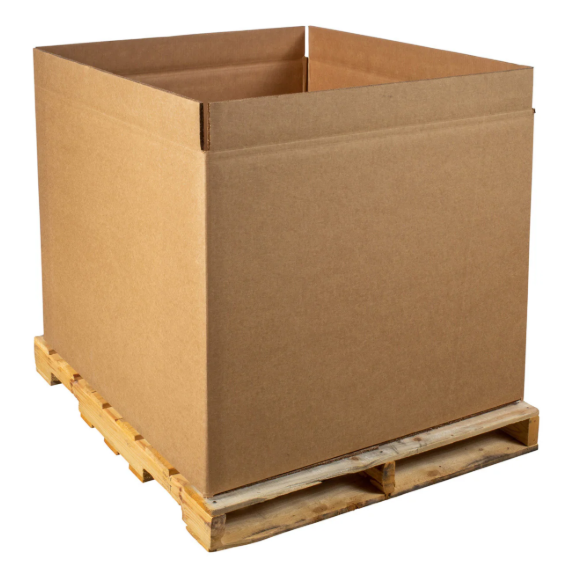
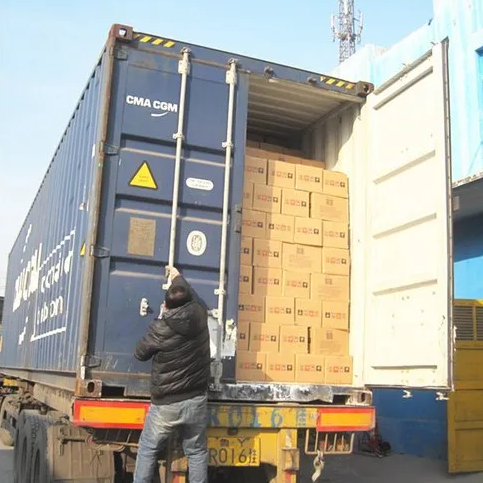
Custom export packaging and pallet configuration.
Information Required for a Retort Film Quote
Food product being packed.
Current film structure if available.
Required total film thickness.
Required roll width.
Core size and maximum roll diameter.
Retort temperature.
Retort hold time.
Retort pressure or process type.
Cooling process after sterilization.
Required OTR and test conditions.
Required WVTR and test conditions.
Required seal strength.
Expected seal contamination from sauce, oil or food residue.
Packaging-machine brand and model.
Thermoforming depth if applicable.
Required shelf life.
Storage temperature after retort.
Required food-contact or regulatory documents.
Trial quantity and annual usage.
Destination country and port.
Certifications and Technical Documentation
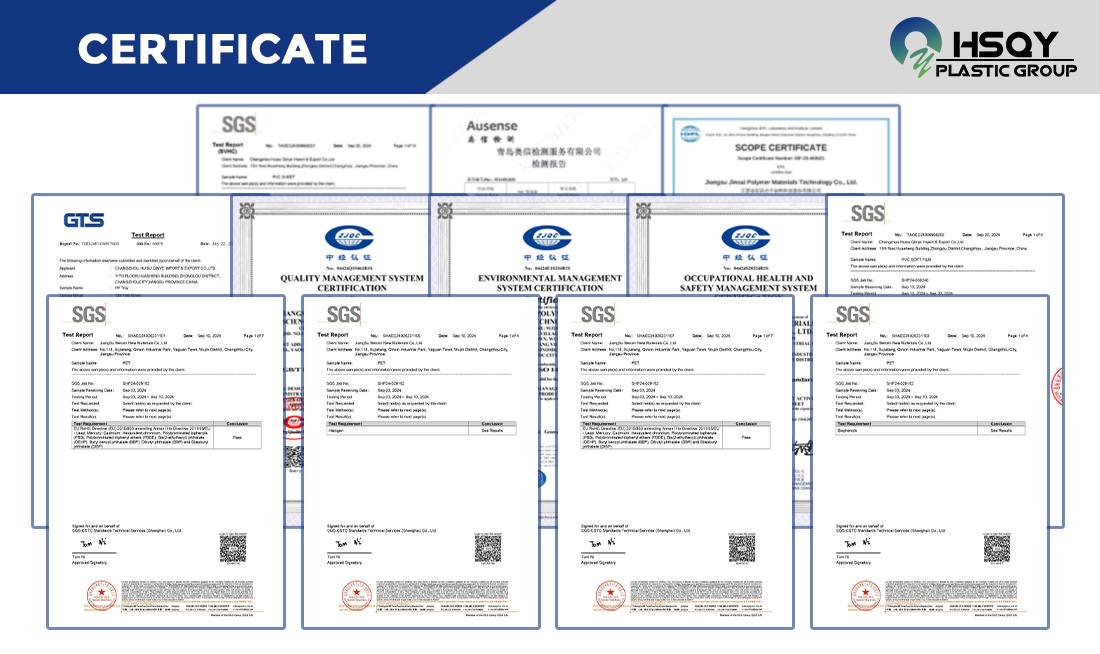
The certificate image below is retained from the original product page. Buyers should confirm the current certificate version, validity, scope and whether the documentation applies to the exact retort film structure being ordered.
A general SGS or ISO quality certificate should not be interpreted as proof of retort performance. Retort suitability requires film-specific testing under the intended thermal-processing conditions.
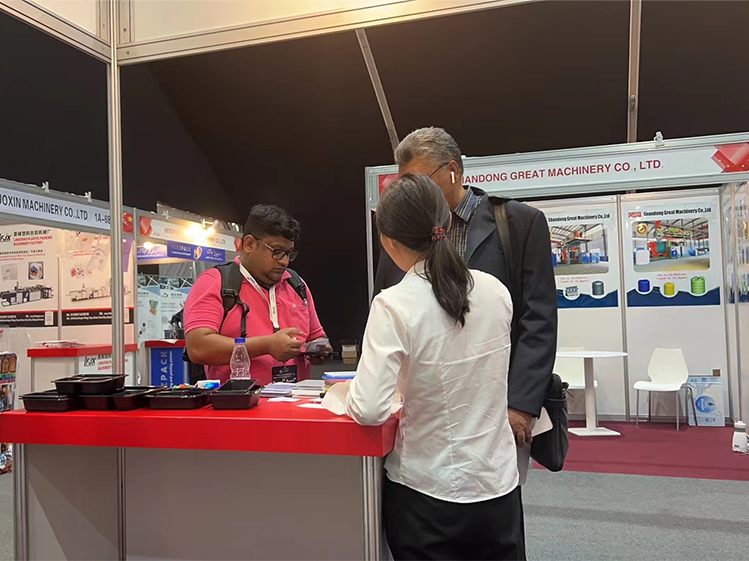
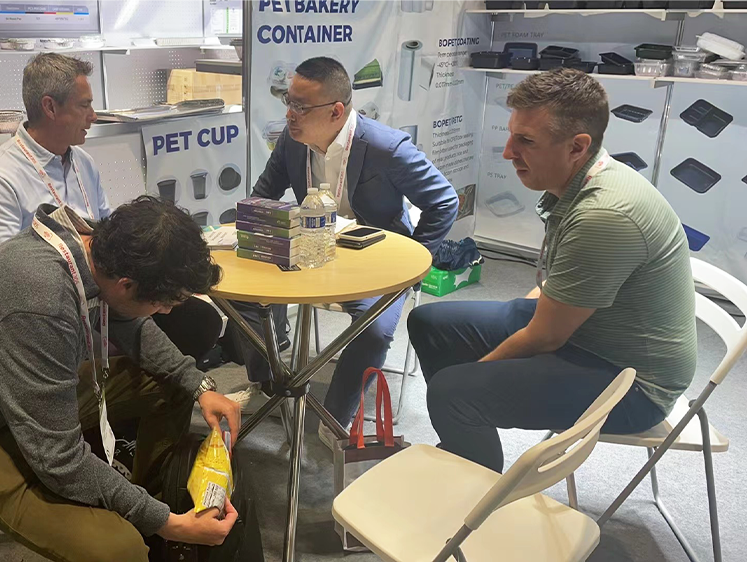
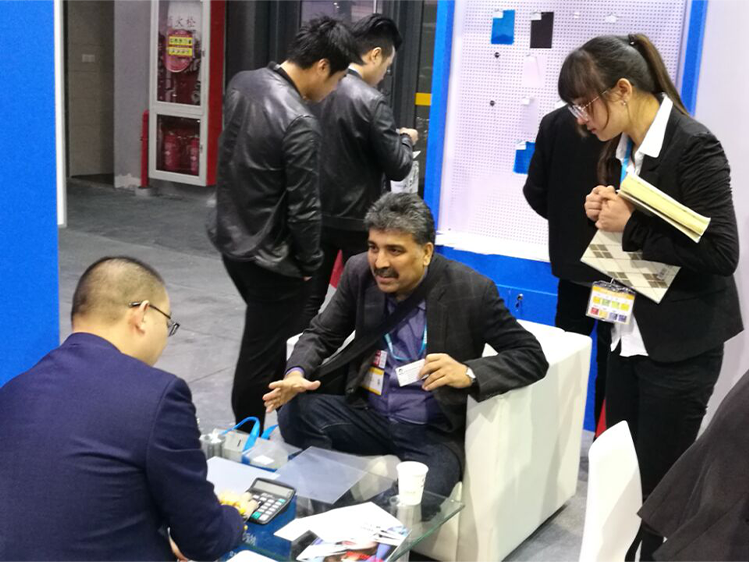
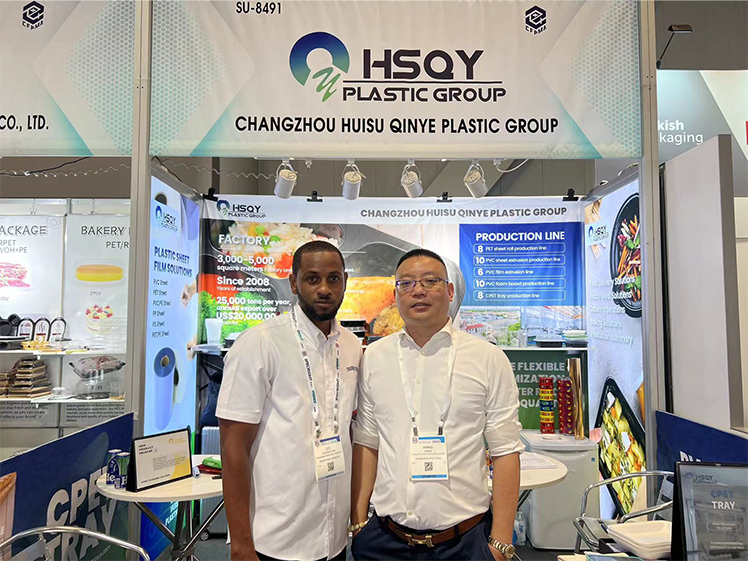
HSQY Plastic Group Global Exhibitions
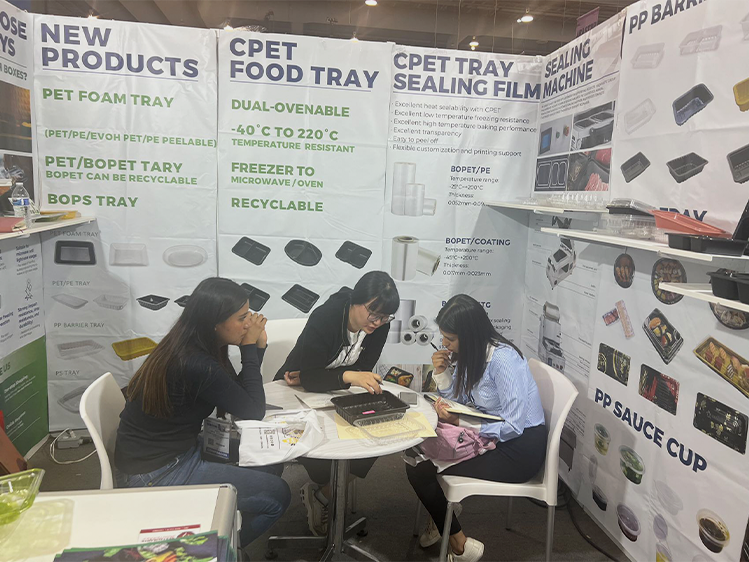
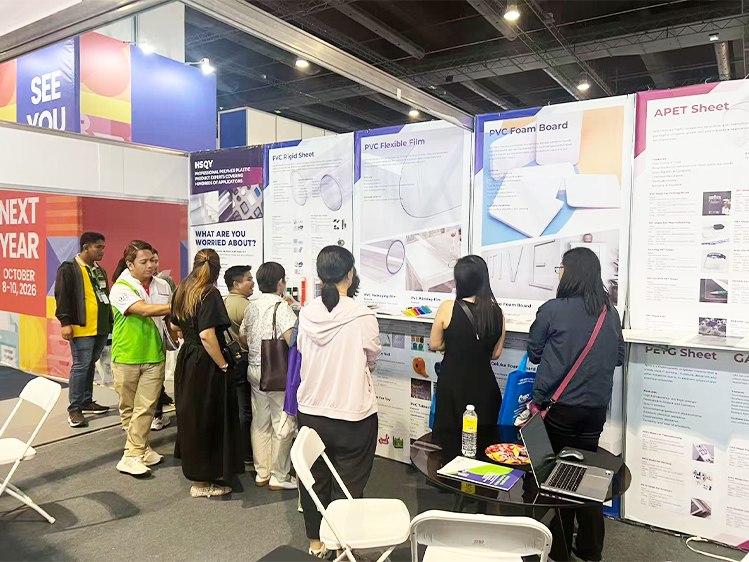
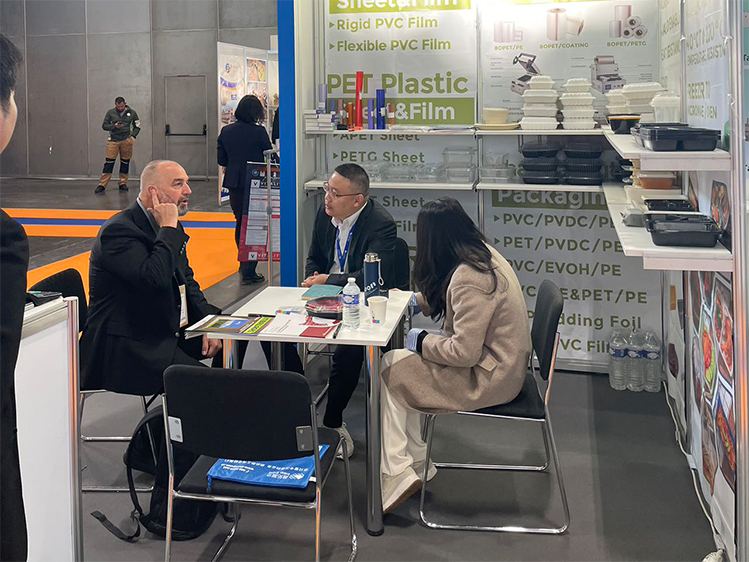
HSQY meets food processors, flexible-packaging converters, distributors and international buyers at industry exhibitions to discuss retort films, high-barrier films, lidding films and customized food-packaging projects.
![HSQY 2024 Mexico Exhibition]()
2024 Mexico Exhibition
![HSQY 2025 Philippines Exhibition]()
2025 Philippines Exhibition
![HSQY 2024 Paris Exhibition]()
2024 Paris Exhibition
![HSQY 2023 Saudi Exhibition]()
2023 Saudi Exhibition
![HSQY 2024 American Exhibition]()
2024 American Exhibition
![HSQY 2017 Shanghai Exhibition]()
2017 Shanghai Exhibition
![HSQY 2018 Shanghai Exhibition]()
2018 Shanghai Exhibition
![HSQY 2023 American Exhibition]()
2023 American Exhibition
Retort Film Production and Packing

Retort Film Production

Film Roll Packing

Export Film Packaging
Frequently Asked Questions About High Barrier Retort Film
What is retort film?
Retort film is flexible packaging designed to maintain package integrity during a defined high-temperature and pressure sterilization process after the package has been filled and sealed.
What is the structure of this HSQY retort film?
The current listed structure is PA/EVOH/PA/TIE/PP/PP/PP. PA provides toughness, EVOH provides oxygen barrier and the PP layers provide functional, moisture-resistant and sealing properties.
Why is EVOH used in retort packaging?
EVOH is used because of its strong oxygen and gas barrier. In a retort structure, it is normally protected between other polymer layers because humidity and heat can influence its barrier performance.
What is the maximum retort temperature?
The current source specification does not provide a validated maximum retort temperature for this exact grade. Provide your required temperature, time and pressure so HSQY can confirm the appropriate structure before commercial use.
Can the film be used at 121°C?
121°C is commonly associated with commercial retort processes, but this should not automatically be treated as an approved condition for every film grade. Compatibility must be confirmed for the exact temperature, time, pressure and food formulation.
Can the film be used at 135°C?
High-temperature retort processes can operate in this range, but a dedicated structure must be specifically validated for the required cycle. Do not use the standard product description alone as confirmation of 135°C performance.
What thicknesses are available?
The current product specification lists 0.045mm to 0.35mm, equivalent to approximately 45-350μm. Final thickness should be selected according to barrier, puncture resistance, package size and thermal-processing requirements.
What widths are available?
The current page lists widths from 160mm to 2600mm. Custom roll dimensions can be discussed according to the packaging-machine requirement.
Does retort affect EVOH oxygen barrier?
Heat and humidity can influence EVOH barrier performance. This is why the EVOH layer is protected inside a multilayer structure and why post-retort OTR testing is important for demanding shelf-life requirements.
What foods can use high barrier retort film?
Potential applications include ready meals, meat products, sauces, marinated foods, processed agricultural products and pet food, provided the package has been validated for the intended retort process and shelf-life requirement.
Can this film be used for vacuum packaging?
PA/EVOH-based structures can provide suitable properties for vacuum packaging, but if the package does not require retort sterilization, a dedicated PA/EVOH/PE vacuum film may provide a more application-specific solution.
Can this film be thermoformed?
Selected structures may be suitable for thermoforming. Provide film gauge, forming depth, cavity geometry and machine model so the required drawability and post-forming barrier can be evaluated.
What OTR should a retort film have?
The correct OTR depends on the food, shelf-life target, temperature and package design. Specify the required OTR together with the test temperature and relative humidity rather than comparing values measured under different conditions.
Why is post-retort seal strength important?
The package seal experiences heat, internal pressure and cooling during retort. Testing seal strength after sterilization helps confirm whether package integrity has been maintained.
Can HSQY customize the film structure?
Multilayer structure, thickness, width, roll specification and barrier target can be discussed according to the packaged food and thermal-processing requirements.
What information is required for a quotation?
Please provide food product, film thickness, roll width, current material structure, maximum retort temperature, retort time, pressure, OTR target, seal requirements, packaging-machine model, annual quantity and destination country.
Why Choose HSQY PA/EVOH/PP Retort Film?
HSQY supplies multilayer high-barrier films for vacuum packaging, thermoforming, retort processing and other food-packaging applications.
Film thickness, width, structure and barrier level can be discussed according to the actual food, packaging machine, sealing conditions and retort process.
For a new retort project, provide your existing package sample or film structure together with retort temperature, cycle time and barrier requirements. This allows the packaging structure to be evaluated based on the complete process rather than only on polymer names.