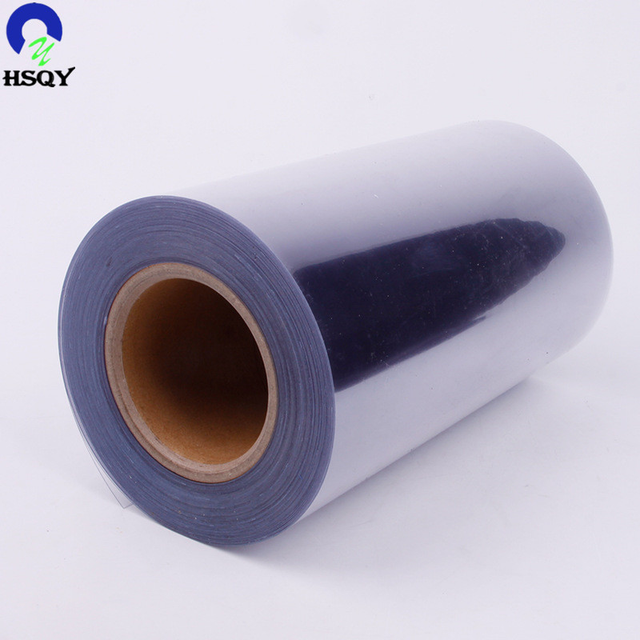
Anti-Static PVC Rigid Sheet for ESD Protection
Anti-static PVC rigid sheet is a static-control plastic sheet designed to reduce electrostatic charge accumulation while retaining the rigidity, chemical resistance, smooth surface and fabrication properties of rigid polyvinyl chloride.
HSQY supplies clear and colored anti-static PVC sheets for electronics manufacturing, semiconductor equipment, cleanroom partitions, machine guards, protective covers, vacuum forming, printing and packaging of static-sensitive components.
Available options include custom thicknesses, sheet sizes, colors, surface treatments and fabricated components. The required surface resistance, anti-static treatment, fire performance and processing method should be confirmed before production according to the intended ESD application.
Request Anti-Static PVC Sheet Samples
Anti-Static PVC Rigid Sheet Product Range
HSQY offers several anti-static and ESD PVC sheet configurations for different industrial processing and packaging requirements.
Typical Anti-Static PVC Sheet Specifications
The following table summarizes the typical HSQY rigid PVC sheet range. Final specifications depend on the selected product model, anti-static treatment and customer requirements.
| Property | Typical Details |
| Product Type | Anti-static PVC rigid sheet, ESD PVC sheet or static-control PVC sheet |
| Base Material | Rigid polyvinyl chloride |
| Anti-Static Treatment | Surface coating or anti-static formulation, depending on the selected grade |
| Typical Thickness | Approximately 0.21mm-6.5mm; selected models may be offered from 0.15mm-5mm |
| Standard Sheet Sizes | 700 × 1000mm, 915 × 1830mm and 1220 × 2440mm |
| Maximum Standard Width | Up to approximately 1280mm, subject to product grade |
| Custom Size | Custom sheets, rolls and cut-to-size parts can be discussed |
| Color | Clear, natural transparent, blue tint, white, black, red, yellow, blue and custom colors |
| Surface Finish | Glossy, smooth or customized finish |
| Density | Approximately 1.36-1.38 g/cm³ |
| Tensile Strength | Typical rigid-sheet value above 52 MPa, subject to grade and test method |
| Impact Strength | Typical value above 5 kJ/m², subject to grade and test method |
| Softening Temperature | Typically above 75°C for decorative grades and above 80°C for selected industrial grades |
| Surface Resistance | Specify the required resistance range and test method; common ESD PVC projects may target approximately 106-108 Ω |
| Optional Features | Anti-static, anti-UV, anti-sticking, printing, custom color and protective masking |
| Processing | Cutting, die cutting, CNC machining, drilling, printing, bending, welding and thermoforming, subject to thickness and grade |
| Minimum Order Quantity | Typically 1,000kg, depending on specification and customization |
| Documentation | Available technical data, inspection reports and applicable compliance documents should be confirmed before ordering |
Note: Surface resistance, transparency, mechanical properties, flame rating and temperature resistance vary by formulation and test conditions. Request the technical data sheet for the exact product grade before approving it for an ESD-controlled application.
How Does Anti-Static PVC Rigid Sheet Work?
Standard rigid PVC is electrically insulating and can retain a static charge generated by contact, separation, rubbing or handling. An anti-static treatment modifies the surface or material formulation so that accumulated charge can dissipate more gradually.
The sheet does not simply remove every electrical charge. Its performance depends on surface resistance, humidity, grounding, contamination, cleaning, material thickness and the way the sheet is installed in the complete ESD-control system.
For critical electronics and semiconductor applications, the anti-static PVC sheet should be evaluated together with grounding, personnel controls, work surfaces, packaging and other measures used in the electrostatic protected area.
Anti-Static, Static-Dissipative and Conductive PVC
The terms anti-static, static-dissipative and conductive are sometimes used interchangeably in commercial product descriptions, but they do not necessarily describe the same electrical performance.
Anti-Static PVC Sheet
Anti-static sheet is designed to reduce charge generation or charge accumulation. The term alone does not establish an exact resistance value, decay time or shielding capability.
Static-Dissipative PVC Sheet
Static-dissipative material allows electrical charge to move across or through the material in a controlled manner. Buyers should specify the required surface resistance, volume resistance, charge-decay performance and test standard.
Conductive Plastic Sheet
Conductive plastics have lower electrical resistance and move charge more rapidly. They may be required for particular grounding or shielding applications, but they should not automatically be substituted for a static-dissipative sheet without technical evaluation.
ESD Shielding Material
An anti-static or dissipative PVC sheet does not automatically provide electrostatic discharge shielding. Projects requiring shielding from an external discharge must specify that requirement separately.
Key Benefits of Anti-Static Clear PVC Sheet
Static-control performance: Helps reduce static charge accumulation around sensitive electronic components and manufacturing equipment.
Clear visibility: Transparent grades allow operators to monitor equipment and packaged components through the sheet.
Reduced dust attraction: Lower static accumulation can help reduce electrostatically attracted dust on the surface.
Chemical resistance: Rigid PVC offers resistance to many diluted acids, alkalis and industrial chemicals, subject to concentration and exposure conditions.
Rigid construction: Suitable for guards, partitions, covers and fabricated industrial components.
Smooth surface: Supports cleaning, printing, inspection and general industrial fabrication.
Custom processing: Sheets can be supplied in custom dimensions or processed into finished components.
Multiple colors: Clear and colored grades are available for identification, branding and safety zoning.
Applications of ESD PVC Rigid Sheet
Electronics and Semiconductor Manufacturing
Anti-static PVC sheets can be used for equipment covers, inspection windows, work-area partitions, component trays and protective panels around electronics assembly or semiconductor-processing equipment.
Cleanroom Partitions and Equipment Guards
Clear anti-static PVC provides visibility while helping control static-related dust attraction. It may be used for cleanroom partitions, machine enclosures, equipment windows and protective barriers.
Electronic Component Packaging
Thin anti-static PVC sheets can be vacuum formed or thermoformed into trays, inserts, blister packs and protective packaging for circuit boards, connectors, sensors and other static-sensitive products.
Industrial Machine Enclosures
Thicker rigid sheets can be fabricated into inspection panels, machine guards, control-system covers and protective enclosures for automated production lines.
Medical and Laboratory Equipment
Selected grades may be used for laboratory equipment covers, instrument packaging and protective panels. Medical applications should be evaluated against the required hygiene, sterilization, biocompatibility and regulatory standards.
Printing and Industrial Signage
Printable anti-static PVC sheets can be used for equipment labels, safety signs, control panels and instructions in static-controlled production areas.
How to Select the Correct Anti-Static PVC Sheet
1. Specify the Required Surface Resistance
Do not purchase the material based only on the term “anti-static.” State the target resistance range, test voltage, electrode configuration, conditioning environment and required test standard.
2. Confirm Whether You Need Coated or Formulated Material
Surface-coated sheets and internally modified sheets may behave differently after cutting, thermoforming, cleaning or long-term use. Explain whether the anti-static property is required only on the surface or throughout the finished component.
3. Select the Correct Thickness
Thin sheets are generally selected for printing, packaging and thermoforming. Thicker sheets provide more rigidity for machine guards, equipment panels, partitions and fabricated structures.
4. Define Transparency and Color Requirements
Clear sheets are suitable for inspection windows and transparent packaging. Colored or opaque sheets can be used for equipment zoning, component identification and branded industrial applications.
5. Confirm Chemical and Cleaning Exposure
Provide details of cleaning agents, solvents, acids, alkalis, disinfectants and expected contact time. Chemical compatibility should be checked under the actual operating temperature and concentration.
6. Define Fabrication Requirements
State whether the sheet will be printed, die cut, drilled, CNC machined, welded, bent or thermoformed. The processing method may affect the surface treatment and finished anti-static performance.
7. Request Samples and Test Finished Parts
Test samples under the expected humidity, temperature, cleaning and processing conditions. For thermoformed or machined parts, measure the finished component rather than relying only on the original flat-sheet value.
Custom Fabrication and Processing Options
HSQY can discuss customized anti-static PVC sheets and fabricated components according to customer drawings and application requirements.
Custom sheet width and length.
Custom thickness and color matching.
Sheet cutting and cut-to-size panels.
Die-cut packaging inserts and components.
CNC machining, drilling and routing.
Heat bending and fabricated equipment covers.
Vacuum forming and thermoformed trays.
Screen printing, offset printing and UV printing.
Protective masking film for transportation and fabrication.
Custom packaging and export pallet requirements.
Send Your Drawing for Evaluation
Quality Checks for ESD PVC Sheet
The inspection plan should be agreed before production, especially when the material is used in an electrostatic protected area or for sensitive electronic components.
Surface resistance: Measure the sheet according to the agreed test method, voltage and environmental conditioning.
Resistance consistency: Test multiple positions across the sheet or finished component.
Thickness tolerance: Verify thickness at several positions across the sheet.
Dimensions: Confirm width, length, squareness and cut-part tolerances.
Appearance: Inspect clarity, color, scratches, bubbles, black points and surface contamination.
Protective masking: Confirm masking type and adhesion before machining or shipment.
Fabrication testing: Recheck anti-static performance after printing, forming, bending or machining.
Documentation: Confirm the required inspection report, technical data and compliance documents.
Information Required for an Accurate Quotation
Send the following information to receive a suitable product recommendation and quotation:
Required sheet thickness, width and length.
Clear, blue-tint, colored or opaque appearance.
Target surface resistance or ESD classification.
Required resistance test method and conditioning environment.
Coated or permanently modified anti-static construction.
Expected operating temperature and humidity.
Chemical, solvent or cleaning-agent exposure.
Required processing such as printing, machining or thermoforming.
Required fire rating or regulatory documents.
Order quantity and estimated annual demand.
Destination country and preferred trade terms.
Technical drawing or physical sample, when applicable.
Frequently Asked Questions About Anti-Static PVC Rigid Sheet
What is an anti-static PVC rigid sheet?
It is a rigid polyvinyl chloride sheet with a surface treatment or material formulation designed to reduce static charge accumulation. It is commonly used around electronic components, automated equipment and static-controlled production areas.
What surface resistance is available for ESD PVC sheet?
The required range depends on the application. Many commercial ESD PVC sheets target a surface resistance around 106-108 Ω, but the exact HSQY grade, test method and acceptable tolerance must be confirmed before ordering.
Is anti-static PVC the same as conductive PVC?
No. Conductive PVC generally has lower electrical resistance and allows charge to move more rapidly. Anti-static and static-dissipative grades are designed to control charge generation or allow charge to dissipate in a controlled manner.
Does anti-static PVC sheet provide ESD shielding?
Not necessarily. Anti-static, dissipative and ESD-shielding performance are different properties. A project requiring protection from an external electrostatic discharge must specify shielding performance separately.
Can anti-static PVC sheet be used in cleanrooms?
It can be used for cleanroom partitions, equipment covers, observation windows and guards when the selected grade meets the project requirements. The complete installation should also consider particle generation, cleaning chemicals, grounding and the cleanroom classification.
Can anti-static PVC sheet be thermoformed?
Selected grades can be vacuum formed or thermoformed into trays and protective packaging. Forming conditions and the anti-static performance of the finished part should be tested because stretching may change the coating thickness or electrical properties.
Can the sheet be CNC machined or cut to size?
Yes. Custom cutting, drilling, routing, CNC machining and fabricated parts can be discussed. Send a technical drawing showing the dimensions, tolerances, holes, edges and surface requirements.
Is clear anti-static PVC suitable for machine guards?
Clear rigid PVC can be used for selected inspection panels and equipment guards. The required thickness and material should be evaluated against impact load, operating temperature, chemical exposure and applicable machine-safety standards.
Does the anti-static performance last permanently?
Service life depends on whether the material is coated or internally modified, as well as abrasion, cleaning, humidity, UV exposure and operating conditions. Periodic resistance testing is recommended for critical ESD applications.
How should anti-static PVC sheet be cleaned?
Use a soft, non-abrasive cloth and a cleaner approved for the selected sheet grade. Strong solvents, abrasive pads or unapproved chemicals may scratch the surface or damage an anti-static coating.
Is anti-static PVC sheet flame retardant?
Rigid PVC can offer self-extinguishing behavior, but a specific flame rating such as UL 94 must not be assumed. Request a test report for the exact grade when a defined fire classification is required.
Can logos and safety instructions be printed on the sheet?
Yes. Screen printing, offset printing and UV printing can be evaluated according to the sheet surface, ink system and required adhesion. The printed area should be checked to ensure that the printing process does not interfere with required ESD performance.
Is anti-static PVC sheet recyclable?
PVC is not biodegradable. Whether a used anti-static PVC sheet can be recycled depends on its coating, additives, contamination, local collection system and recycling infrastructure. Buyers should verify disposal and recycling requirements in the destination market.
What is the minimum order quantity?
The typical minimum order quantity is approximately 1,000kg. Custom colors, special resistance levels, printing and fabricated parts may require a different MOQ.
Can I receive a sample before bulk production?
Sample availability can be discussed according to the required thickness, color and ESD grade. Test the sample under the actual processing and operating conditions before approving bulk production.
Anti-Static PVC Sheet Manufacturer and Supplier
HSQY Plastic Group supplies rigid PVC sheets and customized plastic materials for packaging, printing, electronics, industrial fabrication and protective applications.
For an accurate anti-static PVC sheet quotation, provide the required sheet dimensions, surface resistance, color, processing method, operating environment, order quantity and destination country.
Contact HSQY for Pricing and Samples