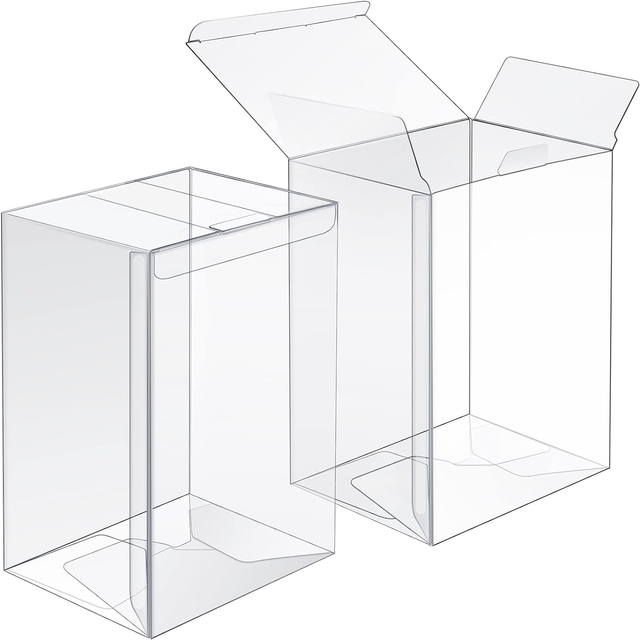
Clear PVC Folding Box Sheet Manufacturer & Supplier
HSQY Plastic manufactures and supplies clear PVC folding box sheets and rolls for transparent cartons, retail packaging, cosmetic boxes, gift boxes, stationery packaging, electronics packaging, clear sleeves and paper-box windows.
Also known as transparent PVC folding box sheet, rigid PVC packaging film, clear vinyl sheet or PVC folding carton material, this rigid plastic combines high product visibility with practical stiffness and conversion performance. Suitable grades can be printed, die cut, punched, scored, creased, folded, embossed and bonded into customized transparent packaging.
HSQY supplies PVC folding box material in sheets, rolls and slit rolls. Common folding-box projects generally use approximately 0.2 mm to 1.0 mm, while the wider rigid PVC product range covers thinner and thicker specifications for different packaging and industrial applications.
For a faster quotation, send us your finished box dimensions, packaged product weight, required PVC thickness, printing method, crease design, annual consumption and destination market. Our team can help evaluate a suitable sheet or roll specification for sample testing.
What Is PVC Sheet for Folding Boxes?
PVC sheet for folding boxes is a transparent rigid polyvinyl chloride material designed for manufacturing plastic folding cartons and other clear packaging structures.
During box production, the PVC sheet is normally printed or decorated if required, die cut into the box profile, scored or creased along the folding lines, folded into shape and then locked, glued or otherwise assembled according to the packaging design.
Unlike paperboard, transparent PVC allows the product to remain visible from outside the package. This is particularly useful for products where appearance, color, shape or finish is important to the customer's purchasing decision.
The best PVC folding-box grade should be selected according to box size, product weight, material thickness, stiffness, folding direction, crease design, printing process, bonding method and automated packaging-line requirements.
PVC Folding Box Sheet Specifications
HSQY supplies different PVC packaging grades for printing, folding and conversion. The following table summarizes typical options. Final specifications should be confirmed according to the selected grade and production process.
| Specification | Typical Options |
| Product | Clear PVC Sheet for Folding Boxes |
| Material | Rigid Polyvinyl Chloride / PVC |
| Production Process | Calendering or extrusion depending on thickness and grade |
| Total Product Range | Approximately 0.05 mm – 6 mm depending on production method and specification |
| Common Folding Box Thickness | Approximately 0.2 mm – 1.0 mm |
| Standard Sheet Sizes | 700 × 1000 mm, 900 × 1200 mm, 915 × 1220 mm, 1220 × 2440 mm and customized sizes |
| Roll Width | Approximately 200 mm – 1500 mm depending on grade |
| Supply Format | Sheets, rolls, slit rolls and custom cut sizes |
| Color | Clear, blue-tinted clear, transparent colors, opaque colors and customized colors |
| Surface | Glossy, matte, frosted and customized surfaces |
| Protective Film | Available for selected specifications |
| Typical Density | Approximately 1.36 g/cm³ depending on formulation |
| Conversion | Printing, die cutting, punching, scoring, creasing, folding, embossing and bonding |
| MOQ | Approximately 1000 kg for many standard specifications |
| Typical Production Time | Approximately 7–15 days after specification and order confirmation for selected standard products |
Thickness tolerance, dimensional tolerance, optical appearance, surface treatment, folding performance and printing compatibility should be confirmed through an approved sample and final technical specification.
Why Use Clear PVC for Transparent Folding Boxes?
High Product Visibility
Clear PVC allows customers to see the product without opening the package. This helps manufacturers combine packaging protection with product display.
Good Rigidity
Appropriate rigid PVC grades provide sufficient stiffness for transparent cartons, sleeves and display packaging while remaining suitable for controlled scoring and folding.
Die Cutting and Creasing
PVC sheet can be die cut into customized box profiles, including tuck tabs, locking structures, slots, hanging holes and display windows. Correct tooling helps achieve clean edges and consistent folds.
Printable Surface
Suitable grades can be printed with logos, product information, decorative graphics and branding elements using compatible printing and surface-treatment systems.
Moisture-Resistant Plastic Substrate
PVC does not absorb normal environmental moisture in the same way as paperboard, helping clear plastic packaging maintain its visual appearance during normal storage and retail handling.
Developing a new transparent folding box?
Send HSQY your finished box size, product weight, current material thickness, printing process and folding design. We can help evaluate a suitable PVC sheet specification for trial production.
Request Folding Test Sample Applications of PVC Folding Box Sheet
Cosmetic Packaging: Clear boxes for skincare, makeup, perfume, beauty tools and personal-care products.
Gift Packaging: Transparent cartons for gifts, promotional items and premium retail products.
Electronics Packaging: Clear cartons for cables, chargers, adapters, accessories and small devices.
Toy Packaging: Transparent display boxes for toys, models, collectibles and hobby products.
Stationery Packaging: Clear boxes and sleeves for pens, office supplies, craft products and stationery sets.
Hardware Packaging: Boxes for small tools, fittings, accessories and spare parts.
Retail Display Packaging: Clear boxes with hanging holes, Euro slots or locking tabs.
Paper Box Windows: Transparent PVC windows combined with printed paperboard cartons.
Healthcare Secondary Packaging: Clear packaging for selected non-direct-contact healthcare products after application-specific evaluation.
How to Choose PVC Folding Box Thickness
Thickness affects box stiffness, folding force, crease appearance, product protection, material consumption and overall packaging cost.
| Thickness Direction | General Characteristics | Typical Application Direction |
| 0.10–0.20 mm | Thin and relatively flexible | Packaging windows, sleeves and lightweight applications |
| 0.20–0.35 mm | Balanced stiffness and folding performance | Small cosmetics, stationery and lightweight retail boxes |
| 0.35–0.50 mm | Higher structural rigidity | Medium-size gift, toy, cosmetic and electronics boxes |
| 0.50–1.00 mm | Greater stiffness and support | Larger cartons, heavier products and rigid transparent packaging |
These ranges are general selection guidance rather than fixed rules. Box dimensions, product weight, locking structure, hanging design and crease geometry should all be considered when selecting the final gauge.
How to Prevent White Marks and Cracking When Folding PVC
One of the most important quality issues in transparent plastic folding boxes is stress whitening, sometimes described as white lines or white marks at the crease.
Excessive stress can also cause cracking or uncontrolled spring-back. Folding quality depends on the complete combination of PVC formulation, thickness, material direction and converting conditions.
Control Crease Depth
A crease that is too shallow may require excessive folding force, while an overly aggressive crease can damage the sheet. Tool geometry should be matched to the actual PVC thickness.
Confirm Material Direction
Folding behavior may vary with the manufacturing direction of the sheet or roll. Critical box designs should be tested in the intended folding orientation before production.
Use Suitable Folding Radius
Extremely sharp bends can increase localized stress. Box structure and tooling should provide an appropriate fold geometry for the selected material thickness.
Test the Complete Conversion Process
Test printing, drying or curing, die cutting, creasing, folding and bonding in the same sequence used during commercial production. A sheet that performs well before printing may behave differently after ink, varnish or surface treatment has been applied.
Printing on Clear PVC Folding Box Sheet
Transparent PVC packaging can combine product visibility with printed branding, logos, instructions, barcodes and decorative graphics.
Compatible printing methods can include:
Ink adhesion depends on the PVC formulation, surface condition, ink chemistry and curing process. Packaging converters should test the actual ink and printing press before approving bulk material.
Bonding and Box Assembly
Transparent folding boxes can use several closure and assembly structures, including locking tabs, tuck tabs, mechanical interlocks and adhesive seams.
If adhesive bonding is required, buyers should test the actual adhesive against the selected PVC grade. Important factors include:
Initial tack
Final bond strength
Drying or curing time
Transparency of the adhesive joint
Resistance to whitening or stress cracking
Compatibility with printed or coated areas
Performance on automated box-gluing equipment
HSQY recommends conducting bonding tests using the exact sheet, ink system, adhesive and production-line conditions before commercial approval.
Sheet vs Roll PVC for Folding Box Production
| Supply Form | Advantages | Typical Buyer |
| PVC Sheet | Convenient for sheet-fed printing, die cutting and short-to-medium packaging runs | Printers, box converters and packaging manufacturers |
| PVC Roll | Suitable for continuous conversion, custom web widths and automated production | Large converters and roll-fed processing lines |
| Slit Roll | Reduces customer-side trimming and matches specific machine widths | Automated converting and specialized packaging lines |
| Custom Cut Sheet | Helps reduce waste for repeat standardized jobs | OEM packaging programs with stable box dimensions |
Glossy, Matte and Frosted PVC Folding Box Sheet
| Surface | Appearance | Typical Selection Reason |
| Glossy Clear | High transparency and bright appearance | Maximum product visibility and premium transparent packaging |
| Matte | Reduced reflection | Specialty visual effect and reduced glare |
| Frosted | Diffused semi-transparent appearance | Premium, decorative or privacy-oriented packaging |
| Colored Transparent | Transparent material with colored tint | Brand differentiation and decorative packaging |
PVC vs PET and PETG for Clear Folding Boxes
PVC, PET and PETG can all be used for transparent folding packaging, but they have different processing characteristics, stiffness, toughness, material costs and market requirements.
| Factor | PVC | PET / APET | PETG |
| Transparency | Good clarity in suitable grades | Excellent clarity in suitable grades | Excellent clarity |
| Folding | Good with correct crease design and grade | Requires appropriate folding grade and process control | Useful toughness and conversion performance |
| Printing | Widely used with compatible inks | Compatible grades widely used for printing | Suitable for many printing and decoration processes |
| Material Selection | Established transparent-box material where PVC is accepted | Often selected where PET material or recycling-stream preferences apply | Often selected where higher toughness or specialty conversion is required |
| Final Decision | Compare actual box design, printing, folding process, destination-market requirements, sustainability targets, material cost and production equipment before selecting the final plastic. |
Can PVC Folding Box Sheet Be Used for Food Packaging?
Standard general-purpose PVC packaging sheet should not automatically be described as suitable for direct food contact.
If the PVC material will directly contact chocolates, confectionery, bakery products or another food item, the buyer should specify:
Destination country or regulatory market
Direct or indirect food contact
Food type
Contact temperature
Expected contact duration
Required migration or compliance documentation
HSQY should confirm an appropriate application-specific grade and supporting documentation before the material is approved for food-contact use.
Custom PVC Folding Box Sheet Options
| Customization | Buyer Should Provide |
| Thickness | Required gauge, tolerance and finished box stiffness |
| Sheet Size | Sheet-fed printing or die-cutting dimensions |
| Roll Width | Production-line web width and slitting tolerance |
| Color | Clear, tinted transparent or custom color reference |
| Surface | Glossy, matte, frosted or another finish |
| Protective Film | One-side or two-side protection requirement |
| Printing | Ink type, printing process and required surface treatment |
| Functional Grade | Antistatic, UV-stabilized or another defined performance requirement |
| Packaging | Pallet, sheet count, roll weight and export packing requirement |
Already buying PVC folding box sheet from another supplier?
Send us your current material specification or physical sample. HSQY can compare thickness, clarity, stiffness, folding behavior, surface and sheet or roll dimensions for a comparable trial grade.
Request Comparable PVC Sheet PVC Folding Box Quality Control Checklist
| Quality Item | Why It Matters | Recommended Check |
| Thickness | Controls stiffness and folding force | Define nominal thickness and tolerance |
| Clarity / Haze | Directly affects product presentation | Approve production sample |
| Black Spots / Gels | Highly visible in transparent packaging | Define acceptable defect criteria |
| Surface Scratches | Can reduce premium packaging appearance | Consider protective film and handling standards |
| Folding Whitening | White lines reduce visual quality | Run die-cut and crease trial |
| Cracking | Can cause assembly failures | Check grade, thickness, direction and tool geometry |
| Print Adhesion | Prevents ink from scratching or peeling | Test actual ink and curing conditions |
| Glue Adhesion | Affects box seam integrity | Test actual adhesive system |
Common Folding Box Problems and Solutions
| Problem | Possible Cause | Recommended Check |
| White Fold Lines | Excessive crease stress or unsuitable folding conditions | Adjust crease geometry, thickness or material direction |
| Cracked Corners | Too much localized stress or unsuitable grade | Review corner radius, crease design and material |
| Box Springs Open | High material recovery or inadequate crease | Optimize scoring and pre-folding process |
| Ink Scratches Off | Ink or curing incompatibility | Evaluate ink adhesion and surface preparation |
| Glue Seam Opens | Incorrect adhesive or contaminated surface | Test adhesive compatibility and curing time |
| Surface Scratches During Production | Sheet-to-sheet friction or handling | Use suitable protective film and cleaner handling procedures |
How to Select the Right PVC Folding Box Sheet
Define the finished box size: Provide length, width, height and box structure.
Provide product weight: Heavier products normally require greater box rigidity.
Select material thickness: Balance transparency, stiffness, folding performance and cost.
Confirm printing method: Screen, offset, UV or another printing process.
Confirm die-cutting and creasing equipment: Tooling design affects white marks and cracking.
Select surface: Glossy, matte, frosted or another visual finish.
Confirm assembly method: Tuck tabs, locking tabs, glue seam or another design.
Specify sheet or roll format: Match material dimensions to printing and converting equipment.
Confirm compliance requirements: Especially for food contact, healthcare or market-specific applications.
Run a full production test: Evaluate printing, die cutting, folding and bonding before bulk approval.
Packaging and Export Supply
Transparent PVC packaging materials require careful handling because scratches, dust and edge damage can affect both visual quality and downstream printing.
PE film or protective wrapping
Kraft-paper protection
Sheet pallet packaging
Roll pallet packaging
Edge and corner protection
Customized sheet count per pack
Customized roll weight and dimensions
Batch and product labels
Container-loading support for bulk orders
Why Choose HSQY as Your PVC Folding Box Sheet Supplier?
Broad Thickness Range: Thin packaging film and thicker rigid PVC sheet options are available.
Sheet and Roll Supply: Standard sheets, custom sheets, master rolls and slit rolls can be supplied.
Custom Dimensions: Sheet and roll dimensions can be matched to converting equipment.
Clear and Custom Colors: Natural clear, transparent tints and customized colors can be discussed.
Surface Options: Glossy, matte, frosted and other selected finishes.
Printing and Folding Support: Samples can be tested for printing, die cutting, scoring, folding and bonding.
Protective Film Options: Available for selected projects requiring improved surface protection.
B2B Export Supply: HSQY supports packaging manufacturers, printers, converters, distributors and OEM buyers.
Need a customized transparent packaging material?
Send us your packaging drawing, box dimensions, PVC thickness, printing method and annual quantity. HSQY can review the specification and prepare sample and bulk pricing options.
Contact HSQY for Custom Quote What Information Should Be Included in Your RFQ?
Finished box dimensions
Box structure or die-line drawing
Packaged product type and weight
PVC thickness and tolerance
Sheet dimensions or roll width
Clear, tinted or custom color
Glossy, matte or frosted surface
Printing process and ink type
Die-cutting and crease method
Glue or locking-tab assembly method
Protective-film requirements
Food-contact or other regulatory requirements
Trial quantity
Monthly or annual consumption
Destination country or delivery port
Packing requirements
Frequently Asked Questions About PVC Folding Box Sheet
What is PVC folding box sheet?
PVC folding box sheet is a transparent rigid PVC material used to manufacture clear cartons, transparent retail boxes, display sleeves and packaging windows. It can be die cut, creased, folded, printed and bonded into customized packaging structures.
What thickness is commonly used for clear PVC folding boxes?
Approximately 0.2 mm to 1.0 mm is commonly relevant to folding-box applications. Smaller lightweight boxes may use thinner material, while larger boxes or heavier products may require thicker PVC.
Can PVC sheet be folded without white marks?
Suitable folding-box grades can achieve clean folds with limited whitening when thickness, material direction, crease depth, tool geometry and folding radius are properly matched. Production testing is recommended.
What causes PVC folding boxes to crack?
Cracking can result from excessive crease depth, very sharp fold geometry, unsuitable material grade, incorrect folding direction, low processing temperature or excessive localized stress.
Can clear PVC sheet be printed?
Yes. Suitable PVC packaging grades can be printed using compatible screen, offset or UV printing systems. Ink adhesion and curing should be tested on the exact PVC grade before mass production.
Can PVC folding boxes be foil stamped or embossed?
Yes. Foil stamping, embossing, varnishing and other decorative finishing processes can be evaluated according to sheet thickness, surface and production equipment.
Can HSQY supply PVC folding box sheet in rolls?
Yes. HSQY supplies sheets, rolls and customized slit rolls. Current product information covers roll widths of approximately 200 mm to 1500 mm depending on grade and production method.
What standard sheet sizes are available?
Common HSQY sheet formats include 700 × 1000 mm, 900 × 1200 mm, 915 × 1220 mm and 1220 × 2440 mm. Customized dimensions can also be discussed.
Is PVC suitable for cosmetic packaging?
Yes. Clear PVC is commonly used as secondary retail packaging for cosmetics, skincare, perfume, beauty accessories and personal-care products because the transparent box allows high product visibility.
Can standard PVC folding box sheet directly contact food?
Not automatically. Direct food contact requires an application-specific grade and documentation suitable for the intended food, contact conditions and destination market. Inform HSQY of the food-contact requirement before material selection.
Can PVC folding box sheet be used for pharmaceutical packaging?
Clear PVC folding box sheet can be used for selected secondary pharmaceutical or healthcare packaging, but it should not be confused with dedicated pharmaceutical rigid PVC blister film used as primary medicine packaging.
Is UV-resistant PVC folding box sheet available?
UV-stabilized formulations can be discussed for suitable projects. UV performance should be treated as a grade-specific requirement, so buyers should provide the intended exposure conditions and required test standard.
Is antistatic PVC packaging sheet available?
Antistatic grades can be discussed for applications such as selected electronics packaging. Buyers should specify the required surface-resistance range or applicable test method instead of requesting only a generic antistatic claim.
Should I choose PVC, PET or PETG for a clear folding box?
The best choice depends on box design, required stiffness, folding process, printing system, product weight, destination-market requirements, sustainability goals and cost. Testing the actual material on your production equipment is recommended.
Can HSQY customize PVC sheet dimensions and surface?
Yes. Thickness, sheet size, roll width, color, glossy or matte appearance, frosted surface, protective film and selected functional grades can be customized subject to production capability and MOQ.
What is the MOQ for PVC folding box sheet?
Many standard HSQY PVC folding-box products have a typical MOQ of approximately 1000 kg. Special thicknesses, colors, functional grades or custom roll specifications may require a different MOQ.
Can I get a sample before placing a bulk order?
Yes. Sample testing is recommended so buyers can evaluate transparency, printing, die cutting, crease quality, folding whitening, cracking and adhesive compatibility before bulk production.
What information should I provide for a quotation?
Please provide the finished box size, product weight, PVC thickness, sheet or roll dimensions, color, surface, printing method, die-cutting and creasing process, bonding method, order quantity, annual usage, required documentation and destination country.
Request Clear PVC Folding Box Sheet Samples and Pricing
HSQY supplies clear rigid PVC sheets and rolls to folding-box manufacturers, packaging converters, printers, distributors and OEM customers worldwide.
Whether you require thin PVC film for paper-box windows, 0.2–0.5 mm transparent material for retail folding cartons or thicker clear PVC for rigid display packaging, our team can review your application and conversion process.
Send us your packaging drawing, current PVC sample or technical specification to request trial material, customized dimensions and factory pricing.