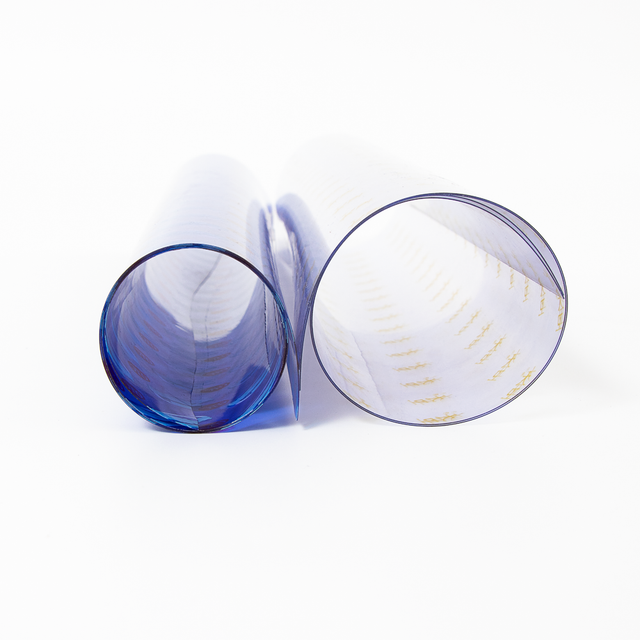
PVC Printing Sheet Manufacturer for Custom Printing and Packaging
HSQY manufactures printable rigid PVC sheets and custom printed PVC plastic sheets for signage, cards, packaging, promotional displays, stationery, decorative panels and industrial applications.
Our PVC printing sheets provide a smooth and consistent surface for high-resolution graphics, text, logos, patterns and decorative designs. Thickness, sheet size, color, surface finish, printed pattern and packaging can be customized according to the customer's printing process and final application.
HSQY can supply unprinted PVC sheets for customers to print independently or manufacture pre-printed PVC rigid sheets according to approved artwork. Buyers should specify whether they require a printable substrate or a finished custom printed sheet when requesting a quotation.
What Is a PVC Printing Sheet?
A PVC printing sheet is a solid or semi-rigid polyvinyl chloride sheet designed for printing, decorative lamination or custom pattern production. It usually has a flat, uniform surface that helps produce clear images, consistent colors and defined text.
Depending on the application, the sheet may be transparent, translucent, white, black or colored. Glossy surfaces provide brighter visual effects, while matte surfaces help reduce glare and create a softer appearance.
PVC printing sheet should not be confused with flexible PVC banner material or PVC foam board. HSQY's products in this category are primarily rigid PVC plastic sheets used for printing, packaging, card production, decoration and fabrication.
Printable PVC Sheet and Pre-Printed PVC Sheet
Printable Rigid PVC Sheet
Printable rigid PVC sheet is supplied without a finished design. Customers can print graphics, text, barcodes, instructions or decorative patterns using a compatible printing system.
This option is suitable for printing companies, packaging converters, card manufacturers, advertising companies and distributors that have their own printing and converting equipment.
Custom Printed PVC Rigid Sheet
Custom printed PVC sheet is manufactured with the buyer's approved design, color, logo or decorative pattern. It can be supplied as full-size sheets, cut sheets or application-specific components according to the project requirements.
Before mass production, the artwork, printing direction, color reference, surface finish, printing side and acceptable color tolerance should be confirmed.
Key Benefits of PVC Printing Sheets
Smooth printing surface: A flat and consistent surface supports clear graphics, sharp text and controlled color reproduction.
Custom colors and patterns: PVC sheets can be supplied in white, transparent, colored or custom printed configurations.
Good rigidity: Solid rigid PVC provides greater structural stability than flexible vinyl film.
Moisture resistance: PVC does not absorb moisture like paperboard, making it useful for humid environments and reusable displays.
Easy fabrication: Suitable grades can be cut, punched, die cut, folded, drilled, laminated, bonded or thermoformed.
Multiple surface options: Glossy, matte, transparent, opaque and selected textured finishes can be produced according to project requirements.
Consistent production: Controlled thickness, color and surface quality support continuous printing and converting operations.
Custom dimensions: Standard sheet sizes, A4 sheets and custom-cut dimensions are available.
Typical PVC Printing Sheet Specifications
The following information represents the typical HSQY supply range. Final specifications depend on thickness, color, printing method, surface finish, order quantity and application.
| Product Name | Printable rigid PVC sheet or custom printed PVC plastic sheet |
| Material | Rigid polyvinyl chloride |
| Typical Thickness | Approximately 0.12–6.5mm, depending on product grade, format and customization requirements |
| Common Sheet Sizes | 700 × 1000mm, 915 × 1830mm, 1220 × 2440mm, A4 size or customized dimensions |
| Typical Density | Approximately 1.36g/cm³ for listed solid rigid PVC grades; confirm according to the selected formulation |
| Colors | Transparent, white, black, red, green, yellow and customized colors |
| Surface Finish | Glossy, matte, glossy/glossy, matte/matte or customized surface, subject to grade availability |
| Printing Options | UV digital printing, screen printing and other compatible printing processes after ink and surface testing |
| Printed Content | Logos, text, graphics, decorative patterns, instructions, barcodes and customized artwork |
| Processing | Printing, cutting, punching, die cutting, creasing, folding, laminating, bonding and thermoforming |
| Typical MOQ | Approximately 1000kg for listed products; customized colors and printed patterns may require a different MOQ |
| Sample | Standard or customized samples can be discussed before bulk production |
What Printing Methods Can Be Used on PVC Sheets?
UV Digital Printing
UV flatbed printing is commonly used to print full-color graphics directly onto rigid PVC sheets. UV curing allows the ink to cure quickly and is suitable for signage, displays, decorative panels and promotional products.
Printing quality depends on the ink system, printer settings, surface cleanliness and surface energy of the PVC sheet. A production test should be completed before bulk printing.
Screen Printing
Screen printing is suitable for logos, text, solid colors, warning signs, cards and repeated graphic patterns. It can provide strong color coverage and is often selected for medium- and high-volume production.
Buyers should confirm the ink type, mesh, curing temperature and required adhesion before production because different PVC formulations may react differently to solvents and heat.
Offset and Specialty Printing
Thin PVC sheets used for cards, labels and stationery may be compatible with selected offset, gravure or specialty printing systems. The printing process must be matched to the sheet thickness, surface treatment and ink chemistry.
Corona treatment, primer or another surface treatment may be required when the original surface energy does not provide sufficient ink adhesion.
Applications of PVC Printing Sheets
Advertising Signs and Promotional Displays
Printable rigid PVC sheets are used for indoor signs, promotional boards, point-of-purchase displays, exhibition graphics, product information panels and retail display components.
For outdoor signs, buyers should request a UV-stabilized and weather-resistant grade. Standard indoor PVC printing sheet should not automatically be assumed to provide long-term exterior performance.
Packaging and Folding Boxes
Thin printed PVC sheets can be used for transparent boxes, colored packaging, folding cartons, box windows, promotional packaging and decorative packaging components.
Packaging projects should specify the folding direction, crease design, bonding method, printing position and finished product dimensions. Prototype testing is recommended before mass production.
Cards and Stationery
PVC printing sheets can be used for membership cards, promotional cards, playing cards, identification components, dividers, notebook covers and stationery products.
Card manufacturers should provide the finished card thickness, lamination structure, printing method, punching requirements and surface finish when selecting the material.
Decorative Panels and Interior Applications
Custom printed PVC sheets can reproduce woodgrain, stone, geometric, branded and decorative patterns for interior panels, retail fixtures, partitions and furniture components.
The required abrasion resistance, flame performance, chemical resistance and service temperature should be confirmed separately for each interior or industrial project.
Industrial Labels and Information Panels
Rigid PVC sheets can be printed with operating instructions, warnings, equipment labels, identification information and technical graphics.
Chemical exposure, cleaning agents, temperature and required service life should be provided so the correct sheet and ink system can be evaluated.
Types of PVC Printing Sheet
White PVC Printing Sheet
White PVC sheet provides an opaque background for colorful graphics, photographs, text and logos. It is commonly selected for signs, cards, displays and printed packaging where high color contrast is required.
Transparent PVC Printing Sheet
Transparent PVC sheet is suitable for clear packaging, box windows, overlays, promotional products and designs where the background or packaged product must remain visible.
White ink or an underprint layer may be required when printing opaque graphics on transparent PVC.
Colored PVC Printing Sheet
Colored PVC sheets reduce the need to print a full background color and can support brand identification, card production, decorative packaging and display designs.
Buyers can also review HSQY's PVC color sheet range for additional color and surface options.
Glossy PVC Printing Sheet
Glossy PVC sheet creates a bright and reflective appearance that can increase color saturation and visual impact. It is frequently used for decorative packaging, cards and promotional products.
Matte PVC Printing Sheet
Matte PVC sheet reduces reflections and provides a softer surface appearance. It is suitable for information panels, interior graphics, premium packaging and applications viewed under strong lighting.
Solid PVC Printing Sheet vs PVC Foam Board
| Comparison | Solid Rigid PVC Printing Sheet | PVC Foam Board |
| Structure | Dense and solid PVC structure | Expanded or foamed PVC core |
| Weight | Heavier at the same thickness | Lighter and easier to handle |
| Typical Thickness | Thin film-like sheets through several millimeters | Commonly used as thicker display boards |
| Typical Uses | Cards, packaging, box windows, decorative sheets, labels and fabricated components | Sign boards, exhibition panels, displays and lightweight structures |
| Forming | Suitable grades can be folded, formed or thermoformed | Primarily selected for printing, routing and display fabrication |
Buyers should clearly state whether they require a solid rigid PVC sheet or a lightweight PVC foam board. The two materials have different densities, thickness ranges, fabrication methods and price structures.
How to Select the Correct PVC Printing Sheet
Choose the Correct Thickness
Thin PVC sheets are suitable for cards, covers, labels, folding boxes and lightweight packaging. Thicker sheets provide greater stiffness for signs, panels, displays and fabricated components.
Thickness should be selected according to the finished dimensions, rigidity, printing equipment, cutting method, folding requirements and expected service conditions.
Confirm the Printing System and Ink
Inform HSQY whether the sheet will be printed by UV flatbed, screen, offset, gravure or another method. Provide the ink brand or ink type where possible.
Adhesion, curing temperature, solvent resistance and color performance should be tested before commercial production.
Select Glossy or Matte Surface
Choose glossy PVC when brightness, reflectivity and strong color impact are required. Choose matte PVC when glare reduction, readability and a softer visual appearance are more important.
Define Indoor or Outdoor Use
Standard PVC printing sheet is generally suitable for controlled indoor applications. Outdoor signs require suitable UV stabilization, weather resistance, compatible outdoor ink and appropriate installation.
Confirm Post-Printing Processing
Tell the supplier whether the printed sheet will be die cut, punched, folded, laminated, bonded, welded or thermoformed. These processes may affect the required PVC formulation and thickness.
Custom PVC Printing Sheet Options
Custom thickness and sheet dimensions
Transparent, white, black and customized colors
Glossy, matte or selected textured surfaces
Single-side or double-side printing
Custom logos, text, graphics and decorative patterns
Custom printing direction and pattern repeat
Cut sheets, A4 sheets and application-specific dimensions
Die cutting, punching, folding and fabrication support
Protective surface film where required
Customized export packaging and pallet configuration
Custom printed orders normally require an artwork file, color reference, required dimensions, printing side, pattern orientation, quantity and intended application.
Quality Checks for Printed PVC Sheets
A printed PVC sheet should be evaluated according to both material quality and printing quality. Important inspection points may include:
Thickness and dimensional tolerance
Sheet flatness and surface cleanliness
Base color consistency
Printed color consistency
Image registration and printing position
Ink adhesion and curing
Scratch, rub or tape-test performance where specified
Pattern direction and repeat accuracy
Cutting, folding or forming performance
Packaging and surface protection
Buyers with strict brand-color requirements should provide a physical color sample, Pantone reference or approved printed proof.
Why Choose HSQY as Your PVC Printing Sheet Supplier?
Manufacturer and bulk supplier of rigid PVC sheets
Printable and finished custom printed PVC sheet options
Custom thickness, size, color, finish and printed pattern
Material selection support for printing and fabrication
Samples and artwork confirmation before bulk production
Supply for printing companies, converters, distributors and industrial buyers
Export packaging and international shipping support
HSQY can evaluate your printing method, artwork, thickness, dimensions and finished product requirements before recommending a PVC sheet specification.
Frequently Asked Questions About PVC Printing Sheets
What is a PVC printing sheet used for?
PVC printing sheets are used for signs, display panels, cards, packaging, box windows, stationery, decorative panels, technical labels and custom printed plastic components.
Is PVC printing sheet the same as PVC foam board?
No. Solid rigid PVC printing sheet has a dense structure, while PVC foam board has an expanded core and lower density. Solid PVC is commonly selected for cards, packaging and thin fabricated parts, while foam board is frequently used for larger signs and display panels.
Can PVC sheets be used for UV digital printing?
Yes. Suitable rigid PVC sheets can be printed using UV digital equipment. Ink adhesion and curing should be tested with the specific printer, ink and sheet surface before mass production.
Can PVC printing sheets be screen printed?
Yes. Screen printing is commonly used for logos, text, solid colors, cards, labels and repeated patterns. The selected ink must be compatible with PVC.
Does PVC sheet require corona treatment before printing?
Not every printing process requires corona treatment. The requirement depends on the PVC surface, ink chemistry and required adhesion. Surface-energy or ink-adhesion testing should be completed first.
What thicknesses are available?
HSQY's listed and customized PVC printing products cover approximately 0.12–6.5mm. Actual availability depends on color, surface, size, printing method and order quantity.
Can HSQY customize the sheet size?
Yes. Common sizes include 700 × 1000mm, 915 × 1830mm, 1220 × 2440mm and A4 sheets. Other dimensions can be discussed according to production capability and order quantity.
Are glossy and matte PVC printing sheets available?
Yes. Glossy, matte and selected mixed-surface configurations can be supplied. Availability should be confirmed according to thickness, color and printing requirements.
Can HSQY print my logo or custom pattern?
Yes. Custom logos, text, colors, graphics and decorative patterns can be evaluated. Buyers should provide artwork, dimensions, printing position, color requirements and estimated quantity.
Can PVC printing sheet be used outdoors?
Outdoor use requires a suitable weather-resistant and UV-stabilized PVC grade together with compatible outdoor ink. Standard indoor grades may discolor or lose performance during prolonged exterior exposure.
Is PVC printing sheet scratch resistant?
Standard PVC has normal surface durability but should not automatically be described as scratch-proof. A protective film, coating or laminate may be required for frequently handled applications.
Can printed PVC sheets be folded or thermoformed?
Suitable grades can be folded, creased or thermoformed. Printing ink, curing conditions and forming temperature must be compatible with the forming process. Printed samples should be tested before production.
Is PVC printing sheet recyclable?
PVC can be mechanically recycled where suitable collection, identification and specialized recycling facilities are available. Printed inks, coatings, laminates, adhesives and mixed-material structures may affect practical recyclability.
Is PVC printing sheet suitable for food-contact packaging?
Food-contact suitability must be confirmed for the exact PVC formulation, printing ink, coating, application, contact conditions and destination-market regulations. Standard printing-grade PVC should not automatically be treated as food-contact compliant.
What is the MOQ for custom PVC printing sheets?
The typical MOQ for listed products is approximately 1000kg. Custom colors, printed patterns, special surfaces or non-standard sizes may require a higher minimum production quantity.
Can I request a sample before placing an order?
Yes. A sample can be used to evaluate thickness, color, surface, ink adhesion, cutting, folding and forming performance. Custom printed samples may require artwork confirmation and a sampling charge.
What information is required for a quotation?
Provide the thickness, sheet dimensions, color, surface finish, printing method, artwork, printing side, application, order quantity, annual demand, destination port and required compliance documents.
Request a PVC Printing Sheet Sample or Quotation
Contact HSQY for printable rigid PVC sheets, white PVC printing sheets, colored PVC sheets or finished custom printed PVC plastic sheets.
Send your required thickness, dimensions, color, surface, printing method, artwork and estimated quantity through the HSQY contact page to receive material recommendations and a quotation.