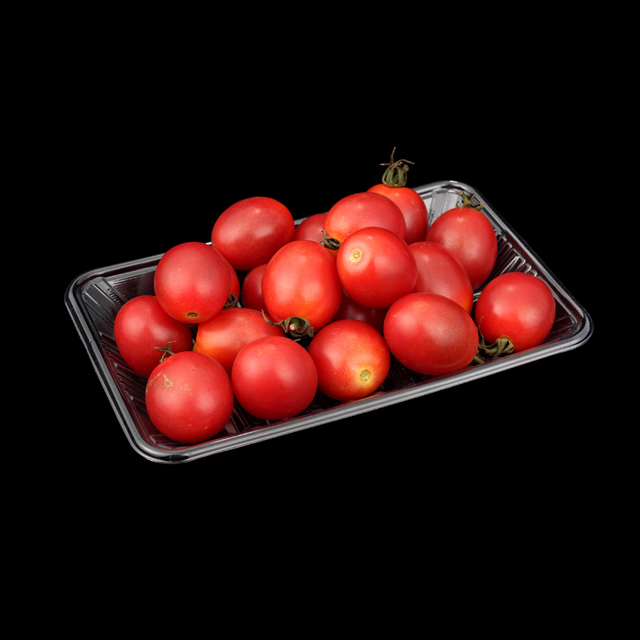
Meat & Vegetable Trays Manufacturer for Fresh Food Packaging
HSQY Plastic manufactures and supplies meat trays and vegetable trays for fresh meat, poultry, seafood, fruits, vegetables, deli foods, and supermarket packaging. Our product range includes PET, rPET, PET/PE, PP, and high-barrier tray structures for overwrap, heat-sealing, chilled storage, and modified atmosphere packaging applications.
Standard and customized trays are available in clear, black, white, and custom colors. Dimensions, depth, thickness, sealing flange, compartment layout, material structure, and packaging method can be developed according to the food product, filling line, sealing film, target market, and distribution conditions.
| Product Range | Meat trays, poultry trays, seafood trays, fruit trays, vegetable trays, produce trays, and deli food trays |
| Material Options | PET, rPET, PET/PE, PP, PP/EVOH/PE, and application-specific material structures |
| Packaging Methods | Film overwrap, top sealing, absorbent-pad packaging, and MAP packaging depending on the tray structure |
| Customization | Size, depth, thickness, color, compartment design, flange, embossing, tooling, and packing method |
| Typical Buyers | Meat processors, produce packers, supermarkets, food factories, distributors, wholesalers, and packaging companies |
What Are Meat and Vegetable Trays?
Meat and vegetable trays are rigid or semi-rigid food packaging containers designed to hold, protect, transport, and display perishable foods. They provide a stable base for fresh products and can be combined with stretch film, lidding film, absorbent pads, or high-barrier packaging systems.
The correct tray helps protect the food from crushing and handling damage, controls liquid within the package, supports stacking during transportation, and presents the product clearly at the point of sale.
Common users include supermarkets, grocery chains, butcher shops, seafood processors, poultry factories, fruit and vegetable packers, catering suppliers, food distributors, and ready-to-eat food producers.
Types of Meat and Vegetable Trays
Clear PET Meat and Produce Trays
Clear PET trays provide strong product visibility and a rigid structure for retail display. They are commonly selected for chilled meat, poultry, seafood, mushrooms, berries, tomatoes, cut fruit, vegetables, bakery products, and deli foods.
PET trays are suitable when shelf presentation, clarity, stackability, and cold-chain handling are important. The exact sealing method should be confirmed according to the tray structure and selected film.
PET/PE Heat-Sealable Food Trays
PET/PE trays combine the clarity and rigidity of PET with a PE sealing layer. They are suitable for heat-sealed packages containing fresh meat, processed meat, poultry, seafood, fruits, vegetables, salads, and deli products.
Buyers using automated tray-sealing equipment should provide the sealing temperature, dwell time, pressure, film structure, and machine model so the tray and lidding film can be evaluated as a complete packaging system.
Learn more about our PET/PE food trays.
PP Meat and Vegetable Trays
PP trays offer good toughness, moisture resistance, and flexibility for food processing and distribution. They are commonly used for vegetables, chilled meat, poultry, seafood, frozen foods, prepared ingredients, and other applications that require a durable packaging base.
Temperature resistance varies by PP grade, tray design, food type, and production process. Microwave, freezer, or hot-fill suitability must therefore be confirmed for the specific product rather than assumed for every PP tray.
High-Barrier MAP Trays
High-barrier trays are designed for products that require controlled oxygen and moisture transmission. Multilayer structures such as PP/EVOH/PE can be used with appropriate high-barrier lidding films in modified atmosphere packaging systems.
These trays are commonly considered for fresh beef, pork, lamb, poultry, seafood, sausages, processed meat, cheese, and other chilled foods. Final shelf life depends on the complete packaging system, including food condition, gas mixture, tray barrier, sealing film, seal integrity, hygiene, and storage temperature.
View our MAP tray solutions and high-barrier PP trays.
Black, White, and Custom-Color Trays
Black trays create a strong contrast for red meat, poultry, seafood, and premium deli foods. White trays provide a clean and traditional supermarket presentation, while clear trays maximize product visibility.
Custom colors may be developed according to minimum production requirements, material structure, recycling objectives, and brand guidelines.
Fruit and Vegetable Produce Trays
Produce trays are designed to organize and protect fruits and vegetables during packing, transportation, retail display, and home handling. Common applications include mushrooms, tomatoes, berries, grapes, cherries, asparagus, herbs, cut fruit, salad ingredients, and mixed vegetables.
Depending on the produce type, the tray design may need to consider ventilation, drainage, anti-fog performance, lid compatibility, stacking strength, and resistance to crushing.
Meat and Vegetable Tray Material Comparison
| Material | Main Characteristics | Typical Applications | Packaging Considerations |
| PET or rPET | High clarity, rigidity, and strong retail presentation | Chilled meat, poultry, seafood, fruit, vegetables, and deli foods | Commonly used with overwrap or application-specific sealing systems |
| PET/PE | Clear, rigid, and designed with a heat-sealing layer | Fresh meat, seafood, sausages, deli foods, fruit, and vegetables | Suitable film and sealing parameters must be matched to the tray |
| PP | Tough, lightweight, moisture-resistant, and cost-effective | Meat, poultry, seafood, vegetables, frozen foods, and prepared ingredients | Temperature and sealing suitability depend on the selected PP grade |
| PP/EVOH/PE | High oxygen barrier with a heat-sealable inner layer | Fresh protein, processed meat, seafood, cheese, and chilled foods | Commonly specified for MAP with compatible barrier lidding film |
Material selection should be based on the complete application rather than price alone. Food characteristics, required shelf life, filling temperature, storage conditions, sealing equipment, film compatibility, transportation distance, and local recycling infrastructure should all be evaluated.
Applications of Meat and Vegetable Packaging Trays
Fresh Red Meat Packaging
Beef, pork, lamb, steaks, minced meat, sausages, and processed meat may be packed in overwrapped trays, heat-sealed trays, or high-barrier MAP trays. Tray rigidity, liquid control, seal integrity, color presentation, and cold-chain stability are important selection factors.
Poultry Packaging
Chicken breasts, thighs, wings, drumsticks, whole poultry, and processed poultry products require trays with reliable puncture resistance, sufficient depth, stable stacking, and suitable liquid-management options.
Seafood and Fish Packaging
Fish fillets, shellfish, shrimp, frozen seafood, and processed seafood require moisture-resistant trays with secure edges and suitable sealing performance. The tray depth and absorbent capacity should match the expected liquid release and product weight.
Fruit and Vegetable Packaging
Produce trays help organize individual portions, reduce movement within the outer package, improve stacking, and protect delicate fruits and vegetables from compression during transportation and display.
Deli, Salad, and Ready-to-Pack Food Applications
Meat and vegetable trays can also be used for sliced deli products, cheese, salads, prepared ingredients, marinated foods, meal components, and food-service portions. Sealing performance and storage temperature must be confirmed according to the food formulation.
Packaging Methods and Sealing Options
Film Overwrap Packaging
Overwrap packaging uses stretch or wrapping film around the tray. It is commonly selected for supermarket meat, poultry, produce, and short-distribution applications where simple packing and product visibility are required.
Top-Sealed Tray Packaging
Top sealing bonds a lidding film to the tray flange. A successful seal depends on the tray material, sealing layer, flange design, film structure, sealing temperature, pressure, dwell time, and cleanliness of the sealing area.
Modified Atmosphere Packaging
MAP replaces the air inside the sealed package with an application-specific gas mixture. The tray and lidding film must provide the required barrier and sealing performance to maintain the internal atmosphere.
MAP performance must be validated with the actual food, gas composition, packaging equipment, storage temperature, and target shelf life. A tray alone cannot determine the final shelf life of a packaged product.
Absorbent-Pad Packaging
Absorbent pads can be placed inside meat, poultry, and seafood trays to control purge and improve package appearance. Pad dimensions, absorption capacity, food-contact suitability, and compatibility with the tray should be specified according to the product.
Lidding Film Options
Depending on the tray and packaging system, available film functions may include easy-peel opening, anti-fog performance, high oxygen barrier, puncture resistance, printed branding, and compatibility with automated tray-sealing lines.
Explore our tray sealing film solutions.
Custom Meat and Vegetable Tray Options
HSQY Plastic supports standard product supply and custom tray development for food processors, packaging distributors, supermarkets, and private-label packaging projects.
Custom tray length, width, depth, and usable internal dimensions
Custom wall thickness and tray weight
Clear, black, white, and application-specific colors
Single-compartment and multi-compartment designs
Customized sealing flange dimensions
Stacking, nesting, denesting, and automated-line considerations
Logo embossing and molded identification marks
Custom tooling and thermoforming mold development
Tray and sealing-film compatibility support
Carton quantity, pallet configuration, and export packing options
Custom printing directly on a thermoformed tray may not be suitable for every design or material. Embossing, labels, printed lidding film, sleeves, or outer cartons may provide more practical branding options.
How to Select the Right Food Packaging Tray
Buyers should evaluate the tray as part of the complete food packaging system. Before selecting a model, confirm the following information:
Food type and whether the product is raw, cooked, fresh, chilled, or frozen
Product dimensions, portion weight, and expected liquid release
Required external and internal tray dimensions
Overwrap, top-seal, MAP, or another packaging method
Required oxygen and moisture barrier performance
Filling, sealing, storage, transportation, and display temperatures
Tray sealer brand, model, mold dimensions, and operating speed
Current lidding film structure and sealing parameters
Target market and required food-contact documentation
Estimated order quantity and annual purchasing volume
Providing an existing tray sample, technical drawing, packaging photograph, or sealing-machine mold drawing can reduce specification errors and accelerate quotation.
Food Contact, Testing, and Quality Requirements
Food packaging requirements vary by material, food type, temperature, intended use, and destination market. Buyers should specify the applicable regulatory market and required test documents before confirming an order.
Relevant documentation may include raw-material declarations, food-contact test reports, migration testing, quality inspection records, dimensional reports, and other documents agreed for the project. Document availability should be confirmed for the selected material and production specification.
For new packaging systems, HSQY recommends testing production samples with the actual food, film, sealing equipment, gas mixture, storage temperature, and distribution process before commercial use.
Benefits for Food Processors, Retailers, and Distributors
Improved product organization and retail presentation
Protection against crushing and handling damage
More stable stacking during storage and transportation
Compatibility with different sealing and wrapping formats
Standardized portion and package dimensions
Options for clear, black, white, and branded packaging systems
Custom development for automated food-packing lines
Combined sourcing of trays and compatible lidding films
Why Choose HSQY as Your Meat and Vegetable Tray Supplier?
HSQY Plastic provides plastic sheet materials, thermoformed food trays, high-barrier packaging structures, and tray sealing films. This integrated product range allows buyers to discuss the tray material, tray design, barrier requirement, and lidding film within one packaging project.
Standard and custom thermoformed tray options
PET, PET/PE, PP, and high-barrier material structures
Support for meat, poultry, seafood, produce, and deli applications
Custom mold, dimensions, colors, and packaging configurations
Tray and sealing-film matching support
Bulk supply for processors, wholesalers, distributors, and retail packaging projects
Export packaging and international shipment support
Meat and Vegetable Trays FAQ
What materials are used to manufacture meat and vegetable trays?
Common materials include PET, rPET, PET/PE, PP, and multilayer high-barrier structures such as PP/EVOH/PE. The correct material depends on product visibility, sealing method, barrier requirement, storage temperature, shelf-life target, and recycling objectives.
Is PET or PP better for fresh food packaging?
PET is generally selected when high clarity and rigid retail presentation are priorities. PP is often selected for toughness, moisture resistance, flexibility, and application-specific temperature performance. Neither material is universally better; selection must match the food and packaging process.
What is the difference between PET and PET/PE trays?
PET provides clarity and rigidity. PET/PE includes a PE sealing layer that supports heat sealing with a compatible lidding film. Buyers should confirm the film structure and sealing parameters before placing a commercial order.
Can meat trays be used for modified atmosphere packaging?
Yes, but the tray must have an appropriate barrier structure and must be paired with a compatible high-barrier lidding film. Seal integrity, gas mixture, food hygiene, and storage temperature must also be validated.
Can absorbent pads be added to meat and seafood trays?
Yes. Absorbent pads can be selected according to the tray size, food type, expected purge volume, and required absorption capacity. The pad must be suitable for the intended food-contact application.
Can meat and vegetable trays be customized?
Yes. HSQY can discuss custom dimensions, depth, thickness, tray weight, color, compartments, flange design, embossing, mold development, carton packing, and pallet configuration.
Are PET and PP food trays recyclable?
PET and PP are technically recyclable materials, but practical recyclability depends on the tray construction, food contamination, color, labels, films, collection systems, sorting technology, and local recycling infrastructure. Buyers should verify local acceptance before making recyclability claims.
Are meat and vegetable trays microwave-safe or freezer-safe?
Not every tray is microwave-safe or freezer-safe. Suitability depends on the polymer grade, tray thickness, design, food type, exposure time, and temperature. The intended temperature range must be confirmed and tested for the selected tray.
What sealing film should be used with a meat tray?
Film selection depends on the tray material and packaging method. Important requirements may include seal compatibility, easy-peel performance, anti-fog properties, oxygen barrier, puncture resistance, printing, and sealing-machine conditions.
What information is required for a meat tray quotation?
Please provide the food type, tray material, external dimensions, depth, product weight, color, packaging method, sealing-film details, temperature range, required quantity, destination country, and any applicable regulatory requirements. Photos, samples, or technical drawings are highly recommended.
Can HSQY provide samples before bulk production?
Samples of available models can be discussed for dimensional, appearance, stacking, and preliminary sealing evaluation. Custom-tool samples require mold development and should be confirmed according to the project requirements.
What are the minimum order quantity and production lead time?
Minimum order quantity and lead time depend on the tray model, material, color, dimensions, mold availability, customization level, packing method, and production schedule. Standard stock molds normally require less development time than fully customized designs.
Request a Quote for Meat and Vegetable Trays
Contact HSQY Plastic for standard or custom meat trays, poultry trays, seafood trays, fruit trays, vegetable trays, PET/PE heat-sealable trays, PP trays, high-barrier MAP trays, and compatible lidding films.
For an accurate quotation, send us your required dimensions, food application, packaging method, material preference, color, order quantity, sealing-machine information, and destination market.
Request a Meat Tray Quotation