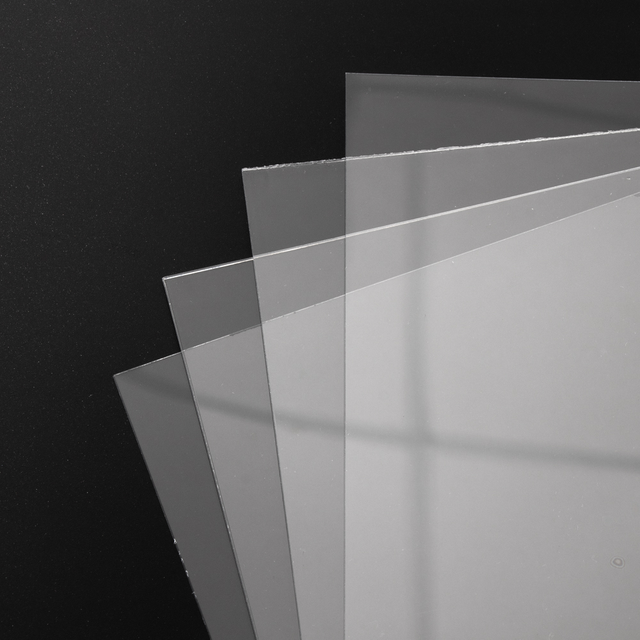
Anti-Scratch PET Sheet Manufacturer and Supplier
HSQY Plastic manufactures and supplies anti-scratch PET sheets and rolls for printing, folding boxes, transparent packaging windows, protective covers, displays, electronic overlays, furniture protection, industrial panels, and thermoforming applications.
Compared with standard PET sheet, anti-scratch PET has a specially treated or hard-coated surface that helps reduce visible scuffs, handling marks, and abrasion while maintaining the clarity, rigidity, and processing advantages of PET.
HSQY can supply anti-scratch PET in sheets or rolls with customized thickness, width, length, color, surface finish, coating configuration, protective film, and packaging. The coating specification should be selected according to the required surface hardness, optical performance, printing method, forming process, cleaning environment, and final application.
| Product | Anti-scratch PET sheet, rigid PET film, and PET sheet roll |
| Material | PET with an application-specific scratch-resistant surface treatment or hard coating |
| Thickness | 0.1–3mm, subject to product structure and order confirmation |
| Supply Format | Cut sheets, standard-size sheets, slit rolls, and customized rolls |
| Surface Options | Clear glossy, matte, frosted, textured, or application-specific functional coating |
| Common Applications | Packaging windows, printed panels, displays, overlays, protective covers, folding boxes, blister packaging, and decorative surfaces |
What Is an Anti-Scratch PET Sheet?
An anti-scratch PET sheet is a transparent or colored polyethylene terephthalate sheet with a modified surface designed to provide better resistance to scratches, scuffs, and abrasion than untreated PET.
Standard PET already provides good clarity, rigidity, dimensional stability, and impact resistance. However, repeated handling, stacking, transportation, cleaning, printing, converting, and retail display can leave marks on an untreated surface.
An anti-scratch coating creates a harder surface layer that reduces visible damage and helps the finished product maintain a cleaner appearance. The final performance depends on the PET substrate, coating chemistry, coating thickness, curing process, required hardness, and method used to test scratch resistance.
Anti-scratch does not mean completely scratch-proof. Sharp tools, abrasive particles, excessive pressure, unsuitable cleaners, or improper processing can still damage the material. Buyers should define measurable performance requirements instead of relying only on the term “anti-scratch.”
How Does the Scratch-Resistant Coating Work?
The PET substrate is treated with a transparent functional coating that is cured or bonded to the surface. This harder outer layer helps reduce surface deformation when the material is exposed to friction, repeated handling, sliding contact, or light abrasion.
Depending on the application, the coating may be applied to one side or both sides. One-side coating is commonly selected when only the exposed surface requires protection. Double-side coating is used when both surfaces may be handled, printed, cleaned, or exposed during use.
A hard coating can also be engineered to provide additional functions, including anti-glare performance, anti-static behavior, improved chemical resistance, UV resistance, anti-fingerprint properties, or enhanced printability. These functions are not automatically included in every anti-scratch PET grade and must be specified separately.
Key Benefits of Anti-Scratch PET Sheets
Improved resistance to scuffs, handling marks, and light abrasion
Maintains a cleaner and more professional surface appearance
High transparency for product visibility and display applications
Lower weight and reduced breakage risk compared with glass
Suitable for printing, die cutting, folding, punching, and fabrication
Available in sheet and roll formats for different converting equipment
Optional glossy, matte, frosted, anti-glare, or functional surfaces
Can be supplied with protective masking film for processing and transportation
Customizable thickness, width, color, hardness, and coating configuration
Anti-Scratch PET Sheet Specifications
The following table shows the general HSQY supply range. Exact availability depends on thickness, coating type, surface finish, order quantity, processing method, and required tolerances.
| Item | Available Specification |
| Base Material | PET or application-specific PET substrate |
| Thickness | 0.1–3mm |
| Standard Sheet Sizes | 700 × 1000mm, 915 × 1830mm, 1000 × 2000mm, 1220 × 2440mm, and custom sizes |
| Roll Width | Approximately 80–1300mm, subject to thickness and coating configuration |
| Colors | Transparent, transparent tinted, colored, and opaque options |
| Surface Finish | Glossy, matte, frosted, textured, or custom finish |
| Coating Configuration | Single-side or double-side treatment, subject to application requirements |
| Protective Film | One-side or double-side protective masking can be discussed |
| Minimum Order Quantity | Typically 1000kg, subject to product and customization |
| Customization | Thickness, width, length, color, finish, coating hardness, protective film, cutting, slitting, and packaging |
View the complete HSQY PET sheet range, including APET, PETG, RPET, GAG, anti-fog PET, glossy PET, matte PET, and PET thermoforming sheets.
Important Performance Parameters
Buyers should not evaluate an anti-scratch sheet based only on thickness and appearance. The required performance should be defined through measurable technical parameters and agreed test methods.
| Parameter | Why It Matters | What Buyers Should Confirm |
| Pencil Hardness | Indicates the resistance of the coated surface to marking under a defined test condition | Required hardness grade, applied load, test method, coating side, and acceptance criteria |
| Light Transmission | Determines how much visible light passes through the sheet | Minimum transmission required for packaging, display, optical, or protective applications |
| Haze | Affects transparency, sharpness, diffusion, and visual appearance | Maximum haze for clear products or target haze for matte and anti-glare surfaces |
| Coating Adhesion | Indicates whether the coating remains bonded during cutting, folding, forming, cleaning, and use | Required adhesion test, processing conditions, bend radius, and exposure environment |
| Abrasion Resistance | Evaluates surface change after repeated rubbing or abrasive contact | Abrasive wheel or material, load, cycle count, haze change, and visual acceptance limit |
| Chemical Resistance | Important when the surface is exposed to cleaners, oils, cosmetics, chemicals, or disinfectants | Exact chemical, concentration, contact time, temperature, cleaning frequency, and acceptable surface change |
| Formability | Determines whether the coating can withstand bending or thermoforming without cracking | Forming temperature, draw ratio, mold design, coating orientation, and required finished shape |
| Printability | Affects ink adhesion, image quality, curing, and production consistency | Printing side, ink system, surface energy, curing method, and adhesion requirements |
Types of Anti-Scratch PET Sheets
Clear Glossy Anti-Scratch PET Sheet
Clear glossy PET provides high product visibility and a smooth, reflective appearance. It is commonly selected for transparent box windows, retail packaging, display panels, protective covers, and applications where visual clarity is the priority.
Matte Anti-Scratch PET Sheet
Matte surfaces reduce strong reflections and provide a softer visual appearance. They are used for control panels, labels, graphics, document covers, displays, decorative applications, and products that require improved readability under indoor lighting.
Anti-Glare PET Sheet
Anti-glare PET uses a controlled surface texture or coating to diffuse reflected light. It can improve readability for displays, equipment panels, membrane switches, electronic interfaces, and protective screen overlays.
Anti-glare performance normally increases haze, so buyers should balance reflection control against image sharpness and transparency.
Single-Side Hard-Coated PET
Single-side hard-coated PET is suitable when only the outward-facing or user-contact surface requires additional protection. The untreated side may be reserved for printing, lamination, adhesive application, or bonding.
Double-Side Hard-Coated PET
Double-side coating provides protection on both surfaces and can be considered for reusable panels, transparent barriers, frequently handled sheets, and applications in which both sides remain exposed.
Functional Anti-Scratch PET
Application-specific versions may combine scratch resistance with anti-static, UV-resistant, anti-fingerprint, chemical-resistant, printable, or textured functions. Each additional function affects cost, optical performance, processing behavior, and minimum order quantity.
Applications of Anti-Scratch PET Sheets
Transparent Packaging Windows
Anti-scratch PET is widely used as a transparent window for folding cartons, toy boxes, cosmetic packaging, gift boxes, electronics packaging, stationery packaging, and other retail products.
The improved surface helps the window maintain a clean appearance during die cutting, box assembly, transportation, stacking, and shelf display.
Folding Boxes and Printed Packaging
PET sheets can be printed, die cut, creased, folded, and bonded to produce transparent or partially transparent packaging. The coating must be matched to the selected ink, adhesive, folding radius, and converting process.
Electronic Displays and Screen Overlays
Hard-coated PET can be used as a protective overlay for displays, instrument panels, touch interfaces, control equipment, household appliances, and electronic products.
Display applications may require tightly controlled haze, light transmission, surface hardness, anti-glare performance, adhesive compatibility, and optical inspection standards.
Membrane Switches and Control Panels
Printable hard-coated PET is used for membrane switches, graphic overlays, keypads, equipment labels, and human-machine interfaces. These applications require reliable coating adhesion, print adhesion, embossing performance, dimensional stability, and resistance to repeated contact.
Retail Displays and Signage
Clear, matte, and printed PET sheets can be used for point-of-sale displays, price holders, promotional panels, menu covers, product stands, signage components, and reusable display materials.
Furniture and Decorative Surface Protection
Anti-scratch PET film can be laminated or applied to furniture panels, decorative surfaces, appliance panels, cabinet components, doors, shelves, and other products that require a durable and easy-to-clean surface.
Adhesive, lamination temperature, surface tension, dimensional change, color consistency, and resistance to household chemicals should be validated before production.
Protective Barriers, Visors, and Covers
Transparent PET can be used for protective covers, machine guards, equipment windows, visors, face shields, document protection, and temporary barriers where lightweight construction and visibility are required.
Medical, safety, or personal protective equipment applications require separate verification of optical quality, impact performance, chemical resistance, hygiene requirements, device standards, and regulatory compliance. A general-purpose PET sheet should not automatically be described as medical-grade or safety-certified.
Thermoformed and Blister Packaging
Certain anti-scratch PET grades can be used for shallow forming, blister packaging, trays, protective inserts, and vacuum-formed components. A coating that performs well on a flat sheet may crack, whiten, or lose adhesion during deep forming.
Buyers should provide the forming temperature, draw depth, mold geometry, heating method, cycle time, and required surface appearance so that a suitable formable coating can be evaluated.
Processing and Fabrication Options
Printing
Anti-scratch PET can be developed for screen printing, UV printing, offset printing, digital printing, or other printing methods. The printing side, ink chemistry, surface treatment, curing energy, ink adhesion, and post-processing conditions should be tested.
Die Cutting, Punching, and Slitting
Sheets and rolls can be slit, punched, die cut, guillotined, or fabricated into custom dimensions. Tool sharpness, cutting clearance, coating brittleness, protective film, and edge-quality requirements affect the finished result.
Folding and Creasing
Folding-box applications require suitable crease design, grain or extrusion-direction evaluation, sheet temperature, folding radius, and coating flexibility. Production samples should be folded and inspected for cracking, whitening, and coating separation.
Thermoforming and Vacuum Forming
Thermoforming suitability depends on the PET grade and coating formulation. Deep draws, sharp corners, high forming ratios, or excessive temperatures may damage a non-formable coating. HSQY recommends testing the actual mold and production parameters before bulk ordering.
Lamination and Adhesive Bonding
PET sheets may be laminated to paperboard, plastic, metal, wood-based panels, printed layers, adhesive films, or decorative substrates. The bonding side should be specified because some scratch-resistant coatings may reduce adhesive or ink adhesion.
Standard PET vs Anti-Scratch PET vs PETG and Polycarbonate
| Feature | Standard PET | Anti-Scratch PET | PETG | Polycarbonate |
| Surface Scratch Resistance | Basic | Improved through coating or surface treatment | Basic unless coated | Basic unless hard coated |
| Transparency | High | High when a clear coating is selected | High | High |
| Thermoforming | Suitable with the correct PET grade | Requires a formable coating and production testing | Generally easy to form | Formable but requires appropriate temperature control |
| Impact Performance | Good | Good, depending on substrate and thickness | Good | Very high |
| Typical Selection Reason | Cost-effective clear packaging and printing | Better long-term surface appearance and durability | Complex forming and fabrication | High impact and demanding engineering applications |
The best material depends on surface durability, impact requirements, forming depth, temperature, optical quality, printing method, chemical exposure, regulatory requirements, and budget.
How to Choose the Right Anti-Scratch PET Sheet
To recommend a suitable material, HSQY needs more information than thickness and sheet size. Buyers should provide the following details:
Final application and expected service life
Required thickness, width, length, or roll diameter
Clear, tinted, colored, matte, glossy, frosted, or anti-glare finish
Required pencil hardness or abrasion-resistance target
Required light transmission and maximum haze
Single-side or double-side coating
Printing process, ink type, and printing side
Die cutting, folding, punching, bonding, or lamination process
Thermoforming temperature, draw depth, and mold geometry
Chemicals, cleaners, oils, or disinfectants contacting the surface
UV exposure and indoor or outdoor operating environment
Required protective film and packaging method
Estimated order quantity and annual purchasing volume
Sending a current material sample, technical drawing, finished-product photograph, specification sheet, or test standard can reduce specification errors and accelerate quotation.
Quality Control for Hard-Coated PET Sheets
The required inspection plan should be agreed before mass production. Depending on the application, quality control may include:
Thickness, width, length, and diagonal measurement
Surface inspection for scratches, particles, coating defects, and contamination
Light transmission and haze testing
Pencil hardness and abrasion testing
Coating adhesion testing
Color, gloss, and surface-texture measurement
Flatness, curl, winding, and roll-edge inspection
Printing, folding, forming, or chemical-resistance validation
Protective-film adhesion and removal testing
Performance values are meaningful only when the test method, sample conditioning, load, cycle count, temperature, equipment, and acceptance criteria are clearly defined.
Is Anti-Scratch PET Sheet Recyclable?
PET is a recyclable thermoplastic, but the practical recyclability of a finished anti-scratch PET product depends on its complete construction and the recycling system available in the destination market.
Coatings, inks, adhesives, labels, protective films, laminations, colors, contamination, and multilayer components may affect sorting and recycling. Buyers should verify acceptance with local recyclers and should avoid making unconditional “100% recyclable” claims without evaluating the finished product.
Using a durable surface can extend the useful life of a packaging component, cover, display, or panel, but durability and recyclability are separate performance considerations.
Why Choose HSQY Anti-Scratch PET Sheets?
PET sheet manufacturing and international supply experience
Sheet and roll formats for printing, packaging, and industrial applications
Thickness range from approximately 0.1mm to 3mm
Roll widths up to approximately 1300mm
Standard sheets up to 1220 × 2440mm and customized dimensions
Clear, tinted, colored, glossy, matte, and frosted options
Customized coating, slitting, cutting, protective film, and packaging
Sample evaluation for printing, forming, folding, and surface testing
Bulk supply for converters, printers, packaging manufacturers, distributors, and industrial users
Explore our anti-scratch PET sheet and film or view the 1mm transparent anti-scratch PET rigid sheet.
Anti-Scratch PET Sheet FAQ
What is the difference between anti-scratch PET and standard PET?
Standard PET has an untreated or conventionally treated surface. Anti-scratch PET has an additional surface treatment or hard coating that improves resistance to scuffs, abrasion, and handling marks. The base material may be similar, but the coated sheet normally maintains its appearance for longer in high-contact applications.
Does anti-scratch mean the PET sheet cannot be scratched?
No. Anti-scratch means the surface provides improved resistance under defined conditions. Sharp tools, abrasive particles, excessive pressure, aggressive chemicals, and unsuitable cleaning methods can still damage the coating.
What pencil hardness is available for anti-scratch PET?
Available hardness depends on the coating, PET substrate, sheet thickness, forming requirement, and test method. Buyers should specify the target hardness, applied load, testing standard, and acceptable result. A higher hardness is not always better if the sheet must be deeply formed, folded, or embossed.
What thicknesses are available?
HSQY anti-scratch PET sheets and films are generally available from approximately 0.1mm to 3mm. Exact availability depends on width, surface finish, coating configuration, order quantity, and required processing.
Can anti-scratch PET be supplied in rolls?
Yes. HSQY can supply slit rolls and customized-width rolls. Roll width, core size, outside diameter, roll weight, winding direction, protective film, splice requirements, and packaging should be confirmed before production.
Can both sides of the PET sheet be hard coated?
Yes. Single-side and double-side surface treatments can be discussed. Double-side coating may increase cost and can affect printing, bonding, lamination, and forming, so the function of each side should be clearly defined.
Is anti-scratch PET suitable for printing?
It can be suitable for screen printing, UV printing, offset printing, and other processes, but ink adhesion depends on the coating and printing side. Buyers should test the actual ink, curing process, adhesion, color density, and post-processing conditions.
Can anti-scratch PET sheet be thermoformed?
Certain grades can be thermoformed, but not every hard coating is suitable for deep drawing. The coating may crack, whiten, or lose adhesion if the material is overstretched. The mold, draw ratio, heating profile, coating side, and forming temperature should be tested.
Is anti-scratch PET resistant to chemicals and disinfectants?
Chemical resistance varies by coating and chemical. Buyers should provide the exact cleaner, disinfectant, solvent, oil, concentration, temperature, contact time, and cleaning frequency. Testing should be performed before the material is approved for repeated cleaning.
Can anti-static or anti-glare performance be added?
Anti-static, anti-glare, UV-resistant, anti-fingerprint, chemical-resistant, matte, and textured functions may be available as custom options. Each function should be confirmed separately because it may affect optical clarity, haze, printing, forming, and MOQ.
Can anti-scratch PET replace glass?
PET can replace glass in some lightweight covers, packaging windows, displays, overlays, and protective applications. However, PET and glass have different stiffness, heat resistance, optical behavior, surface hardness, flammability, and regulatory characteristics. The final design must be evaluated for the actual application.
How should anti-scratch PET sheets be cleaned?
Use a soft, clean, non-abrasive cloth and a cleaner that has been validated for the selected coating. Avoid abrasive pads, dirty cloths, powders, sharp tools, and unapproved solvents. Remove loose dust before wiping to reduce surface abrasion.
Are samples available before bulk ordering?
Available material samples can be discussed for appearance, printing, folding, forming, coating, and compatibility testing. Custom coating or special-size samples may require additional development and preparation.
What information is required for a quotation?
Please provide the application, thickness, sheet or roll size, color, surface finish, coating side, hardness requirement, optical requirements, printing or forming process, protective-film requirement, order quantity, and destination country.
Request an Anti-Scratch PET Sheet Quotation
Contact HSQY Plastic for anti-scratch PET sheets, clear rigid PET film, PET rolls, hard-coated PET, matte PET, printable PET, packaging-window PET, and customized functional PET materials.
Send us your technical requirements, target application, drawings, current material sample, test standard, and estimated quantity. Our team will evaluate the appropriate thickness, surface finish, coating configuration, roll or sheet format, and packaging method.
Request an Anti-Scratch PET Quote