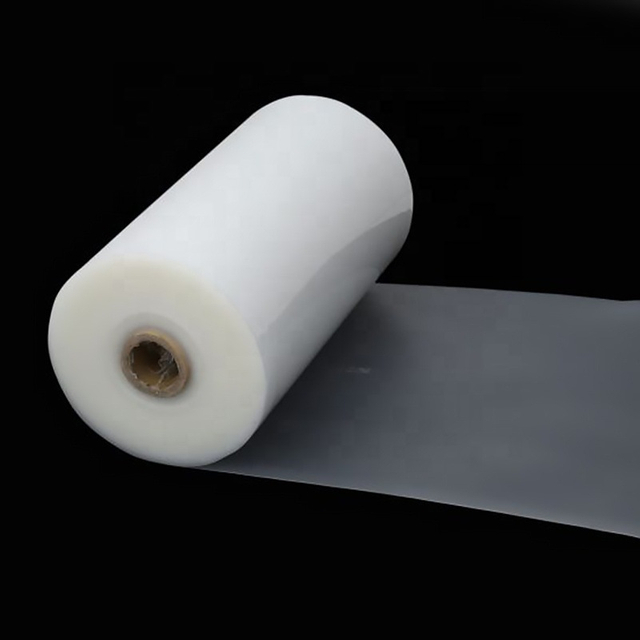
Heat-Resistant Polypropylene Sheets and Rolls
HSQY PLASTIC manufactures and supplies heat-resistant polypropylene sheets and high-temperature PP sheet rolls for thermoforming, hot-fill packaging, microwaveable containers, industrial liners, electrical components, cooling-tower applications, chemical-processing equipment and fabricated parts exposed to elevated temperatures.
Heat-resistant PP should not be selected according to melting point alone. The correct material depends on continuous operating temperature, short-term peak temperature, exposure duration, mechanical load, chemical environment, PP grade, sheet thickness and finished-part design.
HSQY's current high-temperature PP product family includes approximately 0.125–3 mm sheet and rollstock, with customized widths up to approximately 1830 mm for selected specifications. Natural, translucent, white, black and customized colors can be discussed depending on the required formulation.
A reference temperature range of approximately -30°C to +130°C is available for selected HSQY high-temperature PP formulations, but the upper value must be validated according to exposure time, mechanical load, chemical contact, processing conditions and application. It should not automatically be interpreted as a continuous-service temperature for every PP sheet.
What Is a Heat-Resistant PP Sheet?
A heat-resistant PP sheet is a polypropylene sheet selected or modified to retain useful mechanical and dimensional properties for longer periods at elevated temperatures compared with a general-purpose PP formulation.
Heat performance can be influenced by the base polypropylene resin, homopolymer or copolymer structure, nucleating system, antioxidants, thermal stabilizers, mineral fillers, reinforcement and other additives.
Heat stabilization can slow thermal oxidation and help maintain useful properties during repeated or prolonged warm-service exposure. It does not turn polypropylene into an unlimited high-temperature engineering plastic.
Continuous Temperature vs. Short-Term Temperature
The most important purchasing distinction is between continuous operating temperature and short-term peak temperature.
| Temperature Term | Meaning | What the Buyer Should Specify |
| Continuous Service Temperature | Long-duration operating condition under defined load and environment | Normal temperature, service life, load, support and chemical contact |
| Short-Term Peak Temperature | Temporary maximum temperature during processing or a limited operating cycle | Peak temperature, duration, number of cycles and mechanical load |
| Heat Deflection Temperature | Laboratory indication of deformation under a defined load | Test method, applied stress and required HDT value |
| Vicat Softening Temperature | Laboratory softening test under a defined indentation load | Required test method and relevance to the finished part |
| Melting Temperature | Temperature range where crystalline PP melts | Primarily relevant to processing, not direct continuous-service rating |
A statement such as "PP withstands 130°C" is incomplete unless the exposure duration, load and material grade are also defined.
HSQY Heat-Resistant PP Sheet Specifications
| Product | Heat-Resistant Polypropylene Sheet / High-Temperature PP Sheet Roll |
| Material | Polypropylene with application-specific resin selection and heat-stabilizing formulation |
| Current Reference Thickness | Approximately 0.125–3 mm |
| Reference Maximum Width | Up to approximately 1830 mm for selected sheet or roll specifications |
| Supply Format | Rollstock or cut sheet according to thickness, width, core and winding requirements |
| Reference Temperature Range | Approximately -30°C to +130°C for selected formulations; upper temperature requires application validation |
| Long-Term Temperature | Must be confirmed separately according to grade, load, exposure time and service environment |
| Colors | Natural, transparent/translucent, white, black and customized colors subject to formulation |
| Surface Options | Smooth, matte, textured, corona-treated and application-specific surfaces |
| Processing | Thermoforming, vacuum forming, cutting, die cutting, punching, folding, heat sealing and welding subject to grade |
| Functional Options | Heat stabilization, impact modification, antistatic, conductivity, UV stabilization and flame retardancy can be discussed for suitable projects |
| Main Applications | Thermoformed packaging, hot-fill containers, microwaveable trays, industrial liners, electrical parts, cooling-tower components and fabricated PP parts |
PP Homopolymer vs. PP Copolymer vs. Heat-Stabilized PP
| PP Type | General Selection Direction |
| PP Homopolymer / PP-H | Often selected where higher rigidity, chemical resistance and upper-temperature stiffness are priorities |
| PP Copolymer / PP-C | Can provide improved impact performance, especially when lower-temperature toughness matters |
| Heat-Stabilized PP | Uses an optimized stabilizer package to improve resistance to thermal oxidation during repeated or prolonged warm exposure |
| Reinforced / Filled PP | Fillers or reinforcement can be used where higher stiffness or dimensional stability is required, subject to processing and application needs |
Standard PP vs. Heat-Resistant PP Sheet
| Comparison | Standard PP | Heat-Resistant / Heat-Stabilized PP |
| Main Purpose | General packaging and fabrication | Repeated or prolonged elevated-temperature applications |
| Thermal Aging | Standard antioxidant package | Enhanced thermal stabilization can slow oxidation and embrittlement |
| Elevated-Temperature Rigidity | Decreases as temperature and mechanical load increase | Can be improved through resin, nucleation, filler or reinforcement selection |
| Qualification | Standard material data may be sufficient for noncritical uses | Thermal-aging and finished-application validation are recommended |
Heat-Resistant PP Sheet Roll for Thermoforming
Roll-fed polypropylene is widely used on automated thermoforming lines for trays, containers, lids, inserts and technical packaging.
Successful PP thermoforming depends on gauge consistency, heating uniformity, material orientation, web sag, mold design, forming depth, cooling rate and trimming conditions.
Buyers should provide roll width, thickness tolerance, core diameter, maximum roll weight, forming method and required finished wall thickness.
For hot-use products, dimensional stability should be tested after forming because local thinning can change the performance of the finished tray compared with the original flat sheet.
PP Sheet for Hot-Fill Packaging
Hot-fill packaging exposes a formed container to elevated product temperature during filling and cooling.
The correct PP grade should be selected according to fill temperature, contact duration, container geometry, wall thickness, stacking load and cooling process.
Testing should include dimensional change, flange flatness, panel deformation, seal performance and stacking stability after the complete filling cycle.
Heat-Resistant PP for Microwaveable Containers
Selected polypropylene grades can be evaluated for microwaveable trays, bowls and food containers.
Microwave suitability is a property of the complete finished package rather than the raw sheet alone. Heating conditions depend on food type, food mass, fat and water content, microwave power, heating duration, container geometry and wall thickness.
Finished containers should therefore be tested under the actual intended microwave cycle before commercial approval.
Heat-Resistant PP for Food Trays and Containers
Heat-stabilized polypropylene can be considered for thermoformed food trays and containers where the application requires greater temperature capability than general ambient-temperature packaging.
Food-contact suitability must be confirmed for the exact resin, additives, pigment and destination-market requirement.
Buyers should specify whether the package is intended for chilled food, hot fill, microwave reheating, steam exposure or another thermal cycle.
Heat-Resistant PP for Electronic Equipment
Polypropylene combines low moisture absorption, chemical resistance and electrical insulation, making suitable grades useful for separators, liners, housings and components in electrical or electronic equipment exposed to moderate heat.
Electrical projects should define operating temperature, voltage, dielectric requirement, creepage distance, mechanical load and any flame-retardant requirement before material selection.
Heat resistance and electrical insulation do not automatically mean that every PP sheet is approved for semiconductor, cleanroom or electrical-safety applications.
Heat-Resistant PP for Cooling Tower Fill
Thin polypropylene sheet can be processed into suitable cooling-tower fill or related water-treatment components where low weight, moisture resistance, chemical compatibility and thermal performance are required.
Cooling-tower projects should specify water temperature, continuous operating conditions, chemical-treatment additives, sheet thickness, forming profile and required mechanical stability.
Chemical compatibility should be evaluated at the actual operating temperature because chemical resistance can change as temperature increases.
Heat-Resistant PP for Chemical Processing
PP-H and suitable modified polypropylene sheets are widely considered for tanks, linings, scrubbers, ducting, ventilation systems and fabricated chemical-processing equipment.
Chemical resistance should never be evaluated independently from temperature.
Provide the chemical name, concentration, operating temperature, maximum temperature, exposure duration and mechanical load before selecting a sheet for corrosive-service applications.
Transparent Heat-Resistant PP Sheet
Transparent or translucent heat-resistant PP can be evaluated for placemats, protective covers, packaging and applications requiring both visibility and elevated-temperature performance.
Increasing thermal stabilization, crystallinity, fillers or other additives can influence haze, gloss and overall transparency, so optical requirements should be specified separately from temperature requirements.
For projects where transparency is the primary requirement, also review our Clear Polypropylene Sheets.
How Temperature Affects PP Sheet Strength
Polypropylene becomes less stiff as temperature increases. A sheet that performs well without load can deform when the same temperature is combined with weight, pressure or mechanical stress.
This is why melting temperature alone is not sufficient for engineering selection.
For load-bearing or dimension-critical applications, consider tensile retention, flexural modulus, creep, HDT, Vicat softening and dimensional change at the intended operating temperature.
Thermal Expansion and Dimensional Stability
Polypropylene expands as temperature rises and contracts as it cools.
Fabricated components should therefore include suitable expansion clearance, flexible mounting or other design allowances where significant temperature cycling occurs.
Large sheets, welded tanks, liners and long components are particularly sensitive to dimensional movement.
PP Sheet Thickness and Heat Performance
A thicker PP sheet is generally more rigid, but thickness alone does not increase the intrinsic temperature rating of the resin.
| Thickness Range | General Application Direction |
| 0.125–0.5 mm | Thin rollstock, lightweight thermoforming, liners and converted components |
| 0.5–1.0 mm | Thermoformed trays, inserts, containers and technical packaging |
| 1.0–2.0 mm | More rigid containers, covers, separators and fabricated parts |
| 2.0–3.0 mm | Heavier thermoformed or fabricated components within the current HSQY high-temperature PP range |
Heat-Resistant PP Sheet vs. Heat-Resistant PET / CPET
| Selection Factor | Heat-Resistant PP | CPET / Heat-Resistant PET |
| Main Packaging Direction | Microwave, hot-fill and PP-specific thermoformed packaging | Ovenable and higher-temperature ready-meal packaging where a suitable CPET grade is required |
| Density | Relatively low | Higher than PP |
| Chemical Resistance | Strong application fit for many acid and alkali environments | Different chemical-resistance profile; application validation required |
| Selection | Choose where PP chemistry, low density and suitable thermal performance fit the application | Evaluate where oven-temperature packaging performance is required |
Heat-Resistant PP vs. Flame-Retardant PP
Heat resistance and flame retardancy are different material properties.
A PP sheet that performs at an elevated operating temperature is not automatically flame retardant. Likewise, a flame-retardant grade does not automatically provide the required long-term thermal-aging performance.
If fire performance is required, provide the exact test standard, required classification and sheet thickness.
For dedicated fire-performance applications, review our Flame Retardant PP Sheets.
Heat-Resistant PP vs. Antistatic PP
Heat resistance also does not automatically provide static-control performance.
Electronic packaging or equipment may require both temperature resistance and a defined antistatic, static-dissipative or conductive property.
In these projects, specify target surface resistance, test method, operating temperature and whether electrical performance must remain stable after forming or heat exposure.
For dedicated ESD applications, review our Antistatic PP Sheets.
Chemical Resistance at Elevated Temperature
PP provides useful resistance to many acids, alkalis, salts and aqueous solutions, but chemical compatibility changes with temperature.
A chemical that causes little effect at room temperature may become more aggressive when concentration or operating temperature increases.
For chemical-processing applications, the purchasing specification should identify:
Welding and Fabricating Heat-Resistant PP Sheet
Suitable polypropylene sheets can be cut, machined, thermoformed and welded into fabricated structures.
Hot-air welding and extrusion welding can be used for compatible PP constructions when resin compatibility, joint preparation, welding temperature and operator procedure are properly controlled.
For heat-stabilized or modified formulations, confirm that the welding rod and base sheet are compatible before fabricating tanks, ducts, liners or equipment.
Can Heat-Resistant PP Be Used Outdoors?
Heat stabilization and UV stabilization are separate requirements.
A high-temperature PP formulation should not automatically be assumed to have long-term outdoor UV resistance.
Outdoor projects should specify UV exposure, expected service period, color retention and mechanical-performance requirements so a suitable stabilized grade can be evaluated.
Food-Contact and Regulatory Requirements
Not every heat-resistant PP sheet should automatically be described as food-grade, medical-grade, FDA compliant or suitable for sterilization.
Regulatory suitability depends on the exact resin, stabilizers, pigments, fillers, processing aids and finished application.
Buyers should identify the destination market, applicable standard, product-contact conditions and required reports before material approval.
How to Select a Heat-Resistant PP Sheet
1. Define the Continuous Operating Temperature
Provide the normal temperature at which the finished component must operate for an extended period.
2. Define the Maximum Peak Temperature
Specify the highest temporary temperature and how long each peak lasts.
3. Define the Number of Heat Cycles
A one-time heating cycle and thousands of repeated temperature cycles can create very different material requirements.
4. Define Mechanical Load
State whether the sheet or finished part carries weight, pressure, tension or structural load at elevated temperature.
5. Define Chemical Exposure
Provide the chemicals, concentration and operating temperature when the PP is used in chemical processing.
6. Choose PP-H, PP-C or a Modified Grade
Select according to the required balance of upper-temperature rigidity, impact resistance and processing performance.
7. Select Thickness and Width
HSQY's current high-temperature PP range is approximately 0.125–3 mm with selected widths up to approximately 1830 mm.
8. Select Sheet or Roll
Rollstock is useful for automated thermoforming, while cut sheets can be suitable for fabrication, separators, liners and other converted parts.
9. Define Thermoforming Requirements
Provide forming method, mold dimensions, draw depth, machine width and finished wall-thickness requirement.
10. Confirm Functional Additives
Identify whether UV, antistatic, conductivity, impact modification or flame retardancy is also required.
11. Confirm Regulatory Requirements
Food-contact, electrical, medical, flame or other standards should be defined before formulation approval.
12. Test the Finished Application
Evaluate dimensional stability, mechanical performance and appearance after the real heat cycle before approving commercial production.
Custom Heat-Resistant PP Sheet Manufacturing
HSQY supports customized heat-resistant polypropylene projects for thermoformers, food-packaging companies, electronic-equipment manufacturers, industrial fabricators and chemical-processing customers.
Custom options can include:
PP homopolymer, copolymer or modified PP formulation
Heat-stabilized grades
Approximately 0.125–3 mm current product range
Customized thickness
Widths up to approximately 1830 mm for suitable specifications
Sheet and roll formats
Custom roll width
Custom core and roll weight
Natural and translucent PP
White and black PP
Custom colors
Smooth and matte surfaces
Corona-treated surfaces
Thermoforming grades
Impact-modified PP
Antistatic and conductive options
UV-stabilized options
Flame-retardant options
Cut sheets and die-cut parts
Custom export packaging
Quality Control for Heat-Resistant PP Sheet
Important inspection and qualification parameters can include:
Thickness and thickness tolerance
Sheet or roll width
Roll winding and core alignment
Color and surface condition
Tensile and flexural properties where specified
Heat deflection temperature where specified
Vicat softening temperature where specified
Dimensional change after heat exposure
Thermal-aging performance
Thermoforming shrinkage
Finished wall-thickness distribution
Chemical compatibility where required
Electrical properties where specified
Food-contact documentation where specified
Functional additive performance
Packing and pallet condition
Packing and International Shipping
Heat-resistant PP can be supplied in rolls or sheets according to the production and transportation requirements.
Roll orders should specify width, core diameter, roll diameter, maximum roll weight and winding direction.
Sheet products can be protected using suitable wrapping, cartons or palletized export packaging according to dimensions and surface requirements.
Why Choose HSQY for Heat-Resistant PP Sheets?
Sheet and Roll Supply: HSQY supplies thin high-temperature PP in continuous rollstock and cut-sheet formats for thermoforming and industrial converting.
Approximately 0.125–3 mm Current Range: Thin gauges support packaging, liners, separators and formed components.
Widths up to Approximately 1830 mm: Wide sheet and roll requirements can be discussed according to thickness and formulation.
Application-Based Temperature Selection: Continuous temperature, peak temperature, duration and load can be incorporated into material selection rather than relying only on melting point.
Thermoforming Support: Roll width, gauge tolerance, mold depth and finished-part thermal requirements can be evaluated together.
Custom Formulations: Heat stabilization, impact modification, UV, antistatic, conductive and flame-retardant requirements can be discussed according to measurable technical targets.
Broader PP Portfolio: HSQY also supplies PP Sheets, Clear Polypropylene Sheets, Colored PP Sheets, Antistatic PP Sheets and Flame Retardant PP Sheets.
Information Needed for a Heat-Resistant PP Quote
| Application | Thermoforming, hot-fill, microwave container, industrial liner, electrical component, cooling tower or other application |
| Continuous Temperature | Normal long-term operating temperature |
| Peak Temperature | Maximum short-term temperature |
| Exposure Duration | Seconds, minutes, hours or continuous exposure |
| Heat Cycles | One-time exposure or estimated repeated cycles |
| Mechanical Load | Weight, pressure, tension, support spacing or dimensional requirement |
| Chemical Contact | Chemical name, concentration and exposure temperature |
| Thickness | Required thickness and tolerance |
| Dimensions | Sheet dimensions or roll width |
| Supply Format | Sheet, roll, slit roll or cut piece |
| Thermoforming | Mold size, draw depth, forming type and required finished wall thickness |
| Color / Transparency | Natural, translucent, white, black or custom color |
| Functional Requirements | UV, impact, antistatic, conductive, flame-retardant or other requirement |
| Regulatory Requirement | Food-contact, electrical, medical, flame or destination-market requirement |
| Quantity | Trial quantity, regular order quantity and estimated annual demand |
| Destination | Destination country and port |
Heat-Resistant Polypropylene Sheet FAQ
What is a heat-resistant PP sheet?
It is a polypropylene sheet selected or modified to retain useful properties for longer periods under elevated-temperature conditions compared with a general-purpose PP formulation.
What temperature can HSQY heat-resistant PP withstand?
Selected HSQY products use a reference range of approximately -30°C to +130°C. The upper temperature must be validated according to material grade, duration, load, chemical environment and finished-part design.
Can polypropylene continuously operate at 130°C?
Do not assume that a 130°C reference peak means every PP sheet can continuously operate at 130°C. Continuous-service capability should be specified and validated separately for the exact formulation and mechanical load.
What is the melting point of polypropylene?
Many crystalline PP grades melt in a range around 160–170°C, but melting temperature is not the same as a safe continuous operating temperature.
Why is the PP melting point higher than its normal service temperature?
PP loses stiffness and can creep or deform under load well before the polymer reaches its melting temperature.
What is the difference between PP-H and PP-C?
PP homopolymer generally offers higher rigidity and is often selected for upper-temperature industrial applications. PP copolymer can offer improved impact performance, especially at lower temperatures.
What is heat-stabilized polypropylene?
Heat-stabilized PP uses an optimized antioxidant or stabilizer system designed to slow degradation during repeated or prolonged elevated-temperature exposure.
What thicknesses does HSQY supply?
HSQY's current high-temperature PP product family covers approximately 0.125–3 mm, subject to width, formulation and production confirmation.
What is the maximum width of HSQY heat-resistant PP sheet?
Selected current specifications can be produced up to approximately 1830 mm wide. Confirm maximum width for the required gauge and formulation before ordering.
Does HSQY supply heat-resistant PP rollstock?
Yes. Current high-temperature products can be supplied as rolls or cut sheets depending on thickness, width, core and converting requirements.
Can heat-resistant PP be thermoformed?
Yes. Suitable grades can be thermoformed into trays, containers, covers and industrial components. Test the finished part under its actual thermal cycle.
Can heat-resistant PP be vacuum formed?
Yes. Vacuum forming can be used for suitable PP grades when heating, sheet orientation, forming depth and cooling are properly controlled.
Is heat-resistant PP suitable for hot-fill packaging?
Selected grades can be evaluated for hot-fill applications. Fill temperature, duration, container geometry and final wall thickness should be validated.
Can heat-resistant PP be used in a microwave?
Selected formulations can be evaluated for microwave containers, but the complete finished package should be tested with the actual food, heating power and duration.
Is heat-resistant PP oven safe?
Do not assume a heat-resistant PP sheet is suitable for conventional oven temperatures. For true ovenable ready-meal packaging, another material such as an appropriate CPET grade may be more suitable depending on the required temperature cycle.
Is heat-resistant PP food safe?
Food-contact suitability is grade-specific. Confirm the exact resin, additives, color and applicable destination-market regulation.
Can PP be sterilized?
Some PP grades can tolerate selected sterilization processes, but suitability depends on sterilization method, temperature, duration, number of cycles and required regulatory documentation.
Is heat-resistant PP chemically resistant?
PP resists many common acids and alkalis, but compatibility must be evaluated at the actual concentration and operating temperature.
Can heat-resistant PP be welded?
Compatible PP sheets can be hot-air or extrusion welded using suitable PP welding material and controlled fabrication procedures.
Can heat-resistant PP be used for chemical tanks?
Suitable PP-H or modified PP can be evaluated for chemical tanks and linings. Chemical type, concentration, temperature, pressure and structural design must be confirmed.
Can heat-resistant PP be used for cooling towers?
Suitable thin PP products can be evaluated for cooling-tower fill and water-treatment components. Water temperature, chemistry, sheet profile and mechanical requirements should be specified.
Is heat-resistant PP electrically insulating?
Standard natural PP is electrically insulating, but electrical applications should confirm dielectric, flame, temperature and dimensional requirements for the exact formulation.
Is heat-resistant PP flame retardant?
Not automatically. Heat resistance and flame retardancy are different properties. A dedicated flame-retardant formulation is required when a specific fire classification is needed.
Can heat-resistant PP also be antistatic?
Application-specific formulations combining heat stability with static-control performance can be discussed when the required surface-resistance range is provided.
Can heat-resistant PP be transparent?
Transparent or translucent grades can be evaluated, but heat stabilizers, crystallinity, thickness and other additives can affect haze and clarity.
Can HSQY customize the PP sheet color?
Natural, translucent, white, black and customized colors can be discussed according to the heat-stabilized formulation and production quantity.
Can I request samples for thermal testing?
Available samples can be discussed for evaluating forming, dimensional stability, chemical compatibility and thermal performance under your intended operating conditions.
What information should I provide for a quotation?
Provide application, continuous temperature, peak temperature, exposure time, mechanical load, chemical contact, thickness, dimensions, sheet or roll format, thermoforming requirements, functional properties, quantity and destination.
Request a Heat-Resistant PP Sheet Quote
Looking for a reliable heat-resistant PP sheet manufacturer, high-temperature polypropylene sheet supplier or custom PP rollstock for thermoforming, hot-fill, microwave, electrical or industrial applications?
Send HSQY your continuous operating temperature, maximum peak temperature, exposure time, sheet thickness, roll or sheet dimensions and estimated purchasing quantity. For thermoforming projects, include mold depth and finished wall requirements. For industrial projects, include chemical exposure and mechanical load so the appropriate polypropylene formulation can be evaluated.