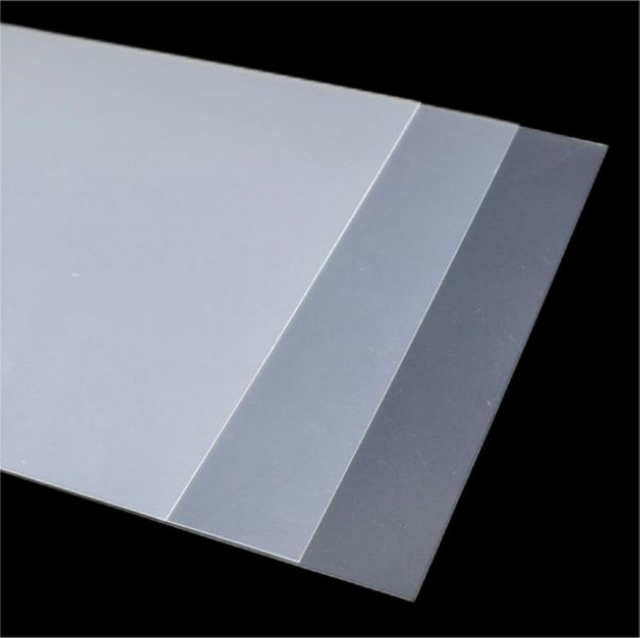
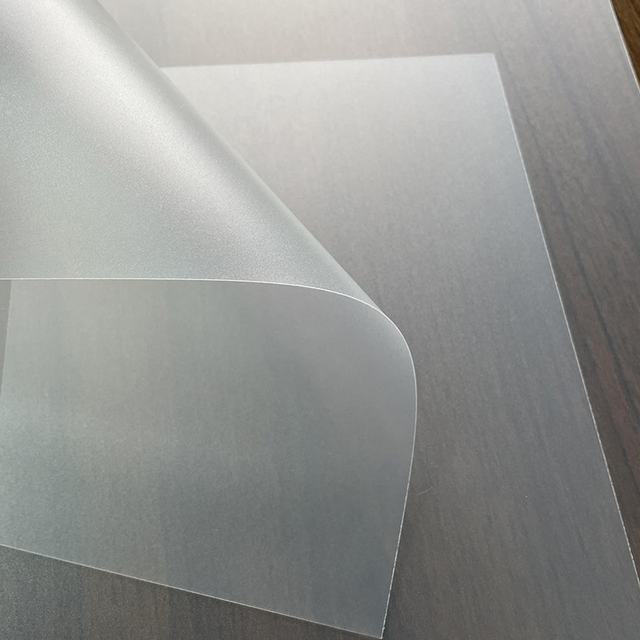
Clear Polypropylene Sheets for Thermoforming, Packaging and Printing
HSQY PLASTIC manufactures and supplies clear polypropylene sheets and high-clarity PP sheets for thermoforming, vacuum forming, packaging, printing, stationery, folders, dividers, blister-style packaging, retail displays and industrial converting.
Also known as transparent PP sheet, clear PP plastic sheet, high-clarity polypropylene sheet or transparent polypropylene rollstock, this material is engineered to provide better product visibility than conventional natural polypropylene while retaining PP's low density, moisture resistance, chemical resistance and processing flexibility.
HSQY's current clear PP product family includes featured 0.5 mm, 0.8 mm and 1 mm sheets, with a broader customized thickness range of approximately 0.08–3 mm depending on width, supply format, surface, processing method and production requirements.
Flat sheets, continuous rolls, slit rolls and custom-cut pieces can be supplied for different converting processes. Surface options include smooth, glossy, matte, frosted and customized textures, while printing treatment can include corona treatment, flame treatment or other application-specific surface preparation.
What Is a Clear Polypropylene Sheet?
A clear polypropylene sheet is an extruded PP plastic sheet formulated and processed to provide greater visual clarity than conventional natural polypropylene.
Standard natural PP normally has a translucent or slightly milky appearance. High-clarity PP uses an optimized resin formulation, processing conditions and surface design to reduce visible haze and improve product visibility.
However, the word "clear" should not automatically be interpreted as glass-like transparency. Actual optical appearance depends on resin grade, sheet thickness, crystallization, surface texture, haze, gloss and processing conditions.
Buyers with strict optical requirements should specify acceptable haze, gloss, light transmission and an approved visual sample rather than relying only on the terms "clear" or "transparent."
Natural PP vs. Clear PP vs. High-Clarity PP vs. Frosted PP
| PP Type | Visual Appearance | Typical Applications |
| Natural PP | Milky or translucent with visible haze | Industrial parts, dividers, folders and packaging where full visibility is unnecessary |
| Clear PP | Improved visibility and gloss while retaining some natural PP haze | Packaging, printed covers, stationery, formed trays and retail products |
| High-Clarity PP | Optimized for lower haze and better product visibility | Premium packaging, thermoformed products and visibility-focused applications |
| Frosted PP | Diffused, matte or textured translucent appearance | Folders, decorative packaging, privacy panels, dividers and premium covers |
Clear Polypropylene Sheet Specifications
| Product | Clear Polypropylene Sheet / High-Clarity PP Sheet |
| Material | Polypropylene / PP |
| Featured Thicknesses | 0.5 mm, 0.8 mm and 1 mm |
| Customized Thickness Range | Approximately 0.08–3 mm, subject to width, surface, supply format and production confirmation |
| Width | Customized according to thickness, extrusion capability and order specification |
| Length | Standard sheets, custom-cut lengths or continuous rolls |
| Supply Format | Flat sheets, rolls, slit rolls and custom-cut pieces |
| Appearance | Natural clear, high clarity, translucent, frosted and tinted clear |
| Surface Finish | Smooth, glossy, matte, frosted, twill or customized texture |
| Typical Density | Approximately 0.90–0.92 g/cm³ depending on resin and formulation |
| Printing Treatment | Untreated, corona-treated, flame-treated or application-specific treated surface |
| Processing | Thermoforming, vacuum forming, slitting, cutting, punching, die cutting, creasing, folding, welding and printing |
| Functional Options | Antistatic, conductive, anti-fog, UV-stabilized and other application-specific grades subject to technical confirmation |
| Main Applications | Packaging, thermoforming, printing, folders, stationery, blister-style packaging, trays, displays and industrial components |
0.5mm vs. 0.8mm vs. 1mm Clear PP Sheet
Sheet thickness changes flexibility, rigidity, forming behavior, finished-part weight and optical appearance.
| Thickness | General Characteristics | Typical Applications |
| 0.5 mm | Lightweight and relatively flexible | Folders, packaging windows, shallow trays, inserts, covers and lightweight displays |
| 0.8 mm | Balanced stiffness and flexibility | Thermoformed trays, packaging components, stationery and retail displays |
| 1 mm | Greater rigidity and structural support | Rigid inserts, stronger trays, protective panels and fabricated components |
The correct thickness also depends on panel dimensions, forming depth, stacking load, service temperature, product weight and the selected polypropylene formulation.
Clear PP Sheet for Thermoforming
Clear PP thermoforming sheet can be heated and formed into trays, inserts, boxes and other three-dimensional packaging or industrial components.
Thermoforming performance depends on resin grade, starting thickness, heating profile, mold geometry, draw depth, forming speed and cooling conditions.
For deep-draw products, buyers should provide the mold dimensions, cavity depth, starting sheet gauge and required minimum finished wall thickness before selecting the material.
Optical appearance should also be checked after forming because stretching, wall-thickness variation and surface replication can affect clarity and gloss.
Clear PP Sheet for Vacuum Forming
Vacuum forming uses negative pressure to pull heated PP sheet against a mold.
Clear polypropylene can be suitable for vacuum-formed packaging, trays, inserts and industrial components when the resin and forming conditions are matched to the part design.
Before mass production, evaluate mold definition, wall distribution, shrinkage, trimming, stacking and visual appearance using the actual production equipment.
Transparent PP Sheet for Packaging
Clear PP sheet is used in packaging applications where lightweight construction, moisture resistance, product visibility and converting flexibility are required.
Typical applications can include clear boxes, folding packages, product windows, thermoformed trays, inserts, sleeves, blister-style packs and reusable packaging components.
Packaging buyers should specify transparency, haze, surface gloss, folding method, sealing process, forming depth, product weight and storage conditions before choosing the final PP grade.
Clear PP Sheet for Food Packaging
Selected polypropylene formulations can be supplied for food-packaging projects, but food-contact compliance should be confirmed for the exact resin, additives, color and finished specification.
When requesting food-contact material, provide the destination market, applicable regulation, food type, contact duration, contact temperature and whether the package will be used for chilled, frozen, hot-fill or microwave applications.
Do not assume that every transparent PP grade has identical food-contact, microwave or hot-fill performance.
Clear PP Sheet for Printing
Polypropylene has relatively low surface energy, so successful printing requires the sheet surface, ink system and treatment level to be matched correctly.
Suitable clear PP sheets can be evaluated for screen printing, UV printing, offset printing and other printing processes after surface compatibility is confirmed.
Corona treatment, flame treatment or another surface preparation can be specified where improved ink adhesion is required.
For commercial printing projects, provide the printing method, ink system, required treatment side and target dyne level where applicable.
Clear PP Sheet for Folders, Binding Covers and Stationery
Thin clear, translucent, frosted and textured PP sheets are widely used for document covers, notebooks, loose-leaf dividers, folders, portfolios, index sheets and reusable stationery products.
PP combines low weight, moisture resistance and flexibility, making thin sheets suitable for scoring, folding, die cutting and repeated handling.
Frosted and twill surfaces can be selected where reduced glare, fingerprint concealment or a more decorative appearance is required.
Clear PP Sheet for Blister-Style Packaging
Transparent polypropylene can be thermoformed into blister-style and rigid display packaging for consumer products, hardware, stationery, cosmetics and other goods.
Material selection should consider forming depth, required visibility, sealing method, stiffness, product weight and whether the finished pack will require heat sealing, mechanical locking or another closure system.
Clear PP Sheet Roll for Automated Converting
Continuous clear polypropylene rollstock can be more suitable than flat sheets for automated thermoforming, printing, slitting, die cutting and packaging-converting lines.
Roll specifications should be matched to the processing machine, including roll width, roll diameter, core diameter, winding direction, roll weight, surface treatment and allowable splice requirements.
HSQY currently offers high-gloss clear PP roll products as well as matte and frosted polypropylene roll options.
Glossy vs. Matte vs. Frosted Clear PP Sheet
| Surface | Appearance | Typical Applications |
| High Gloss | Smooth, bright surface with maximum visual clarity for the selected grade | Packaging, product windows, printed covers and retail displays |
| Matte | Reduced glare and lower surface reflection | Folders, dividers, printed panels and premium packaging |
| Frosted | Diffused translucent appearance that partially obscures details | Stationery, privacy panels, decorative packaging and light-diffusing applications |
| Twill / Textured | Patterned tactile surface with decorative appearance | Binding covers, notebooks, dividers and branded stationery |
Clear PP Sheet vs. PET Sheet
| Feature | Clear PP | Clear PET |
| Typical Clarity | Clear to high clarity but typically retains more haze | Usually selected when very high transparency and gloss are priorities |
| Density | Lower, helping reduce material weight | Higher than PP |
| Chemical Resistance | Good resistance to many acids, alkalis and common chemicals | Application dependent |
| Folding / Living Hinge | Strong application fit when properly designed | Not normally selected for repeated living-hinge applications |
| Selection Priority | Lightweight construction, chemical resistance, folding and PP-specific performance | Maximum clarity, stiffness and premium transparent packaging appearance |
Clear PP Sheet vs. PVC Sheet
| Feature | Clear PP | Clear PVC |
| Density | Relatively low | Higher |
| Flexibility | Good flex and repeated-fold capability in suitable thin grades | Depends strongly on rigid or plasticized PVC formulation |
| Printing | Often requires controlled surface treatment | Printing characteristics depend on PVC formulation and surface |
| Material Selection | Useful where low density, PP chemistry and folding performance are important | Useful where PVC-specific clarity, rigidity or processing behavior is required |
Why Is Polypropylene Harder to Print Than Some Plastics?
Polypropylene naturally has relatively low surface energy, which can make ink, coating and adhesive bonding more difficult without suitable surface preparation.
Corona treatment is commonly used to temporarily increase surface energy before printing or bonding.
Because treatment level can decline during storage, buyers should confirm the required dyne level, treated side, production date and maximum acceptable storage period before printing.
Folding and Living Hinges in PP Sheet
One advantage of polypropylene in stationery and reusable packaging is its ability to form repeated-flex or living-hinge structures when the resin, thickness, hinge geometry and processing direction are properly designed.
Applications include document folders, reusable boxes, notebook covers, hinged packaging and closure components.
Repeated-fold life should be tested using the final product geometry rather than assumed from sheet material alone.
Heat, Hot-Fill and Microwave Requirements
Polypropylene is often selected for applications requiring higher heat capability than some general-purpose packaging plastics, but the exact usable temperature range is grade-specific.
Critical hot-fill, microwave, sterilization or elevated-temperature applications should define the actual food or product load, temperature, duration, wall thickness and mechanical loading.
Finished thermoformed parts should be tested under their real service cycle before production approval.
Cold and Frozen Applications
Low-temperature impact behavior depends on polypropylene grade, additives, sheet thickness and finished-part design.
Packaging intended for refrigerated or frozen use should therefore be tested at the required minimum temperature using the final thermoformed product.
Chemical Resistance of Clear Polypropylene
Polypropylene generally resists many diluted acids, alkalis, detergents and oils, making it useful for packaging and industrial applications exposed to moisture or common chemicals.
Chemical compatibility should still be confirmed using the actual chemical, concentration, temperature, exposure duration and mechanical stress.
UV and Outdoor Use
Standard clear PP sheet is generally intended for indoor or controlled applications.
Long-term sunlight exposure can affect color, clarity, surface appearance and mechanical performance unless an appropriate UV-stabilized grade is selected.
UV stabilization can improve outdoor durability but does not create an unlimited outdoor service life. Specify expected location, exposure duration and appearance requirements before choosing an outdoor PP grade.
Antistatic and Conductive Clear PP Options
Specialized static-control formulations can be evaluated for packaging or components used around electronic products.
"Antistatic," "static dissipative" and "conductive" refer to different electrical-performance ranges and should not be used interchangeably.
Buyers should specify target surface resistance, test standard, conditioning environment, transparency requirement and whether electrical performance must remain stable after thermoforming.
For dedicated static-control products, review our Antistatic PP Sheets.
Clear PP vs. Colored and Textured PP
Clear polypropylene is primarily selected when product visibility or light transmission is important. Other PP sheet categories serve different purchasing requirements.
How to Choose a Clear Polypropylene Sheet
1. Define the Required Clarity
Specify whether you need natural translucent PP, standard clear PP, high-clarity PP or a frosted translucent appearance.
2. Define Haze and Gloss Requirements
If appearance is critical, specify acceptable haze, gloss or light-transmission values together with an approved physical sample where possible.
3. Select the Thickness
HSQY features 0.5, 0.8 and 1 mm clear PP sheets, with customized products available from approximately 0.08–3 mm depending on specification.
4. Select Sheet or Roll Format
Flat sheets are useful for folders, printing and fabrication, while rollstock can improve efficiency on continuous thermoforming, printing and converting lines.
5. Select the Surface Finish
Specify smooth, high gloss, matte, frosted, twill or another required surface.
6. Define the Printing Requirements
Provide printing technology, ink type, treated side and required dyne level where applicable.
7. Define the Thermoforming Process
Provide mold dimensions, draw depth, processing equipment and required finished wall thickness.
8. Confirm Folding or Creasing Requirements
Stationery, boxes and reusable packaging should specify fold direction, score geometry and required repeated-fold performance.
9. Confirm Service Temperature
Specify chilled, frozen, ambient, hot-fill, microwave or other thermal conditions where relevant.
10. Confirm Regulatory Requirements
Food-contact, medical-packaging, electrical, UV, flame and other functional requirements should be identified before material approval.
11. Test a Sample
Evaluate clarity, haze, printing, folding, cutting or thermoforming performance using the actual production process before approving customized bulk material.
Recommended Quality Checks for Clear PP Sheet
Thickness and thickness tolerance
Sheet width, length and roll width
Transparency and overall visual appearance
Haze and light transmission where specified
Surface gloss
Crystal points, gels and visual impurities
Surface scratches and defects
Flatness or roll winding quality
Corona treatment and dyne level where specified
Ink adhesion
Die-cutting edge quality
Folding and repeated-flex performance
Thermoforming shrinkage
Wall-thickness distribution after forming
Functional properties where specified
Custom Clear PP Sheet Manufacturing
HSQY supports customized clear polypropylene projects for thermoforming companies, packaging converters, printers, stationery manufacturers, distributors and industrial buyers.
Custom options can include:
Custom thickness
Custom width and length
Flat sheets
Continuous rolls
Slit rolls
Custom-cut pieces
Natural clear and high-clarity grades
Translucent and tinted clear grades
High-gloss surface
Matte and frosted surfaces
Twill and custom embossing
Corona treatment
Application-specific thermoforming grades
Antistatic and conductive options
Anti-fog options
UV-stabilized options
Food-contact formulations subject to regulatory confirmation
Custom protective film and export packaging
Packing and International Shipping
Clear PP sheets and rolls can be packed according to thickness, surface, dimensions and transportation requirements.
Packaging options can include PE film, kraft paper, cartons, roll wrapping and palletized export packaging.
Scratch-sensitive high-gloss material can also be evaluated with protective film where required.
For rollstock, specify roll width, core diameter, roll weight, roll diameter, winding direction and unloading limitations before production.
Why Choose HSQY as Your Clear PP Sheet Manufacturer?
Multiple Clarity Levels: HSQY supplies natural translucent, clear, high-clarity and frosted polypropylene products for different visual requirements.
0.08–3 mm Customized Range: Featured products include 0.5, 0.8 and 1 mm sheets together with a broader customized thickness range.
Sheet and Roll Supply: Flat sheets, continuous rolls, slit rolls and cut pieces can support different production lines.
Thermoforming Support: Material can be evaluated for vacuum forming, shallow forming and other thermoforming applications according to the required part design.
Printing and Converting Options: Corona treatment, cutting, slitting, punching, die cutting, folding and printing requirements can be incorporated into the purchasing specification.
Multiple Surface Finishes: Smooth, glossy, matte, frosted and textured appearances are available according to product specification.
Functional Grades: Antistatic, conductive, anti-fog, UV-stabilized and other application-specific PP formulations can be discussed where required.
Broader PP Sheet Portfolio: HSQY also supplies PP Sheets, Colored PP Sheets, Textured PP Sheets and specialized functional PP products.
Information Needed for a Clear PP Sheet Quote
| Application | Thermoforming, packaging, printing, stationery, blister-style packaging, display or other application |
| Clarity | Natural translucent, clear, high clarity, frosted or approved sample |
| Optical Requirement | Target haze, gloss or light transmission where specified |
| Thickness | Required thickness and tolerance |
| Dimensions | Sheet width × length, roll width or finished cut-piece dimensions |
| Supply Format | Sheet, roll, slit roll or cut piece |
| Surface | Glossy, smooth, matte, frosted, twill or custom texture |
| Printing | Printing method, ink system, treated side and required dyne level |
| Thermoforming | Mold dimensions, forming depth, machine width and required finished wall thickness |
| Thermal Conditions | Ambient, chilled, frozen, hot-fill, microwave or other service conditions |
| Functional Requirements | Antistatic, conductive, anti-fog, UV-stabilized or other special requirement |
| Regulatory Requirement | Food-contact, medical-packaging, electrical or other applicable requirement |
| Quantity | Trial quantity, regular order quantity and estimated annual demand |
| Destination | Destination country and port |
Clear Polypropylene Sheet FAQ
What is a clear polypropylene sheet?
Clear polypropylene sheet is an extruded PP material optimized to provide better visibility and lower haze than conventional natural polypropylene.
Is polypropylene naturally transparent?
Natural polypropylene is normally translucent rather than glass-clear. High-clarity grades use optimized material formulation and processing to improve transparency.
What is the difference between clear PP and high-clarity PP?
Clear PP provides improved visibility compared with natural PP, while high-clarity PP is optimized for lower haze and stronger product visibility. Exact performance should be confirmed using optical data or samples.
Is clear PP as transparent as PET?
Usually not. PET is commonly selected when very high transparency and glass-like product visibility are the primary requirements. High-clarity PP provides improved transparency while retaining PP-specific advantages such as low density and good chemical resistance.
What thickness clear PP sheet does HSQY supply?
Featured HSQY thicknesses include 0.5 mm, 0.8 mm and 1 mm. A broader customized range of approximately 0.08–3 mm is available depending on width, surface and supply format.
Does HSQY supply clear PP sheet rolls?
Yes. Clear PP can be supplied as flat sheets, continuous rolls, slit rolls and custom-cut pieces according to production requirements.
Can clear polypropylene sheet be thermoformed?
Yes. Suitable PP grades can be thermoformed into trays, inserts, packaging components and other formed parts. The correct grade and process settings depend on part geometry and forming depth.
Can clear PP sheet be vacuum formed?
Yes. HSQY supplies clear PP products for vacuum-forming applications. Forming performance should be tested using the actual mold, sheet thickness and processing equipment.
Can clear PP sheet be printed?
Yes. Polypropylene can be printed when the surface and ink system are correctly matched. Corona or another treatment may be required to improve ink adhesion.
Why does PP need corona treatment?
Polypropylene has relatively low surface energy. Corona treatment increases surface energy so compatible inks, coatings or adhesives can bond more effectively.
Can clear PP sheet be folded?
Yes. Suitable thin PP sheets can be scored, creased and folded for folders, boxes, covers and reusable packaging. Repeated-fold performance depends on grade, thickness and hinge design.
What is a PP living hinge?
A living hinge is a thin flexible section connecting two parts of a PP component. Properly designed polypropylene hinges can repeatedly flex without requiring a separate mechanical hinge.
Is clear PP sheet suitable for food packaging?
Selected grades can be used for food-packaging applications, but food-contact compliance must be confirmed for the exact material formulation and destination-market regulation.
Can clear PP sheet be microwaved?
Microwave suitability is grade- and package-specific. The final thermoformed container should be tested using the actual food load, temperature, microwave power and heating duration.
Can clear PP sheet be used for hot-fill packaging?
Selected PP grades can be evaluated for hot-fill applications, but suitability depends on fill temperature, duration, container geometry and mechanical load.
Is clear PP suitable for frozen packaging?
Frozen applications require grade-specific low-temperature impact testing. Provide the required minimum temperature and finished-package design before material selection.
Is clear polypropylene waterproof?
Polypropylene absorbs very little moisture and is commonly used in moisture-resistant applications, but the performance of a finished package also depends on seals, joints, openings and overall product design.
Is clear polypropylene chemically resistant?
PP resists many common acids, alkalis, oils and detergents, but compatibility should be tested using the actual chemical, concentration, temperature and exposure time.
Can clear PP be used outdoors?
Standard clear PP is primarily intended for indoor or controlled applications. Long-term outdoor use should specify a suitable UV-stabilized grade.
Can clear PP sheet be antistatic?
Application-specific antistatic or conductive PP formulations can be evaluated. Required electrical resistance and transparency should be specified before material selection.
Can HSQY make frosted clear polypropylene sheets?
Yes. HSQY currently supplies frosted clear PP with matte/matte, matte/smooth and customized textured surfaces.
Can HSQY make twill clear PP sheets?
Yes. Twill and other textured PP products are currently included in HSQY's clear polypropylene product portfolio.
Can the transparency of PP sheet be customized?
Different clarity levels can be evaluated according to resin formulation, thickness and surface. For strict visual requirements, provide target haze, gloss or an approved physical sample.
Can HSQY cut clear PP sheet to size?
Custom-cut pieces can be discussed according to thickness, dimensions, tolerance, processing method and order quantity.
Can I request a clear PP sample?
Available samples can be discussed for checking clarity, haze, gloss, surface, printing, folding and thermoforming performance before bulk ordering.
What information should I provide for a clear PP sheet quotation?
Provide application, thickness, dimensions, sheet or roll format, transparency requirement, surface, printing or thermoforming process, functional requirements, quantity and destination.
Request a Clear Polypropylene Sheet Quote
Looking for a reliable clear polypropylene sheet manufacturer, transparent PP sheet supplier or custom high-clarity polypropylene rollstock for thermoforming, packaging or printing?
Send HSQY your required thickness, sheet or roll dimensions, target clarity, surface finish, processing method and estimated purchasing quantity. For optical applications, include target haze or an existing sample. For printing, include ink and corona-treatment requirements. For thermoforming, include mold dimensions and forming depth.