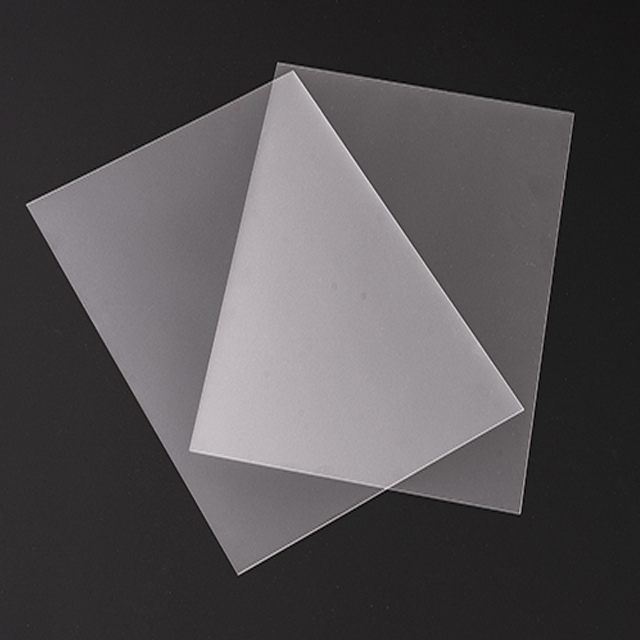
Clear Polycarbonate Film Manufacturer & Supplier
HSQY Plastic manufactures and supplies clear polycarbonate film for graphic overlays, membrane switches, instrument panels, nameplates, labels, electronic displays, in-mold decoration, printing, die cutting, thermoforming and other precision industrial applications.
Also known as clear PC film, transparent polycarbonate film or polycarbonate film roll, this engineering thermoplastic combines high transparency, impact resistance, dimensional stability, heat resistance and good secondary-processing performance.
HSQY supplies transparent polycarbonate film in multiple thicknesses, widths and surface finishes including polished, glossy, fine matte, matte, velvet/textured and selected hard-coated options. Current clear-film products include thicknesses from approximately 0.125 mm to 1.0 mm, with widths up to approximately 1220 mm for selected grades.
Standard clear PC film, optical-grade film, UV-resistant film, flame-retardant film and hard-coated film have different performance specifications. Tell HSQY your application, thickness, optical requirements, printing method, surface finish and functional requirements so the correct grade can be selected.
What Is Clear Polycarbonate Film?
Clear polycarbonate film is a thin transparent film made from polycarbonate, a high-performance engineering thermoplastic known for its toughness, thermal stability and dimensional stability.
Unlike thick solid polycarbonate panels used for roofing and glazing, PC film is generally supplied in relatively thin gauges for printing, forming, die cutting, lamination, insulation and precision component production.
Clear PC film can provide high light transmission while maintaining significantly greater impact resistance than many conventional transparent plastics. Depending on grade and surface, it can also provide excellent printing registration, heat resistance and dimensional stability.
These properties make polycarbonate film particularly useful for electronics, automotive interiors, industrial graphics, membrane switches, appliance controls, identification products and formed decorative components.
Clear Polycarbonate Film Specifications
HSQY supplies multiple clear PC film grades. Final values depend on thickness, resin, surface finish and functional specification. The following table summarizes common current options.
| Specification | Typical HSQY Options |
| Material | Polycarbonate / PC |
| Common Thicknesses | 0.125 / 0.20 / 0.25 / 0.375 / 0.50 / 0.80 / 1.00 mm |
| Custom Thickness | Available according to grade and production capability |
| Maximum Width | Up to approximately 1220 mm for selected clear-film grades |
| Supply Format | Rolls, slit rolls, sheets and customized cut sizes |
| Light Transmission | Approximately 89%–92% for suitable transparent grades depending on thickness and surface |
| Surface Finish | Polished, glossy, fine matte, matte, velvet/textured and selected specialty surfaces |
| Hard Coating | Available for selected scratch-, abrasion- or chemical-resistant grades |
| Color | Clear and selected transparent tinted grades |
| Printing | Screen, offset, UV and other compatible printing processes depending on grade |
| Processing | Die cutting, punching, embossing, bending, thermoforming, lamination and selected forming processes |
| Typical MOQ | Approximately 1000 kg for many standard specifications; customized grades may differ |
Optical properties, thickness tolerance, surface roughness, flame rating, UV resistance, hard-coat performance and electrical properties should always be confirmed against the exact PC film grade rather than assumed from the general material name.
Key Properties of Clear Polycarbonate Film
High Transparency
Suitable transparent PC films can provide approximately 89%–92% light transmission, making them useful for graphic overlays, displays, transparent windows and backlit components.
High Impact Resistance
Polycarbonate is valued for its toughness and impact resistance. This can provide greater durability than more brittle transparent materials in industrial control panels, overlays, electronic products and formed components.
Dimensional Stability
Good dimensional stability is especially important in multi-layer printing, die-cut components, membrane switches and in-mold decoration where printed graphics and mechanical features must remain accurately registered.
Heat Resistance
Polycarbonate offers higher thermal performance than many common packaging plastics, making it suitable for selected automotive, appliance, electronics and industrial graphics applications exposed to elevated temperatures.
Good Printability
Selected clear PC films are designed for graphic printing and can support compatible solvent-based, water-based, UV-curing and other ink systems. Printing performance should be confirmed using the exact film surface and production process.
Electrical Insulation
Polycarbonate can provide useful electrical insulation properties, making selected grades suitable for insulating components, battery applications, electronics and appliance assemblies where electrical performance is required.
Need PC film for a membrane switch, overlay or control panel?
Send HSQY your thickness, drawing, printing process, surface requirement, operating temperature and annual consumption. We can help evaluate a suitable clear polycarbonate film grade.
Get Technical Recommendation Applications of Clear Polycarbonate Film
Graphic Overlays
Clear polycarbonate film is widely used as the base material for printed graphic overlays on industrial machines, appliances, control equipment and electronic products. Graphics can be reverse printed to help protect ink beneath the transparent film.
Membrane Switches
Polycarbonate film provides a combination of printing compatibility, dimensional stability, toughness and embossing capability for membrane-switch overlays, keypads and human-machine interfaces.
Instrument Panels and Control Panels
Transparent or textured PC films can be used for automotive dashboards, appliance panels, industrial control panels and electronic display interfaces where printed graphics and durability are required.
Nameplates and Industrial Labels
PC film can be printed and die cut into durable nameplates, warning labels, equipment labels and branded industrial graphics.
In-Mold Decoration and In-Mold Electronics
Suitable clear PC film can be printed, formed and integrated into molded components for appliance panels, automotive interiors, consumer electronics and decorative components. Precise dimensional stability is particularly important for print-to-form registration.
Electronic Displays
Clear PC films can be used in selected display windows, protective overlays, communication devices and electronic interfaces. Projects requiring very low haze or tightly controlled optical performance should use a dedicated optical-grade PC film.
ID Cards and Security Cards
Thin polycarbonate films can be used as card layers, overlays and printable substrates in selected identification and security-card constructions.
Electrical Insulation Components
Selected PC film grades can be die cut into insulating barriers, spacers and protective components for batteries, electrical equipment and electronic assemblies.
Clear PC Film vs Solid Polycarbonate Sheet
Clear polycarbonate film and solid polycarbonate sheet use the same polymer family but normally serve different applications.
| Comparison | Polycarbonate Film | Solid Polycarbonate Sheet |
| Typical Thickness | Thin gauges, often below approximately 1 mm | Usually thicker structural sheet |
| Supply Form | Rolls or thin sheets | Flat sheets or panels |
| Main Processing | Printing, die cutting, embossing, forming and lamination | Saw cutting, drilling, routing, bending and fabrication |
| Typical Applications | Overlays, switches, labels, electronics, IMD and precision components | Machine guards, glazing, roofing, partitions and structural panels |
For roofing, skylights, large glazing panels and structural safety guards, buyers should normally review HSQY's solid polycarbonate sheet range rather than this thin-film category.
Standard Clear Film vs Optical-Grade PC Film
| Requirement | General Clear PC Film | Optical-Grade PC Film |
| Primary Priority | General transparency and industrial conversion | Tightly controlled optical performance |
| Haze | Depends on surface and general grade | Lower and more tightly specified for suitable optical grades |
| Surface Quality | Suitable for graphics and industrial use | Higher requirements for defects, distortion and optical consistency |
| Typical Applications | Graphic overlays, nameplates, switches and formed parts | Displays, optical windows and precision light-management applications |
If your project has a defined haze, optical distortion, birefringence, light-transmission or display requirement, specify those values in your RFQ and request an optical-grade material rather than relying only on the word “clear.”
Clear PC Film Surface Finishes
| Surface | Main Characteristics | Typical Application |
| Polished / Polished | High-gloss clear surfaces on both sides | Display windows, transparent graphics, IMD and clear components |
| Polished / Fine Matte | Clear polished side plus lower-glare surface | Overlays, automotive interiors and appliance controls |
| Polished / Matte | Reduced reflection and improved tactile appearance | Membrane switches and industrial graphics |
| Velvet / Textured | Textured appearance that can help hide minor wear and reduce glare | Control panels, overlays, labels and backlit interfaces |
| Hard-Coated | Enhanced surface abrasion, scratch or chemical resistance depending on coating | High-touch interfaces, protective windows and demanding industrial surfaces |
Printing on Clear Polycarbonate Film
Printing performance is one of the major reasons polycarbonate film is widely used for overlays and industrial graphics.
Depending on film grade and surface, compatible printing methods may include:
Screen printing
UV printing
Offset printing on suitable grades
Solvent-based ink systems
Water-based ink systems on compatible surfaces
Reverse or second-surface printing
Multi-layer graphic printing
Selected digital-printing systems
Reverse printing is commonly useful for graphic overlays because the printed ink is positioned behind the transparent PC layer, helping protect graphics from direct abrasion during use.
Always test ink adhesion, drying or curing, color reproduction, layer registration and post-forming performance with the actual PC film grade before approving commercial production.
Die Cutting, Embossing and Forming
Clear polycarbonate film supports multiple secondary conversion processes used by industrial graphics and electronics manufacturers.
Die Cutting: Used to produce overlay profiles, windows, labels, holes and precision components.
Punching: Suitable for mounting holes and component features.
Embossing: Used to create tactile keys, domes, raised symbols and decorative effects.
Thermoforming: Selected grades can be heated and formed into three-dimensional components.
Hydroforming: Can be used with suitable grades for detailed formed graphic components.
Bending: Thin film can be formed according to material thickness and design radius.
Lamination: PC film can be incorporated into multi-layer structures for selected applications.
Polycarbonate Film for Membrane Switches
A membrane switch overlay must combine visual graphics with repeatable mechanical performance. Polycarbonate film is frequently selected because it can support printing, embossing, die cutting and repeated user interaction.
Buyers should define:
Film thickness
Gloss, matte or textured surface
Required transparency or display windows
Printing system
Embossed-key geometry
Die-cut tolerance
Operating temperature
Chemical-cleaning exposure
Required abrasion or scratch resistance
Required flame rating if applicable
Replacing LEXAN™, Makrofol® or another PC film?
Send HSQY the current material code or data sheet together with thickness, surface, optical requirements, printing process and annual volume. We can review suitable HSQY alternatives for testing.
Request Comparable PC Film Standard, UV, Flame-Retardant and Hard-Coated PC Film
Not every transparent polycarbonate film has the same functional performance. Selecting the correct grade is especially important for outdoor, electrical and high-touch applications.
| Grade | Main Purpose | Buyer Should Specify |
| Standard Clear PC Film | General graphics, printing, overlays and industrial conversion | Thickness, transparency and surface finish |
| UV-Resistant PC Film | Applications exposed to UV radiation or outdoor environments | Exposure conditions, UV test and expected service requirement |
| Flame-Retardant PC Film | Electrical, electronics and transportation applications requiring defined flame performance | Required UL94 or other specific standard and thickness |
| Hard-Coated PC Film | Higher scratch, abrasion or chemical resistance | Abrasion test, chemical exposure and forming requirements |
| Optical-Grade PC Film | Displays and precision transparent components | Transmission, haze and optical-quality requirements |
Clear Polycarbonate Film vs PET Film
| Selection Factor | Polycarbonate Film | PET Film |
| Impact Toughness | Very high | Good, depending on PET grade |
| Heat Performance | Strong engineering-plastic performance | Depends strongly on PET film type and orientation |
| Embossing / Forming | Widely used for overlays and formed graphics | Depends on specific PET construction |
| Typical Use | Membrane switches, IMD, control panels and high-performance graphics | Labels, insulation, packaging and industrial film applications |
| Final Selection | Compare temperature, impact, flex life, print requirements, forming process, thickness and cost using the actual end-use conditions. |
Quality Control for Clear Polycarbonate Film
B2B buyers should define measurable acceptance criteria, especially when PC film is used for printing, overlays or precision die-cut components.
| Quality Item | Why It Matters | Buyer Requirement |
| Thickness | Affects stiffness, forming and die cutting | Nominal thickness and tolerance |
| Light Transmission | Critical for display and transparent-window applications | Define minimum transmission when required |
| Haze | Influences optical clarity | Specify maximum haze for optical applications |
| Surface Texture | Affects appearance, glare and printing | Approved texture or surface sample |
| Surface Defects | Scratches and contamination are highly visible on clear film | Define acceptable visual defects |
| Dimensional Stability | Critical for print registration and formed graphics | Define processing temperature and registration tolerance |
| Print Adhesion | Prevents printed graphics from peeling or scratching | Test actual ink and curing system |
| Functional Grade | UV, FR and coating properties vary between grades | Specify required test standard and performance level |
How to Choose the Right Clear Polycarbonate Film
Define the application: Graphic overlay, membrane switch, instrument panel, display, label, insulation or IMD component.
Select thickness: Specify the current gauge or required stiffness and forming behavior.
Define optical requirements: Light transmission, haze and optical distortion where relevant.
Select surface finish: Polished, gloss, fine matte, matte or textured.
Confirm printing method: Provide the ink system and curing method.
Confirm secondary processing: Die cutting, embossing, thermoforming, bending or lamination.
Specify operating environment: Temperature, humidity, chemicals, cleaning agents and outdoor exposure.
Define functional requirements: UV resistance, flame rating, hard coating, electrical insulation or optical grade.
Specify roll dimensions: Width, core, roll diameter and roll weight where roll-fed processing is used.
Run a production trial: Test printing, forming, die cutting and finished-part performance before bulk approval.
Custom Clear Polycarbonate Film Options
| Customization | Information to Provide |
| Thickness | Nominal thickness and tolerance |
| Roll Width | Required web width and slit tolerance |
| Sheet Size | Length, width and dimensional tolerance |
| Surface | Gloss, polished, fine matte, matte, velvet or another texture |
| Optical Performance | Transmission, haze and optical-quality requirements |
| Hard Coating | Scratch, abrasion and chemical-resistance target |
| Flame Performance | Required UL94 or another defined test standard at specified thickness |
| UV Performance | Indoor/outdoor exposure and required weathering test |
| Printing | Ink type, print method and required side |
| Packing | Roll, sheet, pallet and protective-film requirements |
Packaging and Export Supply
Clear PC film requires clean handling because scratches, dust and roll damage can affect printing and final appearance.
Protective film for selected surfaces
PE wrapping
Kraft-paper protection
Roll or sheet packaging
Customized slit rolls
Edge and corner protection
Palletized export packing
Customized roll weight
Batch and roll identification
Why Choose HSQY as Your Clear Polycarbonate Film Supplier?
Multiple PC Film Grades: Clear, optical, flame-retardant, UV-resistant, hard-coated, light-diffusing and tinted options.
Custom Thickness: Multiple thin-film gauges for printing and industrial conversion.
Custom Width: Roll widths and slit rolls can be matched to customer equipment.
Multiple Surface Finishes: Gloss, polished, matte, fine matte and textured options.
Printing Applications: Suitable grades for graphic overlays, labels, cards and industrial panels.
Secondary Processing: Die cutting, embossing, forming, bending and lamination can be evaluated.
Technical Data Support: HSQY provides multiple polycarbonate film data sheets for application-specific grades.
B2B Export Supply: Support for electronics manufacturers, printers, converters, automotive suppliers and distributors.
Need clear PC film for a new OEM project?
Send us the drawing, current material code, required thickness, surface finish, printing process and annual volume. HSQY can recommend a suitable film and provide sample information for evaluation.
Request PC Film Sample & Pricing What Information Should Be Included in Your RFQ?
Finished application
PC film thickness and tolerance
Roll width or sheet dimensions
Clear or transparent tinted requirement
Gloss, polished, fine matte, matte or textured surface
Light-transmission requirement
Maximum haze if applicable
Printing method and ink system
Die cutting, embossing or forming process
Operating temperature
Chemical or cleaning-agent exposure
UV resistance if required
Flame rating if required
Hard-coat or scratch-resistance requirement
Trial quantity
Monthly or annual demand
Destination country or port
Packing requirements
Frequently Asked Questions About Clear Polycarbonate Film
What is clear polycarbonate film used for?
Clear polycarbonate film is commonly used for graphic overlays, membrane switches, industrial labels, nameplates, instrument panels, appliance controls, electronic displays, identification cards, in-mold decoration and electrical insulation components.
What thicknesses of clear PC film are available?
Current HSQY clear PC film products include approximately 0.125, 0.20, 0.25, 0.375, 0.50, 0.80 and 1.00 mm. Other specifications can be discussed depending on grade and order requirements.
How transparent is clear polycarbonate film?
Suitable transparent polycarbonate films can provide approximately 89%–92% light transmission. Actual values depend on thickness, resin grade and surface texture. Optical applications should also specify haze and other optical criteria.
Is clear PC film the same as optical-grade PC film?
Not necessarily. Standard clear film provides general transparency, while optical-grade film is designed for applications requiring more tightly controlled haze, light transmission, surface quality and optical distortion.
Can polycarbonate film be printed?
Yes. Suitable grades support screen printing and other compatible solvent-based, water-based, UV or IR-cured printing systems. Ink adhesion should be tested on the selected film and surface before mass production.
Can PC film be reverse printed?
Yes. Reverse or second-surface printing is commonly used for graphic overlays because the transparent PC layer can protect the printed image from direct contact and abrasion.
Can clear PC film be die cut?
Yes. Polycarbonate film is widely converted by die cutting and punching for overlays, labels, switches and precision components. Tool design should be optimized for the selected film thickness.
Can polycarbonate film be embossed?
Yes. Suitable PC film can be embossed to produce tactile keys, switch domes, raised symbols and decorative features for membrane switches and control-panel applications.
Can clear polycarbonate film be thermoformed?
Yes. Suitable grades can be thermoformed for IMD, automotive, appliance and electronic components. Forming temperature and dimensional compensation should be validated using the actual part design and film grade.
Is all clear polycarbonate film UV resistant?
No. UV performance depends on the resin formulation, stabilizers or protective coating. Outdoor or long-term UV applications should specify a dedicated UV-resistant PC film grade.
Is all polycarbonate film flame retardant?
No. Flame performance varies by grade and thickness. Projects requiring UL94 V-0, V-2 or another defined classification should use a dedicated flame-retardant PC film and confirm the rating at the specified thickness.
Is standard clear PC film scratch resistant?
Polycarbonate provides good toughness but an uncoated surface can still scratch. Applications requiring higher abrasion, scratch or chemical resistance should use an appropriate hard-coated polycarbonate film.
What surface finishes are available?
Options include polished, high-gloss, fine matte, matte, velvet/textured and selected hard-coated surfaces. Different combinations can be supplied on the two sides depending on the product grade.
Is PC film suitable for membrane switches?
Yes. Polycarbonate film is widely used for membrane-switch overlays because it combines printing capability, toughness, dimensional stability, embossing performance and multiple surface finishes.
Is polycarbonate film suitable for outdoor applications?
Outdoor use requires a suitable UV- and weather-resistant grade. Standard clear PC film should not automatically be described as long-term weatherproof without a defined UV stabilization system and weathering requirement.
Can HSQY supply PC film in rolls?
Yes. HSQY supplies PC film in rolls as well as sheets and customized slit rolls. Roll width, thickness, core and packing configuration can be discussed according to the customer's converting equipment.
Can HSQY provide samples before bulk production?
Sample evaluation can be discussed. Buyers should test optical appearance, printing, die cutting, embossing, forming and finished-part performance before approving commercial production.
What information should I provide for a quotation?
Please provide the application, thickness, roll width or sheet size, optical requirements, surface finish, printing process, forming or die-cutting method, operating temperature, UV or flame-rating requirements, hard-coat requirement, quantity and destination country.
Request Clear Polycarbonate Film Samples and Pricing
HSQY supplies clear PC film to membrane-switch manufacturers, graphic-overlay converters, printers, electronics manufacturers, automotive suppliers, appliance manufacturers, label converters and industrial distributors.
Whether you require polished clear PC film for printing, matte film for control panels, textured film for graphic overlays or an application-specific UV, FR, optical or hard-coated grade, HSQY can review your technical requirements.
Send your drawing, existing film specification or application requirements to request technical data, sample information and factory pricing.