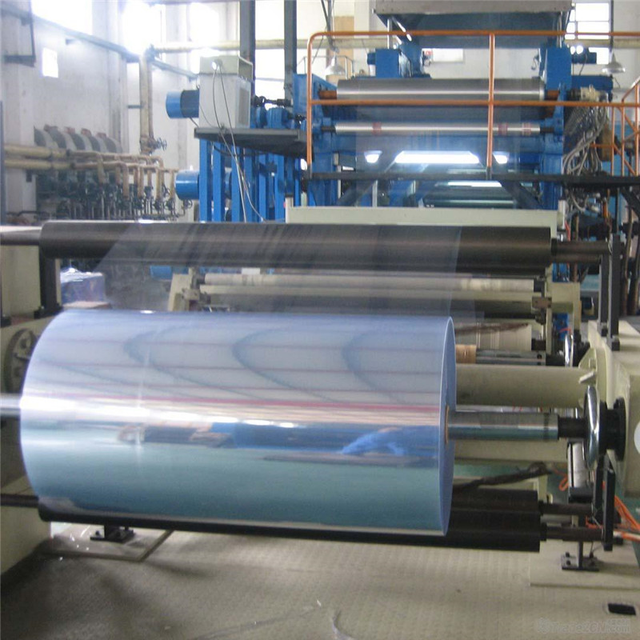
Heat-Resistant CPET Sheet for Ovenable Food Packaging
HSQY PLASTIC manufactures and supplies heat-resistant CPET sheet and rollstock for thermoforming ovenable food trays, microwave meal trays, frozen ready-meal packaging, airline food containers, bakery trays and other high-temperature food-packaging applications.
CPET stands for crystalline polyethylene terephthalate. Unlike conventional transparent APET used primarily for chilled packaging, CPET is engineered to develop a controlled crystalline structure that provides greater dimensional stability when the finished tray is exposed to elevated temperatures.
HSQY's current heat-resistant CPET product range includes approximately 0.12–3.0 mm thickness, roll widths from approximately 80–1300 mm, black and white standard colors, and customized sheet, roll, color and surface options. Final temperature performance depends on the exact CPET formulation, crystallinity, sheet thickness, tray geometry, thermoforming process, food load and heating cycle.
What Is Heat-Resistant CPET Sheet?
Heat-resistant CPET sheet is a PET-based thermoforming material developed for applications that require greater thermal stability than conventional amorphous PET.
During CPET manufacturing and thermoforming, crystallization is carefully controlled. The crystalline regions help the finished tray maintain its geometry when exposed to cooking or reheating temperatures that would normally cause standard transparent APET packaging to soften or distort.
The material is also commonly searched as high-temperature PET sheet, ovenable PET sheet, CPET plastic sheet, crystalline PET sheet, C-PET sheet or CPET thermoforming rollstock.
High-Temperature PET Is Not One Single Material
Buyers should distinguish between different products marketed as "high-temperature PET."
| Material Type | Appearance | Typical Heat Requirement | Typical Application |
| CPET | Normally opaque or translucent; commonly black or white | Designed for microwave and conventional-oven food packaging after validation | Ready meals, baking trays, airline meals and frozen ovenable food trays |
| Standard APET | Highly transparent | Primarily ambient, chilled and lower-temperature packaging | Fruit trays, bakery clamshells, cold-food packaging and blister packs |
| PETG | Clear and glossy | Good thermoforming performance but not automatically conventional-oven suitable | Displays, clear formed parts and specialty packaging |
| Modified Clear Heat-Resistant PET | Transparent | Application-specific elevated-temperature dimensional stability | Electronics trays and industrial thermoforming applications |
HSQY's primary products in this category are CPET sheets for high-temperature food packaging. Customers requiring transparent high-temperature PET for electronics or another industrial application should provide the required heat-deflection temperature, transparency, ESD requirement and operating conditions separately.
Heat-Resistant CPET Sheet Specifications
| Product | Heat-Resistant CPET Thermoforming Sheet |
| Alternative Names | CPET Sheet, Crystalline PET Sheet, Ovenable PET Sheet, High-Temperature PET Sheet, C-PET Sheet |
| Material | Crystalline Polyethylene Terephthalate / CPET |
| Thickness | Approximately 0.12–3.0 mm |
| Roll Width | Approximately 80–1300 mm |
| Standard Sheet Sizes | 700 × 1000 mm, 915 × 1830 mm, 1000 × 2000 mm, 1220 × 2440 mm and custom sizes |
| Supply Form | Master rolls, slit rolls, flat sheets and custom-cut sheets |
| Standard Colors | Black and white |
| Custom Colors | Gold, silver, cream, gray and other project-specific colors subject to formulation and MOQ |
| Surface | Glossy, matte, fine texture, embossed, coated or custom finish |
| Featured Heat Performance | Up to approximately 350°F / 177°C for the current featured HSQY grade under validated heating conditions |
| Heating Methods | Microwave and conventional-oven applications after finished-tray validation |
| Processing | Thermoforming, vacuum forming, pressure forming, plug-assisted forming, cutting and trimming |
| Typical Applications | Ovenable trays, ready meals, airline meal trays, bakery trays, frozen meals and catering packaging |
| MOQ | Approximately 1,000 kg for current standard product; final MOQ depends on color and specification |
CPET Temperature Performance
There is no single universal maximum temperature that applies to every CPET sheet and every finished tray.
Heat resistance is influenced by resin formulation, crystallinity, sheet gauge, finished wall thickness, tray geometry, food moisture and oil content, heating duration, oven type and whether the tray is mechanically supported during cooking.
| Condition | Typical Application | Recommended Validation |
| Frozen Storage | Frozen ready meals and cold-chain distribution | Low-temperature impact, drop, stacking, transport and seal tests |
| Refrigerated Storage | Chilled prepared meals and catering | Seal integrity, condensation, transport and shelf-life testing |
| Microwave Reheating | Individual ready meals and prepared food | Microwave wattage, heating time, food load, venting and hot-spot testing |
| Conventional Oven up to Approximately 350°F / 177°C | Current featured HSQY CPET grade | Oven temperature, cooking duration, tray load and deformation testing |
| Higher-Temperature Requirement | Special freezer-to-oven or dual-ovenable applications | Grade-specific technical evaluation and complete finished-package validation |
CPET vs. APET, PETG and PP
| Material | Appearance | Heat Performance | Typical Applications |
| CPET | Normally opaque or translucent | Developed for higher-temperature microwave and conventional-oven applications | Ovenable meals, frozen meals, airline meals and bakery trays |
| APET | High clarity | Better suited to ambient, chilled and lower-temperature applications | Fruit packaging, bakery clamshells, trays and blisters |
| PETG | Clear and glossy | Good forming behavior but not automatically conventional-oven compatible | Displays, clear formed covers and specialty packaging |
| PP | Natural translucent or colored | Common microwave-food material; conventional-oven use requires a specialized system | Microwave trays, takeaway containers and prepared meals |
Why Crystallinity Matters in CPET
The difference between ordinary APET and high-temperature CPET is strongly related to molecular structure and crystallization.
Standard transparent APET is largely amorphous. This contributes to its clarity but limits dimensional stability at elevated temperatures.
CPET formulations use crystallization-promoting systems and controlled processing conditions. During thermoforming, the material is heated and held under appropriate conditions so sufficient crystallinity develops in the finished tray.
Insufficient or uneven crystallization can result in inconsistent tray stiffness, dimensional stability and heat performance. This is why CPET material, mold temperature, heating time and cooling conditions must be engineered together.
CPET Sheet for Ovenable Ready-Meal Trays
Ready-meal manufacturers use CPET because one tray can potentially move through frozen or chilled storage and then into a validated reheating or cooking process.
Typical ready-meal applications include pasta, rice meals, meat dishes, vegetables, casseroles, frozen dinners and prepared catering meals.
Customers requiring finished meal trays can review our CPET Tray for Meal Packing range.
CPET Sheet for Baking Trays
CPET can be thermoformed into baking trays for selected bakery, dessert and oven-ready food applications.
Baking applications should be evaluated according to oven temperature, baking duration, product moisture, sugar and fat content, tray geometry and whether the package is supported during heating.
Finished products are available in our CPET Baking Trays category.
CPET Sheet for Airline Meal Trays
Airline catering is another established CPET application because prepared meals often require refrigerated or frozen logistics followed by reheating before service.
Airline tray projects should consider portion size, tray dimensions, compartment layout, stackability, sealing film, reheating process and compatibility with catering equipment.
Finished containers can be reviewed in the CPET Airline Trays category.
CPET Sheet for Frozen Ready Meals
CPET is frequently selected for frozen ready meals where the same package must tolerate low-temperature storage followed by reheating or oven cooking.
Low-temperature suitability should not be evaluated by resin name alone. The finished tray should be tested for drop impact, cracking, stacking, vibration and seal integrity under actual frozen-storage and transportation conditions.
CPET Sheet for Microwave Meal Trays
Suitable CPET tray systems can be used for microwave reheating of prepared meals.
Microwave testing should include the actual food because water, oil, fat and sugar content can produce very different heating patterns. Microwave wattage, heating duration, tray fill weight, venting and lid or film instructions should all be included in the validation process.
CPET Thermoforming Requirements
CPET thermoforming requires more process control than conventional cold-food APET forming because tray geometry and crystallization develop together during production.
Important thermoforming parameters include:
• Sheet thickness and tolerance
• Roll width
• Sheet drying conditions
• Heating-zone temperature profile
• Mold temperature
• Heating and residence time
• Forming pressure or vacuum
• Plug-assist design
• Draw ratio
• Tray wall-thickness distribution
• Flange geometry
• Crystallization level
• Cooling conditions
• Cutting and trimming process
How Sheet Thickness Affects CPET Tray Performance
Sheet thickness affects finished tray rigidity, wall thickness, forming depth, material distribution and overall package weight.
| Selection Factor | Why It Matters |
| Tray Depth | Deeper cavities stretch the original sheet more and can create thinner corners and walls. |
| Food Weight | Heavy meal portions may require greater tray rigidity. |
| Oven Exposure | Finished wall thickness influences dimensional stability during heating. |
| Flange Strength | The sealing flange must remain sufficiently flat and rigid for reliable lidding-film sealing. |
| Material Cost | Excessively thick sheet can add unnecessary material cost and package weight. |
The correct starting gauge should therefore be selected using the actual tray drawing and forming conditions rather than choosing one universal CPET thickness.
Black vs. White CPET Sheet
Black and white are the most common CPET tray colors.
| Feature | Black CPET | White CPET |
| Appearance | Dark premium presentation | Clean and neutral presentation |
| Food Contrast | Strong contrast with many light-colored foods | Neutral background for a broad range of meals |
| Typical Markets | Retail ready meals and premium prepared foods | Airline, institutional, bakery and prepared-food packaging |
Is Transparent CPET Available?
Conventional highly crystallized CPET is normally translucent or opaque rather than crystal clear.
High transparency is more commonly associated with APET and PETG. Therefore, a request for "clear high-temperature PET" should be evaluated separately from conventional black or white CPET.
If both transparency and elevated-temperature dimensional stability are mandatory, provide the required operating temperature, heating duration and optical requirements so an application-specific PET structure can be evaluated.
CPET Tray Sealing and Lidding Film
A complete ovenable or ready-meal package includes more than the CPET tray itself. Tray flange design, lidding-film structure, sealing temperature, pressure and dwell time must work together.
Depending on the application, buyers may require weld-seal or easy-peel lidding, anti-fog performance, printed film, microwave venting or elevated-temperature resistance.
HSQY also supplies Sealing Film for CPET Trays so tray material, finished tray and lidding-film requirements can be evaluated together.
Oven and Microwave Validation
Material-level heat resistance does not automatically guarantee that every finished thermoformed tray is suitable for every oven or microwave cycle.
Finished-package validation should include:
• Finished tray dimensions and wall thickness
• Food type and food weight
• Oil, fat, sugar and water content
• Lidding film or cover
• Oven type
• Oven set temperature
• Cooking duration
• Microwave wattage and heating duration
• Tray support condition
• Venting requirements
• Deformation after heating
• Seal integrity
• Handling immediately after heating
Food-Contact Requirements
Food-contact compliance is specific to the CPET resin, additives, color masterbatch, recycled content, coatings and intended conditions of use.
Buyers should provide the destination market, food type, maximum contact temperature, heating method and contact duration so that available documentation can be matched to the exact material being supplied.
If specific migration testing, FDA-related documentation, EU food-contact documentation or other market-specific requirements are needed, these should be confirmed in the approved product specification before mass production.
Recycled Content and CPET
Recycled-content PET structures can be evaluated for selected CPET applications, but recycled content can affect appearance, processing and regulatory requirements.
Buyers requiring recycled content should specify the target percentage, food-contact requirement, color, mechanical performance and any required chain-of-custody or recycled-content documentation.
Is CPET Recyclable?
CPET is PET-based, but actual recycling acceptance depends on the finished tray structure, color, labels, lidding film, food contamination and local collection and sorting infrastructure.
Customers should therefore verify local recycling guidance before making a universal recyclability claim about the complete CPET food package.
Custom Heat-Resistant CPET Sheet Manufacturing
HSQY supports custom CPET material projects for thermoformers, ready-meal manufacturers, airline-catering suppliers, bakery-packaging manufacturers and food-packaging distributors.
Custom options can include:
• Custom thickness
• Custom roll width
• Slit roll supply
• Custom sheet dimensions
• Custom roll weight and outside diameter
• Black or white CPET
• Gold, silver, cream, gray or other colors
• Matte or textured surfaces
• Custom crystallization behavior
• Impact-modified formulations
• Recycled-content structures where suitable
• Application-specific food-contact documentation
• Custom thermoforming trials
• Export pallet and packaging requirements
How to Choose the Right CPET Sheet
1. Define the Finished Tray Application
Specify whether the tray will be used for frozen ready meals, airline catering, baking, microwave reheating, conventional-oven cooking or another application.
2. Specify the Required Temperature and Time
Provide both maximum temperature and exposure time. A temperature figure without heating duration is not sufficient for reliable material selection.
3. Provide the Tray Drawing
Tray length, width, depth, flange dimensions, compartments and forming depth influence the required sheet gauge and thermoforming process.
4. Confirm Sheet Thickness
Existing tray samples and current sheet thickness are useful starting points when replacing another CPET supplier.
5. Confirm Roll Width and Machine Requirements
Provide thermoforming machine model, usable web width, maximum roll diameter, core size and current roll specification where available.
6. Select Color and Surface
Black and white are standard CPET options. Custom colors and surfaces should be approved using a physical sample when appearance is important.
7. Confirm Food-Contact Requirements
Provide the destination country and required documentation before the exact material formulation is finalized.
8. Confirm Lidding-Film Requirements
Specify easy-peel or weld-seal requirements, anti-fog needs, film structure and heating conditions.
9. Run Thermoforming Trials
Sample material should be tested on the actual thermoforming line to confirm heating, forming, crystallization, trimming and stacking performance.
10. Validate the Finished Package
Oven, microwave, frozen-storage, transport and sealing tests should be performed using the final tray, food and lidding-film combination before commercial launch.
CPET Sheet Quality Control
Consistent raw material and sheet properties are important for stable thermoforming and oven performance.
Relevant inspection and approval parameters can include:
• Sheet thickness and tolerance
• Roll width and tolerance
• Roll edge quality
• Roll winding
• Color consistency
• Surface quality
• Density
• Crystallization behavior
• Thermoforming performance
• Finished tray wall-thickness distribution
• Tray rigidity
• Flange flatness
• Low-temperature impact performance
• Oven deformation testing
• Microwave testing
• Lidding-film seal performance
• Food-contact documentation
Packing and International Shipping
CPET can be supplied as master rolls, slit rolls, flat sheets or custom-cut sheets depending on the customer's thermoforming process.
Rolls can be protected with suitable wrapping and pallet packaging, while sheets can be packed in protective bundles and plywood pallets for international transportation.
Roll weight, roll diameter, pallet configuration and container loading should be confirmed according to the production machine and destination.
Why Choose HSQY as Your CPET Sheet Manufacturer?
CPET Material and Finished Tray Supply: HSQY supplies both CPET thermoforming material and an extensive range of finished CPET Food Trays.
Wide Thickness Range: Current heat-resistant products cover approximately 0.12–3.0 mm according to specification.
Roll and Sheet Supply: Customers can discuss master rolls, slit rolls, flat sheets and customized cut dimensions.
Custom Colors and Surfaces: Black, white and application-specific color or surface requirements can be evaluated.
Thermoforming Support: Material selection can be discussed using your tray drawing, forming depth and equipment information.
Lidding Film Supply: HSQY also supplies compatible CPET tray sealing-film solutions for complete ready-meal packaging projects.
Samples for Validation: Available sheet or roll samples can be used for thermoforming, oven, microwave and sealing trials before mass production.
Information Needed for a CPET Sheet Quote
| Application | Ready meal, oven tray, bakery tray, airline tray, microwave tray or other use |
| Maximum Temperature | Required oven or microwave conditions |
| Heating Duration | Required exposure or cooking time |
| Thickness | Required starting sheet thickness and tolerance |
| Roll Width / Sheet Size | Required width or flat-sheet dimensions |
| Color | Black, white or custom color |
| Tray Drawing | Length, width, depth, flange, compartments and forming depth |
| Thermoforming Machine | Brand, model, usable width and heating configuration if available |
| Lidding Film | Easy peel, weld seal, anti-fog, printing or other requirement |
| Regulatory Requirement | Destination country and required food-contact documentation |
| Quantity | Trial quantity, regular order quantity and estimated annual demand |
| Destination | Destination country and port |
Heat-Resistant CPET Sheet FAQ
What does CPET stand for?
CPET stands for crystalline polyethylene terephthalate. It is a PET-based material engineered to develop sufficient crystallinity for improved dimensional stability at elevated temperatures.
What is high-temperature PET sheet?
In ovenable food packaging, high-temperature PET usually refers to CPET sheet. However, other modified PET materials can also be marketed as heat-resistant PET for industrial applications, so buyers should confirm the exact material grade.
What is the difference between CPET and APET?
APET is largely amorphous and is normally selected for clear chilled-food and retail packaging. CPET develops a more crystalline structure and is selected where the finished tray requires greater high-temperature dimensional stability.
What temperature can HSQY CPET sheet withstand?
The current featured HSQY heat-resistant CPET grade is designed for finished-tray applications up to approximately 350°F / 177°C under validated conditions. Other CPET formulations may require separate testing and technical confirmation.
Can CPET withstand 200°C?
Some CPET systems in the market are designed for higher temperatures, but 200°C should not be treated as a universal value for every CPET grade. If your application requires 200°C, provide the heating duration, food load and tray geometry for grade-specific evaluation.
Can CPET withstand 350°C?
HSQY does not recommend treating 350°C as a standard CPET service temperature. Temperature capability should be based on the approved material grade and validated finished-package testing. Do not confuse 350°F with 350°C.
Is CPET oven safe?
Suitable CPET trays can be designed for conventional-oven cooking. Final oven suitability depends on the specific CPET grade, tray geometry, food load, cooking temperature and cooking duration.
Is CPET microwave safe?
Suitable CPET tray systems can be used for microwave reheating after the finished tray, food load and microwave cycle have been validated.
Can CPET go from freezer to oven?
Certain CPET structures are designed for freezer-to-oven ready-meal applications. Low-temperature impact performance and high-temperature cooking performance should both be confirmed using the finished package.
Why is CPET usually black or white?
Crystallization reduces the transparency normally associated with amorphous PET. As a result, conventional CPET food trays are generally opaque or translucent, with black and white being common commercial colors.
Is transparent CPET available?
Conventional highly crystallized CPET is not normally crystal clear. If transparency and elevated-temperature performance are both required, an application-specific PET structure should be evaluated separately.
What thicknesses of CPET sheet does HSQY supply?
HSQY's current heat-resistant CPET product range covers approximately 0.12–3.0 mm. Exact thickness availability and tolerance should be confirmed according to the required width and application.
Can HSQY supply CPET in rolls?
Yes. CPET can be supplied as master rolls or slit rolls for thermoforming applications. Current roll widths extend to approximately 1300 mm depending on specification.
Can CPET sheet be custom slit?
Custom roll widths can be discussed according to thickness, machine web width, slitting tolerance and order quantity.
Can CPET be vacuum formed?
Yes. Suitable CPET sheet can be processed using thermoforming, vacuum forming, pressure forming and plug-assisted forming. Crystallization and mold-temperature control are particularly important.
What products are made from CPET sheet?
Common products include ovenable ready-meal trays, airline meal containers, bakery trays, frozen-food trays, microwave trays and other thermoformed high-temperature food packages.
Can CPET trays be heat sealed?
Yes. Suitable CPET tray-and-film systems can use heat-sealed lidding films. Sealant structure, flange geometry and sealing parameters must be matched to the tray and final heating application.
Can CPET use easy-peel lidding film?
Easy-peel lidding solutions are available for selected CPET tray systems. Peel strength and heating performance should be confirmed using the actual tray and film.
Is CPET suitable for food contact?
Application-specific food-contact CPET formulations are available. Documentation should be confirmed for the exact formulation and destination market rather than applying one general statement to all CPET products.
Is CPET recyclable?
CPET is PET-based, but actual recycling acceptance depends on tray color, food contamination, labels, lidding films and local collection and recycling infrastructure.
Can CPET contain recycled PET?
Recycled-content structures can be evaluated for selected applications. The required recycled percentage, food-contact status and performance specifications should be provided before formulation selection.
Can HSQY customize CPET colors?
Yes. Black and white are standard options, while gold, silver, cream, gray and other colors can be evaluated according to specification and production volume.
Can I request CPET samples?
Available A4 sheets, custom-cut samples or limited roll samples can be discussed for thermoforming and performance testing.
What information is needed for a CPET quotation?
Provide thickness, roll width or sheet size, color, tray drawing, required temperature and heating time, thermoforming machine information, food-contact requirement, purchasing quantity and destination.
Request a Heat-Resistant CPET Sheet Quote
Looking for a reliable heat-resistant CPET sheet manufacturer, ovenable PET rollstock supplier or customized thermoforming material for ready-meal trays?
Send HSQY your required thickness, roll width, tray drawing, oven or microwave conditions and estimated purchasing quantity. Our team can evaluate the appropriate CPET material, provide samples for thermoforming trials and help match the sheet with finished CPET trays and compatible lidding films.