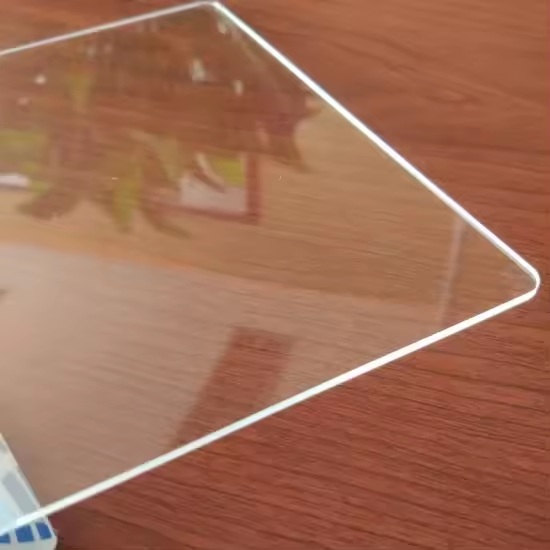
Solid Polystyrene Plastic Sheets – GPPS and HIPS
HSQY PLASTIC manufactures and supplies solid polystyrene sheets for printing, thermoforming, vacuum forming, displays, advertising, model making, packaging, appliance components and industrial fabrication.
Our solid polystyrene sheet range mainly includes GPPS sheets and HIPS sheets. GPPS, or General Purpose Polystyrene, is typically selected when transparency, gloss and rigidity are priorities. HIPS, or High Impact Polystyrene, is rubber-modified to provide greater toughness and is commonly selected for thermoforming, printing and fabricated components.
HSQY's current mainstream GPPS and HIPS product families cover approximately 0.2–6 mm thickness, standard 1220 × 2440 mm / 4 × 8 ft sheets and widths up to approximately 1600 mm for selected specifications. Thin PS rollstock is also available for selected thermoforming and packaging applications.
Thickness, width, color, surface, sheet or roll format, forming performance and regulatory requirements should be confirmed according to the exact GPPS or HIPS grade rather than applying one specification to every polystyrene product.
What Is a Polystyrene Sheet?
A polystyrene sheet, often abbreviated as PS sheet, is a rigid thermoplastic sheet manufactured from polystyrene resin.
Solid polystyrene sheet is generally supplied as GPPS or HIPS. These materials share the same basic polystyrene family but provide different combinations of transparency, toughness, rigidity, thermoforming performance and surface appearance.
Because polystyrene softens when heated, suitable grades can be thermoformed or vacuum formed. Sheets can also be cut, routed, drilled, die-cut, printed, bonded and fabricated into finished products using compatible processing methods.
GPPS vs. HIPS Polystyrene Sheets
Choosing between GPPS and HIPS is usually the first step when purchasing solid polystyrene sheet.
| Feature | GPPS Sheet | HIPS Sheet |
| Full Name | General Purpose Polystyrene | High Impact Polystyrene |
| Typical Appearance | Clear, transparent and high-gloss | Usually opaque, commonly white, black or colored |
| Impact Performance | Rigid but comparatively brittle | Greater toughness due to rubber modification |
| Transparency | Main advantage | Generally not selected for optical transparency |
| Thermoforming | Suitable for selected clear formed products | Commonly selected for vacuum forming and thermoforming |
| Printing | Suitable with appropriate printing process | Widely used for printed signs and displays |
| Common Applications | Clear displays, picture frames, transparent covers, model making and decorative panels | Thermoformed trays, appliance liners, signage, displays and packaging |
For detailed clear-sheet specifications, visit our GPPS Sheets category.
For impact-resistant thermoforming and printing applications, visit our HIPS Sheets category.
HSQY Polystyrene Sheet Product Range
| Product Type | Current Selection Direction | Typical Applications |
| Clear GPPS Sheet | Approximately 0.2–6 mm, widths up to approximately 1600 mm for selected specifications | Displays, frames, clear panels, model making, printing and indoor fabrication |
| HIPS Sheet | Approximately 0.2–6 mm mainstream product range | Thermoforming, vacuum forming, signs, trays, appliance components and packaging |
| PS Sheet Roll | Current dedicated roll product approximately 0.2–2.0 mm and 300–1400 mm width | Thermoforming, vacuum forming, trays and high-volume processing |
| Colored PS / HIPS Sheet | White, black and customized colors according to grade | Displays, signs, branded products and thermoformed parts |
| Mirror Polystyrene Sheet | Decorative mirror-faced PS products available within the current category | Interior decoration, displays, crafts and lightweight decorative panels |
| ESD / Anti-Static HIPS | Specialized grade; electrical resistance must be specified | Electronic-component trays and static-sensitive packaging |
General Polystyrene Sheet Specifications
| Material Family | Solid Polystyrene / PS |
| Main Grades | GPPS and HIPS |
| Mainstream Sheet Thickness | Approximately 0.2–6 mm for current GPPS and HIPS families |
| Standard Sheet Size | 1220 × 2440 mm / approximately 4 × 8 ft for selected products |
| Maximum Mainstream Width | Up to approximately 1600 mm for selected GPPS and HIPS specifications |
| PS Roll Thickness | Approximately 0.2–2.0 mm for the current dedicated roll product |
| PS Roll Width | Approximately 300–1400 mm for the current dedicated roll product |
| GPPS Colors | Clear and selected transparent or custom colors |
| HIPS Colors | White, black and custom colors |
| Surface | Smooth, glossy, matte and application-specific surfaces depending on grade |
| Processing | Cutting, routing, drilling, die cutting, thermoforming, vacuum forming, printing and bonding |
| Main Applications | Printing, displays, signage, thermoforming, vacuum forming, packaging, model making and appliance components |
These values describe HSQY's main current PS sheet portfolio. Certain legacy, specialty or project-specific products may use different thicknesses and dimensions, so final specifications should be confirmed by product model, quotation and approved sample.
Polystyrene Sheet for Thermoforming
Polystyrene is widely processed through thermoforming because suitable PS sheets soften when heated and can be shaped over a mold.
HIPS is usually the preferred starting point where formed components require greater toughness, while GPPS can be evaluated where transparency is important.
Common thermoformed products include trays, inserts, covers, appliance components, display parts and packaging components.
For accurate material selection, provide sheet thickness, mold dimensions, forming depth, draw ratio, required finished wall thickness and thermoforming-machine dimensions.
Polystyrene Sheet for Vacuum Forming
Vacuum forming is a common method for producing three-dimensional parts from thin and medium-gauge PS sheets.
The heated sheet is pulled against the mold using vacuum pressure. HIPS is particularly useful for many general vacuum-formed components because of its balance of forming performance, rigidity and toughness.
Before full production, evaluate mold definition, webbing, wall-thickness distribution, shrinkage, trimming and finished-part performance using the actual mold and forming equipment.
Polystyrene Sheet Roll for High-Volume Thermoforming
Thin polystyrene rollstock is suitable for automated thermoforming lines where continuous material feed is preferred over individual flat sheets.
HSQY's current dedicated PS sheet-roll product covers approximately 0.2–2.0 mm thickness and approximately 300–1400 mm roll width.
Buyers should provide machine width, maximum roll diameter, roll weight, core diameter, forming pitch and required electrical or surface properties when requesting rollstock.
Polystyrene Sheets for Printing and Advertising
PS sheets can be used as substrates for indoor advertising, point-of-sale displays, promotional graphics, sign panels, exhibition displays and printed decorative products.
White HIPS is commonly selected where an opaque printable background and greater toughness are required, while clear GPPS is useful where transparency or reverse-print visual effects are part of the design.
Printing performance depends on ink chemistry, curing method, surface finish and surface energy. If corona treatment or a particular dyne level is required, state it in the purchasing specification and test the actual ink system before mass production.
Clear Polystyrene Sheets for Displays and Protective Panels
Clear GPPS sheet provides a transparent, glossy and rigid surface for indoor applications where visibility and economical material cost are important.
Typical applications include menu holders, shelf dividers, display covers, picture-frame glazing, poster protection, transparent partitions, model components and decorative panels.
Clear GPPS should not automatically be substituted for acrylic or polycarbonate where high impact resistance, long-term outdoor exposure or demanding safety glazing is required.
Polystyrene Sheets for Model Making and Crafts
Thin polystyrene sheets are widely used for architectural models, scale models, prototypes, hobby projects, craft components and educational fabrication.
White, black and clear sheets can be selected according to the required appearance. Thin sheets can be mechanically cut, scored or fabricated using tools suitable for the specific thickness.
Polystyrene Sheet for Packaging
PS sheet and rollstock can be thermoformed into trays, inserts, product packaging, electronic packaging and other rigid packaging components.
GPPS may be considered where transparency is required, while HIPS can be selected where greater toughness or opaque color is more important.
Packaging specifications should include forming depth, finished-part stiffness, transparency or color requirements, stacking conditions and any regulatory requirements.
Food-Contact Polystyrene Sheet
Not every industrial GPPS or HIPS sheet should automatically be described as food-contact compliant.
If the material will contact food, provide the destination market, required regulation, food type, contact temperature and intended use before selecting a PS grade.
Regulatory documentation should be confirmed for the exact resin formulation, color, additives and supplied product rather than applied automatically to the entire category.
Mirror Polystyrene Sheets
HSQY's current category also includes decorative polystyrene mirror-sheet products in gold, silver, rose-gold and related finishes.
These products are primarily intended for lightweight decorative applications, displays, crafts and interior visual effects rather than structural or safety-mirror applications.
Mirror-sheet construction, reflective film, thickness, substrate and fabrication requirements should be confirmed by individual product.
Clear, White, Black and Colored Polystyrene Sheets
| Appearance | Typical Material | Common Selection Direction |
| Clear | GPPS | Displays, transparent covers, frames and clear fabricated panels |
| White | Commonly HIPS | Printing, displays, thermoformed trays and appliance components |
| Black | HIPS or specialty PS grades | Displays, industrial components, trays and electronic packaging |
| Custom Colors | Application-specific GPPS or HIPS | Branded displays, packaging, decorative products and OEM components |
Glossy, Matte and Textured PS Sheets
Surface finish affects appearance, printing, glare and final product design.
| Surface | Typical Use |
| Glossy | Clear GPPS panels, displays, decorative applications and high-gloss graphics |
| Matte | Printed displays, signs and products requiring reduced surface reflection |
| Gloss / Matte | Applications requiring different appearance or processing behavior on each side |
| Textured | Decorative, privacy and project-specific applications |
Available finish depends on the exact resin grade, thickness and production setup. Confirm surface samples before specifying a custom finish.
How to Choose Polystyrene Sheet Thickness
| Thickness | General Selection Direction |
| 0.2–0.5 mm | Thin thermoforming, packaging, inserts and rollstock applications |
| 0.5–1.0 mm | Lightweight forming, model making, graphics and thin fabricated products |
| 1.0–2.0 mm | Displays, signs, packaging, formed components and decorative panels |
| 2.0–3.0 mm | Rigid displays, clear panels, larger signs and thermoformed components |
| 3.0–6.0 mm | Heavier fabricated panels, displays, models and heavy-gauge thermoforming |
For thermoforming applications, starting thickness should also account for material stretching and the minimum required wall thickness of the finished component.
4 × 8 ft Polystyrene Sheets
HSQY's current GPPS and HIPS portfolios include standard 1220 × 2440 mm sheets, commonly referred to as approximately 4 × 8 ft polystyrene sheets.
This size is suitable for distributors, display manufacturers, printing companies, thermoformers and plastic fabricators using standard sheet-processing equipment.
Custom sheet dimensions can also be discussed according to the selected grade, thickness, width and production quantity.
Solid Polystyrene Sheet vs. EPS and XPS Foam
The term polystyrene sheet can describe very different products. HSQY's GPPS and HIPS products in this category are solid extruded plastic sheets and should not be confused with expanded or extruded polystyrene foam insulation boards.
| Material | Structure | Main Applications |
| GPPS | Solid rigid plastic sheet, usually clear | Displays, clear panels, printing, model making and fabrication |
| HIPS | Solid rubber-modified plastic sheet | Thermoforming, printing, trays, appliances and displays |
| EPS | Expanded cellular foam | Protective packaging and thermal-insulation applications |
| XPS | Extruded closed-cell foam | Building insulation and related construction applications |
Polystyrene Sheet vs. Acrylic Sheet
| Feature | GPPS | Acrylic |
| Transparency | Good clear appearance | Typically selected when premium optical appearance is important |
| Cost Positioning | Economical clear plastic option | Generally selected for higher optical and weathering requirements |
| Outdoor Use | Standard GPPS is primarily recommended for indoor applications | Suitable outdoor acrylic grades are widely used |
| Typical Use | Indoor displays, frames, model making and economical clear panels | Premium displays, signage, glazing and outdoor applications |
Cutting and Fabricating Polystyrene Sheets
PS sheets can be fabricated using appropriate tools and processing conditions selected according to thickness and grade.
Common methods include saw cutting, CNC routing, drilling, scoring, die cutting, punching, thermoforming and vacuum forming.
GPPS is more brittle than HIPS, so machining parameters, clamping force and edge condition should be controlled to reduce cracking during fabrication.
Printing on Polystyrene Sheets
Suitable GPPS and HIPS sheets can be printed for advertising, graphics and packaging applications.
Screen printing, UV printing and other printing methods should be evaluated using the actual ink, curing system and surface condition.
Buyers should specify required surface treatment and printing technology when ink adhesion is an important acceptance criterion.
Outdoor Use and UV Resistance
Standard GPPS and HIPS sheets are primarily suitable for indoor or controlled-environment applications.
Prolonged ultraviolet exposure can affect appearance and mechanical performance. If outdoor use is required, specify the expected exposure period and request an appropriate UV-stabilized grade where available.
For demanding long-term exterior applications, compare PS with materials specifically selected for outdoor weathering before final material approval.
Temperature and Heat Resistance
Polystyrene is a thermoplastic and should not automatically be specified for high-temperature service.
Heat resistance varies with GPPS or HIPS grade, formulation, sheet thickness, applied load and service time.
Provide continuous operating temperature, peak temperature and mechanical loading when heat resistance is important. Do not apply one generic temperature limit to every HSQY PS product.
Chemical Compatibility
Polystyrene can be affected by certain solvents and chemicals, so chemical compatibility should be evaluated using the actual exposure conditions.
Provide the chemical name, concentration, temperature, exposure duration and mechanical stress where chemical resistance is critical.
Recyclability of Solid Polystyrene Sheets
Polystyrene is identified under resin code #6 and can technically be recycled through suitable recycling systems.
Actual collection and recycling availability varies by country, municipality, product construction, contamination and local recycling infrastructure.
Mirror laminates, printed sheets, multilayer structures, coatings and other modifications can also affect end-of-life recycling options.
How to Choose the Right Polystyrene Sheet
1. Decide Whether You Need GPPS or HIPS
Choose GPPS when clear appearance and rigidity are the main requirements. Choose HIPS when toughness, forming and opaque colors are more important.
2. Define the Application
Specify printing, display, model making, thermoforming, vacuum forming, packaging, appliance component or another final use.
3. Select Sheet or Roll
Flat sheets are useful for printing, displays and fabrication, while continuous rollstock can be more suitable for automated thin-gauge thermoforming.
4. Confirm Thickness
HSQY's current mainstream GPPS and HIPS product families cover approximately 0.2–6 mm. Select thickness according to stiffness, forming depth and finished-part requirements.
5. Confirm Sheet or Roll Dimensions
Specify finished dimensions, processing-machine width, mold dimensions or roll-width requirements.
6. Select Color and Transparency
Specify clear, white, black, transparent tint or custom color according to the final product.
7. Select Surface Finish
Confirm glossy, matte, textured or another surface requirement before approving samples.
8. Define the Processing Method
Provide thermoforming, printing, cutting, routing, drilling, die-cutting or bonding requirements.
9. Confirm Indoor or Outdoor Use
Standard PS is primarily an indoor material. Outdoor applications should specify UV and weathering requirements.
10. Confirm Regulatory Requirements
Identify food-contact, ESD, flame, appliance or other required standards before material selection.
11. Test Samples in Your Process
Test forming, printing, cutting, color, appearance and finished-product performance before approving a customized production order.
Custom Polystyrene Sheet Manufacturing
HSQY supports customized solid polystyrene sheet projects for thermoformers, printers, display manufacturers, packaging companies, appliance manufacturers, model makers and plastic distributors.
Custom options can include:
GPPS or HIPS grade selection
Custom thickness
Standard 1220 × 2440 mm sheets
Custom sheet width and length
Sheet or roll format
Clear GPPS
White or black HIPS
Custom colors
Glossy or matte surfaces
Application-specific texture
Thermoforming grades
Printing requirements
ESD or anti-static HIPS for suitable projects
Cut-to-size sheets
CNC cutting and drilling
Die cutting and punching
Protective film
Custom export packaging
Polystyrene Sheet Quality Control
Relevant inspection parameters depend on the final application and selected grade.
Thickness and thickness tolerance
Width and length tolerance
Sheet flatness
Transparency for GPPS where specified
Color consistency
Surface gloss or matte level
Visual defects
Impact performance for HIPS where specified
Thermoforming performance
Shrinkage where relevant
Printing adhesion where specified
Surface treatment where specified
ESD resistance where required
Cut-to-size dimensions
Packing and pallet condition
Packing and International Shipping
Flat PS sheets can be protected using suitable film, paper, cartons, wrapping and palletized export packaging according to sheet dimensions and surface requirements.
For rollstock, roll width, roll diameter, core size, roll weight and packaging method should be confirmed before production.
Buyers ordering custom sheet sizes should also consider pallet dimensions, container loading and downstream material yield when comparing total purchasing cost.
Why Choose HSQY as Your Polystyrene Sheet Manufacturer?
GPPS and HIPS Supply: HSQY supplies both major solid polystyrene sheet families, allowing buyers to select between transparency-focused GPPS and impact-resistant HIPS.
Mainstream 0.2–6 mm Range: Current GPPS and HIPS product families cover thin sheets through medium-gauge rigid panels.
4 × 8 Sheet Format: Standard 1220 × 2440 mm sheets are available within the current GPPS and HIPS portfolio.
Sheet and Roll Options: Flat panels and selected thin PS rollstock support different printing, fabrication and thermoforming processes.
Clear and Colored Materials: Clear GPPS together with white, black and customized HIPS colors can support different visual and functional requirements.
Multiple Processing Applications: Material can be selected for printing, vacuum forming, thermoforming, model making, displays and packaging.
Specialty Options: Mirror PS and application-specific ESD HIPS products are also available within the wider HSQY polystyrene portfolio.
Material-Specific Categories: Buyers who already know their required resin can go directly to GPPS Sheets or HIPS Sheets for more detailed product selection.
Information Needed for a Polystyrene Sheet Quote
| Material | GPPS, HIPS or recommendation required |
| Application | Printing, display, thermoforming, vacuum forming, packaging, model making or other use |
| Thickness | Required thickness and tolerance |
| Sheet Size | 1220 × 2440 mm or custom width × length |
| Supply Format | Flat sheet, cut sheet or rollstock |
| Color | Clear, white, black or custom color |
| Surface | Glossy, matte, textured or custom surface |
| Printing | Printing method, ink system and surface-treatment requirement where applicable |
| Thermoforming | Mold dimensions, forming depth, machine width and finished-part requirement where applicable |
| Roll Requirement | Roll width, roll weight, diameter and core specification where applicable |
| Functional Requirement | ESD, UV stabilization or other application-specific requirement |
| Regulatory Requirement | Food-contact, electrical, fire or other applicable standard |
| Quantity | Trial quantity, regular order quantity and estimated annual demand |
| Destination | Destination country and port |
Polystyrene Sheet FAQ
What is a polystyrene sheet?
A polystyrene sheet is a solid thermoplastic sheet made from PS resin. The two major solid sheet grades are GPPS, which emphasizes transparency and rigidity, and HIPS, which provides increased toughness.
What does PS sheet mean?
PS sheet is an abbreviation for polystyrene sheet. Depending on the product, the material may be GPPS, HIPS or another specialized polystyrene formulation.
What are the two main types of solid polystyrene sheet?
The two main types are GPPS, or General Purpose Polystyrene, and HIPS, or High Impact Polystyrene.
What is the difference between GPPS and HIPS?
GPPS is typically clear, glossy and rigid but more brittle. HIPS contains a rubber-modified phase that increases toughness and is commonly supplied in opaque colors.
Which is better, GPPS or HIPS?
Neither is universally better. Choose GPPS for transparency and glossy appearance. Choose HIPS when impact resistance, thermoforming or opaque colors are more important.
What thicknesses of polystyrene sheet does HSQY offer?
HSQY's current mainstream GPPS and HIPS ranges cover approximately 0.2–6 mm. Specialty and legacy products can use other gauges, so availability should be confirmed by product.
Does HSQY supply 4 × 8 ft polystyrene sheets?
Yes. Current GPPS and HIPS products include 1220 × 2440 mm sheets, approximately equivalent to the common 4 × 8 ft format.
Does HSQY supply clear polystyrene sheet?
Yes. Clear PS sheet is mainly supplied as GPPS for displays, frames, protective covers, printing and general indoor fabrication.
Does HSQY supply white and black polystyrene sheet?
Yes. White and black PS sheets are available, particularly within the HIPS product family. Custom colors can also be discussed.
Does HSQY supply polystyrene sheet rolls?
Yes. HSQY's current dedicated PS roll product covers approximately 0.2–2.0 mm thickness and approximately 300–1400 mm width.
Can polystyrene sheet be thermoformed?
Yes. Suitable GPPS and HIPS sheets can be thermoformed, although HIPS is particularly common for general-purpose thermoformed products requiring greater toughness.
Can polystyrene sheet be vacuum formed?
Yes. Vacuum forming is widely used with PS sheet to produce trays, covers, packaging, appliance components and display products.
Can polystyrene sheets be printed?
Yes. Suitable PS sheets can be screen printed, UV printed or processed using other compatible printing systems. Ink and surface compatibility should be tested before production.
Can polystyrene sheets be cut to size?
Yes. Cut-to-size requirements can be discussed according to material grade, thickness, dimensions and quantity.
Can polystyrene sheet be drilled or CNC routed?
Yes. PS sheets can be drilled and CNC routed using suitable machining parameters. GPPS requires more attention to cracking because it is more brittle than HIPS.
Is polystyrene sheet the same as Styrofoam?
No. The solid GPPS and HIPS sheets on this page are rigid plastic sheets. Foam products such as EPS and XPS have cellular structures and are mainly associated with packaging or insulation applications.
Is polystyrene sheet the same as EPS foam?
No. EPS is expanded polystyrene foam. GPPS and HIPS sheets are solid thermoplastic materials with very different density, structure and applications.
Is GPPS suitable for outdoor use?
Standard GPPS is primarily recommended for indoor applications. Prolonged outdoor exposure requires evaluation of UV stabilization and overall weathering requirements.
Is HIPS suitable for outdoor use?
Standard HIPS also has limited long-term UV resistance. Specify a suitable stabilized grade or evaluate another outdoor plastic for prolonged exposure.
Is polystyrene sheet heat resistant?
Polystyrene is not generally considered a high-temperature engineering plastic. Service temperature varies by grade and loading, so provide the required continuous and peak temperatures before selecting material.
Is polystyrene sheet food safe?
Food-contact suitability is grade-specific. Confirm the required destination-market regulation and the exact GPPS or HIPS formulation rather than assuming every PS sheet is approved for food contact.
Is polystyrene sheet recyclable?
Polystyrene is technically recyclable under resin code #6, but actual collection and recycling options depend on local infrastructure and the construction of the finished product.
Can HSQY match a custom polystyrene sheet color?
Custom colors can be discussed using an approved physical sample, Pantone, RAL or other agreed color reference, subject to material grade and production requirements.
Can HSQY supply ESD polystyrene sheet?
HSQY supplies specialized ESD and anti-static HIPS products for selected electronic-packaging applications. Specify required surface resistance and test method before ordering.
What information should I provide for a polystyrene sheet quotation?
Provide GPPS or HIPS requirement, application, thickness, sheet or roll dimensions, color, surface, printing or thermoforming process, functional requirements, quantity and destination.
Request a Polystyrene Sheet Quote
Looking for a reliable polystyrene sheet manufacturer, GPPS sheet supplier or HIPS sheet supplier for printing, thermoforming, displays, packaging or industrial fabrication?
Send HSQY your application, thickness, sheet or roll dimensions, color, processing method and estimated purchasing quantity. If you are unsure whether GPPS or HIPS is more suitable, provide your transparency, impact, thermoforming and printing requirements so the appropriate material can be evaluated.