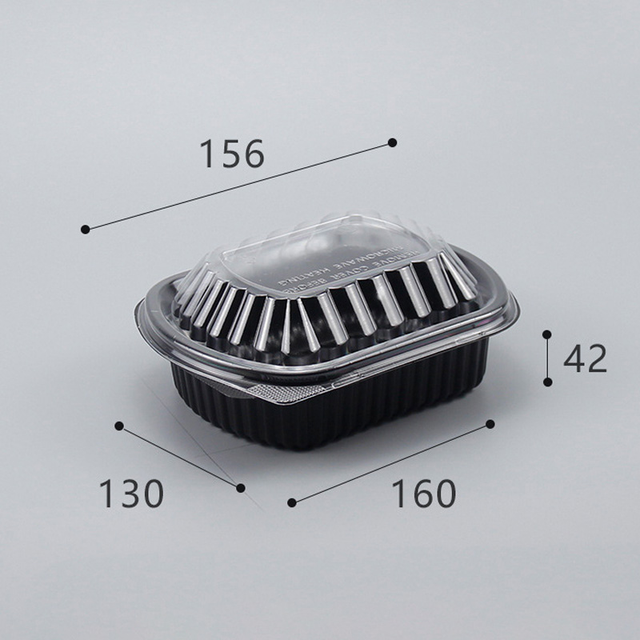
PP Lunch Box Manufacturer for Takeaway and Meal Prep
HSQY supplies disposable polypropylene lunch boxes with matching lids for restaurants, food delivery, meal-prep companies, catering businesses, supermarkets, cloud kitchens and food-packaging distributors. Available options include clear, black and white PP containers in single-compartment and multi-compartment configurations for hot and cold prepared meals.
The current HSQY range includes selected capacities from approximately 12 oz to 50 oz, or about 500 ml to 1500 ml in several product series, with 1, 2, 3, 4 and 5-compartment designs. Matching lids, stackable formats, custom colors, private-label packaging and selected branding options can be supplied according to the model and order requirements.
Quick answer: A PP lunch box is a lightweight polypropylene food container used for takeaway meals, delivery, prepared foods and portion-controlled meal packaging. Selected HSQY models are designed for microwave reheating and freezer storage within their stated temperature range, but the exact container and lid specification must be checked before use.
PP Lunch Box Product Range
Different menus require different capacities, compartment layouts and lid systems. The following product types cover the main purchasing requirements for foodservice and wholesale packaging buyers.
| Product Type | Main Features | Typical Applications |
| Single-Compartment PP Lunch Box | Maximum usable volume for one main meal, with rectangular and deep-container options. | Rice dishes, noodles, pasta, curries, salads, stews and family portions. |
| Two-Compartment PP Lunch Box | Separates a main dish from rice, vegetables, salad or another side. | Combo meals, school meals, catering and prepared-food counters. |
| Three-Compartment PP Lunch Box | Supports portion control and separates the main course from two side dishes. | Balanced meals, bento meals, airline-style meals and meal-prep programs. |
| Four- and Five-Compartment PP Lunch Box | Multiple separated sections for structured meal sets, condiments and smaller portions. | Institutional meals, catering, tasting sets, school meals and premium bento packaging. |
| Clear PP Lunch Box | Improved product visibility for merchandising and prepared-food display. | Supermarkets, deli counters, salads, meal prep and chilled displays. |
| Black or White PP Lunch Box | Strong visual contrast and a clean presentation for branded takeaway meals. | Restaurants, delivery platforms, catering and private-label foodservice packaging. |
| Hinged-Lid PP Takeout Container | Container and lid remain connected, simplifying handling and reducing separate lid inventory. | Fast service, hot-food counters, catering and food delivery. |
Browse the products above to compare capacities, dimensions, colors and compartment layouts. Related categories include PP food containers, hinged-lid takeout containers, dual-color hinged containers and PP food bowls.
Typical PP Lunch Box Specifications
HSQY offers multiple product families rather than one universal specification. The table below summarizes the category range. Final dimensions, capacity, product weight, temperature rating, lid type and packing quantity must be confirmed for the selected item.
| Specification | Typical HSQY Options |
| Material | Food-contact polypropylene according to the confirmed product grade |
| Capacity Range | Selected models from approximately 12–50 oz; common metric series include about 500–1500 ml |
| Compartment Options | 1, 2, 3, 4 or 5 compartments, depending on the model |
| Colors | Clear, black and white; custom colors subject to volume and technical review |
| Lid Options | Matching separate lid, clear lid or integrated hinged lid, depending on product series |
| Typical Temperature Range | Selected HSQY models are specified from approximately -16°C to 100°C; confirm each container and lid separately |
| Processing | Thermoforming or injection molding, according to the container design |
| Common MOQ | Typically about 30,000–50,000 pieces for existing models; custom colors, printing and molds may require more |
| Customization | Color, carton marks, label, sleeve packing, logo treatment and custom mold development subject to feasibility |
| Supply Format | Nested containers and lids packed in sleeves and export cartons |
Examples include the 25 oz and 30 oz black PP lunch box series, the 17–34 oz clear PP bento box series, the 34 oz and 41 oz two-compartment series and the 17–50 oz clear PP container series.
How to Choose the Right PP Lunch Box
The correct container should be selected from the actual meal, fill weight, serving temperature, distribution route and reheating method. A larger nominal capacity does not automatically provide better performance because container depth, flange rigidity and compartment layout also affect filling and delivery.
Define the portion size: Record the food weight and volume rather than choosing only by the advertised ounce capacity.
Select the compartment layout: Use one compartment for mixed meals, two for a main and side, and three or more for structured meal sets.
Confirm food type: Soups, oily sauces, dry foods, salads and rice meals place different demands on the lid and container wall.
Confirm temperature conditions: Specify filling temperature, chilled or frozen storage and intended microwave reheating.
Check lid design: Confirm snap engagement, venting, stacking, opening force and compatibility with the exact container.
Test delivery performance: Evaluate filled packs during stacking, tilting, vibration and realistic delivery time.
Approve the complete SKU: Freeze the container, lid, product weight, carton packing and quality criteria before bulk ordering.
Single-Compartment vs Multi-Compartment Lunch Boxes
| Selection Factor | Single Compartment | Multiple Compartments |
| Usable Volume | Provides one unrestricted cavity for larger portions. | Divides the total capacity among separate sections. |
| Food Separation | Suitable when ingredients can be mixed or packed together. | Helps reduce mixing of rice, vegetables, proteins and sides. |
| Typical Menu | Pasta, noodles, curry, salad, soup and one-dish meals. | Bento meals, combo meals, meal prep and institutional catering. |
| Portion Control | Portioning depends mainly on the operator. | Compartment geometry supports more repeatable portion allocation. |
| Leakage Consideration | Only the outer rim and lid interface require closure testing. | Internal ribs separate foods but may not create liquid-tight barriers between compartments. |
Important: Multi-compartment designs help separate food, but internal partitions should not automatically be described as liquid-tight. Test sauces and liquids in the actual container before commercial use.
Key Benefits of PP Takeaway Food Containers
Suitable for hot and cold prepared foods: Selected grades support a broad foodservice temperature range.
Microwave reheating options: Approved models can be used under their specified heating conditions.
Grease and moisture resistance: PP performs well with many oily, sauced and moist foods.
Multiple portion formats: A broad range of capacities and compartment layouts supports varied menus.
Stackable design: Nested empty containers reduce storage volume, while compatible lids support filled-pack stacking.
Lightweight construction: Helps reduce handling weight in foodservice and distribution.
Brand customization: Selected colors, labels, carton marks and private-label configurations are available.
Recycling potential: Polypropylene may be recyclable where suitable local collection and sorting systems accept the item.
Are HSQY PP Lunch Boxes Microwave-Safe?
Selected HSQY PP lunch boxes are specified for microwave reheating, with several product pages listing a maximum recommended temperature of approximately 100°C. This does not mean every polypropylene container, every lid or every custom version is suitable for unrestricted microwave use.
Before microwave use, confirm the product data for the exact SKU. Follow the stated time and temperature limits, release or remove the lid as instructed, avoid direct contact with heating elements and stop using containers that are cracked, distorted or damaged. Foods with high oil or sugar content can become hotter than water and may require additional validation.
Should the Lid Stay Closed During Microwave Reheating?
Do not assume the lid can remain tightly sealed. Steam pressure must be released according to the product instructions. Depending on the lid design, the user may need to loosen, vent or remove it before reheating.
Can PP Lunch Boxes Be Used in Freezers?
Selected HSQY products are specified for freezer storage down to approximately -16°C. Freezer suitability still depends on the exact PP grade, wall thickness, lid material, food type, freezing rate and handling after removal from storage.
Test the filled package after freezing for cracking, lid retention, corner damage and deformation. Avoid severe impact while the container is cold, and follow the approved transition procedure before microwave reheating.
Lid Fit, Spill Resistance and Delivery Testing
A matching lid can provide a secure snap fit and help reduce spills, but disposable lunch boxes should not be described as universally airtight or leakproof without testing. Performance depends on the rim geometry, lid material, filling level, food viscosity, closure force, container temperature and delivery conditions.
For takeaway and delivery programs, evaluate the complete filled package using realistic tests:
Manual closure and audible or tactile snap engagement
Lid-removal force after hot filling, chilling and reheating
Tilt and short-duration inversion testing when appropriate
Stack compression in bags, crates and delivery carriers
Vibration and vehicle-transport simulation
Leakage around corners, vents and compartment intersections
Container distortion with hot, oily or heavy food
Applications of Disposable PP Lunch Boxes
Restaurant takeaway and food delivery
Cloud kitchens and delivery-only food brands
Meal-prep companies and subscription meals
Supermarket prepared-food and deli counters
Catering, events and corporate meals
Schools, hospitals and institutional foodservice
Rice, noodle, pasta and curry meals
Salads, chilled foods and portion-controlled meals
Packaging wholesalers, importers and restaurant-supply distributors
PP Lunch Boxes vs Other Food Container Materials
| Material | Main Strength | Temperature Consideration | Typical Best Fit |
| PP | Good balance of heat resistance, toughness, grease resistance and cost. | Selected grades support microwave reheating and freezer storage within stated limits. | Hot meals, takeaway, meal prep and delivery. |
| PET or rPET | High transparency and strong retail presentation. | Standard grades are generally used for cold or chilled foods rather than hot microwave reheating. | Salads, desserts, bakery and chilled display. |
| CPET | Designed for higher-temperature ready-meal applications. | Selected systems can support conventional oven and microwave use after validation. | Ovenable frozen and chilled ready meals. |
| Bagasse or Molded Fibre | Fibre-based appearance and selected compostability pathways. | Heat and liquid performance vary by formulation, coating and product design. | Takeaway meals where fibre-based packaging is preferred. |
| Paperboard | Printable surface and paper-based brand presentation. | Performance depends on the coating, window and closure structure. | Dry or moderately moist takeaway foods and branded meal boxes. |
Food-Contact Safety and Compliance
Food-contact suitability must be verified for the exact container, lid, pigment, additive package and intended conditions of use. Requirements vary by destination country, food type, contact duration, filling temperature, storage temperature and microwave exposure.
Before ordering, provide the destination market and required regulatory framework. Request the applicable declaration, migration or test information and product specification for the exact SKU. A general statement that polypropylene is widely used for food packaging does not replace documentation for the finished product.
Are PP Lunch Boxes Reusable?
Some heavier PP containers may tolerate limited reuse, but a disposable lunch box should not automatically be marketed as a durable reusable storage product. Reuse suitability depends on product design, wall thickness, closure condition, cleaning method, scratches, staining and the manufacturer's instructions.
Do not reuse containers that are cracked, warped, deeply scratched, heavily stained or no longer close correctly. For a formal reusable packaging program, select a product designed and tested for repeated washing and use cycles.
Recycling and Sustainability Considerations
Polypropylene is identified by resin code 5 and may be recyclable, but actual acceptance varies by country and municipality. Small food containers, dark colors, food residue, labels and local sorting capability can affect whether the item is collected and recycled.
Sustainability decisions should evaluate more than the resin name. Buyers should also consider product weight, food protection, delivery damage, packing density, transport efficiency and local end-of-life infrastructure. Any recyclability or recycled-content claim should be supported for the exact product and destination market.
Custom PP Lunch Boxes for Foodservice Brands
HSQY supports OEM, ODM and private-label projects for distributors, restaurant groups, meal-prep companies and packaged-food brands. Available customization depends on the product series and commercial volume.
| Customization | Information Required | Key Consideration |
| Custom Color | Color reference, target opacity and annual quantity. | Pigment must be suitable for the required food-contact application. |
| Logo or Branding | Vector artwork, branding area, color count and durability requirement. | Printing directly on a formed PP container may have technical limits; labels, sleeves or embossing may be more suitable. |
| Carton and Sleeve Packing | Pieces per sleeve, sleeves per carton, barcode and shipping marks. | Packing density affects storage, freight and container loading. |
| Custom Compartment Layout | Meal drawing, portion volumes, dimensions and product weights. | Compartment geometry affects mold cost, rigidity and usable capacity. |
| New Mold Development | 3D drawing, reference sample, material target, lid system and annual forecast. | Tooling, sampling, testing and minimum production volume must be agreed before development. |
Quality Control for PP Lunch Boxes and Lids
A commercial lunch-box specification should define measurable acceptance criteria rather than relying only on terms such as strong, leakproof or microwave-safe. Depending on the product and order, quality control may include:
Material, color and visual appearance
Overall dimensions, capacity and product weight
Wall, base, flange and compartment-rib consistency
Lid fit, closure force and opening force
Stacking stability for empty and filled packs
Leak and tilt performance with the intended food type
Microwave, hot-fill, chilled and freezer testing when specified
Drop, compression and transport simulation
Carton quantity, sleeve count and label accuracy
Batch traceability and agreed food-contact documentation
Common PP Lunch Box Problems and Solutions
| Problem | Possible Causes | Recommended Checks |
| Lid Does Not Close Evenly | Wrong lid, deformed flange, excessive filling, hot-container distortion or stacking damage. | Confirm model matching, closure method, fill line and storage conditions. |
| Liquid Leaks During Delivery | Food too fluid, rim contamination, incomplete closure, unsuitable lid design or severe tilting. | Run filled-pack tilt and vibration tests and consider a container designed for liquid-rich foods. |
| Container Warps in Microwave | Temperature or time exceeds rating, food contains high oil or sugar, lid is sealed, or the product is not microwave-approved. | Verify the exact SKU rating, vent correctly and test with the actual food and microwave cycle. |
| Container Cracks After Freezing | Impact while cold, unsuitable grade, overfilling, sharp food edges or rapid temperature transition. | Validate the freezing cycle and handling method with the intended filled product. |
| Compartments Mix During Transport | Liquid food, low internal ribs, overfilling or severe movement. | Use thicker foods, lower fill levels or a compartment design validated for the menu. |
| Filled Packs Collapse in a Stack | Excessive stack height, heavy food, high temperature, lid mismatch or insufficient container rigidity. | Measure load, stacking time and temperature, then select a heavier or more rigid model. |
Bulk Packaging and Export Supply
PP lunch boxes and lids are normally nested and packed in protective sleeves and corrugated cartons. Packing quantity varies considerably with the container dimensions, depth, compartment design and whether lids are packed together or separately.
Before confirming a wholesale order, request the final packing specification, including pieces per sleeve, sleeves per carton, carton dimensions, gross weight, pallet configuration and estimated container loading quantity. For mixed-SKU shipments, verify how containers and lids will be paired to reduce receiving and inventory errors.
Why Choose HSQY as Your PP Lunch Box Supplier?
Broad range of 1–5 compartment PP takeaway containers
Selected capacities from small portions to approximately 50 oz
Clear, black and white product series with matching lids
Existing models for restaurants, delivery, catering and meal prep
Sample support for food, lid-fit and transport testing
OEM, private-label, carton-mark and selected custom development options
Bulk export packaging and container-loading support
Related PP bowls, hinged containers and complete food-packaging categories
Request PP Lunch Box Samples and a Wholesale Quote
To receive an accurate recommendation and quotation, provide:
Required capacity in ml or oz
Number and approximate volume of compartments
Food type, portion weight and filling temperature
Microwave, chilled or frozen storage requirements
Preferred color and lid design
Order quantity and annual forecast
Custom branding, label, sleeve or carton requirements
Destination country and required food-contact documents
Shipping terms and target delivery schedule
Contact HSQY through the inquiry page to request samples, product drawings, packing data and bulk pricing.
FAQ About PP Lunch Boxes
What is a PP lunch box?
A PP lunch box is a polypropylene food container used for packing, transporting, storing and, for approved models, reheating prepared meals. It is widely used for takeaway, delivery, meal prep, catering and supermarket foodservice.
What sizes of PP lunch boxes does HSQY supply?
The category includes selected products from approximately 12 oz to 50 oz. Several common metric series range from about 500 ml to 1500 ml. Availability depends on the color, shape and compartment layout.
How many compartments are available?
HSQY offers selected 1, 2, 3, 4 and 5-compartment lunch boxes. One compartment provides maximum open capacity, while multiple compartments help organize main dishes, rice, vegetables and side portions.
Are PP lunch boxes microwave-safe?
Selected HSQY models are designed for microwave reheating within the stated temperature and time limits. Confirm the exact container and lid specification, vent or remove the lid as instructed and test the package with the intended food.
Can PP lunch boxes hold hot food?
Approved PP containers can be used for hot prepared foods within their stated temperature range. Very hot oil, sugar-rich food and prolonged heat exposure may create higher temperatures, so the complete application should be tested.
Can PP lunch boxes be frozen?
Selected products are rated for freezer storage, with several HSQY models specifying temperatures down to approximately -16°C. Confirm the exact grade and test the filled pack for brittleness, cracking and lid retention.
Are PP lunch boxes completely leakproof?
A properly matched lid can provide a secure, spill-resistant closure, but leakage performance depends on the food, filling level, rim cleanliness and handling. Test liquid-rich meals under actual delivery conditions before making a leakproof claim.
Do the compartments prevent sauces from mixing?
Compartments help separate solid and semi-solid foods, but internal dividers are not necessarily liquid-tight. Thin sauces can move between sections if the container is tilted or overfilled.
What colors are available?
Common HSQY options include clear, black and white. Custom colors may be possible for qualifying order volumes, subject to color matching, food-contact suitability and production feasibility.
Are lids included with the PP lunch boxes?
Matching lids are available for the relevant product series, but commercial quotations may list containers and lids separately. Confirm the lid material, color, packing quantity and fit for the selected container model.
Can HSQY customize PP lunch boxes with a logo?
Selected branding options may include labels, printed sleeves, carton marks, embossing or other treatments. Direct printing feasibility depends on the container shape, surface and order quantity.
Can HSQY develop a custom size or compartment design?
Yes. Custom mold development can be evaluated using a drawing, reference sample, required capacity, compartment ratio, lid design and annual demand. Tooling cost, sampling and minimum production volume must be confirmed.
Are PP lunch boxes recyclable?
Polypropylene may be recyclable where local programs accept resin code 5 food containers. Actual recycling depends on local collection, sorting equipment, food residue, color and item dimensions.
What is the minimum order quantity?
Existing HSQY product pages show common minimum orders of approximately 30,000 to 50,000 pieces, depending on the model. Custom colors, printing, packing or molds may require a higher quantity.
Can I request samples before a bulk order?
Yes. Samples should be tested with the actual meal, filling temperature, microwave cycle, freezer cycle and delivery method. Confirm sample freight and availability with the HSQY sales team.
What information is needed for a wholesale quotation?
Provide capacity, compartment count, color, lid type, quantity, food application, temperature requirements, customization, destination country, packing requirements and shipping terms.