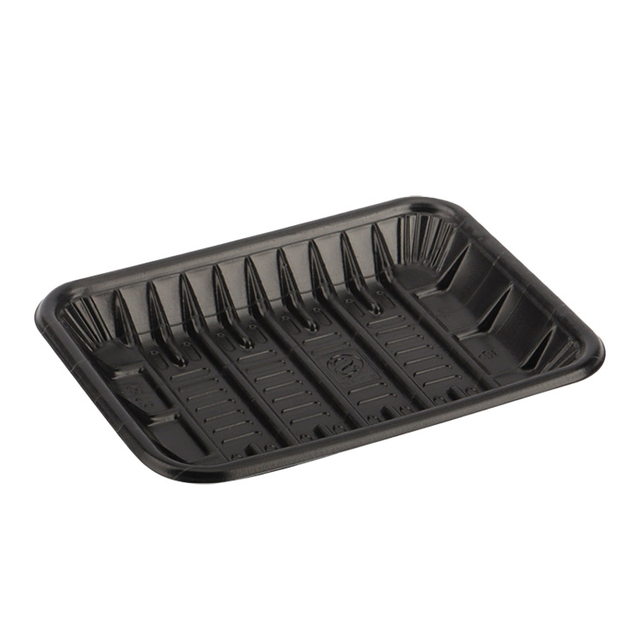
PP Fresh Meat Trays for Meat, Poultry and Seafood Packaging
HSQY PLASTIC manufactures and supplies fresh meat trays for beef, pork, lamb, poultry, fish, seafood, sausages, minced meat, marinated products and selected frozen foods. Our thermoformed PP meat packaging trays are designed for food processors, meat packers, supermarkets, butcher shops, packaging distributors and private-label food packaging projects.
Fresh meat packaging requirements vary according to food type, portion weight, liquid release, storage temperature, retail display and packaging method. HSQY therefore offers multiple tray dimensions, depths and colors together with options for absorbent pads, stretch film, heat-sealing film, modified atmosphere packaging and vacuum skin packaging projects.
Standard PP meat trays are suitable for many conventional chilled and frozen food packaging applications, while customers requiring controlled gas-barrier performance can select dedicated high-barrier MAP or VSP tray systems.
What Are Fresh Meat Trays?
Fresh meat trays are rigid or semi-rigid food packaging containers used to pack, display, store and transport fresh or processed meat products under controlled chilled or frozen conditions.
A meat tray provides a stable base for the food and can be combined with stretch film, cling film, an absorbent pad, heat-sealing film, MAP lidding film or vacuum skin film depending on the packaging process.
For industrial food packaging, the tray should not be selected by size alone. Tray rigidity, depth, rim geometry, film compatibility, product purge, cold-chain conditions, stacking performance and packaging-machine compatibility should all be considered.
Fresh Meat Tray Specifications
HSQY offers multiple standard fresh meat tray models. Exact dimensions, material weight, temperature performance, packing quantity and MOQ should be confirmed for the selected tray.
| Product Name | Thermoformed PP Fresh Meat Tray |
| Main Material | Food packaging grade polypropylene (PP) |
| Manufacturing Process | Plastic sheet extrusion and thermoforming |
| Standard Shapes | Rectangular trays and project-specific custom shapes |
| Example Sizes | 220 × 150 × 40 mm, 220 × 150 × 50 mm, 220 × 150 × 60 mm, 271 × 217 × 65 mm and other standard models |
| Size Customization | Custom length, width, depth, rim structure and usable capacity subject to mold evaluation |
| Compartments | Single compartment as standard; custom compartment designs can be evaluated |
| Available Colors | Black, clear, white, yellow, green, gold and selected custom colors |
| Packaging Methods | Stretch film, cling film, compatible heat-sealing film and project-specific packaging systems |
| Main Applications | Beef, pork, lamb, poultry, minced meat, sausages, fish, seafood and selected frozen foods |
| Absorbent Pads | Pad matching can be discussed according to tray size, food type and required absorption capacity |
| Customization | Size, depth, tray weight, color, rim, compartments, embossing, stacking design and custom mold |
Key Features of PP Fresh Meat Trays
Stable Product Support: The thermoformed tray provides a stable base for steaks, minced meat, poultry, fish, seafood and other food products during packaging, transport and retail display.
Moisture Resistance: PP does not readily absorb moisture from fresh meat or humid refrigerated environments.
Good Mechanical Strength: Proper tray thickness, wall design and ribs can provide the rigidity required for packing, stacking and transportation.
Efficient Nesting: Stackable and nestable tray designs can reduce carton volume and support efficient handling on food packing lines.
Multiple Colors: Black, clear, white and other colors can be selected according to product presentation, branding and retail merchandising requirements.
Flexible Packaging Options: Different tray designs can be evaluated with overwrap film, absorbent pads or suitable heat-sealing films.
Custom Manufacturing: New dimensions, rim geometries, compartments, colors and molds can be developed for qualified B2B projects.
Fresh Meat Tray Applications
Beef Packaging Trays
Fresh meat trays can be used for steaks, whole-muscle beef portions, minced beef, burgers, meatballs, sliced beef, premium cuts and marinated beef products. Tray depth should be selected according to meat thickness, packed weight and required film clearance.
Pork Packaging Trays
PP meat trays can accommodate pork chops, sliced pork, ribs, pork belly, minced pork, sausages, bacon and marinated products. Products with exposed bones should also be evaluated for film puncture risk.
Poultry Packaging Trays
Chicken breasts, legs, wings, drumsticks, whole portions, turkey and prepared poultry can be packed in suitable meat trays. Poultry may release significant liquid, so tray depth and absorbent-pad capacity should be selected according to the product.
Lamb and Mutton Packaging Trays
Lamb chops, sliced lamb, mutton portions, skewers and marinated products can be packed using suitable tray dimensions and film systems. Bone edges and product height should be checked before selecting the final packaging configuration.
Fish and Seafood Trays
Fish fillets, salmon portions, shrimp, shellfish and processed seafood can also be packed in suitable fresh food trays. Buyers should consider liquid release, absorbent capacity, odor management, puncture resistance and refrigerated storage conditions.
Sausage and Processed Meat Trays
Meat trays can be used for sausages, meatballs, sliced processed meats, bacon and other chilled products where stable presentation and efficient retail display are required.
Frozen Meat and Frozen Food Trays
Selected PP tray designs can be evaluated for frozen meat, frozen seafood, vegetables and other frozen products. Final suitability should be confirmed at the intended freezing and distribution temperatures using the actual packed weight and transportation conditions.
Fresh Meat Packaging Methods
Fresh meat trays can be used with several packaging methods. The correct system depends on the meat product, desired retail presentation, distribution period, temperature, liquid release, target shelf life and available packaging equipment.
| Packaging Method | How It Works | Typical Applications | Key Requirements |
| Stretch Film / Overwrap | Transparent film is wrapped around the tray and product. | Supermarkets, butcher shops and shorter distribution applications. | Rim shape, film tension, puncture resistance, pad capacity and wrapping-machine compatibility. |
| Heat-Sealed Lidding | Compatible lidding film is heat sealed to the tray flange. | Chilled food and selected fresh meat packaging projects. | Tray sealant, flange geometry, film structure, temperature, pressure and dwell time. |
| MAP | Package air is replaced with a controlled food-grade gas atmosphere. | Case-ready beef, pork, poultry and other products requiring controlled atmosphere packaging. | High-barrier tray, barrier lidding film, gas mixture, gas-tight seal and MAP tray sealer. |
| VSP | Air is removed and heated skin film conforms tightly around the product. | Premium steaks, meat cuts, seafood, poultry and high-visibility retail packages. | VSP-compatible tray, thermoformable skin film, product protrusion and machine compatibility. |
Fresh Meat Trays for Stretch Film and Overwrap Packaging
Conventional stretch-film or cling-film overwrap remains an important packaging format for fresh meat, poultry and seafood. The tray provides the structural base while transparent film is wrapped around the food and tray.
Important considerations include tray rim geometry, film tension, product height, exposed bones, puncture resistance, liquid release and absorbent-pad performance.
Overwrap applications are different from high-barrier MAP and VSP packaging and should therefore be specified according to the actual packaging process.
Heat-Sealed Fresh Meat Trays
Selected PP trays can be evaluated with a compatible heat-sealing film. Reliable sealing depends on the tray's sealing surface, flange flatness, lidding-film sealant layer and tray-sealing parameters.
HSQY also supplies sealing films for PP trays, allowing customers to discuss the tray and film specification together.
Before commercial production, samples should be tested using the actual sealing temperature, pressure, dwell time and packaging machine.
MAP Trays for Fresh Meat Packaging
Modified Atmosphere Packaging (MAP) replaces the normal atmosphere inside a sealed meat package with a selected gas composition.
MAP requires a tray-and-film combination with appropriate gas-barrier performance and reliable sealing. A standard PP overwrap meat tray should therefore not automatically be described as a MAP tray.
Customers requiring gas flushing, high oxygen barrier or extended chilled distribution should review HSQY's dedicated MAP Trays and High Barrier PP Trays.
VSP Trays for Fresh Meat Packaging
Vacuum Skin Packaging (VSP) uses vacuum and a thermoformable skin film that closely conforms around the meat and bonds to the tray's compatible sealing surface.
VSP is commonly considered where strong product visibility, product immobilization and tight retail presentation are important.
Product protrusion, skin-film formability, puncture resistance and machine compatibility are particularly important for steaks, bone-in meat and other high-profile products.
Customers using skin packaging should review our dedicated VSP Trays.
Case-Ready Meat Packaging Trays
Case-ready meat packaging allows fresh meat to be portioned and packaged before reaching the retail meat case. The finished package should provide product protection, retail presentation and reliable performance throughout cold-chain distribution.
Case-ready packaging projects may use overwrap, heat-sealed trays, MAP or VSP depending on the product and distribution system.
For industrial meat processors, tray dimensions should also be evaluated for conveyor handling, automatic tray denesting, pad placement, filling, sealing, labeling, boxing and palletizing.
Absorbent Pads for Fresh Meat Trays
Fresh beef, pork, poultry, fish and seafood can release liquid during refrigerated storage. An appropriately selected meat absorbent pad can collect this liquid and reduce visible pooling inside the package.
The absorbent pad should be matched to the actual food and packaging conditions rather than selected only by tray size.
| Pad Selection Factor | Why It Matters |
| Tray Internal Dimensions | The pad should fit inside the tray without interfering with the rim or sealing flange. |
| Meat Type | Beef, poultry, fish and seafood can release different amounts of liquid. |
| Packed Product Weight | Larger portions may require a different pad size or absorption capacity. |
| Distribution Period | Liquid accumulation can change during refrigerated storage and transportation. |
| Packaging Method | Overwrap, heat-sealed, MAP and VSP systems can have different pad-placement requirements. |
| Food-Contact Requirements | Pad materials should be appropriate for the intended food-contact conditions and target market. |
The pad should remain flat inside the tray and should not extend onto the sealing flange or create folds that interfere with the film.
Standard PP vs. High-Barrier Meat Trays
Not every fresh meat application requires the same tray structure. Standard PP trays and multilayer high-barrier trays serve different packaging requirements.
| Tray Type | Typical Packaging Method | Main Selection Factors | Typical Applications |
| Standard PP Meat Tray | Stretch film, cling film or compatible project-specific lidding | Size, depth, rigidity, cold resistance, pad fit, wrapping compatibility and cost | Supermarket meat, butcher-counter packaging, poultry, seafood and selected frozen food |
| PP/EVOH/PE High-Barrier Tray | Heat-sealed MAP packaging | Oxygen barrier, gas retention, sealant layer, flange geometry and tray-sealer compatibility | Fresh meat, poultry and controlled-atmosphere packaging projects |
| PET/PE Tray | Heat sealing and selected chilled-food systems | Clarity, rigidity, seal compatibility and cold-chain conditions | Chilled meat, seafood, deli food and other fresh-food packaging |
| PET/EVOH/PE High-Barrier Tray | High-barrier MAP and selected skin-pack systems | Oxygen barrier, sealing, transparency, product shape and packaging system | Premium meat, poultry, fish, seafood and high-visibility retail packaging |
For PET-based high-barrier packaging, customers can also review PET/EVOH/PE Trays.
Do Fresh Meat Trays Extend Shelf Life?
A fresh meat tray alone does not determine product shelf life. The tray is one component of the complete food packaging system.
Actual shelf-life performance can be affected by initial meat quality, processing hygiene, temperature, film barrier properties, sealing integrity, oxygen exposure, gas composition in MAP systems, product purge and cold-chain stability.
Commercial shelf-life claims should therefore be established using the actual food product, tray, film, absorbent pad, packaging machine and intended storage conditions.
How to Choose the Right Fresh Meat Tray
1. Confirm the Meat Type
Beef steaks, minced meat, pork chops, chicken portions, fish fillets and sausages have different shapes, weights, bone structures and liquid-release characteristics.
2. Confirm Portion Weight and Dimensions
Provide the product length, width, thickness and packed weight. The tray should provide sufficient internal space without creating excessive movement or unnecessary package volume.
3. Select the Correct Tray Depth
A tray that is too shallow can create film contact or puncture problems. A tray that is unnecessarily deep can increase package size and shipping volume.
4. Evaluate Tray Rigidity
Heavy portions require sufficient resistance to bending. Tray weight, wall thickness, ribs, rim structure and material distribution all influence mechanical performance.
5. Choose the Packaging Method
Confirm whether the package will use stretch film, cling film, heat sealing, MAP or VSP. Each method requires a different combination of tray geometry and film properties.
6. Determine the Absorbent-Pad Requirement
Products that release more liquid may require greater absorption capacity. The pad should fit within the tray without affecting film sealing or product height.
7. Confirm Cold-Chain Conditions
Provide the filling temperature, refrigerated storage temperature, frozen storage requirement, distribution period and retail-display conditions.
8. Check Packaging-Machine Compatibility
Tray dimensions, flange geometry, nesting pitch, denesting performance, conveyor handling and tooling should be tested with existing packing equipment.
9. Test Samples Before Mass Production
Physical samples should be tested with the actual meat product, film, absorbent pad, packing equipment, stacking conditions and cold chain before a large production order is finalized.
Fresh Meat Tray Sizes and Colors
HSQY offers multiple tray footprints and depths for individual portions, supermarket packs, family packs and larger meat portions.
Black Meat Trays
Black meat trays provide strong visual contrast with red meat, poultry, seafood and other foods and are frequently selected for premium retail presentation.
Clear Meat Trays
Clear trays allow the packaged product to remain visible from more angles and may suit projects where visual inspection is particularly important.
White and Custom-Color Meat Trays
White, yellow, green, gold and other selected colors can be used for product segmentation, retail differentiation and private-label packaging projects. Custom-color MOQ depends on the tray model, pigment and production quantity.
Custom Fresh Meat Tray Manufacturing
HSQY supports OEM and custom meat tray projects for meat processors, food factories, supermarket groups, packaging distributors and private-label customers.
Custom options can include:
• Custom external and internal dimensions
• Custom tray depth and usable volume
• Single or multiple compartments
• Custom material thickness and tray weight
• Black, clear, white or custom colors
• Custom rim and sealing-flange geometry
• Embossed logo, recycling mark or product code
• Custom stacking and denesting design
• Absorbent-pad matching
• Lidding-film compatibility evaluation
• New thermoforming mold development
• Custom carton and pallet packaging
Custom Meat Tray Development Process
| Step | Process |
| 1. Requirement Review | Customer provides food type, product dimensions, tray size, packaging method, equipment and expected order volume. |
| 2. Structure Evaluation | Tray depth, wall angle, rim width, stacking, denesting and material distribution are reviewed. |
| 3. Drawing Confirmation | Technical drawing or three-dimensional design is prepared for confirmation. |
| 4. Mold Development | Mold cost, sampling requirements, MOQ and development conditions are confirmed. |
| 5. Sample Testing | Samples are evaluated with the actual food, film, absorbent pad and packing equipment. |
| 6. Mass Production | Final specifications are confirmed after customer approval and production testing. |
Meat Tray Compatibility with Automatic Packaging Lines
Industrial meat processors should evaluate trays for more than product fit. Automatic packing lines may require consistent tray dimensions, nesting pitch, flange geometry and denesting behavior.
Important parameters include:
• Automatic tray denesting
• Conveyor handling
• Meat filling and portioning
• Automatic absorbent-pad placement
• Stretch-film wrapping or tray sealing
• Labeling and inspection
• Case packing and stacking
• Pallet stability
If replacing an existing tray, providing the current tray sample or technical drawing is usually the most effective way to evaluate compatibility.
Quality Control for Fresh Meat Trays
Consistent tray quality is important for manual packaging as well as automatic meat-packing lines.
Relevant inspection points may include:
• Material and color consistency
• External and internal dimensions
• Tray weight
• Material thickness distribution
• Rim and sealing-flange flatness
• Stacking and denesting performance
• Resistance to normal bending and handling
• Surface cleanliness
• Trimming and edge quality
• Low-temperature evaluation when required
• Film and pad compatibility
• Carton quantity and pallet stability
Food-Contact and Regulatory Requirements
Food-contact requirements depend on material formulation, food type, contact duration, temperature, packaging process and destination market.
Customers should provide the destination country and required food-contact documentation before ordering so that the applicable documents for the selected tray structure can be confirmed.
The complete package can include the tray, film, absorbent pad, label, ink and adhesive, so compliance requirements should be evaluated according to the intended final package.
Are PP Fresh Meat Trays Recyclable?
Polypropylene is commonly identified as resin code 5 and can be mechanically recycled where suitable PP collection, sorting and recycling infrastructure exists.
The recyclability of the final meat package can also depend on tray color, labels, food contamination, attached films, absorbent pads and local recycling rules.
Buyers should therefore confirm local recycling guidance before making claims about the complete meat package.
Packaging and International Shipping
Fresh meat trays are nested to reduce storage and shipping volume and can be packed in protective bags and export cartons.
Pallet packing can be arranged according to tray dimensions, carton size, container loading requirements and customer warehouse conditions.
Tray depth and nesting pitch can significantly affect carton quantity and container utilization, so international buyers should consider both product price and shipping efficiency when comparing different tray designs.
Why Choose HSQY as Your Fresh Meat Tray Manufacturer?
Manufacturer Supply: Direct B2B support for food processors, meat packers, supermarket groups and packaging distributors.
Multiple Standard Tray Models: Existing sizes, depths and colors can reduce sourcing and development time.
Custom Thermoforming: Custom sizes, colors, tray structures, compartments and molds can be developed for qualified projects.
Multiple Packaging Technologies: HSQY supplies conventional PP meat trays as well as dedicated MAP, VSP and high-barrier tray solutions.
Film Supply Support: Compatible PP sealing films and high-barrier packaging films can be discussed together with tray requirements.
Sample Evaluation: Available samples can be used for checking product fit, pad placement, film compatibility, stacking and packing-line performance before a larger order.
International B2B Support: Carton packing, pallet plans, container loading and international delivery terms can be discussed according to the project.
What Information Is Needed for a Fresh Meat Tray Quote?
Providing detailed project information allows HSQY to recommend a more suitable tray and prepare a more accurate quotation.
| Tray Dimensions | External length × width × depth and internal usable dimensions |
| Food Product | Beef, pork, lamb, poultry, seafood, sausage, frozen food or other product |
| Product Weight | Weight of food packed in each tray |
| Tray Color | Black, clear, white or custom color |
| Packaging Method | Overwrap, heat-sealed lidding, MAP or VSP |
| Absorbent Pad | Required size and absorption capacity if applicable |
| Storage Temperature | Chilled, frozen or other storage conditions |
| Packing Equipment | Machine brand, model and tooling information if available |
| Quantity | Trial quantity, regular order quantity and estimated annual demand |
| Destination Market | Destination country, port or delivery address |
Fresh Meat Tray FAQ
What materials are commonly used for fresh meat trays?
Fresh meat trays can be manufactured from materials including PP, PET and multilayer structures. HSQY's products in this category primarily use thermoformed polypropylene, while separate PET/PE, PET/EVOH/PE and PP/EVOH/PE options are available for different packaging requirements.
What types of meat can be packed in PP meat trays?
Suitable trays can be used for beef, pork, lamb, poultry, minced meat, sausages, fish, seafood, marinated products and selected frozen foods. Tray dimensions and packaging methods should be selected according to the product.
Are fresh meat trays leak-proof?
The tray helps contain the food and liquid, but finished-package leak resistance depends on the entire system including tray geometry, film, sealing quality, absorbent pad, product loading and handling conditions.
Why are absorbent pads used in meat trays?
Absorbent pads collect liquid released by fresh meat, poultry, fish or seafood during storage. This helps reduce visible pooling and keeps the retail package cleaner.
How do I choose the correct absorbent pad?
Consider tray dimensions, food type, packed weight, expected liquid release, storage period, packaging method and required absorption capacity.
Can PP fresh meat trays be heat sealed?
Selected PP trays can be evaluated with compatible heat-sealing films. The tray surface, flange, film sealant, sealing temperature, pressure and dwell time must work together.
Are standard PP meat trays suitable for MAP packaging?
Not necessarily. MAP requires appropriate gas-barrier properties and a gas-tight tray-and-film seal. Customers requiring MAP should use a tray specifically designed and tested for modified atmosphere packaging.
What is the difference between MAP and VSP meat trays?
MAP normally maintains a controlled gas atmosphere in the headspace above the food. VSP removes air and uses a thermoformable film that closely conforms around the product. The films, tray structures and equipment requirements are different.
Which fresh meat packaging method should I choose?
The correct choice depends on food type, target shelf life, retail presentation, distribution distance, equipment, required barrier performance and packaging cost. Overwrap, heat sealing, MAP and VSP each serve different applications.
Can fresh meat trays be used for frozen meat?
Selected PP trays can be evaluated for frozen meat and frozen food applications. Final suitability should be tested using the actual freezing temperature, food weight, stacking load, transportation conditions and thawing process.
Are fresh meat trays microwave safe?
Fresh meat trays in this category are primarily intended for food packaging, refrigerated display and cold-chain distribution. Microwave suitability should only be claimed when the specific tray, food load, temperature and heating conditions have been validated.
Do meat trays extend the shelf life of fresh meat?
The tray alone does not determine shelf life. Shelf-life performance depends on the meat, hygiene, temperature, packaging atmosphere, film barrier, sealing integrity and cold-chain conditions.
What is case-ready meat packaging?
Case-ready meat is portioned and packaged before reaching the retail meat case. Depending on the product and supply chain, case-ready packaging can use overwrap, heat-sealed trays, MAP or VSP systems.
Can fresh meat trays be used on automatic packaging lines?
Yes, suitable tray designs can be used with automatic packaging equipment. Dimensions, nesting, denesting, flange geometry and machine tooling should be tested before mass production.
Can fresh meat tray sizes and colors be customized?
Yes. HSQY can evaluate custom dimensions, depths, tray weights, compartments, colors, rim structures, embossed details and custom molds for qualified projects.
Can HSQY make a meat tray based on my existing sample?
Yes. Providing an existing tray, drawing or detailed dimensions can help evaluate whether an existing HSQY model is suitable or whether a custom mold is required.
What is the MOQ for wholesale fresh meat trays?
MOQ depends on tray model, color, packing quantity and customization. Standard models may have lower starting quantities than custom colors or newly developed molds. Contact HSQY with the required model and quantity for the current MOQ.
Can I request fresh meat tray samples?
Available stock samples can be discussed for product-fit, rigidity, absorbent-pad, film, sealing, stacking, freezing and transportation testing.
What information should I provide for a quotation?
Provide tray dimensions, food type, packed weight, color, estimated quantity, packaging method, absorbent-pad requirement, storage conditions, packaging-machine information and destination market.
Request a Fresh Meat Tray Quote
Looking for a reliable fresh meat tray manufacturer, PP meat packaging tray supplier or custom case-ready meat packaging solution?
Send HSQY your tray dimensions, food application, packed weight, packaging method and estimated order quantity. We can help evaluate standard PP meat trays, absorbent pads, compatible lidding films, MAP/VSP options or custom tray development.