PET/PA/PE Lamination Film for High-Performance Flexible Packaging
HSQY PET/PA/PE lamination film is a three-material flexible packaging structure that combines a printable PET outer layer, a tough polyamide (PA or nylon) reinforcement layer and a heat-sealable PE inner layer. This construction is designed for packaging that requires good appearance, mechanical strength, puncture resistance, moisture protection and reliable sealing.
The PET layer provides dimensional stability, print quality and surface protection. The PA layer improves toughness, flex-crack resistance and resistance to punctures from sharp or irregular products. The PE layer provides the product-contact sealing surface and helps protect the package from moisture.
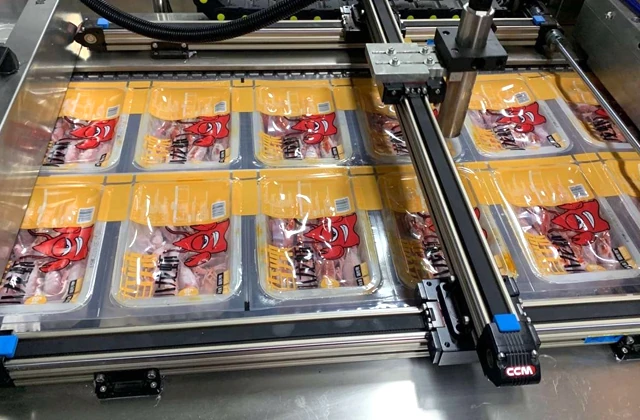
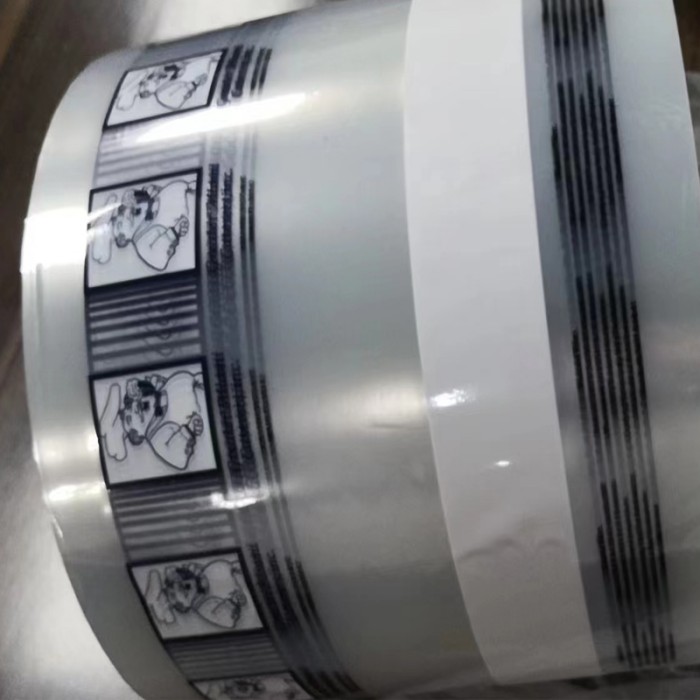
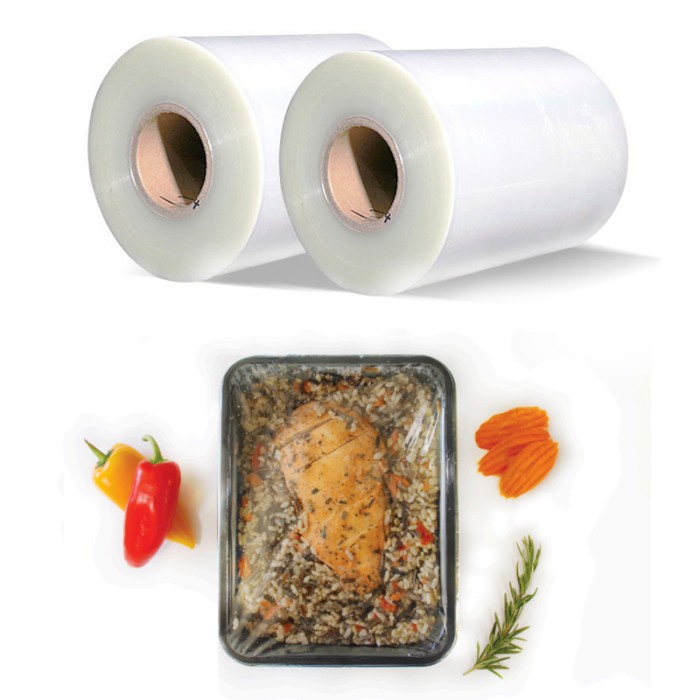
PET/PA/PE film can be supplied as clear or printed roll stock for vacuum bags, three-side-seal pouches, stand-up pouches, liquid pouches, frozen food packaging and selected industrial packaging. The final film structure, thickness, adhesive system, sealant grade and barrier performance must be matched to the packed product, filling process, storage temperature, shelf-life target and packaging machine.
Important selection note: PET/PA/PE is not automatically suitable for retort sterilization, medical sterilization or every food-contact application. High-temperature processing, food-contact compliance, oxygen transmission rate, water-vapor transmission rate and seal performance should be confirmed using the final specification and applicable test reports.
Request a Film Recommendation
PET/PA/PE Lamination Film Image
PET/PA/PE Laminated Flexible Packaging Film
PET/PA/PE Lamination Film Technical Documents
PET/PA/PE Lamination Film Specifications
| Property |
Available Details |
| Product Name |
PET/PA/PE Lamination Film |
| Material Structure |
PET + PA (Nylon) + PE |
| Supply Form |
Flexible roll stock; converted bags or pouches subject to project requirements |
| Appearance |
Clear or custom printed |
| Available Width |
160mm–2600mm, subject to final production confirmation |
| Available Total Thickness |
0.045mm–0.35mm, subject to the selected structure and application |
| Main Functions |
Printability, mechanical strength, puncture resistance, moisture protection and heat sealing |
| Potential Applications |
Vacuum packaging, frozen food packaging, liquid or sauce pouches, pet food packaging, industrial packaging and selected medical-device packaging after validation |
| Printing |
Custom printing can be discussed; artwork, ink system, color count and surface treatment must be confirmed |
| Barrier Data |
OTR and WVTR should be specified and tested for the final structure, thickness and test conditions |
| Seal Performance |
Seal initiation temperature, seal strength and sealing window depend on the PE grade and packaging machine settings |
| Compliance Documents |
SGS and RoHS-related documents may be available; food-contact or medical compliance must be confirmed with application-specific reports |
| Minimum Order Quantity |
1,000kg for standard production; custom printing or special structures may require a different MOQ |
| Payment Terms |
T/T, L/C, Western Union or PayPal, subject to order confirmation |
| Delivery Terms |
EXW, FOB, CNF or DDU |
| Reference Lead Time |
Approximately 10–14 days after order confirmation, subject to specification and production schedule |
How the PET, PA and PE Layers Work
| Layer |
Primary Function |
Buyer Considerations |
| PET Outer Layer |
Provides stiffness, dimensional stability, transparency, abrasion resistance and a suitable surface for reverse printing. |
Confirm print treatment, ink system, lamination bond and whether matte or glossy appearance is required. |
| PA Middle Layer |
Improves toughness, puncture resistance, flex-crack resistance and gas-barrier performance compared with simpler PET/PE structures. |
Specify product shape, sharp edges, vacuum level, drop-test requirements and low-temperature conditions. |
| PE Inner Layer |
Creates the heat-sealable product-contact layer and provides moisture resistance, flexibility and seal integrity. |
Confirm filling temperature, contamination at the seal area, sealing temperature, dwell time and required seal strength. |
Key Benefits of PET/PA/PE Lamination Film
Balanced mechanical performance: PET provides stability while PA improves resistance to puncture, flexing and handling damage.
Reliable heat-seal layer: The PE inner layer can provide strong seals when the correct PE grade and machine settings are selected.
Clear product presentation: Transparent structures can provide product visibility, while reverse printing can protect graphics between film layers.
Moisture protection: PE contributes water-vapor resistance for foods, liquids and industrial products that require moisture control.
Improved puncture resistance: The nylon layer is useful for products with hard edges, bones, shells or irregular shapes.
Custom converting options: Width, total thickness, printing, roll diameter, core size and packaging format can be discussed for different machines.
Application-specific engineering: Barrier, seal and thermal performance can be adjusted through material grade, layer thickness and adhesive selection, but final performance requires testing.
Typical Applications
Vacuum packaging: Meat, seafood, cheese, processed food and other products requiring toughness, low leakage risk and good seal integrity.
Frozen food packaging: Products exposed to low-temperature storage and handling, subject to drop, flex-crack and seal testing.
Liquid and sauce pouches: Condiments, sauces, beverage concentrates and other liquids when the structure is validated for product compatibility and drop resistance.
Pet food packaging: Wet or semi-moist products, treats and products with irregular shapes that benefit from PA puncture resistance.
Industrial packaging: Components, powders, chemicals or technical products requiring moisture protection and durable sealed packaging.
Medical-device packaging: Possible only after confirming material cleanliness, sterilization compatibility, seal validation and applicable regulatory requirements.
Packaging Formats and Converting Options
| Format |
Typical Use |
Important Specification Details |
| Printed Roll Stock |
VFFS, HFFS and pouch-making lines |
Roll width, roll diameter, core size, unwind direction, registration mark and machine speed |
| Three-Side-Seal Pouch |
Vacuum-packed food, medical or industrial products |
Pouch size, seal width, opening method, printing and vacuum requirement |
| Stand-Up Pouch |
Sauces, liquids, pet food and consumer products |
Bottom gusset, zipper, spout, drop-test requirement and fill weight |
| Vacuum Bag |
Meat, seafood, cheese and processed food |
Bag size, seal strength, puncture requirement, vacuum level and storage temperature |
| Custom Converted Film |
Special packaging lines or industrial products |
Drawing, tolerance, winding direction, slit width and packing method |
PET/PA/PE vs Other Flexible Packaging Structures
| Structure |
Relative Strength |
Barrier Profile |
Typical Selection Logic |
| PET/PE |
Good general stiffness and sealability |
Suitable for many general packaging applications; exact barrier depends on grades and thickness |
Selected when puncture resistance requirements are moderate and cost efficiency is important |
| PA/PE |
High toughness and puncture resistance |
Useful for vacuum and frozen packaging; less suitable when premium reverse-printed graphics require a PET print surface |
Selected for vacuum bags and mechanically demanding packs |
| PET/PA/PE |
Combines PET stiffness and printability with PA toughness |
Improved gas and mechanical protection compared with simpler structures, but target OTR and WVTR must be verified |
Selected for printed, puncture-resistant pouches, vacuum packaging and demanding roll-stock applications |
| PET/PA/EVOH/PE |
High toughness with an added barrier layer |
Designed for lower oxygen transmission when higher barrier performance is required |
Selected for extended shelf-life, MAP or oxygen-sensitive products after application testing |
| PET/AL/PA/PE or RCPP |
Strong multilayer structure |
Very high light, oxygen and moisture barrier depending on foil integrity |
Used for highly sensitive products or validated thermal processing; not transparent |
Barrier and Seal Performance to Confirm
A layer description alone does not establish shelf life or machine compatibility. Buyers should define measurable performance targets for the final film rather than relying only on the words PET, PA and PE.
Oxygen transmission rate (OTR): State the required value, test temperature and relative humidity.
Water-vapor transmission rate (WVTR): State the required value and test conditions.
Seal strength: Define the target seal strength, test method and required aging period.
Seal initiation temperature: Confirm the lowest practical sealing temperature and the usable sealing window.
Bond strength: Confirm lamination bond strength, especially for liquid, vacuum, freezing or thermal applications.
Puncture and drop resistance: Provide the packed product weight, shape, sharp edges and transport conditions.
Thermal exposure: State filling temperature, freezing temperature, pasteurization, hot-fill or sterilization conditions. Do not assume standard PE is suitable for retort processing.
Printing and Lamination Considerations
PET is commonly used as the print-facing layer because it provides a stable surface for high-quality graphics. Reverse printing can place ink between the PET and the remaining laminate, helping protect the artwork from abrasion and direct product contact.
Artwork: Supply editable artwork, color references, barcode requirements and printing tolerances.
Ink and adhesive compatibility: Confirm resistance to the packed product, storage conditions and any thermal process.
Curing: Laminated film should receive the required adhesive-curing time before slitting, pouch making, filling or compliance testing.
Surface treatment: Corona treatment and print-side identification should be confirmed for converting.
Migration and odor: Food and medical applications should be evaluated using applicable migration, residual-solvent and odor requirements.
How to Specify PET/PA/PE Film for a Quotation
Providing complete application data helps HSQY recommend a suitable structure and reduces delays caused by repeated specification revisions.
1. Packed product: Food type, liquid, powder, medical device or industrial component.
2. Package format: Roll stock, vacuum bag, three-side-seal pouch, stand-up pouch or another format.
3. Film dimensions: Total thickness, roll width, pouch size, roll diameter, core size and winding direction.
4. Processing conditions: VFFS/HFFS machine, sealing temperature, filling temperature, vacuum level, freezing, hot fill or other thermal exposure.
5. Performance targets: OTR, WVTR, puncture resistance, drop test, seal strength and shelf-life target.
6. Printing: Number of colors, artwork, surface finish and annual volume.
7. Compliance: Destination market, food-contact regulation, medical requirements or customer-specific standards.
8. Commercial information: Trial quantity, annual demand, delivery destination and requested Incoterm.
Packaging and Delivery
Sample packing: Stock samples or small trial rolls can be packed in protective bags or cartons, subject to availability.
Roll packing: Rolls can be wrapped to protect against moisture, dust and surface damage. Roll weight and dimensions should match the customer's handling equipment.
Pallet packing: Export plywood pallets can be used according to roll dimensions, loading requirements and destination regulations.
Container loading: Loading quantity depends on film density, roll dimensions, pallet configuration and legal weight limits.
Delivery terms: EXW, FOB, CNF and DDU can be discussed.
Lead time: The reference production time is approximately 10–14 days after specification and deposit confirmation. Printed or special structures may require additional time.
Certificates and Test Documents
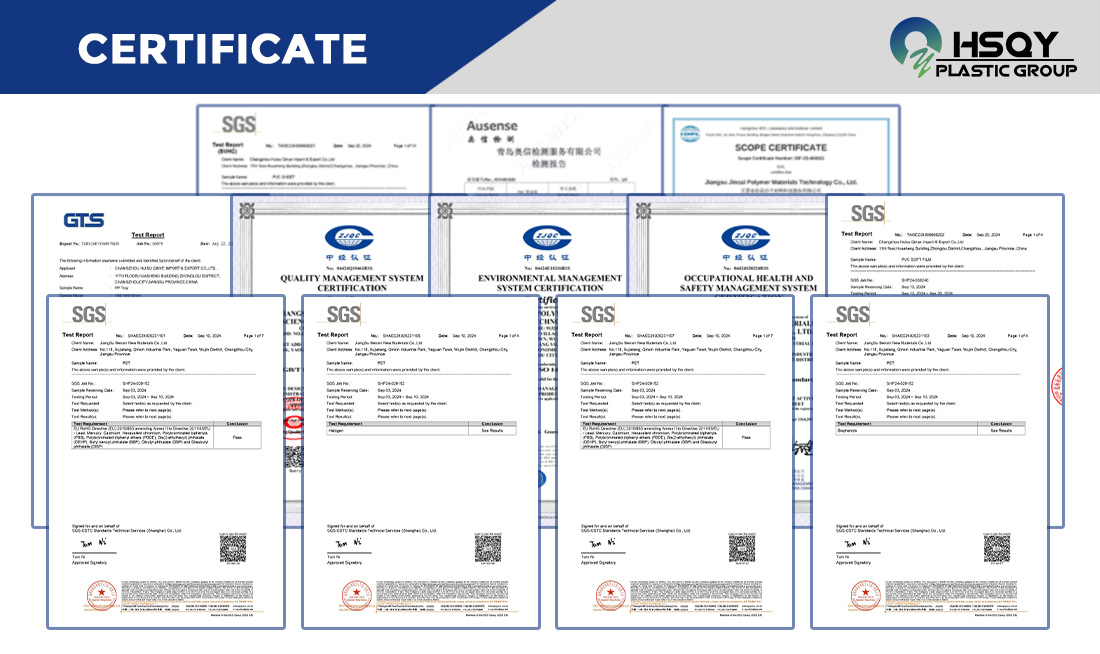
The image below is retained from the original page. Buyers should request the current certificate number, scope, validity date and matching product test report. RoHS documentation does not by itself establish food-contact suitability, and SGS is a testing organization rather than a single universal product approval.

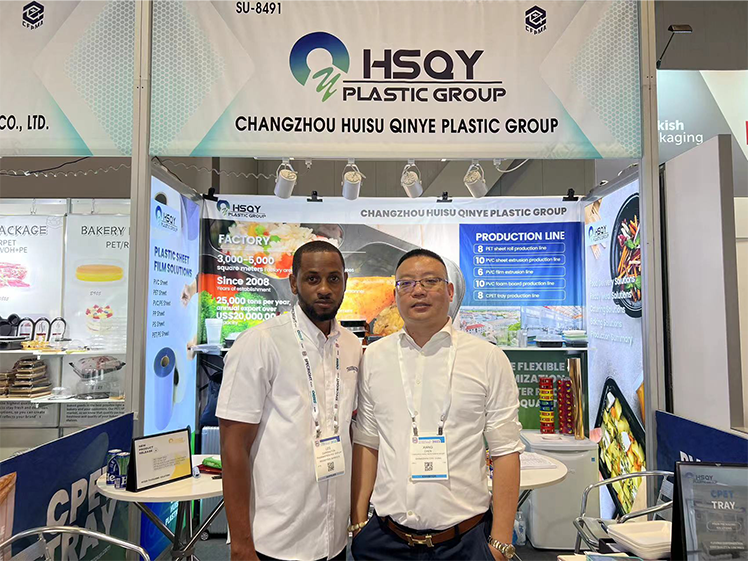
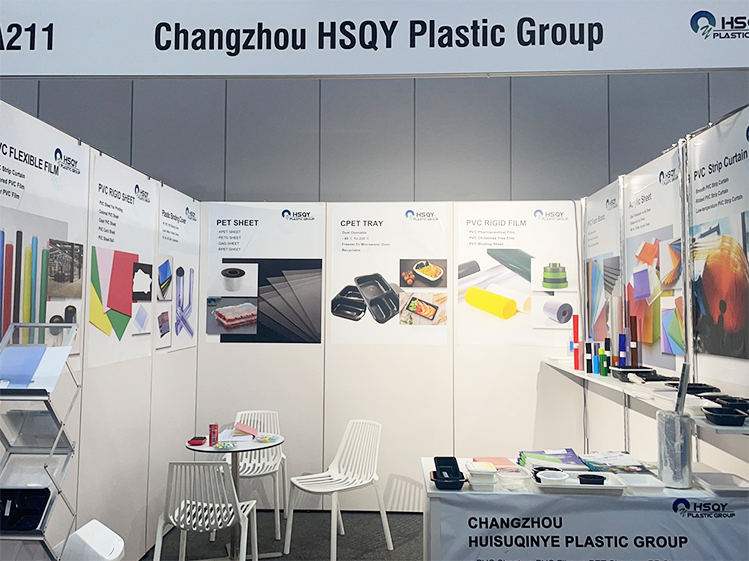
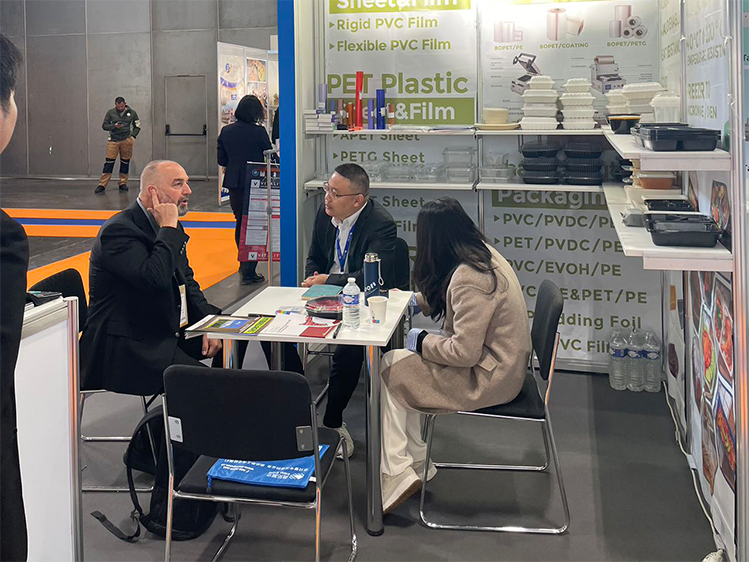
Global Exhibitions

2017 Shanghai Exhibition

2018 Shanghai Exhibition

2023 Saudi Exhibition

2023 American Exhibition

2024 Australian Exhibition

2024 American Exhibition

2024 Mexico Exhibition

2024 Paris Exhibition
Frequently Asked Questions About PET/PA/PE Lamination Film
What is PET/PA/PE lamination film?
PET/PA/PE lamination film is a multilayer flexible packaging material. PET provides printability and dimensional stability, PA provides toughness and puncture resistance, and PE provides moisture resistance and heat sealing.
What is PET/PA/PE film used for?
It is commonly evaluated for vacuum packaging, frozen food, liquid or sauce pouches, pet food, printed roll stock and industrial packaging. The exact structure must be selected according to the packed product and process.
Is PET/PA/PE film a high-barrier film?
It can provide improved gas and mechanical protection compared with simpler PE or PET/PE structures, but the phrase “high barrier” should be supported by target OTR and WVTR values. Very oxygen-sensitive products may require EVOH, PVDC, AlOx, metallized film or aluminum foil.
Can PET/PA/PE film be used for vacuum packaging?
Yes, suitable structures can be used for vacuum packaging because PA improves toughness and puncture resistance while PE provides the sealing layer. Film thickness, vacuum level, product edges and seal strength should be tested.
Can PET/PA/PE film be used for frozen food?
It can be suitable for frozen food when the selected PA, PE, adhesive and total structure maintain impact resistance, seal integrity and flex-crack resistance at the required storage temperature.
Is PET/PA/PE film suitable for retort pouches?
Not automatically. Standard PE sealant layers may not be suitable for retort sterilization. A retort application requires a specially engineered and validated structure, often using a heat-resistant sealant such as retort-grade CPP or another approved material.
Is PET/PA/PE film food safe?
Food-contact suitability depends on the exact resins, inks, adhesives, additives and destination-market regulations. Request a food-contact declaration and applicable migration or compliance test reports for the final structure. RoHS alone is not a food-contact approval.
What thicknesses and widths are available?
The original product specification lists widths from 160mm to 2600mm and total thicknesses from 0.045mm to 0.35mm. Final availability depends on layer design, printing, slitting and production requirements.
Can PET/PA/PE film be custom printed?
Yes. Custom printing can be discussed for roll stock and converted pouches. Provide artwork, color count, printing area, surface finish, roll direction and annual volume for evaluation.
What information is needed to calculate shelf life?
Provide the product's oxygen and moisture sensitivity, target shelf life, filling process, storage temperature, package dimensions, headspace, OTR, WVTR and sealing conditions. Shelf life cannot be predicted accurately from the material name alone.
Can PET/PA/PE film be used on VFFS or HFFS machines?
Yes, suitable roll stock can be engineered for vertical or horizontal form-fill-seal machines. Machine model, forming method, sealing-jaw type, speed, roll dimensions, registration requirements and unwind direction should be provided.
Are samples available?
Stock samples or trial material may be available for checking appearance, print quality, sealing, puncture resistance and machine compatibility. Courier cost and custom trial conditions should be confirmed with HSQY.
What is the MOQ for PET/PA/PE lamination film?
The listed standard MOQ is 1,000kg. Custom printing, special resin grades, unusual widths or application-specific structures may require a different minimum quantity.
How do I request a quotation?
Send the packed product, film or pouch dimensions, thickness, quantity, printing requirements, machine type, filling and storage conditions, barrier targets, destination market and delivery port through the HSQY contact page.
Why Choose HSQY as Your PET/PA/PE Film Supplier?
HSQY Plastic Group supplies flexible packaging films and plastic sheet products to international converters, food manufacturers, packaging distributors and industrial customers.
Support can include structure discussion, custom width and thickness, printed roll stock, sample evaluation, technical document review, export packing and bulk production.
For an accurate recommendation, provide measurable barrier, seal, machine and compliance requirements instead of only requesting a generic PET/PA/PE structure.
Request a Quote and Sample





 Download PET/PA/PE Lamination Film Data Sheet