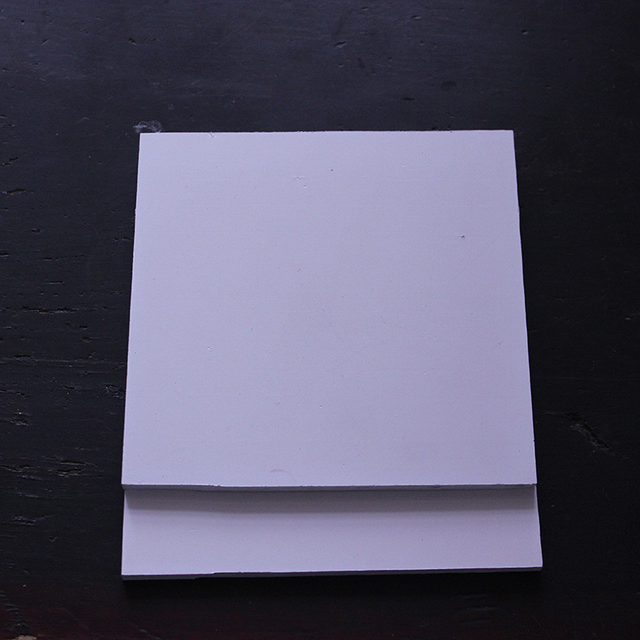
What Is a Rigid Grey PVC Sheet?
A rigid grey PVC sheet is a high-density thermoplastic board manufactured from polyvinyl chloride resin, stabilizers, pigments and application-specific additives. It is also commonly described as a grey PVC board, industrial PVC sheet, hard PVC sheet or rigid PVC plastic panel.
Grey rigid PVC sheets combine useful mechanical strength, low moisture absorption, electrical insulation and resistance to many acids, alkalis and industrial chemicals. They can be cut, drilled, routed, machined, welded, thermoformed and fabricated into industrial components.
HSQY supplies virgin and recycled-content grey PVC sheets for chemical processing equipment, construction panels, engraving, advertising, water-treatment projects, machine components, tank linings, laboratory equipment and electrical applications.
Is PVC Grey Board the Same as Paper Greyboard?
No. Industrial PVC grey board and paper greyboard are two different materials.
| Comparison | Rigid PVC Grey Board | Paper Greyboard |
| Main Material | Polyvinyl chloride plastic | Recycled paper fibers and paper pulp |
| Water Resistance | Low moisture absorption and suitable for wet industrial environments | Can absorb moisture, swell or lose strength |
| Chemical Resistance | Resistant to many acids, alkalis and industrial chemicals | Limited chemical resistance |
| Typical Applications | Chemical tanks, ducting, machine parts, construction, engraving and electrical equipment | Book covers, gift boxes, folders, puzzles and rigid paper packaging |
HSQY PVC grey board products in this category are rigid plastic sheets. They are not paper-fiber boards coated with PVC.
Grey PVC Sheet Specifications
The following table summarizes common HSQY rigid grey PVC sheet specifications. Exact properties should be confirmed for the selected material grade and order.
| Product Name | Industrial Rigid Grey PVC Sheet |
| Material | Rigid polyvinyl chloride, PVC |
| Material Options | Virgin PVC, recycled-content PVC and project-specific formulations |
| Total Thickness Range | Approximately 1.0–40.0 mm |
| Common Thickness Range | 3.0–16.0 mm |
| Standard Sizes | 920 × 1820 mm, 1000 × 2000 mm, 1220 × 2440 mm and 1300 × 2000 mm |
| Custom Sizes | Custom length, width and cut-to-size panels are available |
| Reference Density | Approximately 1.50 g/cm³, depending on formulation |
| Available Colors | Light grey, dark grey, black, white, green, blue and custom colors |
| Surface | Smooth matte or project-specific finish |
| Reference Tensile Strength | Greater than 52 MPa for selected grades |
| Reference Impact Strength | Greater than 5 kJ/m² for selected grades |
| Reference Vicat Softening Point | Greater than 75°C for selected decorative grades and greater than 80°C for selected industrial grades |
| Fabrication Methods | Cutting, drilling, routing, milling, turning, engraving, bending, thermoforming, bonding and plastic welding |
| Typical MOQ | Approximately 1,000 kg |
| Reference Lead Time | Approximately 15–18 working days after specification and order confirmation |
Mechanical, chemical, electrical, fire and temperature performance can vary with resin grade, recycled content, filler level, pigment and additives. Buyers should request the technical data and test documentation for the exact material being ordered.
Key Properties of Rigid Grey PVC Board
Chemical Resistance
Rigid grey PVC sheet has useful resistance to many acids, alkalis, salts, alcohols and water-based chemical solutions. This makes it suitable for chemical-processing equipment, tank linings, plating equipment and laboratory fabrication.
Chemical compatibility must be checked against the actual substance, concentration, temperature, pressure and exposure time. PVC is not universally resistant to every solvent or chemical.
High Rigidity and Structural Stability
The high-density solid construction provides greater rigidity than flexible PVC films and lightweight PVC foam boards. Properly selected thicknesses can be used for self-supporting panels, equipment housings, machine components and fabricated structures.
Low Moisture Absorption
Rigid PVC does not readily absorb water, helping the sheet maintain its dimensions in humid, wet or wash-down environments.
Electrical Insulation
PVC has useful dielectric properties and can be considered for electrical housings, insulating panels, terminal-box components and other non-conductive applications.
Projects with a specified dielectric strength, operating voltage or electrical standard should use a tested material grade.
Self-Extinguishing Behavior
Rigid PVC generally has better flame behavior than many common thermoplastics and may stop burning after the ignition source is removed.
The sheet should not be described as fireproof. UL 94, ASTM E84, EN 13501 or other fire ratings must be verified using documentation for the exact formulation, thickness and test method.
Easy Mechanical Fabrication
Grey PVC board can be processed using conventional woodworking and plastic-fabrication equipment. It can be saw-cut, CNC-routed, drilled, milled, engraved, turned and mechanically fastened.
Virgin PVC vs. Recycled PVC Grey Board
HSQY can supply both virgin-material and recycled-content grey PVC sheets. The appropriate grade depends on the mechanical, visual, environmental and cost requirements of the project.
| Comparison | Virgin PVC Grey Sheet | Recycled PVC Grey Sheet |
| Raw Material | Primarily virgin PVC resin and controlled additives | Contains recycled PVC material with application-specific additives |
| Color Consistency | Generally easier to control consistently | May have greater color variation between batches |
| Mechanical Performance | Generally preferred for demanding structural, chemical and precision-machining applications | Suitable for cost-sensitive applications where performance has been validated |
| Surface Appearance | More consistent surface and fewer visible impurities | Surface appearance may vary according to recycled feedstock |
| Typical Positioning | Chemical equipment, electrical components, precision parts and premium industrial projects | Construction, formwork, backing panels, engraving and general-purpose applications |
Recycled PVC grey board is still a plastic material. It is not manufactured from recycled paper fibers.
Applications of Grey Rigid PVC Sheets
Chemical Tanks and Tank Linings
Rigid grey PVC sheets can be fabricated into chemical tanks, process vessels, plating tanks, collection trays and corrosion-resistant tank linings.
Sheet thickness, reinforcement, welding design and chemical compatibility must be calculated according to tank dimensions, liquid density, operating temperature and mechanical load.
Industrial Ducting and Fume Extraction
Grey PVC board can be welded into ventilation ducts, fume extraction systems, scrubber components and equipment covers for corrosive industrial environments.
Laboratory Equipment
Applications include laboratory cabinets, work surfaces, splash guards, sinks, equipment housings and chemical storage components.
Water Treatment and Water Conservancy Projects
Rigid PVC panels can be considered for water-treatment equipment, baffles, tank dividers, equipment linings and non-pressure fabricated components.
Mechanical Parts and Machine Components
CNC-machined grey PVC sheets can be converted into spacers, mounting plates, covers, supports, guides, guards and other fabricated machine components.
Construction and Formwork
Thick grey PVC boards can be used for reusable formwork, temporary construction panels, protective partitions, backing panels and moisture-resistant building applications.
Structural load, support spacing, impact conditions, outdoor exposure and local building requirements must be evaluated before installation.
Advertising, Signage and Engraving
The smooth grey surface can be routed, engraved, painted or printed for industrial signs, identification boards, equipment labels, display panels and architectural models.
Electrical Insulation Components
Grey rigid PVC may be used for electrical housings, switchboard components, battery-area panels and insulating barriers where the selected grade meets the required electrical specification.
How to Choose the Right Grey PVC Sheet Thickness
| Thickness Range | General Characteristics | Possible Applications |
| 1–2 mm | Thin and relatively flexible compared with thicker rigid boards | Liners, covers, lightweight panels and fabricated components |
| 3–5 mm | Balanced weight, rigidity and fabrication performance | Signage, guards, partitions, cabinet panels and equipment covers |
| 6–10 mm | Increased stiffness and machining depth | Tank walls, machined parts, work surfaces, machine components and industrial panels |
| 12–20 mm | High rigidity for heavy-duty fabrication | Large tanks, structural supports, thick machined components and formwork |
| 25–40 mm | Heavy solid board for specialized fabrication | Heavy machined parts, structural blocks and custom industrial components |
These thickness recommendations are general references. Engineering calculations should consider panel dimensions, support spacing, operating temperature, chemical exposure, liquid pressure, wind load and required safety factors.
Grey PVC Sheet Fabrication Methods
Saw Cutting
Circular saws, panel saws and table saws can be used with blades suitable for rigid plastic sheets. The board should be supported to reduce vibration and edge chipping.
CNC Routing and Milling
CNC equipment can produce custom profiles, grooves, recesses, holes, slots, channels and precision-machined parts.
Cutter geometry, feed speed and spindle speed should be adjusted to avoid excessive heat, melting or rough edges.
Drilling
Standard drills can be used when the sheet is properly supported. Suitable clearance should be provided around fasteners to allow for thermal expansion.
Hot Bending and Thermoforming
Rigid PVC sheet can be heated and formed into angles, channels, covers and other shapes. Heating should be uniform and carefully controlled to avoid discoloration, burning or internal stress.
Plastic Welding
Hot-air welding and extrusion welding can join rigid PVC panels for tanks, ducts, trays and fabricated equipment.
The welding rod, sheet formulation and welding parameters should be compatible. Structural and leak-critical welds should be performed by trained fabricators.
Adhesive Bonding
Compatible PVC solvent cements and industrial adhesives can be used for selected joints. Surface cleaning, joint design, curing time and chemical exposure should be considered.
Can Grey PVC Sheets Be Printed or Engraved?
Yes. Grey rigid PVC sheets can support CNC engraving, mechanical marking, screen printing and suitable UV flatbed printing.
Ink and coating adhesion depends on surface cleanliness, surface energy, ink chemistry and curing conditions. Printing tests should be completed before mass production.
Standard offset printing processes developed for paper should not automatically be assumed to work on thick rigid PVC boards.
Grey Rigid PVC vs. PVC Foam Board
| Comparison | Solid Grey Rigid PVC | PVC Foam Board |
| Structure | Solid, high-density PVC | Cellular or foamed PVC core |
| Density | Higher density and heavier | Lower density and lighter |
| Chemical Equipment | More suitable for tanks, linings, ducting and industrial fabrication | Normally selected for signs, displays, cabinetry and lightweight panels |
| Machining | Suitable for precision machining and solid fabricated parts | Easy to cut but less suitable for highly loaded machined parts |
| Weight | Higher weight at the same dimensions | Lower shipping and handling weight |
Grey PVC vs. PP, HDPE and CPVC Sheets
| Material | Main Advantages | Main Limitations | Typical Selection |
| Rigid PVC | High rigidity, useful chemical resistance, weldability, electrical insulation and favorable flame behavior | Limited continuous high-temperature performance and not resistant to every solvent | Tanks, ducting, laboratory equipment, electrical panels and machined industrial parts |
| PP | Low density, chemical resistance, weldability and higher service-temperature potential than standard PVC | Lower rigidity and higher thermal expansion | Chemical tanks, plating equipment, food processing and higher-temperature wet environments |
| HDPE | Excellent impact performance, low moisture absorption and good chemical resistance | Lower stiffness and more difficult adhesive bonding | Liners, cutting boards, tanks, outdoor components and impact-resistant parts |
| CPVC | Higher temperature capability while retaining useful chemical resistance | Higher material cost and different fabrication requirements | Hot corrosive liquids, high-temperature ducting and demanding chemical processes |
Temperature Limitations of Rigid PVC Sheets
Vicat softening temperature is not the same as a recommended continuous operating temperature. The actual usable temperature depends on load, sheet thickness, exposure time, chemical environment and required dimensional stability.
Standard rigid PVC should not be selected for continuous high-temperature applications without technical evaluation. CPVC, PP, PVDF or another engineering plastic may be more suitable when the application involves hot liquids or elevated process temperatures.
Can Grey PVC Sheets Be Used Outdoors?
UV-stabilized grey PVC grades can be evaluated for outdoor panels, signs, equipment housings and construction applications.
Long-term outdoor performance depends on UV stabilizers, pigment, temperature cycling, installation method, exposure direction and climate. Standard indoor grades should not automatically be promoted as permanently weatherproof.
Custom Grey PVC Sheet Options
HSQY supports customized rigid PVC sheet projects for fabricators, chemical-equipment manufacturers, construction companies, distributors and industrial users.
Custom sheet thickness
Custom length and width
Cut-to-size rectangular panels
Light grey, dark grey or custom color
Virgin or recycled-content PVC
Custom density and formulation
UV-stabilized grades
Application-specific flame-retardant grades
Anti-static or electrical grades subject to specification
CNC cutting and routing
Drilled holes and machined slots
Engraving and custom profiles
Protective surface film
Custom pallet and export packaging
Quality Control for Industrial Grey PVC Sheets
Stable material quality is important for machining, welding, chemical fabrication and structural assembly.
Relevant inspection items may include:
Material formulation and recycled-content confirmation
Sheet length and width
Thickness and thickness tolerance
Density and sheet weight
Flatness and warpage
Color consistency
Surface scratches, pits and impurities
Edge condition and cutting quality
Tensile and impact performance when specified
Vicat softening temperature when specified
Chemical resistance for project-specific media
Welding and machining performance
Pallet strength and shipping protection
Documentation and Compliance
Documentation requirements vary according to the PVC formulation, application and destination country.
Buyers should state whether they require:
Technical data sheet
Material safety information
RoHS declaration
REACH-related documentation
Heavy-metal or restricted-substance testing
Flammability test report
Mechanical property report
Chemical-resistance information
Batch inspection report
Certificates and test reports should be confirmed for the exact product grade rather than assumed to apply to every PVC grey board.
Packaging and International Shipping
Grey PVC sheets are generally stacked, protected with kraft paper or wrapping film and secured on export pallets.
Additional packaging options may include:
Protective film on one or both sides
Kraft-paper wrapping
Corner and edge protectors
Steel or plastic pallet straps
Fumigation-free export pallets
Custom labels and pallet marks
Customer-logo packaging
Container loading quantity depends on sheet thickness, dimensions, density, pallet height and maximum allowable loading weight.
Why Choose HSQY as Your Grey PVC Sheet Manufacturer?
Direct manufacturer supply: Factory support for industrial fabricators, distributors and bulk purchasers.
Wide thickness range: Sheets from approximately 1 mm to 40 mm are available.
Multiple sheet sizes: Standard and custom dimensions can be supplied.
Virgin and recycled grades: Different material structures can be evaluated according to performance and cost requirements.
Custom fabrication: Cutting, drilling, routing and engraving services can be discussed.
Industrial application support: Materials can be selected for chemical, construction, advertising and mechanical projects.
Sample evaluation: Samples can be arranged for machining, welding, chemical exposure and appearance testing.
Export packaging: Palletizing and international shipping support are available.
Related PVC materials: Customers can also review HSQY's PVC sheet range.
Information Required for a Grey PVC Sheet Quote
To receive an accurate factory quotation, please provide as much of the following information as possible:
Required thickness
Sheet length and width
Required quantity or annual demand
Light grey, dark grey or custom color
Virgin or recycled-content material
Required density or sheet weight
Final product and application
Chemical name, concentration and operating temperature
Indoor or outdoor use
Required mechanical properties
Required flame or electrical standard
Cutting, drilling, routing or engraving requirements
Protective-film requirement
Required test reports or declarations
Pallet and packaging requirements
Destination port or delivery address
Frequently Asked Questions About Grey PVC Sheets
What is grey PVC board made from?
Grey PVC board is made primarily from rigid polyvinyl chloride resin, stabilizers, grey pigments and application-specific additives. Some grades contain recycled PVC, but they are not manufactured from recycled paper fibers.
Is grey PVC sheet solid or foamed?
The products in this category are high-density rigid PVC sheets. They should not be confused with lightweight expanded or foamed PVC boards.
What thicknesses are available?
HSQY offers an overall thickness range of approximately 1–40 mm. Common product specifications are between 3 and 16 mm.
What is the standard size of a grey PVC sheet?
Common sizes include 920 × 1820 mm, 1000 × 2000 mm, 1220 × 2440 mm and 1300 × 2000 mm. Custom dimensions and cut-to-size panels can also be discussed.
Is grey PVC sheet resistant to acids and alkalis?
Rigid PVC is resistant to many acids, alkalis and salt solutions. Compatibility depends on the exact chemical, concentration, temperature and exposure period. A chemical-resistance review is required for critical applications.
Can grey PVC board be used to manufacture chemical tanks?
Yes, suitable rigid PVC grades can be welded into chemical tanks, plating tanks, trays and linings. The design must account for chemical compatibility, liquid pressure, temperature, reinforcement and welding quality.
Is rigid PVC sheet fireproof?
No plastic sheet should be described as fireproof without appropriate testing. Rigid PVC generally has self-extinguishing characteristics, but any specific fire rating must be verified for the exact grade and thickness.
Can grey PVC sheet be used outdoors?
UV-stabilized grades can be evaluated for outdoor use. Long-term weathering performance depends on formulation, climate, installation and exposure conditions.
Can rigid PVC board be CNC machined?
Yes. It can be routed, milled, drilled, turned and engraved using suitable cutting tools and controlled machining parameters.
Can grey PVC sheet be laser cut?
Conventional laser cutting is generally not recommended for PVC because heating the material can generate corrosive fumes and damage laser equipment. Mechanical cutting or CNC routing is usually preferred.
Can PVC sheets be welded together?
Yes. Rigid PVC sheets can be joined using hot-air or extrusion welding with compatible PVC welding rod. Leak-critical equipment should be welded and tested by qualified fabricators.
Can grey PVC board be printed?
Screen printing and compatible UV flatbed printing can be used after surface preparation and ink-adhesion testing. Printing performance depends on the ink, surface condition and curing system.
What is the difference between virgin and recycled grey PVC?
Virgin PVC normally provides better control of color, surface appearance and mechanical consistency. Recycled PVC can provide a more economical solution for applications where the required performance has been verified.
Is grey PVC board recyclable?
Rigid PVC can be mechanically recycled where suitable collection, separation and processing facilities exist. Actual recyclability depends on the formulation, contamination and local recycling infrastructure.
Can HSQY provide custom-cut PVC panels?
Yes. Custom sheet dimensions, rectangular cutting, CNC routing, drilling, slots and engraved profiles can be discussed according to drawings and order quantity.
Can I request a sample before ordering?
Samples can be arranged for color, surface, machining, welding and chemical-compatibility evaluation. Please provide the required thickness, grade and application.
What is the MOQ for grey PVC sheets?
The typical MOQ is approximately 1,000 kg. The final minimum quantity depends on thickness, dimensions, color, material formulation and fabrication requirements.
What is the production lead time?
The reference production time is approximately 15–18 working days after specifications and order details are confirmed. Custom formulations, colors and machining may require additional time.
Request a Grey PVC Sheet Quote
Looking for a rigid grey PVC sheet manufacturer, chemical-resistant PVC board supplier or custom-cut industrial PVC panel?
Contact HSQY to request technical data, samples, material recommendations, custom dimensions, fabrication support, factory pricing and international shipping information.
Request a Quote