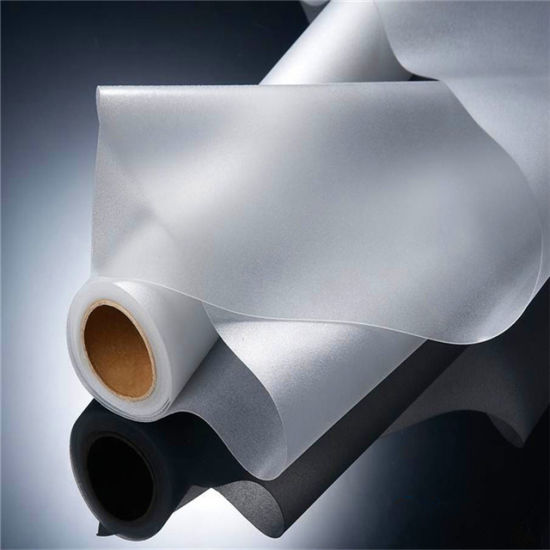
Matte PET Sheet and Film Manufacturer
HSQY PLASTIC manufactures and supplies matte PET sheet and matte PET film for printing, folding boxes, stationery, vacuum forming, thermoforming, packaging, display components and industrial converting applications.
Also known as matt PET sheet, matte polyester sheet, matte PET film or matt polyester film, this PET material features a low-gloss, frosted or finely textured surface that reduces strong visible reflections and provides a softer appearance than conventional glossy PET.
HSQY supplies both thin matte PET film and thicker semi-rigid or rigid PET sheet products. Current product families include thin materials from approximately 50–400 μm and thick-gauge matte PET sheet and roll products from approximately 0.18–1.2 mm. Exact thickness availability, tolerance and surface finish should be confirmed according to the selected product and application.
What Is Matte PET Sheet?
Matte PET sheet is a polyethylene terephthalate material with a low-gloss, frosted or textured surface instead of the highly polished appearance found on conventional glossy PET.
The matte surface diffuses reflected light, creating a softer visual appearance and generally making fingerprints, minor handling marks and small surface imperfections less visible than on a highly polished surface.
Depending on thickness and manufacturing method, matte PET can be supplied as flexible film, semi-rigid sheet, rigid sheet, flat cut sheets, rolls or slit rolls.
Matte PET Sheet vs. Matte PET Film
Buyers frequently use the terms "matte PET sheet" and "matte PET film" interchangeably, but these materials can be designed for very different converting processes.
| Feature | Matte PET Sheet | Thin Matte PET / BOPET Film |
| Typical Thickness | Common HSQY thick-gauge range approximately 0.18–1.2 mm | Specified primarily in microns for flexible-film applications |
| Mechanical Behavior | Semi-rigid to rigid depending on thickness | Thin and flexible |
| Typical Processing | Printing, die cutting, scoring, folding, thermoforming and vacuum forming | Web printing, lamination, coating, heat transfer, metallizing and flexible packaging |
| Typical Applications | Folding boxes, binding covers, stationery, displays and formed packaging | Labels, lamination, flexible packaging, heat-transfer printing and specialty converting |
When requesting a quotation, buyers should specify the required thickness in millimeters or microns together with the final manufacturing process so HSQY can recommend the appropriate PET product family.
Matte PET Sheet Specifications
| Product | Matte PET Sheet / Matte PET Film / Matt Polyester Sheet |
| Material | Polyethylene Terephthalate (PET) |
| Thin-Film Product Range | Selected products approximately 50–400 μm; confirm by product model |
| Thick-Gauge Product Range | Approximately 0.18–1.2 mm for current mainstream thick-gauge products |
| Standard Sheet Sizes | 610 × 610 mm, 700 × 1000 mm, 915 × 1220 mm, 915 × 1830 mm, 1220 × 2440 mm and other available sizes |
| Roll Width | Approximately 110–1280 mm for selected current products; custom slitting subject to production requirements |
| Supply Form | Flat sheets, cut sheets, rolls and slit rolls |
| Surface | Matte, frosted, low-gloss, fine matte or coarse matte according to product |
| Matte Configuration | Single-side matte, double-side matte or custom surface combination subject to confirmation |
| Appearance | Transparent, translucent or customized color according to formulation and surface |
| Density | Approximately 1.35 g/cm³ for selected current products; final value depends on formulation |
| Processing | Printing, die cutting, slitting, scoring, folding, vacuum forming, thermoforming and lamination |
| Custom Options | Thickness, width, sheet size, roll width, color, matte appearance, surface treatment and protective film |
Key Benefits of Matte PET Sheet
Low-Gloss Appearance: The matte surface reduces strong specular reflections and creates a softer visual finish than polished glossy PET.
Premium Packaging Appearance: Frosted and matte surfaces can provide a differentiated presentation for folding boxes, stationery, printed graphics and branded packaging.
Reduced Visibility of Fingerprints: Minor handling marks and fingerprints are generally less noticeable on a matte texture than on a highly polished clear PET surface.
Good Dimensional Stability: Appropriate PET grades provide practical stiffness and dimensional stability for printing, cutting, folding and fabricated plastic parts.
Printing Capability: Printing-compatible grades can support screen printing, UV printing and selected offset printing processes after the appropriate surface and ink system have been confirmed.
Converting Capability: Suitable grades can be die cut, slit, scored, folded, vacuum formed and thermoformed for different packaging and industrial applications.
Custom Supply: HSQY can discuss custom thicknesses, sheet dimensions, roll widths, matte textures, colors and surface configurations according to B2B project requirements.
Matte PET vs. Anti-Glare Hard-Coated PET
Standard matte PET and optical-grade anti-glare hard-coated PET should not automatically be treated as the same product.
| Feature | Standard Matte PET | Specialized Anti-Glare / Hard-Coated PET |
| Main Purpose | Low-gloss or frosted appearance | Controlled optical glare plus application-specific functional performance |
| Surface | Matte or textured PET surface | Specialized functional coating or engineered hardcoat |
| Scratch / Abrasion Performance | Depends on PET grade, surface and optional coating | Can be specifically engineered and tested for abrasion resistance |
| Typical Applications | Packaging, printing, stationery, folding boxes and general display applications | Display overlays, touch interfaces, control panels and specialized optical applications |
If your project requires a defined gloss value, haze, optical clarity, pencil hardness, abrasion resistance or anti-glare performance, include the required test method and target values in your inquiry instead of specifying only "matte PET."
Applications of Matte PET Sheet and Film
Matte PET Sheet for Printing
Printing-compatible matte PET sheet can be used for screen-printed graphics, UV-printed components, promotional materials, labels, packaging and decorative panels.
Ink adhesion depends on PET surface energy, matte texture, ink chemistry, curing conditions and any corona or chemical treatment. Buyers should provide their printing process before ordering production material.
Matte PET Sheet for Folding Boxes
Matte PET can be die cut, scored and folded into translucent folding boxes, packaging sleeves, gift packaging, garment boxes and other retail packaging components.
Thickness, crease depth, folding radius and material direction should be optimized according to box dimensions and product weight to reduce spring-back, whitening or cracking.
Matte PET Sheet for Stationery
Typical stationery applications include binding covers, notebook covers, folders, dividers, menu covers, document covers, craft sheets and printed protective covers.
Matte PET can provide a subdued appearance while maintaining useful stiffness and moisture resistance for frequently handled stationery products.
Matte PET Sheet for Thermoforming
Suitable matte PET grades can be vacuum formed or thermoformed into packaging trays, covers, inserts and shaped plastic components.
Heating and stretching can alter matte texture, haze and local wall thickness, so forming performance should be evaluated using the actual mold, draw ratio, heating cycle and cooling conditions.
Matte PET for Display and Decorative Applications
Matte PET can be used for display inserts, point-of-purchase panels, promotional graphics, signage, decorative sheets and translucent components where a lower-gloss appearance is preferred.
Matte PET for Industrial Applications
Selected PET materials can be used for protective sheets, separators, overlays and other fabricated industrial components.
If electrical insulation, chemical resistance, temperature performance or another certified industrial property is required, the relevant PET grade and test method should be specified before material selection.
How to Choose Matte PET Sheet Thickness
The correct thickness depends on stiffness, product dimensions, printing method, folding design, forming depth and final use. The following ranges are general selection directions rather than fixed engineering specifications.
| Thickness Range | General Characteristics | Typical Applications |
| 50–180 μm | Thin and flexible | Selected printing, packaging, protective-film and flexible converting applications |
| 0.18–0.30 mm | Lightweight and relatively flexible | Binding covers, dividers, overlays, lightweight packaging and small folding components |
| 0.30–0.50 mm | Balance between flexibility and stiffness | Folding boxes, stationery, printed sheets, packaging windows and shallow forming |
| 0.50–0.80 mm | Greater rigidity and dimensional support | Larger boxes, formed covers, trays, display panels and thermoformed components |
| 0.80–1.20 mm | Higher stiffness with greater forming and creasing requirements | Rigid covers, larger panels, industrial components and heavier thermoformed parts |
If your project already uses another PET sheet, send the existing thickness, dimensions and a physical sample so HSQY can evaluate a comparable material.
Fine Matte vs. Coarse Matte PET Surface
| Surface | Appearance | Typical Selection Direction |
| Fine Matte | Finer texture with a softer low-gloss appearance | Printing, premium packaging, stationery and decorative applications |
| Coarse Matte | More visible texture and stronger diffusion of direct reflections | Applications requiring a more pronounced textured appearance |
Terms such as fine matte and coarse matte can vary between suppliers, so buyers with strict appearance requirements should approve a physical sample or provide target gloss, haze and texture references.
Single-Sided vs. Double-Sided Matte PET
Matte PET can be specified with different surface configurations according to printing, appearance and processing requirements.
| Configuration | Description | Typical Consideration |
| Single-Side Matte | One matte surface with a different finish on the reverse side | Useful when only one visible face requires a matte appearance |
| Double-Side Matte | Matte appearance on both surfaces | Suitable when both sides remain visible or require similar tactile appearance |
| Customized Combination | Surface configuration developed according to project needs | Confirm production feasibility, MOQ and required surface values |
Matte PET Sheet for Printing
Matte PET is frequently selected for printing because its subdued surface can provide a distinctive graphic appearance compared with glossy transparent PET.
Suitable grades can be evaluated for screen printing, UV printing and offset printing. However, printing compatibility depends on surface treatment, ink chemistry, curing conditions and the final converting process.
Does Matte PET Need Corona Treatment?
Corona treatment is not automatically required for every printing process. The correct treatment depends on the PET surface, ink system, printing technology and required adhesion.
Buyers should provide the intended ink, printing process and adhesion requirement when requesting material so a treated or printing-compatible grade can be evaluated.
Printing Tests Recommended Before Mass Production
• Ink adhesion
• Color density and appearance
• Curing temperature
• Scratch and rub resistance of printed ink
• Folding after printing
• Die-cutting after printing
• Lamination or adhesive compatibility
• Surface appearance after processing
Matte PET Sheet for Folding and Die Cutting
Appropriate matte PET thicknesses can be die cut, scored and folded for packaging, stationery and fabricated plastic products.
Die-cutting performance depends on blade condition, cutting pressure, sheet temperature, material direction and thickness. Sample testing should check edge quality, cracking, burrs and dimensional accuracy.
Folding performance depends on score width, crease depth, folding radius, thickness and material direction. Thicker PET generally requires more carefully controlled tooling.
Matte PET Sheet for Vacuum Forming and Thermoforming
Suitable thick-gauge matte PET sheet grades can be vacuum formed or thermoformed into trays, inserts, protective covers and three-dimensional packaging components.
Important forming parameters include sheet thickness, heating temperature, heating uniformity, mold temperature, draw ratio, cooling time and demolding conditions.
Because stretching can change the original matte texture and haze, buyers with strict appearance requirements should thermoform samples using the actual production mold before approving mass production.
Matte PET vs. Glossy PET Sheet
| Feature | Matte PET Sheet | Glossy PET Sheet |
| Surface Appearance | Low-gloss, frosted or textured | Smooth and polished |
| Reflection | Reduced visible reflections | Stronger reflected highlights |
| Product Visibility | Diffused or semi-transparent appearance depending on haze | Better direct visibility through clear grades |
| Fingerprints | Generally less noticeable | More visible on highly polished surfaces |
| Typical Positioning | Premium low-gloss packaging and graphic applications | High-clarity packaging and display applications |
Buyers requiring higher direct transparency can also review our Glossy PET Sheet product range.
Matte PET vs. Anti-Scratch PET Sheet
Matte surface appearance and scratch resistance are different product properties.
A matte texture may make minor marks less visible, but it should not automatically be described as a hard-coated or high-scratch-resistance surface unless the specific material has been designed and tested for that function.
Applications requiring specialized surface durability can also review Anti-Scratch PET Sheet.
Can Matte PET Sheet Be Used for Food Packaging?
PET is widely used in packaging, but food-contact suitability should be confirmed for the specific matte PET grade, resin, surface treatment, additive package, color and intended conditions of use.
If direct food contact is required, buyers should provide the destination market, food type, contact temperature, contact duration and applicable regulatory requirements before ordering.
Available PET technical data sheets, resin reports or other documentation should be matched to the exact product being purchased rather than applying one certification statement to every matte PET material.
Custom Matte PET Sheet and Roll Options
HSQY supports custom PET material supply for printing companies, packaging manufacturers, thermoformers, stationery manufacturers, plastic distributors and industrial converters.
Custom options can include:
• Customized PET thickness
• Custom sheet dimensions
• Custom roll width and slitting
• Flat sheet or roll supply
• Fine matte or coarse matte appearance
• Single-side or double-side matte surface
• Transparent or translucent appearance
• Custom colors subject to formulation requirements
• Printing-compatible surface treatment
• Protective film for processing
• Custom cutting tolerance
• Custom roll weight
• Export pallet and packaging requirements
Matte PET Quality Control
For B2B converting applications, consistent surface appearance and dimensions can be as important as the PET resin itself.
Recommended inspection and sample-approval items include:
• Thickness and thickness tolerance
• Width and sheet dimensions
• Matte level and surface texture
• Haze and transparency
• Single-side or double-side matte configuration
• Color and batch consistency
• Sheet flatness
• Stiffness and flexibility
• Printing adhesion
• Die-cutting edge quality
• Folding and crease-whitening behavior
• Thermoforming performance
• Adhesive and lamination compatibility
• Protective-film compatibility
• Required regulatory documentation
How to Choose the Right Matte PET Material
1. Define Whether You Need Film or Sheet
Specify whether the application requires thin flexible film, semi-rigid sheet or thicker thermoforming material.
2. Specify Thickness and Tolerance
Provide the required nominal thickness together with acceptable tolerance. Use microns for thin film and millimeters where appropriate for thicker sheet.
3. Define the Matte Surface
Confirm whether you need fine matte, coarse matte, low gloss, frosted appearance, single-side matte or double-side matte.
4. Specify Transparency and Haze
If the finished product must remain partially transparent, provide the required appearance or an approved reference sample.
5. Confirm the Printing Process
Specify screen printing, UV printing, offset printing, heat transfer or another process together with the ink system where possible.
6. Confirm Converting Requirements
Tell HSQY whether the material will be die cut, folded, laminated, vacuum formed, thermoformed, slit or processed using another method.
7. Specify Surface Protection
If scratch-sensitive downstream processing is involved, discuss protective film, interlayer protection or special packing requirements.
8. Confirm Regulatory Requirements
Provide any required food-contact, restricted-substance, electrical or market-specific documentation before final material approval.
9. Test Physical Samples
When surface appearance, printing or forming performance is critical, approve a physical sample using the actual manufacturing process before bulk production.
Packaging and International Shipping
Matte PET sheet and roll materials can be packed according to thickness, surface sensitivity, order volume and destination.
| Samples | A4 sheets, cut samples or limited-size roll samples according to availability |
| Sheet Packing | Protective bag, wrapping and pallet packing according to sheet dimensions |
| Roll Packing | Roll wrapping and pallet protection according to width, thickness and roll weight |
| Surface Protection | Protective film, PE wrapping, kraft paper or interlayer protection can be discussed |
| Export Packing | Plywood pallet or customized export packing according to shipment requirements |
Why Choose HSQY as Your Matte PET Sheet Manufacturer?
Multiple Matte PET Product Types: HSQY supplies both thin matte PET film products and thicker matte PET sheet and roll materials for different manufacturing processes.
Wide Thickness Selection: Current products cover thin-film specifications starting from approximately 50 μm together with mainstream thick-gauge PET sheet products up to approximately 1.2 mm.
Sheet and Roll Supply: Standard sheets, custom-cut sheets, rolls and slit rolls can be discussed according to production requirements.
Custom Surface Options: Fine matte, coarse matte, low-gloss, single-side matte and double-side matte configurations can be evaluated according to the required product appearance.
Multiple Converting Applications: Suitable products can support printing, folding boxes, die cutting, stationery, vacuum forming and thermoforming.
Broader PET Product Portfolio: Customers can also source PET Sheet, Glossy PET Sheet and Anti-Scratch PET Sheet according to different surface and application requirements.
Information Needed for a Matte PET Quote
| Thickness | Required micron or millimeter thickness and tolerance |
| Supply Form | Sheet, cut sheet, roll or slit roll |
| Dimensions | Sheet length × width or roll width × roll length / weight |
| Matte Surface | Fine matte, coarse matte, single-side matte, double-side matte or target sample |
| Appearance | Transparent, translucent, color, haze or gloss requirement |
| Processing | Printing, folding, die cutting, thermoforming, vacuum forming, lamination or other process |
| Printing Method | Screen, UV, offset, heat transfer or other printing process |
| Surface Treatment | Corona, printing treatment, protective film or other requirement |
| Application | Folding box, printing, stationery, thermoforming, display, industrial component or other use |
| Quantity | Trial quantity, regular order quantity and estimated annual demand |
| Destination | Destination country and port |
Matte PET Sheet FAQ
What is matte PET sheet?
Matte PET sheet is polyethylene terephthalate sheet with a low-gloss, frosted or textured surface. It provides a softer visual appearance and reduces strong surface reflections compared with glossy PET.
Is it called matt PET or matte PET?
Both spellings are used. "Matte PET" is common in American English, while "matt PET" is also widely used internationally. Both generally refer to PET material with a low-gloss or textured surface.
What is matte PET sheet used for?
Common applications include printing, folding boxes, binding covers, stationery, packaging windows, display panels, protective covers, vacuum forming and thermoforming.
What thicknesses of matte PET does HSQY offer?
Current HSQY product families include selected thin matte PET materials from approximately 50–400 μm and thick-gauge products commonly available from approximately 0.18–1.2 mm. Exact availability depends on the product and specification.
What is the difference between matte PET sheet and matte BOPET film?
Matte PET sheet is generally thicker and used for printing, folding, thermoforming and fabricated parts. Matte BOPET film is usually much thinner and is commonly used for flexible packaging, lamination, labels, heat transfer and other roll-to-roll converting applications.
Is matte PET transparent?
Matte PET can be transparent or translucent, but the textured surface diffuses light and reduces direct clarity. Final appearance depends on haze, thickness, texture and lighting conditions.
Is matte PET the same as frosted PET?
The terms are often used for similar low-gloss visual effects, but actual texture, haze and gloss can vary considerably. Buyers with a strict appearance target should approve a physical sample.
Does matte PET reduce glare?
A matte texture can reduce strong visible reflections compared with a glossy surface. However, standard matte PET should not automatically be treated as a certified optical anti-glare film with defined optical performance.
Is matte PET scratch resistant?
A matte surface can make minor handling marks less visible, but actual scratch and abrasion resistance depend on the PET grade and surface treatment. Applications requiring high scratch resistance should specify a hard-coated or tested anti-scratch product.
Can matte PET sheet be printed?
Yes. Suitable matte PET grades can support screen, UV and offset printing. Ink adhesion, surface treatment and curing conditions should be tested with the actual printing system before mass production.
Does matte PET require corona treatment for printing?
Not in every application. The required treatment depends on the PET surface, ink and printing process. Provide your printing method so HSQY can evaluate a suitable surface option.
Can matte PET sheet be folded?
Suitable thicknesses can be scored and folded for packaging and stationery. Thickness, material direction, score width, crease depth and folding radius influence spring-back, whitening and cracking.
Can matte PET sheet be thermoformed?
Appropriate matte PET grades can be vacuum formed or thermoformed. Because heating and stretching can change surface texture, haze and thickness distribution, production trials are recommended.
Can matte PET be used for folding boxes?
Yes. Matte PET can be used for translucent folding boxes, sleeves and premium retail packaging when an appropriate thickness and crease structure are selected.
Can matte PET be used for food packaging?
Selected PET grades can be used in food-packaging applications, but food-contact suitability must be confirmed for the exact resin, additives, surface treatment and intended conditions of use.
Is matte PET biodegradable?
Standard PET should not normally be described as biodegradable. End-of-life options depend on material structure, additives, contamination and the collection and recycling infrastructure available in the destination market.
Can matte PET be recycled?
PET is technically recyclable, but whether a specific matte PET product is accepted in a recycling stream depends on its surface treatment, coatings, colors, adhesives, contamination and local recycling infrastructure.
Can HSQY supply matte PET in rolls?
Yes. Selected products can be supplied as full rolls or slit rolls. Current product specifications include roll widths up to approximately 1280 mm, subject to thickness and production requirements.
Can HSQY cut matte PET sheets to size?
Custom-cut dimensions can be discussed according to thickness, size tolerance, order quantity and manufacturing feasibility.
Can I get a physical matte PET sample?
Yes. Available A4 sheets or limited-size samples can be discussed for checking thickness, matte appearance, transparency, printing, folding and thermoforming performance.
What should I provide when requesting a matte PET quotation?
Provide thickness, sheet or roll dimensions, matte surface requirement, transparency, printing or forming process, required quantity, application and destination market. A physical reference sample is useful when surface appearance is critical.
Request a Matte PET Sheet Quote
Looking for a reliable matte PET sheet manufacturer, matt polyester film supplier or custom low-gloss PET material for printing, folding boxes, stationery or thermoforming?
Send HSQY your required thickness, dimensions, surface finish, processing method and estimated purchasing volume. Our team can help determine whether you need thin matte PET film, thick-gauge PET sheet, sheet material or roll material and provide suitable samples and factory pricing.