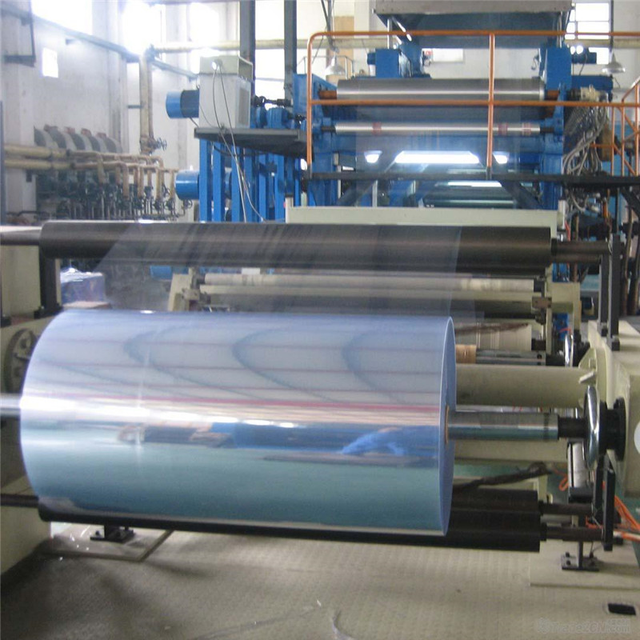
Anti-Fog PET Sheet Manufacturer for Clear Packaging
Anti-fog PET sheet is a clear polyethylene terephthalate sheet engineered to maintain product visibility when temperature differences and humidity cause condensation. Instead of allowing moisture to collect as many small light-scattering droplets, the treated surface helps water spread into a more uniform and transparent layer.
HSQY supplies clear anti-fog PET sheets for refrigerated food packaging, thermoformed trays, lids, clamshell containers, produce packaging, meat packaging, protective visors and other visibility-critical applications. Sheets can be supplied in roll, cut-sheet and customized formats according to the forming process, packaging design and target-market requirements.
Quick answer: Anti-fog PET sheet is primarily selected for transparent packaging that must remain visually clear in refrigerated, humid or temperature-changing environments. Buyers should confirm the anti-fog side, sheet thickness, thermoforming performance, food-contact documentation, roll dimensions and required fog-resistance test before placing a production order.
What Is Anti-Fog PET Sheet?
Anti-fog PET sheet is a transparent PET or APET substrate with a surface treatment or functional anti-fog layer. It is also described as anti-condensation PET sheet, non-fog PET film, anti-fog APET sheet or clear anti-fog thermoforming sheet.
Standard clear PET can develop visible fog when warm, moisture-rich air contacts a colder plastic surface. This commonly occurs inside refrigerated food packages, chilled display containers and protective visors. The anti-fog treatment changes how condensed water behaves on the surface, helping the package retain a clearer appearance.
Anti-fog PET does not eliminate moisture or prevent condensation from occurring. Its function is to reduce the formation of separate visible droplets that scatter light and obscure the packaged product.
How Does Anti-Fog PET Sheet Work?
Fog appears when microscopic water droplets form on a transparent surface. The droplets refract and scatter light, causing the sheet to look cloudy even though the PET substrate itself remains transparent.
A hydrophilic anti-fog surface reduces the tendency of condensed moisture to remain as isolated droplets. The moisture spreads across the treated PET surface as a thinner, more continuous layer, allowing more light to pass through and improving visibility.
| Surface Condition | Moisture Behavior | Visual Result |
| Standard untreated PET | Condensation may remain as many separate droplets. | Droplets scatter light and can create a cloudy or fogged appearance. |
| Anti-fog treated PET | Moisture spreads more evenly across the treated surface. | The package remains clearer under the tested humidity and temperature conditions. |
Key Benefits of Anti-Fog PET Sheets
Improved product visibility: Helps consumers see fresh produce, meat, salads, bakery goods and prepared foods through refrigerated packaging.
High optical clarity: Combines the transparent appearance of PET with a functional condensation-control surface.
Thermoforming compatibility: Suitable grades can be processed into trays, lids, clamshells, domes and other formed packaging.
Lightweight construction: Provides transparent coverage without the weight and breakage characteristics associated with glass.
Good mechanical performance: PET offers useful stiffness and impact resistance for packaging and protective applications.
Flexible supply formats: Available as rolls, flat sheets, slit rolls or cut-to-size material, subject to production specifications.
Custom functional options: Single-sided or double-sided anti-fog treatments can be considered according to the application.
Anti-Fog PET Sheet Applications
Anti-fog PET is most valuable when a clear plastic component is exposed to high humidity, refrigeration or rapid temperature changes. The final sheet grade should be selected according to the food type, forming depth, storage temperature, package structure and required anti-fog duration.
| Application | Why Anti-Fog PET Is Used | Purchasing Considerations |
| Fresh fruit and vegetable packaging | Maintains visibility when moisture is released by produce inside refrigerated packs. | Ventilation design, anti-fog side, forming depth and cold-storage conditions. |
| Fresh meat and poultry packaging | Improves product presentation in refrigerated retail displays. | Food-contact compliance, sealing system, barrier requirement and tray structure. |
| Salad and deli containers | Reduces the cloudy appearance associated with chilled, moisture-rich foods. | Hinge performance, lid fit, clarity and anti-fog durability. |
| Bakery and prepared-food packaging | Helps retain clear presentation when warm products release moisture after packing. | Actual filling temperature, cooling process and intended storage condition. |
| Clamshells, trays and transparent lids | Combines visibility with thermoformed shape and structural rigidity. | Sheet thickness, forming ratio, trim quality and stacking performance. |
| Protective face visors | Reduces fog caused by breathing and environmental humidity. | Optical quality, impact requirements, anti-fog durability and applicable product standards. |
| Transparent covers and display components | Helps maintain visibility in humid or temperature-changing environments. | Scratch resistance, UV exposure, printing and end-use temperature. |
Anti-Fog PET Sheet Specifications
The following table presents common purchasing options for anti-fog PET sheet. Final specifications should be confirmed through a technical data sheet, approved sample and written quotation because available dimensions and performance can vary by production grade.
| Specification | Available or Typical Option |
| Material | Clear PET or APET substrate |
| Appearance | Transparent, high-gloss or application-specific surface |
| Common thickness range | Commonly requested from approximately 0.20 mm to 1.00 mm; other thicknesses subject to confirmation |
| Anti-fog treatment | Single-sided or double-sided, depending on the application |
| Supply format | Roll, slit roll, flat sheet or cut-to-size sheet |
| Width and length | Customized according to extrusion, slitting and cutting capability |
| Roll core | Selected according to roll width, weight and customer equipment |
| Processing methods | Thermoforming, vacuum forming, die cutting, slitting and printing after compatibility testing |
| Protective film | Available for selected sheet products and surface requirements |
| Food-contact documents | Supplied according to the selected grade, intended use and destination-market requirements |
| Sample availability | Samples can be evaluated before mass production, subject to specification and availability |
Anti-Fog PET Sheet vs. Standard PET Sheet
| Property | Standard Clear PET | Anti-Fog PET |
| Transparency | High initial clarity | High initial clarity with improved visibility under tested condensation conditions |
| Condensation behavior | Visible droplets may form | Moisture is encouraged to spread into a more uniform layer |
| Typical use | General transparent packaging and thermoforming | Refrigerated, humid and visibility-critical packaging |
| Surface identification | Normally no designated anti-fog side | Treated side should be identified before forming and packing |
| Cost | Standard material cost | Includes additional functional treatment and quality control |
Single-Sided vs. Double-Sided Anti-Fog PET Sheet
Single-Sided Anti-Fog PET Sheet
Single-sided anti-fog PET has one functional surface. It is commonly considered when condensation is expected mainly on the inside of a food package, lid or protective component.
The treated side must face the moisture source after thermoforming and package assembly. Buyers should communicate the winding direction, forming orientation and inside-facing surface before production.
Double-Sided Anti-Fog PET Sheet
Double-sided anti-fog PET is treated on both surfaces. It may be preferred when either side can experience condensation, when the sheet orientation is difficult to control or when the finished product requires visibility from both directions.
Double-sided treatment can simplify handling but should still be tested for printing, lamination, sealing and downstream processing compatibility.
Is Anti-Fog PET Suitable for Thermoforming?
Suitable anti-fog PET grades can be thermoformed or vacuum formed into clear food trays, lids, clamshells, cups, domes and protective components. Successful processing depends on sheet thickness, resin properties, forming temperature, heating time, mold design, draw ratio and treatment durability.
Excessive forming temperature or an unsuitable heating cycle may affect optical quality, thickness distribution or anti-fog performance. A production trial should therefore reproduce the customer’s actual tooling and operating conditions.
Customers looking for general forming material can also review HSQY’s PET thermoforming sheets and APET sheet range .
Does Anti-Fog PET Extend Food Shelf Life?
Anti-fog treatment primarily improves package visibility. It does not by itself create an oxygen barrier, control the internal gas composition or guarantee a longer product shelf life.
Shelf life is influenced by the food type, hygiene, temperature control, tray structure, lidding film, seal integrity, oxygen transmission, moisture transmission and packaging atmosphere. Applications requiring modified-atmosphere packaging or high-barrier performance may need a multilayer tray or lidding system in addition to anti-fog functionality.
Food-Contact Compliance for Anti-Fog PET Sheet
Food-contact suitability must be evaluated for the complete material formulation and intended conditions of use. It is inaccurate to assume that every anti-fog PET sheet is automatically approved for every food, temperature or market.
Buyers should state the destination country, food type, contact duration, storage temperature, filling temperature and whether the sheet will contact fatty, acidic, aqueous or dry food. The supplier can then identify the appropriate grade and available supporting documentation.
Request a declaration or compliance statement for the intended market.
Confirm whether migration testing applies to the final sheet or formed package.
Check the permitted food types and temperature conditions.
Include the anti-fog treatment, printing ink, adhesive and other layers in the compliance review.
Retain batch information and technical documents for supply-chain traceability.
How to Choose the Right Anti-Fog PET Sheet
Selecting anti-fog PET only by thickness or price can result in poor performance. The purchasing specification should describe the complete application and expected processing conditions.
Define the application: State whether the material will be used for produce packaging, meat trays, salad lids, clamshells, visors or another product.
Identify the moisture source: Determine whether condensation occurs on the inside surface, outside surface or both.
Specify storage conditions: Provide the expected temperature, humidity and storage duration.
Confirm the forming process: State the machine type, forming temperature, mold depth, cycle speed and finished-part geometry.
Select sheet dimensions: Confirm thickness, width, roll diameter, roll weight, core size or cut-sheet dimensions.
Review downstream operations: Explain whether the sheet will be printed, laminated, heat sealed, die cut or coated.
Provide regulatory requirements: Identify the destination market and required food-contact documents.
Approve a sample: Test the material under actual forming, packing, refrigeration and transportation conditions.
How to Test Anti-Fog PET Performance
Anti-fog performance should be evaluated under conditions that represent the final application. A quick visual test may be useful for screening, but it may not predict long-term performance in a commercial cold chain.
| Test Factor | What to Evaluate |
| Initial anti-fog response | How quickly the treated surface changes visible droplets into a more uniform moisture layer. |
| Refrigerated performance | Clarity after the packed product remains at the intended chilled temperature. |
| Hot-to-cold transition | Performance when warm, moist air contacts a cooled package surface. |
| Formed-part performance | Whether stretching and heat during thermoforming affect the treated surface. |
| Long-duration performance | Visibility over the actual intended storage and distribution period. |
| Surface durability | Effect of handling, rubbing, washing, printing or contact with other packaging components. |
Printing and Converting Anti-Fog PET Sheet
Anti-fog PET can be considered for printing, die cutting, folding, slitting and other converting processes, but the functional surface may behave differently from untreated PET.
Ink adhesion, surface energy, drying conditions and print resistance should be tested before mass production. Printing directly over the anti-fog surface may reduce its effective area or alter condensation behavior. Where possible, keep critical viewing zones free from excessive ink coverage.
Buyers should provide the printing method, ink system, curing process, coverage area and required adhesion test when requesting a custom printable anti-fog PET sheet.
Storage and Handling Recommendations
Store PET sheets and rolls in a clean, dry indoor environment.
Protect the material from dust, oil, moisture and direct sunlight.
Keep rolls in their original packaging until they are required for production.
Avoid rubbing, scratching or contaminating the functional anti-fog surface.
Identify the treated side and winding direction before loading the roll.
Allow cold material to acclimatize before opening the packaging if warehouse and production temperatures differ significantly.
Use stock according to the supplier’s recommended storage period and handling instructions.
Is Anti-Fog PET Sheet Recyclable?
PET is a widely recognized recyclable polymer, but the practical recyclability of an anti-fog PET package depends on the complete packaging design and the local collection and processing system.
Anti-fog coatings, sealing layers, labels, inks, adhesives, colors and food residue can affect compatibility with a PET recycling stream. Therefore, the finished package should not be described as universally or automatically recyclable without evaluating its full structure and the rules of the destination market.
Packaging designers should minimize incompatible components, consider established design-for-recycling guidance and verify whether PET thermoforms are accepted by local recyclers.
Why Source Anti-Fog PET Sheet from HSQY?
PET sheet manufacturing and customized converting support.
Roll, slit-roll and cut-sheet supply options.
Single-sided and double-sided anti-fog solutions subject to specification.
Support for food packaging, thermoforming and protective applications.
Custom thickness, width, length and packaging configurations.
Sample evaluation before commercial production.
Export packaging and international shipment support.
Related PET, APET, RPET, PETG and thermoforming sheet options from one supplier.
View additional PET sheet materials or contact HSQY with your drawing, thickness, width, annual volume and application requirements.
Need Anti-Fog PET Sheet for Food Packaging or Thermoforming?
Send us your required thickness, roll width, anti-fog side, forming process, destination market and order quantity. HSQY can recommend a suitable grade and arrange sample evaluation.
Request a Sample and Quote Frequently Asked Questions About Anti-Fog PET Sheet
What is anti-fog PET sheet used for?
Anti-fog PET sheet is used for transparent applications where humidity or temperature changes can create visible condensation. Common uses include refrigerated food packaging, fruit and vegetable containers, meat trays, salad clamshells, transparent lids, protective visors and display covers.
Does anti-fog PET completely prevent condensation?
No. Anti-fog PET does not stop water vapor from condensing. It changes how moisture behaves on the treated surface, helping it spread into a more transparent layer instead of remaining as many small visible droplets.
Is anti-fog PET sheet suitable for food packaging?
Food-contact grades can be supplied for suitable packaging applications. Buyers must verify the complete material formulation, food type, contact conditions, temperature and destination-market requirements rather than assuming that every anti-fog PET grade is suitable for all foods.
Is all anti-fog PET sheet FDA approved?
No universal FDA approval applies to every finished anti-fog PET sheet. Food-contact substances and components must comply with the applicable authorization, limitations and intended conditions of use. Request documentation for the exact material grade being purchased.
What is the difference between anti-fog PET and anti-fog APET?
APET refers to amorphous PET, a clear PET form commonly used for thermoforming. In packaging markets, the terms anti-fog PET and anti-fog APET are sometimes used interchangeably. Buyers should compare the actual resin structure, forming properties, thickness and technical data rather than relying only on the product name.
Can anti-fog PET sheet be thermoformed?
Yes, appropriate grades can be thermoformed or vacuum formed. The buyer should test the forming temperature, heating time, draw depth and mold design because excessive heat or stretching may influence clarity, thickness distribution and anti-fog performance.
Should the anti-fog treatment be on one side or both sides?
Single-sided treatment is often sufficient when condensation occurs mainly inside the package. Double-sided anti-fog PET may be preferable when moisture can affect both surfaces or when sheet orientation is difficult to control.
Which side of anti-fog PET should face the food?
For a single-sided grade, the treated surface normally faces the area where condensation is expected. In many refrigerated food packages, this is the internal side. Confirm the supplier’s side identification and winding direction before forming the material.
How long does the anti-fog effect last?
Duration depends on the anti-fog technology, temperature, humidity, storage time, surface handling, forming process and contact conditions. The material should be tested over the complete intended shelf-life and distribution cycle.
What thickness is available for anti-fog PET sheet?
Common purchasing requirements are approximately 0.20 mm to 1.00 mm, although other thicknesses may be available. Thin materials can suit lids and light packaging, while thicker sheets may provide greater rigidity for formed trays and protective components.
Can anti-fog PET sheet be printed?
Printing may be possible with a compatible ink system and suitable surface preparation. Ink adhesion and the effect of printing on anti-fog performance should be tested before production, particularly when printing on the functional surface.
Is anti-fog PET suitable for hot food?
Standard anti-fog PET is generally associated with chilled and refrigerated packaging. Suitability for hot filling or elevated temperatures depends on the specific sheet grade, filling temperature, exposure time and package design. Confirm these conditions with the supplier before use.
Does anti-fog PET provide an oxygen barrier?
Anti-fog treatment is designed to improve visibility and is not the same as an oxygen-barrier layer. Applications requiring extended shelf life or modified-atmosphere packaging may need a PET/EVOH/PE or another high-barrier structure.
Is anti-fog PET sheet recyclable?
The PET substrate may be recyclable where suitable collection and processing systems exist. Actual recycling compatibility depends on the anti-fog treatment and the complete package, including sealing layers, labels, inks and adhesives.
Can HSQY provide custom anti-fog PET sheet rolls?
Custom thickness, width, roll dimensions, cut-sheet size and single-sided or double-sided treatment can be discussed according to the application and order requirements. Final availability should be confirmed in the quotation.
Can I request an anti-fog PET sample before ordering?
Yes. Sample evaluation is recommended before bulk purchasing. Test the sample on the intended thermoforming equipment and with the actual food, temperature, humidity, storage duration and packaging process.
What information is needed for an anti-fog PET quotation?
Provide the application, thickness, width, roll or sheet format, anti-fog side, required quantity, forming process, food-contact requirement, destination country and expected storage conditions. Photos, drawings and current material samples can help the supplier recommend a more accurate solution.