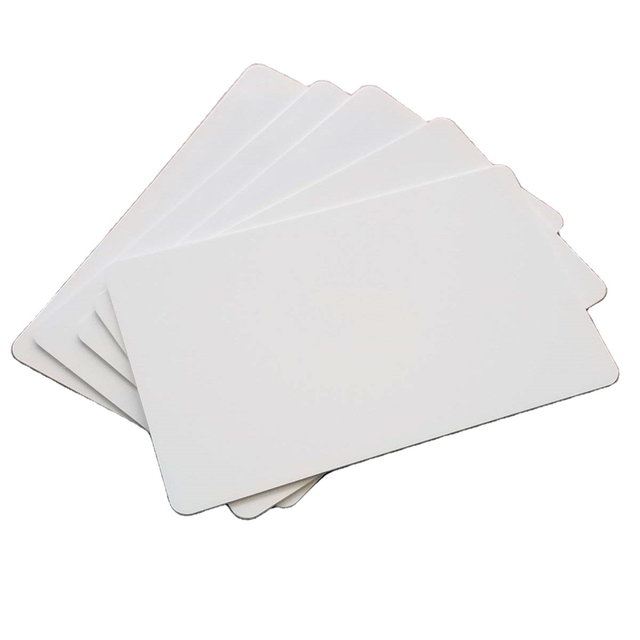
White PVC Card Sheet Manufacturer for Plastic Card Printing
HSQY supplies white rigid PVC sheets for plastic card manufacturing, including card core sheets, offset-printing sheets, inkjet-printable sheets, embossed sheets, frosted sheets and white PVC material for playing cards. These sheets are designed for card printing, lamination, cutting and punching rather than structural construction boards.
The current category is primarily based on approximately 0.3 mm white PVC rigid sheet in common printing formats such as 500 × 765 mm and 700 × 1000 mm. Custom thicknesses, sheet dimensions, colors, surface finishes and cutting services can be evaluated for card factories and printing converters.
Quick answer: White PVC card sheet is the printable core material used to manufacture ID cards, membership cards, loyalty cards, hotel key cards, promotional cards and plastic playing cards. It must be matched to the printing method, ink system, overlay film, lamination cycle and final card thickness.
Current HSQY White PVC Sheet Products
The six products currently listed in this category are all related to card and playing-card production. They should not be confused with thick PVC-U engineering plate or lightweight PVC foam board.
| Current Product | Primary Application | Published Specification | Buyer Selection Point |
| PVC Card Sheet | General plastic-card core and printable sheet. | 0.3 mm; white or custom colors; 500 × 765 mm and 700 × 1000 mm; glossy, matte or grain. | Confirm offset, screen, UV or digital printing process and lamination structure. |
| Embossed, Frosted or Inkjet PVC Sheet | Cards requiring a matte, grain or specially printable surface. | 0.3 mm standard; custom size and surface; 1000 kg published MOQ. | Confirm whether the sheet is truly inkjet coated or only a textured offset-printing core. |
| White Inkjet PVC Sheet for Plastic Card | Small-batch or desktop inkjet card production. | 0.3 mm standard; 500 × 765 mm and 700 × 1000 mm listed; custom cutting available. | Match coating to dye or pigment ink and test drying, adhesion and lamination. |
| PVC Sheet for Playing Cards | Plastic poker cards, game cards and promotional decks. | 0.3 mm standard; glossy, matte or grain; custom colors and sizes. | Define deck feel, flexibility, opacity, print method and finished card gauge. |
| PVC Plastic Sheet for Playing Cards | Durable printed playing-card production. | 0.3 mm standard; white rigid PVC; cutting service. | Evaluate shuffle feel, stiffness, surface friction and edge durability. |
| Plastic Card PVC Sheets | ID, membership, promotional and printed card conversion. | 0.3 mm; 500 × 765 mm and 700 × 1000 mm; published MOQ 1000 kg. | Confirm final card construction, number of layers and overlay compatibility. |
Typical HSQY White PVC Card Sheet Specifications
| Property | Published HSQY Information | Procurement Guidance |
| Material | Rigid polyvinyl chloride sheet for printing and card conversion. | Confirm resin formulation, plasticizer level, stabilizers and recycled-content policy. |
| Standard Thickness | Approximately 0.3 mm on all current category product pages. | Specify nominal thickness, tolerance and measurement method. |
| Common Sheet Sizes | 500 × 765 mm and 700 × 1000 mm. | Confirm grain direction, trim allowance, printing-machine size and pallet format. |
| Color | White as standard; custom colors may be available. | Define whiteness, opacity, shade and lot-to-lot color tolerance. |
| Surface | Glossy, matte/matte, matte/grain, frosted or embossed options. | Match the surface to ink adhesion, laminating and card feel. |
| Printing | Current detailed pages mainly reference offset printing; selected titles reference inkjet. | Do not assume one sheet works with every ink system. |
| Processing | Cutting service and card conversion applications. | Confirm lamination, punching, embossing, personalization and chip-inlay processes. |
| Published MOQ | 1000 kg on most current product headers. | Final MOQ depends on thickness, size, surface, color and packing. |
| Published Capacity | Approximately 2000 tons per month on current detailed pages. | Confirm allocation and delivery schedule for repeat orders. |
| Sheet Packing | PE film or brown paper, approximately 30 kg per bag. | Set bag weight according to handling and sheet-flatness requirements. |
| Pallet Packing | Approximately 500–1000 kg per pallet. | Confirm pallet dimensions, moisture protection and stack height. |
| Sample | A4 samples are referenced with freight collected. | Production approval should use the actual printer and lamination process. |
White PVC Card Sheet vs White PVC Foam Board
| Comparison | White PVC Card Sheet | White PVC Foam Board |
| Structure | Dense, thin rigid PVC sheet. | Foamed cellular PVC board with lower density. |
| Typical Gauge | This category is centered on approximately 0.3 mm sheet. | Commonly supplied in several millimeters of thickness. |
| Main Application | Plastic cards, playing cards, printing and lamination. | Signage, displays, cabinets, partitions and fabrication. |
| Printing Process | Offset, coated inkjet, screen or other card-printing systems depending on grade. | Large-format digital, UV or screen printing depending on surface. |
| Conversion | Printing, collating, overlay lamination and punching. | Sawing, routing, fastening, bending and panel installation. |
| HSQY Category Intent | Card and playing-card material. | A separate PVC foam board category should target construction and signage boards. |
White PVC Core Sheet, Inkjet Sheet and Overlay Film
| Material Layer | Function | Important Specification |
| White PVC Core Sheet | Provides opacity, stiffness and the printable card body. | Thickness, whiteness, opacity, printability, shrinkage and lamination bond. |
| Inkjet-Coated White PVC Sheet | Receives ink from a compatible desktop or industrial inkjet system. | Coating side, ink type, drying speed, color density, water resistance and lamination. |
| Clear PVC Overlay Film | Protects printed graphics and can carry magnetic stripe, hologram or security features. | Thickness, gloss, lamination temperature, peel strength and surface treatment. |
| Prelam Inlay | Contains RFID, NFC, contactless chip or antenna structures. | Chip position, antenna design, sheet format, lamination pressure and punching registration. |
| Adhesive or Coated Layer | Supports bonding in selected low-temperature or specialty card systems. | Adhesive activation, aging, blocking, peel strength and compatibility. |
A white core sheet is not automatically an inkjet sheet, and an inkjet-printable sheet is not automatically an overlay. Buyers should identify every card layer before requesting material.
How Plastic Cards Are Manufactured
Artwork preparation: Card graphics, variable areas, barcodes and security features are positioned on the sheet layout.
Sheet printing: Front and back white PVC sheets are printed using the approved offset, screen, UV, inkjet or digital system.
Ink drying or curing: The printed sheet must reach sufficient adhesion and dryness before collating.
Layer registration: Printed core sheets, overlays and optional chip inlays are aligned.
Lamination: Heat and pressure fuse the layers into a stable card sheet.
Cooling and flattening: Controlled cooling reduces warpage, shrinkage and blocking.
Punching: Finished cards are punched to the required format and corner radius.
Personalization: Magnetic stripes, signatures, embossing, laser marking, chips or variable data may be added.
Inspection: Cards are checked for thickness, print registration, bond strength, flatness and edge quality.
How to Select the Correct Sheet Thickness
The published 0.3 mm sheet is a common card-core layer, not necessarily the final card thickness. The final gauge depends on the number of printed core layers, overlay thickness, inlay thickness, adhesive layers and lamination compression.
| Selection Input | Why It Matters |
| Final Card Thickness | Determines how many layers and which gauges are required. |
| Single-Sheet or Multilayer Construction | A playing card may use a different structure from a laminated ID or smart card. |
| Overlay Thickness | Changes total gauge, stiffness and graphic protection. |
| Chip or Inlay | Adds local thickness and can require compensation layers. |
| Card Flexibility | Thin cores can create a softer card; thick cores create more stiffness. |
| Punching Equipment | The laminate stack must remain within die and press capability. |
| Lamination Compression | Final thickness can differ from the mathematical sum of individual layers. |
Offset-Printing PVC Sheet
Offset printing is the primary printing method referenced on HSQY’s current detailed product pages. A suitable card sheet should provide consistent ink receptivity, low static, dimensional stability and reliable adhesion after lamination.
Confirm whether the sheet is corona-treated or otherwise surface-treated.
Specify the ink system and curing or drying conditions.
Test solid-color density, fine text, halftones and reverse printing.
Check front-to-back registration on the full production sheet.
Measure ink adhesion before and after lamination.
Evaluate blocking when printed sheets are stacked.
Confirm that surface treatment remains effective through storage.
Inkjet-Printable PVC Sheet
Inkjet PVC sheet normally requires a coating designed to absorb or anchor the selected ink. Untreated offset PVC card core may produce slow drying, poor image density, smearing or weak lamination.
| Inkjet Selection Factor | Required Evaluation |
| Printer Type | Desktop sheet-fed, wide-format or industrial inkjet. |
| Ink Chemistry | Dye, pigment, aqueous, UV-curable or another compatible system. |
| Printable Side | One-side or two-side coating and correct loading orientation. |
| Drying Time | Time before stacking, cutting or overlay lamination. |
| Image Quality | Color density, dot gain, fine lines, skin tones and barcode readability. |
| Water and Abrasion Resistance | Resistance before and after lamination. |
| Lamination Compatibility | Coating must not bubble, delaminate or discolor during heat and pressure. |
Playing Card PVC Sheet Requirements
Plastic playing cards have different performance priorities from ID cards. The sheet must balance printability, flexibility, opacity, surface friction, shuffle feel and edge durability.
Define the finished card thickness and deck weight.
Select glossy, matte, grain or frosted feel.
Test bending recovery and crease resistance.
Evaluate shuffle, dealing and card-to-card friction.
Confirm opacity so graphics do not show through.
Test ink and varnish resistance to repeated handling.
Check punched-edge smoothness and corner durability.
Evaluate humidity, heat and cold storage performance.
Approve a finished deck rather than only a flat sheet sample.
ID, Membership and Loyalty Card Applications
Employee and visitor ID cards
Membership and loyalty cards
Hotel key cards
Gift and prepaid cards
Access-control cards
Student and library cards
Promotional and event cards
Healthcare and insurance cards
Transportation and ticketing cards
Game, poker and specialty cards
Bank, payment, SIM, contactless and government ID cards can require specialized security, chip, antenna, durability and compliance specifications. A standard printable PVC sheet should not automatically be approved for these applications without full card-system validation.
Surface Finish Selection
| Surface Finish | Visual and Tactile Effect | Processing Consideration |
| Glossy | Bright color, high reflectivity and a smooth premium appearance. | Can show scratches and fingerprints; test ink and overlay adhesion. |
| Matte / Matte | Low glare on both sides and a softer visual appearance. | Confirm consistent matte level and print density. |
| Matte / Grain | One matte face and one textured or grain face. | Verify printing side, lamination side and grain orientation. |
| Frosted | Diffused, textured or semi-matte appearance. | Can affect fine-detail printing and coating uniformity. |
| Embossed | Adds tactile differentiation and decorative texture. | Pattern depth can affect printing, stacking and lamination. |
| Inkjet-Coated | Receives compatible inkjet inks with faster drying and higher image density. | Must be protected from moisture, contamination and incorrect-side printing. |
Whiteness, Opacity and Color Control
The white card core influences printed color accuracy, opacity and the appearance of the finished card. Two white PVC sheets with the same thickness can produce different print results because of pigment loading, undertone and surface finish.
Define a physical white standard or approved retained sample.
Specify whiteness, L*a*b* color or acceptable color difference where required.
Measure opacity and show-through after printing.
Check color consistency between front and back core sheets.
Evaluate white shade after lamination heat.
Confirm whether optical brighteners or special pigments are permitted.
Maintain batch traceability for repeat card programs.
Dimensional Stability and Lamination Shrinkage
Printing registration and card punching depend on stable sheet dimensions. PVC card sheet can change dimensions during printing, conditioning and lamination if formulation, grain direction, storage or heat exposure are not controlled.
Condition sheets in the production room before printing.
Record machine direction and cross direction.
Measure dimensions before and after the intended lamination cycle.
Test front-to-back registration across the full sheet.
Use matched batches for front and back core layers.
Control lamination heating, pressure, cooling and stack time.
Define acceptable shrinkage and warpage in the purchase specification.
Lamination Compatibility
| Lamination Variable | Possible Defect if Incorrect | Recommended Check |
| Temperature | Bubbles, discoloration, insufficient bond or excessive shrinkage. | Develop a grade-specific temperature window. |
| Pressure | Weak bonding, excessive emboss flattening or inlay damage. | Balance pressure across the full platen. |
| Dwell Time | Incomplete fusion or excessive deformation. | Validate with the complete layer stack. |
| Cooling | Warped sheets, blocking or unstable dimensions. | Cool under controlled pressure where required. |
| Overlay Compatibility | Delamination, haze or poor peel strength. | Test the exact overlay and printed ink system. |
| Printed Ink | Ink transfer, color shift, bubbling or bond failure. | Confirm full drying or curing before lamination. |
Printing and Conversion Quality Control
| Quality Item | Why It Matters |
| Thickness and Tolerance | Controls final card gauge, stiffness and laminate symmetry. |
| Sheet Size and Squareness | Supports feeding, registration and punching yield. |
| Flatness | Reduces double feeding, head strikes and registration errors. |
| Surface Energy | Influences ink wetting and adhesion. |
| Whiteness and Opacity | Controls print color and show-through. |
| Surface Finish | Determines print behavior, tactile feel and lamination contact. |
| Static Level | Affects sheet separation, dust attraction and printer feeding. |
| Shrinkage | Influences front-to-back registration and punching alignment. |
| Lamination Bond | Prevents layer separation during card use. |
| Punchability | Controls edge quality, burrs and die life. |
| Batch Traceability | Supports repeat production and complaint investigation. |
Common Problems and Corrective Actions
| Problem | Possible Causes | Recommended Checks |
| Ink Does Not Adhere | Wrong grade, low surface energy, contamination or incompatible ink. | Confirm printing grade, treatment and ink system. |
| Inkjet Print Smears | Uncoated sheet, wrong printable side or insufficient drying. | Use a compatible coated sheet and validate drying time. |
| Printed Sheets Block | Ink not fully dry, excess stack pressure or high temperature. | Improve curing, interleaving and storage conditions. |
| Card Delaminates | Incompatible overlay, low temperature, contamination or cured ink barrier. | Validate the complete layer stack and lamination window. |
| Card Sheet Warps | Unbalanced layers, uneven heating or inadequate cooling. | Use symmetrical construction and controlled cooling. |
| Registration Shifts | Sheet shrinkage, moisture, grain-direction mismatch or printer setup. | Measure shrinkage and condition matched batches. |
| Punched Edges Are Rough | Worn die, brittle sheet or incorrect laminate temperature. | Inspect tooling, grade and final laminate properties. |
| White Shade Varies | Pigment variation, mixed batches or lamination heat. | Approve color tolerance and retain batch samples. |
| Playing Cards Stick Together | Excess gloss, surface contamination or incompatible coating. | Adjust finish, varnish and card-to-card friction. |
RoHS, REACH and Application Compliance
Current HSQY product pages reference RoHS and REACH. Buyers should request documents for the exact formulation, thickness, color and production period rather than using a general website statement as the final compliance record.
Card applications can also require limits for heavy metals, phthalates, restricted substances, recycled content or specific customer standards. Payment, government, transport and children’s products may require additional testing and security controls.
Recycled Content and Recyclability
PVC card sheet may contain recycled material when the required color, printing, lamination and regulatory performance can be maintained. Recycled content should be documented for the exact product rather than described with a vague environmental claim.
Finished cards are multilayer products and may contain printed inks, overlay films, magnetic stripes, chips, antennas, adhesives and security elements. Their actual recyclability depends on card construction and the collection and processing systems available in the destination market.
Avoid claiming that every PVC card is automatically recyclable. A more defensible approach is to specify material composition, reduce production scrap, maintain long service life and identify an available recovery route.
Packing and Export Logistics
Current HSQY product pages publish A4 sample packing, approximately 30 kg sheet bags, 500–1000 kg pallets and a reference loading quantity of approximately 20 tons per 20-foot container.
Confirm sheets per bag and bags per pallet.
Use PE film or moisture-resistant inner wrapping.
Protect sheet corners and maintain pallet flatness.
Define maximum pallet height and weight.
Specify slip sheets, top boards and strapping.
Control heat and pressure that could emboss or block the sheets.
Label every pallet with size, thickness, surface, color and batch.
Confirm destination port, Incoterms and unloading equipment.
Recalculate container quantity from final pallet dimensions and legal weight limits.
How to Evaluate White PVC Card Sheet Samples
Confirm the sample identity: Record thickness, size, color, surface and printing grade.
Condition the sheet: Store it in the production environment before printing.
Run the actual printer: Use the intended offset, inkjet, screen or digital ink system.
Measure print quality: Check color density, fine text, barcodes, drying and adhesion.
Build the full card stack: Include front core, back core, overlays and optional inlay.
Laminate the stack: Use the intended temperature, pressure, dwell and cooling process.
Measure final properties: Check thickness, flatness, shrinkage, bond and opacity.
Punch finished cards: Inspect registration, edges and corner quality.
Test actual use: Evaluate bending, abrasion, handling, shuffle or personalization as applicable.
Approve a golden sample: Link the approved card to the material and process specification.
Why Choose HSQY for White PVC Card Sheet?
White rigid PVC sheet focused on card and playing-card manufacturing
Published standard thickness of approximately 0.3 mm
Common sizes of 500 × 765 mm and 700 × 1000 mm
Glossy, matte, grain, frosted and embossed surface options
Offset-printing and selected inkjet-printable grades
White and custom-color development
Custom size, thickness and cutting service
A4 sample support for printing and lamination trials
Published production capacity of approximately 2000 tons per month
Export packing for card factories, printers and material distributors
Related HSQY categories include PVC sheet for playing cards, PVC sheet and PVC card materials. Confirm internal URLs before publishing if your CMS uses different category aliases.
Request Samples and a Bulk Quotation
To receive an accurate recommendation and quotation, provide:
Card type and final application
Offset, inkjet, screen, UV or digital printing process
Ink brand and curing method
Required core-sheet thickness and tolerance
Sheet size and printing-machine format
White shade, opacity and custom-color requirement
Glossy, matte, grain, frosted or embossed surface
Overlay-film structure and thickness
Lamination temperature, pressure and cycle
Final card thickness and punching format
Monthly quantity and annual forecast
Packing, destination port and Incoterms
Required RoHS, REACH or customer-specific documents
Contact HSQY
FAQ About White PVC Card Sheets
What is a white PVC card sheet?
It is a dense rigid PVC sheet used as the printable core material for plastic cards and playing cards.
What is this HSQY category mainly used for?
The current products are mainly intended for ID cards, membership cards, promotional cards, hotel key cards and plastic playing cards.
Is this the same as white PVC foam board?
No. Card sheet is thin, dense rigid PVC, while PVC foam board is a thicker cellular panel used for signs, displays and fabrication.
What is the standard thickness?
Current HSQY product pages mainly publish a standard thickness of approximately 0.3 mm, with customization available.
What sheet sizes are available?
Common published sizes are 500 × 765 mm and 700 × 1000 mm. Custom cutting can be discussed.
What colors are available?
White is standard, and custom colors may be available subject to quantity and color approval.
What surface finishes are available?
Options include glossy, matte/matte, matte/grain, frosted and embossed surfaces.
Can white PVC card sheet be offset printed?
Yes. Offset printing is the main printing method referenced on current HSQY product pages.
Can the same sheet be used for inkjet printing?
Only when the surface is coated or otherwise designed for the specific inkjet system. Standard offset sheet may smear or dry poorly.
How can I identify the printable side?
Inkjet-coated products should be supplied with side identification or instructions. Test before full production.
Can the sheet be printed on both sides?
Many card-core constructions use front and back printable sheets, but both-side compatibility must be confirmed for the selected grade.
What is the difference between card core and overlay film?
The white core provides opacity and printed graphics, while clear overlay protects the print and supports lamination.
Can the sheet be used for playing cards?
Yes. HSQY lists multiple products for plastic poker and playing-card production.
What should be tested for playing cards?
Test flexibility, shuffle feel, opacity, surface friction, print durability, edge quality and finished deck weight.
Can the sheet be used for RFID or smart cards?
It can be part of a smart-card construction, but the inlay, antenna, chip position, lamination and punching process require separate validation.
What final card thickness can be produced?
Final thickness depends on the number of core sheets, overlays, inlays, adhesive layers and lamination compression.
Does 0.3 mm mean the finished card is 0.3 mm thick?
No. The 0.3 mm value normally describes one core sheet, not the complete laminated card.
What lamination temperature should be used?
The correct temperature depends on the core, overlay, ink and equipment. Develop a validated lamination window instead of using one universal setting.
Why do cards warp after lamination?
Common causes include unbalanced layers, unequal grain direction, excessive heat, uneven pressure or inadequate cooling.
Why does ink peel from PVC sheet?
Possible causes include low surface energy, contamination, incompatible ink, incomplete curing or an incorrect sheet grade.
Can HSQY customize whiteness and opacity?
Custom white shades and opacity targets can be discussed using a physical sample or measured color specification.
Can HSQY provide embossed or frosted sheet?
Yes. Current category products include embossed, frosted, matte and grain surface options.
What is the MOQ?
Most current HSQY product pages publish an MOQ of approximately 1000 kg. Final MOQ depends on size, thickness, color and surface.
What is the packing method?
Current pages reference approximately 30 kg per PE-film or brown-paper bag and 500–1000 kg per pallet.
Can I request a sample?
Yes. Current pages reference free A4 samples with freight collected. Test the sample using the actual printing and lamination process.
What certifications are referenced?
Current product pages reference RoHS and REACH. Request current documents for the exact supplied formulation.
Is white PVC card sheet recyclable?
Recovery depends on the complete card construction and local PVC recycling systems. Chips, overlays, inks and magnetic stripes can complicate recycling.
What information is needed for a quotation?
Provide card application, printing method, thickness, size, surface, color, overlay, lamination process, quantity, packing and destination.