PVC Thermoforming Film for Food Packaging
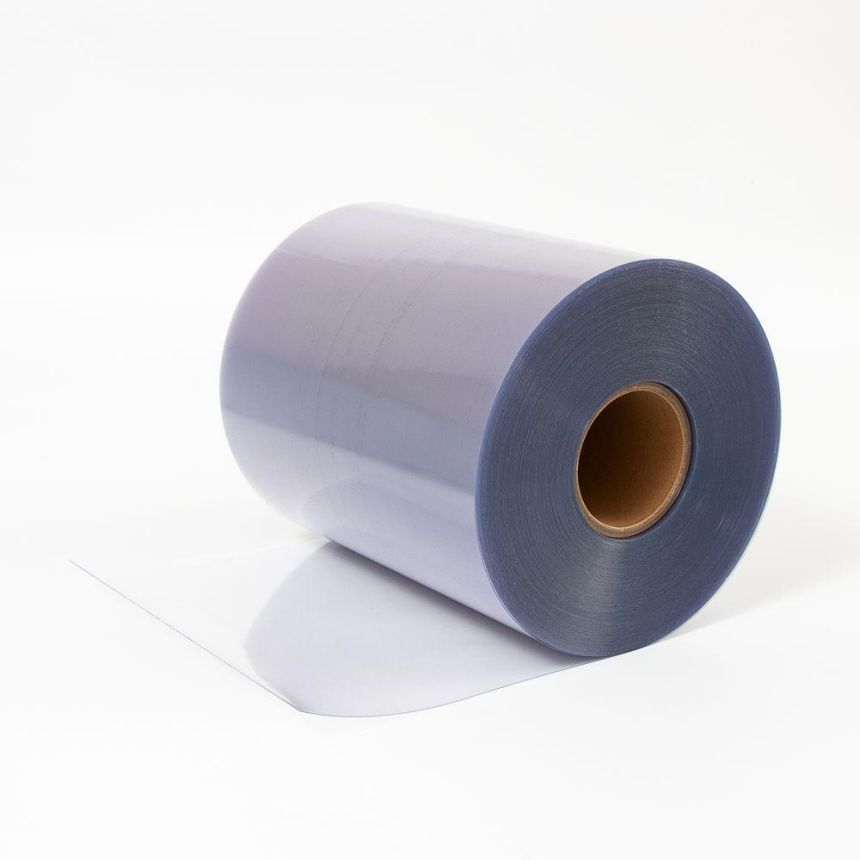
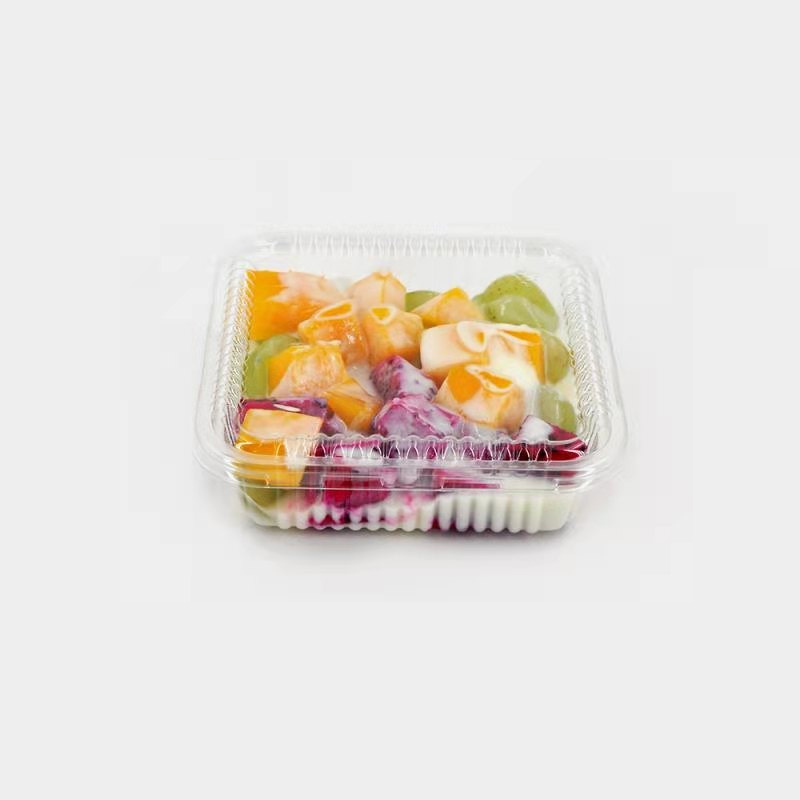
HSQY manufactures clear rigid PVC thermoforming film rolls for food trays, bakery packaging, confectionery inserts, fresh-produce containers, clamshells, blister packs and customized rigid packaging applications.
The material is a rigid polyvinyl chloride film engineered for heating, forming and trimming on vacuum-forming, pressure-forming and form-fill-seal equipment.
Standard transparent film provides clear product visibility, controlled stiffness and reliable forming performance for retail and food-packaging applications.
The recommended rigid PVC roll range is approximately 0.15mm to 1mm. Selected specifications up to approximately 1.5mm may be supplied in rolls after confirming roll diameter, bending radius, core strength and customer equipment.
Thicker PVC products within the broader published range are normally supplied as flat sheets rather than food-packaging rolls.
Roll widths from approximately 10mm to 1280mm are available, subject to thickness, edge tolerance, roll weight and production feasibility.
Natural clear, blue-tinted transparent, opaque and customized colored films can be produced with glossy, matte or frosted surfaces.
Food-contact, anti-blocking, anti-static, impact-modified, UV-stabilized, flame-retardant and barrier grades are available as separate formulations or structures subject to the required test standard and application.
Food-contact suitability is not established solely by using virgin PVC resin. The complete formulation, food type, contact temperature, contact duration and destination-market requirements must be confirmed.
Explore the complete HSQY rigid PVC sheet and film range for food packaging, printing, thermoforming and industrial applications.
Request PVC Film Pricing Request Thermoforming Samples
PVC Plastic Roll Product Video
Watch the video below to review HSQY rigid PVC film rolls and related thermoforming applications.
Clear PVC Thermoforming Film Images
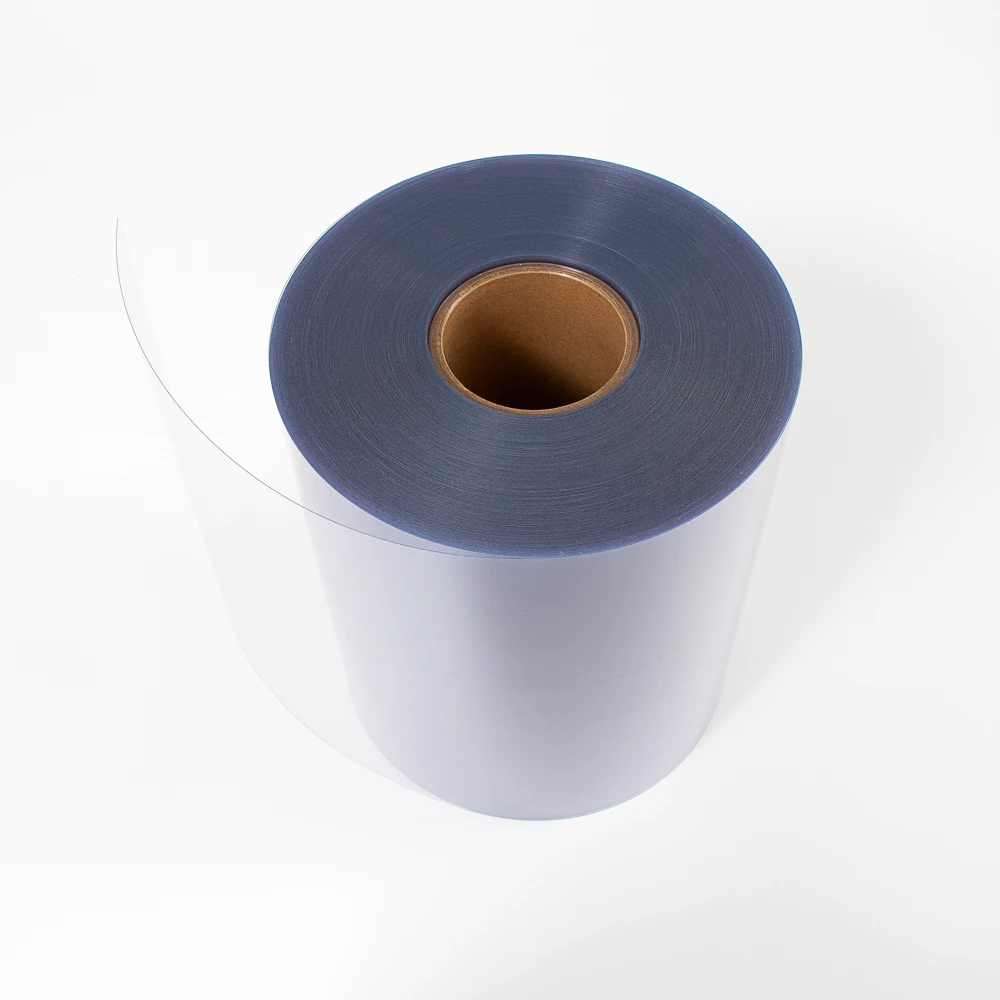
PVC Plastic Roll for Food Packaging

PVC Plastic Roll for Thermoforming
What Is Rigid PVC Thermoforming Film?
Rigid PVC thermoforming film is a semi-rigid or rigid polyvinyl chloride material supplied in continuous rolls for heating and forming into packaging cavities.
Unlike flexible PVC cling film, rigid thermoforming film contains little or no intentionally added plasticizer according to the selected formulation and retains the shape of the formed tray or package.
The film can be processed into trays, clamshells, blister cavities, inserts, lids and packaging components using vacuum, pressure or mechanical forming.
Final performance depends on the PVC resin, stabilizer system, impact modifier, processing aid, colorant, thickness tolerance, extrusion or calendaring conditions and forming equipment.
PVC Food Packaging Film Specifications
| Property |
Available Specification |
| Product Name |
PVC Thermoforming Film Roll for Food Packaging |
| Alternative Names |
Rigid PVC Film, Clear PVC Packaging Roll, PVC Vacuum-Forming Film and Food Packaging PVC Sheet |
| Brand |
HSQY Plastic |
| Material |
Rigid polyvinyl chloride / PVC |
| Raw Material |
Virgin PVC formulation or another approved structure according to the application |
| Recommended Roll Thickness |
Approximately 0.15-1mm |
| Selected Heavy Roll Gauges |
Up to approximately 1.5mm after confirming roll and equipment requirements |
| Broader Custom PVC Range |
Approximately 0.05-6mm, with thicker products normally supplied as flat sheets |
| Roll Width |
Approximately 10-1280mm |
| Sheet Sizes |
700 × 1000mm, 915 × 1830mm, 1220 × 2440mm and customized sizes |
| Supply Format |
Master rolls, slit rolls, flat sheets and cut pieces |
| Appearance |
Natural clear, blue-tinted transparent, translucent or opaque |
| Surface Options |
Glossy, matte, frosted and customized surface |
| Color Options |
Clear, white, black and customized transparent or opaque colors |
| Reference Density |
Approximately 1.35-1.40g/cm³, subject to the exact formulation |
| Thermoforming Processes |
Vacuum forming, pressure forming, plug-assist forming and matched-mold forming |
| Printing Methods |
UV offset, screen printing, UV inkjet and selected digital printing after validation |
| Main Food Applications |
Bakery trays, confectionery inserts, produce packs, clamshells and selected food containers |
| Barrier Options |
Mono PVC, PVC/PVDC and customized multilayer structures according to shelf-life requirements |
| Sealing Options |
Compatible coatings, laminates or lidding systems subject to seal testing |
| Optional Grades |
Food-contact, anti-blocking, anti-static, impact-modified, UV-stabilized and flame-retardant grades |
| Pharmaceutical Grade |
Separate dedicated product subject to pharmaceutical packaging requirements |
| Minimum Order Quantity |
Approximately 1000kg for standard bulk production |
| Samples |
Existing A4 sheets, cut samples and limited roll samples may be available |
| Payment Terms |
30% deposit and 70% balance before shipment, or agreed terms |
| Delivery Terms |
FOB, CIF, EXW and other agreed Incoterms |
| Typical Lead Time |
Approximately 7-15 days after specification, sample, deposit and packing confirmation |
Final specifications should identify the nominal thickness, tolerance, width, roll length, roll weight, core diameter, winding direction, color, surface, food-contact conditions and forming process.
Key Features of Rigid PVC Thermoforming Film
Clear product visibility: Transparent grades allow consumers and inspectors to view the packaged product.
Thermoforming performance: Suitable grades can form detailed trays, cavities, lids and clamshells.
Controlled stiffness: Provides structural body for lightweight rigid packaging.
Printability: Selected surfaces can support UV offset, screen and digital printing.
Color customization: Clear, tinted and opaque colors are available.
Surface customization: Glossy, matte and frosted finishes can be produced.
Impact-modified option: Increased impact performance can be developed for cold or demanding applications.
Anti-blocking option: Surface formulation or coating can help improve roll unwinding and sheet separation.
Special barrier structures: PVDC or other barrier layers can be evaluated when mono PVC is insufficient.
Food-Contact Compliance Requirements
Virgin PVC resin alone does not establish compliance for direct food contact.
The complete film formulation includes stabilizers, lubricants, impact modifiers, processing aids, pigments and other substances that must be suitable for the intended food-contact conditions.
Buyers should specify the food type, direct or indirect contact, contact temperature, contact duration, storage temperature, filling process and destination market.
Printed or laminated packaging must also evaluate inks, coatings, primers, adhesives, heat-seal layers and lidding films.
Relevant documents may include a declaration of compliance, formulation statement, migration test report, resin authorization information and supporting test records.
| Requirement |
Why It Matters |
Information to Provide |
| Food Type |
Fatty, acidic, aqueous and dry foods can create different migration conditions |
Product description and applicable food simulants |
| Contact Temperature |
Higher temperature can increase migration and deformation risk |
Filling, sealing, storage and consumer-use temperatures |
| Contact Duration |
Long-term storage can require different compliance testing |
Maximum shelf life and storage conditions |
| Packaging Structure |
Coatings, inks and laminates affect final compliance |
Complete layer structure and food-contact side |
| Destination Market |
Regulatory requirements differ by country and region |
United States, European Union or other target market |
PVC Thermoforming Process
Rigid PVC film can be processed using vacuum forming, pressure forming, plug-assist forming and matched-mold forming.
Initial forming trials are commonly conducted within a controlled sheet-temperature range, but the correct setting depends on the exact formulation, thickness, heater type, heating time, mold and production speed.
PVC is sensitive to excessive heat. Overheating or excessive residence time can cause yellowing, odor, bubbles, surface degradation, loss of clarity and reduced mechanical performance.
Heating should be uniform through the film width and thickness. Mold venting, plug design, cooling and trimming conditions should also be validated.
| Forming Issue |
Possible Cause |
Recommended Check |
| Yellowing or Odor |
Excessive temperature, excessive heating time or poor heat stability |
Reduce heat exposure and confirm the thermoforming-grade formulation |
| Uneven Wall Thickness |
Uneven heating, excessive draw ratio or inadequate plug assistance |
Review heater zoning, mold geometry and plug design |
| Poor Cavity Definition |
Insufficient sheet temperature, vacuum, pressure or mold venting |
Adjust heating, vacuum, pressure and vent design |
| Cracking During Trimming |
Low-impact formulation, cold trimming or unsuitable tooling |
Evaluate impact modification, trim temperature and blade condition |
| Film Sticking During Unwinding |
High storage pressure, heat, smooth surfaces or insufficient anti-blocking performance |
Review storage, roll tension, surface and anti-blocking grade |
Mono PVC and High-Barrier Packaging Structures
| Structure |
Main Function |
Important Limitation |
| Mono Rigid PVC |
Transparency, stiffness and standard thermoforming performance |
Not automatically a high oxygen or water-vapor barrier |
| PVC/PVDC |
Improves moisture and gas barrier performance |
Coating weight, forming, sealing and regulatory suitability must be confirmed |
| PVC/PE or Coated PVC |
Provides a heat-sealable or functional surface |
Seal performance depends on the layer, lid and process settings |
| Barrier Multilayer Film |
Supports extended shelf-life applications requiring defined OTR or WVTR |
The complete structure must be designed around the food and shelf-life target |
Buyers requiring extended shelf life should provide the target oxygen-transmission rate, water-vapor-transmission rate, food type, storage temperature and required shelf life.
Heat Sealing and Lidding Compatibility
Formed PVC trays do not automatically seal to every lidding film.
Sealing performance depends on the PVC surface, coating or laminate, lidding-film sealant, sealing temperature, pressure, dwell time, flange flatness and food contamination.
Confirm the lidding-film structure and sealant layer.
Measure seal initiation temperature and operating window.
Test peel force, burst resistance and leak performance.
Evaluate seal performance after chilling, freezing or transport.
Test sealing through oil, moisture, crumbs or other expected contamination.
Confirm whether lock-seal, peelable or easy-open performance is required.
Applications of PVC Food Packaging Film
Bakery packaging: Clear trays, clamshells and inserts for cakes, biscuits and pastries.
Confectionery packaging: Chocolate, candy and gift-box inserts.
Fresh-produce packaging: Selected fruit, vegetable and salad packs using an approved food-contact grade.
Food trays: Lightweight rigid trays for ambient, chilled or application-specific storage.
Clamshell packaging: Hinged transparent packs for retail products.
Blister packaging: Clear formed packaging for consumer goods and selected food products.
Retail inserts: Transparent or colored inserts for cosmetics, toys, hardware and gifts.
Printed packaging: UV-offset and screen-printed plastic boxes or sleeves.
Medical packaging: Only using a dedicated medical-packaging grade and validated process.
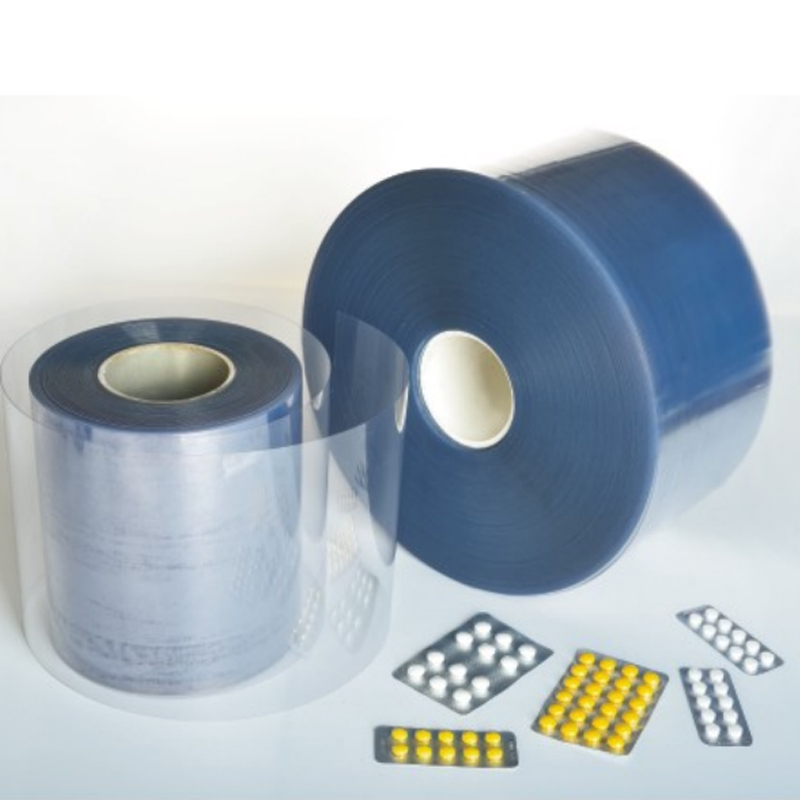
Pharmaceutical blisters: Only using dedicated pharmaceutical-grade PVC film.
Thermoforming Application Images

Food Packaging

Pharmaceutical Packaging Grade

Offset Printing
Pharmaceutical and Medical Packaging Grades
Standard food-packaging or industrial PVC film should not automatically be used for pharmaceutical or sterile medical packaging.
Pharmaceutical blister film may require a dedicated resin and additive system, controlled production environment, batch traceability, thickness control, shrinkage testing and compatibility with lidding foil.
Medical-device packaging may require cleanliness, sterilization compatibility, microbial control, seal validation, aging studies and device-specific documentation.
These applications should be quoted and approved separately from standard food-packaging film.
Printing and Converting PVC Film
Rigid PVC film can be printed, die cut, punched, scored, folded and bonded for packaging and display applications.
| Process |
Typical Application |
Required Validation |
| UV Offset Printing |
Clear packaging boxes, sleeves and promotional packaging |
Static control, ink adhesion, curing, migration and folding |
| Screen Printing |
Displays, panels, packaging and labels |
Ink compatibility, drying, abrasion and food-contact separation |
| Die Cutting and Punching |
Blisters, boxes, windows, lids and inserts |
Tool clearance, burrs, edge cracking and dimensional accuracy |
| Scoring and Folding |
Clear boxes and packaging sleeves |
Score depth, bend radius, whitening and cracking |
| Adhesive Bonding |
Assembled boxes and display components |
Adhesive compatibility, clarity, cure time and migration risk |
Anti-Static, Anti-Blocking and Impact Grades
| Grade |
Main Function |
Required Specification |
| Standard Clear PVC |
General thermoforming and packaging |
Clarity, thickness, forming and food-contact requirements |
| Anti-Blocking PVC |
Reduces sticking during winding and feeding |
Storage temperature, winding pressure and release requirement |
| Anti-Static PVC |
Reduces static buildup, dust and feeding problems |
Surface resistance, humidity, voltage and effective duration |
| Impact-Modified PVC |
Improves resistance to cracking and cold handling |
Impact test method, specimen thickness and service temperature |
| UV-Stabilized PVC |
Improves resistance to selected light-exposure conditions |
Exposure time, yellowing, color and mechanical-retention limits |
Flame-Retardant and Self-Extinguishing Claims
Rigid PVC can exhibit self-extinguishing behavior, but a specific flammability classification should not be assumed for every formulation.
Flame-retardant performance must be confirmed using the exact film grade, thickness, color, specimen orientation and test standard.
A material-level test does not establish the fire classification of a complete food tray, package, display or finished product.
Recommended Quality-Control Tests
PVC resin and formulation verification.
Thickness and thickness tolerance.
Roll width, roll length, roll weight and core diameter.
Winding direction, roll tension, telescoping and edge alignment.
Density or sheet-weight verification.
Transparency, haze, gloss and yellowness index.
Color and batch-to-batch color difference.
Black spots, gels, bubbles, lines, scratches and contamination.
Tensile strength, elongation and impact performance.
Machine-direction and transverse-direction shrinkage.
Thermoforming temperature window and web sag.
Forming depth and wall-thickness distribution.
Yellowing and degradation after forming.
Trimming, punching and edge-cracking performance.
Anti-blocking and roll-release performance.
Surface resistance for anti-static grades.
Heat-seal strength and package-leak testing.
OTR and WVTR testing where barrier performance is required.
Overall and specific migration testing where applicable.
Printing-ink adhesion and migration evaluation.
Packing, pallet and container-loading inspection.
Custom PVC Thermoforming Film Options
Rigid PVC roll thicknesses from approximately 0.15mm to 1mm.
Selected heavy roll gauges subject to confirmation.
Roll widths from approximately 10mm to 1280mm.
Customized roll length, weight and core diameter.
Natural clear and blue-tinted transparent film.
Opaque and customized colored film.
Glossy, matte and frosted surfaces.
Food-contact formulations subject to documentation.
Anti-blocking and anti-static grades.
High-impact and cold-resistant grades.
UV-stabilized and flame-retardant grades.
PVC/PVDC and customized barrier structures.
Printable and coated surfaces.
Customized labels, cartons, pallets and shipping marks.
Information Required for a PVC Film Quote
Required thickness and tolerance.
Required roll width and edge tolerance.
Required roll length, roll weight and core diameter.
Winding direction and maximum roll diameter.
Clear, blue-tinted, opaque or customized color.
Glossy, matte or frosted surface.
Thermoforming equipment and line speed.
Mold dimensions, cavity depth and draw ratio.
Food type, contact temperature and shelf life.
Required food-contact regulation and documentation.
Required OTR, WVTR or barrier structure.
Lidding-film and sealing requirements.
Anti-static, anti-blocking, impact or UV requirements.
Printing, coating or adhesive-bonding process.
Initial order quantity and estimated annual demand.
Packing, destination port and required delivery date.
Send Your PVC Film Requirements
PVC Plastic Roll MSDS
Download the available PVC material safety data sheet below.
The MSDS provides general material-safety information and does not independently establish food-contact compliance, migration performance or suitability for a specific packaging application.
![PVC thermoforming film MSDS PDF icon]() Download PVC Plastic Roll MSDS
Download PVC Plastic Roll MSDS
Packaging and Delivery
Sample packing: A4 sheets and small cut samples can be protected with PE bags and packed in rigid courier cartons.
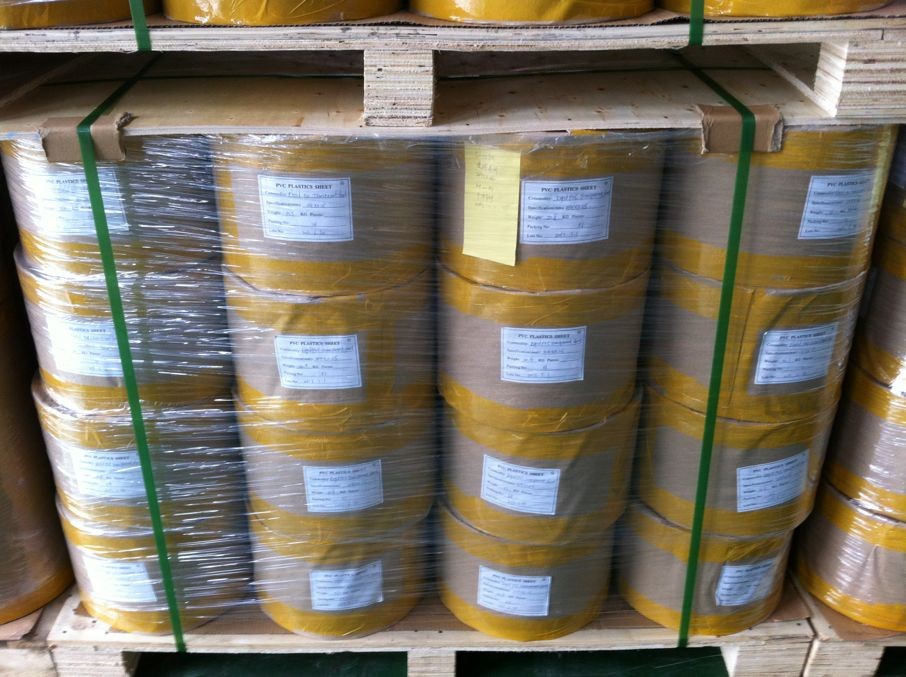
Roll packing: PVC rolls can be wrapped with protective PE film and kraft paper according to roll dimensions and transport requirements.
Core protection: Paper cores and roll ends can be protected to reduce crushing and edge damage.
Pallet packing: Rolls can be secured vertically or horizontally on export pallets according to roll width, weight and customer handling equipment.
Storage: Store the film indoors in a clean, dry and ventilated area away from direct sunlight, heat sources and excessive stacking pressure.
Lead time: Standard production generally requires approximately 7-15 days after specification, sample, deposit and packing confirmation.

Kraft Packing

Pallet Packing
Certificates and Compliance Documents
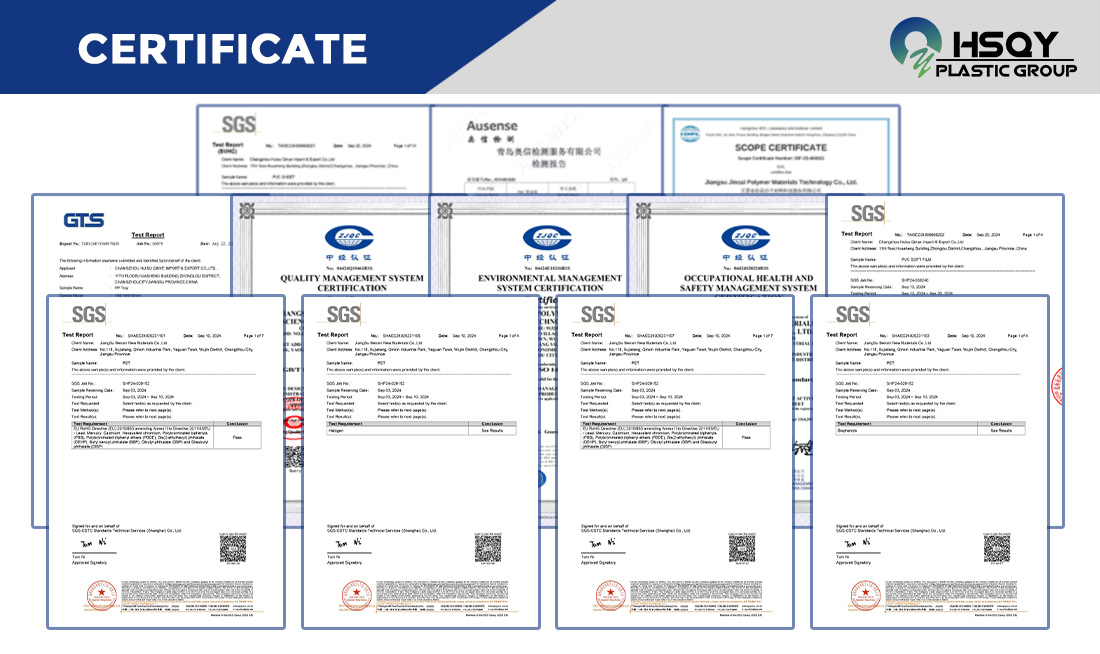
Available documents may include technical data sheets, safety data sheets, formulation statements, migration reports, restricted-substance reports and quality-management certificates.
SGS should be described according to the exact test performed and should not be presented as a universal food-safety certification.
ISO 9001 relates to the manufacturer's quality-management system and does not independently establish food-contact, barrier, sealing or thermoforming performance.
ISO 9001:2008 is a withdrawn standard. The current certificate holder, manufacturing address, standard edition, certification scope and validity period should be verified before publication.
Every report should correspond to the exact PVC formulation, thickness, color, production location and intended food-contact conditions.

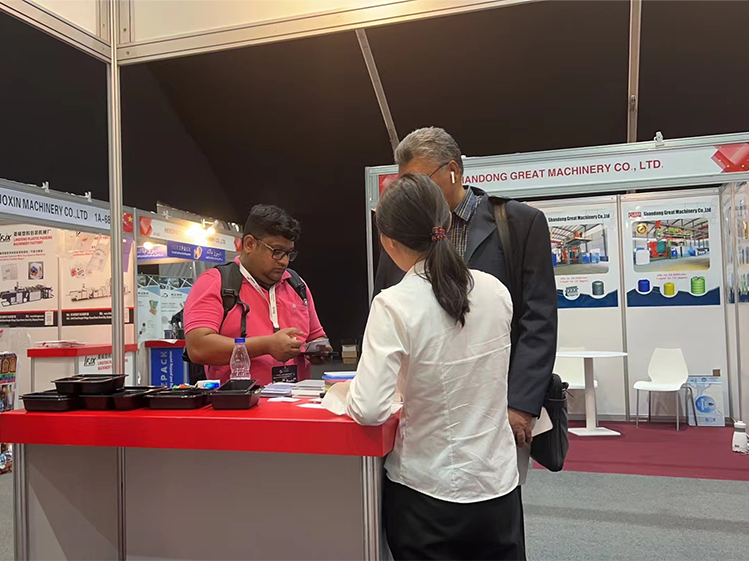
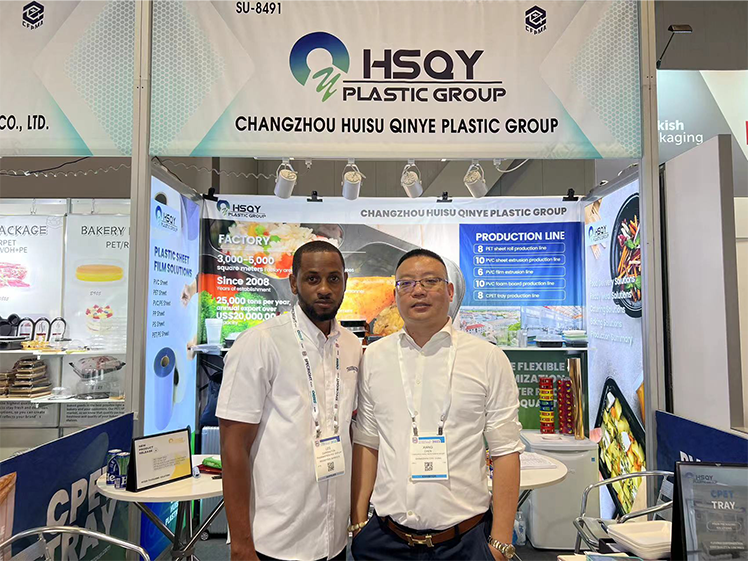
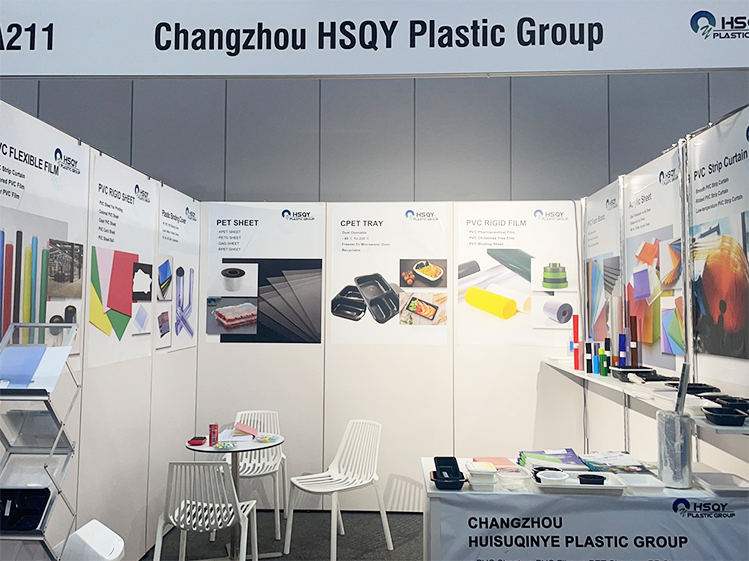
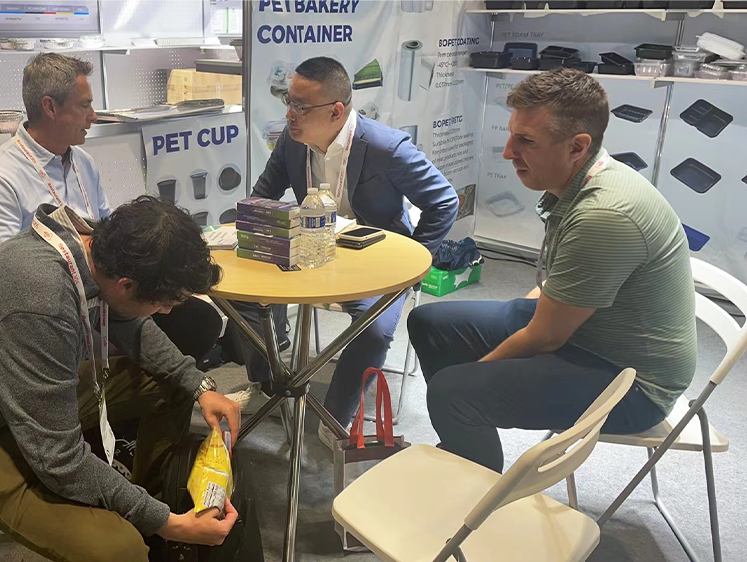
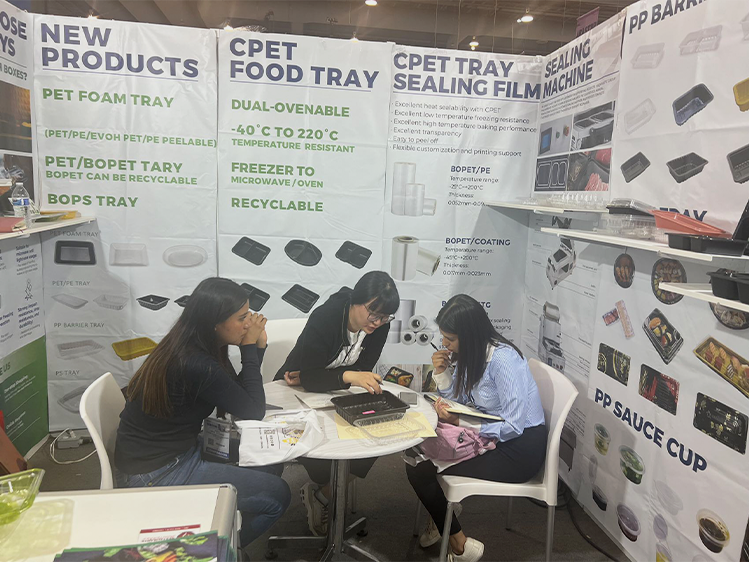
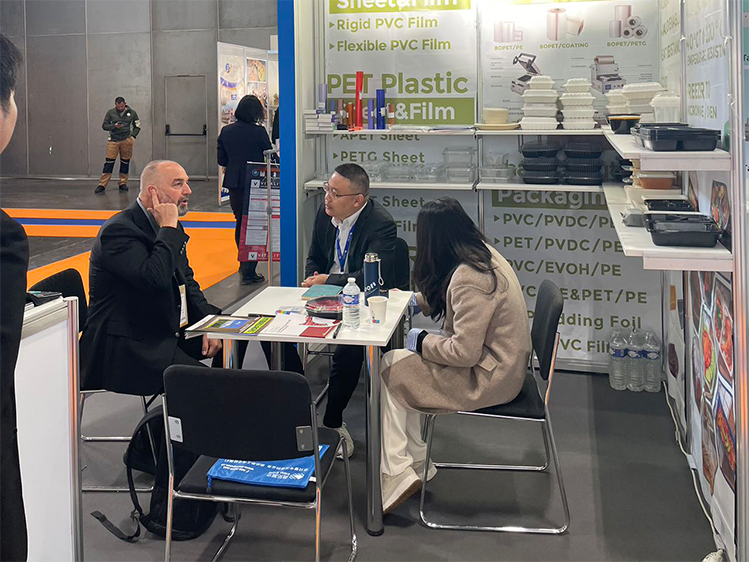
HSQY Global Exhibitions

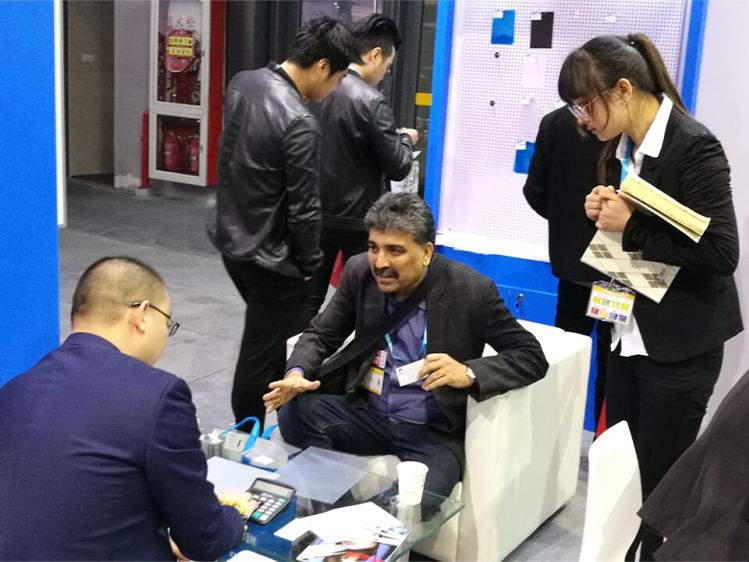
2017 Shanghai Exhibition

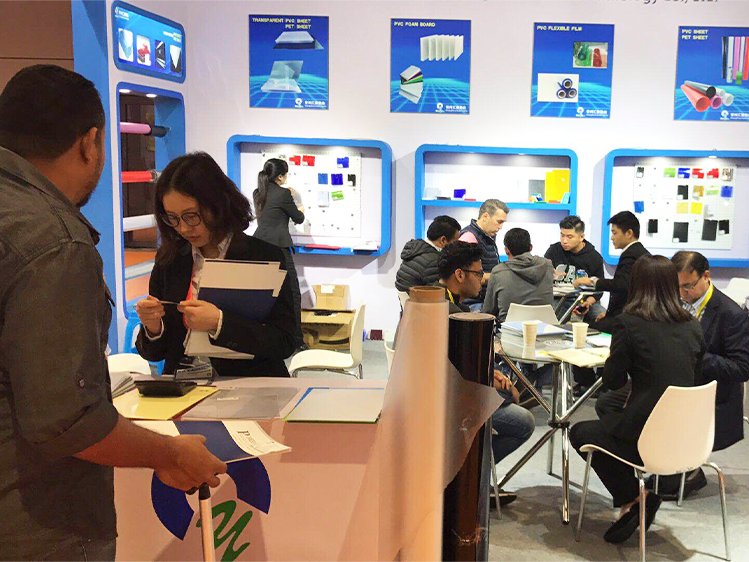
2018 Shanghai Exhibition

2023 Saudi Exhibition

2023 American Exhibition

2024 Australian Exhibition

2024 American Exhibition

2024 Mexico Exhibition

2024 Paris Exhibition
Why Choose HSQY as Your PVC Film Supplier?
Rigid PVC thermoforming film rolls for packaging production.
Recommended roll thicknesses from approximately 0.15mm to 1mm.
Roll widths up to approximately 1280mm.
Clear, blue-tinted, opaque and custom-colored grades.
Glossy, matte and frosted surface options.
Food-contact formulations subject to documentation.
Anti-blocking, anti-static and high-impact options.
Barrier, printable and coated structures.
Samples for forming, sealing and packaging tests.
Customized roll weight, core, winding and pallet packing.
International B2B production and delivery support.
Before bulk production, HSQY recommends testing the selected film on the customer's actual thermoforming machine, mold, lidding film, sealing equipment and packaged food.
Contact HSQY for Samples and Pricing
Frequently Asked Questions About PVC Thermoforming Film
What is rigid PVC thermoforming film?
It is a rigid PVC material supplied in rolls and designed to be heated and formed into trays, clamshells, blisters, inserts and other packaging components.
Is rigid PVC film the same as PVC cling film?
No. Rigid thermoforming film maintains its formed shape, while PVC cling film is soft, flexible and designed for wrapping products.
What thicknesses are recommended for PVC rolls?
The recommended rigid PVC roll range is approximately 0.15mm to 1mm. Heavier gauges require separate confirmation.
Can 6mm PVC be supplied as a roll?
PVC at this thickness would normally be supplied as a flat sheet rather than a packaging roll.
What roll widths are available?
Customized widths from approximately 10mm to 1280mm are available, subject to thickness and production confirmation.
Is every virgin PVC film food safe?
No. Food-contact suitability depends on the complete formulation, food type, temperature, contact duration and destination-market requirements.
Does an SGS report prove food-contact compliance?
Only when the report covers the exact film formulation, relevant regulation, food simulants and intended conditions of use.
Does ISO 9001 prove that PVC film is food safe?
No. ISO 9001 relates to a manufacturer's quality-management system and does not independently establish food-contact compliance.
Can PVC film be used for fatty foods?
Suitability for fatty foods must be confirmed using the exact formulation and migration tests under the intended temperature and storage conditions.
Can PVC film be vacuum formed?
Yes. A suitable rigid PVC grade can be vacuum formed after the heating profile, mold, draw ratio and cooling process are validated.
What temperature is used to thermoform PVC?
The correct temperature depends on the formulation, thickness, heater and forming equipment. Trials must avoid excessive heat that can degrade PVC.
Why does PVC film turn yellow during forming?
Yellowing can result from excessive temperature, excessive heating time, long machine residence time or insufficient heat stability.
Is mono PVC a high-barrier film?
Standard mono PVC should not automatically be described as a high oxygen or water-vapor barrier. Enhanced shelf life may require PVDC or another barrier layer.
What is PVC/PVDC film?
It is a rigid PVC base film coated or combined with PVDC to improve moisture and gas barrier performance.
Can PVC trays be sealed with lidding film?
Yes, when the PVC surface or seal layer is compatible with the selected lidding film and the sealing process has been validated.
Can PVC thermoforming film be printed?
Suitable grades can be UV offset printed, screen printed or UV inkjet printed after adhesion, curing and migration tests.
Is anti-static PVC film available?
Yes. Anti-static grades can be developed according to the required resistance range, test conditions and effective duration.
What is anti-blocking PVC film?
Anti-blocking film is designed to reduce sticking between adjacent layers during winding, storage and automatic feeding.
Is PVC film UV resistant?
Standard clear PVC should not automatically be considered UV stabilized. A dedicated formulation and weathering requirements are needed.
Is rigid PVC self-extinguishing?
Some rigid PVC formulations exhibit self-extinguishing behavior, but the exact classification must be confirmed for the tested grade and thickness.
Can standard food-grade PVC be used for pharmaceutical blisters?
No. Pharmaceutical blisters require a dedicated pharmaceutical-grade film and appropriate regulatory, forming and sealing validation.
Can standard PVC film be used for sterile medical packaging?
Sterile medical packaging requires a dedicated medical-packaging grade and validation of cleanliness, sealing, sterilization and aging.
What is the minimum order quantity?
The standard reference MOQ is approximately 1000kg. Customized colors, coatings and functional grades may require a different MOQ.
Are PVC thermoforming samples available?
Existing A4 samples, cut sheets and limited roll samples may be available. Customized grades may require trial production.
What is the production lead time?
Standard production generally requires approximately 7-15 days after the specification, sample, deposit and packing are confirmed.
What information is required for a quotation?
Provide the thickness, width, roll specifications, food type, forming process, barrier requirement, lidding film, order quantity, packing and destination.
Get a PVC Thermoforming Film Quote
About HSQY Plastic Group
HSQY Plastic Group supplies rigid PVC thermoforming films, transparent PVC sheets, PET sheets, PP sheets, barrier packaging materials and customized plastic products to international B2B customers.
HSQY supports thermoforming companies, food-packaging manufacturers, printing companies, packaging converters, importers and distributors with material selection, samples, customized production, quality inspection and export packing.
Request a Quote and Sample