Transparent Rigid PVC Sheet Roll Manufacturer
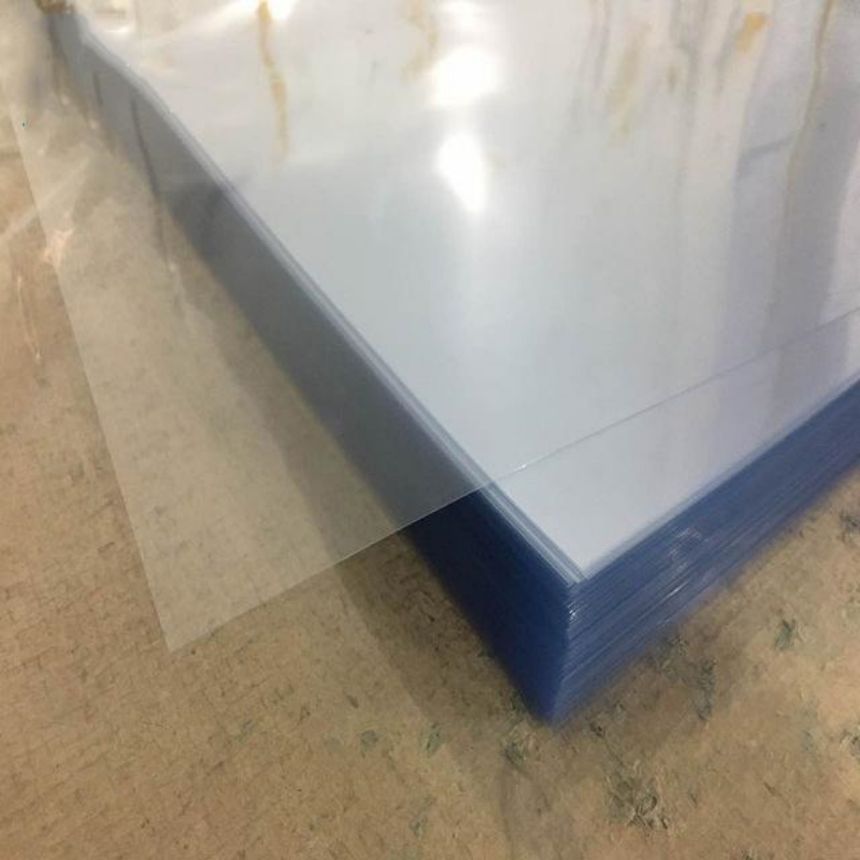
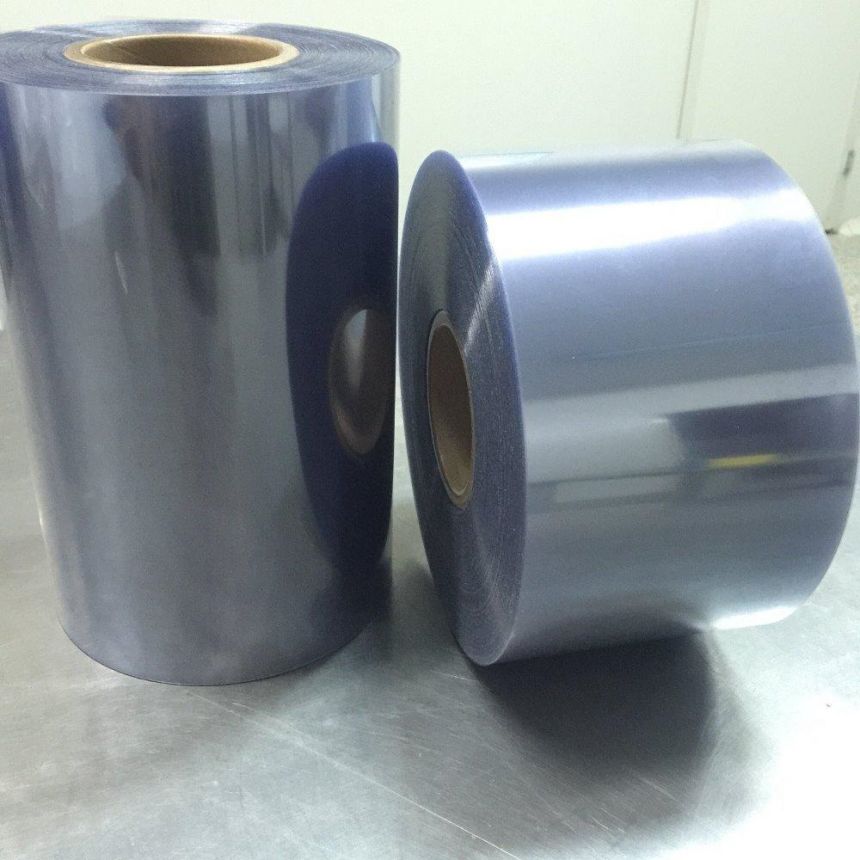
HSQY manufactures transparent rigid PVC sheet rolls and flat sheets for thermoforming, vacuum forming, folding boxes, printed packaging, retail displays, protective covers, stationery products and customized plastic fabrication.
The material is rigid, transparent polyvinyl chloride, commonly described as clear PVC, rigid PVC film, PVC-U sheet, transparent vinyl sheet or clear PVC packaging film.
Thin gauges are available as master rolls and slit rolls for thermoforming, printing and folding-box production. Thicker specifications are normally supplied as flat sheets for displays, guards, partitions and industrial fabrication.
The featured production range is approximately 0.15mm to 5mm. Roll feasibility normally depends on thickness, width, roll diameter, roll weight and surface requirements, while thicker specifications should be confirmed as flat sheets.
Standard widths are available up to approximately 1280mm. Common sheet dimensions include 700 × 1000mm, 915 × 1830mm, 920 × 1820mm and 1220 × 2440mm, with customized roll widths and cut sizes available.
Natural transparent, blue-tinted transparent, transparent colored, translucent and opaque colored PVC can be produced with glossy, matte, frosted or customized surfaces.
Optional grades include printing-grade, thermoforming-grade, anti-static, anti-blocking, impact-modified, UV-stabilized, flame-retardant, food-contact and pharmaceutical-packaging PVC.
These optional properties are not automatically included in standard clear PVC. The exact formulation, thickness, test standard and intended application must be confirmed before production.
Explore the complete HSQY rigid PVC sheet range for transparent, colored, printing, thermoforming and industrial applications.
Request PVC Sheet Roll Pricing Request PVC Samples
Transparent PVC Sheet Roll Video
Watch the video below to review HSQY transparent rigid PVC sheets, roll formats and related converting applications.
Transparent Rigid PVC Sheet Images

Transparent Rigid PVC Sheet Roll

Clear PVC Packaging Sheet
What Is a Transparent Rigid PVC Sheet Roll?
A transparent rigid PVC sheet roll is a clear, unplasticized or low-plasticizer polyvinyl chloride material supplied in continuous roll form for automatic printing, die cutting, thermoforming and packaging production.
Unlike flexible PVC film, rigid PVC maintains its shape and provides sufficient stiffness for blister packs, folding cartons, display panels and formed packaging.
Transparent grades allow products and printed graphics to remain visible. Blue-tinted grades can provide a visually brighter appearance, while transparent colors are used for decorative or color-coded packaging.
Final optical and mechanical performance depends on the PVC resin, stabilizer system, impact modifier, processing aids, pigments, extrusion or calendaring process and thickness tolerance.
PVC Roll Film vs. Flat PVC Sheet
| Supply Format |
Typical Thickness |
Typical Applications |
| Rigid PVC Film Roll |
Approximately 0.15-1mm, subject to winding feasibility |
Blister packaging, folding boxes, printing, stationery and automatic thermoforming |
| Thin Flat PVC Sheet |
Approximately 0.3-1.5mm |
Printing, folding boxes, displays, covers, templates and formed components |
| Thick Flat PVC Sheet |
Approximately 1-5mm |
Machine guards, display panels, protective barriers, partitions and industrial fabrication |
| Pharmaceutical PVC Film |
Normally supplied in controlled thin-gauge roll specifications |
Tablet and capsule blister packaging using approved pharmaceutical-grade film |
Thick PVC should not automatically be described as a roll product. Roll diameter, core strength, minimum bending radius, surface pressure and transport conditions must be evaluated.
Transparent PVC Sheet Roll Specifications
| Property |
Available Specification |
| Product Name |
Transparent Rigid PVC Sheet Roll |
| Alternative Names |
Clear PVC Film Roll, Rigid PVC Film, Transparent PVC-U Sheet and Clear Vinyl Sheet |
| Model |
PVC-Clear |
| Product Code |
HSQY-210119 |
| Brand |
HSQY Plastic |
| Material |
Rigid polyvinyl chloride / PVC-U |
| Published Product Range |
Approximately 0.15-5mm |
| Recommended Roll Range |
Approximately 0.15-1mm, subject to width, roll diameter and winding confirmation |
| Recommended Flat Sheet Range |
Approximately 0.3-5mm |
| Maximum Reference Width |
Approximately 1280mm |
| Common Sheet Sizes |
700 × 1000mm, 915 × 1830mm, 920 × 1820mm and 1220 × 2440mm |
| Custom Dimensions |
Customized roll widths, sheet dimensions and cut-to-size pieces |
| Supply Format |
Master rolls, slit rolls, flat sheets and cut pieces |
| Reference Density |
Approximately 1.36-1.38g/cm³, subject to formulation and test method |
| Standard Appearance |
Natural transparent or blue-tinted transparent |
| Color Options |
Clear, blue-tinted, white, black, red, yellow, blue, green and customized colors |
| Transparency Options |
Transparent, translucent and opaque |
| Surface Options |
Glossy, matte, light frosted, heavy frosted and customized texture |
| Protective Film |
One-side or two-side protective masking for selected flat-sheet specifications |
| Reference Tensile Strength |
Published reference above 52MPa; confirm using the exact grade and test report |
| Reference Impact Strength |
Published reference above 5kJ/m²; confirm thickness, specimen and test method |
| Softening Performance |
Grade dependent; confirm Vicat test method, load and required temperature |
| Thermoforming |
Vacuum forming, pressure forming and matched-mold forming after trial validation |
| Printing Methods |
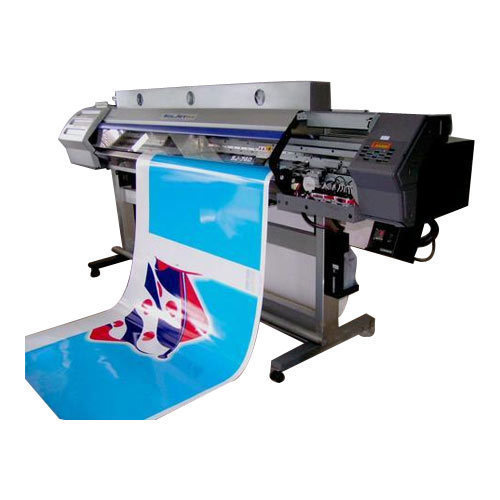
UV offset, screen printing, UV inkjet and selected digital printing |
| Fabrication Methods |
Cutting, die cutting, punching, scoring, folding, routing, drilling, bending and bonding |
| Main Applications |
Thermoforming, folding boxes, printing, displays, packaging, stationery and protective covers |
| Optional Grades |
Anti-static, anti-blocking, impact-modified, UV-stabilized, flame-retardant, food-contact and pharmaceutical grades |
| Minimum Order Quantity |
Approximately 1000kg for standard bulk production |
| Sample Availability |
A4 sheets, cut pieces and limited roll samples may be available |
| Typical Lead Time |
Approximately 7-15 days after specification, sample, packing and deposit confirmation |
| Delivery Terms |
FOB, CIF, EXW and other agreed Incoterms |
Final specifications should identify the exact thickness, tolerance, width, roll length, roll weight, core diameter, color, surface, formulation, printing process and finished application.
Optical Quality and Transparency
| Optical Property |
Why It Matters |
Recommended Specification |
| Light Transmission |
Controls product visibility and display brightness |
Minimum transmission at the specified thickness and test method |
| Haze |
Determines cloudy appearance and visual clarity |
Maximum haze according to the approved sample or test standard |
| Blue Tint |
Can visually reduce yellow appearance |
Approved physical sample or color-coordinate limit |
| Yellowness Index |
Controls raw-material and processing-related discoloration |
Maximum initial value and aging requirement where applicable |
| Black Spots and Gels |
Affects appearance, printing and package inspection |
Maximum defect size and count per square meter |
| Flow Lines |
Can become visible after forming or printing |
Approved visual inspection standard and lighting conditions |
Thermoforming and Vacuum Forming
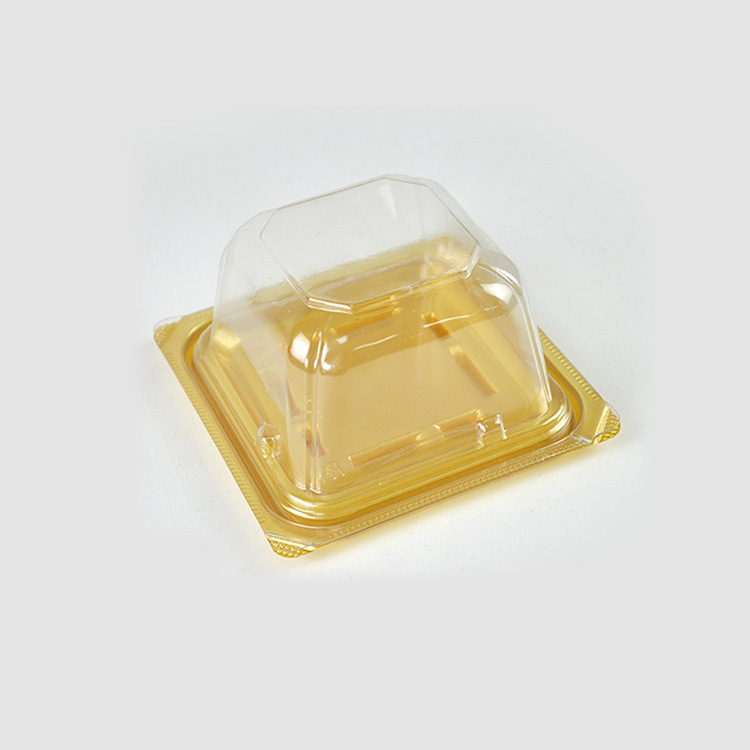
Transparent rigid PVC can be processed by vacuum forming, pressure forming and matched-mold forming to produce clear packaging, inserts, trays and covers.
The correct forming temperature depends on the PVC formulation, thickness, heater type, heating time, mold temperature, draw ratio and production speed.
Excessive heat can cause discoloration, loss of transparency, surface defects, degradation or uneven wall distribution.
Forming trials should evaluate web sag, cavity definition, corner thinning, shrinkage, clarity, trimming performance and dimensional stability after cooling.
| Forming Issue |
Possible Cause |
Recommended Check |
| Yellowing or Darkening |
Excessive heat, long residence time or inadequate heat stability |
Reduce heating time and confirm thermoforming-grade formulation |
| Uneven Wall Thickness |
Uneven heating, excessive draw or mold-design limitations |
Review heater zoning, plug assistance and mold geometry |
| Poor Transparency After Forming |
Surface damage, overheating or internal stress |
Check sheet quality, heating profile and cooling rate |
| Cracking During Trimming |
Low impact grade, cold trimming or unsuitable tooling |
Review impact modifier, trimming temperature and blade condition |
| Excessive Shrinkage |
Internal orientation, uneven cooling or unsuitable formulation |
Specify dimensional stability and test the actual production cycle |
Printing and Folding-Box Production
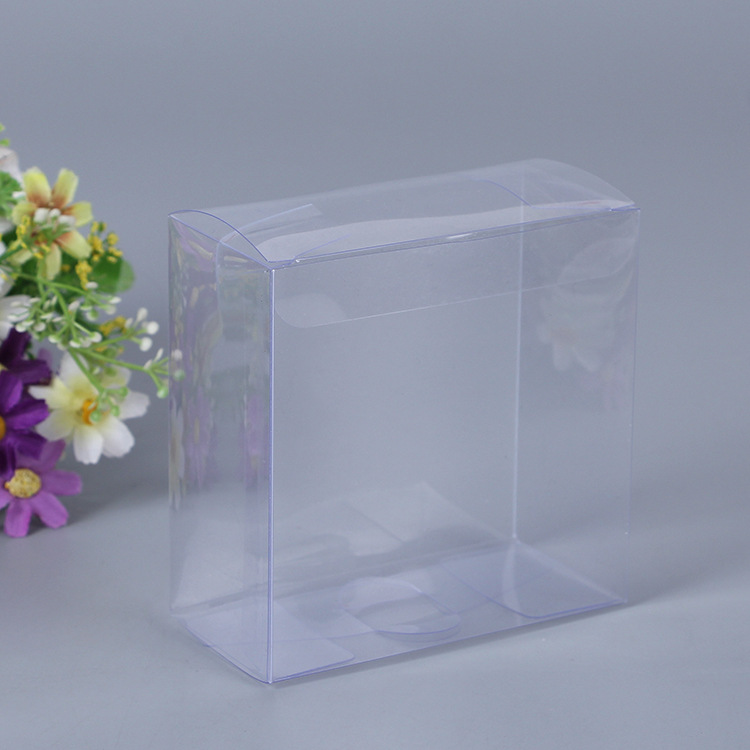
Transparent rigid PVC can be printed and converted into clear folding boxes, sleeves, windows, cards, displays and promotional components.
Printing performance depends on surface cleanliness, static control, ink chemistry, curing energy, thickness, sheet flatness and storage conditions.
| Process |
Typical Application |
Required Validation |
| UV Offset Printing |
Clear boxes, cards, sleeves and decorative packaging |
Sheet feeding, static, ink adhesion, curing and post-print folding |
| Screen Printing |
Displays, signs, panels and promotional products |
Ink compatibility, drying, abrasion and chemical resistance |
| UV Inkjet Printing |
Customized signs, displays and short-run products |
Curing energy, ink adhesion, surface damage and distortion |
| Die Cutting |
Folding cartons, windows, cards and inserts |
Tool clearance, edge cracking, burrs and dimensional accuracy |
| Scoring and Folding |
Transparent boxes, covers and sleeves |
Score depth, bend radius, fold direction, whitening and cracking |
| Adhesive Bonding |
Folding boxes, displays and assembled packaging |
Adhesive clarity, chemical compatibility, cure time and peel strength |
Applications of Clear PVC Sheet Roll
Vacuum-formed packaging: Blisters, clamshells, trays, inserts and transparent covers.
Folding boxes: Clear cartons for cosmetics, gifts, toys, electronics and consumer goods.
Printed packaging: UV-offset, screen-printed and digitally printed plastic boxes.
Packaging windows: Transparent windows for paperboard cartons and display packaging.
Retail displays: POP displays, product holders, shelf components and merchandising panels.
Stationery: Covers, dividers, templates, cards and document components.
Protective covers: Clear guards and covers using a suitable impact grade and thickness.
Industrial fabrication: Transparent panels and components using a chemically compatible grade.
Pharmaceutical packaging: Blister film using a dedicated pharmaceutical-grade formulation.
Food packaging: Selected packaging using an approved food-contact grade.

Vacuum Forming

Folding Boxes

Offset Printing
Pharmaceutical Blister Packaging Requirements
Standard industrial or printing-grade PVC sheet should not automatically be used for pharmaceutical blister packaging.
Pharmaceutical PVC film requires a dedicated formulation, controlled production environment, batch traceability, thickness control, dimensional-stability testing and appropriate regulatory documentation.
Buyers should specify the dosage form, forming machine, pocket depth, sealing foil, sealing temperature, line speed, sterilization method and destination-market requirements.
| Requirement |
Why It Matters |
Information to Confirm |
| Pharmaceutical-Grade Formulation |
Controls extractables, odor, color and regulatory suitability |
Resin, stabilizer, additive and pigment declarations |
| Thickness Uniformity |
Affects pocket depth, barrier and sealing performance |
Nominal thickness, tolerance and measurement frequency |
| Dimensional Stability |
Controls registration and blister-machine feeding |
Machine-direction and transverse-direction shrinkage |
| Heat-Seal Compatibility |
Determines package integrity with lidding foil |
Foil type, coating, seal temperature, pressure and dwell time |
| Barrier Requirement |
Protects moisture-sensitive pharmaceutical products |
Standard PVC, PVC/PVDC or another barrier structure |
| Traceability |
Supports quality investigations and regulated supply chains |
Batch code, raw-material lot, production date and retained samples |
Food-Contact PVC Requirements
Transparent PVC should not automatically be described as food safe based only on the polymer name.
Food-contact suitability depends on the PVC resin, stabilizer, impact modifier, lubricant, pigment, recycled content, printing ink, coating and adhesive.
Buyers should specify the food type, direct or indirect contact, contact temperature, contact duration, filling process, storage conditions and destination market.
Compliance documents should correspond to the exact formulation and conditions of use rather than a general PVC resin or unrelated test specimen.
Chemical Resistance and Industrial Use
Rigid PVC provides useful resistance to many dilute acids, alkalis, salts and water-based cleaning products.
Chemical compatibility depends on the exact chemical, concentration, temperature, contact time, mechanical stress and PVC formulation.
Aromatic hydrocarbons, chlorinated solvents, ketones and other aggressive chemicals may cause swelling, cracking, discoloration or loss of mechanical properties.
Industrial users should conduct immersion, stress-cracking and cleaning-cycle tests using the actual chemical and operating conditions.
Anti-Static and Anti-Blocking PVC Grades
| Grade |
Primary Function |
Required Specification |
| Standard Clear PVC |
General packaging, printing and fabrication |
Thickness, clarity, surface and mechanical requirements |
| Anti-Static PVC |
Reduces static buildup and dust attraction |
Surface resistance, humidity, voltage and effective duration |
| Static-Dissipative PVC |
Protects selected electronic products and sensitive components |
Surface and volume resistance, charge decay and grounding design |
| Anti-Blocking PVC |
Reduces sticking between adjacent film layers |
Blocking force, storage pressure, temperature and winding conditions |
| Silicone-Coated PVC |
Improves denesting or release performance in selected processes |
Coating side, coating weight, migration and printing compatibility |
UV-Stabilized PVC for Outdoor Use
Standard transparent rigid PVC is primarily intended for indoor packaging, printing, display and fabrication applications.
Long-term sunlight exposure may cause yellowing, loss of gloss, embrittlement, color change and reduction in impact performance.
Outdoor applications require a UV-stabilized formulation, UV-protective surface or another application-specific weather-resistant product.
Buyers should specify the climate, exposure direction, service period, color, yellowing limit, gloss retention and mechanical-property retention.
Flame-Retardant PVC Sheet
Rigid PVC generally has better self-extinguishing behavior than many common thermoplastics, but a specific flame classification should not be assumed.
Flame-retardant grades are available when the required test standard, classification, thickness, color and formulation are specified.
A report for one thickness or formulation should not automatically be applied to another product.
Material-level flammability results do not establish the fire classification of an entire package, display, machine guard, furniture product or building system.
Transparent PVC, PETG, APET and Polycarbonate
| Material |
Main Advantages |
Important Limitations |
| Rigid PVC |
Printability, chemical resistance, cost efficiency, forming and self-extinguishing behavior |
Standard grades are mainly for indoor use and require careful thermal processing |
| APET |
Clarity, stiffness, packaging use and established recycling pathways |
Different forming and printing behavior from PVC |
| PETG |
Deep forming, toughness, bonding and resistance to edge cracking |
Higher material cost and different recycling considerations |
| Polycarbonate |
High impact and higher-temperature performance |
Higher cost and different chemical-resistance limitations |
| Acrylic |
High optical clarity, surface hardness and outdoor weatherability |
More brittle during impact, cutting and forming |
Cutting and Fabrication Guidelines
Use sharp guillotines, slitters, knives, punches and steel-rule dies for thin rigid PVC.
Use fine-tooth saws, routers or suitable CNC tools for thicker flat sheets.
Control tool speed and feed to reduce heat buildup, melting and edge chipping.
Confirm die clearance and sheet temperature before mass die cutting.
Use controlled scoring and bend radius for folding-box production.
Select adhesives specifically compatible with rigid PVC.
Provide adequate ventilation during heating, welding, printing and bonding.
Ordinary laser cutting and engraving are not recommended for PVC.
Recommended Quality-Control Tests
PVC resin and formulation verification.
Thickness and thickness tolerance.
Roll width, roll length, roll weight and core diameter.
Sheet dimensions, diagonal tolerance and squareness.
Roll winding, telescoping, blocking and edge alignment.
Sheet flatness, bow, curl and surface condition.
Density or specific gravity.
Light transmission, haze, gloss and yellowness index.
Color and batch-to-batch color difference.
Black spots, gels, bubbles, flow lines and scratches.
Tensile strength, elongation and impact performance.
Vicat softening or heat-deflection performance.
Machine-direction and transverse-direction shrinkage.
Thermoforming window, web sag and cavity definition.
Printing adhesion, curing and abrasion resistance.
Die cutting, scoring, folding and edge-crack tests.
Adhesive clarity and bonding strength.
Surface resistance for anti-static grades.
Artificial weathering for UV-stabilized grades.
Flammability testing for flame-retardant grades.
Food-contact migration testing where applicable.
Pharmaceutical-packaging testing where applicable.
Packing, pallet and container-loading inspection.
Custom Transparent PVC Sheet Options
Thicknesses from approximately 0.15mm to 5mm.
Master rolls, slit rolls, flat sheets and cut pieces.
Widths up to approximately 1280mm.
700 × 1000mm, 915 × 1830mm, 920 × 1820mm and 1220 × 2440mm sheets.
Natural transparent and blue-tinted transparent grades.
Transparent colored, translucent and opaque products.
Glossy, matte, light-frosted and heavy-frosted surfaces.
One-side or two-side protective masking.
Thermoforming, printing and folding-box grades.
Anti-static and anti-blocking grades.
Impact-modified and UV-stabilized grades.
Flame-retardant grades subject to testing.
Food-contact grades subject to documentation.
Pharmaceutical-packaging grades subject to controlled production and validation.
Customized labels, cartons, rolls, pallets and shipping marks.
Information Required for a PVC Sheet Quote
Required thickness and tolerance.
Roll width or flat-sheet dimensions.
Required roll length, roll weight and core diameter.
Natural clear, blue-tinted, colored or opaque appearance.
Glossy, matte or frosted surface.
Protective-film requirement.
Thermoforming depth, mold dimensions and equipment.
Printing process, ink and curing method.
Die cutting, scoring, folding or bonding process.
Required clarity, haze and color limits.
Indoor or outdoor application.
Anti-static, UV, impact or flame-retardant requirements.
Food-contact or pharmaceutical-packaging requirements.
Required technical and compliance documents.
Initial order quantity and estimated annual demand.
Packing, destination port and required delivery date.
Send Your PVC Sheet Requirements
PVC Data Sheets and Test Reports
All original PDF links from the current page are retained below.
Some reports relate to gray board, thick sheet or offset-printing sheet rather than the featured transparent roll product.
Before relying on a document, confirm that the formulation, thickness, color, production site, test specimen and intended application correspond to the product being purchased.
![PVC clear sheet data sheet PDF icon]() PVC Clear Sheet Data Sheet
PVC Clear Sheet Data Sheet
![PVC rigid sheet flammability PDF icon]() Flammability of PVC Rigid Sheet
Flammability of PVC Rigid Sheet
![PVC gray board test report PDF icon]() PVC Gray Board Test Report
PVC Gray Board Test Report
![PVC clear film data sheet PDF icon]() PVC Clear Film Data Sheet
PVC Clear Film Data Sheet
![PVC sheet test report PDF icon]() PVC Sheet Test Report
PVC Sheet Test Report
![20mm PVC gray board report PDF icon]() 20mm Gray Board Test Report
20mm Gray Board Test Report
![PVC offset printing sheet report PDF icon]() PVC Sheet for Offset Printing Test Report
PVC Sheet for Offset Printing Test Report
Packaging and Delivery
Sample packing: A4 sheets and small cut samples can be packed in protective PP or PE bags and rigid courier cartons.
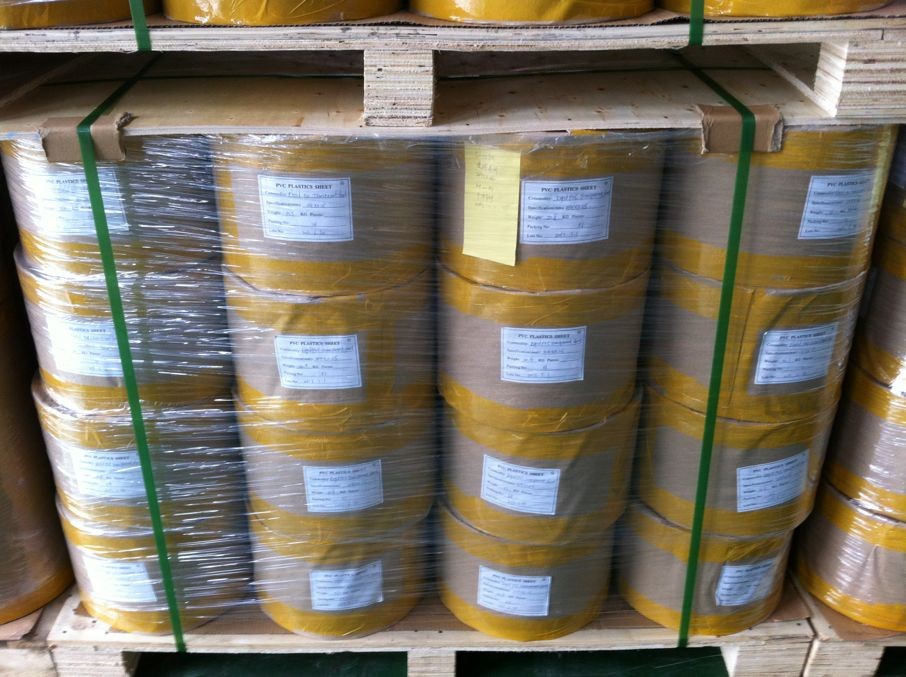
Roll packing: A reference roll weight is approximately 50kg, or customized according to the customer's unwinding and handling equipment.
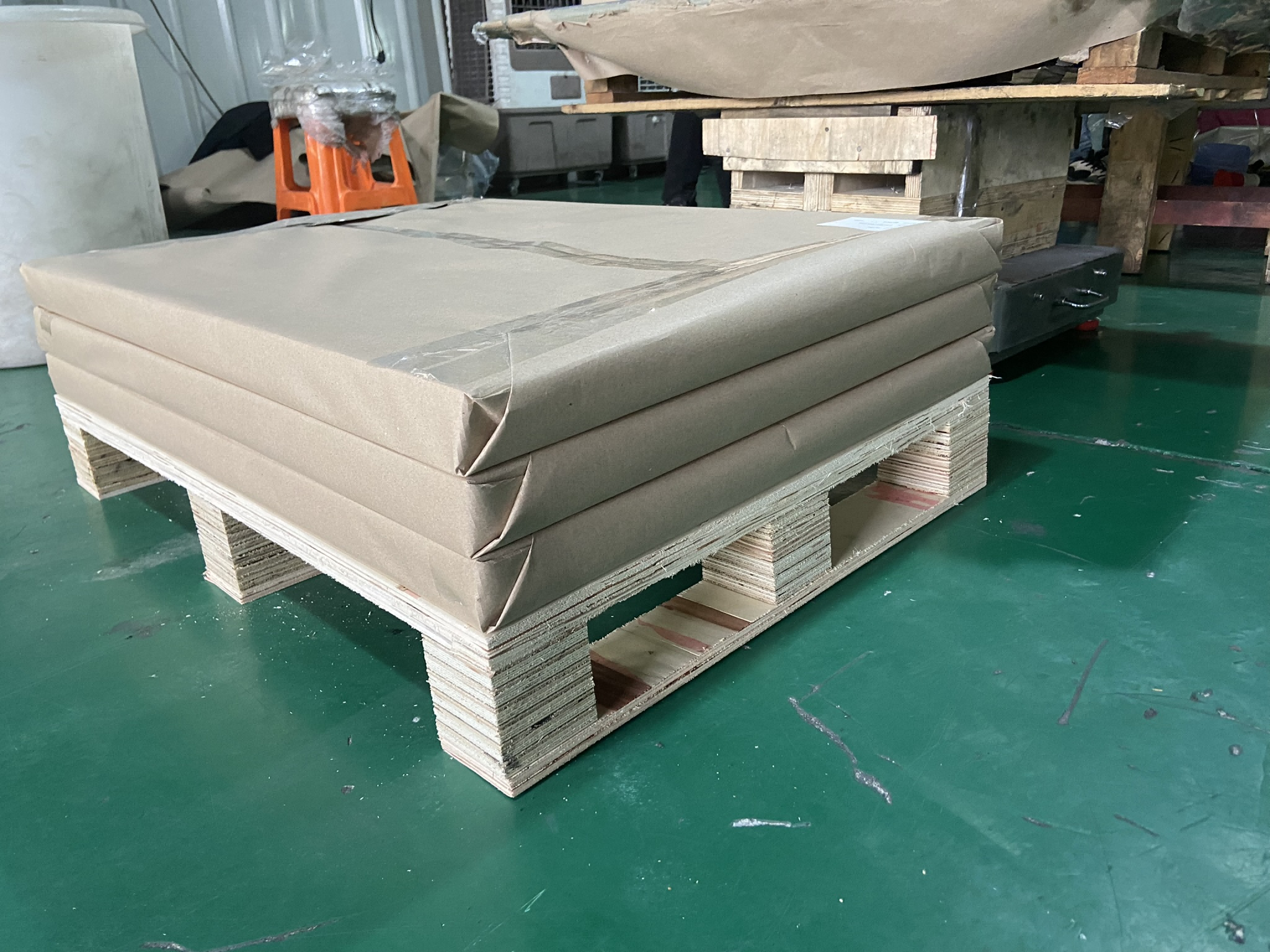
Sheet packing: Flat sheets can be wrapped with PE film, kraft paper or protective interleaving materials.
Pallet packing: Rolls and sheets can be secured on plywood or fumigation-free export pallets with corner protection, straps and stretch film.
Reference pallet weight: Approximately 500-2000kg depending on product dimensions, handling limits and customer requirements.
Container loading: A reference loading quantity is approximately 20 tons, subject to pallet design and legal weight restrictions.
Delivery terms: FOB, CIF, EXW and other agreed Incoterms are available.
Lead time: Standard production generally requires approximately 7-15 days after the specification, sample, deposit and packing are confirmed.

Sheet Pallet Packing

Roll Pallet Packing
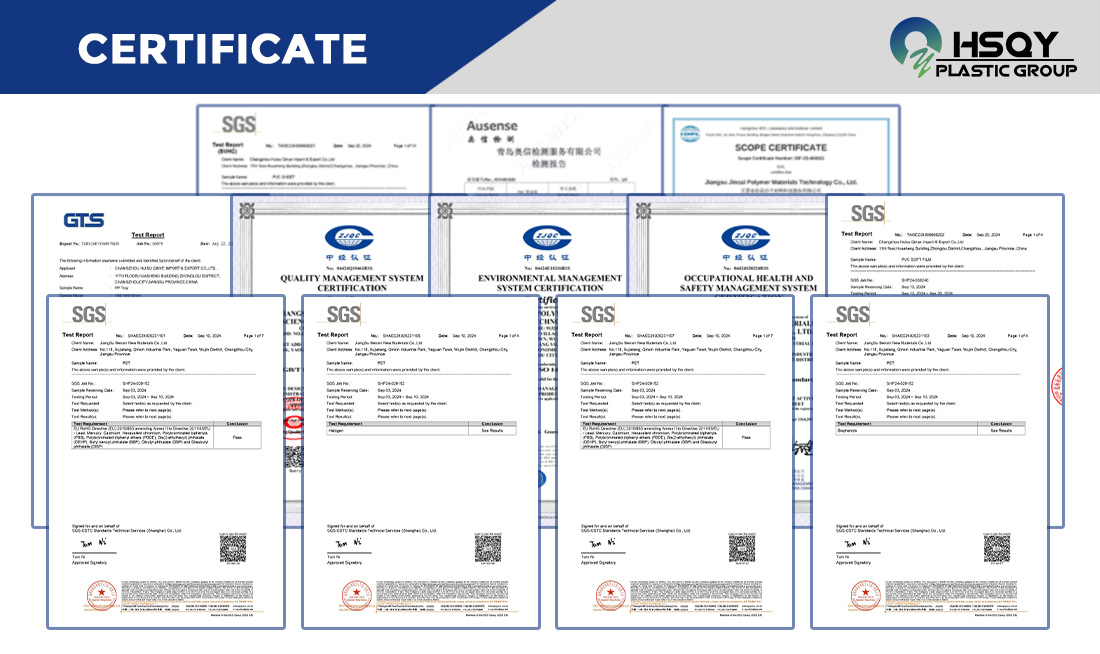
Certificates and Compliance Documents
Available documents may include technical data sheets, safety data sheets, restricted-substance reports, physical-property reports, food-contact documents and quality-management certificates.
SGS should be described according to the exact test performed and should not be presented as a universal certification for food contact, pharmaceutical packaging, fire performance or outdoor use.
RoHS does not independently establish food-contact, pharmaceutical, UV, mechanical or flammability performance.
Each report should be checked against the exact formulation, thickness, color, production site, test specimen and intended application.

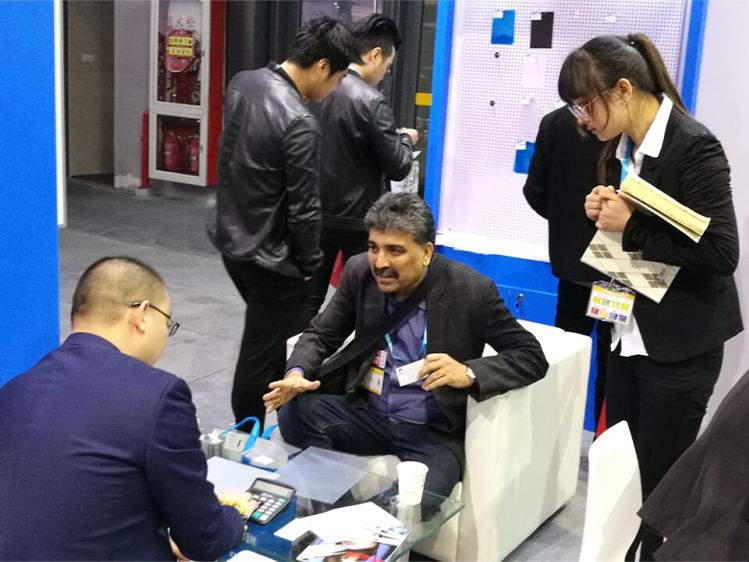
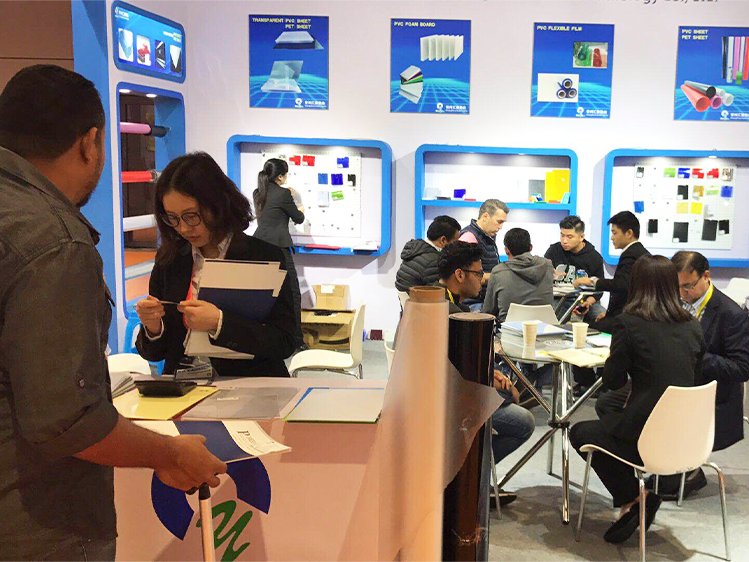
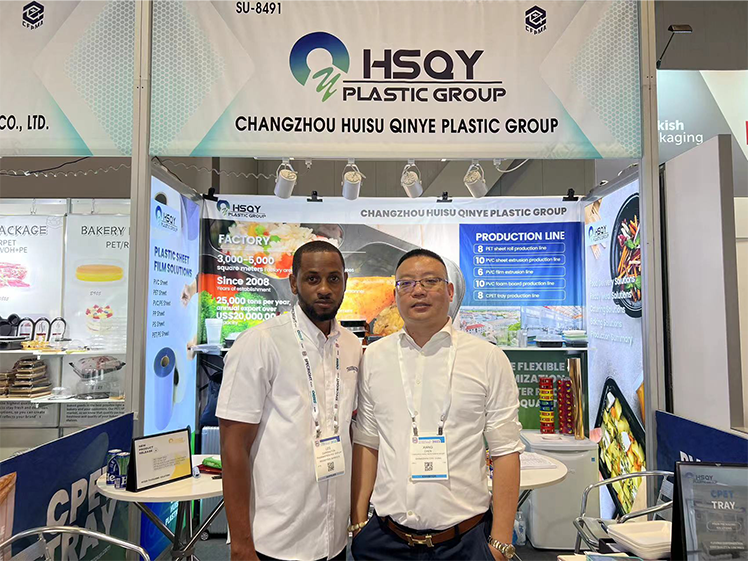
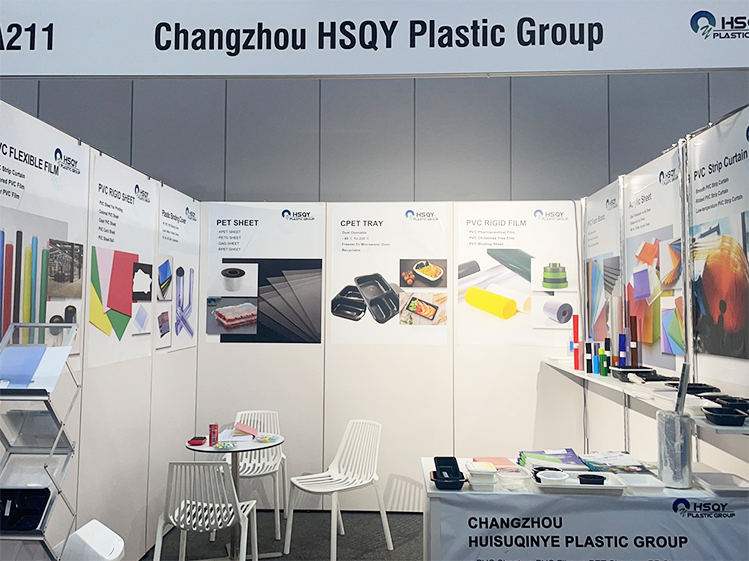
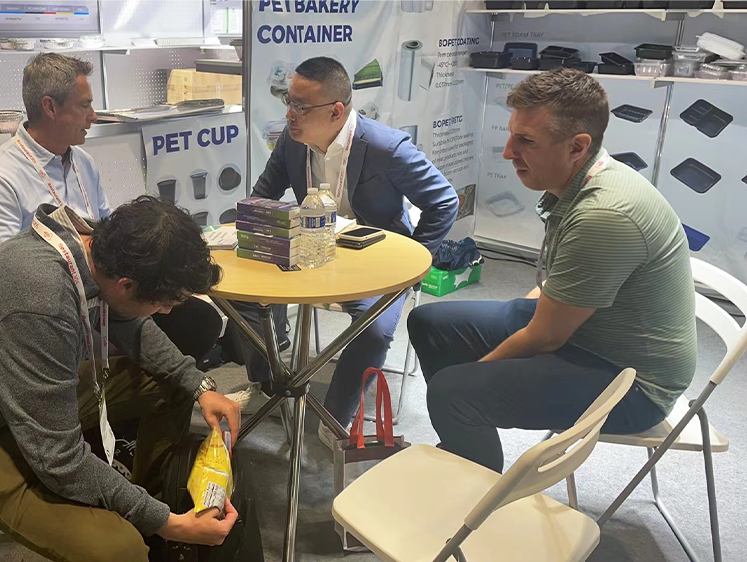
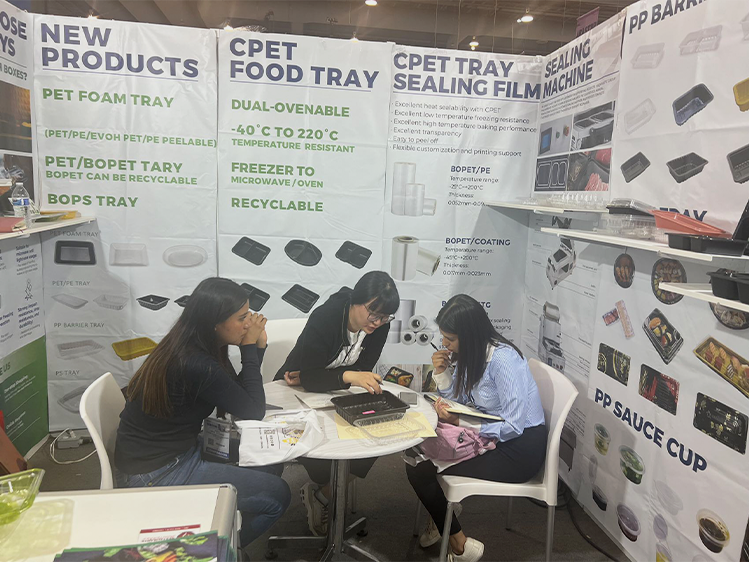
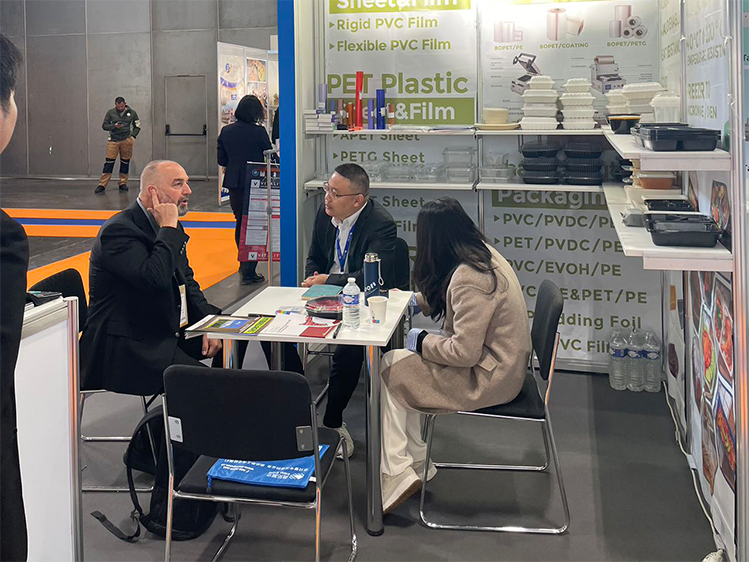
HSQY Global Exhibitions

2017 Shanghai Exhibition

2018 Shanghai Exhibition

2023 Saudi Exhibition

2023 American Exhibition

2024 Australian Exhibition

2024 American Exhibition

2024 Mexico Exhibition

2024 Paris Exhibition
Why Choose HSQY as Your Transparent PVC Supplier?
Transparent rigid PVC rolls and flat sheets.
Published thickness range from approximately 0.15mm to 5mm.
Widths up to approximately 1280mm.
Natural clear, blue-tinted, colored and opaque options.
Glossy, matte and frosted surfaces.
Thermoforming, printing and folding-box grades.
Anti-static, impact-modified, UV and flame-retardant options.
Samples for forming, printing, cutting and bonding trials.
Quality inspection according to approved specifications.
Customized roll, sheet, pallet and export packing.
International B2B production and delivery support.
Before bulk production, HSQY recommends testing the selected PVC using the customer's actual thermoforming machine, mold, printing ink, cutting tools, adhesive, sealing process and finished-product construction.
Contact HSQY for Samples and Pricing
Frequently Asked Questions About Transparent PVC Sheet Rolls
What is a transparent rigid PVC sheet roll?
It is a clear, rigid polyvinyl chloride material supplied in roll form for printing, thermoforming, folding boxes and packaging production.
Is rigid PVC the same as flexible PVC film?
No. Rigid PVC contains little or no plasticizer and maintains its shape, while flexible PVC contains plasticizer and bends more easily.
What thicknesses are available?
The published product range is approximately 0.15mm to 5mm. Roll and flat-sheet availability depends on thickness and width.
Can 5mm PVC be supplied in a roll?
Thick PVC is normally supplied as flat sheets. Roll supply is primarily used for thinner gauges and must be confirmed according to bending radius and roll diameter.
What is the maximum PVC roll width?
The reference maximum width is approximately 1280mm, subject to thickness, surface and production confirmation.
What standard sheet sizes are available?
Common sizes include 700 × 1000mm, 915 × 1830mm, 920 × 1820mm and 1220 × 2440mm.
Can transparent PVC be vacuum formed?
Yes. A suitable thermoforming grade can be vacuum formed after the heating profile, draw ratio, mold and cooling conditions are validated.
Why does PVC turn yellow during thermoforming?
Yellowing can result from excessive temperature, excessive heating time, material degradation or an unsuitable heat-stabilizer system.
Can transparent PVC be offset printed?
Yes. Printing-grade PVC can be UV offset printed after sheet feeding, static, ink adhesion and curing conditions are tested.
Can transparent PVC be screen printed?
Yes. Compatible PVC inks can be used after adhesion, drying, flexibility and chemical-resistance tests.
Can PVC sheet be folded into clear boxes?
Yes. Thin rigid PVC can be scored, die cut and folded after the score depth, bend radius and material direction are validated.
Can PVC sheet be bonded with adhesive?
Yes. The adhesive must be compatible with rigid PVC and should be tested for clarity, cure time, strength and environmental resistance.
Is every transparent PVC sheet food safe?
No. Food-contact suitability depends on the exact resin, additives, colorants, printing, food type and conditions of use.
Does an SGS report prove food-contact compliance?
Only when the report covers the exact formulation, relevant regulation, food simulants and intended temperature and contact time.
Can standard clear PVC be used for pharmaceutical blisters?
Pharmaceutical blisters require a dedicated pharmaceutical-grade PVC film produced and tested for regulated packaging requirements.
What is the difference between PVC and PVC/PVDC film?
Standard PVC provides basic blister-forming performance, while PVDC coating is used when improved moisture and gas barrier performance is required.
Is transparent PVC resistant to chemicals?
It resists many dilute acids, alkalis and salts, but compatibility must be confirmed for the exact chemical, concentration, temperature and exposure time.
Is transparent PVC waterproof?
PVC has low water absorption and resists normal water exposure, but a complete package or enclosure is not automatically waterproof.
Is standard clear PVC suitable outdoors?
Standard clear PVC is mainly intended for indoor use. Outdoor applications require a UV-stabilized grade and weathering validation.
Is transparent PVC self-extinguishing?
Rigid PVC can exhibit self-extinguishing behavior, but the exact flame classification must be confirmed for the formulation and thickness.
Does every transparent PVC sheet meet UL 94 V-0?
No. UL 94 classifications apply only to the tested material, thickness, color and specimen conditions.
Is anti-static transparent PVC available?
Yes. Anti-static and static-dissipative grades can be developed according to the required resistance range and effective duration.
What is anti-blocking PVC film?
Anti-blocking PVC is designed to reduce sticking between adjacent layers during winding, storage and automatic feeding.
Can transparent PVC be laser cut?
Ordinary laser cutting and engraving are not recommended because PVC can generate hazardous gases or dust. Mechanical cutting is recommended.
Is protective film available?
One-side or two-side protective masking can be supplied for selected flat-sheet specifications.
Can custom colors be produced?
Yes. Transparent, translucent and opaque colors can be matched according to a physical sample or approved color reference.
What is the minimum order quantity?
The standard reference MOQ is approximately 1000kg. Custom colors and functional grades may require a different MOQ.
Are samples available?
Existing A4 sheets, cut pieces and limited roll samples may be available. Customized grades may require trial production.
What is the production lead time?
Standard production generally requires approximately 7-15 days after the specification, sample, deposit and packing are confirmed.
What information is required for a quotation?
Provide the thickness, width, roll or sheet format, color, surface, processing method, special grade, quantity, packing and destination.
Get a Transparent PVC Sheet Quote
About HSQY Plastic Group
HSQY Plastic Group supplies transparent rigid PVC sheets, PVC film rolls, colored PVC sheets, PVC printing sheets, PET sheets, PP sheets and customized plastic materials to international B2B customers.
HSQY supports thermoforming companies, packaging converters, printers, folding-box manufacturers, display producers, importers and distributors with material selection, samples, customized production, quality inspection and export packing.
Request a Quote and Sample