Pharmaceutical Grade Rigid PVC Blister Film
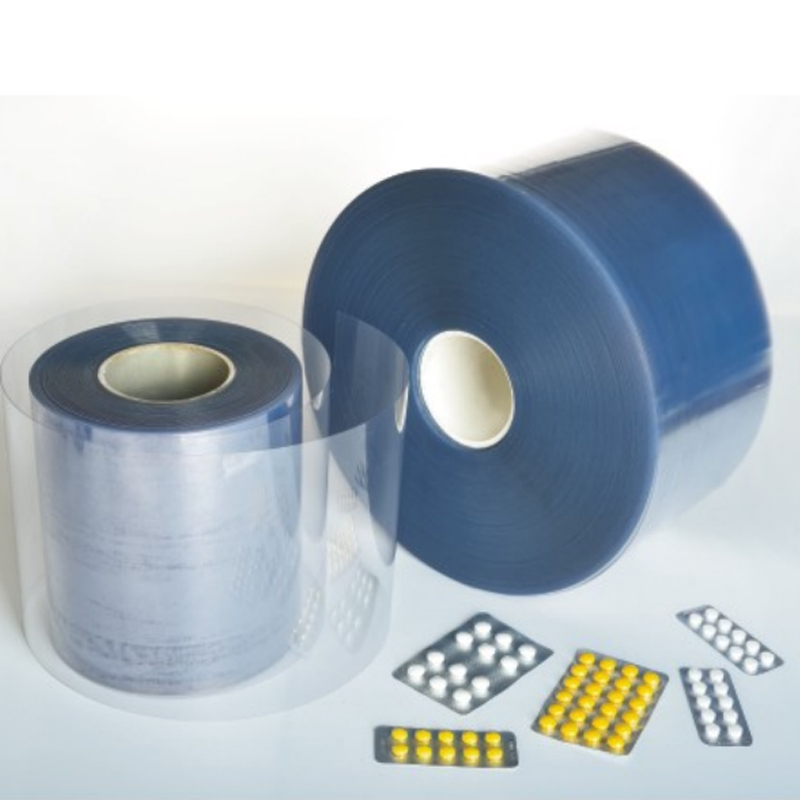
HSQY pharmaceutical grade rigid PVC film is designed for thermoformed blister packaging of tablets, capsules and other solid-dose products. The film provides the rigid forming web used to create blister cavities before filling and sealing with a compatible pharmaceutical lidding material.
The current HSQY-210616 product range covers nominal thicknesses from 0.12mm to 0.30mm with clear, white and customized colored options. Roll dimensions can be customized according to the blister-packaging machine, tooling layout and approved purchasing specification.
Plain rigid PVC is generally selected where reliable thermoforming, visual product inspection, consistent web handling and economical blister production are required. For medicines requiring substantially higher moisture or oxygen barrier, a higher-barrier structure such as PVC/PVDC, PVC/PE/PVDC or another qualified pharmaceutical blister material should be evaluated separately.
Request Pharmaceutical PVC Film Quote
Pharmaceutical PVC Blister Film Video
What Is Pharmaceutical PVC Blister Film?
Pharmaceutical PVC blister film is a rigid thermoforming material used as the cavity-forming web in blister packages. During packaging, the PVC web is heated, formed into cavities, filled with tablets or capsules and then sealed to a compatible lidding foil.
For pharmaceutical converters, film selection is not based on thickness alone. Important factors include forming behavior, dimensional stability, shrinkage, surface quality, roll flatness, color consistency, core size, winding quality and compatibility with the blister machine and lidding system.
The final material specification should be approved for the exact medicine, blister design, packaging line, destination market and regulatory requirements before commercial production.
Pharmaceutical PVC Rigid Film Images

Pharmaceutical Grade Rigid PVC Film

Rigid PVC Film for Pharmaceutical Blister Packaging
Pharmaceutical PVC Film Specifications
The page previously contained a general-purpose PVC table covering 0.07–6mm and non-pharmaceutical applications. For this pharmaceutical product, the current product-level information is 0.12–0.30mm. Final tolerances and roll specifications should be confirmed in the approved technical specification.
| Property |
Current Product Information |
Purchasing Note |
| Product Name |
Pharmaceutical Grade Rigid PVC Blister Film |
Thermoforming web for pharmaceutical blister packaging |
| Model |
Pharmaceutical Grade PVC Rigid Sheet |
Confirm approved product grade before ordering |
| Product Code |
HSQY-210616 |
Reference current product code in inquiries and samples |
| Material |
Rigid PVC |
Pharmaceutical blister grade should be confirmed by exact specification |
| Thickness |
0.12–0.30mm |
Confirm nominal gauge and permitted tolerance |
| Roll Width |
Customized |
Specify exact slit width and tolerance for the blister machine |
| Core Diameter |
76mm Listed in Current Packing Information |
Confirm machine unwind requirement before ordering |
| Density Reference |
1.36–1.42g/cm³ Listed in Original PVC Table |
Final value depends on formulation and color |
| Colors |
Clear, White, Red, Green, Yellow and Customized Colors |
Color should be approved using the production sample or agreed standard |
| Surface |
Pharmaceutical grade should be specified according to blister requirements |
Confirm gloss, slip, blocking, cleanliness and surface quality |
| Production Process |
Calendering or Extrusion According to Grade |
Confirm manufacturing route for the approved material |
| Primary Application |
Tablet and Capsule Blister Packaging |
Final suitability depends on drug stability and packaging qualification |
| MOQ |
2000kg |
Special colors or customized specifications may differ |
| Reference Lead Time |
7–15 Days for Current Listed Production Range |
Subject to specification approval, quantity and production schedule |
Key Requirements for Pharmaceutical PVC Blister Film
Consistent Thermoforming
Pharmaceutical PVC film should form consistent blister cavities under validated heating and forming conditions. Forming performance depends on film grade, thickness, cavity geometry, heater design, line speed and forming pressure.
Thickness Uniformity
Gauge variation can affect cavity formation, web tension, sealing and final blister consistency. Nominal thickness and tolerance should therefore be included in the approved purchase specification.
Optical Clarity
Clear pharmaceutical PVC allows the packaged dosage form to remain visible for inspection and identification. Haze, transparency and surface defects should be controlled according to the approved product standard.
Dimensional Stability
Stable web dimensions help maintain registration, cavity position, sealing accuracy and reliable operation on pharmaceutical blister-packaging equipment.
Controlled Shrinkage
Excessive shrinkage during heating can affect cavity geometry and registration. Thermal behavior should be validated at the actual blister-line forming temperature and speed.
Clean Surface and Roll Quality
Pharmaceutical converters should define acceptable limits for contamination, black spots, gels, scratches, bubbles, blocking, edge damage, curl, telescoping and other defects that could affect packaging-line operation or finished blister appearance.
Pharmaceutical PVC Blister Packaging Process
| Stage |
Function |
What Should Be Controlled |
| Web Unwinding |
Feeds rigid PVC into the packaging line |
Core size, roll tension, winding direction, edge alignment and static behavior |
| Heating |
Softens the PVC before forming |
Film temperature, heating uniformity and residence time |
| Thermoforming |
Forms tablet or capsule cavities |
Cavity depth, wall distribution, forming pressure and line speed |
| Product Filling |
Places dosage forms into the cavities |
Cavity geometry, cleanliness and filling accuracy |
| Lidding and Sealing |
Closes the blister using compatible lidding material |
Lacquer compatibility, sealing temperature, pressure and dwell time |
| Cutting and Inspection |
Creates finished blister cards |
Registration, seal integrity, cavity defects and finished dimensions |
Plain PVC vs. High-Barrier Pharmaceutical Blister Films
Plain rigid PVC is an economical thermoforming material, but it does not provide the same moisture or oxygen protection as dedicated high-barrier blister structures. Film selection should therefore begin with the stability requirements of the pharmaceutical product.
| Structure |
Relative Barrier Position |
Typical Selection Logic |
| Plain Rigid PVC |
Basic blister barrier |
Stable solid-dose products where standard PVC protection is adequate |
| PVC / PVDC |
Higher moisture and oxygen barrier than plain PVC |
Products requiring additional environmental protection after stability evaluation |
| PVC / PE / PVDC |
High-barrier multilayer structure |
Sensitive products requiring higher barrier and application-specific forming properties |
| PVC / PCTFE |
Very high moisture-barrier option |
Highly moisture-sensitive formulations requiring transparent high-barrier packaging |
| Cold-Form Aluminum |
Very high barrier to moisture, oxygen and light |
Highly sensitive medicines where opacity and larger blister footprint are acceptable |
Barrier structure should be selected from pharmaceutical stability data rather than assuming that the highest barrier is automatically the best or most economical solution.
Homopolymer vs. Copolymer PVC for Blister Forming
| PVC Type |
General Processing Characteristic |
Typical Selection |
| Homopolymer PVC |
Standard thermoforming behavior and dimensional stability |
Conventional tablet and capsule blister designs |
| Copolymer PVC |
Can provide a wider forming window or support more demanding cavity geometries depending on grade |
Deeper draw, complex blister geometry or demanding high-speed forming applications |
HSQY should confirm the exact PVC formulation offered for the project rather than describing all pharmaceutical PVC as one universal grade.
Pharmaceutical PVC Blister Film Applications
Tablet Blister Packaging
Rigid PVC film is commonly used as the thermoformed cavity web for unit-dose tablet blister packs where the approved medicine stability profile allows plain PVC packaging.
Capsule Blister Packaging
Capsules often require deeper cavities than small tablets, so forming depth, film gauge, cavity geometry and PVC grade should be evaluated together.
OTC and Nutraceutical Blisters
Suitable pharmaceutical rigid PVC grades can also be evaluated for over-the-counter products, vitamins and nutraceutical solid-dose packaging according to the product's stability and market requirements.
Original Application Images
The following images are retained from the original page. Pharmaceutical blister packaging is the primary SEO and product focus of this page; other PVC applications should be treated as related material capabilities rather than the core pharmaceutical product positioning.

Related PVC Packaging Application

PVC Film for Pharmaceutical Packaging

Related PVC Printing Application
How to Choose Pharmaceutical PVC Blister Film
1. Define the Dosage Form
Specify whether the package contains tablets, capsules, nutraceuticals or another solid-dose product, together with the dimensions of the dosage form.
2. Confirm the Required Barrier Level
Use pharmaceutical stability data to determine whether plain PVC provides adequate protection or whether a PVDC, PCTFE, cold-form aluminum or another high-barrier structure is required.
3. Specify Film Thickness
The current HSQY-210616 product range is listed at 0.12–0.30mm. Select gauge according to cavity depth, web rigidity, forming conditions and packaging-machine requirements.
4. Provide the Blister Cavity Drawing
Cavity length, width, depth, corner radius and draw ratio affect thermoforming behavior and should be considered during material selection.
5. Provide the Blister Machine Details
Provide the machine manufacturer, model, rotary or flat-bed forming system, web width, core requirement, line speed and current operating conditions.
6. Confirm Lidding Foil Compatibility
The PVC forming web must work with the selected pharmaceutical lidding foil and heat-seal lacquer. Final sealing temperature, pressure and dwell time should be validated on the production line.
7. Define Color and Light-Protection Requirements
Clear or colored PVC should be selected according to product visibility, branding and light-protection requirements. Do not claim UV protection unless the exact supplied grade has been formulated and documented for that function.
8. Confirm Pharmaceutical Documentation
Request current technical, quality and regulatory documentation that specifically covers the exact supplied PVC grade and manufacturing site required for the destination market.
Blister Machine and Roll Specification
Roll configuration should be matched to the pharmaceutical blister machine rather than ordering only by film thickness.
| Parameter |
Why It Matters |
| Slit Width |
Must match tooling and blister-web dimensions |
| Width Tolerance |
Affects web tracking and registration |
| Core ID |
Must fit the machine unwind system |
| Roll Outer Diameter |
Must remain within unwind and handling limits |
| Roll Weight |
Important for material handling and machine loading |
| Winding Direction |
Must correspond with the machine and any functional surface |
| Maximum Joints per Roll |
Should be agreed for production continuity and traceability |
| Roll Label |
Should identify grade, batch, dimensions and traceability information |
Quality-Control Parameters to Confirm
Thickness: Nominal gauge and manufacturing tolerance.
Width: Slit width and permitted tolerance.
Density: Confirm specification for the exact formulation.
Thermal Shrinkage: Evaluate under agreed temperature and time conditions.
Formability: Validate cavity formation on the intended machine and tooling.
Clarity and Haze: Control visual appearance for clear pharmaceutical grades.
Surface Defects: Define limits for black spots, gels, scratches, lines, bubbles and contamination.
Flatness and Curl: Important for web tracking and blister-machine stability.
Blocking and Slip: Affect unwind and high-speed processing.
Color: Use an agreed standard for colored pharmaceutical PVC.
Roll Quality: Inspect winding, edge alignment, joints, telescoping and core condition.
Traceability: Batch identification and roll labels should match agreed quality documentation.
Technical Data and Original PDF Documents
The original page contains the following PVC technical documents. Their file names indicate general PVC sheet or film information, so pharmaceutical buyers should request current product-specific documentation for HSQY-210616 before qualification.
![PDF]() PVC Clear Sheet Data Sheet.pdf
PVC Clear Sheet Data Sheet.pdf
![PDF]() PVC Clear Film Data Sheet.pdf
PVC Clear Film Data Sheet.pdf
![PDF]() PVC Sheet Test Report.pdf
PVC Sheet Test Report.pdf
Pharmaceutical Quality and Compliance Documentation
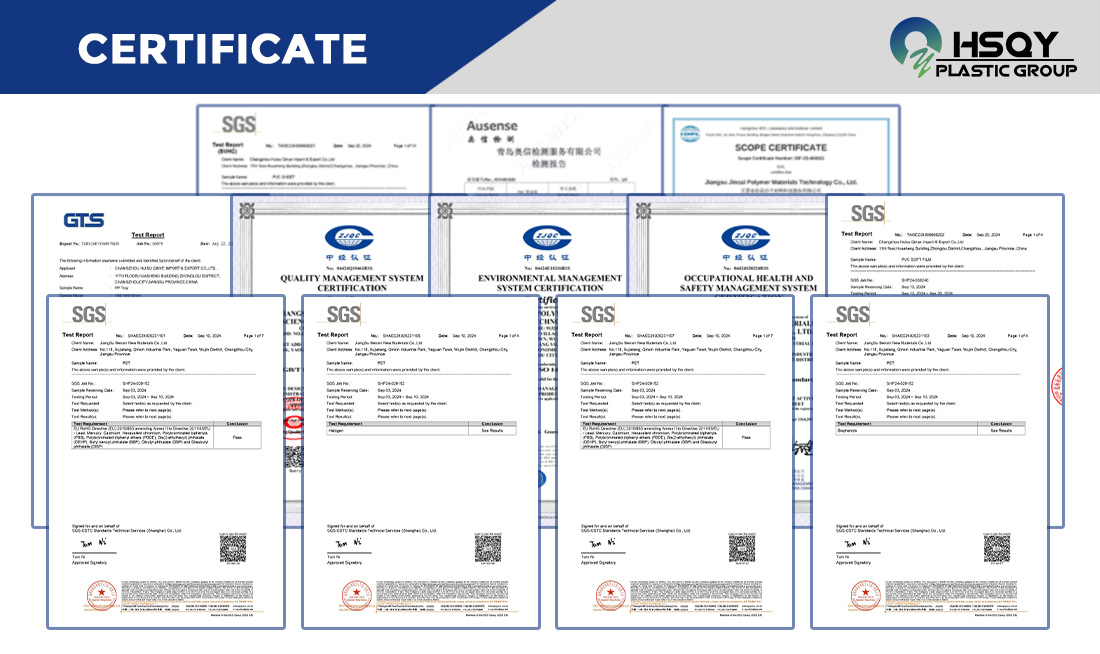
Pharmaceutical packaging qualification should be based on current documents covering the exact supplied film grade and manufacturing site rather than relying only on a general certificate image.
Depending on the destination market and customer quality system, buyers may need to request the applicable technical data sheet, certificate of analysis, material declaration, pharmaceutical or food-contact compliance documentation, residual-monomer information, migration data, dimensional inspection results and other agreed quality documents.
Regulatory and pharmacopoeia claims should only be published when current supporting documentation is available for the exact product supplied.
Information Required for a Pharmaceutical PVC Quote
To obtain an accurate quotation and suitable sample, provide as much of the following information as possible:
Tablet, capsule or other dosage form
Required PVC thickness
Required slit width and width tolerance
Clear, white or required color
Blister cavity drawing and forming depth
Blister machine manufacturer and model
Rotary or flat-bed forming system
Current forming temperature and line speed
Core inside diameter
Maximum roll outside diameter
Maximum roll weight
Lidding foil and heat-seal lacquer specification
Required barrier level
Required pharmaceutical or regulatory documentation
Destination market
Trial quantity and annual consumption
Get Pharmaceutical PVC Film Price
Packing and Delivery
Sample Packaging: The current page lists A4-size sample films packed in PP bags or boxes.
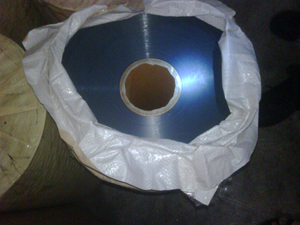
Film Roll Packing: Current information lists approximately 30kg per roll or customized roll weight, protected with PE film or kraft paper.
Core: The current packing specification lists a 76mm inner core diameter. Confirm the required core specification with the blister-machine unwind system.
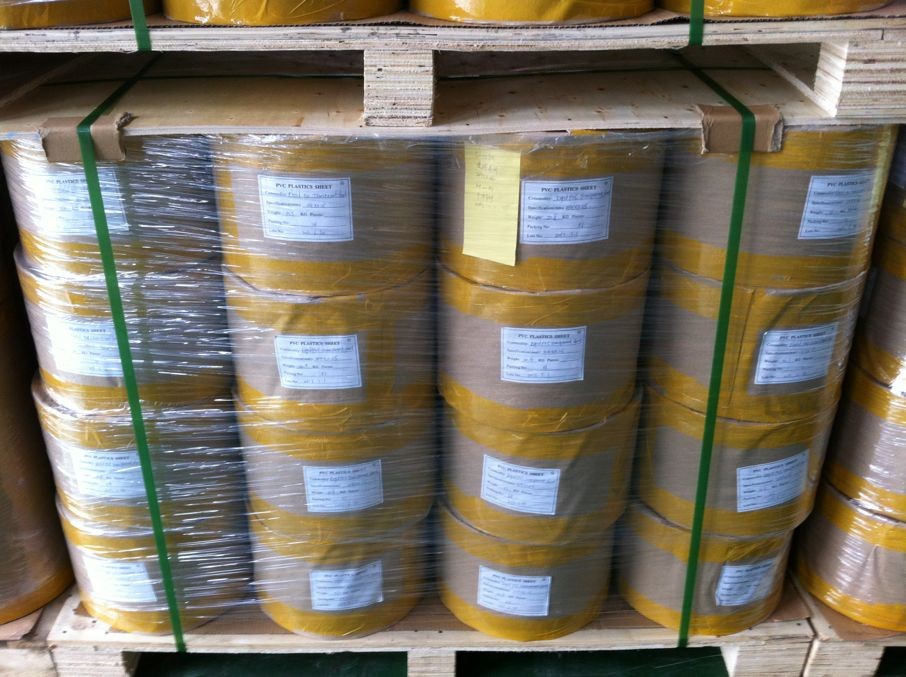
Pallet Packing: Current information lists approximately 500–2000kg per plywood pallet depending on roll configuration and transport requirements.
Container Loading: The existing page references approximately 20 tons per container. Final loading quantity depends on roll dimensions, pallet configuration and container weight limits.
Delivery Terms: EXW, FOB, CNF and DDU are currently listed options.
Reference Lead Time: The current page lists approximately 7–15 days for orders within the stated production range, subject to material specification, color, quantity and production scheduling.

Kraft Packing

Pallet Packing
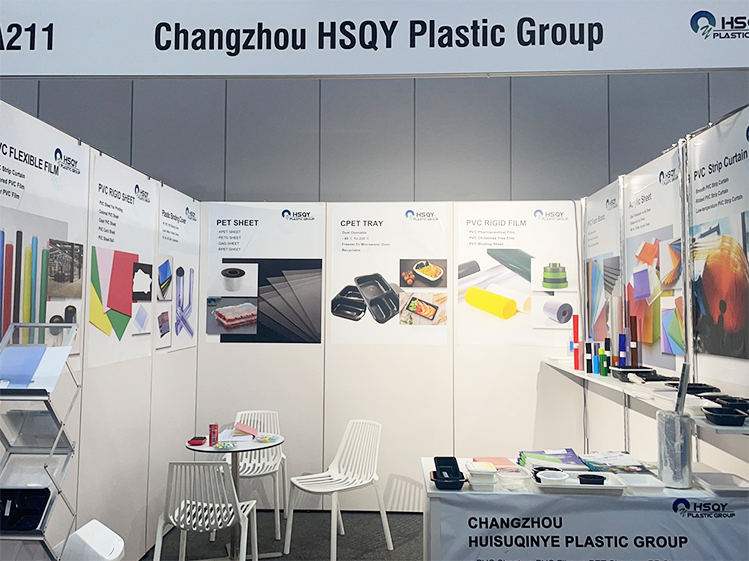
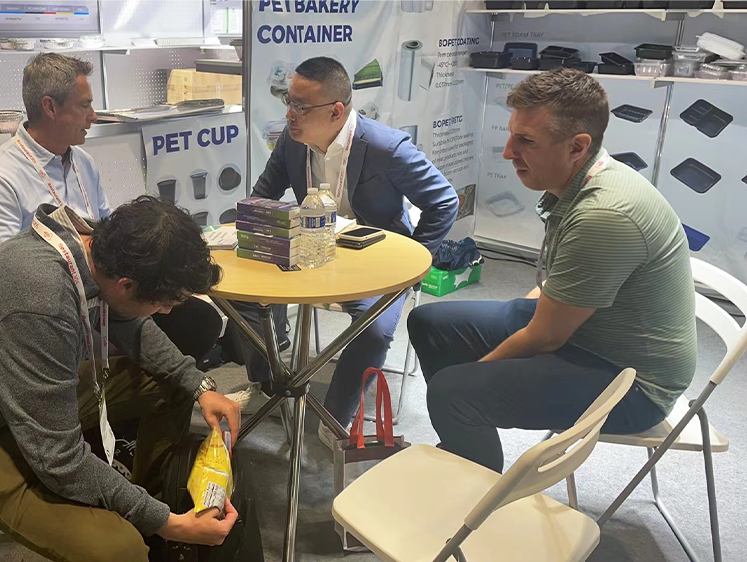
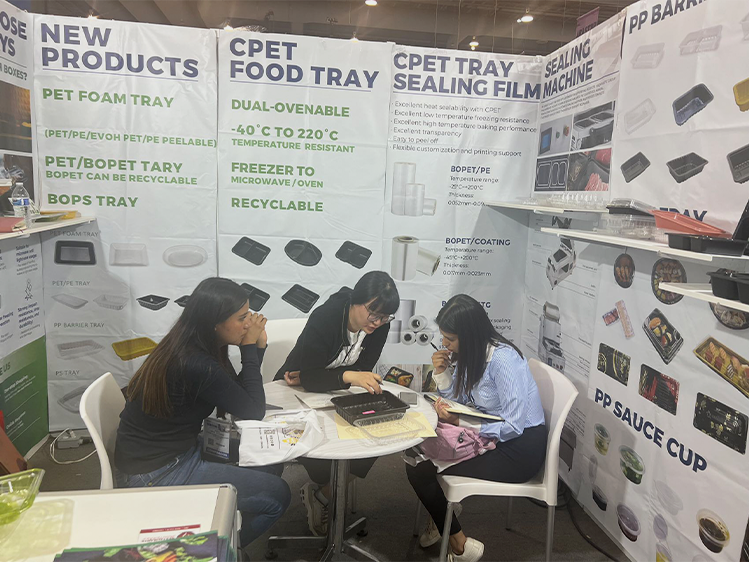
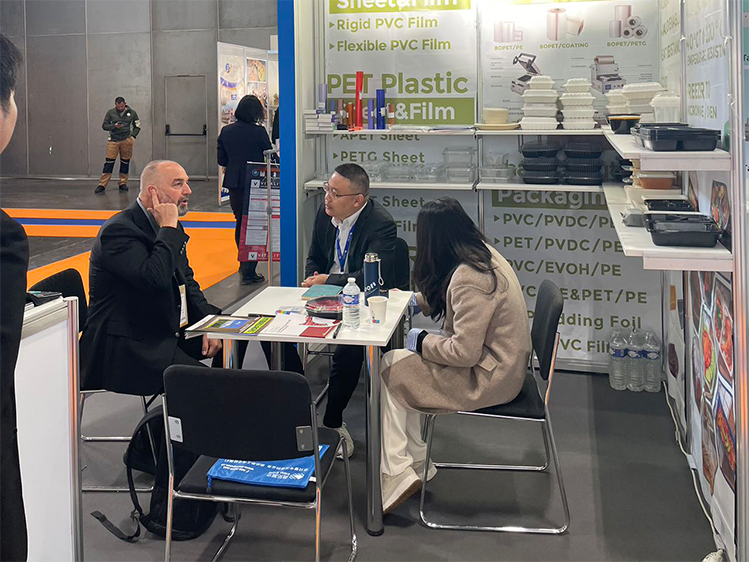
HSQY International Exhibitions
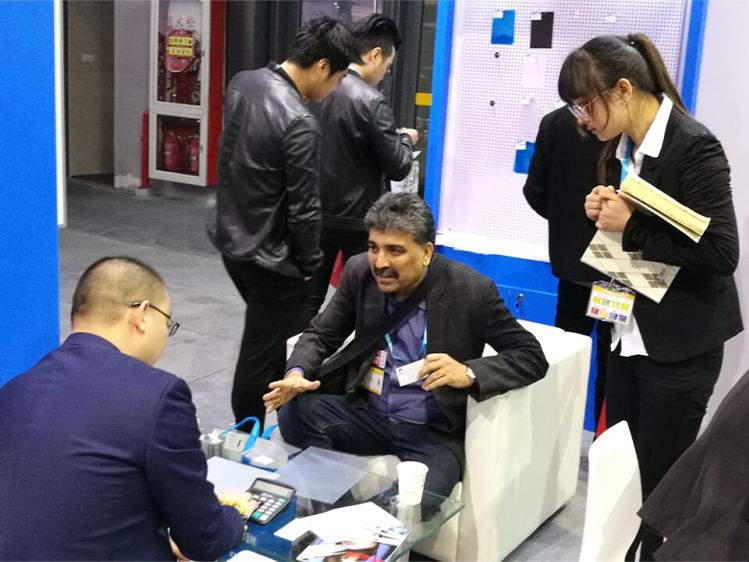
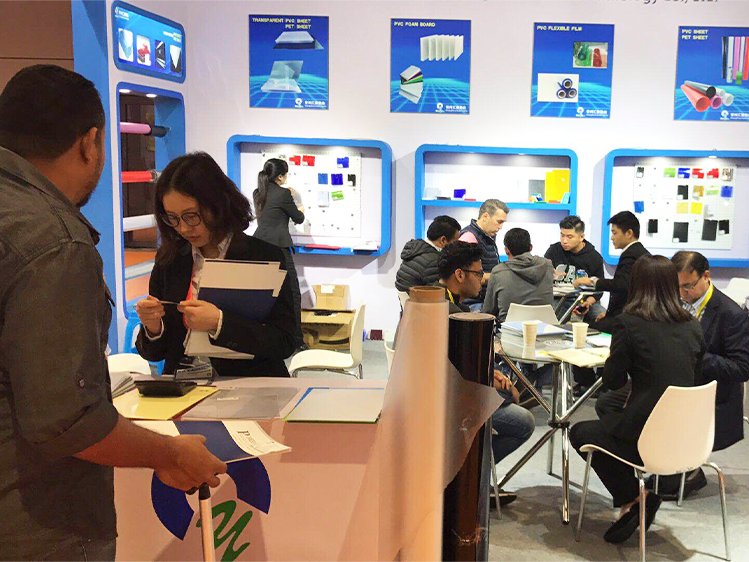
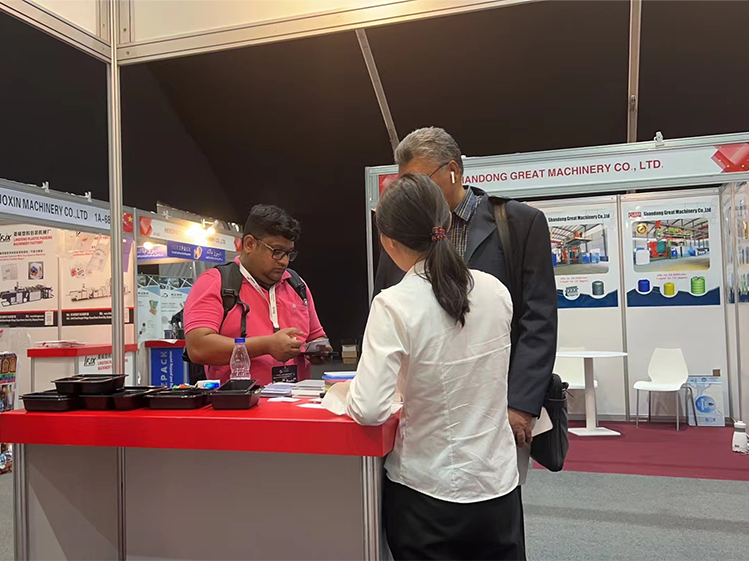
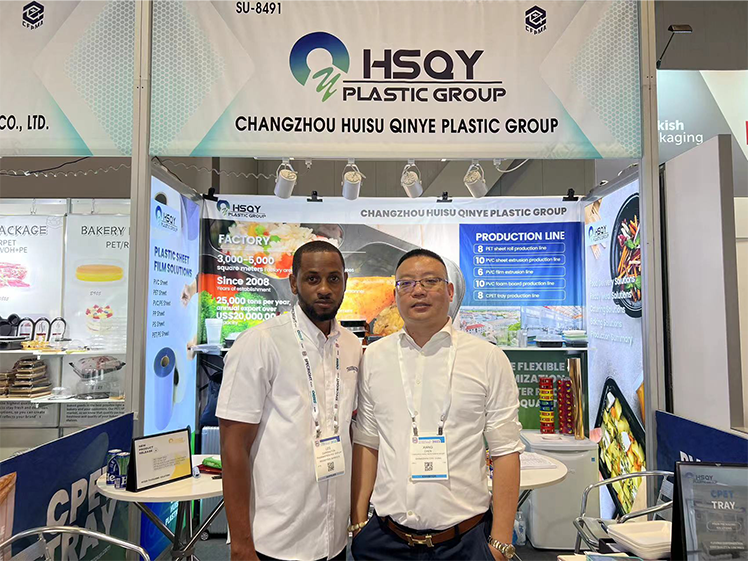
HSQY participates in international plastics and packaging exhibitions to meet pharmaceutical packaging converters, plastic distributors and other industrial B2B customers.

2017 Shanghai Exhibition

2018 Shanghai Exhibition

2023 Saudi Exhibition

2023 American Exhibition

2024 Australian Exhibition

2024 American Exhibition

2024 Mexico Exhibition

2024 Paris Exhibition
FAQ About Pharmaceutical PVC Blister Film
What is pharmaceutical grade rigid PVC film?
It is a rigid thermoforming film used as the cavity-forming web in pharmaceutical blister packaging. The PVC is heated, formed, filled with tablets or capsules and sealed with a compatible lidding material.
What thicknesses of pharmaceutical PVC film does HSQY supply?
The current HSQY-210616 product listing specifies a pharmaceutical PVC thickness range of 0.12mm to 0.30mm. Exact gauge and tolerance should be confirmed before ordering.
Why did the old page show 0.07mm to 6mm?
That range belongs to the broader rigid PVC sheet capability shown in the original general-purpose table. The current pharmaceutical product specification at the top of this product page is 0.12mm to 0.30mm and should be used for pharmaceutical blister inquiries.
Is plain PVC suitable for every pharmaceutical product?
No. Plain PVC provides standard blister protection but may not be sufficient for highly moisture- or oxygen-sensitive formulations. Packaging material should be selected using the drug's stability data and required shelf life.
What is the difference between PVC and PVC/PVDC blister film?
Plain PVC provides the thermoformable base and standard barrier performance. PVC/PVDC adds a PVDC barrier layer to provide greater resistance to moisture and oxygen for more sensitive pharmaceutical products.
What is the difference between PVC/PVDC and PVC/PE/PVDC?
PVC/PVDC is typically a coated or duplex barrier structure. PVC/PE/PVDC contains an additional PE intermediate layer and is a separate multilayer packaging material. The appropriate structure should be selected according to forming and barrier requirements.
When should PVC/PCTFE or Aclar-type blister film be considered?
High-moisture-barrier laminated structures can be considered when pharmaceutical stability studies show that plain PVC or conventional PVDC structures do not provide sufficient protection.
Can pharmaceutical PVC film be colored?
Yes. The current HSQY product listing includes clear, white, red, green and yellow, with additional customized colors subject to formulation, quantity and approval.
Can colored PVC protect light-sensitive medicines?
Color alone should not be treated as proof of light protection. Where UV or visible-light protection is required, the exact formulation and transmission performance should be validated against the medicine's stability requirements.
Can HSQY customize the roll width?
Yes. Roll width can be customized according to the blister machine and tooling. Provide the required slit width and tolerance when requesting a quotation.
What core diameter is available?
The current original packing information lists a 76mm inner core. Confirm the exact unwind requirement of the blister machine before placing an order.
Can this PVC film run on pharmaceutical blister machines?
A compatible pharmaceutical PVC grade can be processed on suitable thermoforming blister equipment after line validation. Machine type, heater design, forming temperature, cavity depth, line speed and web tension all influence performance.
Can pharmaceutical PVC seal to aluminum blister foil?
Pharmaceutical PVC is commonly used with aluminum push-through lidding foil using a compatible heat-seal coating. The exact foil, lacquer and sealing conditions should be validated with the supplied PVC.
What defects should be controlled in pharmaceutical PVC film?
Buyers should establish limits for thickness variation, black spots, gels, fish eyes, scratches, bubbles, contamination, curl, blocking, surface defects, edge damage, joints and roll-winding quality.
What documentation should pharmaceutical buyers request?
Request current technical, inspection, quality and regulatory documents covering the exact material grade and manufacturing location required by the customer's quality system and destination market.
What is the MOQ?
The current HSQY product listing specifies an MOQ of 2000kg. Special colors, widths or formulations may require different commercial quantities.
Can I request a sample before bulk production?
Sample evaluation can be discussed for checking appearance, thickness, thermoforming, cavity formation, machine running and lidding compatibility before commercial approval.
What information is needed for a quotation?
Provide thickness, width, color, core size, roll diameter, blister machine, cavity drawing, dosage form, lidding material, destination market, required documentation and annual demand.
About HSQY Plastic Group
HSQY Plastic Group supplies rigid PVC films and related pharmaceutical blister-packaging materials to international pharmaceutical packaging converters, distributors and industrial customers.
HSQY can support customized PVC thicknesses, slit widths, colors, roll configurations, samples, packing and export supply according to the approved project specification.
For pharmaceutical projects, provide the blister machine, cavity drawing, medicine sensitivity, required barrier level, target market and annual volume so the project can be evaluated against a suitable plain PVC or higher-barrier blister-film structure.
Contact HSQY for Pharmaceutical PVC Film