Polycarbonate Film for Thermoforming & Blister Forming
HSQY polycarbonate film for blister forming is designed for thermoformed packaging, protective covers, formed shells and industrial components that require a combination of impact resistance, toughness, dimensional stability and heat resistance.
Compared with general-purpose packaging plastics, polycarbonate is particularly suitable for applications where the formed part must maintain mechanical strength and dimensional stability after heating and forming. Available surfaces include polished, brushed and diamond textures, with natural and customized colors for different product designs.
Standard film thicknesses range from 0.25mm to 0.5mm, while sheet options range from 0.5mm to 1.5mm. HSQY supports B2B buyers, thermoformers, converters and OEM manufacturers with film, sheet, samples and project-specific specifications.
![Polycarbonate film for blister thermoforming]()
Polycarbonate Blister Film
![Thermoformable polycarbonate film and sheet]()
Thermoformable PC Film & Sheet
Polycarbonate Film for Blister Specifications
| Property |
Specification |
| Product |
Polycarbonate Film for Blister Forming |
| Material |
Polycarbonate (PC) |
| Color |
Natural / Customized |
| Film Thickness |
0.25mm - 0.5mm |
| Sheet Thickness |
0.5mm - 1.5mm |
| Film Width |
930mm / 1220mm |
| Sheet Width |
915mm / 1000mm |
| Surface Options |
Polished/Polished, Polished/Brushed, Polished/Diamond |
| Processing |
Thermoforming, vacuum forming, pressure forming, cutting and die cutting depending on grade and design |
| Typical Applications |
Thermoformed blister components, protective covers, packaging boxes, helmets, luggage components and formed industrial parts |
Specification Note: Forming performance depends on the exact PC grade, thickness, surface structure, mold geometry, draw depth and forming process. Final material selection should be confirmed using samples or trial forming where dimensional or appearance requirements are critical.
What Is Polycarbonate Blister Film?
Polycarbonate blister film is thin PC film or sheet designed to be heated and formed into three-dimensional shapes using thermoforming, vacuum forming or pressure-forming processes.
The word “blister” describes the formed shape or cavity and does not mean that every polycarbonate film has the same sealing, food-contact, pharmaceutical or medical-packaging properties. Where the final application requires heat sealing, sterilization, food contact, medical use or another regulated requirement, an application-specific grade and supporting documentation should be confirmed separately.
Polycarbonate is commonly selected for demanding formed products because it combines toughness, dimensional stability and temperature resistance with the ability to produce detailed three-dimensional parts using suitable forming conditions.
Why Use Polycarbonate Film for Thermoforming?
- High impact resistance: Polycarbonate provides strong resistance to impact for protective and industrial formed components.
- Good toughness: Suitable for parts that need better resistance to cracking or mechanical damage during handling and service.
- Dimensional stability: Helps formed parts maintain shape and fit when the material and process are properly controlled.
- Heat resistance: PC offers higher thermal capability than many general-purpose packaging plastics.
- Formability: Suitable grades can be thermoformed, vacuum formed or pressure formed into three-dimensional components.
- Surface options: Polished, brushed and diamond textures support different functional and decorative requirements.
- Custom colors: Natural and customized colors can be discussed according to project requirements.
Thermoforming Polycarbonate Film
During thermoforming, the PC film or sheet is heated until it reaches a formable condition and is then shaped against a mold using vacuum, air pressure, mechanical assistance or a combination of methods.
Heating uniformity is important because uneven temperatures can result in uneven stretching, poor detail reproduction, warpage or inconsistent wall thickness. Mold geometry and draw ratio also affect how much the material stretches into deep cavities.
The starting sheet thickness should therefore be selected according to the minimum acceptable finished-wall thickness rather than only the nominal starting gauge.
Vacuum Forming vs. Pressure Forming
| Forming Method |
Typical Characteristics |
| Vacuum Forming |
Uses vacuum to pull heated PC film or sheet against the mold; commonly used for covers, trays, shells and relatively straightforward shapes. |
| Pressure Forming |
Uses additional air pressure to push the material against the mold and can improve detail reproduction for more demanding formed surfaces. |
| Matched-Mold Forming |
Uses mating tools to control material shape and may provide improved dimensional or wall-thickness control for selected designs. |
Wall Thickness After Forming
One of the most important considerations in blister and thermoforming applications is wall thinning. When a flat PC sheet is stretched into a deep cavity, the material does not necessarily maintain its original thickness across every area of the finished part.
Corners, sidewalls and deep-draw areas can become thinner than the starting gauge. The amount of thinning depends on draw depth, mold geometry, forming temperature, plug-assist design and forming method.
| Forming Factor |
Why It Matters |
| Starting Thickness |
Determines the initial amount of material available for stretching |
| Draw Depth |
Deeper cavities generally create greater material stretching |
| Draw Ratio |
Higher ratios can increase wall-thickness variation |
| Mold Geometry |
Sharp corners and narrow cavities can make uniform material distribution more difficult |
| Heating Profile |
Uniform heating supports more controlled forming and material distribution |
| Plug Assist |
Can help distribute material into deeper cavities in selected forming processes |
Surface Options for Polycarbonate Blister Film
| Surface |
Typical Appearance |
Possible Applications |
| Polished / Polished |
Smooth surfaces with higher clarity |
Transparent formed covers, blister components and protective windows |
| Polished / Brushed |
One smooth side with decorative brushed texture |
Decorative formed panels, cases and specialty components |
| Polished / Diamond |
Patterned or decorative surface |
Decorative shells, covers and formed industrial components |
Applications of Thermoformable Polycarbonate Film
Polycarbonate film is suitable for demanding formed applications where toughness and structural performance are more important than low-cost disposable packaging.
![Thermoformed polycarbonate film for luggage components]()
Luggage & Protective Shell Components
![Thermoformed polycarbonate sheet for helmet components]()
Helmet & Protective Components
| Application |
Typical Requirement |
| Thermoformed Blister Components |
Formability, toughness, dimensional stability and surface appearance |
| Protective Packaging |
Impact resistance and formed-part strength for high-value or industrial products |
| Protective Covers |
Impact resistance, transparency and shape retention |
| Luggage Components |
Toughness, decorative appearance and three-dimensional forming |
| Helmet Components |
Impact resistance, forming performance and dimensional stability; final safety compliance depends on finished-product design and testing |
| Industrial Formed Parts |
Heat resistance, mechanical strength and repeatable forming |
Polycarbonate vs. PET and PVC for Blister Forming
Material selection should be based on the finished application rather than assuming one blister material is suitable for every package or component.
| Material |
General Positioning |
| Polycarbonate |
Selected when higher toughness, impact resistance, dimensional stability or thermal performance is required |
| PET / APET |
Widely used for transparent consumer packaging, trays and general thermoforming applications |
| PVC |
Common rigid thermoforming material used for blister packaging and other formed applications |
For disposable retail blister packaging where extreme impact or temperature performance is not required, another thermoplastic may be more appropriate. Polycarbonate should primarily be selected when its mechanical, thermal or dimensional properties provide a meaningful benefit to the finished product.
Important Requirements for Blister Packaging
If the finished product is a sealed blister package rather than a standalone thermoformed component, the complete package structure must be evaluated. Formability alone does not confirm sealing compatibility.
| Requirement |
What Buyers Should Confirm |
| Sealing Method |
Heat sealing, adhesive sealing, RF sealing or another package-closing method |
| Lidding / Backing Material |
Card, foil, film or another substrate used with the formed blister |
| Seal Strength |
Required peel or bond performance for the finished package |
| Product Contact |
Food, pharmaceutical, medical or other regulated-contact requirements where applicable |
| Sterilization |
Sterilization method and validation requirements if applicable |
Important: Standard PC film should not automatically be considered suitable for food-contact, pharmaceutical or medical-device blister packaging. Where these requirements apply, specify the intended use and required documentation before material selection.
How to Select Polycarbonate Film Thickness
The correct starting thickness depends on part dimensions, draw depth, load, rigidity and minimum wall-thickness requirements after forming.
| Project Factor |
Selection Consideration |
| Shallow Form |
Thin film may be suitable where draw depth and structural load are limited |
| Deep Draw |
Starting gauge may need to increase to compensate for wall thinning |
| Protective Function |
Greater finished thickness may be required where impact or structural performance is important |
| High Detail |
Material grade and forming method should support mold-detail reproduction |
| Appearance |
Surface finish and thickness must be evaluated after forming, especially for transparent components |
Prototype and Forming Trial
For a new blister or thermoformed component, sample testing is recommended before mass production. A forming trial can help evaluate wall-thickness distribution, corner definition, surface appearance, warpage and dimensional stability.
Where possible, provide HSQY with a finished-part drawing, starting thickness, cavity dimensions and forming method so candidate PC film or sheet specifications can be evaluated more accurately.
What Information Should You Provide for a Quote?
| Requirement |
Information to Provide |
| Application |
Blister packaging, protective cover, shell, helmet component, luggage part or other formed product |
| Film / Sheet |
Required supply format |
| Starting Thickness |
Required nominal gauge and tolerance |
| Width / Size |
Roll width or sheet dimensions |
| Surface |
Polished, brushed, diamond or other required finish |
| Color |
Natural or customized color |
| Forming Method |
Vacuum forming, pressure forming, matched mold or another process |
| Draw Depth |
Maximum cavity depth and part drawing if available |
| Finished Wall Thickness |
Minimum acceptable thickness after forming if specified |
| Special Requirements |
UV, flame, optical, food-contact, medical, sealing or other application-specific requirements |
| Quantity |
Sample, trial quantity, regular order and annual demand |
Blister Polycarbonate Film Data Sheet
![Blister polycarbonate film PDF download]() Blister Polycarbonate Films Data Sheet.pdf
Packing & Delivery
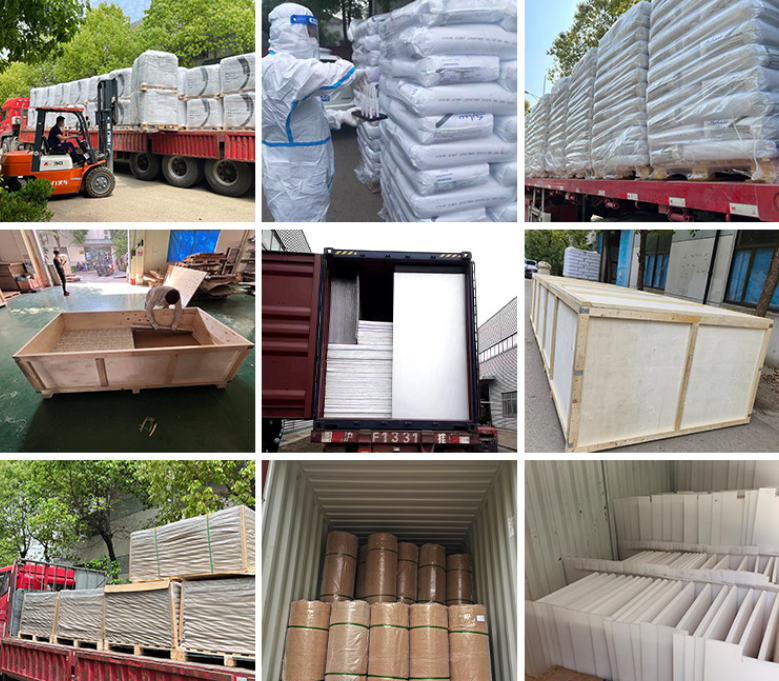
Polycarbonate film and sheet are packed according to thickness, dimensions, surface requirements and international transportation conditions. Protective packing helps reduce contamination, surface scratching, edge damage and roll deformation during storage and shipment.
![Polycarbonate blister film packing and delivery]()
Export Packing for Polycarbonate Film & Sheet
Frequently Asked Questions About Polycarbonate Blister Film
What is polycarbonate blister film?
Polycarbonate blister film is thin PC film or sheet intended for heating and forming into three-dimensional blister shapes, protective covers, shells or other thermoformed components.
Can polycarbonate film be thermoformed?
Yes. Suitable polycarbonate grades can be thermoformed, vacuum formed or pressure formed. Forming performance depends on film thickness, grade, heating conditions, draw ratio and mold design.
What thicknesses are available?
HSQY currently lists film thicknesses from 0.25mm to 0.5mm and sheet thicknesses from 0.5mm to 1.5mm for this product range.
What widths are available?
Standard film widths are 930mm and 1220mm. Standard sheet widths are 915mm and 1000mm. Availability should be confirmed according to thickness and surface finish.
What happens to film thickness after thermoforming?
The film normally becomes thinner in areas where it stretches during forming. Deep cavities, corners and sidewalls may have lower finished thickness than the original flat sheet. Starting gauge should therefore be selected according to the finished-part design.
What is the difference between vacuum forming and pressure forming?
Vacuum forming uses vacuum to pull heated plastic against a mold. Pressure forming adds positive air pressure and can provide improved detail reproduction for selected parts. The appropriate process depends on geometry and surface requirements.
Is PC film suitable for transparent blister components?
Natural polished PC film can be used for transparent formed components where toughness and visibility are required. Final transparency depends on the exact grade, thickness, forming conditions and surface finish.
Can you supply colored polycarbonate film?
Customized colors can be discussed for qualified B2B orders. Provide the required color reference, thickness, surface, application and quantity when requesting a quotation.
Is this PC film suitable for medical or food blister packaging?
Standard thermoformable PC film should not automatically be assumed suitable for medical, pharmaceutical or food-contact packaging. These applications require an appropriate grade and supporting compliance documentation for the intended use.
Can polycarbonate blister film be heat sealed?
Sealing capability depends on the exact PC grade, coating, backing material and sealing process. If the blister must be sealed to card, foil or another film, provide the required sealing system so compatibility can be evaluated.
Can I request samples before mass production?
Yes. Sample and trial forming are recommended for new thermoforming projects so forming behavior, wall thickness, surface appearance and finished-part dimensions can be evaluated.
What information should I provide for a quote?
Please provide application, thickness, width or sheet dimensions, color, surface texture, forming method, draw depth, finished-part drawing, special performance requirements, order quantity and destination.
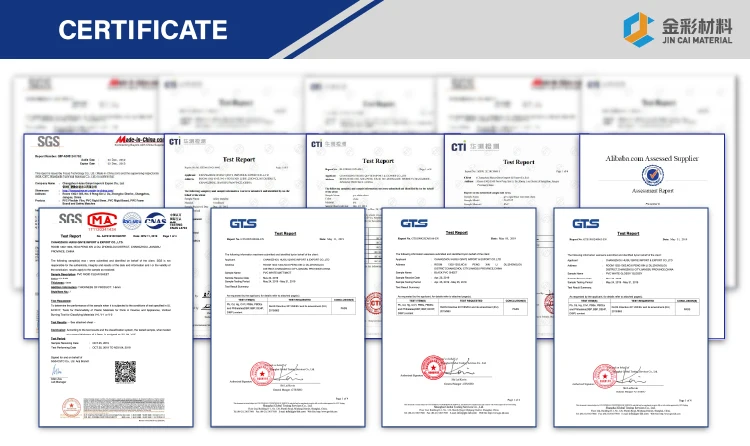
Certifications
About HSQY Plastic Group
HSQY Plastic Group supplies polycarbonate film and sheet for international thermoformers, plastic converters, industrial manufacturers, distributors and OEM customers. Available options include different thicknesses, widths, colors and surface textures for project-specific forming applications.
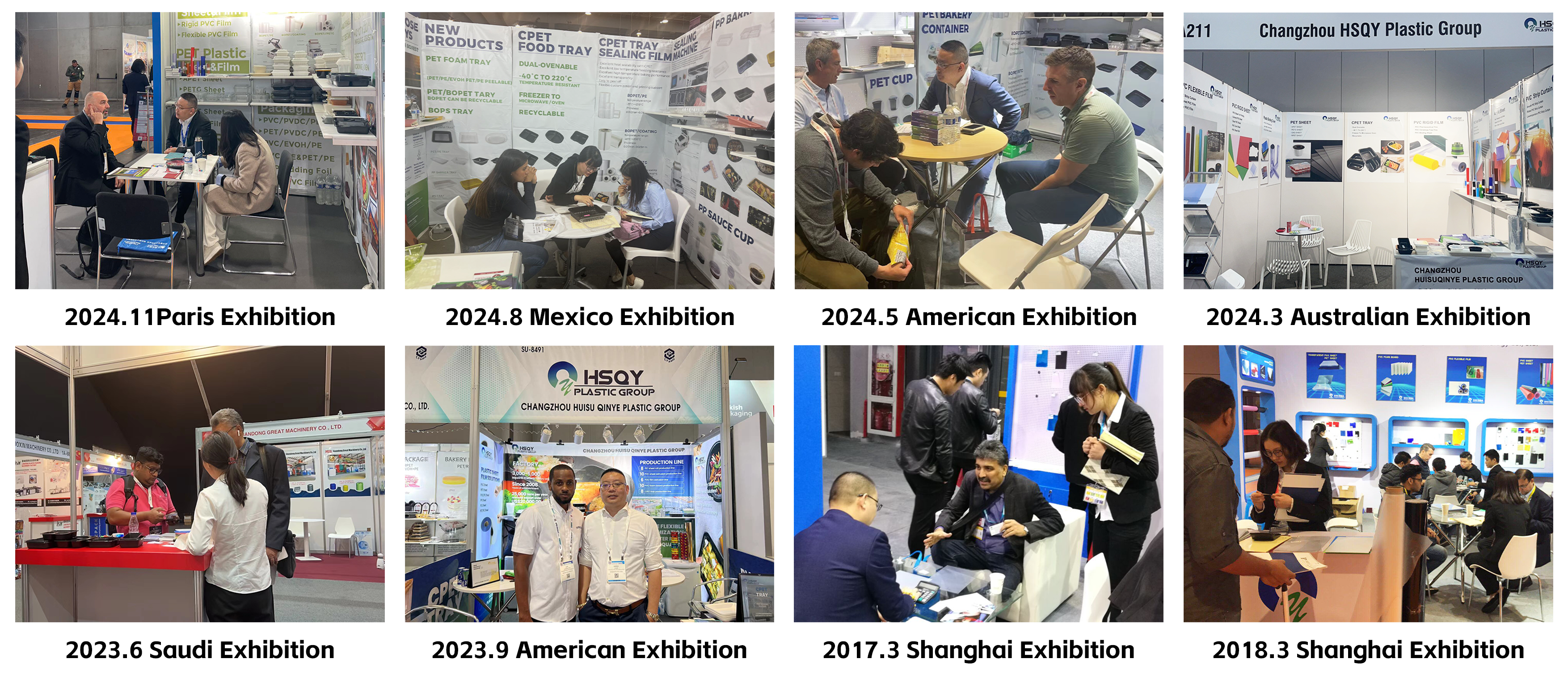
![HSQY Plastic Group international exhibitions]()
HSQY Plastic Group meets international buyers, converters and industry partners at global exhibitions.