High-Barrier PET/EVOH/PE Food Trays for MAP and VSP
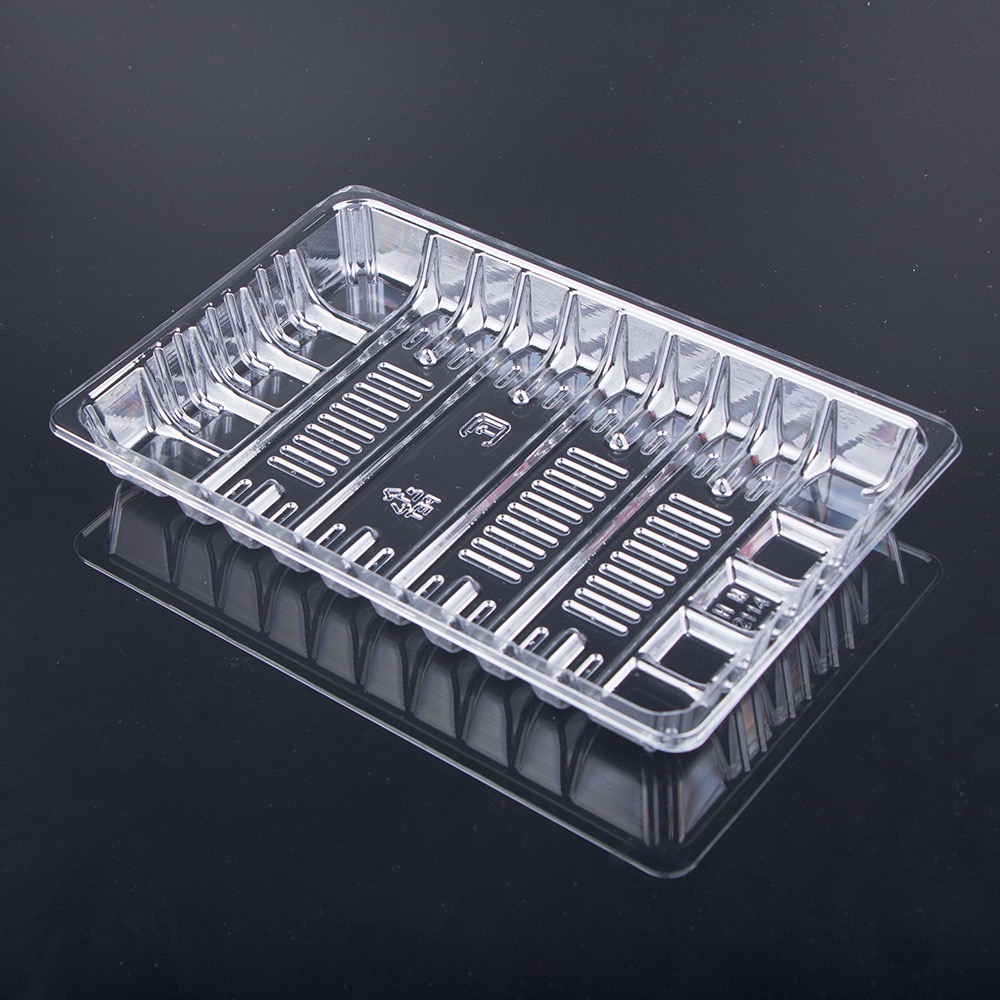
HSQY PET/EVOH/PE food trays are multilayer rigid packaging trays developed for chilled and frozen foods that require product visibility, dependable heat sealing and controlled oxygen transmission. The PET or rPET layer provides clarity and tray stiffness, the EVOH layer supplies the primary oxygen barrier, and the PE sealing layer supports compatibility with suitable PE-sealable lidding films.
These high-barrier food trays can be evaluated for modified atmosphere packaging (MAP), vacuum skin packaging (VSP), chilled meat, seafood, cheese, ready meals and other oxygen-sensitive products. Final suitability depends on the complete packaging system, including tray structure, lidding or skin film, sealing parameters, gas mixture, product characteristics, cold-chain conditions and required shelf life.
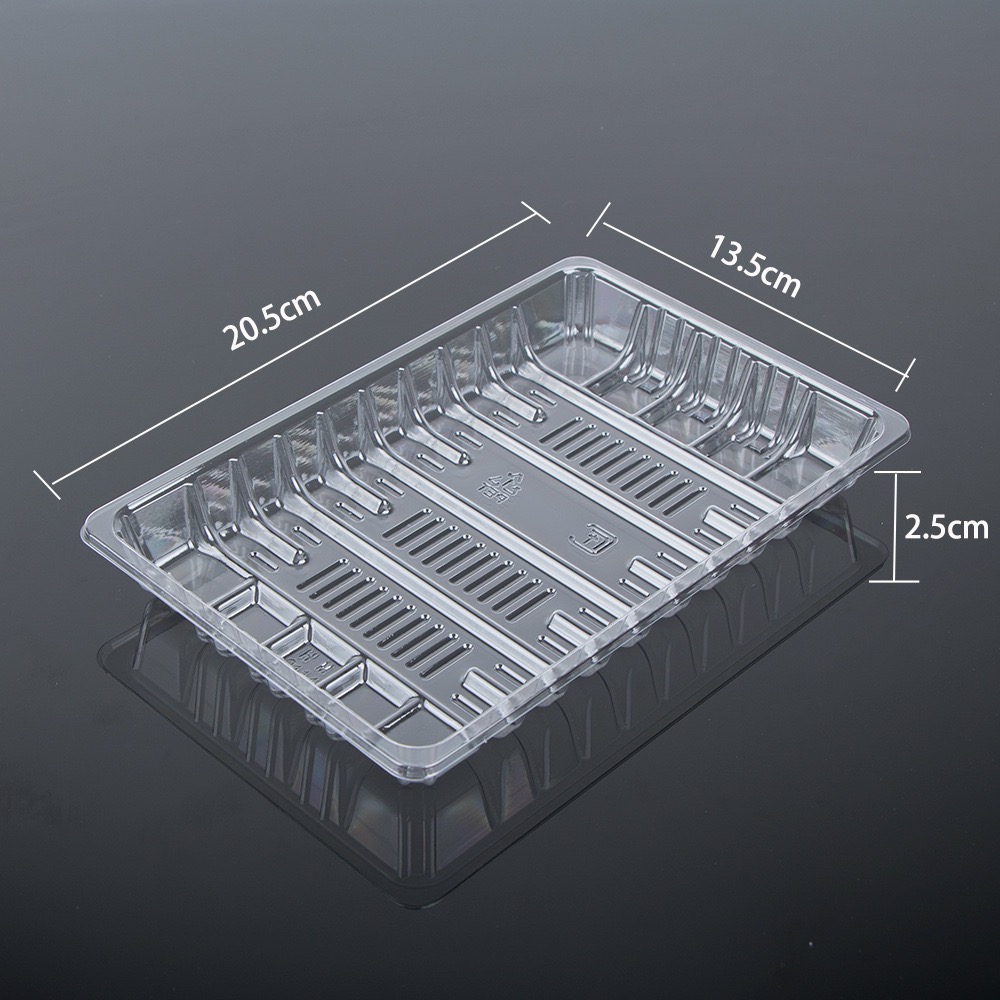
Standard tray sizes include 220 × 170 × 32mm and 220 × 170 × 38mm. Custom dimensions, colors, tray depth, flange design, rPET content, barrier level and packing configuration can be discussed for food processors, tray distributors, supermarket suppliers and packaging converters.
PET/EVOH/PE Food Tray Images
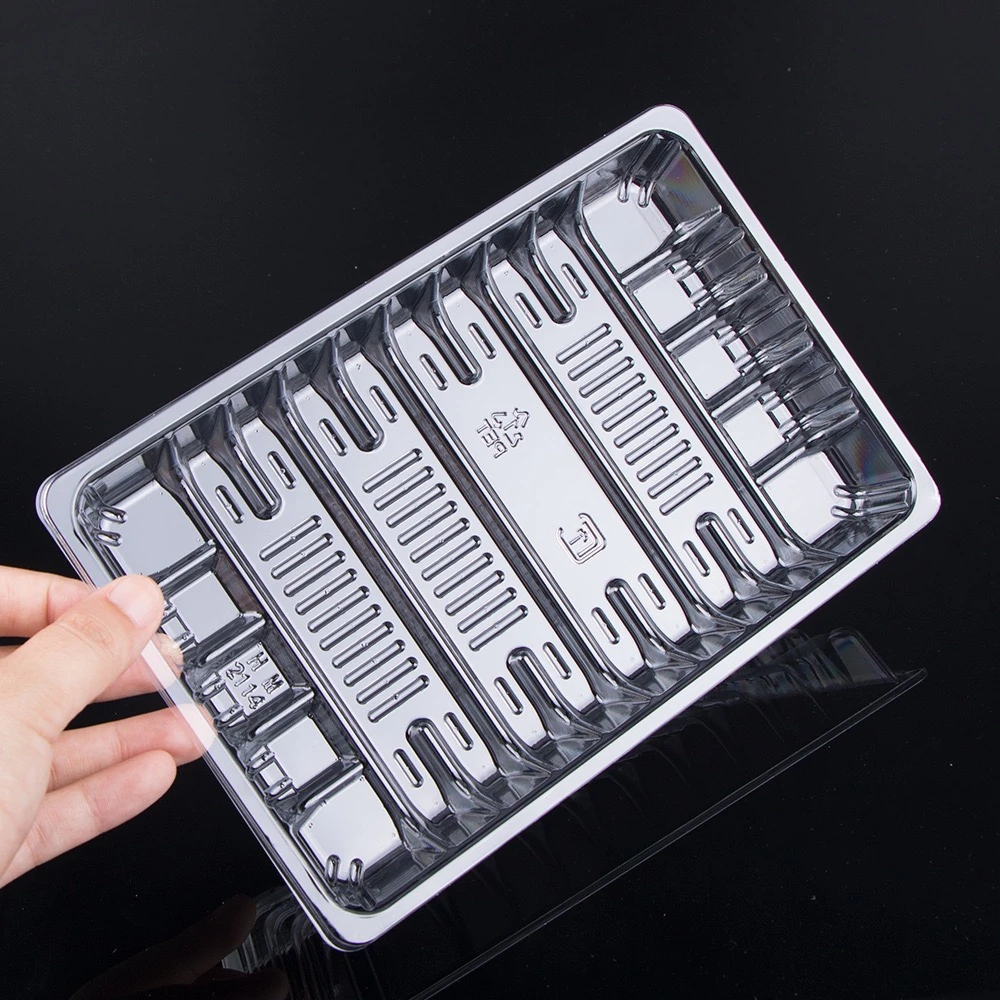
Clear High-Barrier PET/EVOH/PE Food Tray

MAP Tray for Chilled Food Packaging

Heat-Sealable High-Barrier Food Tray
PET/EVOH/PE Food Tray Specifications
| Property |
Details |
| Product Name |
High-Barrier PET/EVOH/PE Food Tray |
| Material Structure |
PET or rPET laminated/coextruded with EVOH barrier and PE sealing layer; exact structure subject to specification |
| Standard Sizes |
220 × 170 × 32mm and 220 × 170 × 38mm |
| Color |
Clear and customized colors |
| Packaging Systems |
MAP, VSP and conventional heat-sealed chilled-food packaging after system validation |
| Typical Products |
Fresh meat, poultry, seafood, cheese, deli food, pasta, prepared ingredients and chilled ready meals |
| Reference Temperature Range |
Approximately −40°C to +60°C, subject to the exact structure, load, test method and application |
| Sealing Surface |
PE-sealable flange; lidding-film compatibility and seal window must be tested |
| Customization |
Size, depth, flange, color, material gauge, rPET content, barrier target, embossing and packing |
| MOQ |
30,000 pieces; custom tooling or colors may require a different MOQ |
| Compliance Documents |
Food-contact declarations and test reports must be confirmed for the exact material structure and destination market |
How the PET/EVOH/PE Structure Works
PET or rPET structural layer: Provides tray rigidity, transparency, dimensional stability and retail presentation. The PET layer also supports thermoformed shapes and helps the tray retain its form during filling, sealing, distribution and display.
EVOH barrier layer: Reduces oxygen and gas transmission through the tray wall. This layer is especially relevant for oxygen-sensitive foods and packages that must retain a modified atmosphere.
PE sealing layer: Provides a sealing-friendly surface and helps protect the moisture-sensitive EVOH layer. The PE layer must be matched with the selected lidding film, seal temperature, dwell time, pressure and contamination conditions.
Why EVOH Is Used in High-Barrier Food Trays
Standard PET provides clarity and mechanical performance but may not deliver the oxygen barrier required for every extended-shelf-life food program. Adding a protected EVOH layer can substantially reduce oxygen transmission and improve retention of gases used in MAP packaging.
EVOH performance depends on grade, layer thickness, relative humidity, temperature and the full multilayer construction. Buyers should request oxygen transmission rate data with defined test conditions rather than relying only on the description “high barrier.”
Shelf life is not created by the tray alone. Food formulation, initial microbial load, gas mixture, headspace, sealing integrity, top-film barrier, storage temperature and distribution conditions must all be included in the validation program.
PET Tray vs PET/EVOH/PE High-Barrier Tray
| Comparison |
Standard PET Tray |
PET/EVOH/PE Tray |
| Primary Strength |
Clarity, stiffness and general chilled-food presentation |
Clarity plus improved oxygen barrier and PE heat-sealing surface |
| Barrier Level |
Application-dependent standard PET barrier |
Higher oxygen barrier when EVOH layer and package are correctly designed |
| Sealing |
Requires a PET-compatible seal system or coating |
PE sealing layer supports compatible PE-sealable lidding films |
| Typical Packaging |
Fresh produce, bakery, short-life chilled food and display packaging |
MAP meat, seafood, cheese, prepared foods and validated VSP applications |
| Selection Basis |
Cost, clarity, stiffness and standard seal requirement |
Barrier target, gas retention, seal integrity and shelf-life validation |
PET/EVOH/PE Trays for Modified Atmosphere Packaging
Modified atmosphere packaging replaces the air inside a sealed package with a selected mixture of gases. A high-barrier tray and lidding film help retain that gas composition during storage, but the correct mixture varies by food category, microbial risk, desired color, respiration rate and distribution conditions.
For a MAP project, the tray flange must remain flat and clean, the lidding film must seal to the PE layer, and the finished package must pass leak, burst, seal-strength and gas-retention tests. Machine cycle speed, seal-head design and product contamination on the flange should be included in trial production.
PET/EVOH/PE Trays for Vacuum Skin Packaging
Vacuum skin packaging uses a heated skin film that conforms closely around the food and seals to the tray flange. PET/EVOH/PE trays can be evaluated as high-barrier VSP bases when the tray, skin film and packaging machine are designed to work together.
VSP approval should include film draw, product height, flange width, corner geometry, seal strength, peel behavior, leak resistance, drip containment and tray deformation under vacuum. A tray described as “VSP compatible” still requires testing on the customer’s actual equipment and product.
Lidding Film and Seal Compatibility
Lidding film must be selected according to the tray’s PE sealing surface, packaging system and opening requirement. Available concepts may include lock seal, easy peel, anti-fog, high-barrier MAP film and skin film, but the exact film structure must be confirmed through sealing trials.
Lock seal: Used where a strong permanent seal and leak resistance are required.
Easy peel: Designed for controlled opening force and consumer convenience.
Anti-fog film: Helps reduce condensation that can obscure product visibility in chilled display.
High-barrier MAP film: Supports gas retention when matched with the barrier performance of the tray.
VSP skin film: Requires suitable draw, sealing, puncture resistance and compatibility with the tray flange.
Typical Food Applications
Fresh red meat: MAP and VSP programs where oxygen control, gas retention, leak resistance and retail presentation are important.
Poultry: Chilled portions and processed poultry requiring dependable seals and drip containment.
Fish and seafood: Fresh fillets, shellfish and prepared seafood products distributed under controlled refrigeration.
Cheese and dairy: Sliced, portioned or specialty products where oxygen and aroma protection may be required.
Fresh pasta and prepared ingredients: Products packaged under MAP to support quality through the chilled supply chain.
Chilled ready meals: Non-ovenable meals and meal components used within the validated temperature range of the tray.
Food Packaging Application Image

High-Barrier Tray Application for Fresh Food
Barrier, Seal and Shelf-Life Testing
A high-barrier food tray should be qualified using measurable performance criteria. The specification should identify whether testing applies to flat sheet, the thermoformed tray, the lidding film or the complete sealed package.
Oxygen transmission rate with stated temperature and relative humidity.
Water-vapor transmission rate where moisture control is relevant.
Seal-strength and peel-force testing across the intended sealing window.
Dye penetration, bubble leak, burst or pressure-decay testing.
Top-load, impact, drop, flange-flatness and denesting performance.
Gas-composition monitoring during the intended storage period.
Microbiological, sensory and product-specific shelf-life validation.
Temperature and Handling Considerations
The reference operating range is approximately −40°C to +60°C, but this should not be interpreted as an unconditional guarantee for every tray design. Performance changes with material gauge, tray geometry, product load, freezing rate, impact during handling and duration of heat exposure.
These trays should not be presented as conventional-oven or high-temperature retort trays unless a separate structure has been specifically designed and tested for that purpose. CPET or qualified PP-based structures are normally evaluated where higher heating temperatures are required.
Food-Contact Compliance
Food-contact suitability must be confirmed for the exact PET or rPET resin, EVOH grade, PE sealing layer, tie layers, colorants, additives and manufacturing specification. A general certificate should not be assumed to cover every customized tray.
Buyers should state the destination market, food type, contact time, storage temperature and intended use so that applicable declarations, migration reports or supporting documents can be reviewed before the order is approved.
Recycled Content and Recyclability
rPET content can be considered in the structural PET layer where the required food-contact and quality controls are available. The percentage and source of recycled content should be stated in the specification and supported by applicable documentation.
PET/EVOH/PE is a multilayer structure, so recyclability depends on layer ratios, adhesives or tie layers, color, labels, residual food, local sorting technology and the recycling guidelines of the destination market. The finished tray should not be described as universally recyclable without a market-specific assessment.
Custom PET/EVOH/PE Food Tray Options
Custom length, width, depth, volume and compartment design.
Clear, black, white and project-specific colors.
Flange width and geometry for selected sealing equipment.
Material gauge and stiffness according to product load and tray dimensions.
Barrier targets based on defined OTR test conditions.
PET or rPET structural layer subject to compliance requirements.
Embossing, logo, cavity identification and denesting features.
Carton quantity, pallet layout, label format and export packing.
Information Required for a Quotation
| Quotation Item |
Information to Provide |
| Tray Format |
Outer dimensions, depth, flange width, volume, compartments and drawing |
| Food Product |
Meat, poultry, seafood, cheese, pasta, ready meal or other product |
| Packaging System |
MAP, VSP or standard heat sealing; machine brand and tray tool if available |
| Lidding Film |
Lock seal, easy peel, anti-fog, barrier film or skin film, including current film structure |
| Performance |
Target shelf life, storage temperature, OTR requirement, seal strength and leak standard |
| Material |
PET or rPET preference, color, gauge, recycled-content target and food-contact market |
| Commercial Details |
Annual quantity, first order quantity, destination port, packing method and required delivery date |
Frequently Asked Questions About PET/EVOH/PE Food Trays
What is a PET/EVOH/PE food tray?
It is a multilayer rigid food tray that combines a PET or rPET structural layer, an EVOH oxygen-barrier layer and a PE heat-sealing layer. The structure is used where clarity, gas barrier and sealability are required together.
What is the purpose of the EVOH layer?
EVOH reduces the transmission of oxygen and other gases through the tray wall. Its actual performance depends on EVOH grade, layer thickness, humidity, temperature and the complete multilayer design.
Are PET/EVOH/PE trays suitable for MAP?
They can be suitable for MAP when the tray barrier, lidding-film barrier, gas mixture, sealing parameters and product conditions are validated as one packaging system.
Can these trays be used for vacuum skin packaging?
They can be evaluated for VSP, but compatibility depends on the skin film, product height, flange geometry, tray rigidity, vacuum level and machine settings. Production trials are required.
Which lidding film seals to PET/EVOH/PE trays?
The tray has a PE sealing surface, so a compatible PE-sealable lidding or skin film is normally required. Lock-seal, easy-peel, anti-fog and high-barrier options should be tested on the actual sealing machine.
Do PET/EVOH/PE trays automatically extend food shelf life?
No packaging component can guarantee shelf life by itself. Shelf life must be established through testing of the food, tray, film, gas mixture, sealing process, hygiene controls and storage conditions.
What foods are commonly packed in these trays?
Typical products include fresh meat, poultry, seafood, cheese, deli food, fresh pasta, prepared ingredients and chilled ready meals that require a sealed high-barrier package.
Can PET/EVOH/PE trays be frozen?
The reference range extends to approximately −40°C, but freezing suitability depends on the precise structure, tray geometry, product load, freezing process and impact conditions. A frozen-product trial is required.
Can these trays be used in a microwave or conventional oven?
They should not be assumed to be microwaveable, ovenable or retortable. Heating applications require a material structure specifically designed and tested for the target temperature and food product.
Are PET/EVOH/PE food trays recyclable?
Recyclability depends on the complete multilayer composition and the collection, sorting and recycling infrastructure in the target market. A market-specific recyclability assessment is recommended.
Can recycled PET be used in the trays?
rPET may be used in the structural PET layer when supported by the required food-contact controls and documentation. The percentage and location of recycled content should be confirmed in the specification.
What standard tray sizes are available?
Current standard sizes include 220 × 170 × 32mm and 220 × 170 × 38mm. Other lengths, widths, depths and compartment layouts can be discussed.
What is the MOQ?
The reference MOQ is 30,000 pieces. A custom mold, special color, revised material structure or nonstandard packing method may require a different quantity.
Can HSQY develop a custom tray?
Yes. Custom projects can include tray dimensions, depth, flange geometry, color, gauge, barrier target, rPET content, logo and export packing. A drawing or physical sample helps shorten development.
What information is needed for a quotation?
Provide the tray drawing or size, food product, packaging system, machine model, lidding film, target shelf life, storage temperature, barrier requirement, quantity, destination and required compliance documents.
About HSQY Plastic Group
HSQY Plastic Group supplies PET/EVOH/PE food trays, PP/EVOH/PE trays, APET trays, CPET trays, PP food containers, lidding films and customized rigid food-packaging solutions for international food processors, distributors and packaging companies.
HSQY supports standard and custom tray development, sample evaluation, lidding-film matching, packaging-machine trials, technical documents, export packing and bulk production. Performance requirements should be agreed before tooling or commercial production.
Request a Quote and Sample