Pharmaceutical PVC/PE/PVDC Triplex Film for Blister Packaging
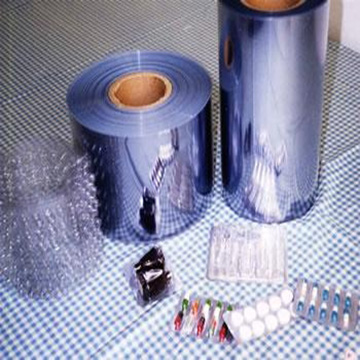
HSQY supplies pharmaceutical PVC/PE/PVDC triplex film for high-barrier thermoformed blister packaging of moisture- and oxygen-sensitive tablets, capsules, pills and other solid-dose products. The multilayer forming web combines the rigidity of pharmaceutical-grade PVC, the flexibility and forming support of PE, and the moisture, oxygen and aroma barrier of a PVDC coating.
Compared with plain PVC and standard PVC/PVDC duplex film, the PVC/PE/PVDC structure is designed for improved thermoforming, mechanical stability and deeper blister cavities while maintaining a transparent high-barrier package. Film structure, coating weight, roll width, color and barrier target can be customized according to the medicine, blister design and packaging machine.
Structure: Pharmaceutical-grade PVC / PE / PVDC
Typical PVC base: 200μm or 250μm; other gauges subject to confirmation
Typical PE layer: Approximately 25–30μm
Typical PVDC coating: 40, 60, 90, 100 or 120g/m²; customized barrier options
Supply format: Slit rolls for pharmaceutical blister machines
Main application: High-barrier blister packs for sensitive pharmaceutical formulations
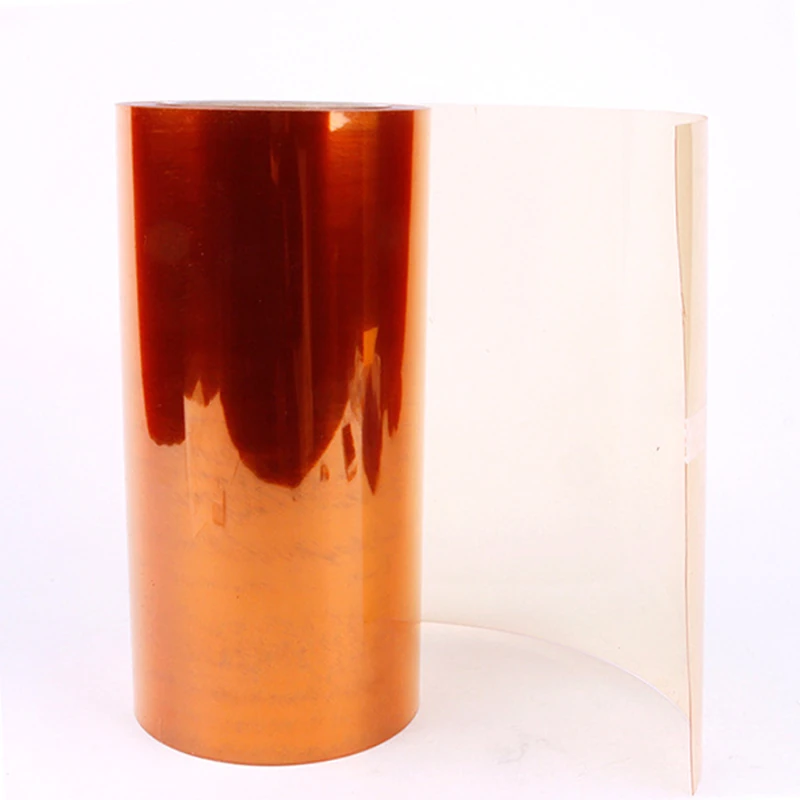
Pharmaceutical PVC/PE/PVDC Triplex Blister Film
What Is PVC/PE/PVDC Pharmaceutical Blister Film?
PVC/PE/PVDC film, also called triplex pharmaceutical blister film, is a three-component thermoforming material. It is generally produced by laminating a pharmaceutical-grade rigid PVC base with a PE layer and applying a controlled PVDC barrier coating.
The PVC layer provides the main structural support and machine-running stability. The PE layer improves flexibility, impact performance and cavity formation. The PVDC layer reduces the transmission of water vapor, oxygen and aroma through the package. The resulting film is suitable for blister packs requiring more protection and more demanding forming performance than plain PVC.
Important naming correction: The industry-standard order is PVC/PE/PVDC because PE is laminated to the PVC base before the PVDC barrier coating is applied. “PVC/PVDC/PE” may appear in search queries, but the physical layer structure and quotation should be confirmed as PVC/PE/PVDC.
How Each Layer Protects the Medicine
| Layer |
Primary Function |
Packaging Benefit |
| PVC base |
Rigid structural forming web |
Provides dimensional stability, transparency, web handling and compatibility with conventional blister-forming equipment |
| PE layer |
Flexible intermediate layer |
Improves impact strength, elongation, deep-draw performance and mechanical stability of formed cavities |
| PVDC coating |
Functional barrier layer |
Reduces moisture, oxygen and aroma transmission to support shelf-life protection of sensitive formulations |
PVC/PE/PVDC Triplex Film Specifications
| Property |
Recommended Page Specification |
| Product name |
Pharmaceutical PVC/PE/PVDC Triplex Film for Blister Packaging |
| Material structure |
Pharmaceutical-grade rigid PVC / PE / PVDC barrier coating |
| Typical PVC base thickness |
200μm or 250μm; customized gauges subject to technical confirmation |
| Typical PE thickness |
Approximately 25–30μm; final structure subject to approved specification |
| Typical PVDC coating weight |
40, 60, 90, 100 or 120g/m²; higher or customized barrier structures subject to production confirmation |
| Total thickness |
Depends on PVC gauge, PE thickness and PVDC coating weight; specified by approved structure rather than a general 0.1–3mm range |
| Roll width |
Customized slit width according to the blister machine and web layout |
| Width tolerance |
Confirm in the approved technical specification; ±1mm is a common reference for slit pharmaceutical films |
| Core diameter |
76mm or 152mm, subject to machine and roll-weight requirements |
| Color |
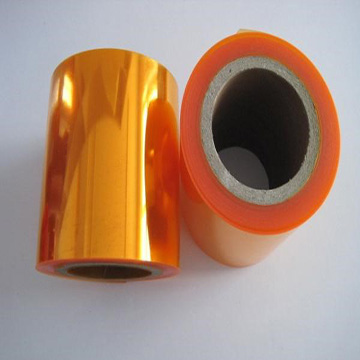
Glass clear, amber, blue, green, orange, red, yellow, white opaque or customized |
| Printing |
Optional blister-side printing subject to ink, surface, rub-resistance and pharmaceutical-packaging validation |
| Typical applications |
Thermoformed blister packs for moisture- and oxygen-sensitive tablets, capsules, nutraceuticals and veterinary products |
| Compatible lidding |
Validated pharmaceutical push-through aluminum foil or another approved lidding system |
| Listed MOQ |
2,000kg on the current product listing; final MOQ depends on structure, coating weight, color and slit width |
| Listed supply capacity |
Up to 2,000 tons per month, subject to production-line availability and approved specification |
| Lead time |
Typically 7–15 days for confirmed standard orders; custom structures and large volumes are scheduled separately |
| Delivery terms |
EXW, FOB, CNF or other agreed Incoterms |
| Quality documentation |
Current material, migration, residual-monomer, quality-system and market-specific documents according to the exact HSQY structure |
Key Benefits of PVC/PE/PVDC Blister Film
1. Configurable moisture barrier: The PVDC coating weight can be selected according to the medicine's water-vapor sensitivity and target shelf life.
2. Improved oxygen and aroma protection: The barrier coating helps reduce oxygen ingress and loss of volatile components compared with plain PVC.
3. Better deep-cavity formability: The PE layer improves flexibility and supports demanding blister shapes, larger cavities and higher draw ratios.
4. Mechanical stability: The triplex structure helps formed cavities withstand filling, sealing, cutting, cartoning and transport.
5. Transparent product visibility: Clear structures allow visual inspection of tablets and capsules while providing a higher barrier than standard PVC.
6. High-speed machine compatibility: Controlled friction, winding, width and forming properties support stable web transport when matched to the packaging line.
7. Custom structures and colors: PVC gauge, PE layer, PVDC coating, roll width, core, roll diameter, color and printing can be configured for the project.
Barrier Levels and Structure Selection
PVDC coating weight is an important purchasing parameter, but it should not be selected in isolation. Barrier performance also depends on coating chemistry, distribution, base-film gauge, package geometry, cavity surface area, environmental conditions and test method.
| Film Type |
Relative Barrier |
Typical Selection Logic |
| Plain PVC |
Standard / lower barrier |
Economical forming web for relatively stable products with lower moisture and oxygen sensitivity |
| PVC/PVDC duplex |
Medium to high barrier |
Common solution for sensitive tablets and capsules requiring improved protection without a PE intermediate layer |
| PVC/PE/PVDC triplex |
High configurable barrier |
Selected where improved barrier, impact strength, deep-draw formability and cavity stability are required |
| PCTFE laminate or cold-form foil |
Very high to near-total moisture barrier |
Considered for highly moisture-sensitive formulations when validated triplex PVDC performance is insufficient |
The final structure should be selected through stability studies and package testing. Provide HSQY with the target water-vapor transmission rate, oxygen-transmission rate, required shelf life, storage climate and blister dimensions whenever available.
Pharmaceutical Blister Packaging Applications
Moisture-sensitive tablets: Hygroscopic or coated tablets requiring stronger water-vapor protection than plain PVC.
Capsules and soft capsules: Products requiring controlled moisture and oxygen exposure during distribution and storage.
Large- or deep-cavity packs: Blister formats where the PE layer helps improve draw performance and mechanical stability.
Nutraceutical and dietary supplements: Vitamins, minerals and supplements requiring transparent presentation and improved barrier protection.
Veterinary medicines: Solid-dose products distributed through demanding climate and logistics conditions.
Branded pharmaceutical packs: Colored or printed blister webs used for differentiation, light management or anti-counterfeit design concepts.

Pharmaceutical Blister Packaging

High-Barrier Pharmaceutical Forming Film
Thermoforming and Machine Compatibility
PVC/PE/PVDC triplex film is designed for thermoforming blister machines, but each structure has its own forming window. Temperature, heating-zone balance, forming pressure, plug assistance, mold geometry and line speed should be optimized through trials.
Blister-machine model: Provide the manufacturer, model, working width and maximum roll diameter.
Cavity geometry: Provide cavity length, width, depth, corner radius and draw ratio.
Line speed: State the target cycles per minute and heating-zone configuration.
Lidding foil: Identify the push-through aluminum foil coating and required sealing conditions.
Web orientation: Confirm which surface faces the cavity, medicine and sealing foil according to the approved structure.
Quality Control and Pharmaceutical Documentation
Pharmaceutical packaging approval requires more than general RoHS or REACH statements. Buyers should request current documents for the exact film structure, resin grades, coating weight, color, production location and destination market.
• PVC, PE and PVDC layer or coating consistency
• Total thickness, coating weight and slit-width tolerance
• Water-vapor and oxygen-transmission performance using agreed test conditions
• Thermoforming, impact, shrinkage and dimensional-stability performance
• Residual vinyl chloride monomer and applicable migration testing
• Toxicological, pharmacopoeial or drug-master-file documentation where available and applicable
• Roll winding, joints, edge quality, labeling, batch traceability and certificate of analysis
Technical and Reference Documents
The original page contains the following general PVC documents. They are retained for reference, but several relate to clear PVC sheet, gray board, flammability or offset-printing applications rather than the specific pharmaceutical PVC/PE/PVDC triplex structure. Request a dedicated triplex-film technical data sheet and certificate of analysis before pharmaceutical approval.
Information Required for an Accurate Quotation
1. Medicine and sensitivity: State whether the product is a tablet, capsule, soft capsule or supplement and provide moisture and oxygen sensitivity data.
2. Required structure: Provide the PVC gauge, PE thickness and PVDC coating weight, or share the target WVTR and OTR.
3. Blister drawing: Include cavity size, cavity depth, pitch, flange width and number of cavities.
4. Roll specification: State slit width, core diameter, maximum roll diameter, maximum roll weight and winding direction.
5. Packaging machine: Provide machine brand, model, working width and target line speed.
6. Color and printing: Confirm clear, tinted, opaque or printed film and identify the required print side.
7. Regulatory requirements: Specify the destination market, pharmacopoeia, DMF, migration, residual-monomer or other documentation required.
8. Commercial details: Provide trial quantity, annual volume, destination port and required delivery date.
Packing and Delivery
Sample packing: Available A4-size or short-length samples can be protected in PE bags, black film, envelopes or cartons.
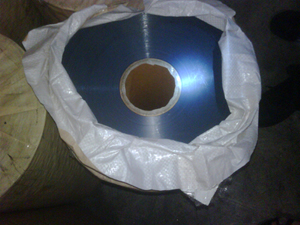
Roll protection: Each slit roll can be wrapped to reduce moisture, dust, surface damage and light exposure during transport.
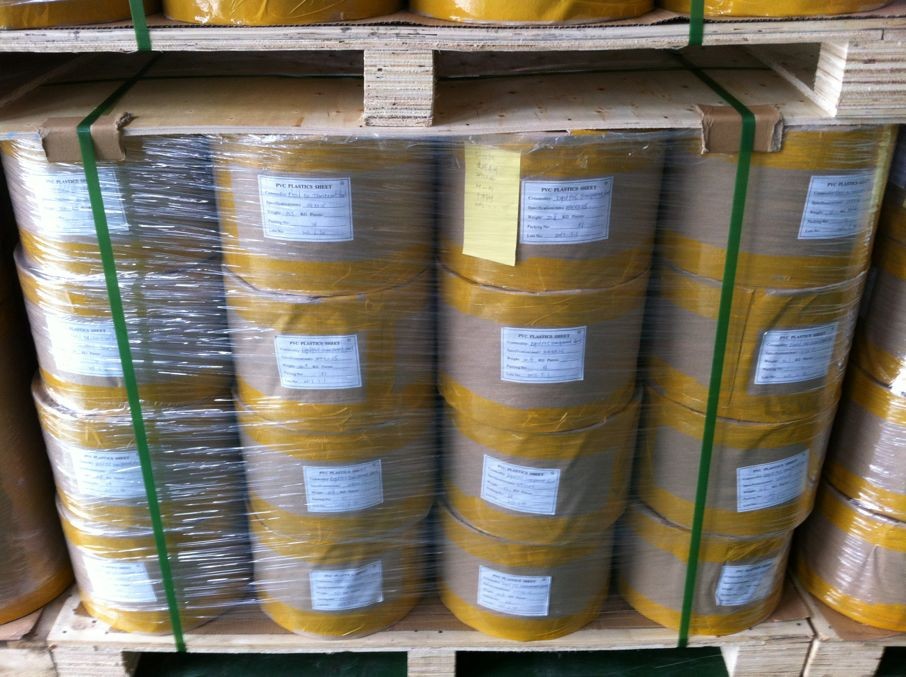
Pallet packing: Rolls are secured on export plywood pallets according to roll diameter, width and handling limitations.
Roll labeling: Labels should identify structure, coating side, width, batch, roll number, weight and production date.
Container loading: Loading quantity depends on the approved roll and pallet configuration rather than a fixed universal weight.
Delivery schedule: Standard orders are typically arranged within 7–15 days after the structure, quality agreement, payment and packing details are confirmed.

Protective Kraft Packing

Export Pallet Packing
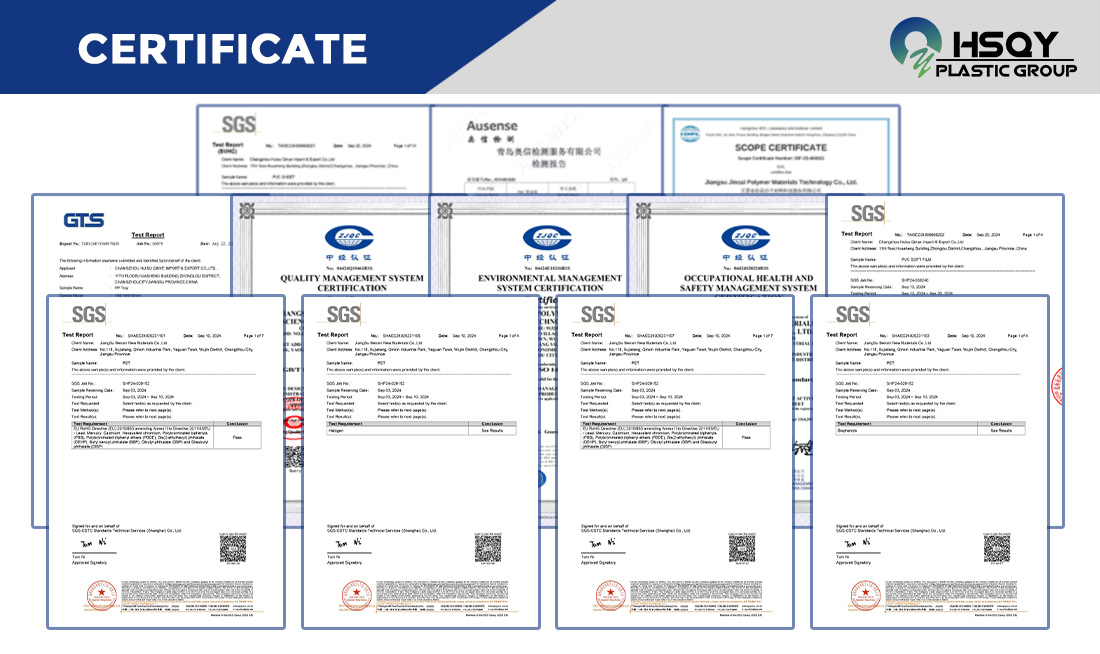
Certificates and Compliance References
The certificate image is retained from the original page. Before approval, confirm that each certificate and test report applies to the exact PVC/PE/PVDC structure, coating weight, color, production site and pharmaceutical use. General RoHS, REACH or ISO documentation alone does not establish suitability for a specific drug product.

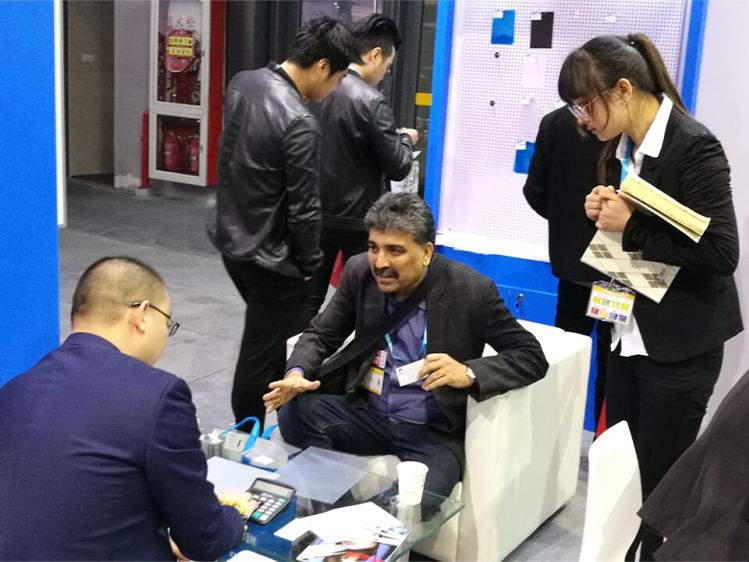
HSQY at Global Exhibitions
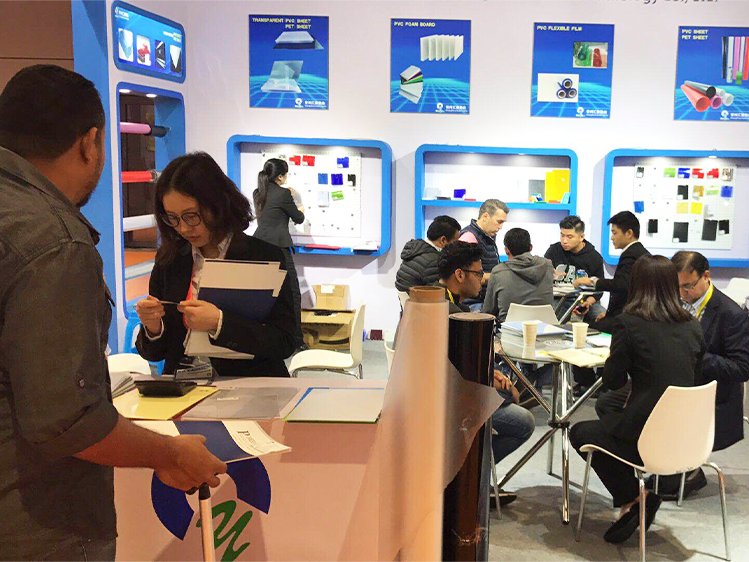
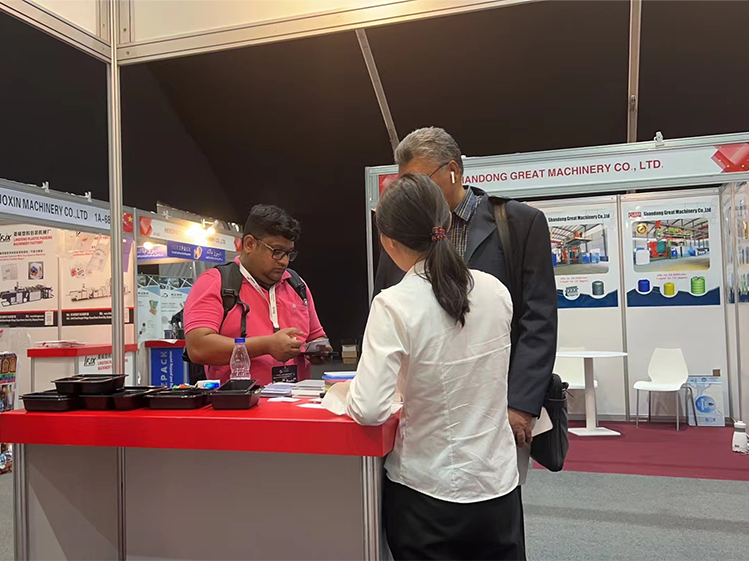
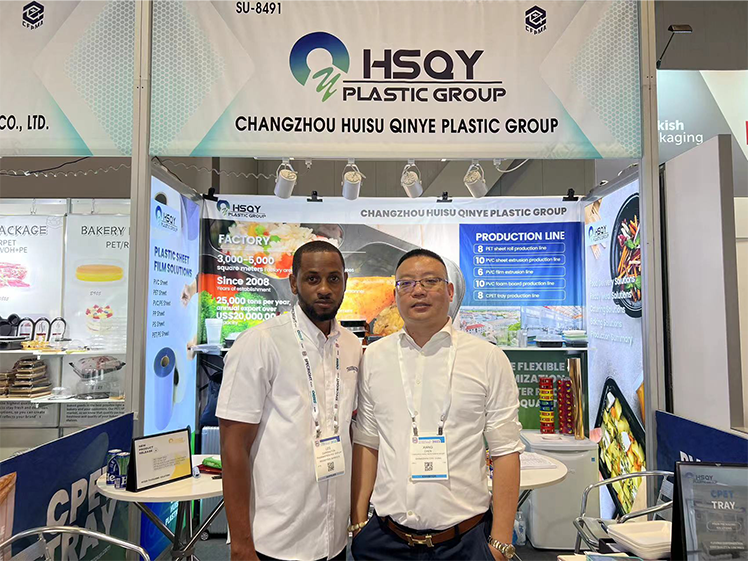
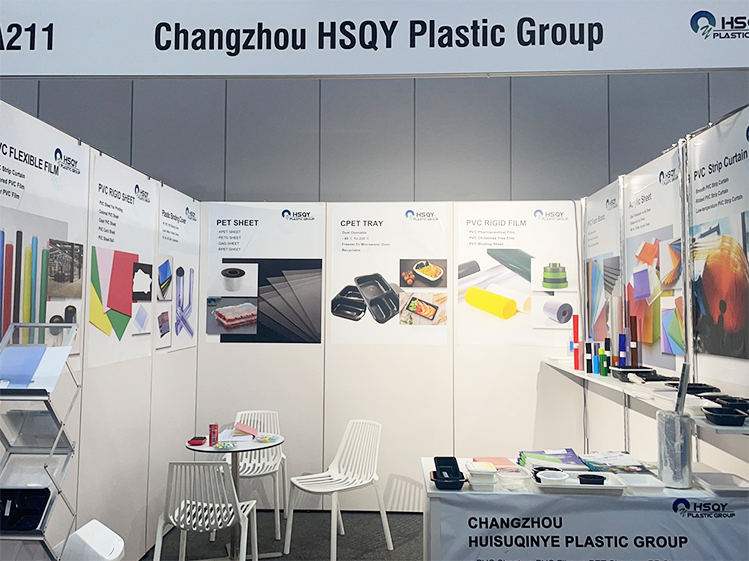
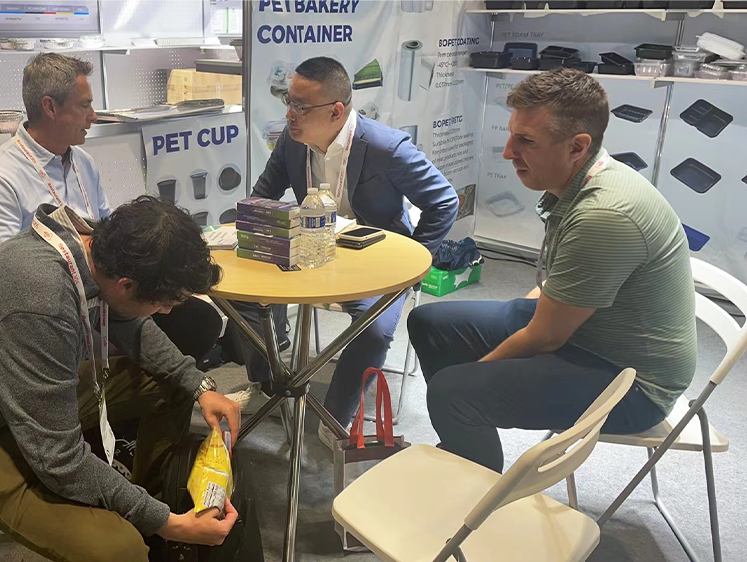
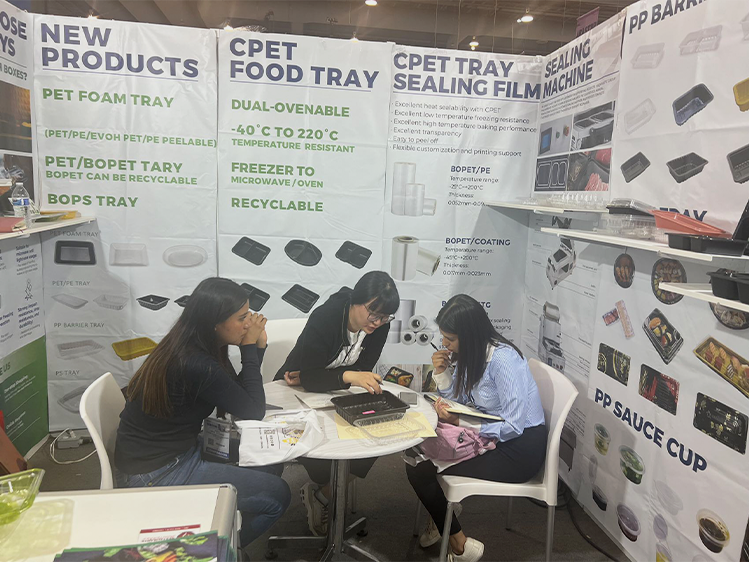
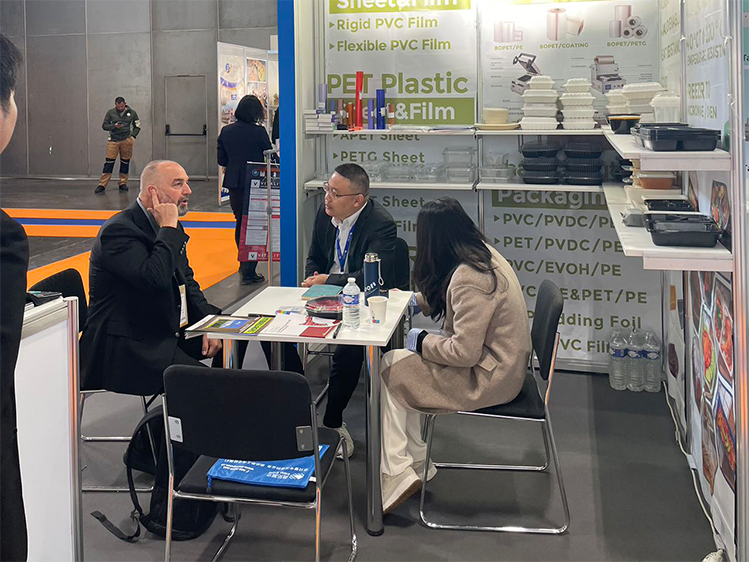
HSQY Plastic Group meets pharmaceutical-packaging customers, plastic converters and distribution partners at international exhibitions in Asia, the Middle East, North America, Australia, Latin America and Europe.

2017 Shanghai Exhibition

2018 Shanghai Exhibition

2023 Saudi Exhibition

2023 American Exhibition

2024 Australian Exhibition

2024 American Exhibition

2024 Mexico Exhibition

2024 Paris Exhibition
Frequently Asked Questions
What is PVC/PE/PVDC triplex film?
It is a three-component pharmaceutical thermoforming film made from a rigid PVC base, a flexible PE intermediate layer and a PVDC barrier coating. It is used for high-barrier blister packaging.
Is PVC/PVDC/PE the same as PVC/PE/PVDC?
The terms may be used interchangeably in online searches, but PVC/PE/PVDC is the clearer structural description: PVC is laminated with PE, and PVDC is then applied as the barrier coating.
Why is PE added between PVC and PVDC?
The PE layer improves flexibility, impact performance and thermoforming. It helps the film form deeper or larger cavities and improves the mechanical stability of the finished blister.
What does the PVDC coating weight mean?
PVDC coating weight is normally expressed in grams per square meter. Higher coating weights generally provide stronger barrier protection, but actual WVTR and OTR also depend on coating chemistry, package design and test conditions.
Which PVDC coating weights are commonly available?
Common triplex structures use PVDC coating weights such as 40, 60, 90, 100 or 120g/m². HSQY's actual available range should be confirmed against the required barrier and production schedule.
Is triplex film better than PVC/PVDC duplex film?
Triplex film is generally selected when the package requires improved deep-draw formability, impact strength and cavity stability in addition to PVDC barrier protection. Duplex film may remain more economical for shallower and less demanding blisters.
Can PVC/PE/PVDC film be used with PTP aluminum foil?
Yes. It is commonly used as the forming web with pharmaceutical push-through aluminum foil. The lidding lacquer, sealing side, temperature, pressure, dwell time and seal strength must be validated.
Is the film suitable for moisture-sensitive medicines?
It is designed for sensitive formulations requiring better moisture and oxygen protection than plain PVC. Final suitability must be demonstrated through stability studies and finished-package testing.
Can the film be used for deep-cavity blister packs?
Yes. The PE layer is specifically useful for larger or deeper cavities, but the achievable draw depends on the structure, mold, plug assistance, forming temperature and required minimum wall thickness.
Can HSQY supply colored or printed triplex film?
Clear, tinted and opaque colors can be discussed. Printing is also possible subject to ink compatibility, rub resistance, registration, surface orientation and pharmaceutical-packaging validation.
What roll information is needed for production?
Provide slit width, width tolerance, core diameter, maximum roll diameter, maximum roll weight, winding direction, coated-side orientation and acceptable number of joints.
Can I request a sample before placing a bulk order?
Available stock samples or trial rolls can be supplied for forming, sealing and preliminary barrier evaluation. The sample must match the intended PVC, PE and PVDC structure as closely as possible.
How do I get an accurate PVC/PE/PVDC film quotation?
Send the structure or target barrier, roll width, core, roll diameter, color, machine model, blister drawing, quantity, destination and required pharmaceutical documents.
Why Choose HSQY as Your Pharmaceutical Blister Film Supplier?
Changzhou Huisu Qinye Plastic Group Co., Ltd. has more than 20 years of experience in rigid plastic films and international supply. HSQY supports pharmaceutical-packaging converters, medicine manufacturers and distributors with customized blister-film structures, slit-roll specifications, sample evaluation, export packing and technical-document coordination.
For a technically matched recommendation, share the drug sensitivity, target shelf life, storage conditions, blister drawing, packaging machine, lidding foil and required quality documentation. HSQY can then determine whether plain PVC, PVC/PVDC duplex, PVC/PE/PVDC triplex or another high-barrier material should be evaluated.
Need a PVC/PE/PVDC triplex-film sample or quotation?
Send your required structure, barrier target, roll width, blister design, packaging machine, order quantity and destination for technical review.
Contact HSQY Plastic


 PVC Clear Sheet Data Sheet