PET/PE Lamination Film Overview Video
What Is General PET/PE Lamination Film?
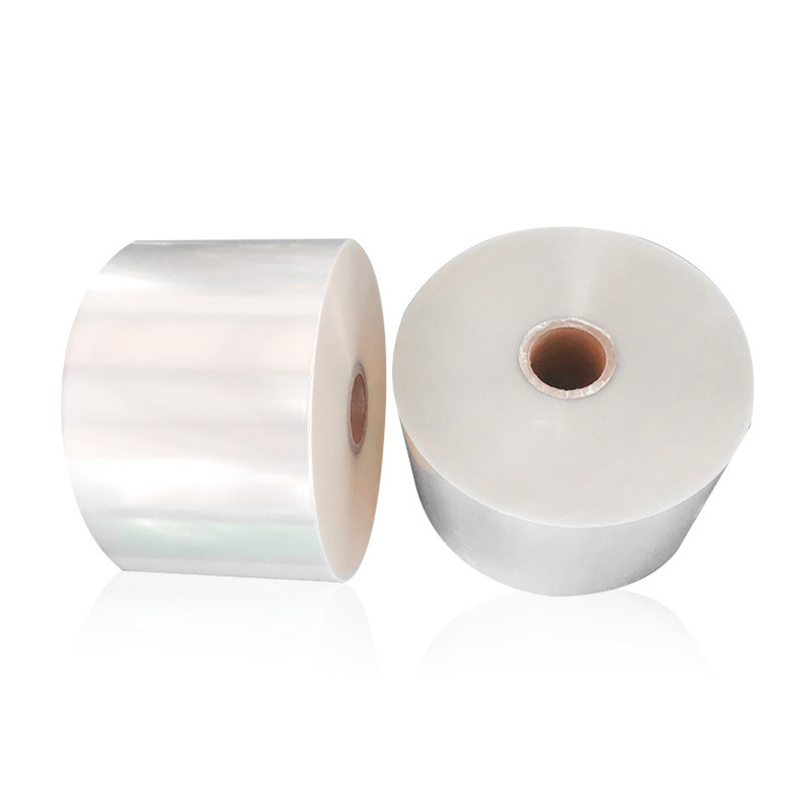
General PET/PE lamination film is a flexible multilayer packaging material that combines a PET or BOPET outer web with a polyethylene sealing layer. PET provides clarity, stiffness, tensile strength, dimensional stability, heat resistance during converting, and a suitable surface for reverse printing. PE provides flexibility, puncture resistance, moisture protection, and heat sealing.
The structure is commonly supplied as printed or unprinted rollstock for pouches, sachets, bags, flow-wrap packs, tray lidding, protective packaging, and form-fill-seal applications. The exact film construction must be selected according to the packaged product, sealing method, filling temperature, required barrier, machine speed, storage conditions, and destination-market compliance requirements.
A general PET/PE laminate should not automatically be described as high barrier, retortable, ovenable, freezer safe, recyclable, or compatible with every tray and sealing machine. These properties require an application-specific structure and validation.
Critical Correction to the Current Page
The existing body content is an rPET rigid-sheet template for blister packaging and thermoforming. It describes 0.12–6mm sheet, 1400mm width, vacuum forming, GRS recycled content, and ESD options. Those specifications do not describe the General PET/PE Lamination Film shown in the product title.
The page body, FAQ, media captions, specification table, application fields, and compliance statements must therefore be replaced with flexible-packaging laminate information. The visible HTML below is written for PET/PE rollstock rather than rigid rPET sheet.
General PET/PE Lamination Film Images

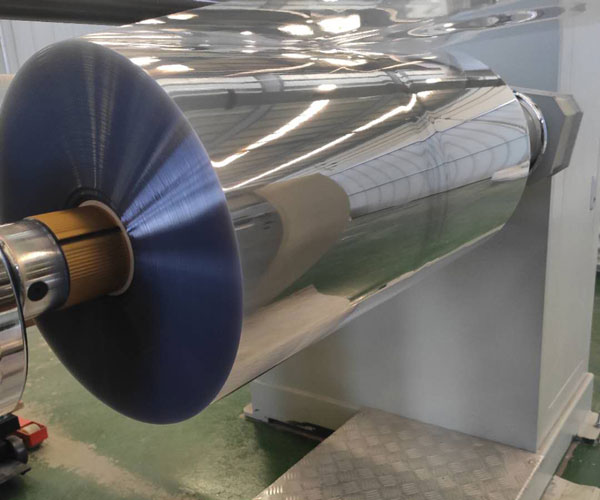
Clear PET/PE laminate roll

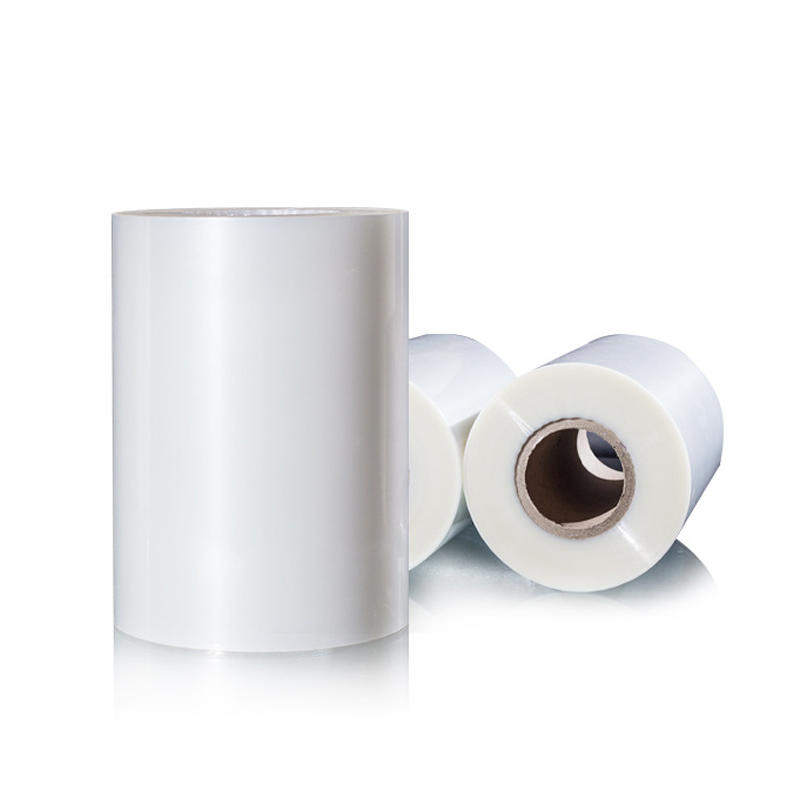
Converted film rolls

Custom-width rollstock
PET/PE Packaging Application Images

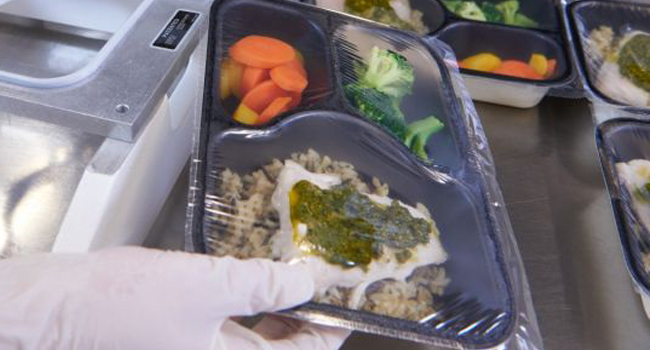
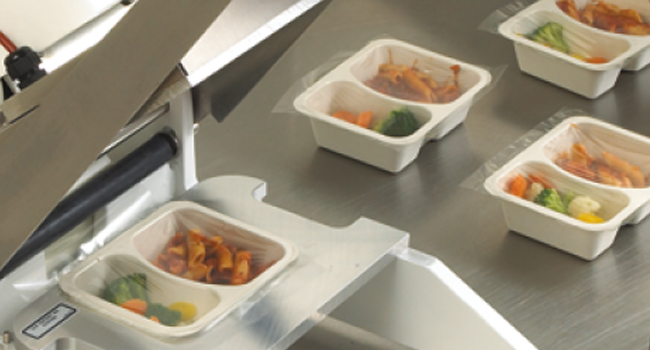
Tray-sealing application

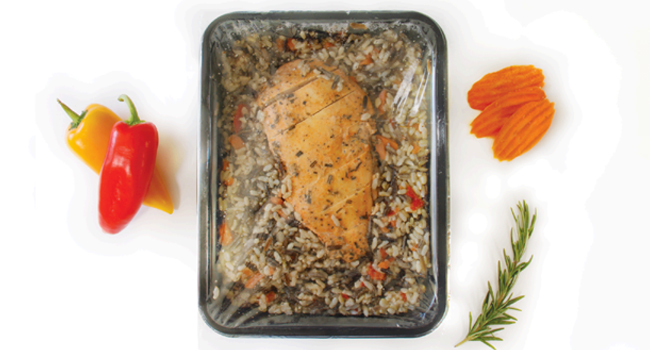
Prepared-food package

Automatic packaging line
Additional Existing Product Images

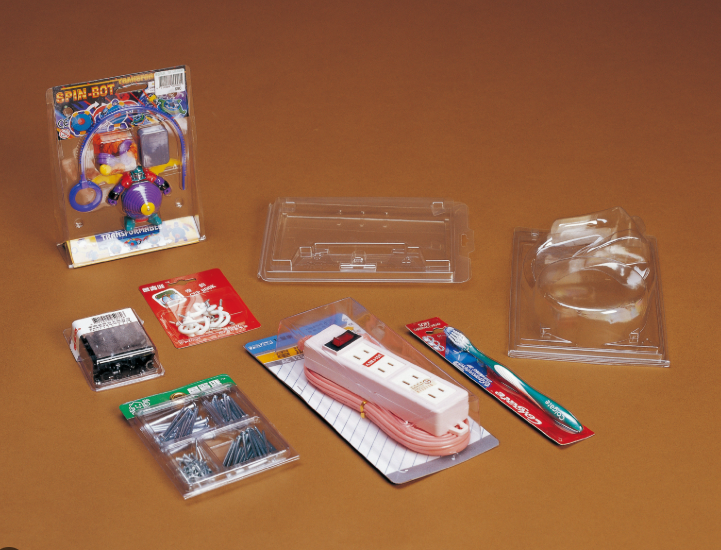
PET packaging material reference

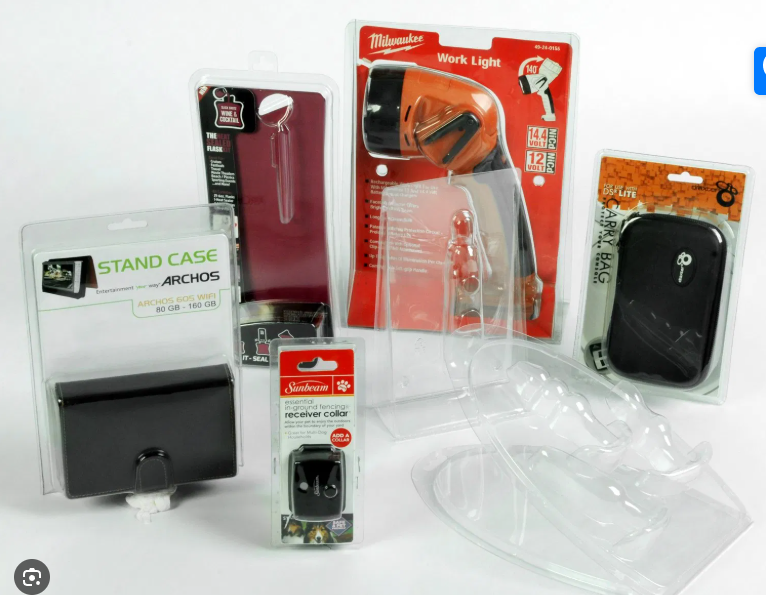
Packaging application reference

Packaging application reference
How the PET/PE Laminate Structure Works
| Layer |
Primary Function |
What Buyers Should Confirm |
| PET / BOPET Outer Web |
Provides strength, stiffness, clarity, thermal stability during printing and lamination, and a premium printable surface. |
Thickness, haze, gloss, shrinkage, corona treatment, primer, print side, and surface-energy retention. |
| Printing Layer |
Carries branding, product information, barcodes, instructions, and traceability. |
Surface or reverse printing, ink chemistry, color count, print repeat, eye mark, and migration requirements. |
| Laminating Adhesive |
Bonds the PET outer web to the PE sealing web. |
Solvent-based, solvent-free, water-based, or extrusion lamination; cure time, bond strength, odor, and migration. |
| PE Structural Layer |
Provides flexibility, toughness, puncture resistance, and moisture-barrier contribution. |
LDPE, LLDPE, mLLDPE, HDPE, or blend; thickness, dart impact, puncture, and flex-crack resistance. |
| PE Sealant Layer |
Provides heat sealing and hot-tack performance. |
Seal initiation temperature, seal window, hot tack, contamination tolerance, seal strength, and product-contact conditions. |
| Optional Functional Layer |
Adds oxygen barrier, light barrier, aroma barrier, anti-static, anti-fog, matte, or other properties. |
EVOH, metallization, foil, coating, additive, or additional web must be defined separately. |
General PET/PE Lamination Film Specifications
The current product page does not publish a verified film thickness, roll width, roll length, or layer ratio. The following specification framework avoids carrying over the incorrect rPET sheet data. Final commercial values should be confirmed in the supplier quotation and approved technical data sheet.
| Property |
Available or Project-Specific Option |
Selection Requirement |
| Product Type |
General-purpose PET/PE flexible packaging laminate |
Rollstock, pouch film, bag film, or tray-sealing grade |
| Typical Structure |
PET / adhesive / PE |
Confirm whether PET means BOPET and define each layer |
| Film Thickness |
Custom by application |
Specify total gauge, PET gauge, PE gauge, and tolerance |
| Roll Width |
Custom slitting |
Specify web width, tolerance, edge quality, and machine limit |
| Roll Length |
Custom |
Specify core ID, roll outside diameter, roll weight, and splice limit |
| Appearance |
Clear, printed, white, metallized, matte, or custom |
Confirm haze, gloss, opacity, and visual defect criteria |
| Printing |
Gravure or flexographic; other systems by project |
Confirm ink system, colors, repeat, eye mark, and printing side |
| Lamination |
Solvent-based, solvent-free, extrusion, or project-specific |
Confirm adhesive, bond, cure, residual solvent, and migration |
| Seal Type |
Lock seal, easy peel, or standard heat seal by project |
Seal behavior is controlled by the PE formulation and substrate |
| Barrier |
Standard, medium, or high barrier by structure |
Specify OTR, WVTR, light barrier, aroma barrier, and test conditions |
| Temperature Use |
Ambient, chilled, frozen, hot fill, pasteurization, or thermal processing by grade |
Do not assume retort, microwave, or oven use |
| Food Contact |
Available for approved food-packaging grades |
Specify food type, time, temperature, and destination-market regulation |
| MOQ |
Confirm by structure and conversion requirement |
Printed, specialty, narrow-width, or high-barrier orders may have higher MOQ |
| Lead Time |
Confirm after specification and artwork approval |
Depends on film structure, printing, adhesive cure, and order size |
PET and PE Perform Different Functions
| Property |
PET / BOPET Layer |
PE Layer |
| Mechanical Role |
Stiffness, tensile strength, dimensional stability, and print registration. |
Flexibility, toughness, puncture resistance, and impact performance. |
| Printing Role |
Commonly used as the reverse-print outer web. |
Can be printed in selected structures but is primarily the sealant web. |
| Heat-Sealing Role |
Standard BOPET is normally not the main heat-seal layer. |
Provides heat sealing, hot tack, and package closure. |
| Moisture Barrier |
Provides limited water-vapor protection compared with polyolefin sealants. |
Usually provides the primary moisture-barrier contribution. |
| Oxygen Barrier |
Provides useful general oxygen and aroma protection but not automatically high barrier. |
Generally lower oxygen barrier; EVOH, foil, metallization, or coating may be added. |
| Thermal Converting |
Helps maintain stability during printing, drying, and lamination. |
Sealant temperature and thermal exposure depend on the PE formulation. |
PET/PE Is Not Automatically a High-Barrier Film
A standard clear PET/PE laminate provides useful protection, but it should not automatically be described as a high-barrier structure. Packaging for oxygen-sensitive, aroma-sensitive, light-sensitive, or long-shelf-life products may require EVOH, metallized PET, aluminium foil, PVDC, AlOx, SiOx, or another functional barrier.
| Structure |
Typical Barrier Function |
Common Selection Reason |
| Clear PET / PE |
General mechanical protection, moisture resistance, sealing, and moderate gas protection. |
Dry foods, household products, industrial products, and general flexible packaging. |
| PET / EVOH-PE |
Higher oxygen and aroma barrier with a transparent structure. |
MAP, meat, cheese, prepared foods, and oxygen-sensitive products. |
| Metallized PET / PE |
Improved light, oxygen, and aroma protection. |
Snacks, coffee, powders, pet food, and products requiring an opaque metallic barrier. |
| PET / Aluminium Foil / PE |
Very high light, oxygen, moisture, and aroma protection. |
Pharmaceutical, chemical, coffee, powder, and demanding long-shelf-life applications. |
| Coated PET / PE |
Barrier or surface functionality according to the coating. |
Specialty transparent barrier, anti-fog, matte, or chemical-resistance applications. |
Oxygen Barrier and Moisture Barrier Should Be Specified Separately
| Property |
What It Measures |
How to Specify It |
| OTR |
Oxygen transmission through the laminate. |
State cc/m²/day, temperature, relative humidity, method, and complete film structure. |
| WVTR |
Water-vapor transmission through the laminate. |
State g/m²/day, temperature, relative humidity, method, and complete film structure. |
| Aroma Barrier |
Retention of aroma and resistance to odor transfer. |
Use product-specific sensory or permeation testing where required. |
| Light Barrier |
Protection from visible and ultraviolet light. |
Specify opacity, optical density, UV transmission, or transmission spectrum. |
| Whole-Pack Barrier |
Combined performance of film, seals, closures, and package geometry. |
Validate the finished pouch, bag, or sealed tray rather than film data alone. |
Printing and Graphic Requirements
PET/PE laminates are frequently reverse printed on the PET surface before lamination. This protects the ink inside the structure and provides a glossy exterior, but the printing system must be matched to the treatment, primer, adhesive, product, and end-use conditions.
Printing process: rotogravure, flexographic, UV-flexo, digital, or another qualified method
Ink system: solvent-based, water-based, UV, EB, or low-migration
Surface treatment: corona, chemical primer, or specialty coating
Surface or reverse printing
Color count, spot colors, white ink, metallic ink, and varnish
Print repeat, eye-mark dimensions, and cutting position
Barcode and QR-code verification
Rub resistance, heat resistance, lightfastness, and chemical resistance
Residual-solvent and odor limits
Migration and food-contact design
Adhesive Lamination and Bond Strength
| Lamination System |
Advantages |
Validation Focus |
| Solvent-Based Adhesive |
Strong performance and broad compatibility for demanding structures. |
Coating weight, drying, residual solvent, cure, bond strength, odor, and migration. |
| Solvent-Free Adhesive |
Low solvent emissions and efficient high-speed lamination. |
Mix ratio, coating weight, cure, slip interaction, tunnel defects, and bond development. |
| Water-Based Adhesive |
Useful for selected structures and sustainability objectives. |
Drying, humidity, surface compatibility, water resistance, and final bond. |
| Extrusion Lamination |
Uses molten polymer to bond webs and can add structure or sealing functionality. |
Melt temperature, oxidation, primer, neck-in, adhesion, thickness uniformity, and thermal history. |
The laminate should not be released for conversion until the adhesive has reached the required cure and bond strength. Premature slitting, pouch making, or food filling can cause delamination, odor, residual migration, and seal failure.
Heat-Seal and Hot-Tack Requirements
| Parameter |
Why It Matters |
Recommended Control |
| Seal Initiation Temperature |
Lowest temperature that creates an acceptable seal. |
Define with the actual machine, dwell time, pressure, and seal-jaw material. |
| Seal Window |
Range between minimum effective sealing and film damage or distortion. |
Use a temperature-pressure-dwell matrix. |
| Hot Tack |
Strength of the seal while still hot after the jaws open. |
Critical for vertical form-fill-seal, liquids, powders, and high-speed packing. |
| Seal Strength |
Final package closure after cooling and conditioning. |
Define specimen width, test speed, conditioning, and acceptable range. |
| Contamination Tolerance |
Ability to seal through oil, powder, moisture, crumbs, or product residue. |
Run clean and contaminated-seal trials. |
| Easy Peel or Lock Seal |
Controls consumer opening or permanent package closure. |
Use a specifically formulated PE sealant rather than assuming standard behavior. |
Common Packaging Formats
| Format |
Typical Use of PET/PE Laminate |
Key Requirement |
| Premade Pouches |
Stand-up, flat, three-side-seal, zipper, or spouted formats. |
Pouch stiffness, seal strength, drop resistance, zipper or spout compatibility. |
| Form-Fill-Seal Rollstock |
Vertical or horizontal packaging for foods, powders, liquids, and consumer goods. |
Hot tack, COF, web tracking, eye marks, line speed, and seal contamination. |
| Sachets and Stick Packs |
Single-use powders, liquids, cosmetics, household, and pharmaceutical products. |
Small-format registration, cutting, sealing, barrier, and tear opening. |
| Tray Lidding |
Heat-sealed top web for a compatible PE or PE-coated flange. |
Tray compatibility, seal window, peel or weld behavior, anti-fog, and cutting. |
| Protective Overwrap |
Protection against dust, moisture, abrasion, or handling. |
Clarity, toughness, sealing, shrinkage, and pack appearance. |
| Industrial Rollstock |
Packaging for components, hardware, chemicals, and consumer products. |
Puncture, chemical compatibility, static control, and traceability. |
Typical Applications
Dry food, snacks, confectionery, bakery products, and powders
Sauces, seasonings, liquids, and portion packs using a qualified sealant
Coffee, tea, pet food, and aroma-sensitive products using an upgraded barrier structure
Frozen, chilled, or ambient foods using an application-specific grade
Household, personal-care, cosmetic, and hygiene packaging
Pharmaceutical and medical packaging after material and regulatory validation
Industrial components, hardware, electronics, and protective packaging
Printed pouches, bags, sachets, flow wrap, and form-fill-seal rollstock
Tray lidding for a compatible PE sealing surface
Machine and Roll Compatibility
Provide the packaging-machine brand and model, horizontal or vertical process, maximum web width, core inside diameter, maximum roll outside diameter, roll weight, unwind direction, print orientation, eye-mark sensor, web tension, line speed, sealing-jaw design, temperature, pressure, and dwell time.
Trials should evaluate roll tracking, curl, static, blocking, COF, print registration, cutting, hot tack, final seal strength, contamination tolerance, laminate bond, puncture, drop performance, and package leakage.
Quality-Control Requirements
Total thickness and layer ratio: Confirm total gauge, PET gauge, PE gauge, and tolerance.
Lamination bond: Test initial and fully cured bond strength.
Residual solvents: Define limits for printed and adhesive-laminated food packaging.
Seal initiation, hot tack, and seal strength: Match the packaging machine and product.
OTR and WVTR: State test conditions when barrier is claimed.
Puncture and impact: Match product edges, drop height, and distribution conditions.
COF and blocking: Control high-speed feeding, unwinding, and bag making.
Optical quality: Confirm haze, gloss, transparency, print appearance, and defects.
Roll quality: Inspect edge alignment, wrinkles, telescoping, splices, cores, and winding direction.
Odor and migration: Verify after full adhesive cure and package conditioning.
Common Problems and Corrective Actions
| Problem |
Possible Cause |
Recommended Check |
| Laminate Delamination |
Insufficient cure, low adhesive coating weight, poor treatment, contamination, or incompatible adhesive. |
Check surface energy, coating weight, cure, bond strength, and storage. |
| Weak Heat Seal |
Low temperature, insufficient dwell or pressure, wrong PE grade, or contamination. |
Build a sealing-window matrix and test the actual packed product. |
| Seal Opens While Hot |
Insufficient hot tack or excessive product load on the seal. |
Select a higher-hot-tack sealant and optimize machine timing. |
| Roll Curls |
Unbalanced layer tension, adhesive shrinkage, thermal history, or uneven thickness. |
Review web tension, cure, layer ratio, and storage. |
| Ink or Adhesive Odor |
Incomplete drying, premature conversion, excessive residual solvent, or insufficient cure. |
Measure residuals, extend cure, and review dryer settings. |
| Poor Print Registration |
PET shrinkage, unstable tension, roll telescoping, eye-mark error, or excessive drying heat. |
Control thermal shrinkage, tension, roll build, and sensor setup. |
Food-Contact and Compliance Documentation
Food-contact suitability applies to the complete approved film structure, not simply to PET or PE as generic polymer names. Buyers should define the food type, direct or indirect contact, storage time, temperature, filling process, fat content, acidity, and destination market.
Complete layer structure and raw-material declarations
Technical data sheet and certificate of analysis
Food-contact declaration for the intended market
Overall and specific migration reports where required
Ink, adhesive, primer, and additive compliance
Residual-solvent and odor controls
Traceability, lot coding, and change-control process
OTR, WVTR, seal, bond, and mechanical test reports where claimed
Recyclability and Design-for-Recycling Considerations
PET/PE is a multi-polymer laminate and should not automatically be described as recyclable in every market. The final result depends on PET-to-PE ratio, adhesive, inks, coatings, zippers, spouts, labels, product residue, package size, local collection rules, and recycling infrastructure.
Where recyclability is a priority, compare the conventional PET/PE laminate with an MDO-PE/PE, BOPE/PE, or another PE-dominant design. Any alternative must still meet printing, barrier, stiffness, hot-tack, sealing, puncture, shelf-life, and machine requirements.
Information Required for an Accurate Quotation
Packaging format: rollstock, pouch, sachet, bag, lidding film, or protective film
Packaged product, fill weight, oil, moisture, acidity, aroma, powder, and sharp-edge risks
Required total thickness and PET/PE layer ratio
Required width, width tolerance, roll length, core ID, outer diameter, roll weight, and winding direction
Printing process, color count, artwork, repeat length, eye mark, and print orientation
Lamination method, adhesive type, and bond-strength requirement
Seal initiation temperature, hot tack, seal strength, easy peel, or lock-seal requirement
OTR, WVTR, light, aroma, or chemical-barrier requirement with test conditions
Ambient, chilled, frozen, hot-fill, pasteurization, retort, or other thermal conditions
Packaging-machine brand, model, speed, temperature, pressure, and dwell time
Food-contact, pharmaceutical, industrial, sustainability, and destination-market documentation
Trial quantity, annual volume, delivery destination, and launch schedule
Request PET/PE Laminate Samples and Pricing
Customization Services
Custom PET, PE, and total laminate thickness
Custom slit width, roll length, core ID, outer diameter, roll weight, and winding direction
Clear, printed, white, metallized, matte, and specialty visual formats
Gravure, flexographic, and application-specific printing
Solvent-based, solvent-free, water-based, and extrusion-lamination structures
Standard seal, high hot tack, lock seal, easy peel, and contamination-resistant sealants
EVOH, metallized PET, foil, transparent barrier coating, anti-fog, anti-static, and UV options
Ambient, chilled, frozen, hot-fill, pasteurization, and specialty thermal grades
Pouch-making, tray-sealing, flow-wrap, and form-fill-seal production trials
Custom labels, cartons, pallet marks, and export packaging
Packaging and Delivery
| Packaging Item |
Standard Arrangement |
Customization |
| Sample Packaging |
Small rolls or cut samples protected in PE bags and cartons. |
Label with structure, thickness, width, treatment side, and lot. |
| Roll Packaging |
Rolls wrapped against dust, moisture, edge damage, and telescoping. |
Core plugs, suspension packing, cartons, or protective film. |
| Pallet Packaging |
Plywood or export pallets selected according to roll dimensions. |
Pallet weight, stacking, corner protection, and stretch wrapping. |
| Container Loading |
Loading optimized for 20ft or 40ft containers. |
Loading plan according to roll diameter, pallet, and destination. |
| Delivery Terms |
FOB, CIF, EXW, or other agreed terms. |
Confirm destination, Incoterm, insurance, and customs documents. |
| Lead Time |
Confirmed after structure and artwork approval. |
Includes printing, lamination, adhesive cure, slitting, inspection, and packing. |
Quality and Compliance Documentation
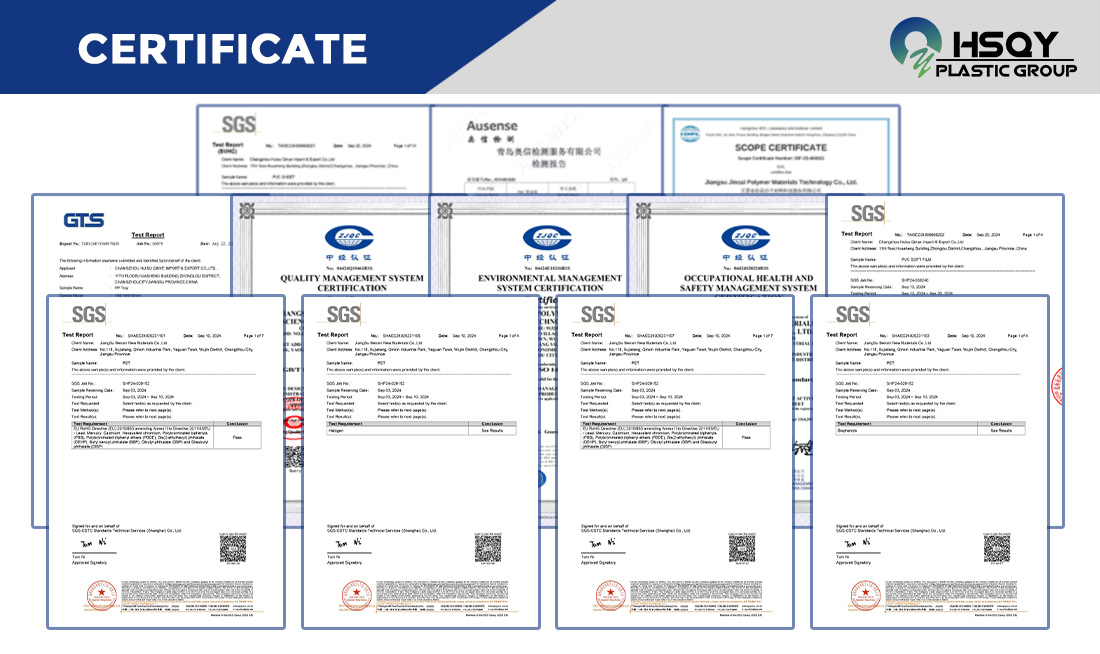
HSQY can provide available technical, quality-management, inspection, and material documentation for the approved PET/PE laminate. Request the technical data sheet, complete structure, certificate of analysis, food-contact declaration where applicable, migration reports, bond-strength method, residual-solvent controls, and roll inspection criteria.
ISO 9001 is a quality-management-system certification and should not be presented as product-specific proof of food-contact safety, recyclability, barrier, or package performance. SGS, FDA, RoHS, REACH, GRS, or other claims must identify the exact film, report, scope, and intended conditions of use.

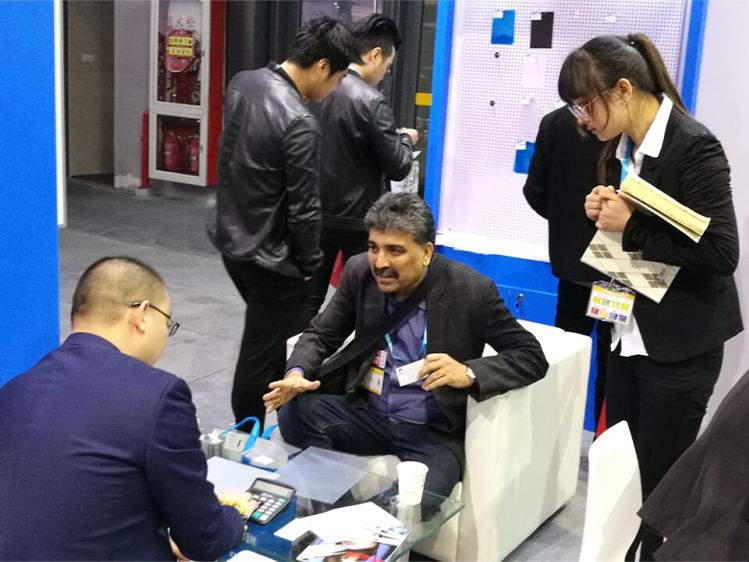
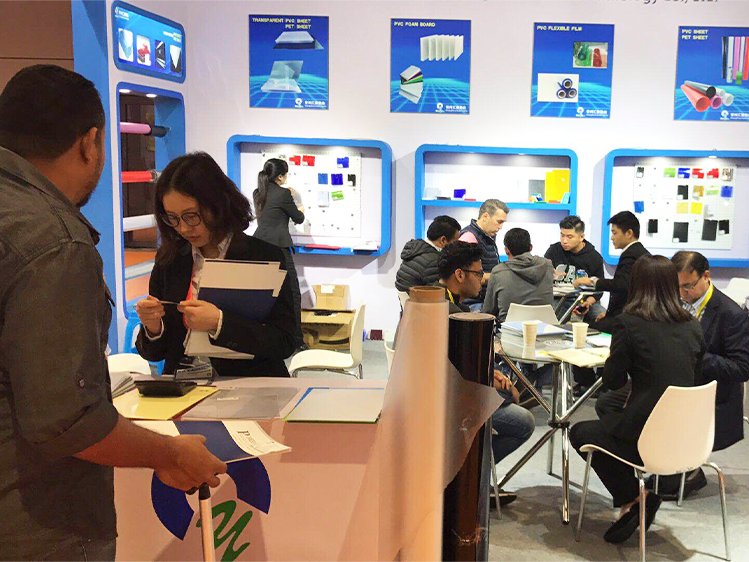
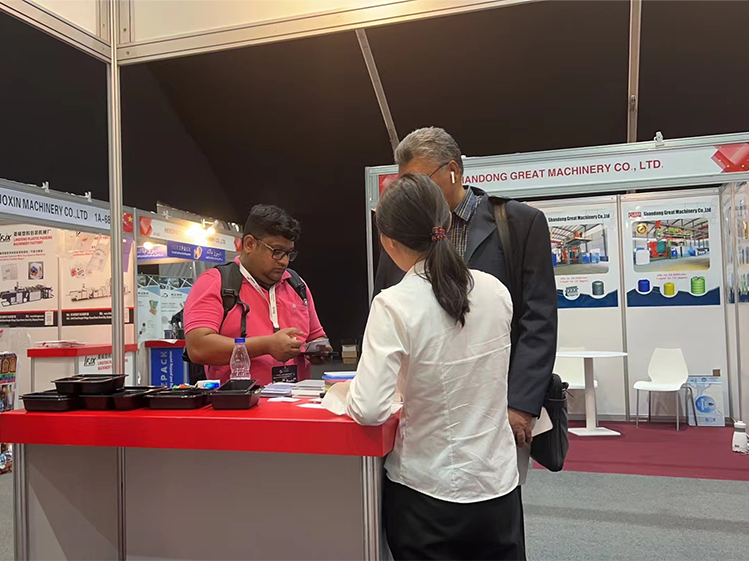
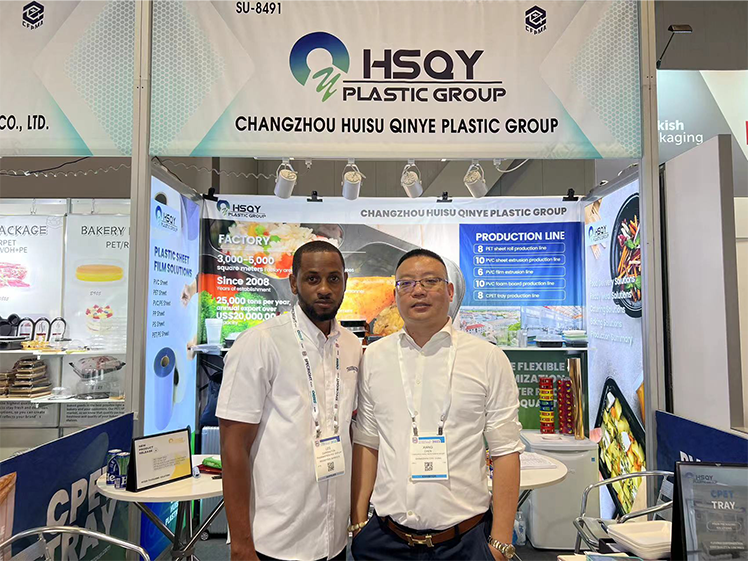
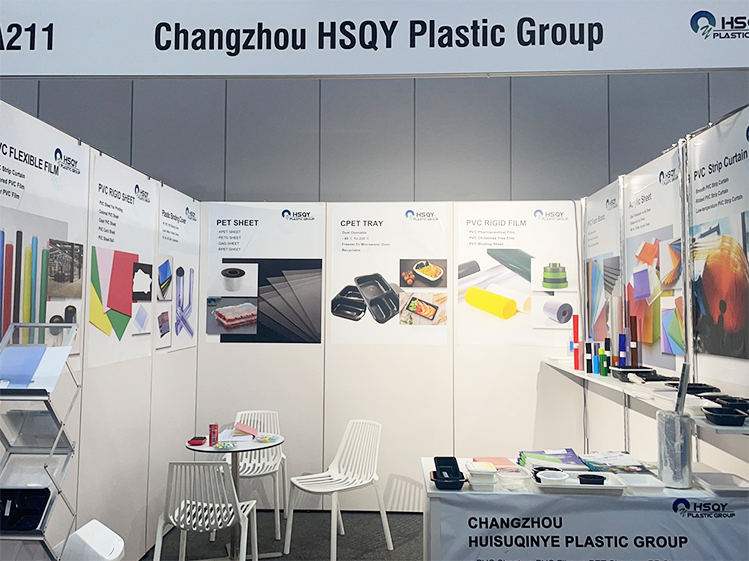
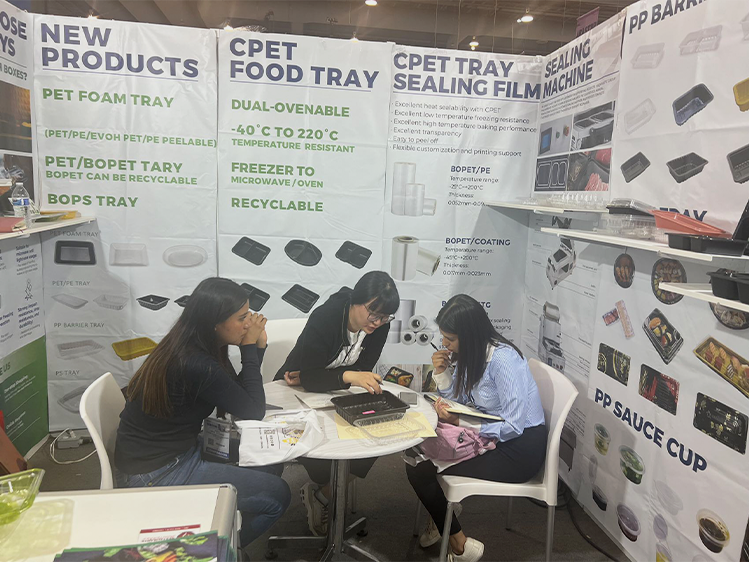
Global Exhibitions

2017 Shanghai Exhibition

2018 Shanghai Exhibition

2023 Saudi Exhibition

2023 American Exhibition

2024 Australian Exhibition

2024 American Exhibition

2024 Mexico Exhibition

2024 Paris Exhibition
Frequently Asked Questions About PET/PE Lamination Film
What is PET/PE lamination film?
It is a flexible laminate combining a PET or BOPET outer web with a polyethylene sealing web for printing, strength, moisture protection, toughness, and heat sealing.
What is the difference between PET/PE film and PET sheet?
PET/PE film is flexible laminated rollstock for pouches, bags, lidding, and packaging. PET sheet is a thicker rigid or semi-rigid material for thermoforming and blister packaging.
Is PET/PE the same as BOPET/PE?
Many PET/PE flexible laminates use BOPET as the outer web, but the technical data sheet should identify the exact PET grade and orientation.
What does the PET layer do?
PET provides stiffness, tensile strength, clarity, dimensional stability, printability, and converting heat resistance.
What does the PE layer do?
PE provides flexibility, puncture resistance, moisture-barrier contribution, hot tack, and heat sealing.
Is standard PET/PE film high barrier?
Not automatically. High-barrier applications may require EVOH, metallized PET, aluminium foil, or a specialty coating with measured OTR and WVTR.
Can PET/PE film be custom printed?
Yes. Gravure and flexographic printing are common, with artwork, colors, repeat, eye marks, ink, and printing side defined for the project.
Can PET/PE film be used for pouches?
Yes. It can be converted into flat, stand-up, zipper, spouted, and three-side-seal pouches when the structure is designed for the product and pouch format.
Can PET/PE film be used for tray sealing?
Yes, when the PE sealant is compatible with the tray flange. Plain PET, PP, CPET, PS, or aluminium may require a different sealing layer.
Can PET/PE film be used for frozen food?
A freezer-grade laminate can be developed, but puncture, impact, seal retention, drop, flexing, and post-freeze performance must be tested.
Can PET/PE film be retorted or used in an oven?
A general PET/PE laminate should not be assumed suitable for retort, microwave, or oven use. These processes require a dedicated structure and validation.
What is hot tack?
Hot tack is the strength of a heat seal immediately after the sealing jaws open, before the seal has fully cooled.
Why does PET/PE laminate delaminate?
Common causes include insufficient adhesive cure, poor corona treatment, contamination, incorrect coating weight, moisture, excessive heat, or incompatible materials.
Is PET/PE film recyclable?
It should not automatically be described as recyclable everywhere because PET and PE are different polymer families. Evaluate the complete package and local recycling rules.
Can I request samples and machine trials?
Yes, subject to specification and material availability. Provide the product, package format, machine, structure, printing, barrier, sealing, and roll requirements.
About HSQY Plastic Group
HSQY Plastic Group supplies PET/PE lamination films, printed and unprinted flexible-packaging rollstock, lidding films, EVOH high-barrier films, BOPET and BOPP films, PET and PP trays, plastic sheets, and related packaging materials for international B2B customers.
The team can support laminate-structure selection, printing, adhesive lamination, sealant development, barrier requirements, roll conversion, pouch and packaging-line trials, quality documentation, export packing, and international delivery.
Contact HSQY for PET/PE Lamination Film