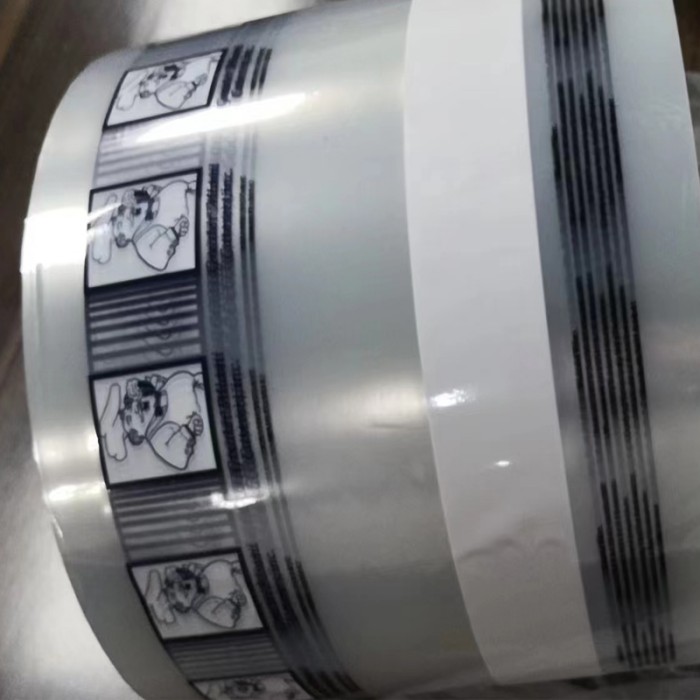
What Is 0.06mm Printable Lidding Film for CPET Trays?
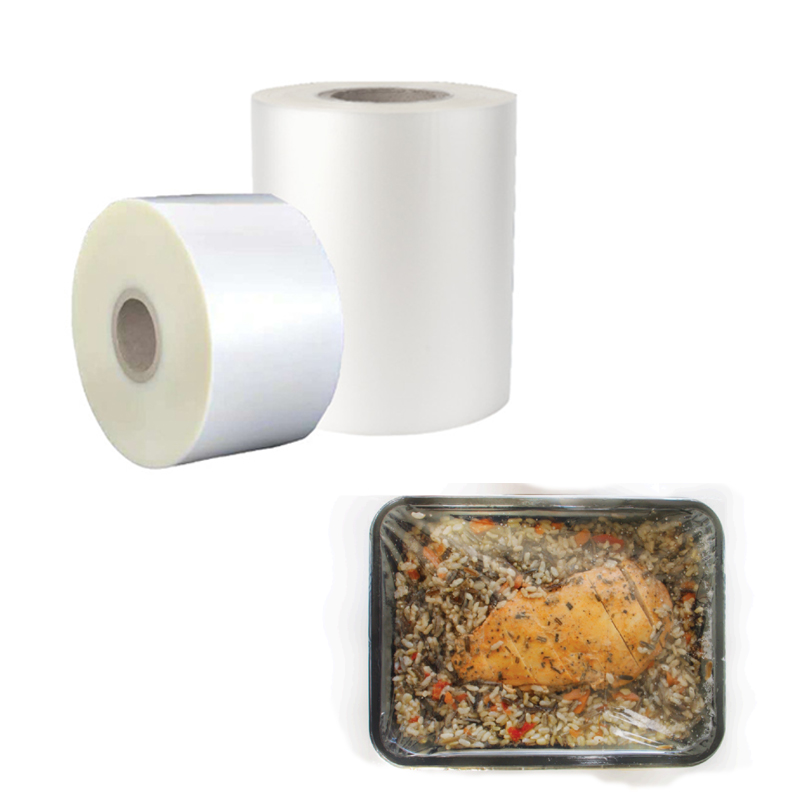
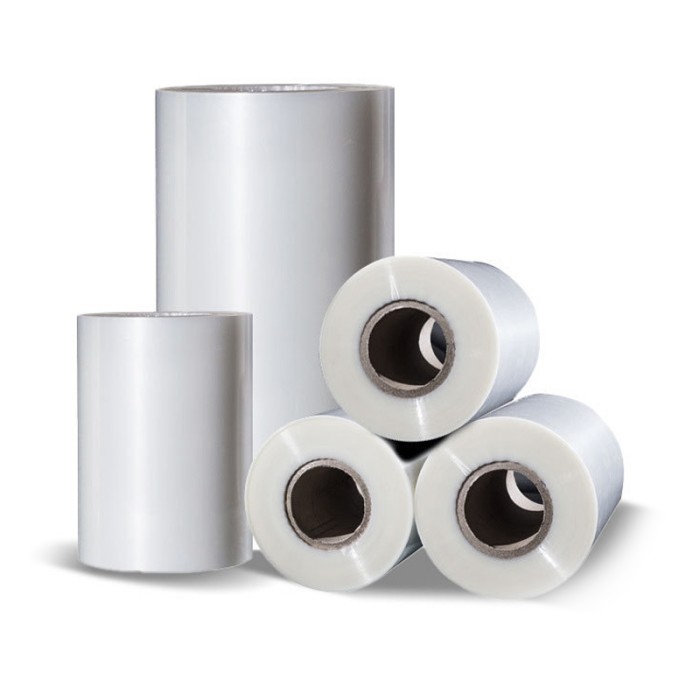
0.06mm printable lidding film is a 60-micron flexible sealing film designed for compatible CPET food trays and supplied in custom-width rolls for tray-sealing equipment. The PET or BOPET outer layer provides clarity, dimensional stability, and a printable surface, while the application-specific inner layer provides the heat-seal and peel performance.
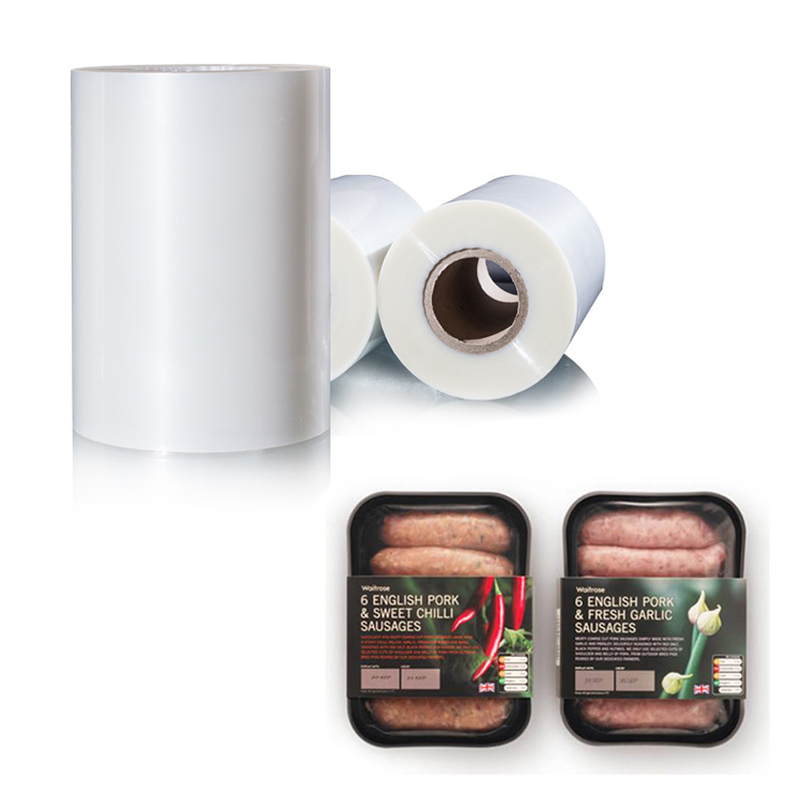
Custom printing allows food manufacturers and private-label brands to place logos, product names, ingredients, cooking instructions, date-code areas, traceability information, promotional graphics, and handling instructions directly on the lidding film.
The final printed structure must be validated with the actual tray, sealing machine, artwork, ink, adhesive, food product, storage conditions, and heating cycle. A standard BOPET/PE film should not automatically be described as compatible with every CPET, PET, PP, microwave, freezer, or conventional-oven application.

60 Micron Printable Lidding Film

Custom Branding and Product Information

Clear or Printed Film Options
Why Use Custom Printed Lidding Film?
Brand visibility: Printed graphics turn the lid into a primary branding surface.
Consumer information: Cooking instructions, storage guidance, ingredients, warnings, and preparation steps can be integrated into the design.
Traceability: Dedicated areas can be included for batch codes, dates, barcodes, QR codes, and variable data.
Reduced secondary labels: Direct film printing may reduce the need for separate pressure-sensitive labels, subject to the final packaging design.
Retail differentiation: High-gloss, matte, transparent-window, and selective-print concepts can improve shelf presentation.
Consistent registration: Printed repeat length and eye marks can be matched to the tray-sealer cutting system.
Custom functionality: Printing can be combined with easy peel, anti-fog, high barrier, MAP, and selected ovenable structures.
0.06mm Printable Sealing Film Specifications
The following information reflects the current commercial configuration of this page. Final printing specifications, tolerances, seal performance, thermal suitability, compliance documents, and artwork approvals should be confirmed before production.
| Property |
Standard or Available Option |
Selection Note |
| Product Type |
Printable tray sealing film / lidding-film roll |
Supplied for manual, semi-automatic, or automatic tray sealers |
| Primary Application |
Compatible CPET food trays |
Send the tray specification, drawing, or sample before bulk production |
| Nominal Thickness |
0.06mm / 60 microns |
Confirm manufacturing tolerance in the approved specification |
| Typical Material Structure |
PET- or BOPET-based laminate with application-specific sealant; BOPET/PE options available |
Final structure depends on tray, print, peel, barrier, and thermal process |
| Thickness Range |
0.05–0.10mm, customizable |
Use a separate technical grade when a different thickness is required |
| Standard Roll Widths |
150mm, 230mm, 280mm, or customized |
Match width to tray dimensions and tooling layout |
| Standard Roll Length |
500m or customized |
Confirm core, roll weight, and maximum outer diameter |
| Appearance |
Clear, transparent, or custom printed |
Confirm haze, gloss, transparency windows, and print coverage |
| Printing Methods |
Flexographic or gravure printing, subject to project requirements |
Confirm colors, artwork, print repeat, and annual volume |
| Print Orientation |
Surface print or reverse print, subject to structure |
Reverse printing can protect graphics inside a laminate |
| Seal Type |
Easy peel, medium peel, or weld seal |
Target peel force must be tested on the actual tray |
| Anti-Fog |
Optional |
Recommended for refrigerated and high-moisture foods |
| Barrier |
Standard or high-barrier grade |
Specify OTR, WVTR, MAP gas mixture, and shelf-life target |
| Freezer Use |
Freezer-compatible grades available |
Validate low-temperature toughness, ink, and seal retention |
| Microwave / Oven Use |
Application-specific grades available |
Do not assume every printed BOPET/PE structure is suitable for 220°C |
| Minimum Order Quantity |
500kg |
Printed-film MOQ may also depend on artwork, colors, and cylinder or plate requirements |
| Typical Lead Time |
Approximately 10–14 working days after specification approval |
New artwork and print tooling may require additional time |
| Payment Terms |
T/T 30% deposit and 70% balance before shipment |
Confirm in the commercial quotation |
| Delivery Terms |
EXW, FOB, CIF/CNF, DDU, or door-to-door |
Subject to destination and shipment size |
How a Printed Lidding-Film Structure Works
| Film Layer |
Primary Function |
Buyer Consideration |
| PET / BOPET Outer Layer |
Provides clarity, strength, stiffness, heat resistance, and a printable surface. |
Confirm thickness, treatment, haze, gloss, and printing compatibility. |
| Printing Ink Layer |
Creates branding, graphics, product information, instructions, and coding areas. |
Confirm ink system, colors, coverage, adhesion, and thermal requirements. |
| Adhesive / Tie Layer |
Bonds the printed PET layer to the sealant or barrier structure. |
Confirm bond strength, curing, migration, and thermal compatibility. |
| Optional Barrier Layer |
Controls oxygen, moisture, aroma, or MAP gas transmission. |
Specify OTR, WVTR, gas mixture, food type, and shelf-life target. |
| Sealant Layer |
Forms the seal to the tray and controls easy-peel, medium-peel, or weld-seal behavior. |
Must match the actual CPET tray flange and sealing conditions. |
Printing Methods and Design Options
| Printing Option |
How It Works |
Project Consideration |
| Reverse Printing |
The graphic is printed on the inner side of the outer PET layer and protected inside the laminate. |
Useful when high rub resistance and protected graphics are required. |
| Surface Printing |
The graphic is printed on the outside surface of the finished film. |
May require protective lacquer and rub-resistance validation. |
| Flexographic Printing |
Common for efficient roll-to-roll printing and repeat packaging work. |
Confirm plate requirements, color count, line screen, and order volume. |
| Gravure Printing |
Suitable for high-quality graphics and consistent long production runs. |
Confirm cylinder cost, artwork separations, repeat length, and annual volume. |
| Transparent Window Design |
Leaves selected areas unprinted so consumers can see the food. |
Confirm window position, print registration, and anti-fog requirements. |
Artwork and Prepress Requirements
Accurate artwork preparation is essential because the printed repeat must align with the tray-sealer tooling and cutting position. Supply editable vector artwork whenever possible and identify all fonts, linked images, barcodes, spot colors, and transparency effects.
Artwork format: Editable AI, EPS, or print-ready PDF files are preferred.
Color references: Provide Pantone, CMYK, or approved physical color standards.
Print repeat: State the repeat length required by the tray and cutting tool.
Eye mark: Confirm size, color, position, and distance from the web edge.
Seal-free zones: Keep critical text and graphics away from the sealing and cutting areas.
Barcode and QR verification: Test code readability after printing, sealing, storage, and heating.
Text and regulatory review: The buyer should approve ingredients, warnings, nutrition content, cooking instructions, and language versions.
Proof approval: Approve the digital proof, color proof, print layout, winding direction, and roll label before mass production.
Print Quality and Registration Controls
Color consistency: Agree acceptable color tolerances and reference standards.
Registration accuracy: Specify acceptable movement between colors and between print and cut position.
Ink adhesion: Test tape adhesion, rub resistance, and resistance to condensation, oil, freezing, and heating.
Blocking resistance: Confirm printed rolls unwind cleanly without ink transfer between layers.
Graphic orientation: Verify reading direction, inside/outside print, seal side, and winding direction.
Surface appearance: Define acceptable pinholes, streaks, scratches, gels, contamination, and print defects.
Variable coding area: Reserve a suitable surface for thermal-transfer, inkjet, laser, or other coding systems when required.
Easy-Peel, Medium-Peel, and Weld-Seal Options
| Seal Type |
Opening Performance |
Typical Application |
| Easy Peel |
Controlled opening with reduced tearing, shredding, or residue. |
Retail ready meals, chilled meals, desserts, and convenience packs. |
| Medium Peel |
Balances consumer opening with stronger distribution security. |
Prepared meals, catering, and heavier products. |
| Weld Seal |
Forms a stronger permanent seal and increased tamper evidence. |
Liquid-containing meals and demanding transport conditions. |
Tray Material Compatibility
The printed outer layer does not determine which tray the film will seal. Compatibility is controlled mainly by the sealant layer, tray flange, and sealing conditions.
| Tray Material |
Compatibility Guidance |
Typical Application |
| CPET |
Primary application for this page. Use a CPET-compatible sealant and validate the thermal cycle. |
Frozen, chilled, microwaveable, and selected ovenable ready meals. |
| APET / RPET / PET |
Requires a PET-compatible sealing layer; anti-fog is often requested for chilled display. |
Meat, produce, bakery, deli, desserts, and chilled foods. |
| PET/PE |
A PE-based sealant may bond to a PE-coated flange after compatibility testing. |
Chilled food and general prepared-food packaging. |
| PP |
Do not assume the CPET grade will seal PP; a PP-compatible sealant may be required. |
Microwave meals, dairy, dips, and prepared foods. |
| Aluminium or Coated Paperboard |
A custom sealing layer may be required according to the rim coating and heating process. |
Ready meals, bakery, and specialty packaging. |
Anti-Fog, High-Barrier, and MAP Options
Anti-fog treatment helps reduce condensation and maintain visibility of the packaged food. It is particularly relevant when the printed design includes a transparent product-viewing window.
High-barrier printed films may incorporate EVOH or another barrier layer for modified atmosphere packaging. Buyers should provide the target OTR, WVTR, gas mixture, storage temperature, food type, and required shelf life.
Printed Film for Ovenable and Microwaveable CPET Trays
Printing adds inks, adhesives, coatings, and sometimes lacquer to the film structure. Each component must remain suitable during the intended microwave or conventional-oven cycle. The thermal rating of the CPET tray should not automatically be applied to the printed lid.
For heated applications, provide the maximum temperature, heating duration, whether the film remains on the tray during cooking, food type, fill weight, venting requirements, storage conditions, and destination-market food-contact requirements.
Typical Applications
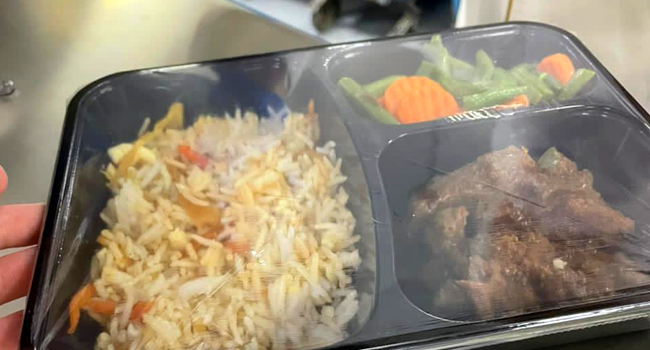
Custom-branded CPET ready meals
Frozen meals and meal-preparation products
Airline, railway, hospital, school, and institutional catering
Private-label supermarket ready meals
Multi-compartment meal trays
Bakery products, desserts, deli foods, and prepared snacks
MAP and extended-shelf-life food packaging
Products requiring printed cooking, storage, or traceability information
Explore HSQY's CPET tray range and CPET sealing film solutions to develop a compatible printed tray-and-film package.
Tray-Sealer Compatibility and Line Testing
Printed film must track, register, seal, and cut consistently at production speed. Confirm the machine brand, model, core diameter, maximum outer diameter, winding direction, eye-mark sensor, web path, operating speed, temperature, pressure, and dwell time.
Before mass production, test print registration, eye-mark detection, code readability, web tracking, cut position, seal continuity, peel force, leakage, ink adhesion, rub resistance, blocking, anti-fog performance, freezer performance, MAP retention, microwave performance, and oven performance when applicable.
Information Required for an Accurate Quotation
Provide the following information so HSQY can prepare the correct printed-film structure, artwork layout, and commercial quotation:
Tray material, supplier, product code, drawing, or physical sample
Tray outside dimensions, flange width, compartments, and fill weight
Tray-sealing machine brand, model, tooling layout, eye-mark system, and operating speed
Required thickness, roll width, length, core ID, maximum outer diameter, roll weight, and winding direction
Easy-peel, medium-peel, or weld-seal requirement
Artwork file, number of colors, print method, repeat length, eye-mark position, and registration tolerance
Surface print or reverse print requirement
Food type, filling temperature, storage conditions, and target shelf life
Freezer, microwave, conventional oven, MAP, hot-fill, pasteurization, or retort process
Anti-fog, barrier, transparent window, perforation, venting, barcode, or coding requirements
Trial quantity, annual demand, delivery destination, and requested launch date
Request Printed Film Samples and Pricing
Custom Printable Lidding-Film Services
Custom thickness, width, length, core, roll weight, and outer diameter
Flexographic or gravure printing subject to artwork and order requirements
Surface printing or reverse printing according to the final laminate
Custom color separations, print repeat, eye marks, and transparent windows
Easy-peel, medium-peel, and weld-seal performance
Anti-fog, high-barrier, MAP, freezer-compatible, and application-specific ovenable grades
Custom cartons, roll labels, pallet marks, and private-label export packaging
Artwork review, proof approval, tray compatibility testing, and production-line trial support
Quality and Compliance Documentation
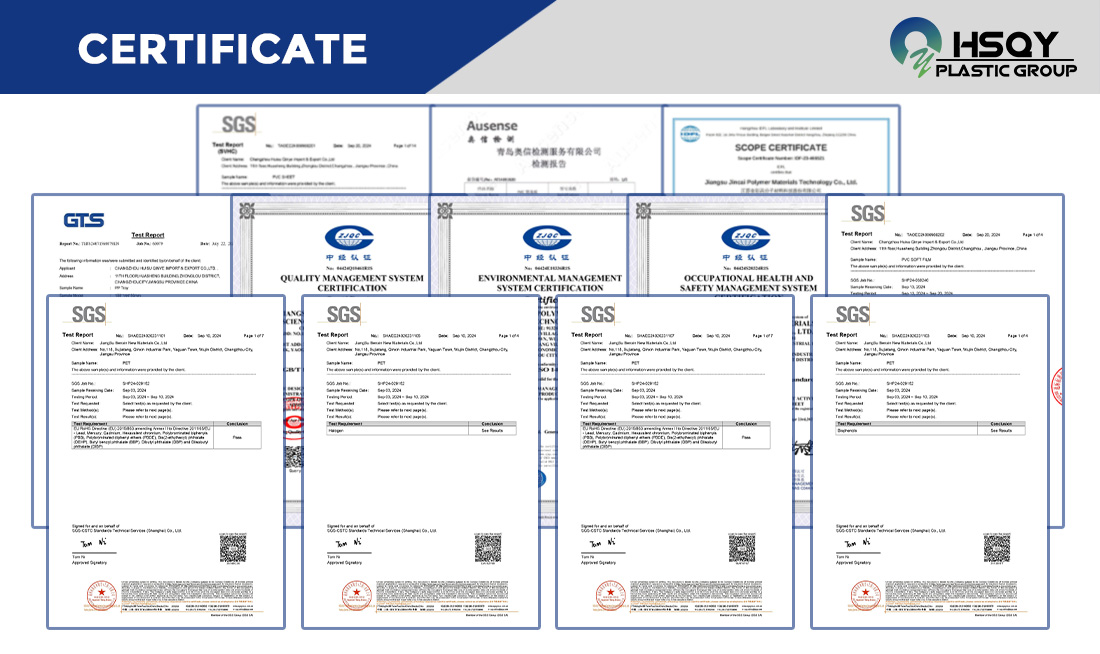
HSQY can provide available quality-management, inspection, film, ink, adhesive, and food-contact documentation for the approved structure. Buyers should request the technical data sheet, certificate of analysis, food-contact declaration, migration or compliance reports, print-approval record, and roll inspection criteria required for the destination market.
ISO 9001 is a quality-management-system certification and should not be presented as product-specific proof of food-contact safety. Printed-film compliance must be evaluated for the complete film, ink, adhesive, coating, food type, storage condition, and heating process.
![HSQY printable CPET lidding film certificates and quality documentation]()
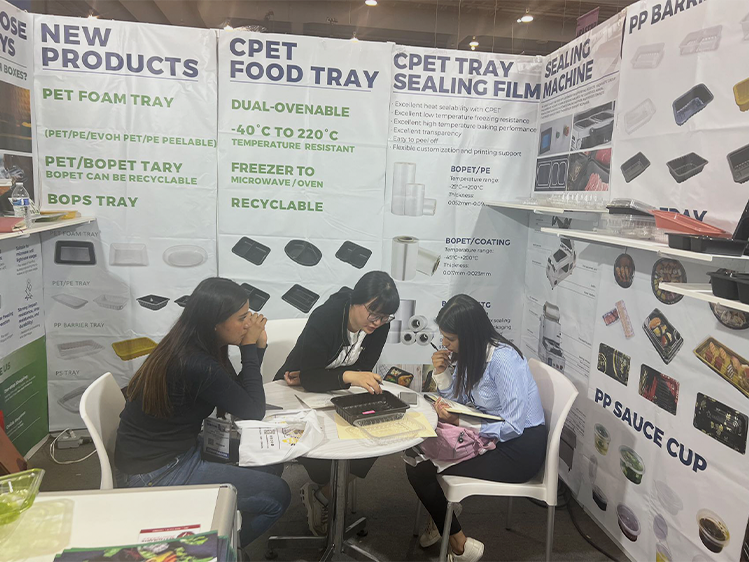
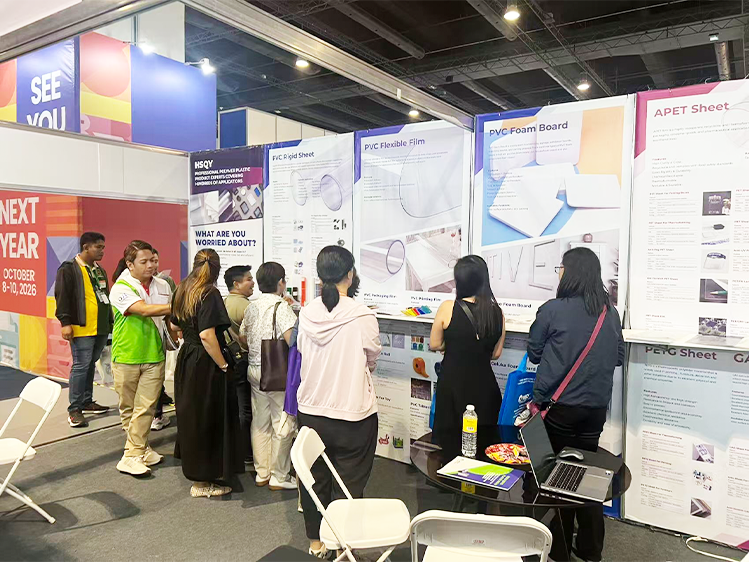
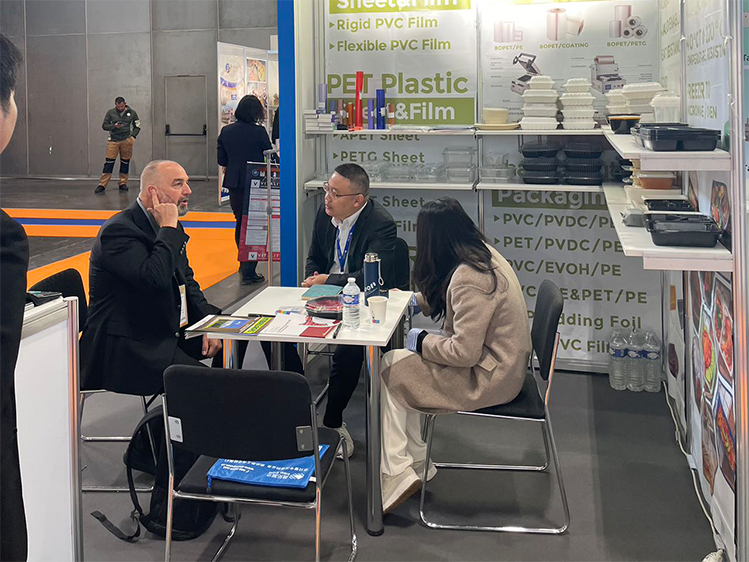
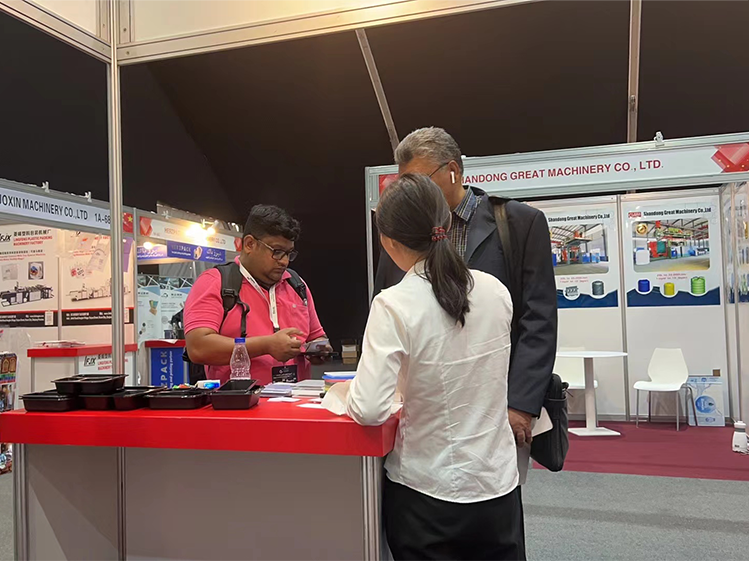
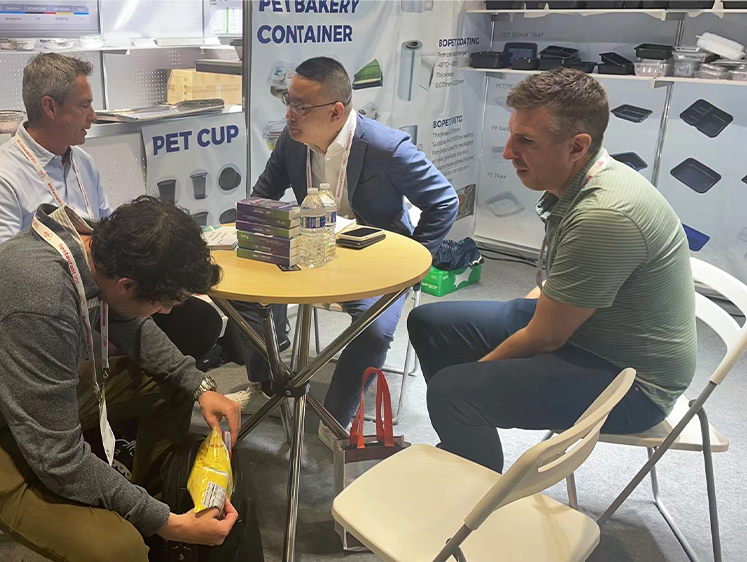
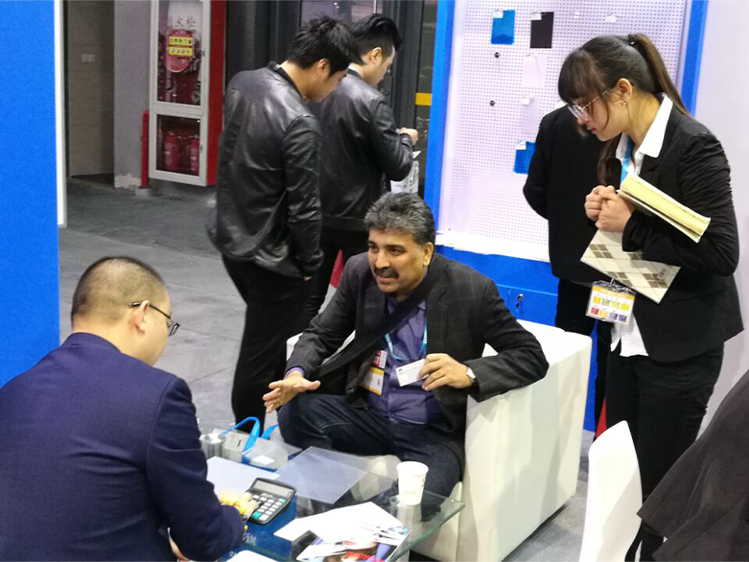
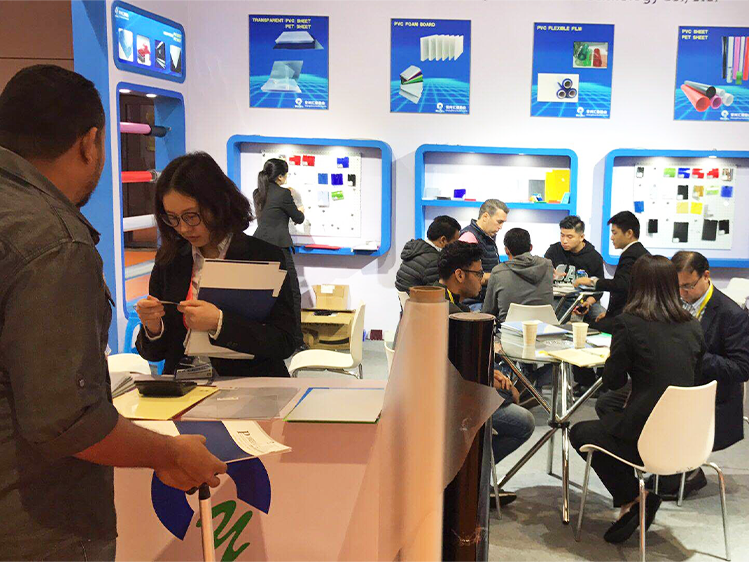
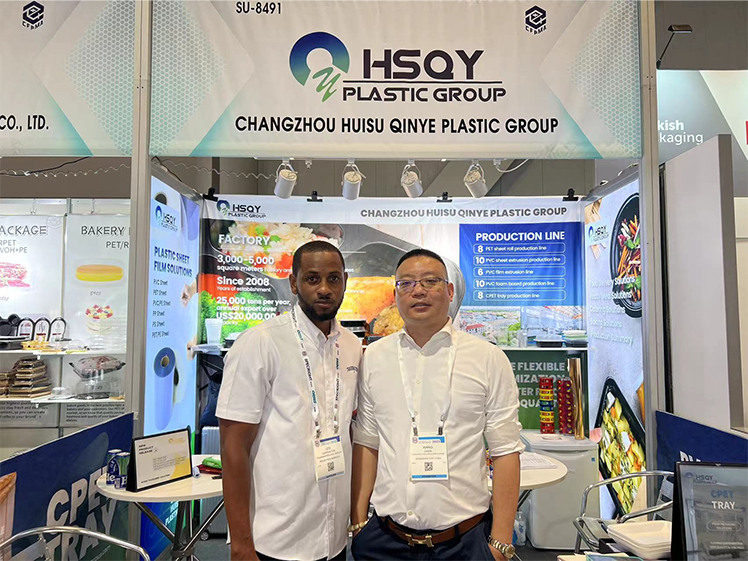
HSQY International Exhibitions
Production and Packing
Packing and Delivery
Sample Packaging: Trial rolls and printed samples are protected against dust, moisture, scratching, creasing, and edge damage.
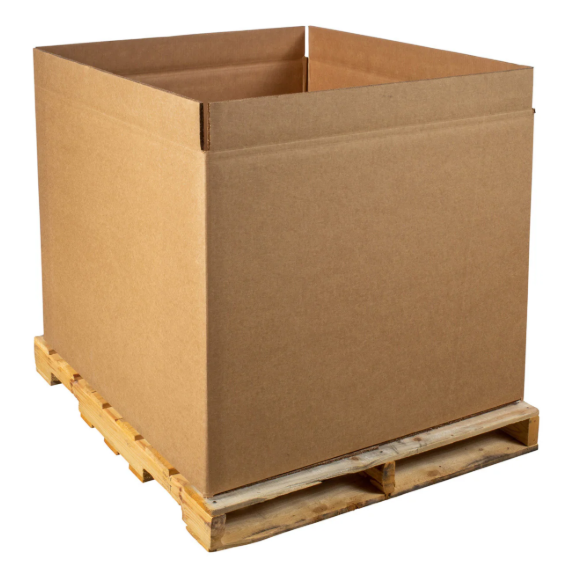
Bulk Roll Packing: Rolls are wrapped in PE film, kraft paper, cartons, or another suitable export material.
Pallet Packing: Approximately 500–2000kg per plywood pallet may be used depending on roll dimensions and shipment conditions.
Roll Identification: Labels can show film grade, thickness, width, length, lot number, print code, seal side, winding direction, and production date.
Artwork Identification: Printed orders should reference the approved artwork number, version, print repeat, and color standard.
Delivery Terms: EXW, FOB, CIF/CNF, DDU, and door-to-door services can be discussed.
Lead Time: Generally 10–14 working days after artwork, specification, and deposit approval; new print tooling may require additional time.
Frequently Asked Questions
What does printable lidding film mean?
Printable lidding film has an outer surface or internal print layer designed to receive graphics, text, barcodes, cooking instructions, and branding while retaining the required tray-sealing performance.
Is 0.06mm the same as 60 microns?
Yes. One millimetre equals 1,000 microns, so 0.06mm equals 60 microns. The acceptable manufacturing tolerance should be stated in the approved specification.
Which printing methods are available?
Flexographic or gravure printing can be evaluated according to artwork quality, number of colors, print repeat, annual volume, and commercial requirements.
What is the difference between surface printing and reverse printing?
Surface printing places the ink on the outside of the film. Reverse printing places the ink on the inner face of the outer PET layer and traps it inside the laminate, protecting the graphic from abrasion.
Can transparent windows be included in the design?
Yes. Selected areas can remain unprinted so consumers can see the product. The window position, anti-fog requirement, and print registration must be confirmed.
Can barcodes and QR codes be printed on the film?
Yes, but the code size, contrast, quiet zone, print quality, distortion, and scanning performance should be validated after printing, sealing, storage, and heating.
Can printed film be used on CPET trays?
Yes, when the sealant layer is compatible with the actual CPET tray and the printed laminate is suitable for the intended storage and heating cycle.
Is easy-peel printed lidding film available?
Yes. Easy-peel, medium-peel, and weld-seal versions can be evaluated. The target peel force must be tested with the actual tray and production settings.
Is anti-fog printed lidding film available?
Yes. Anti-fog treatment can be combined with printed film, including designs with transparent viewing windows for chilled foods.
Can printed film be supplied for MAP packaging?
High-barrier printed structures can be evaluated for MAP. Provide the required OTR, WVTR, gas mixture, storage conditions, food type, and shelf-life target.
Can standard printed BOPET/PE film be used at 220°C?
It should not be assumed that every printed BOPET/PE laminate is suitable for 220°C. The film, ink, adhesive, coating, tray, food, temperature, and heating duration must be validated together.
What artwork files should I provide?
Editable AI, EPS, or print-ready PDF files are preferred. Include linked images, fonts, Pantone or CMYK references, repeat length, eye-mark position, transparent windows, and regulatory text.
What is the MOQ for custom printed film?
The current stated film MOQ is 500kg, but printed-film MOQ may also depend on artwork, color count, print method, roll width, and print-tooling requirements.
Can I request a printed sample before mass production?
A trial or proof process can be discussed. The available sample format depends on the artwork, print method, film structure, tooling, and required quantity.
How should printed lidding-film rolls be stored?
Store rolls in their original protective packaging in a clean, dry area away from sunlight, heat, moisture, dust, solvents, and strong odors. Allow cold-stored rolls to acclimatize before opening.
About HSQY Plastic Group
HSQY Plastic Group supplies CPET, PET, PP, and other food trays together with printable lidding films, flexible packaging films, plastic sheets, and related packaging products for international B2B customers.
The team can support film-grade selection, artwork review, print-repeat planning, roll conversion, peel-force development, anti-fog and barrier selection, samples, line trials, inspection documents, export packing, and international delivery for food manufacturers, private-label brands, contract packers, packaging distributors, airline caterers, and institutional food-service suppliers.
Contact HSQY for Printed Lidding Film