Transparent BOPET Film for Printing Video
What Is Transparent BOPET Film for Printing?
Transparent BOPET film for printing is a biaxially oriented polyethylene terephthalate film used as a clear, dimensionally stable substrate for flexible packaging, labels, lamination, coating, metallization, and graphic conversion. The biaxial orientation process improves tensile strength, stiffness, flatness, thermal stability, and web handling.
For reliable ink or adhesive adhesion, the printing surface is normally corona treated, chemically primed, or supplied with another application-specific coating. The selected surface treatment must match the printing process, ink chemistry, adhesive, drying conditions, lamination structure, and required bond strength.
HSQY lists thicknesses from 12μm to 75μm, custom widths up to 1250mm, clear appearance, optional corona treatment, and a current MOQ of 1000kg. Final properties should be confirmed for the exact film grade before printing or lamination trials.
Important Product-Page Correction
The product summary above the current description identifies this item as a 0.06mm CPET tray sealing film with high-temperature resistance. That summary conflicts with the product name and body content, which describe a 12–75μm transparent BOPET printing and packaging film.
The product type, short description, application, feature fields, and main gallery should be corrected in the website backend so that they consistently describe a printable BOPET film rather than a CPET lidding film. Leaving the conflicting template information may confuse buyers and search engines.
Transparent BOPET Film Images
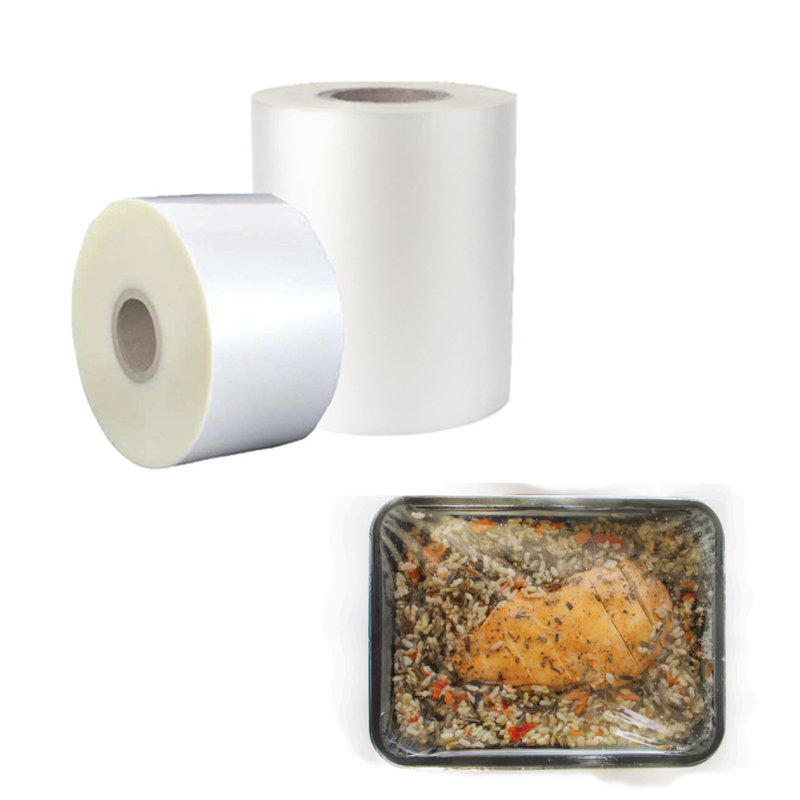
 Transparent BOPET printing film
 Printed BOPET application
 Flexible packaging and lamination application
Why Choose BOPET as a Printing Substrate?
High clarity and gloss: Supports transparent windows, reverse printing, and premium packaging presentation.
Dimensional stability: Helps maintain print registration during multicolor printing, drying, and lamination.
Mechanical strength: Provides tensile strength, stiffness, puncture resistance, and web integrity at relatively low gauge.
Stable web handling: Suitable film flatness, winding, and friction support high-speed printing and converting.
Surface-treatment options: Corona treatment, chemical primer, or specialty coatings can improve ink and adhesive anchorage.
Heat resistance: BOPET can tolerate elevated converting temperatures better than many low-melting packaging films, subject to grade-specific shrinkage limits.
Chemical resistance: The PET base has useful resistance to many oils, greases, and packaging chemicals, but compatibility must be checked with actual inks and solvents.
Conversion versatility: Can be printed, laminated, coated, metallized, embossed, or used as a base for functional packaging structures.
Corona Treatment, Chemical Primer, and Specialty Coatings
| Surface Option |
Primary Function |
Suitable Use |
| Untreated BOPET |
Provides the base optical and mechanical properties without enhanced surface energy. |
Applications where the converter applies treatment or where printing and bonding are not required. |
| One-Side Corona Treated |
Raises surface energy to improve wetting and adhesion of compatible inks, adhesives, and coatings. |
Gravure, flexographic printing, lamination, coating, and metallization after validation. |
| Two-Side Corona Treated |
Provides enhanced surface energy on both sides. |
Applications requiring printing, coating, or bonding on both surfaces. |
| Chemical Primer Coated |
Provides stronger or more durable anchorage for selected solvent-based, water-based, UV, or specialty systems. |
Demanding printing, lamination, label, board-lamination, and conversion applications. |
| UV-Offset-Specific Surface |
Uses a specially engineered surface for UV-offset or UV-letterpress printing. |
Sheet-fed or label applications where a generic corona-treated grade may not provide adequate adhesion. |
| Metallization or Functional-Coating Grade |
Provides controlled surface anchorage for metal, silicone, barrier, matte, release, or other coatings. |
Specialty packaging and industrial conversion. |
Transparent BOPET Film Specifications
The table below retains the existing commercial data and adds the parameters normally required by printers, laminators, label converters, and flexible-packaging manufacturers. Guaranteed values should be included in the approved technical data sheet.
| Property |
Current or Available Option |
Selection Note |
| Product Type |
Transparent printable BOPET film |
Base film for printing, lamination, labels, coating, and packaging |
| Polymer |
Biaxially oriented polyethylene terephthalate |
Confirm virgin, recycled-content, or specialty grade requirements |
| Thickness |
12–75μm |
Confirm nominal gauge, tolerance, and thickness profile |
| Width |
Custom widths up to 1250mm |
Confirm width tolerance, slit quality, and roll-edge requirements |
| Appearance |
Transparent and glossy |
Specify haze, clarity, gloss, gels, black spots, scratches, and visual standards |
| Surface Treatment |
Corona treated, primer coated, untreated, or specialty surface by project |
Identify treated side and required retained surface energy |
| Treatment Sides |
One side or two sides by project |
Confirm inside/outside orientation and roll labeling |
| Printing |
Gravure and flexographic printing after ink validation |
UV offset, UV letterpress, inkjet, or screen printing may require a dedicated surface |
| Lamination |
Solvent-based, solvent-free, water-based, or extrusion lamination by project |
Confirm adhesive chemistry, cure, bond strength, and end-use conditions |
| Color |
Clear base film; custom printed conversion available |
Printing service and raw base-film supply should be quoted separately |
| Roll Length |
Custom |
Specify length, core ID, maximum outer diameter, and roll weight |
| Applications |
Printing, labels, packaging, lamination, coating, and metallization |
Select the exact grade for the intended process |
| MOQ |
1000kg |
Sample and trial quantities depend on grade, thickness, width, and inventory |
Printing-Process Compatibility
| Printing Process |
Compatibility Guidance |
Key Requirements |
| Rotogravure |
Commonly used for high-quality flexible-packaging printing on treated or primed BOPET. |
Ink system, solvent balance, drying temperature, press speed, treatment level, and reverse-print orientation. |
| Flexographic |
Suitable for compatible solvent-based, water-based, or UV-flexo inks on the approved surface. |
Anilox, ink rheology, surface energy, drying, adhesion, blocking, and coefficient of friction. |
| UV Offset |
Requires a grade specifically designed for UV-offset ink anchorage and sheet or web handling. |
Dedicated primer or treated surface, UV cure, ink adhesion, static control, and registration. |
| UV Letterpress |
Possible with an application-specific primed or treated grade. |
Ink chemistry, cure, anchorage, label conversion, and post-print finishing. |
| Digital or Inkjet |
Not automatically compatible with generic corona-treated BOPET. |
Use a dedicated receptive coating and validate ink adhesion, drying, abrasion, and image quality. |
| Screen Printing |
May be used for selected graphic or industrial applications. |
Ink type, mesh, drying or curing, film thickness, static, and dimensional stability. |
Why Surface Energy and Dyne Retention Matter
Printing inks and adhesives must wet the film surface before they can form a durable bond. Corona treatment raises surface energy, but treatment can decay during storage, especially under heat, humidity, contamination, or prolonged ageing.
Specify the minimum surface-energy level at production and at the time of conversion.
Confirm whether the requirement applies to one side or both sides.
Identify the treated side on every roll label.
Store rolls in clean, dry, controlled conditions and use first-in, first-out inventory rotation.
Check treatment before printing rather than relying only on the production certificate.
Re-treat the film online when permitted by the film and printing process.
Avoid silicone, oil, dust, fingerprints, and other surface contamination.
Ink and Adhesive Compatibility
“Printable” does not mean every ink adheres equally well. The final structure should be tested with the exact ink, adhesive, coating, curing system, food-contact design, and end-use conditions.
| System |
What to Confirm |
Recommended Test |
| Solvent-Based Ink |
Resin compatibility, solvent balance, drying temperature, residual solvents, and bond after lamination. |
Cross-hatch or tape adhesion, rub resistance, blocking, residual-solvent analysis, and laminate bond. |
| Water-Based Ink |
Wetting, drying capacity, primer compatibility, humidity response, and adhesion. |
Ink adhesion, water rub, blocking, print density, and ageing. |
| UV-Curable Ink |
Dedicated surface compatibility, UV dose, cure, brittleness, migration, and post-cure adhesion. |
Tape adhesion, scratch, bend, odor, migration, and ageing tests. |
| Solvent-Based Adhesive |
Coating weight, drying, residual solvent, cure, and bond to the second web. |
Initial and cured bond strength, tunnel resistance, odor, and package conditioning. |
| Solvent-Free Adhesive |
Surface treatment, mix ratio, coating weight, cure, slip interaction, and laminate bond. |
Bond development, coefficient of friction, blocking, and migration where applicable. |
| Extrusion Lamination |
Primer need, melt temperature, oxidation, line speed, neck-in, and adhesion. |
Peel bond, heat exposure, dimensional stability, and final laminate performance. |
Printing Side, Winding Direction, and Roll Identification
Treated side: Mark the corona-treated, primer-coated, or specialty-coated surface.
Printing side: Confirm whether the film will be surface printed or reverse printed.
Inside and outside: Define which side faces the product and which side becomes the package exterior.
Winding direction: Approve a winding diagram that matches the printing and laminating equipment.
Core identification: Specify core inside diameter, core material, and core length.
Roll dimensions: Confirm maximum outer diameter, roll weight, roll length, and splice limits.
Traceability: Labels should include film grade, thickness, width, treatment side, lot number, production date, and roll number.
Optical, Mechanical, and Thermal Properties
| Property |
Why It Matters |
How to Specify It |
| Haze and Clarity |
Controls transparency, product visibility, and reverse-print appearance. |
Set maximum haze and approved visual standard. |
| Gloss |
Influences shelf appearance and print depth. |
Specify gloss test method and minimum value where critical. |
| Tensile Strength and Elongation |
Affects press tension, web breaks, bag performance, and conversion. |
Specify machine and transverse direction values. |
| Thermal Shrinkage |
Controls registration, curl, wrinkles, and dimensional change during drying or lamination. |
State test temperature, duration, and MD/TD limits. |
| Coefficient of Friction |
Influences web transport, winding, bag making, and blocking. |
Specify treated-to-untreated or relevant surface combination. |
| Thickness Profile |
Affects roll build, print pressure, gauge consistency, and conversion yield. |
Specify average gauge and cross-web tolerance. |
| Surface Defects |
Gels, fisheyes, black spots, scratches, and contamination can disrupt print quality. |
Use agreed inspection area, defect size, and acceptance level. |
BOPET Film Is Not Automatically High Barrier
Transparent BOPET provides useful mechanical, aroma, and general gas-barrier performance, but a plain printing grade should not automatically be described as a high oxygen- or moisture-barrier film. High-barrier applications require a dedicated coating, metallization, EVOH-containing laminate, aluminium foil, or another functional structure with measured OTR and WVTR.
For moisture-sensitive products, the final laminate often relies on PE, CPP, metallization, coatings, or other layers to reach the required water-vapour barrier.
Lamination and Flexible-Packaging Structures
| Example Structure |
Typical Role of BOPET |
Application Consideration |
| BOPET / PE |
Printable outer web plus PE sealing and moisture-barrier layer. |
General flexible packaging; select adhesive and PE according to product and sealing needs. |
| BOPET / CPP |
Printable outer web plus CPP sealing layer. |
Snack, bakery, confectionery, and other PP-compatible packaging. |
| BOPET / Metallized Film / PE |
Provides graphics and mechanical strength in a higher-barrier laminate. |
Dry foods, snacks, coffee, and products requiring light or oxygen protection. |
| BOPET / Aluminium Foil / PE |
Provides printing surface and structural support around a foil barrier. |
High-barrier products, subject to flex-crack and sealing design. |
| BOPET / Paper or Board |
Adds gloss, protection, durability, and graphic enhancement. |
Cartons, labels, graphic lamination, and specialty board applications. |
| BOPET / Specialty Coating |
Acts as the base for barrier, matte, release, silicone, metallization, or other functional coatings. |
Use a grade engineered for the coating and final process. |
Typical Applications
Flexible-packaging gravure and flexographic printing
Reverse-printed laminated pouches and bags
Pressure-sensitive and wraparound labels
Carton and board lamination
Food, confectionery, snack, bakery, and dry-product packaging
Industrial labels, tapes, graphic films, and protective laminates
Metallization and decorative-film conversion
Holographic, embossing, transfer, and specialty coating applications
Transparent windows and high-gloss printed packaging
Quality-Control Requirements
Thickness and profile: Confirm average gauge and cross-web tolerance.
Width and slit quality: Check width, edge alignment, burrs, dust, and telescoping.
Surface treatment: Measure initial and retained surface energy on the specified side.
Optical quality: Inspect haze, clarity, gloss, gels, scratches, black spots, and contamination.
Thermal shrinkage: Test MD and TD shrinkage under the converter’s drying or lamination conditions.
Mechanical properties: Confirm tensile strength, elongation, and web-break resistance.
Coefficient of friction: Match press, laminator, slitter, and bag-making requirements.
Ink or adhesive adhesion: Validate with the actual conversion system.
Roll quality: Inspect winding hardness, wrinkles, splices, core condition, and roll labeling.
Information Required for an Accurate Quotation
Intended application: printing, lamination, labels, coating, metallization, or industrial conversion
Required film thickness and thickness tolerance
Required slit width, width tolerance, and annual volume
One-side or two-side corona treatment, primer coating, or specialty surface
Required surface-energy level at production and conversion
Printing process: gravure, flexographic, UV offset, UV letterpress, screen, or digital
Ink type: solvent based, water based, UV, EB, or another system
Lamination method and adhesive chemistry
Required haze, gloss, clarity, shrinkage, COF, tensile, and defect limits
Core ID, roll length, maximum outer diameter, roll weight, winding direction, and splice limit
Food-contact, migration, recycled-content, compliance, and destination-market requirements
Sample quantity, trial schedule, delivery destination, and requested launch date
Request Printable BOPET Film Samples and Pricing
Customization Services
Custom 12–75μm thicknesses and gauge tolerance
Custom slit widths up to 1250mm
One-side or two-side corona treatment
Chemical primer, UV-printing surface, metallization, coating, or lamination grades
Custom surface-energy and retained-treatment requirements
Custom roll length, core ID, maximum outer diameter, roll weight, and winding direction
Clear, super-clear, matte, white, metallizable, heat-resistant, and specialty BOPET grades
Gravure, flexographic, label, board-lamination, coating, and industrial-conversion support
Roll inspection, printing trials, lamination trials, and retained-sample management
Custom labels, cartons, pallet marks, and international delivery
Quality and Compliance Documentation
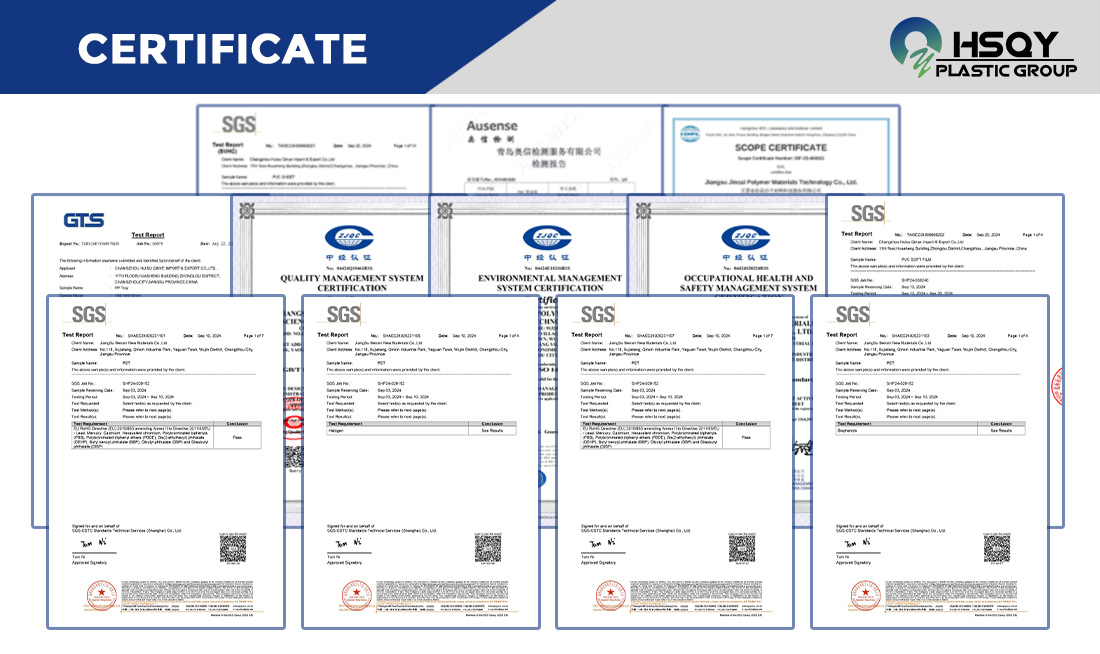
HSQY can provide available technical, quality-management, inspection, and material documentation for the approved BOPET grade. Buyers should request the technical data sheet, certificate of analysis, surface-treatment record, food-contact declaration where relevant, migration or compliance reports, and roll inspection criteria.
ISO 9001 is a quality-management-system certification and should not be presented as product-specific proof of printability, food-contact compliance, or end-package recyclability. SGS or other report claims should identify the exact film grade, test method, report number, and intended conditions of use.

Recyclability Considerations
The unprinted base film is a PET material, but the recyclability of the finished package depends on inks, primers, coatings, adhesives, other laminate layers, labels, product contamination, package format, collection rules, and local recycling infrastructure.
Do not describe every printed or laminated BOPET structure as universally recyclable. Where circularity is a project requirement, evaluate the complete package against the destination market’s current design-for-recycling guidance.
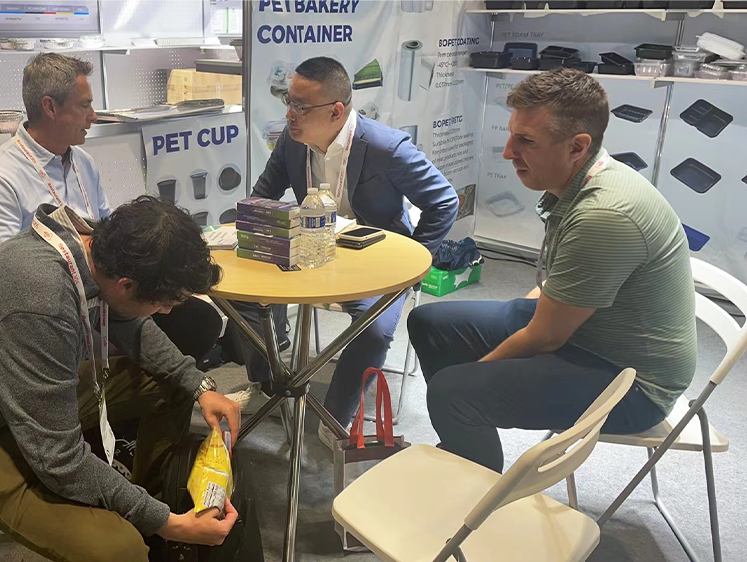
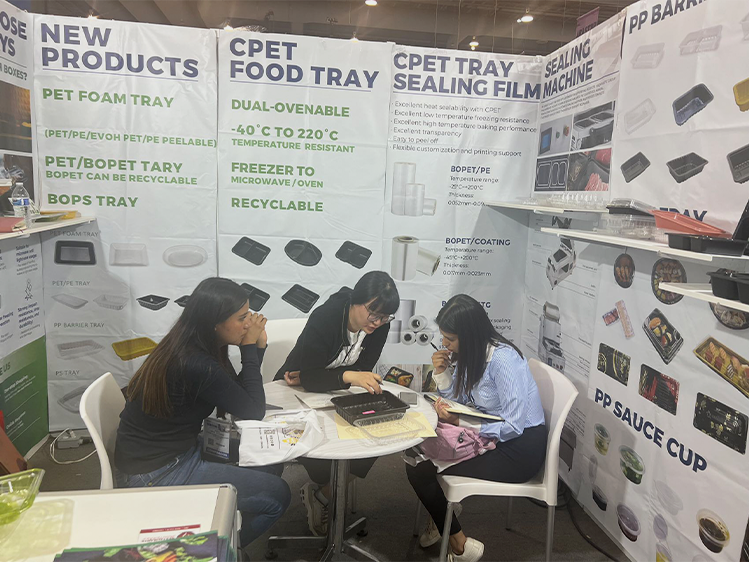
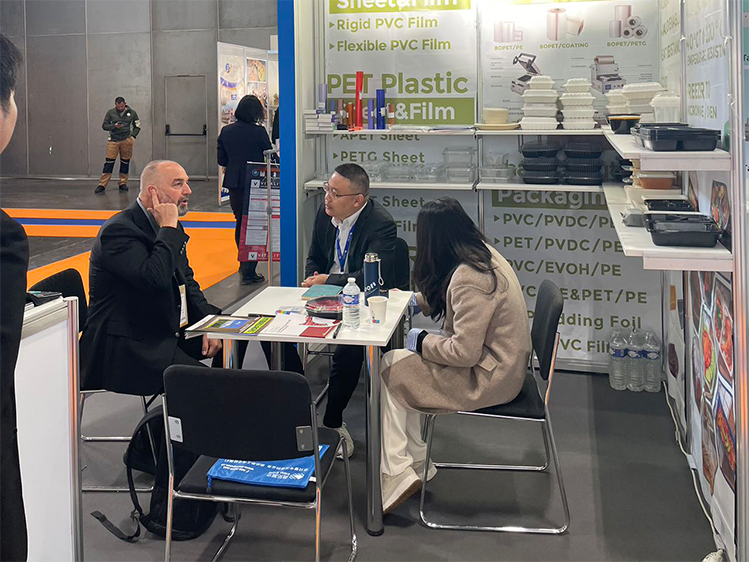
Global Exhibitions

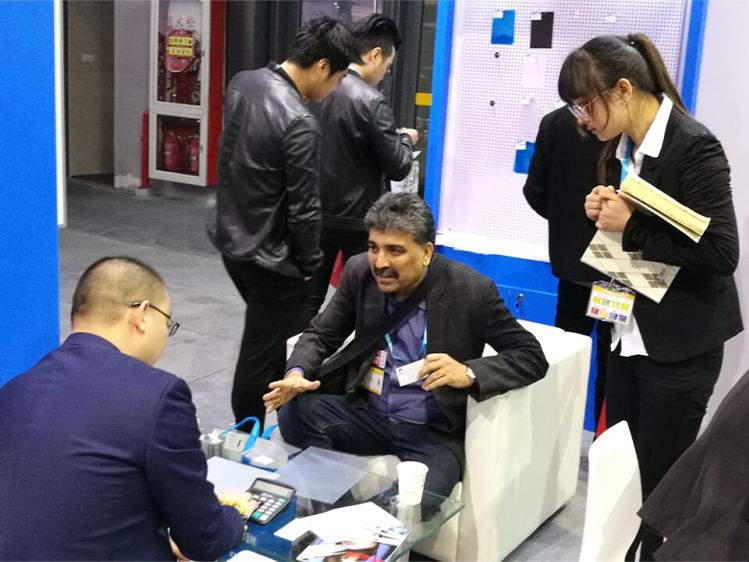
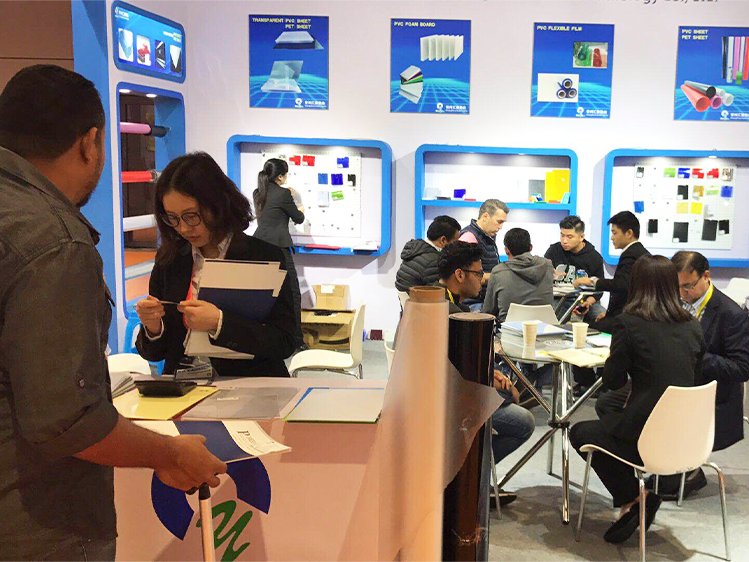
2017 Shanghai Exhibition

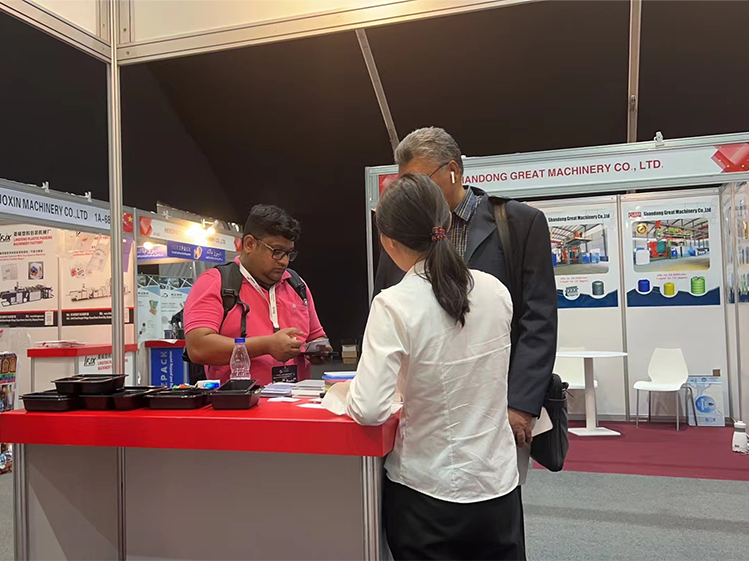
2018 Shanghai Exhibition

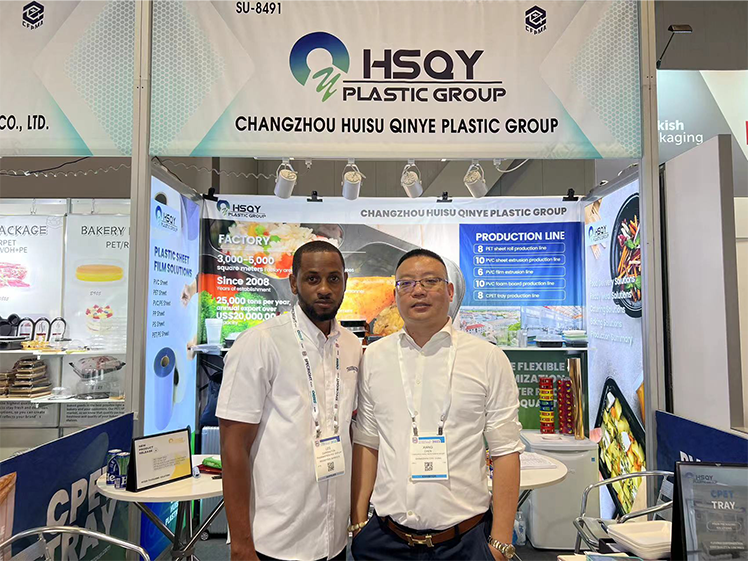
2023 Saudi Exhibition

2023 American Exhibition

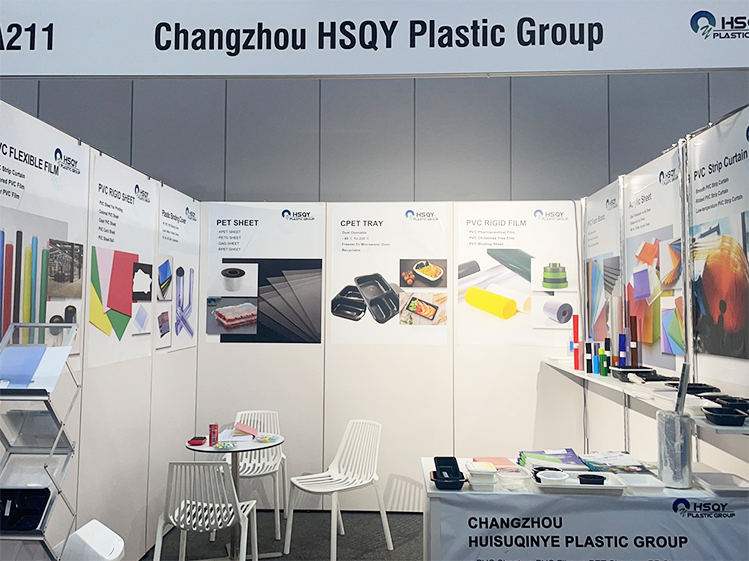
2024 Australian Exhibition

2024 American Exhibition

2024 Mexico Exhibition

2024 Paris Exhibition
Frequently Asked Questions About Transparent BOPET Film
What is transparent BOPET film?
It is a biaxially oriented PET film with high clarity, tensile strength, stiffness, dimensional stability, and suitability for printing, lamination, coating, and packaging.
Why is BOPET film corona treated?
Corona treatment increases surface energy so compatible inks, adhesives, and coatings can wet and bond to the film more effectively.
Is one-side corona treatment enough?
It is enough when only one side will be printed or bonded. Two-side treatment may be required when both surfaces are converted.
Does corona treatment last permanently?
No. Surface treatment can decay during storage. Check dyne level before printing and manage storage and inventory rotation.
Can transparent BOPET be gravure printed?
Yes, when the treated or primed surface is compatible with the selected gravure ink and drying conditions.
Can BOPET film be flexographically printed?
Yes. Validate the exact solvent-based, water-based, or UV-flexo ink with the supplied surface treatment.
Can generic corona-treated BOPET be UV-offset printed?
Not always. UV-offset and UV-letterpress applications may require a dedicated primer or specialty surface.
Can BOPET film be digitally printed?
A generic corona-treated film may not be sufficient. Digital and inkjet printing commonly require a dedicated ink-receptive coating.
What is the difference between corona-treated and primer-coated BOPET?
Corona treatment increases surface energy, while a primer adds a chemical anchoring layer designed for selected inks, adhesives, or coatings.
What thicknesses are available?
The current page lists transparent BOPET film from 12μm to 75μm.
What widths are available?
Custom widths are available up to 1250mm, subject to grade, thickness, slitting, and order volume.
Is transparent BOPET film high barrier?
Plain BOPET provides useful general gas and aroma protection but should not be called high barrier without a dedicated barrier coating, metallization, or laminate and measured OTR and WVTR.
Is BOPET film recyclable?
The base film is PET, but recyclability of the final printed or laminated package depends on all layers, inks, adhesives, coatings, and local recycling systems.
What is the minimum order quantity?
The current stated MOQ is 1000kg. Sample and trial quantities depend on film grade, thickness, width, treatment, and inventory.
Can I request samples for printing tests?
Yes, subject to grade availability. Provide the printing process, ink, adhesive, thickness, width, treatment, and roll requirements.
About HSQY Plastic Group
HSQY Plastic Group supplies transparent BOPET printing films, plain PET and BOPET films, coated and corona-treated films, metallizable films, printing and lamination substrates, lidding films, plastic sheets, and related packaging materials for international B2B customers.
The team can support film-grade selection, surface treatment, roll conversion, printing and lamination trials, optical and mechanical requirements, quality documentation, samples, export packing, and international delivery.
Contact HSQY for Transparent BOPET Film