What Is Clear BOPET Film Roll?
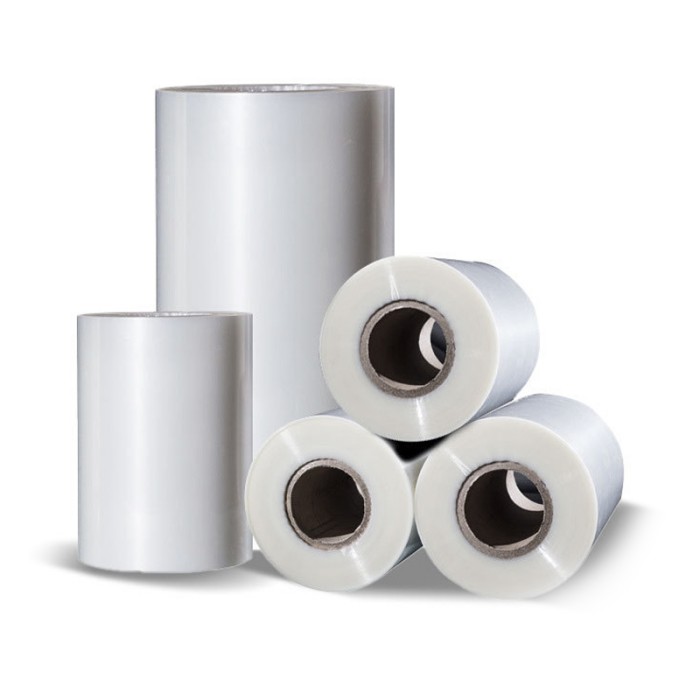
Clear BOPET film roll is a biaxially oriented polyethylene terephthalate film engineered for applications that require transparency, tensile strength, dimensional stability, chemical resistance, and controlled surface performance. HSQY supplies transparent polyester film in thicknesses from 30 to 250 microns for printing, lamination, coating, protective packaging, labels, graphic products, electrical insulation, and other industrial converting applications.
BOPET film is not a single universal grade. Plain, corona-treated, chemically coated, heat-stabilized, heat-sealable, release-treated, and laminating grades are designed for different converting processes. Before ordering, the required thickness, optical quality, surface treatment, heat shrinkage, coefficient of friction, roll width, core size, and downstream process should be confirmed.
This page is positioned as a clear BOPET base film product. If your project requires tray lidding or direct heat sealing, HSQY should select a dedicated heat-sealable, coated, or laminated structure rather than assuming that plain BOPET will seal directly to the tray.

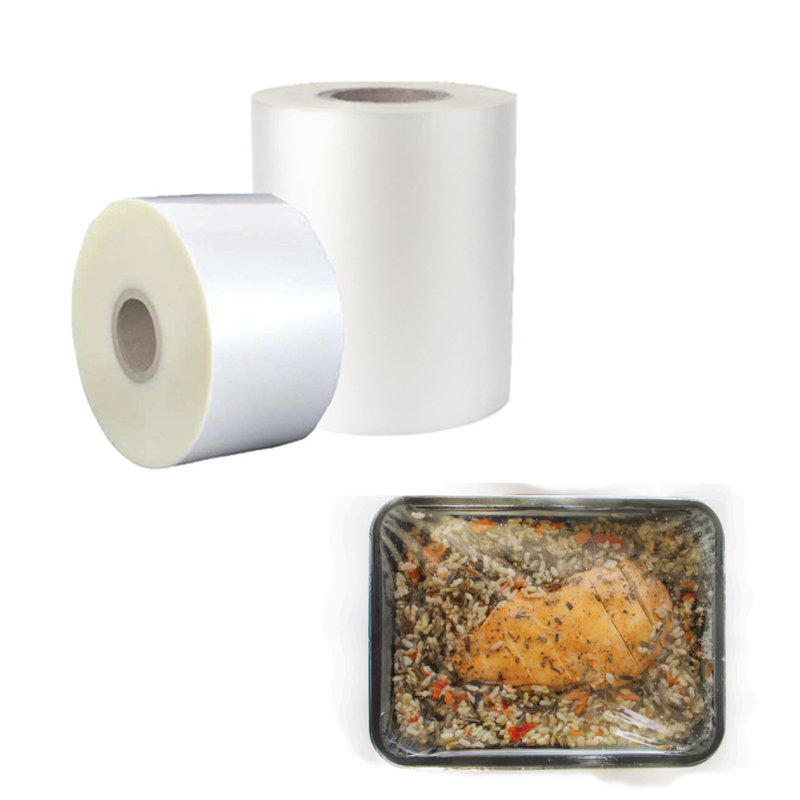
Clear Polyester Film Roll

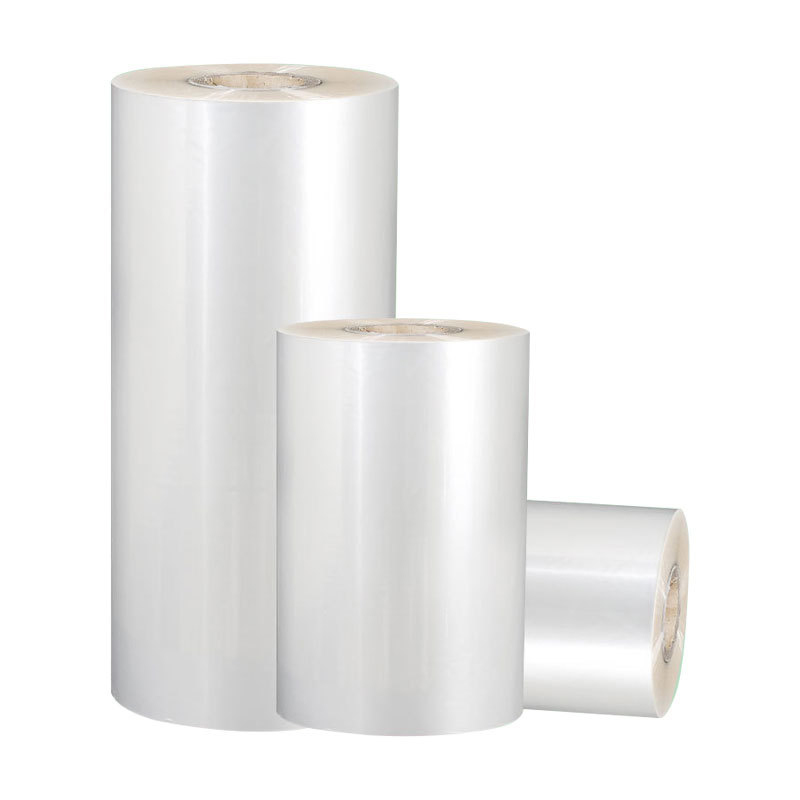
Custom Slit Widths

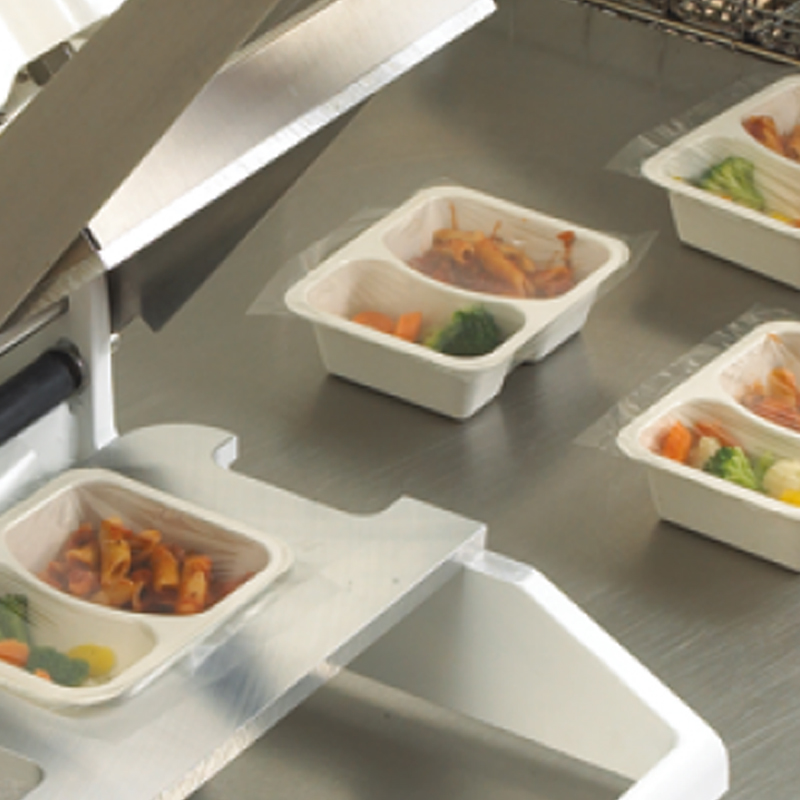
Printing and Lamination Grade
Clear BOPET Film Specifications
| Property |
Available Specification or Selection Guidance |
| Product Type |
Transparent BOPET / polyester film roll |
| Material |
Biaxially oriented polyethylene terephthalate |
| Thickness Range |
30–250 microns (0.03–0.25mm), subject to grade and application |
| Standard Width Examples |
150mm, 230mm, 280mm, or custom slit width |
| Roll Length |
500m or customized according to thickness, core, and roll diameter |
| Color and Appearance |
Clear, glossy, transparent; optical grade subject to haze and clarity target |
| Surface Options |
Untreated, corona treated, chemically coated, or custom functional coating |
| Printing and Lamination |
Available with suitable surface treatment; ink, adhesive, and process compatibility must be tested |
| Heat Sealing |
Plain BOPET is not inherently heat-sealable; specify a heat-sealable coating, coextruded grade, or laminated sealant structure when required |
| Core and Roll Direction |
Custom paper core, winding direction, splice policy, and maximum outer diameter subject to confirmation |
| MOQ |
500kg, subject to thickness, width, coating, and production schedule |
| Typical Lead Time |
Approximately 10–12 days after specification and deposit confirmation; custom grades may require longer |
| Payment Terms |
T/T 30% deposit and 70% balance before shipment; other terms subject to approval |
| Delivery Terms |
EXW, FOB, CNF/CIF, DDU, or negotiated delivery terms |
Key Properties of Transparent BOPET Film
Optical clarity: Suitable grades provide a transparent, glossy surface for printed graphics, overlays, and packaging laminates.
Mechanical strength: Biaxial orientation improves tensile strength, stiffness, and dimensional consistency.
Dimensional stability: Helps maintain flatness and registration during printing, coating, laminating, and die-cutting.
Chemical resistance: Polyester film resists many oils, greases, and common chemicals, subject to application testing.
Electrical insulation: Thicker BOPET grades are used in insulation, motor, cable, and electronic component applications.
Surface versatility: Corona treatment or chemical coating can improve adhesion to inks, adhesives, coatings, and metallization.
Custom converting: Roll width, length, core size, winding direction, and packaging can be adjusted for the customer’s line.
BOPET Film Grades and Surface Treatments
| Film Grade |
Typical Purpose |
Information to Confirm |
| Plain Untreated BOPET |
General converting, insulation, die-cut parts, spacers, protective layers |
Thickness, haze, shrinkage, flatness, slip, dielectric requirement |
| Corona-Treated BOPET |
Printing, adhesive lamination, coating, metallization |
Treatment side, dyne level, ink or adhesive chemistry, treatment retention |
| Chemically Coated BOPET |
Improved anchorage for inks, adhesives, primers, and specialty coatings |
Coating chemistry, coated side, downstream process, regulatory requirements |
| Heat-Sealable BOPET |
Lidding, pouches, packaging seals, seal-to-self or seal-to-compatible substrates |
Seal substrate, initiation temperature, seal strength, peel behavior, heating process |
| Heat-Stabilized BOPET |
Printing, electronics, labels, circuits, high-temperature processing |
Maximum shrinkage, process temperature, dwell time, dimensional tolerance |
| Hard-Coated or Functional Film |
Scratch resistance, chemical resistance, release, anti-static, optical or protective use |
Coating function, hardness, adhesion, transparency, surface resistance, testing standard |
Applications of 30–250 Micron BOPET Film
Printing and graphic conversion: Labels, overlays, cards, printed sheets, display components, and durable graphics.
Flexible packaging lamination: Outer print webs and structural layers combined with PE, CPP, foil, paper, or other substrates.
Industrial coating: Adhesive coating, release coating, silicone coating, protective coating, and specialty functional layers.
Electrical and electronic insulation: Motor insulation, cable wrapping, separators, membrane switches, and die-cut insulating components.
Protective and technical films: Surface protection, spacers, windows, overlays, templates, and transparent industrial components.
Heat-sealable packaging: Available only when a compatible heat-sealable grade, coating, or laminate is specified.
How to Select the Right BOPET Film Thickness
| Thickness Range |
Typical Selection Considerations |
| 30–50 microns |
Flexible laminates, printing, labels, coatings, lidding grades, and lightweight converting where flexibility is required. |
| 50–100 microns |
Durable graphics, overlays, stronger laminates, die-cut parts, release liners, and general industrial use. |
| 100–188 microns |
Cards, templates, insulation parts, membrane-switch components, protective windows, and rigid-feel printed products. |
| 188–250 microns |
Thicker industrial components, electrical insulation, stiff overlays, spacers, and applications requiring greater body and dimensional stability. |
These ranges are selection guidance rather than guaranteed application limits. Final thickness should be based on stiffness, tensile strength, shrinkage, optical performance, processing temperature, converting speed, and end-use testing.
Information Required for a BOPET Film Quotation
Required thickness and tolerance
Roll width, roll length, core inner diameter, and maximum outer diameter
Plain, corona-treated, chemically coated, heat-stabilized, or heat-sealable grade
Printing method, ink system, adhesive, coating, or metallization process
Required clarity, haze, gloss, dyne level, shrinkage, and coefficient of friction
Winding direction, splice allowance, roll label, and pallet requirements
Food-contact, electrical, medical, or destination-market compliance requirements
Order quantity, annual demand, destination port, and sample requirements
Request BOPET Film Samples and Pricing
Custom BOPET Film Services
Custom thickness and slit width
Custom roll length, paper core, outer diameter, and winding direction
Corona treatment and chemical coating options
Printing, laminating, heat-sealable, and functional-coating grade selection
Custom roll labels, cartons, pallet marks, and export packaging
Trial samples and application matching before mass production
EXW, FOB, CIF/CNF, DDU, and door-to-door shipping support
Quality and Compliance Documentation
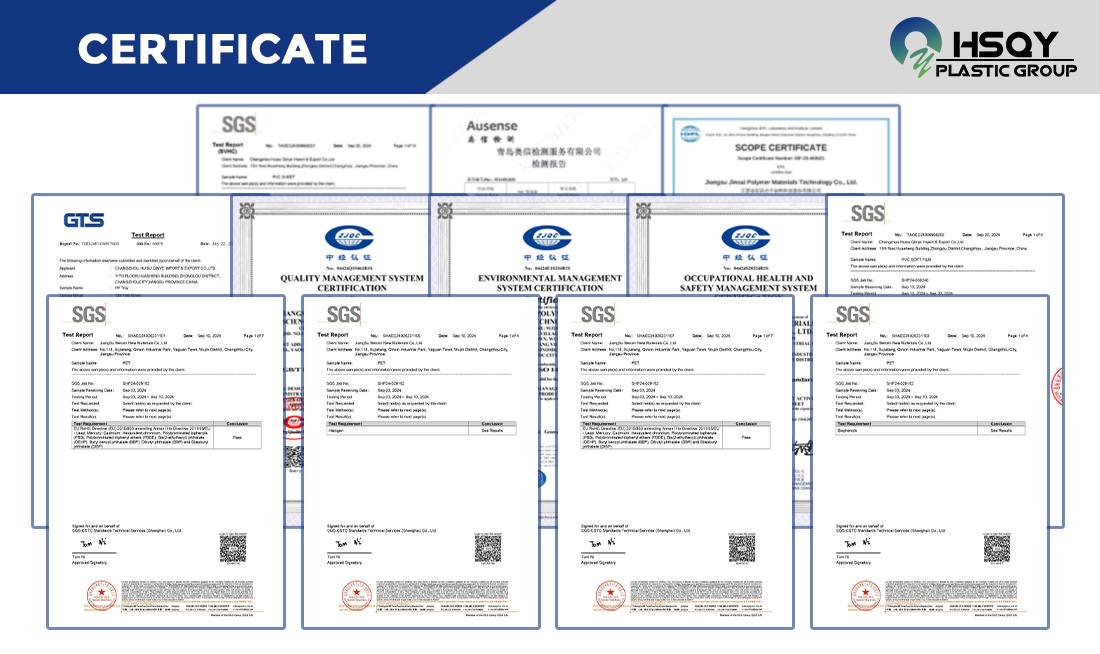
Available test reports, quality-management documents, material declarations, and compliance documentation depend on the exact BOPET grade and destination market. ISO 9001 is a quality-management certification and should not be presented by itself as proof of food-contact compliance. Request the specific declaration or test report required for your application before ordering.
![HSQY BOPET film certificates and quality documentation]()
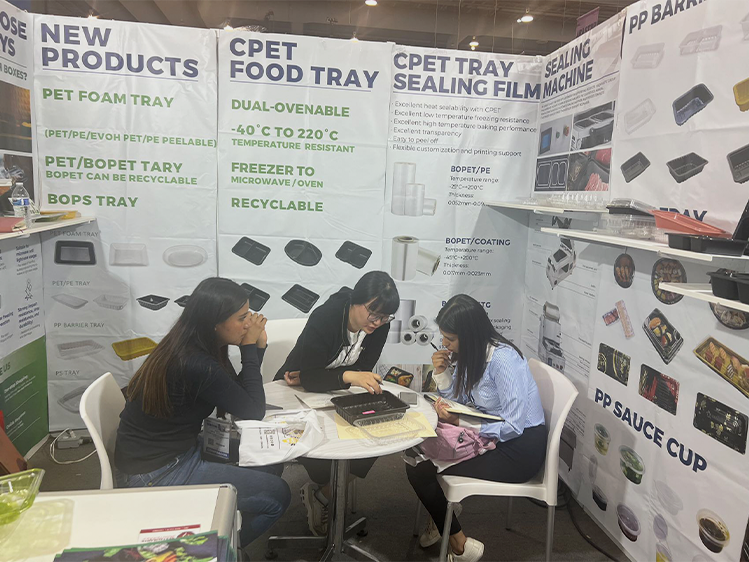
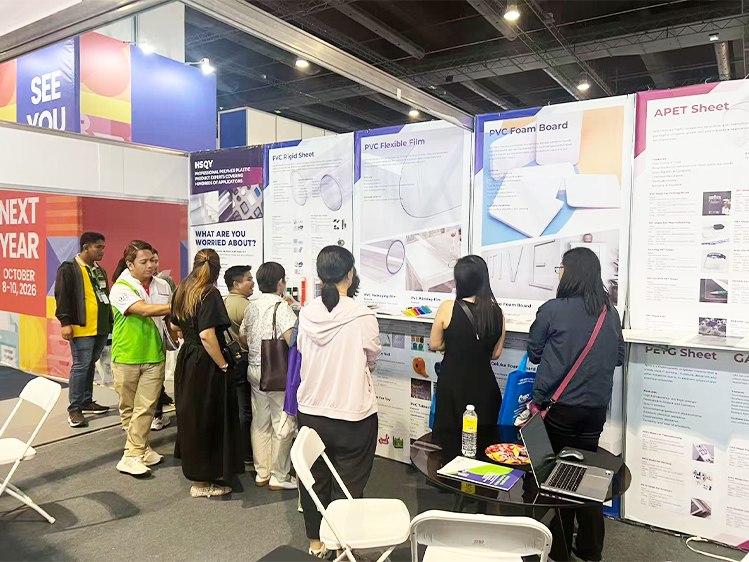
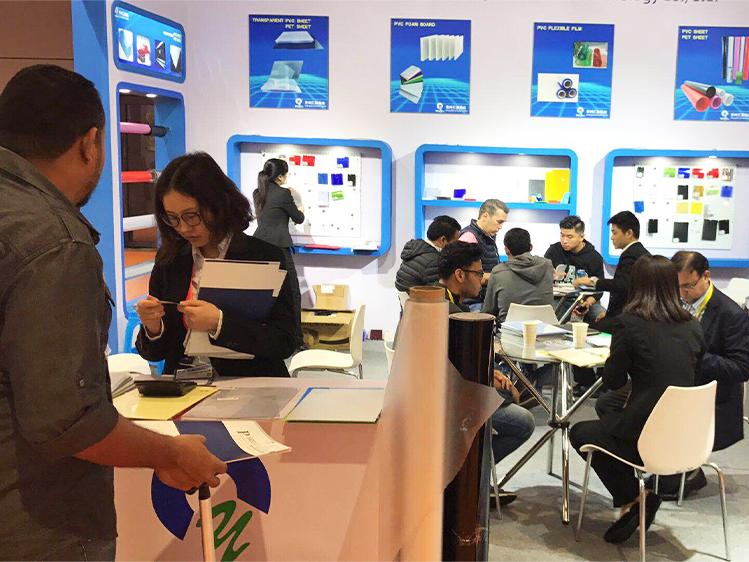
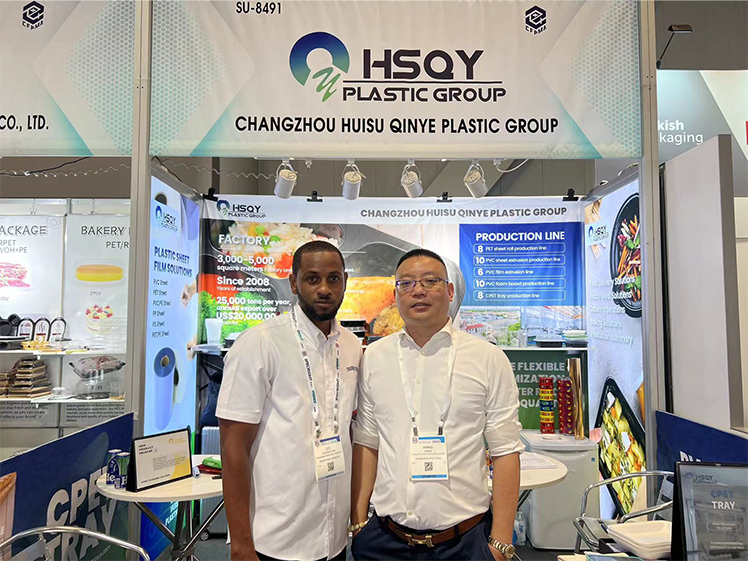
HSQY International Exhibitions
Production and Packing
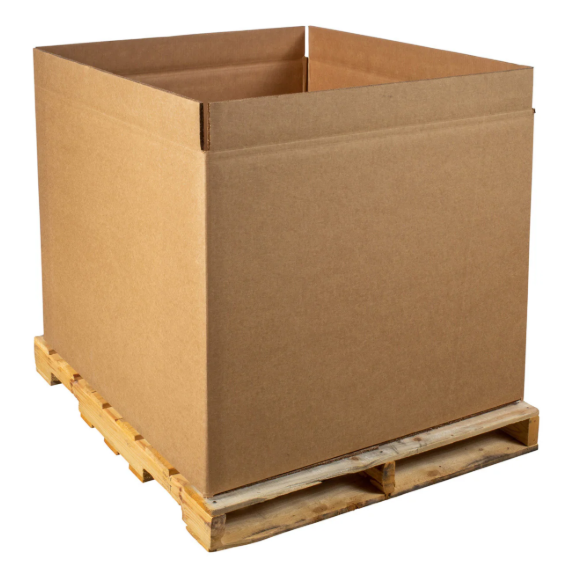
Packing and Delivery
Sample Packaging: Sheet or small-roll samples packed in protective bags, cartons, or rigid envelopes.
Roll Packing: Rolls wrapped with protective film or kraft material and secured to prevent moisture, dust, edge damage, and telescoping.
Pallet Packing: Plywood pallets or export pallets configured according to roll width, weight, and transport method.
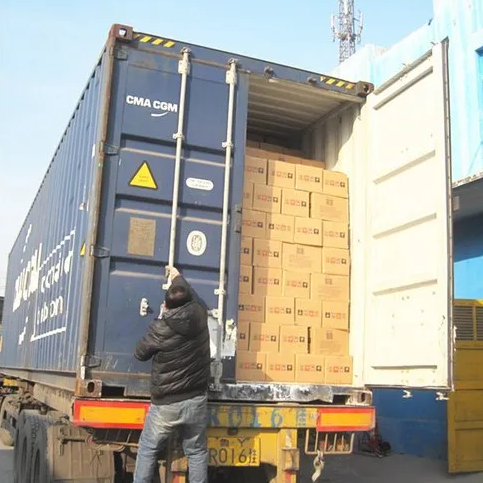
Container Loading: Loading plans are optimized according to roll dimensions, core orientation, pallet configuration, and container type.
Delivery Terms: EXW, FOB, CNF/CIF, DDU, and negotiated door-to-door delivery options.
Lead Time: Normally approximately 10–12 days after specification, sample, artwork, and deposit confirmation; special coatings or large orders may require additional time.
Frequently Asked Questions
What is the difference between PET film and BOPET film?
PET is the polyester resin, while BOPET is PET film stretched in both the machine and transverse directions. Biaxial orientation improves tensile strength, stiffness, dimensional stability, clarity, and barrier performance compared with unoriented PET film.
Is clear BOPET film naturally heat-sealable?
Plain BOPET is generally not inherently heat-sealable. Direct sealing requires a coextruded heat-seal layer, a functional coating, or lamination with a compatible sealant such as PE or CPP. The correct construction depends on the substrate and required seal strength.
Can 30–250 micron BOPET film be used for printing?
Yes, provided the surface is compatible with the selected printing process. Corona-treated or chemically coated grades are commonly specified to improve adhesion. The ink system, curing temperature, dyne level, and treatment side should be tested before production.
Which BOPET film thickness should I choose?
Thin grades are typically selected for flexible lamination, printing, and coatings, while thicker grades provide greater stiffness for graphics, insulation, die-cut parts, overlays, and industrial components. Send the end-use requirement and target properties for a grade recommendation.
Can HSQY supply corona-treated or chemically coated BOPET film?
Treatment and coating options can be evaluated according to the printing, adhesive, coating, or metallization process. Specify the required treatment side, target dyne level, coating type, and downstream chemistry.
Is transparent BOPET film suitable for food packaging?
Certain BOPET grades are designed for food-packaging use, but food-contact suitability must be verified for the exact grade, additives, coating, adhesive, ink, laminate construction, packed food, and destination market. Request the applicable declaration or test report before use.
Can BOPET film be laminated with PE, CPP, foil, or paper?
Yes. BOPET is commonly used as a printing or structural web in laminates with PE, CPP, aluminium foil, paper, and other substrates. Surface treatment, adhesive selection, curing conditions, bond strength, and end-use resistance must be validated.
Can roll width, length, core size, and winding direction be customized?
Yes. HSQY can evaluate custom slit width, roll length, core diameter, maximum outer diameter, winding direction, splice allowance, roll labels, and pallet configuration according to your converting equipment.
What technical data should I provide when requesting a quote?
Provide thickness, width, roll length, core size, treatment type, optical requirements, shrinkage limit, coefficient of friction, downstream process, compliance needs, order quantity, and destination. A current technical data sheet or reference sample is particularly useful.
Can I request a sample before placing a bulk order?
Yes. Sample availability depends on the requested thickness, width, treatment, and grade. Freight terms, sample dimensions, and testing requirements are confirmed during quotation.
How should BOPET film rolls be stored?
Store rolls in their original packaging in a clean, dry indoor area away from direct sunlight, high humidity, excessive heat, dust, and chemical vapors. Keep rolls supported to prevent edge damage and allow cold material to acclimatize before opening the packaging.
About HSQY Plastic Group
HSQY Plastic Group supplies PET and BOPET films, flexible packaging materials, lidding films, plastic sheets, and food-packaging products for international B2B customers. The team supports custom film conversion, roll slitting, coating and treatment selection, samples, export packaging, and delivery coordination.
For an accurate recommendation, send your technical data sheet, reference sample, end-use application, converting process, required film dimensions, annual demand, and destination market.
Contact HSQY for a BOPET Film Quote