0.5mm, 1mm & 2mm HIPS Sheet for Thermoforming
HSQY 0.5mm, 1mm and 2mm HIPS sheets combine impact resistance, rigidity and reliable thermoforming performance for packaging trays, displays, appliance parts, covers and other vacuum-formed components.
High Impact Polystyrene, commonly known as HIPS, is a rubber-modified polystyrene material developed to provide greater toughness than standard GPPS while retaining good forming, printing and fabrication performance.
This page focuses on three commonly requested gauges: 0.5mm for lightweight formed parts, 1mm for general-purpose thermoforming and displays, and 2mm for larger or more rigid formed components. HSQY's broader HIPS range covers approximately 0.2mm to 6mm with widths up to 1600mm.
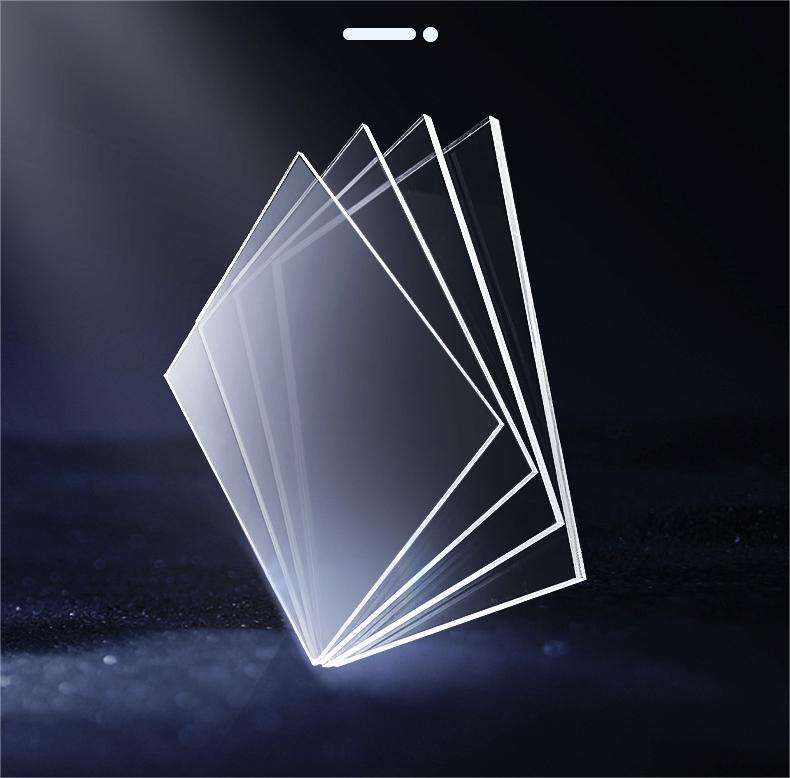
![0.5mm 1mm 2mm HIPS sheet for thermoforming]()
HIPS Sheet for Thermoforming
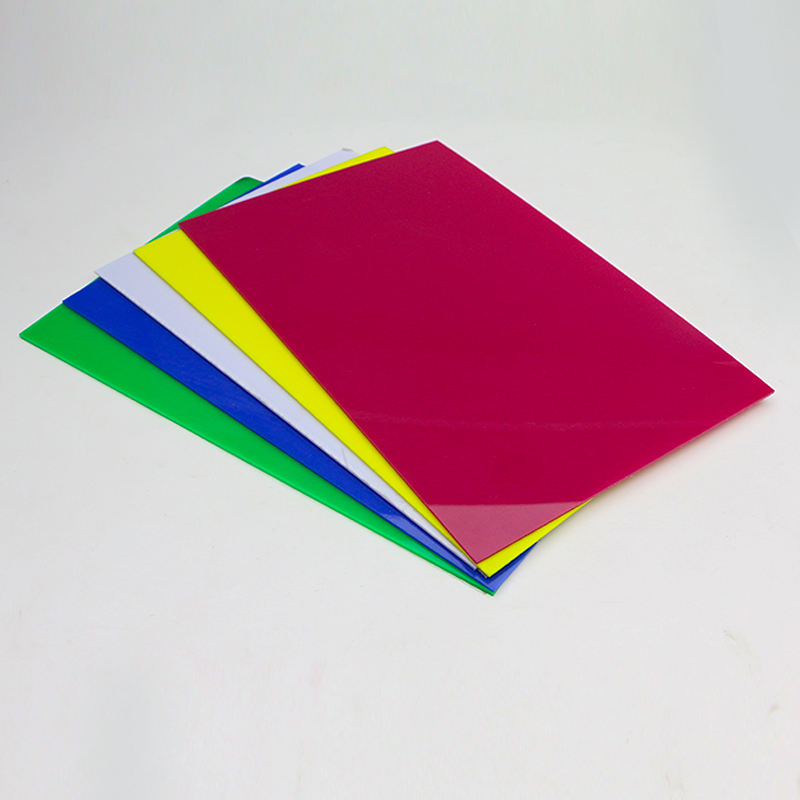
![High impact polystyrene plastic sheet]()
High Impact Polystyrene Sheet
![White HIPS sheet for vacuum forming]()
HIPS Sheet for Vacuum Forming
HIPS Sheet Specifications
| Property |
Specification |
| Product |
High Impact Polystyrene Sheet / HIPS Sheet |
| Material |
High Impact Polystyrene (HIPS / PS) |
| Featured Thicknesses |
0.5mm, 1.0mm, 2.0mm |
| Available Thickness Range |
Approximately 0.2mm - 6mm, customized |
| Maximum Width |
Up to approximately 1600mm |
| Color |
White, Black, Colored, Custom |
| Surface |
Smooth surface; gloss, matte or application-specific finish subject to grade confirmation |
| Processing |
Thermoforming, vacuum forming, die cutting, CNC cutting, drilling, printing, painting, bonding and laminating depending on grade |
| Typical Applications |
Thermoformed trays, packaging inserts, displays, signage, appliance parts, liners, covers, prototypes and fabricated components |
Thickness Selection Note: 0.5mm, 1mm and 2mm are starting-sheet thicknesses. Final wall thickness after thermoforming depends on draw depth, mold geometry and material distribution, so finished-part requirements should be considered when selecting the starting gauge.
How to Choose 0.5mm, 1mm or 2mm HIPS Sheet
Sheet thickness directly affects rigidity, forming depth, material usage and the wall thickness of the finished component. The correct gauge should therefore be selected according to part dimensions and forming geometry rather than simply choosing the thickest material.
| Thickness |
General Selection Direction |
Typical Applications |
| 0.5mm HIPS |
Thin and lightweight starting gauge for shallow or smaller formed components |
Packaging trays, inserts, lightweight displays and thin thermoformed parts |
| 1.0mm HIPS |
Balanced gauge for general thermoforming, rigidity and fabrication |
Vacuum-formed parts, displays, signage, trays, covers and prototype components |
| 2.0mm HIPS |
Greater starting rigidity for larger parts or applications requiring more material after forming |
Larger formed covers, appliance components, liners, panels and industrial parts |
These are general selection directions, not guaranteed application limits. A large shallow part may use a different gauge from a small deep-draw part. Forming trials should confirm the final specification.
0.5mm HIPS Sheet
0.5mm HIPS is a thin-gauge material suitable for lightweight thermoformed components where low material usage and easy forming are important. Typical applications can include shallow packaging trays, product inserts, disposable or lightweight components and small display parts.
Because 0.5mm material can thin significantly during deep forming, buyers should pay particular attention to corner thickness, webbing and the minimum wall thickness required in the finished part.
1mm HIPS Sheet
1mm HIPS is a versatile general-purpose gauge for vacuum forming, thermoforming, printing and fabrication. It provides more rigidity than thin 0.5mm material while remaining suitable for many forming applications.
This thickness can be considered for display components, signs, trays, covers, prototypes and medium-size formed products, subject to part geometry and performance requirements.
2mm HIPS Sheet
2mm HIPS provides greater initial rigidity and more material for forming than 0.5mm or 1mm sheet. It can be useful for larger thermoformed products, equipment covers, appliance parts, liners and fabricated panels.
A thicker starting sheet does not automatically guarantee sufficient finished-part strength. Deep forming can still reduce wall thickness around corners and sidewalls, so critical areas should be measured on the formed component.
Why HIPS Is Used for Thermoforming
HIPS is widely used for thermoforming because suitable grades offer a practical balance of formability, rigidity, impact resistance and material cost. The rubber-modified structure provides improved toughness compared with standard GPPS.
During thermoforming, the sheet is heated until sufficiently pliable and formed against a mold using vacuum, pressure or mechanical assistance. The final result depends on the material grade, sheet thickness, heating profile, mold design and forming cycle.
| Thermoforming Factor |
Why It Matters |
| Starting Gauge |
Controls how much material is available before stretching |
| Heating Uniformity |
Helps the sheet form consistently across the mold |
| Draw Depth |
Greater draw depth can create more wall-thickness variation |
| Mold Radius |
Sharp corners can increase localized thinning and stress |
| Webbing |
Closely spaced cavities or complex geometry can increase webbing risk |
| Finished Wall Thickness |
Critical areas should be measured after forming |
HIPS Sheet for Vacuum Forming
Vacuum forming uses a pressure difference to pull heated HIPS sheet over or into a mold. It is commonly used for trays, packaging inserts, housings, covers, liners, display components and prototype parts.
For repeatable production, buyers should evaluate mold definition, shrinkage, webbing, trimming behavior and final wall thickness using the exact HIPS grade and thickness intended for mass production.
Key Benefits of HIPS Sheet
Improved impact resistance: Rubber modification improves toughness compared with standard general-purpose polystyrene.
Good thermoformability: Suitable HIPS grades can be vacuum formed and thermoformed into a wide range of three-dimensional parts.
Good dimensional stability: Useful for fabricated and formed applications when the correct grade and process are selected.
Lightweight and rigid: HIPS provides useful stiffness without excessive material weight.
Smooth surface: Suitable grades can support printing, painting, labeling and lamination.
Easy fabrication: HIPS can be cut, drilled, routed, die cut and CNC machined using suitable tools.
Color options: White, black, colored and customized sheets are available according to the selected specification.
Broad gauge range: HSQY's current product family covers approximately 0.2mm to 6mm.
HIPS Sheet for Packaging Trays & Inserts
Thin and medium-gauge HIPS can be used for protective trays, inserts, clamshell-style components and other thermoformed packaging parts.
0.5mm may suit lightweight shallow trays, while 1mm and 2mm provide progressively more starting rigidity and material for larger or deeper products. The exact gauge should be confirmed by forming trials.
For food, medical, pharmaceutical or electronic packaging, specify the required application-specific material, static-control or regulatory requirements rather than assuming a standard HIPS grade is suitable.
HIPS Sheet for Displays & Signage
HIPS is also used for retail displays, POP/POS components, advertising panels and signage because it provides a lightweight rigid substrate that can be printed and fabricated.
For flat printed graphics, sheet thickness should be selected according to panel size, mounting method and required stiffness. Printing compatibility depends on surface finish, ink system and any required surface treatment.
HIPS Sheet for Appliance Parts & Liners
HIPS can be evaluated for appliance liners, covers, housings and interior components where thermoforming performance, rigidity, surface appearance and impact resistance are required.
For appliance projects, specify operating temperature, chemical or detergent exposure, forming depth, color, surface finish and required mechanical performance so the correct HIPS grade and thickness can be evaluated.
HIPS Sheet for Covers, Housings & Prototypes
HIPS is easy to cut and fabricate, making it useful for equipment covers, prototype enclosures, models, mock-ups and short-run fabricated components.
1mm material can be useful for lightweight models and formed covers, while 2mm material provides greater flat-sheet stiffness for larger panels or prototypes. Mechanical requirements should still be checked on the finished component.
0.5mm vs. 1mm vs. 2mm HIPS Sheet
| Factor |
0.5mm |
1mm |
2mm |
| Starting Rigidity |
Lower |
Medium |
Higher |
| Material Usage |
Lower |
Medium |
Higher |
| Typical Forming Direction |
Lightweight and shallow formed parts |
General-purpose vacuum forming |
Larger or more rigid formed components |
| Typical Uses |
Trays, inserts and thin packaging |
Displays, covers, trays and prototypes |
Liners, housings, covers and larger parts |
HIPS vs. GPPS Sheet
| Feature |
HIPS |
GPPS |
| Material Structure |
Rubber-modified polystyrene |
General Purpose Polystyrene |
| Appearance |
Normally opaque |
Commonly clear and glossy |
| Impact Resistance |
Higher because of rubber modification |
More brittle |
| Typical Selection |
Thermoforming, printing, packaging and fabricated parts |
Transparent displays and clear rigid applications |
HIPS vs. ABS Sheet
| Selection Factor |
HIPS |
ABS |
| Main Positioning |
Economical thermoforming and fabrication material |
Engineering thermoplastic for more demanding performance |
| Thermoforming |
Widely used for straightforward forming processes |
Widely used for durable formed components |
| Application Direction |
Packaging, displays, appliance liners and economical covers |
More demanding housings, automotive and industrial components |
| Selection |
Choose according to impact, temperature, stiffness, appearance, forming process and total part cost |
Cutting, Machining & Fabrication
HIPS can be fabricated using suitable cutting, drilling, routing, punching, die-cutting and CNC processes. Processing conditions should be selected according to sheet thickness and part geometry.
For thin 0.5mm sheet, adequate support helps reduce flexing during cutting. For 1mm and 2mm material, tool geometry, feed rate and heat generation should be controlled to maintain clean edges and accurate dimensions.
Printing, Painting & Lamination
Suitable HIPS surfaces can be printed, painted, labeled or laminated for displays, graphics, branded products and decorative components.
Printing and bonding performance depends on surface condition, ink or adhesive chemistry and any required surface treatment. Test the actual HIPS grade before large production runs.
Indoor & Outdoor Use
Standard HIPS is primarily used for indoor and controlled applications unless the exact grade has been specifically formulated and tested for extended outdoor weathering.
For continuous sunlight exposure, specify UV resistance, weathering conditions and required service life so an appropriate stabilized grade or alternative material can be considered.
What Information Should You Provide for a Quote?
| Requirement |
Information to Provide |
| Application |
Thermoforming, vacuum forming, packaging, display, appliance, prototype or other use |
| Thickness |
0.5mm, 1mm, 2mm or other required gauge |
| Sheet Size |
Required width × length; current maximum width approximately 1600mm |
| Color |
White, black, colored or custom requirement |
| Surface |
Smooth, gloss, matte or application-specific finish |
| Mold Size |
Length, width and cavity dimensions for thermoforming projects |
| Draw Depth |
Maximum forming depth and critical wall-thickness areas |
| Finished Wall Thickness |
Minimum required thickness after forming where applicable |
| Printing / Fabrication |
Printing, drilling, die cutting, CNC machining, painting or lamination requirements |
| Special Requirement |
Food contact, ESD, flame, UV or other project-specific requirement where applicable |
| Quantity |
Trial quantity, regular order and estimated annual demand |
| Destination |
Country and destination port |
Frequently Asked Questions About 0.5mm, 1mm & 2mm HIPS Sheet
What is HIPS sheet?
HIPS stands for High Impact Polystyrene. It is rubber-modified polystyrene designed to provide greater toughness and impact resistance than standard GPPS while remaining easy to thermoform and fabricate.
What is 0.5mm HIPS sheet commonly used for?
0.5mm HIPS can be considered for lightweight packaging trays, inserts and shallow thermoformed parts. Final suitability depends on product dimensions and forming depth.
What is 1mm HIPS sheet commonly used for?
1mm HIPS is a versatile general-purpose gauge used for thermoformed trays, displays, covers, signs, prototypes and other medium-gauge formed or fabricated components.
What is 2mm HIPS sheet commonly used for?
2mm HIPS provides greater starting rigidity and can be considered for larger thermoformed components, appliance parts, covers, liners and fabricated panels.
Which thickness is best for vacuum forming?
There is no single best thickness. The correct gauge depends on mold size, cavity depth, draw ratio, required finished wall thickness and mechanical requirements.
Does HIPS become thinner during thermoforming?
Yes. The material stretches during forming, so sidewalls, corners and deep cavities can be thinner than the original flat sheet. Critical areas should be measured after forming.
Can HIPS sheet be vacuum formed?
Yes. Vacuum forming is a common HIPS processing method. A production trial should verify mold definition, wall-thickness distribution, shrinkage, trimming and finished-part performance.
What thickness range does HSQY supply?
HSQY's current HIPS product range covers approximately 0.2mm to 6mm, with this product page focusing on 0.5mm, 1mm and 2mm gauges.
What is the maximum HIPS sheet width?
The current product specification lists widths up to approximately 1600mm. Exact availability depends on thickness, color and product grade.
What colors are available?
The current HSQY range includes white, black, colored and customized HIPS sheets. Custom colors should be confirmed according to the required gauge and order specification.
Can HIPS sheet be printed?
Suitable HIPS grades can be printed. Printing performance depends on surface finish, ink chemistry, curing conditions and any required surface treatment.
Can HIPS be drilled and CNC machined?
Yes. HIPS can be drilled, routed, die cut and CNC machined using suitable tools and processing parameters.
Can HIPS sheet be used outdoors?
Standard HIPS is generally intended for indoor or controlled applications. Long-term outdoor projects should specify UV and weathering requirements before material selection.
Can HIPS sheet be used for food packaging?
Food packaging requires a suitable application-specific grade and applicable documentation. Standard HIPS should not automatically be assumed suitable for direct food contact.
What information should I provide for a quotation?
Please provide the application, required thickness, sheet dimensions, color, surface finish, mold dimensions, forming depth, finished wall-thickness requirement, processing method, quantity and destination.
Packing & Delivery
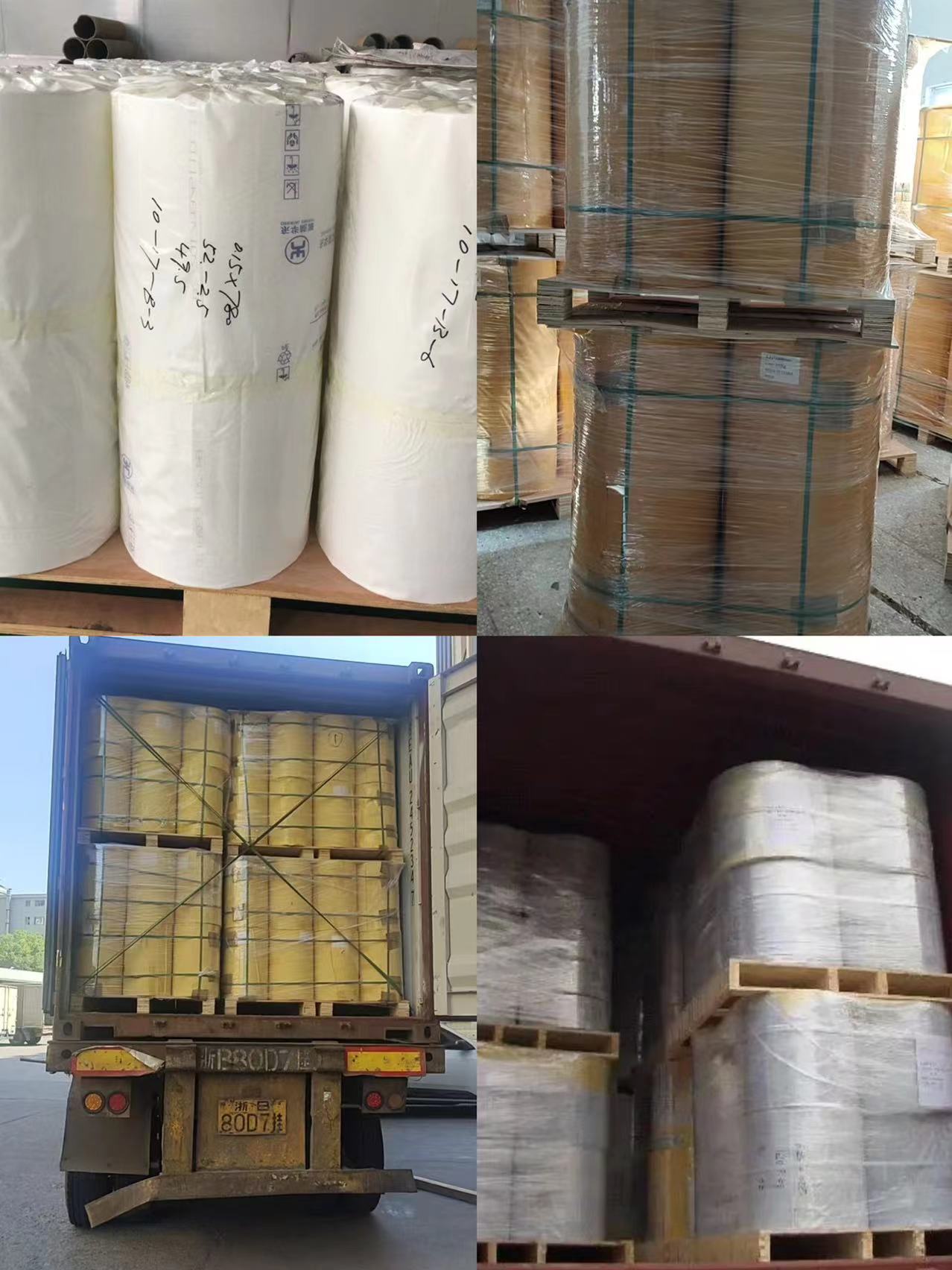
HIPS sheets are packed according to thickness, sheet dimensions, surface requirements and transportation conditions. Protective packaging helps reduce scratching, contamination, edge damage and movement during shipment.
![HIPS sheet packing for export shipment]()
Export Packing for HIPS Sheet
About HSQY Plastic Group
HSQY Plastic Group supplies HIPS, GPPS and other plastic sheet materials for thermoformers, packaging manufacturers, appliance manufacturers, printers, display producers and industrial fabricators. Different gauges, colors, sheet dimensions and processing requirements can be discussed according to the project.
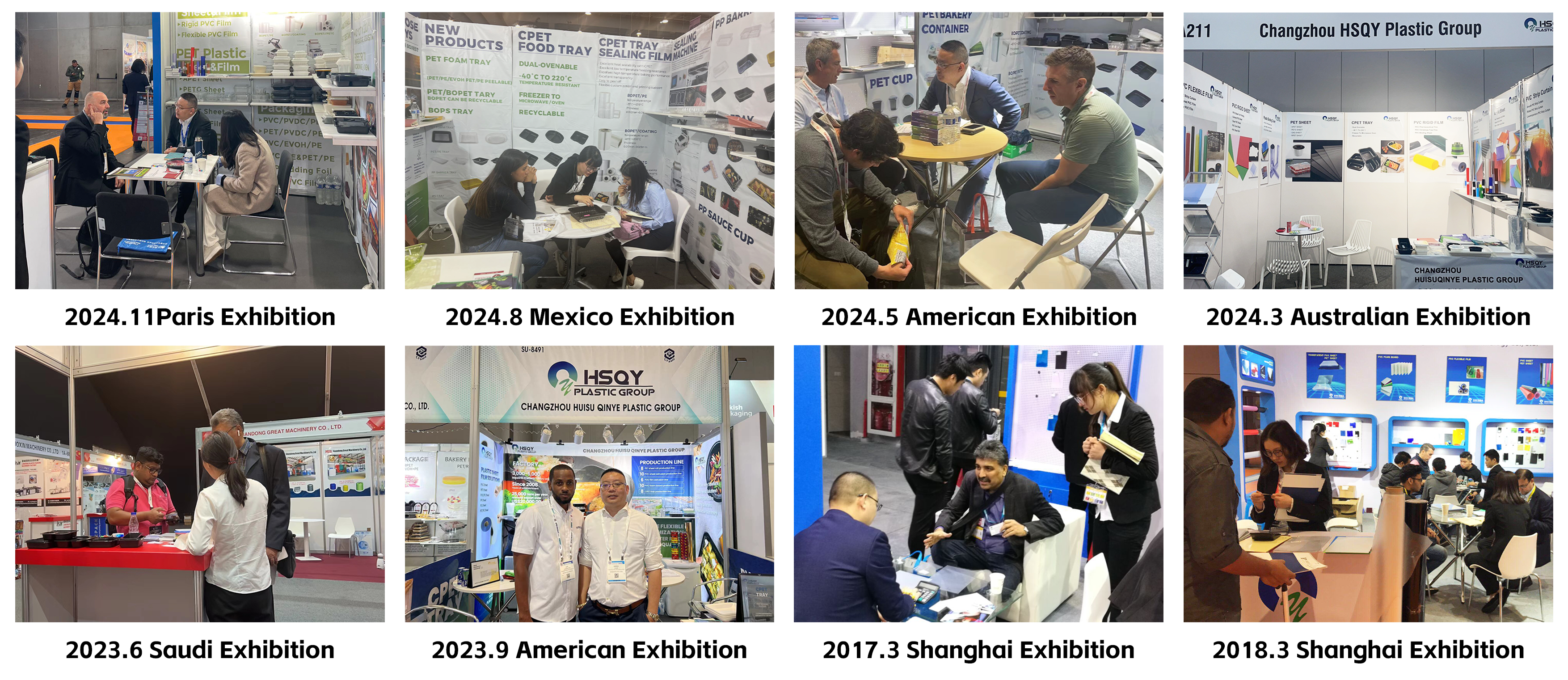
HSQY Plastic Group Exhibitions
![HSQY Plastic Group international exhibitions]()
HSQY Plastic Group meets international thermoformers, packaging manufacturers, appliance producers and plastic-sheet buyers at industry exhibitions.
Certificates & Documentation
Available certificates and technical documentation should be confirmed for the exact HIPS grade, thickness and intended application before order approval.