HSQY 4×8 High Impact Polystyrene (HIPS) sheet is a rubber-modified polystyrene material developed for applications requiring greater toughness than general-purpose polystyrene while retaining good rigidity, printability and forming performance.
The standard 1220 × 2440mm sheet format is approximately 4×8 ft and is suitable for thermoforming, vacuum forming, retail signage, POP displays, printed graphics, appliance components, packaging parts, prototypes and fabricated industrial products.
HSQY's current HIPS range covers thicknesses from 0.2mm to 6mm, widths up to 1600mm, and white, black and customized colors. Buyers should specify thickness, dimensions, color, surface requirements, printing method, forming depth and fabrication process when requesting a quotation.
High Impact Polystyrene Sheet Video
4×8 HIPS Sheet Images
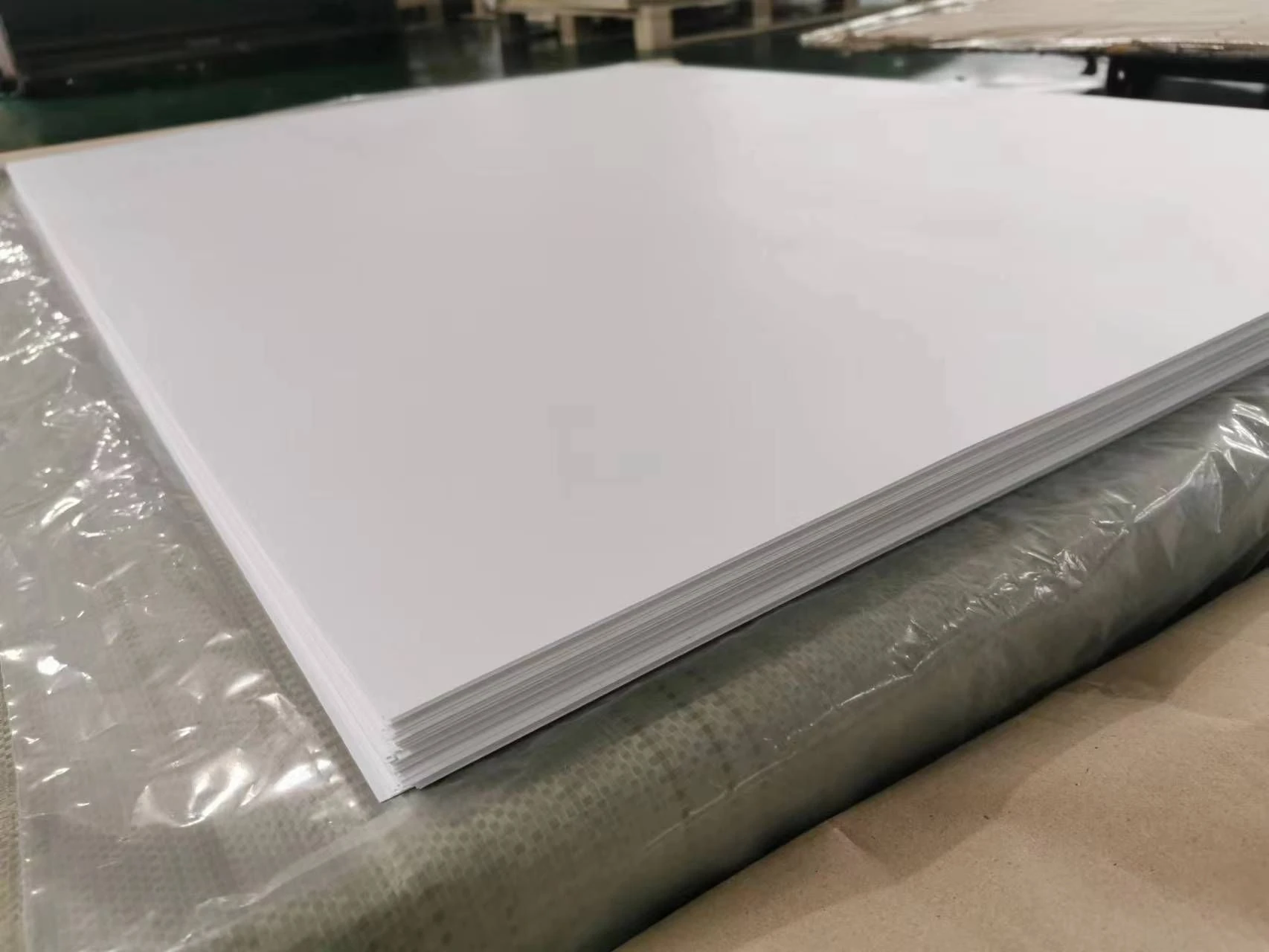
4×8 High Impact Polystyrene Sheet

HIPS Sheet Impact Resistance

Printed HIPS Sheet
4×8 HIPS Sheet Specifications
| Property |
Details |
| Product Name |
4×8 High Impact Polystyrene Sheet |
| Material |
High Impact Polystyrene (HIPS) |
| Standard Size |
1220 × 2440mm / Approximately 4×8 ft |
| Maximum Listed Width |
1600mm |
| Thickness Range |
0.2–6mm |
| Colors |
White, Black, Custom |
| Impact Performance |
High Impact Resistance; Rubber-Modified Polystyrene |
| Listed Printing Methods |
Screen, UV Offset |
| Listed Fabrication |
CNC, Laser, Die Cutting, Thermoforming |
| Typical Applications |
Signage, POP Displays, Thermoformed Parts, Packaging, Appliance Components, Prototypes and Industrial Fabrication |
| Listed Documentation |
SGS, ISO 9001:2008; confirm current scope and validity |
| MOQ |
1000kg |
| Listed Lead Time |
10–15 Days; confirm current schedule according to specification and quantity |
What Is High Impact Polystyrene Sheet?
High Impact Polystyrene, commonly abbreviated HIPS, is a modified polystyrene material developed to improve toughness and resistance to cracking compared with general-purpose polystyrene.
The rubber-modified structure provides a useful balance of rigidity, impact resistance and processability, making HIPS suitable for thermoforming, printing and fabricated components.
HIPS is commonly opaque and is available in white, black and customized colors. It is frequently selected where transparency is not required but good forming, printing and fabrication performance are important.
HIPS vs. GPPS Sheet
| Selection Factor |
HIPS |
GPPS |
| Material Structure |
Rubber-modified polystyrene |
General-purpose polystyrene |
| Impact Resistance |
Higher toughness and improved resistance to cracking |
More rigid but generally more brittle |
| Typical Appearance |
Commonly opaque; white, black and custom colors |
Commonly selected when transparency and gloss are priorities |
| Thermoforming |
Commonly selected for vacuum forming and thermoforming |
Formable, but selection depends on finished-part requirements |
| Typical Purchasing Direction |
Formed parts, signs, POP displays, appliance liners and fabricated components |
Clear displays, transparent fabricated parts and rigid clear-sheet applications |
Why Choose 4×8 HIPS Sheet?
1220 × 2440mm is approximately the standard 4×8 ft sheet format used by many thermoformers, printers, sign manufacturers, display fabricators and industrial processors.
Using a common sheet format can simplify storage, palletization, CNC nesting and conversion on equipment designed around standard sheet dimensions.
For projects requiring dimensions wider than 1220mm, the current product range lists widths up to 1600mm. Confirm the feasible width together with thickness, length and order quantity.
0.2–6mm HIPS Sheet Thickness Range
The HSQY HIPS product range covers 0.2mm to 6mm, allowing buyers to select thin-gauge sheet for forming and packaging or thicker sheet for displays, panels and fabricated components.
| Thickness Direction |
General Application Direction |
What Buyers Should Confirm |
| 0.2–0.9mm |
Thin-gauge forming, packaging components and lightweight converted products |
Forming depth, finished wall thickness, roll or sheet format and machine requirements |
| 1–2mm |
Thermoformed parts, signs, displays, prototypes and fabricated panels |
Rigidity, print process, forming depth and finished-part dimensions |
| 2–4mm |
POP displays, model making, appliance components and more rigid fabricated parts |
Panel span, machining, mounting and finished weight |
| 4–6mm |
Heavy-gauge formed or fabricated components requiring greater starting-sheet rigidity |
Thermoforming equipment, heating profile, machining method and final load |
These ranges are general purchasing directions rather than fixed structural ratings. Final thickness should be selected according to the actual forming, fabrication and finished-part requirements.
HIPS Sheet for Thermoforming
Thermoforming is one of the primary processing methods listed for HSQY HIPS sheet. The material can be evaluated for formed trays, housings, liners, covers, displays and other three-dimensional parts.
Starting-sheet thickness should be selected according to mold geometry and forming depth because material distribution changes during forming and thinner areas can develop in deep-drawn sections.
For production projects, provide finished dimensions, draw depth, mold geometry, corner radii, target wall thickness and thermoforming-machine information when requesting a material recommendation.
HIPS Sheet for Vacuum Forming
HIPS is widely used in vacuum-formed products because it combines rigidity with improved toughness and good forming characteristics.
Vacuum-forming trials should verify mold definition, sheet sag, shrinkage, corner thinning and finished-part rigidity before bulk material specifications are finalized.
HIPS Sheet for Printing and Signage
The current product information lists screen and UV offset printing. The smooth HIPS surface makes the sheet relevant to signs, printed graphics, retail displays and promotional panels.
Printing performance depends on surface condition, ink system, curing process and any required surface treatment. Buyers should test the actual production sheet with the intended printing process before volume production.
HIPS Sheet for POP and Retail Displays
High Impact Polystyrene sheet is suitable for evaluation in point-of-purchase displays, retail signs, promotional fixtures, product-display panels and exhibition components.
For display fabrication, specify panel size, thickness, color, print process, folding or forming requirements, mounting method and expected handling conditions.
HIPS Sheet for Packaging
HIPS can be converted into thermoformed packaging components, protective trays, inserts, covers and other formed products where toughness and formability are important.
Packaging buyers should provide part geometry, forming depth, material thickness, packed-product weight, surface requirements and any destination-market documentation needed for the finished application.
HIPS Sheet for Refrigerator Liners and Appliance Components
Refrigerator liners and appliance housings are listed among the current HIPS applications. Thermoformability and impact resistance make HIPS relevant to formed interior panels and appliance components.
Appliance projects should define the required thickness, finished shape, temperature exposure, cleaning chemicals, impact requirements and dimensional tolerances before the final material grade is approved.
HIPS Sheet for Prototypes and Model Making
HIPS is also used for prototypes, models, mock-ups and fabricated development parts because sheets can be cut, shaped and formed using suitable fabrication processes.
Where dimensional accuracy is important, provide finished drawings, tolerances and fabrication requirements when selecting the sheet thickness.
CNC Cutting, Die Cutting and Fabrication
The current product information lists CNC cutting, laser processing, die cutting and thermoforming as fabrication options.
For CNC or die-cut parts, provide finished dimensions, cut profiles, hole positions, edge requirements and dimensional tolerances. Machine settings should be matched to the sheet thickness and required edge quality.
Where laser processing is proposed, confirm compatibility with the actual HIPS grade and the equipment manufacturer's process and ventilation requirements before production.
Impact Resistance and Toughness
The defining advantage of HIPS compared with general-purpose polystyrene is its improved toughness from rubber modification.
This makes HIPS useful for applications where standard rigid polystyrene could be too brittle during handling, forming or normal service conditions.
The current HSQY page does not provide a numerical impact-strength value for this specific grade, so projects requiring a defined impact test result should request applicable technical data for the exact material being supplied.
White, Black and Custom HIPS Colors
The current product specification lists white, black and customized colors.
White HIPS is widely used for printing, signage, displays and thermoformed parts where a neutral base color is useful. Black HIPS can be selected for dark appliance, display and fabricated components.
For repeat custom-color projects, provide a color reference and approve a representative production sample before volume manufacturing where color consistency is important.
Surface Finish and Print Preparation
Surface appearance can influence printing, forming and the final visual result. If a specific matte, gloss or textured appearance is required, include the surface requirement in the purchasing specification.
For printed applications, buyers should also state whether any surface treatment is required by their ink or printing process.
HIPS vs. ABS Sheet
| Selection Factor |
HIPS |
ABS |
| Typical Selection Priority |
Economical forming, printing and fabrication |
Higher-performance engineering applications depending on grade |
| Thermoforming |
Commonly used for formed trays, displays and appliance components |
Also widely thermoformed for engineered components |
| Printing |
Commonly used for printed signs and POP displays |
Possible depending on surface and treatment |
| Final Selection |
Select according to required impact performance, stiffness, temperature, appearance, forming process, cost and finished-part requirements |
Indoor and Outdoor Use
The current product page does not establish long-term outdoor UV performance for the standard HIPS grade.
For outdoor signage or components, specify UV exposure, temperature range, color-retention requirements and expected service period and request an appropriate grade rather than assuming standard HIPS is suitable for prolonged exterior exposure.
Typical HIPS Sheet Applications
Thermoforming: Formed trays, covers, liners, housings and other three-dimensional plastic components.
Signage: Printed signs, advertising panels and promotional graphics.
POP Displays: Retail display panels, promotional fixtures and exhibition components.
Packaging: Thermoformed trays, inserts, protective packaging and fabricated components.
Appliances: Refrigerator liners, appliance housings and interior formed components.
Prototypes: Models, mock-ups and design-development components.
Industrial Fabrication: CNC-cut, die-cut and fabricated parts requiring a balance of rigidity and toughness.
Explore More HSQY HIPS Sheets
How to Specify 4×8 HIPS Sheet
| RFQ Item |
Information to Provide |
| Application |
Thermoforming, signage, POP display, packaging, appliance part, prototype or other industrial application |
| Thickness |
Required thickness within the current 0.2–6mm range |
| Sheet Size |
Standard 1220 × 2440mm / 4×8 ft or required custom dimensions |
| Width |
Required width; current listed maximum is 1600mm |
| Color |
White, black or required custom color |
| Surface |
Required gloss, matte, texture or print surface where applicable |
| Printing |
Screen, UV offset or other intended printing process to be evaluated |
| Thermoforming |
Mold dimensions, draw depth, corner radii and target finished wall thickness |
| Fabrication |
CNC cutting, die cutting, drilling, routing or other processing requirements |
| Finished Dimensions |
Provide part drawings and dimensional tolerances where applicable |
| Impact Requirement |
Specify any required test method or minimum performance where the application is impact-critical |
| Outdoor Use |
Specify UV and weather-exposure requirements if the finished product will be used outdoors |
| Documentation |
Required technical, compliance or destination-market documentation |
| Quantity |
Required quantity; current listed MOQ is 1000kg |
| Destination |
Destination country or port |
HIPS Sheet Data Sheets
The original product page provides the following HIPS data-sheet and test-report links. Confirm that each document applies to the exact thickness, color and material grade being ordered.
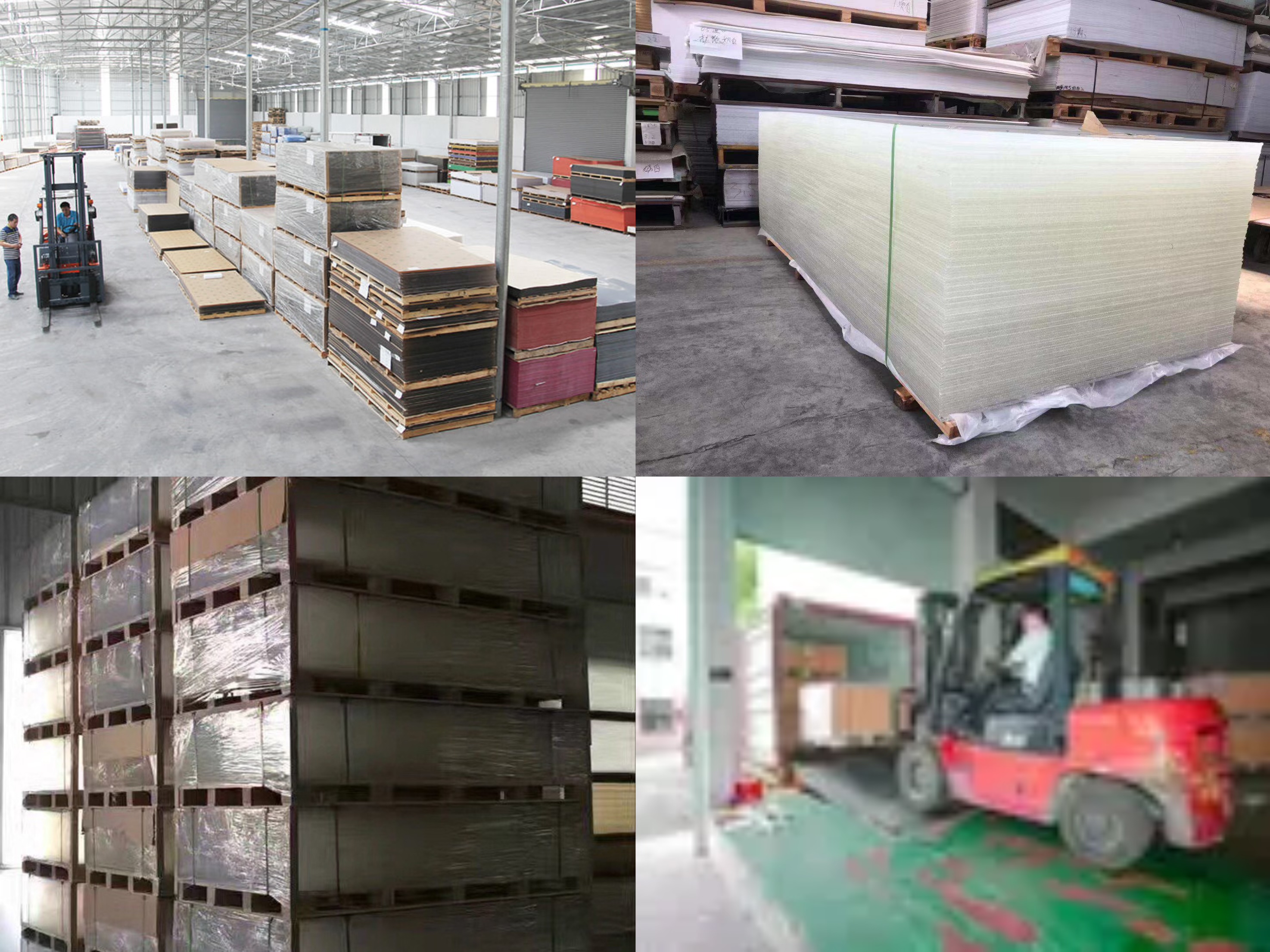
HIPS Sheet Packaging
HIPS sheets should be protected against surface damage and deformation during storage and international transportation. Packing requirements can vary according to thickness, sheet dimensions and quantity.

HIPS Sheet Pallet Packaging
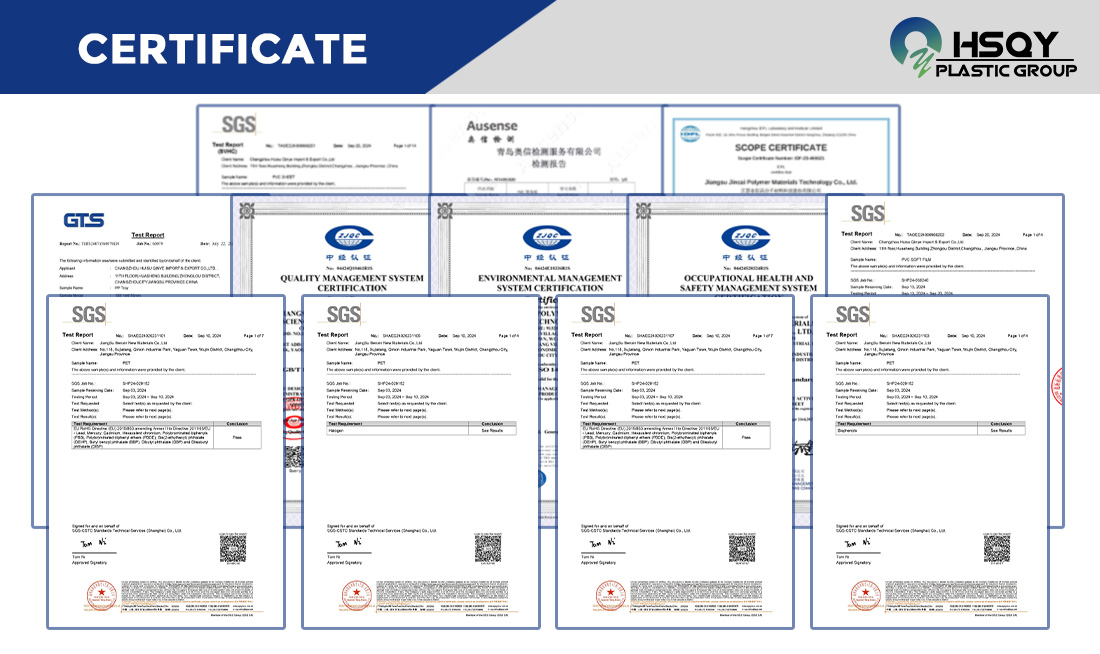
Certification and Documentation
The current product page lists SGS and ISO 9001:2008 documentation. Buyers should request current copies and confirm the scope, issuing organization, validity and applicability to the exact HIPS grade being purchased.

HSQY Certification Information
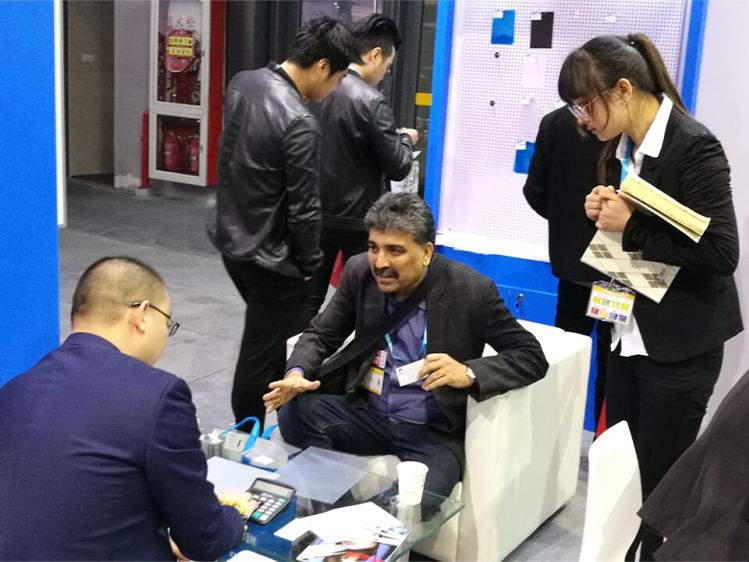
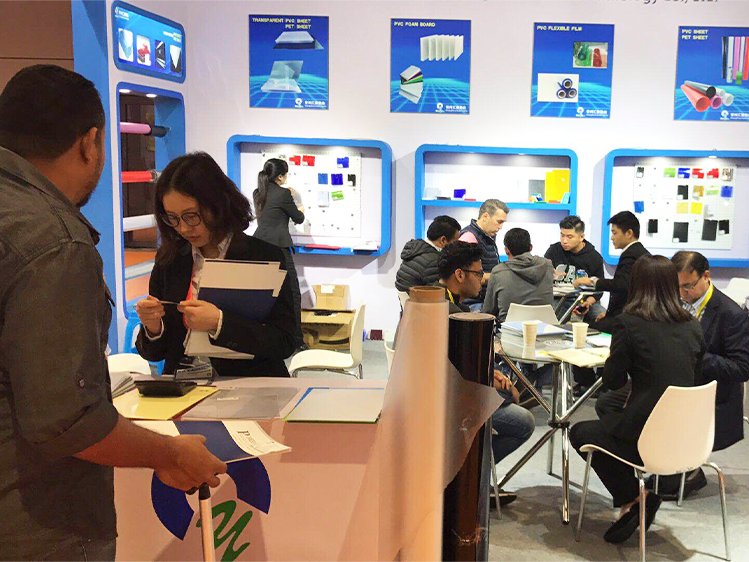
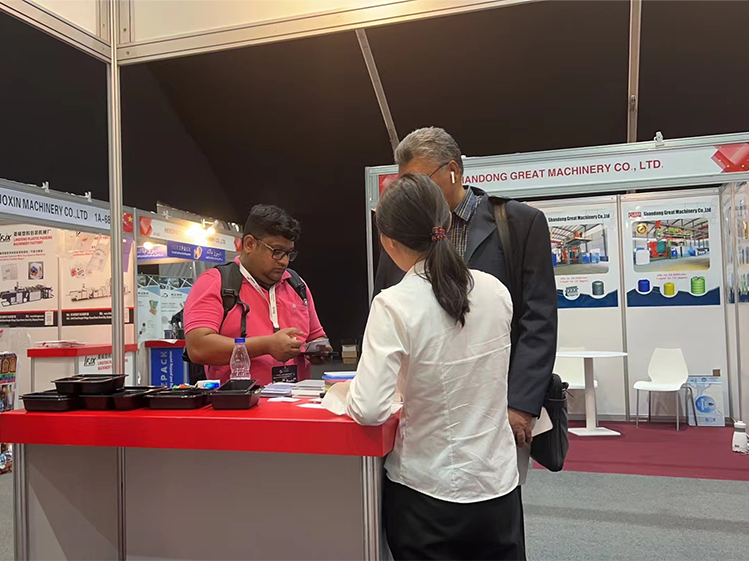
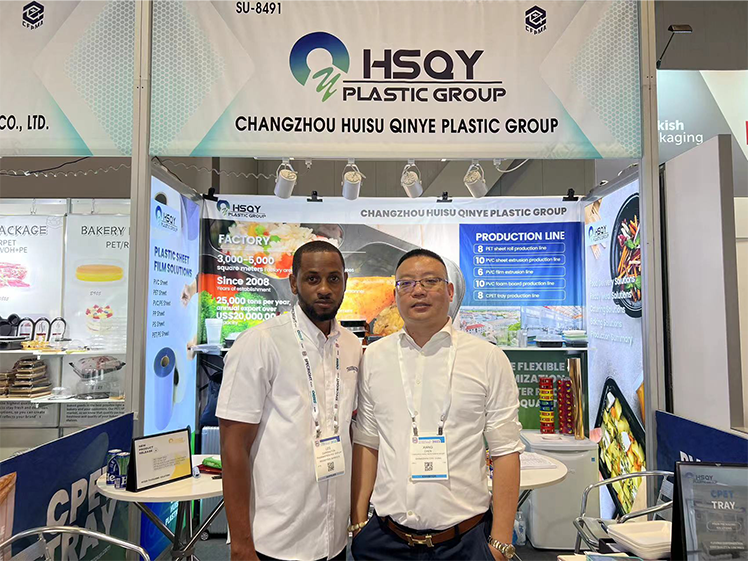
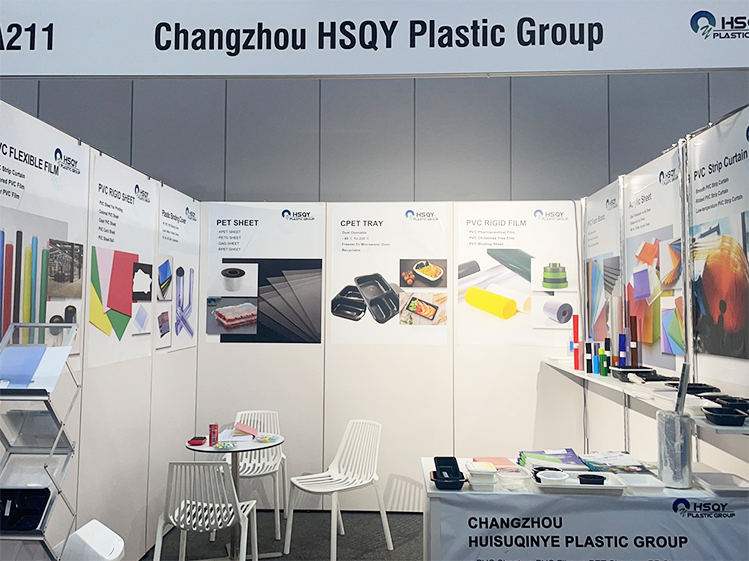
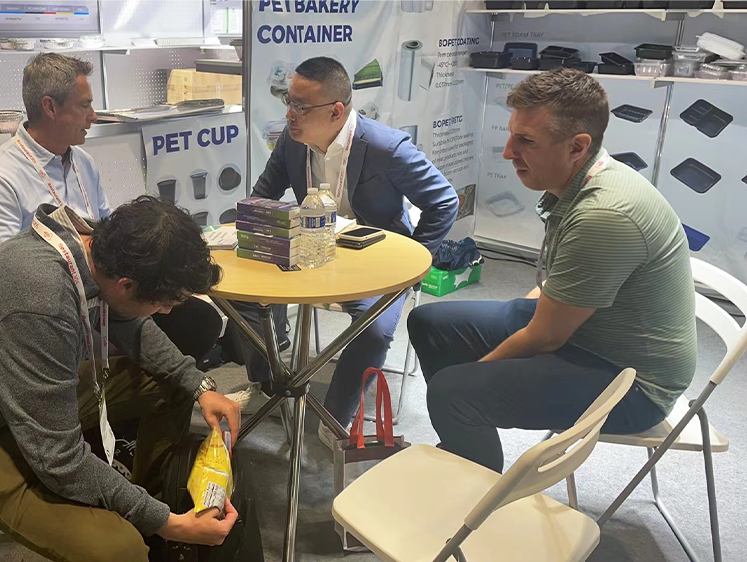
HSQY Global Exhibitions

2017 Shanghai Exhibition

2018 Shanghai Exhibition

2023 Saudi Exhibition

2023 American Exhibition

2024 Australian Exhibition

2024 American Exhibition

2024 Mexico Exhibition

2024 Paris Exhibition
Frequently Asked Questions About HIPS Sheet
What is HIPS sheet?
HIPS stands for High Impact Polystyrene. It is rubber-modified polystyrene designed to provide greater toughness and resistance to cracking than general-purpose polystyrene.
What size is a 4×8 HIPS sheet?
The current standard sheet size is 1220 × 2440mm, approximately four feet by eight feet.
What thicknesses are available?
The current HSQY product range lists thicknesses from 0.2mm to 6mm.
What is the maximum sheet width?
The current product specification lists a maximum width of 1600mm.
What colors are available?
White, black and customized colors are listed.
Is HIPS more impact resistant than GPPS?
Yes. HIPS uses rubber modification to improve toughness and resistance to cracking compared with general-purpose polystyrene.
Can HIPS sheet be thermoformed?
Yes. Thermoforming is one of the primary processing methods listed for this product. Production trials should confirm mold definition, shrinkage and final wall thickness.
Can HIPS sheet be vacuum formed?
Suitable HIPS grades can be vacuum formed into trays, housings, liners and other components. Confirm sheet thickness and forming conditions for the actual mold.
Can HIPS sheet be printed?
Yes. The current product specification lists screen and UV offset printing. Ink and surface compatibility should be tested before bulk printing.
Can HIPS sheet be CNC cut?
Yes. CNC processing is listed among the current fabrication methods. Provide drawings and tolerances for precision fabricated parts.
Can HIPS sheet be die cut?
Die cutting is listed as an available fabrication method. Tool design and processing conditions should be matched to the actual sheet thickness.
Is HIPS suitable for POP displays?
Yes. Printed signs and point-of-purchase displays are typical HIPS applications because the material combines rigidity, toughness, printability and fabrication capability.
Can HIPS be used for refrigerator liners?
Refrigerator liners and appliance components are included among the current product applications. Confirm the exact grade according to forming, temperature and chemical-cleaning requirements.
Can HIPS be used outdoors?
The current product page does not establish long-term outdoor UV resistance for the standard grade. Specify outdoor exposure if UV stability or weathering performance is required.
Is HIPS transparent?
HIPS is commonly supplied as an opaque sheet and this product is listed in white, black and customized colors. If transparency is the main requirement, GPPS may be a more appropriate polystyrene option.
What certifications are listed?
The current product page lists SGS and ISO 9001:2008. Request current documentation and confirm its scope before ordering.
What is the MOQ?
The current listed minimum order quantity is 1000kg.
Are samples available?
The current product page lists free A4 samples with freight collected from the buyer. Confirm thickness and color when requesting a sample.
What is the listed lead time?
The current product specification lists approximately 10–15 days. Confirm the schedule according to thickness, dimensions, color and order quantity.
What information should I provide for a quotation?
Provide the application, thickness, sheet size, color, surface requirement, printing or thermoforming process, fabrication drawings where applicable, quantity, documentation requirements and destination.
About HSQY Plastic Group
HSQY Plastic Group supplies HIPS sheets and other plastic sheet materials to thermoformers, packaging manufacturers, printers, sign fabricators, display manufacturers, appliance producers, distributors and industrial buyers.
For 4×8 HIPS sheet projects, provide the required thickness, dimensions, color, printing or thermoforming process, fabrication requirements, quantity and destination so the appropriate material specification can be reviewed.


 Download HIPS Sheet Data Sheet