What Is a Transparent Rigid PVC Sheet?
A transparent PVC sheet is a clear, rigid polyvinyl chloride material used for thermoforming, printing, folding boxes, blister packaging, protective covers, stationery, retail displays and fabricated plastic components.
HSQY supplies transparent rigid PVC sheets in commonly requested thicknesses of 0.1 mm, 0.2 mm, 0.3 mm, 1 mm and 3 mm. The standard product range for this page is 0.1 mm to 3 mm, with custom sheet dimensions, colors and surface finishes available according to production feasibility.
Thin 0.1 mm to 0.3 mm PVC materials are generally selected for printing, packaging windows, lightweight folding boxes, blister packs and thin thermoformed components. Thicker 1 mm and 3 mm sheets provide greater rigidity for protective panels, displays, machine covers, templates and fabricated parts.
Available material options may include virgin PVC or formulations containing recycled material. Virgin-grade PVC is normally preferred when high clarity, consistent color, controlled forming performance or application-specific compliance is required.
Buyers should provide the required thickness, dimensions, transparency, surface finish, processing method, quantity and target-market requirements so that HSQY can recommend a suitable PVC grade.
Request Transparent PVC Sheet Pricing Request a PVC Sheet Sample
Transparent PVC Sheet Images

Transparent PVC Sheet for Thermoforming

Transparent PVC Sheet for Printing

Clear Rigid PVC Plastic Sheet
Transparent PVC Sheet Data Sheets
Review the available technical data and test documentation below. Buyers should confirm that each document applies to the exact PVC formulation, thickness, color and production specification being purchased.
Download Transparent PVC Sheet Data Sheet ![Transparent PVC sheet data sheet PDF icon]() Download Transparent PVC Sheet Test Report
Download Transparent PVC Sheet Test Report ![Transparent PVC sheet test report PDF icon]()
Transparent PVC Sheet Specifications
| Property |
Available Specification |
| Product Name |
Transparent Rigid PVC Sheet |
| Material |
Polyvinyl Chloride / Rigid PVC |
| Featured Thicknesses |
0.1 mm, 0.2 mm, 0.3 mm, 1 mm and 3 mm |
| Standard Product Range |
0.1 mm-3 mm |
| Other Thicknesses |
Subject to production capability, material grade and order confirmation |
| Standard Sizes |
A4, 500 × 765 mm, 700 × 1000 mm and customized dimensions |
| Supply Form |
Sheets, cut sheets, rolls or slit rolls, subject to thickness |
| Material Options |
Virgin PVC or recycled-content formulation subject to application requirements |
| Color |
Clear white, clear blue-tinted, transparent colors and custom colors |
| Transparency |
Transparent, translucent or opaque grades available according to specification |
| Surface Finish |
Glossy, matte, light frosted, heavy frosted and customized finish |
| Density |
Approximately 1.32-1.45 g/cm³, depending on formulation |
| Hardness |
Rigid |
| Processing Methods |
Printing, die-cutting, scoring, folding, thermoforming, vacuum forming, bending, welding and fabrication |
| Protective Film |
Available for selected thicknesses and surface-protection requirements |
| Available Documentation |
RoHS-related reports, ISO 9001 and ISO 14001 documentation for applicable products and operations |
| Minimum Order Quantity |
1000 kg; special specifications may require a different MOQ |
| Sample |
A4 or limited-size samples available; freight is normally collected |
| Payment Terms |
T/T, L/C and other terms subject to order confirmation |
| Delivery Terms |
EXW, FOB, CNF and other agreed trade terms |
| Typical Production Time |
Approximately 10-14 days after specification and payment confirmation |
Final thickness tolerance, width tolerance, transparency, color, surface finish and processing performance should be confirmed through an approved sample, technical specification or purchase contract.
How to Choose 0.1 mm, 0.2 mm, 0.3 mm, 1 mm or 3 mm PVC Sheet
Thickness affects flexibility, stiffness, forming depth, folding behavior, impact performance and finished-product weight. The following table provides general selection guidance.
| Thickness |
General Characteristics |
Typical Applications |
| 0.1 mm |
Very thin and flexible with low structural rigidity |
Printing substrates, lightweight windows, overlays, labels, stationery and thin packaging components |
| 0.2 mm |
Flexible thin-gauge material with practical folding and forming capability |
Blister packaging, folding boxes, packaging windows, printed sheets and lightweight covers |
| 0.3 mm |
Balance of flexibility, crease performance and light structural support |
Clear folding boxes, retail packaging, stationery covers, formed trays and display components |
| 1 mm |
Semi-rigid to rigid with greater dimensional support |
Protective covers, signs, panels, partitions, templates, machine guards and fabricated components |
| 3 mm |
Rigid sheet with substantially greater stiffness and fabrication requirements |
Display panels, protective screens, equipment covers, partitions, industrial panels and rigid fabricated parts |
These recommendations are general. Sheet dimensions, support spacing, forming depth, product weight, tooling and service temperature can change the required thickness.
Thin PVC Film vs. Thick Rigid PVC Sheet
| Comparison |
0.1-0.3 mm Thin PVC |
1-3 mm Rigid PVC Sheet |
| Flexibility |
Flexible or semi-rigid depending on formulation |
More rigid with greater shape retention |
| Supply Format |
Sheets, rolls or slit rolls |
Mainly flat sheets or cut pieces |
| Common Processing |
Printing, die-cutting, scoring, folding and thin-gauge thermoforming |
Cutting, bending, routing, drilling, welding and fabrication |
| Typical Applications |
Blisters, folding boxes, printed packaging, windows and stationery |
Panels, partitions, guards, displays and structural covers |
Key Features of Transparent PVC Sheet
High Product Visibility
Clear PVC allows products, graphics and components behind the sheet to remain visible. This makes it suitable for packaging, display windows, protective covers and retail presentation.
Practical Rigidity and Dimensional Stability
Rigid PVC maintains its shape under normal handling conditions and provides practical support for folded, formed and fabricated products. Actual rigidity depends strongly on thickness and formulation.
Thermoforming Capability
Suitable grades can be heated and formed into blister cavities, trays, covers and other three-dimensional components. Heating, mold design and cooling conditions should be validated before production.
Printing and Decoration
Properly prepared PVC surfaces can support screen printing, UV printing, offset printing, foil stamping, labeling and decorative finishing. Ink compatibility must be tested.
Moisture Resistance
PVC does not readily absorb water and can provide a moisture-resistant surface for packaging, covers and industrial components. It should not automatically be treated as a complete moisture-barrier package.
Chemical Resistance
PVC resists many commonly encountered chemicals, but compatibility varies with chemical type, concentration, temperature and exposure duration. Critical applications require testing.
Multiple Surface and Color Options
Available options may include clear white, blue-tinted transparent, colored transparent, glossy, matte, light-frosted and heavy-frosted finishes.
Virgin and Recycled-Content Options
Recycled-content formulations may be available for suitable industrial applications. Clarity, color consistency, odor, mechanical performance and regulatory suitability should be evaluated separately from virgin-grade PVC.
Thermoforming and Vacuum-Forming Guidelines
Thermoforming performance depends on the PVC formulation, thickness, sheet direction, heating uniformity, mold design, forming depth and cooling cycle.
Heat the sheet evenly to reduce local thinning, stress and optical distortion.
Match the PVC grade to the forming depth and cavity geometry.
Control mold temperature and cooling to reduce distortion after forming.
Check wall-thickness distribution in deep-draw components.
Test cutting, sealing and stacking after the part has fully cooled.
Confirm whether the finished product requires food, pharmaceutical or medical compliance.
A production trial using the actual thermoforming machine and mold is recommended before approving a large order.
Printing, Folding and Fabrication
Screen, UV and Offset Printing
Printing results depend on surface energy, ink chemistry, curing conditions and surface finish. Buyers should test adhesion, color appearance, scratch resistance and fold-line durability.
Die-Cutting and Punching
Thin PVC can be die cut into packaging windows, carton profiles, tags and inserts. Cutting pressure, die clearance, sheet temperature and tool condition affect edge quality.
Scoring and Folding
Suitable thin PVC grades can be scored and folded into transparent boxes and sleeves. Incorrect crease depth, folding radius or material direction may cause whitening or cracking.
Bending and Fabrication
Thicker 1 mm and 3 mm sheets can be cut, drilled, routed, bent and fabricated into panels and covers. Heat-bending conditions should be controlled to limit bubbles, discoloration or deformation.
Welding and Adhesive Bonding
Compatible PVC components can be welded or bonded using suitable processes. Adhesive compatibility, joint appearance, curing and long-term strength should be tested before commercial production.
Applications of Transparent PVC Sheet
Blister and Thermoformed Packaging
Thin PVC sheet can be formed into blister packs, clamshells, trays, covers and protective retail packaging for consumer goods, electronics, toys and other products.
Transparent Folding Boxes
Clear PVC can be printed, die cut, creased and folded into cosmetic boxes, gift boxes, electronics packaging, stationery boxes and promotional packaging.
Printing and Signage
Printing-grade PVC can be used for graphic panels, promotional signs, menu covers, printed overlays, display components and point-of-purchase materials.
Stationery and Binding
Applications include notebook covers, binding covers, folders, document windows, dividers, card holders and other transparent stationery components.
Protective Covers and Guards
Thicker sheets may be fabricated into equipment covers, protective shields, machine guards, dust covers and transparent partitions for controlled indoor use.
Displays and Decorative Panels
Transparent and colored PVC can be used for product displays, retail panels, exhibition components, decorative inserts and visual-merchandising structures.
Industrial Fabrication
Industrial applications include templates, separator sheets, protective liners, formed covers, inspection windows and custom-fabricated plastic components.
Explore more PVC sheet products for printing, packaging, forming and industrial fabrication.
Transparent PVC vs. PET, PETG and Polycarbonate
| Selection Factor |
PVC |
PET |
PETG |
Polycarbonate |
| Typical Positioning |
Cost-effective printing, folding and thermoforming |
Clear packaging and thermoforming with PET recycling considerations |
Tough transparent packaging and forming |
High-impact protective glazing and engineering components |
| Forming |
Easy to process with a suitable forming grade |
Requires PET-specific heating control |
Good forming flexibility |
Requires higher-temperature processing and drying control |
| Printing and Folding |
Widely used after grade and ink validation |
Surface treatment and crease design may be required |
Suitable after process testing |
Less commonly selected for thin folding cartons |
| Impact Resistance |
Practical for packaging and general fabrication |
Good for packaging applications |
Higher toughness than many standard packaging sheets |
High impact resistance for protective uses |
| Selection Basis |
Compare clarity, forming, folding, printing, impact, compliance, recycling requirements and total converted-product cost |
Custom Transparent PVC Sheet Options
Featured thicknesses of 0.1 mm, 0.2 mm, 0.3 mm, 1 mm and 3 mm.
Standard sheets, custom-cut sheets, rolls and slit rolls.
Clear white, blue-tinted, transparent colored and opaque colors.
Glossy, matte, light-frosted and heavy-frosted surfaces.
Printing-grade, folding-box-grade and thermoforming-grade formulations.
Virgin or recycled-content options subject to application suitability.
Protective film for scratch-sensitive processing and transportation.
Custom cutting, slitting, packaging and pallet requirements.
Samples for transparency, printing, folding, forming and fabrication tests.
Information Required for a Transparent PVC Sheet Quote
Required thickness and thickness tolerance.
Sheet dimensions, roll width, roll length or cut-piece size.
Clear white, blue-tinted or custom color.
Glossy, matte or frosted surface.
Required transparency, haze or optical appearance.
Printing, folding, die-cutting, thermoforming or fabrication method.
Virgin-material or recycled-content requirement.
Protective-film and packaging requirements.
Trial quantity, bulk quantity and annual demand.
Destination country, port, trade term and required delivery date.
Food-contact, pharmaceutical, medical, RoHS, REACH or other compliance requirements.
Send Your PVC Sheet Requirements
Quality and Compliance Considerations
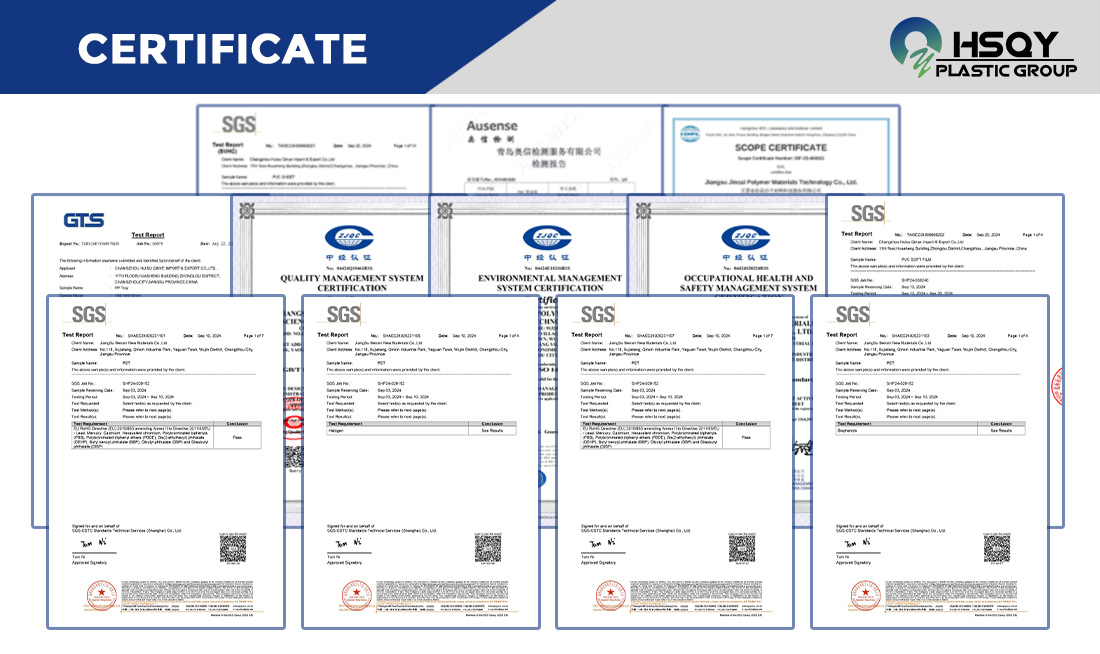
Available documentation may include RoHS-related test reports and ISO quality or environmental-management documentation. Buyers should confirm that the document applies to the exact PVC formulation and order specification.
ISO 9001 and ISO 14001 relate to management systems and should not be presented as direct certification that every PVC sheet is suitable for a specific regulated application.
Standard industrial PVC sheet should not automatically be assumed to meet direct food-contact, pharmaceutical, medical or toy requirements. The intended use, contact conditions and destination-market regulations must be stated before ordering.
Recycled-content PVC may not provide the same clarity, color consistency or regulatory profile as virgin PVC. It should be evaluated against the actual application.
Outdoor Use and Service Temperature
Standard clear PVC sheet is normally selected for indoor or controlled applications. Long-term sunlight exposure may cause discoloration, surface changes or loss of mechanical performance unless a UV-stabilized outdoor grade is specified.
Water resistance alone does not make a standard PVC sheet suitable for permanent outdoor use. UV exposure, wind load, temperature cycling, mounting method and required service life must be evaluated.
The usable temperature range depends on the PVC formulation, thickness, mechanical load and exposure duration. Critical applications require grade-specific technical data and actual-condition testing.
Recommended Sample and Quality Checks
Thickness, width, length and dimensional tolerance.
Transparency, haze, color tone and visible impurities.
Glossy, matte or frosted surface consistency.
Scratch condition and protective-film compatibility.
Printing adhesion, curing and abrasion resistance.
Die-cutting and edge quality.
Folding, crease whitening and cracking behavior.
Thermoforming temperature, draw depth and wall-thickness distribution.
Bending, drilling, routing, bonding or welding performance.
Chemical, outdoor and temperature performance where applicable.
Required compliance reports for the exact specification.
Packaging and Delivery Options
Sample packaging: A4 sheets or limited-size samples packed in protective bags or cartons.
Sheet packaging: Approximately 30 kg per package, or customized according to dimensions and handling requirements.
Surface protection: Protective film, PE wrapping, kraft paper and interlayer materials can be used to reduce scratches.
Pallet packaging: Approximately 500-2000 kg per plywood pallet, depending on sheet size and loading requirements.
Container loading: Approximately 20 tons, subject to packaging, dimensions and container-weight restrictions.
Delivery terms: EXW, FOB, CNF and other agreed trade terms.
Typical production time: Approximately 10-14 days after the specification and payment are confirmed.
Production time does not include international shipping. Custom colors, unusual thicknesses, protective film and special compliance requirements may extend the lead time.
Transparent PVC Sheet Manufacturing Facilities

PVC Rigid Clear Sheet Factory

HSQY Plastic PVC Sheet Manufacturing

PVC Clear Sheet Production Line

Transparent PVC Sheet Factory
Certifications and Quality Documentation
HSQY can provide available quality-management, environmental-management and product test documentation for confirmation. Required reports should be reviewed against the exact ordered grade.

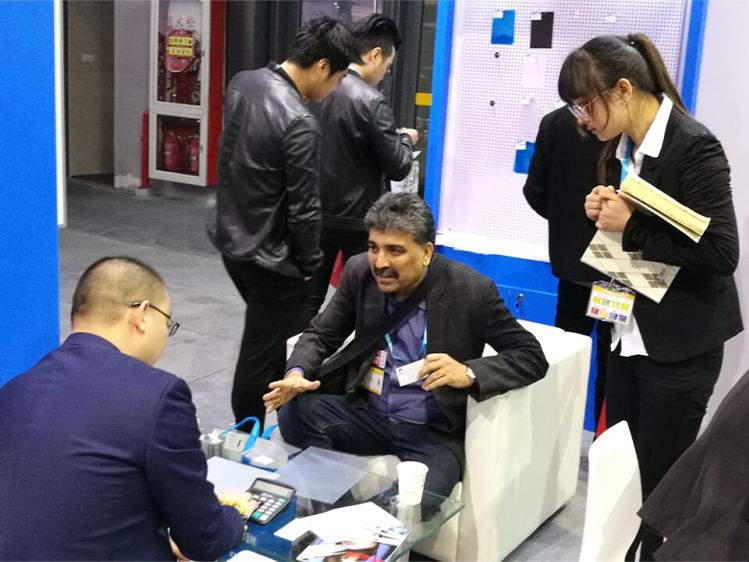
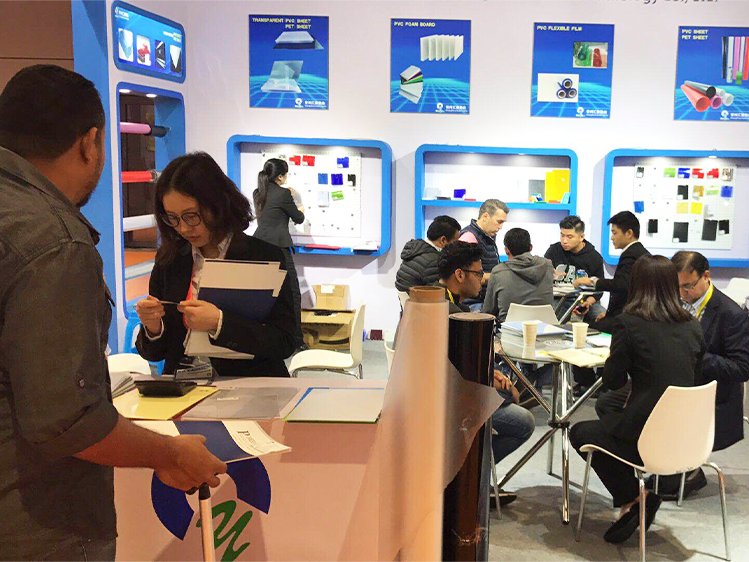
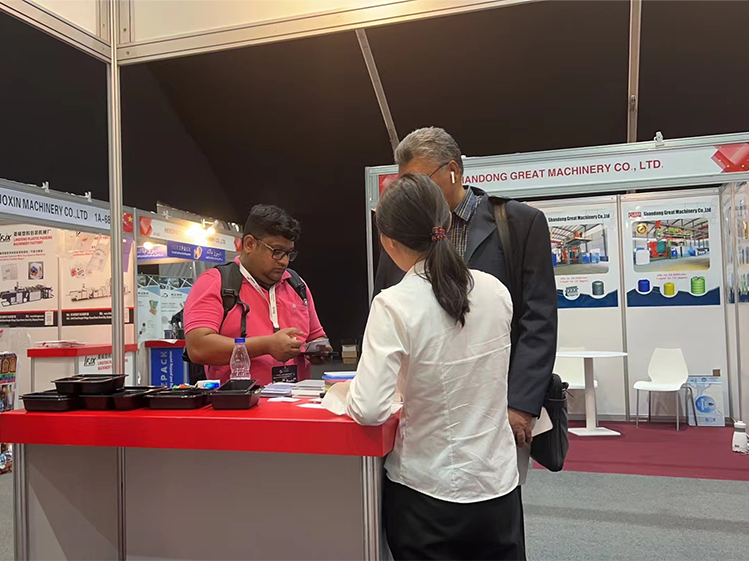
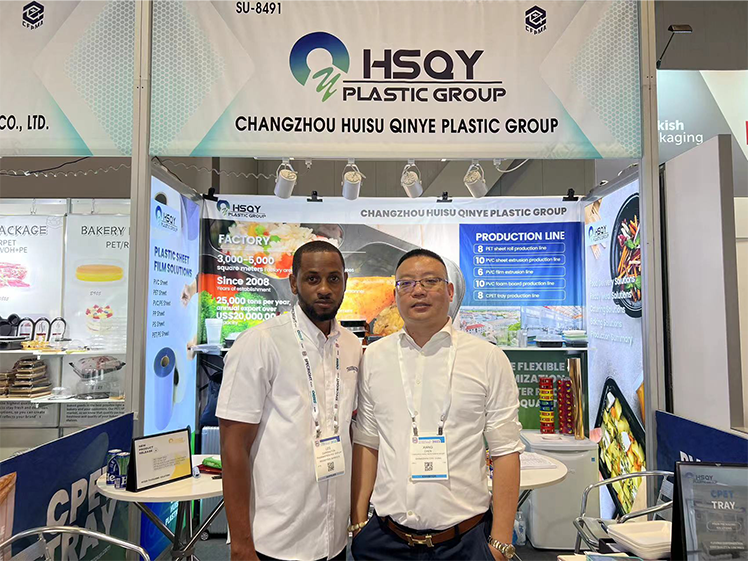
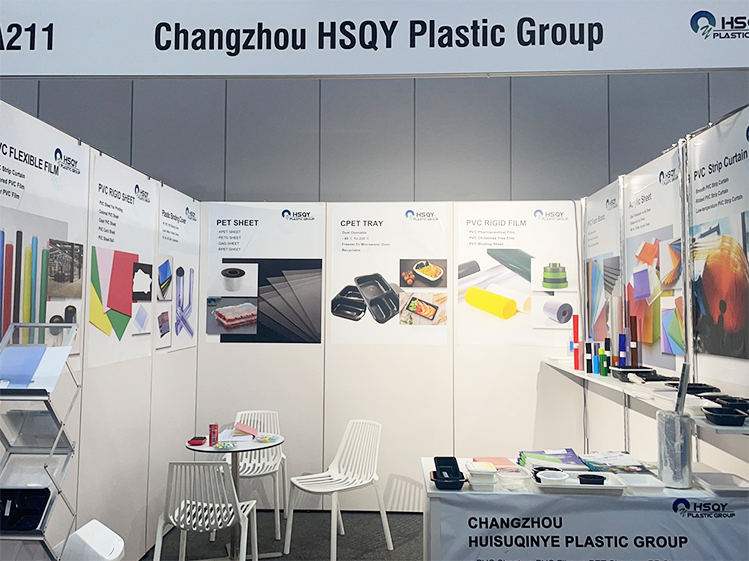
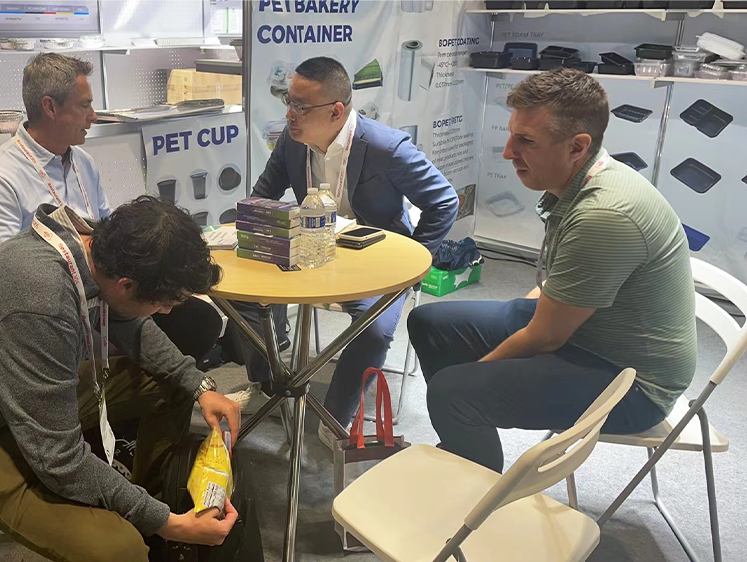
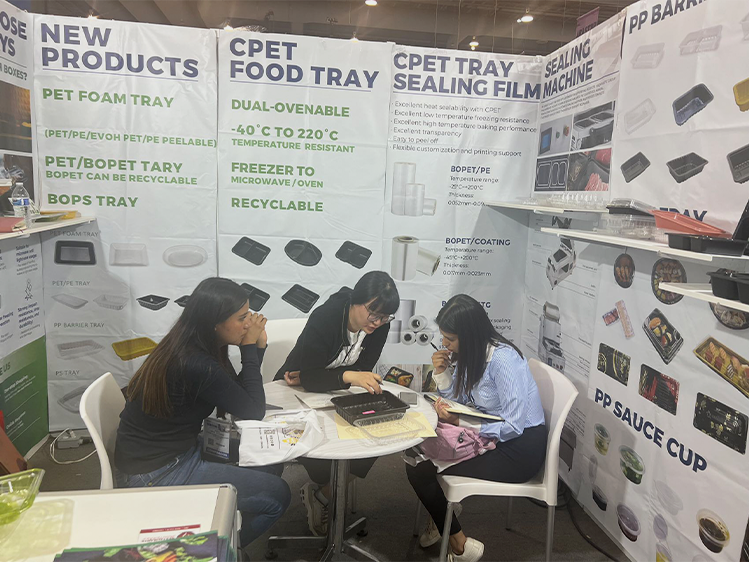
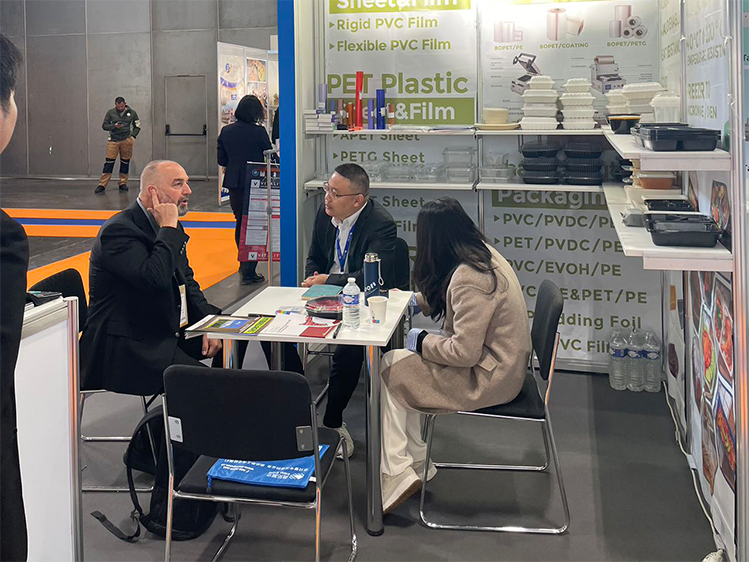
HSQY Global Exhibitions

2017 Shanghai Exhibition

2018 Shanghai Exhibition

2023 Saudi Exhibition

2023 American Exhibition

2024 Australian Exhibition

2024 American Exhibition

2024 Mexico Exhibition

2024 Paris Exhibition
Why Choose HSQY as Your Transparent PVC Sheet Supplier?
Transparent rigid PVC sheets from 0.1 mm to 3 mm.
Featured 0.1 mm, 0.2 mm, 0.3 mm, 1 mm and 3 mm options.
Sheets, custom-cut pieces, rolls and slit rolls.
Printing, folding-box and thermoforming grades.
Transparent, tinted, colored, glossy, matte and frosted options.
Virgin and recycled-content formulations for suitable projects.
Protective film and customized export packaging.
Samples for printing, forming and fabrication tests.
Bulk production support for converters, distributors and OEM projects.
Before bulk production, buyers should test the selected PVC sheet with their actual ink, tooling, thermoforming mold, crease design, adhesive and fabrication equipment.
Contact HSQY for Samples and Pricing
Frequently Asked Questions About Transparent PVC Sheet
What is a transparent rigid PVC sheet?
It is a clear, non-plasticized or low-plasticizer PVC sheet used for printing, thermoforming, folding boxes, packaging, displays, covers and fabricated plastic components.
What thicknesses are available?
The standard product range on this page is 0.1 mm to 3 mm, including commonly requested 0.1 mm, 0.2 mm, 0.3 mm, 1 mm and 3 mm thicknesses.
What is 0.1 mm transparent PVC sheet used for?
A 0.1 mm sheet is suitable for thin printing substrates, lightweight packaging windows, overlays, stationery and other applications requiring flexibility rather than structural rigidity.
What is 0.2 mm transparent PVC sheet used for?
A 0.2 mm sheet is commonly used for blister packaging, thin folding boxes, printed packaging, windows and lightweight thermoformed components.
What is 0.3 mm clear PVC sheet used for?
A 0.3 mm sheet provides more support than 0.1 mm or 0.2 mm material and is often selected for folding boxes, retail packaging, stationery covers, displays and formed packaging.
Is 1 mm transparent PVC sheet rigid?
A 1 mm PVC sheet is substantially more rigid than thin packaging film. Finished stiffness also depends on panel dimensions, support spacing, temperature and formulation.
What is 3 mm transparent PVC sheet used for?
A 3 mm sheet is suitable for rigid panels, protective screens, equipment covers, displays, partitions, templates and fabricated industrial components.
Can transparent PVC sheet be thermoformed?
Yes. Suitable grades can be vacuum formed or thermoformed into blisters, trays, covers and shaped packaging components. A production trial is recommended.
Can transparent PVC sheet be printed?
Yes. Printing-grade PVC can support screen, UV and offset printing after ink, surface and curing compatibility are confirmed.
Can clear PVC sheet be folded into boxes?
Thin folding-box grades can be die cut, scored and folded into transparent cartons. Thickness, grain direction, crease depth and folding radius affect whitening and cracking.
Can transparent PVC sheet be cut to size?
Yes. Custom dimensions, cut sheets and slit rolls can be discussed according to thickness, tolerance, equipment and order quantity.
Is protective film available?
Protective film can be supplied for selected products to reduce surface scratching during transportation, printing, fabrication and assembly.
Is transparent PVC sheet waterproof?
PVC does not readily absorb water and provides a moisture-resistant surface. This does not automatically make a finished package or assembly completely waterproof.
Can transparent PVC sheet be used outdoors?
Standard clear PVC is generally intended for indoor or controlled environments. Outdoor applications may require UV stabilization and testing for weather, temperature and expected service life.
Is transparent PVC suitable for food packaging?
Suitability depends on the exact resin, additives, production specification, food type, contact conditions and destination-market regulations. Food-contact requirements must be stated before ordering.
Is recycled-content transparent PVC available?
Recycled-content formulations may be available for suitable applications. Clarity, color, mechanical properties and compliance should be evaluated using an approved sample.
What is the difference between clear white and blue-tinted PVC?
Clear white PVC has a more neutral visual appearance, while blue-tinted PVC contains a slight blue tone that may visually offset yellowish coloration. A physical sample should be approved.
Is matte or frosted transparent PVC available?
Yes. Matte, light-frosted and heavy-frosted surfaces can be discussed for reduced glare, diffused visibility and decorative applications.
What is the MOQ for transparent PVC sheets?
The standard MOQ for this product is 1000 kg. Custom colors, unusual dimensions, specialized grades or protective-film requirements may have a different MOQ.
Are transparent PVC sheet samples available?
Yes. A4 or limited-size samples may be supplied for checking transparency, thickness, printing, folding, forming and fabrication. Courier freight is normally paid by the buyer.
What is the production lead time?
Typical production time is approximately 10-14 days after specifications and payment are confirmed. Customized products may require additional time.
What information is required for a quotation?
Provide the thickness, dimensions, quantity, color, transparency, surface finish, processing method, material-content preference, packaging, destination and required compliance documents.
Get a Custom Transparent PVC Sheet Quote