0.1mm, 0.2mm and 0.3mm Clear Rigid PVC Sheet Roll for Printing
HSQY manufactures 0.1mm, 0.2mm and 0.3mm clear rigid PVC sheet rolls for UV offset printing, screen printing, folding boxes, blister packaging, overlays and thermoformed display packaging. The material combines high clarity, good dimensional stability, a smooth printable surface and practical converting performance.
Standard production focuses on transparent rigid PVC roll stock with customized widths up to 1280mm. Clear white, blue-tinted transparent and customized colors can be discussed. Virgin resin is recommended for demanding clarity and printing projects, while recycled-content options should be evaluated according to appearance, compliance and end-use requirements.
Core thicknesses: 0.1mm, 0.2mm and 0.3mm
Material: Clear rigid PVC / rigid vinyl film
Maximum listed width: 1280mm
Printing methods: UV offset and screen printing after ink-compatibility testing
Supply formats: Slit roll, jumbo roll or cut sheet
Main applications: Printed packaging, clear folding boxes, blisters, clamshells, overlays and stationery
Clear PVC Sheet Roll Video
Clear Rigid PVC Roll Images
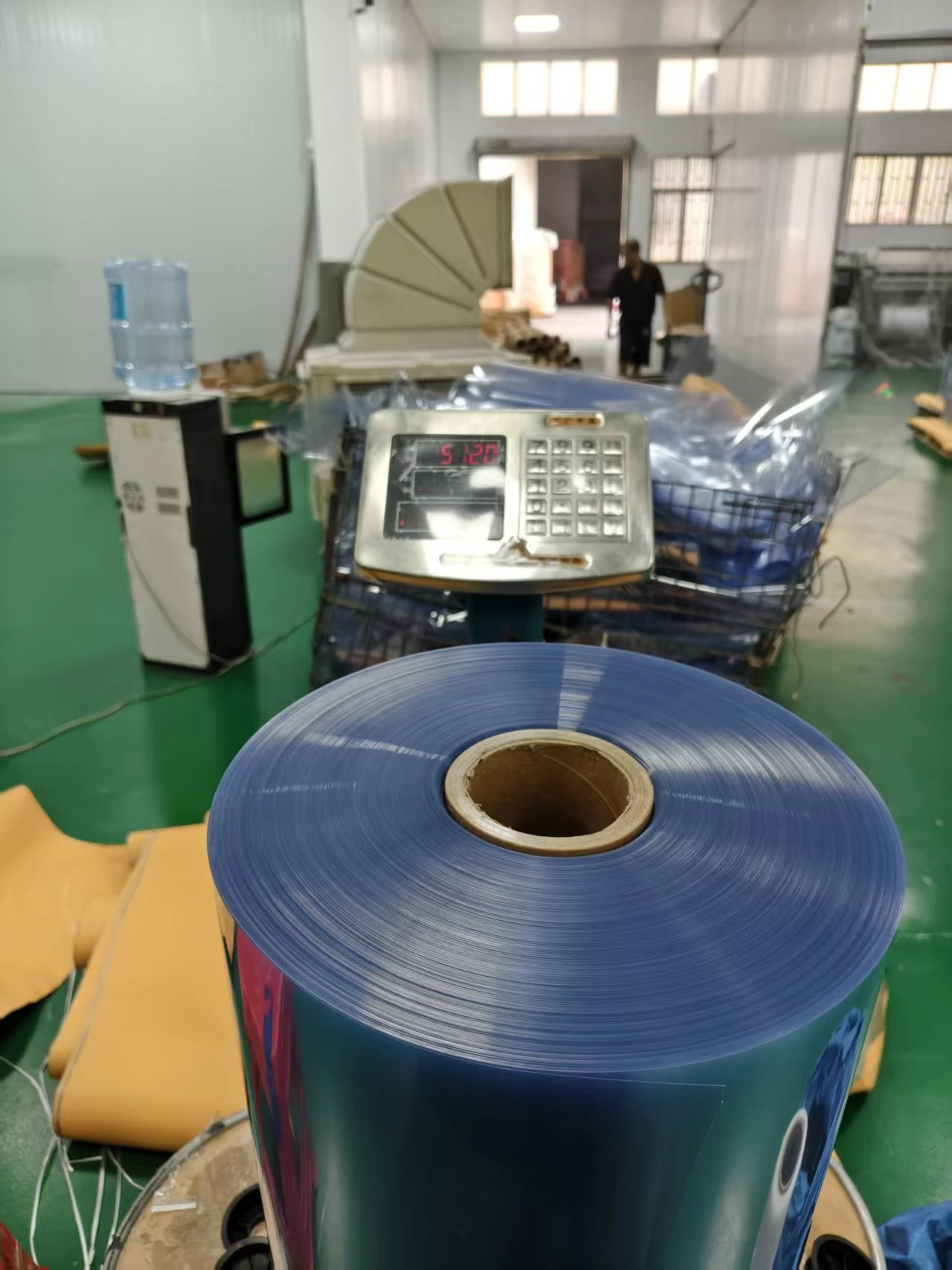
High-Clarity Rigid PVC Roll

Vacuum-Formed PVC Tray

Printed Transparent PVC Sheet
What Is a Clear Rigid PVC Sheet Roll?
A clear rigid PVC sheet roll is a thin, transparent polyvinyl chloride web formulated with little or no plasticizer. It is stiffer than flexible PVC film but can still be wound into rolls at thin gauges such as 0.1mm, 0.2mm and 0.3mm.
Rigid PVC is widely used because it can be printed, die cut, folded, welded, glued and thermoformed. Its dimensional stability and economical material cost make it suitable for printed packaging, clear boxes, graphics, overlays, stencils and protective components.
Material clarification: This page covers transparent rigid PVC roll stock for printing and forming. It is not soft PVC curtain film, self-adhesive vinyl, shrink film or flexible table-cover PVC.
0.1mm vs. 0.2mm vs. 0.3mm PVC Sheet
| Thickness |
Relative Stiffness |
Typical Selection Logic |
| 0.1mm / 100 micron |
Thin and flexible |
Lightweight overlays, inserts, printed sheets, stationery and shallow formed components |
| 0.2mm / 200 micron |
Balanced stiffness and flexibility |
Printed folding boxes, packaging windows, medium-duty overlays and thermoformed packaging |
| 0.3mm / 300 micron |
Higher rigidity |
Structured clear boxes, clamshells, blisters, covers and applications requiring greater shape retention |
The final gauge should be selected according to the package dimensions, fold design, print process, forming depth, load, stiffness target and transport conditions. Sample testing is recommended before mass production.
PVC Transparent Sheet Roll Specifications
| Property |
Details |
| Product name |
0.1mm–0.3mm Clear Rigid PVC Sheet Roll for Printing |
| Material |
Rigid polyvinyl chloride; virgin resin recommended for demanding clarity |
| Core thicknesses |
0.1mm, 0.2mm and 0.3mm |
| Broader listed range |
0.1mm–3mm on the current product listing; roll or sheet availability depends on gauge |
| Width |
Customized, up to 1280mm for the listed production program |
| Cut-sheet sizes |
A4, 500 × 765mm, 700 × 1000mm or customized |
| Density reference |
Approximately 1.32–1.45g/cm³, subject to formulation |
| Color |
Clear white, blue-tinted transparent or customized transparent color |
| Surface |
Glossy clear; matte, embossed or custom surfaces subject to confirmation |
| Printing |
UV offset and screen printing; test ink adhesion, curing and blocking on the exact grade |
| Processing |
Printing, die cutting, folding, creasing, gluing, welding and thermoforming |
| Recycled-content option |
Up to 30% recycled PVC is listed as an option; clarity, color, odor and compliance must be approved |
| Main applications |
Printed packaging, folding boxes, blister packs, clamshells, overlays, stationery and display components |
| MOQ |
1,000kg on the current product listing; trial or mixed specifications are subject to confirmation |
| Lead time |
Typically 7–13 days after specification, sample, payment and packing details are confirmed |
| Quality documents |
Current data sheet, inspection report and applicable compliance documents for the selected grade |
Key Benefits of Printable Clear Rigid PVC Film
1. High clarity and gloss: Transparent presentation helps printed graphics and packaged products remain visible.
2. Dimensional stability: Controlled thickness and flatness support printing, laminating, die cutting and package conversion.
3. Printable surface: Compatible grades can support UV offset and screen printing after ink, surface and curing trials.
4. Thermoforming performance: Rigid PVC softens evenly and can form packaging cavities, blisters and trays under controlled conditions.
5. Folding and fabrication: The material can be creased, folded, die cut, glued and welded for boxes, covers and displays.
6. Moisture and oil resistance: PVC resists water and many oils, supporting packaging and reusable overlay applications.
7. Custom converting: Thickness, width, sheet size, color, surface, roll diameter and packing can be matched to the buyer's line.
Printing Guidance for Transparent PVC Sheet
Printing performance depends on the PVC formulation, surface condition, ink system, curing energy, press speed and storage conditions. A production sample should be tested before full-volume printing.
UV offset printing: Confirm ink adhesion, UV curing, sheet temperature, static control and stack blocking.
Screen printing: Select PVC-compatible ink and verify solvent resistance, opacity, drying and rub resistance.
White ink and reverse printing: Define whether graphics are printed on the viewing side or reverse side and whether a white backing layer is required.
Surface cleaning: Remove dust, oil and handling contamination without using a cleaner that damages PVC.
Static control: Thin plastic sheets may attract dust; use suitable ionization and handling controls on the press.
Post-print conversion: Test creasing, folding, die cutting, gluing and thermoforming after the ink is fully cured.
Thermoforming, Folding and Die-Cutting Guidance
Thermoforming: Use even heating and validate forming temperature, mold draft, cavity depth and cooling to reduce webbing and distortion.
Creasing and folding: Match crease depth and rule geometry to the sheet gauge to reduce cracking and whitening at the fold.
Die cutting: Use sharp tooling and confirm edge quality, dimensional recovery and sheet alignment.
Gluing: Select a PVC-compatible adhesive and verify transparency, blooming, cure time and bond strength.
Welding: Heat, high-frequency or ultrasonic welding may be possible with a compatible design and validated settings.
Applications of Clear PVC Printing Roll
Printed folding boxes: Transparent retail cartons for cosmetics, stationery, gifts, electronics and consumer products.
Blister and clamshell packaging: Thermoformed packaging for products requiring visibility and shape retention.
Printed overlays: Protective graphic overlays, labels, menu covers, instructional panels and decorative layers.
Stationery and office products: Covers, dividers, pockets, templates, stencils and document-protection components.
Display and POP components: Printed transparent panels, promotional inserts, signage layers and retail presentation parts.
Explore the broader HSQY PVC sheet range for alternative thicknesses, colors and applications.
Application Images

Blister Packaging

Clear Folding Box

Printed Overlay
Virgin PVC vs. Recycled-Content PVC
| Material Option |
Main Advantages |
Approval Considerations |
| Virgin PVC |
Better control of clarity, color, gels, odor and batch consistency |
Preferred for premium transparent printing, demanding packaging and regulated applications |
| Recycled-content PVC |
Reduces use of virgin material and can support selected cost or sustainability objectives |
Clarity, tint, black spots, odor, mechanical performance and regulatory restrictions must be tested |
Food, Medical and Outdoor Use Requirements
General-purpose clear PVC printing film should not automatically be treated as food-contact, pharmaceutical, medical or outdoor grade. Each application requires a formulation and documentation appropriate to its risk and market.
Food contact: Request an application-specific grade and current migration or declaration documents for the destination market.
Medical or pharmaceutical packaging: Confirm resin, residual monomer, cleanliness, traceability and required pharmacopoeial or regulatory documents.
Outdoor use: Standard clear rigid PVC may yellow, haze or become brittle under prolonged UV and weather exposure; request a stabilized formulation.
Fire performance: A specific rating must be supported by a report covering the selected formulation and thickness.
Quality Control for Clear PVC Printing Film
• Thickness and width tolerance
• Transparency, haze, gloss and color consistency
• Gels, black spots, flow lines, bubbles, scratches and surface contamination
• Flatness, curl and dimensional stability
• Ink adhesion, curing, rub resistance and blocking
• Folding, die-cutting, gluing and thermoforming performance
• Roll winding, edge alignment, core size, roll diameter, joints and batch labels
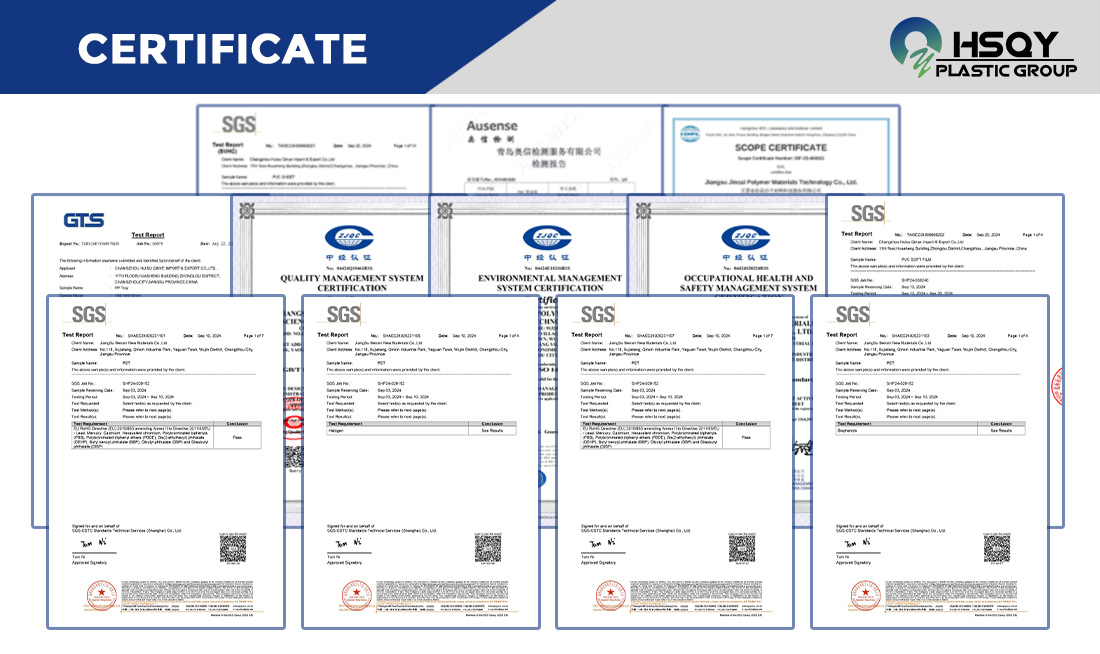
PVC Sheet Data and Test Reports
Review the available documents and confirm that each report covers the exact clear PVC formulation, thickness, recycled-content level and application being purchased.
Information Required for an Accurate Quotation
1. Thickness: Confirm 0.1mm, 0.2mm, 0.3mm or another required gauge and tolerance.
2. Roll or sheet dimensions: Provide width, length, core diameter, roll diameter, roll weight or cut-sheet size.
3. Optical requirements: State clear white or blue tint and provide haze, transparency or appearance expectations.
4. Printing process: Identify UV offset, screen or another method, ink supplier, printing side and required adhesion.
5. Converting process: State whether the film will be die cut, folded, glued, welded, laminated or thermoformed.
6. Resin option: Confirm virgin material or an acceptable recycled-content target.
7. Compliance: Provide the destination market and required RoHS, REACH, food-contact, medical or other documents.
8. Commercial details: Provide trial quantity, annual volume, packing, destination port and delivery date.
Packaging and Delivery
Sample packing: A4 or available custom samples can be protected in bags, envelopes or cartons.
Roll packing: Rolls can be wrapped with PE film, kraft paper or another agreed protective material.
Sheet packing: Cut sheets can be interleaved or wrapped and packed in cartons or on plywood pallets.
Surface protection: Protective masking can be discussed for suitable surfaces, thicknesses and order quantities.
Lead time: Standard production is typically arranged within 7–13 days after order details are confirmed.
Certifications
HSQY can provide relevant quality-system and third-party documents according to the selected clear PVC formulation and order requirements. Confirm that each document applies to the exact grade, thickness, recycled-content level and intended use.

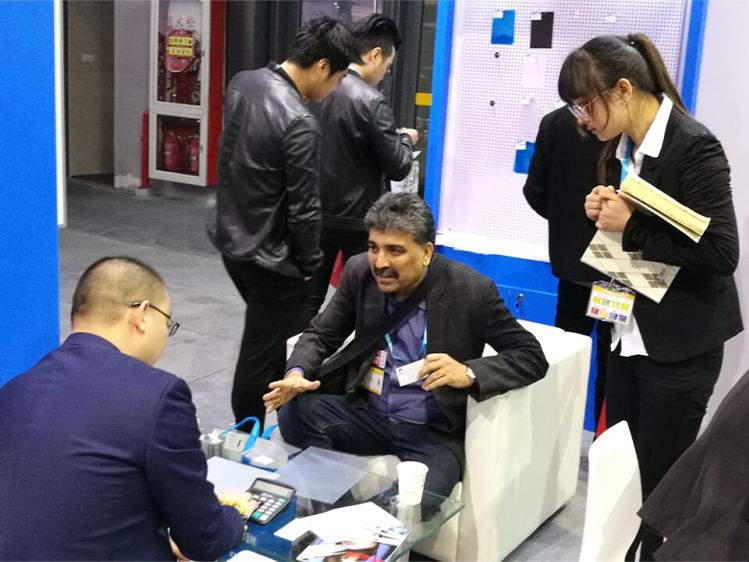
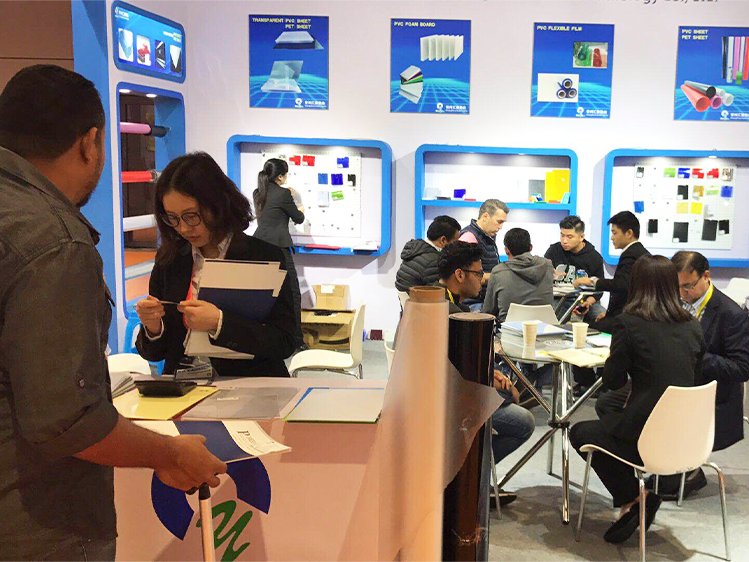
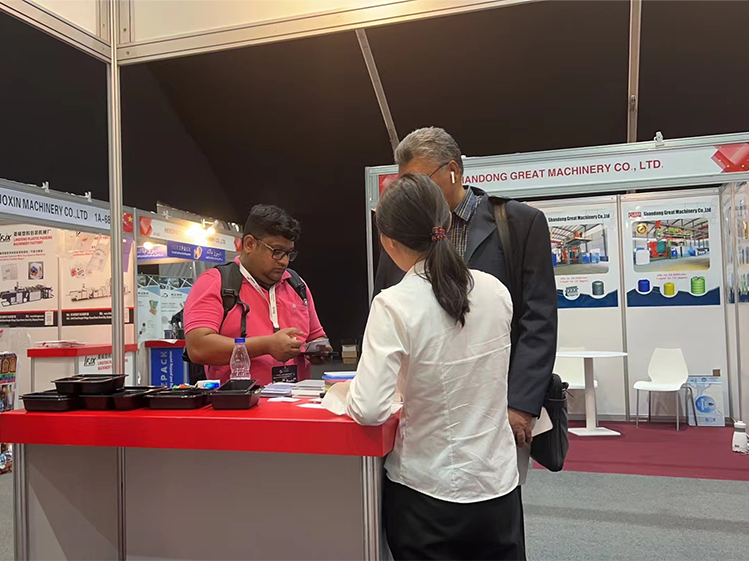
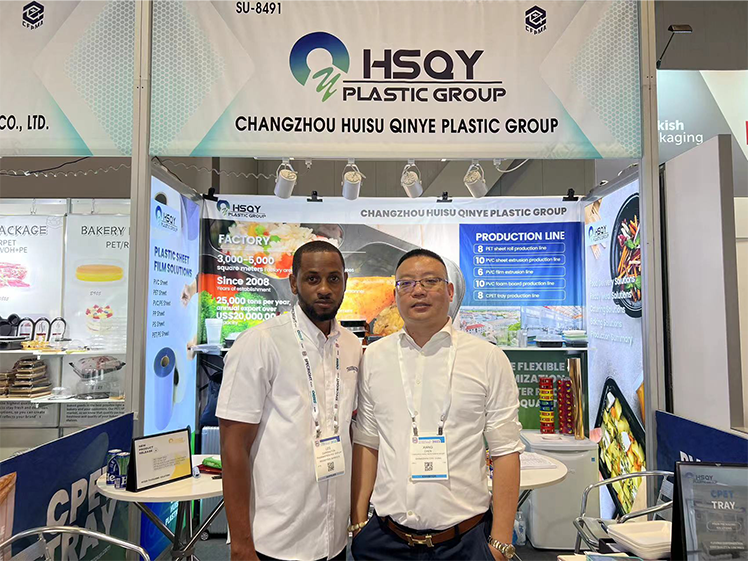
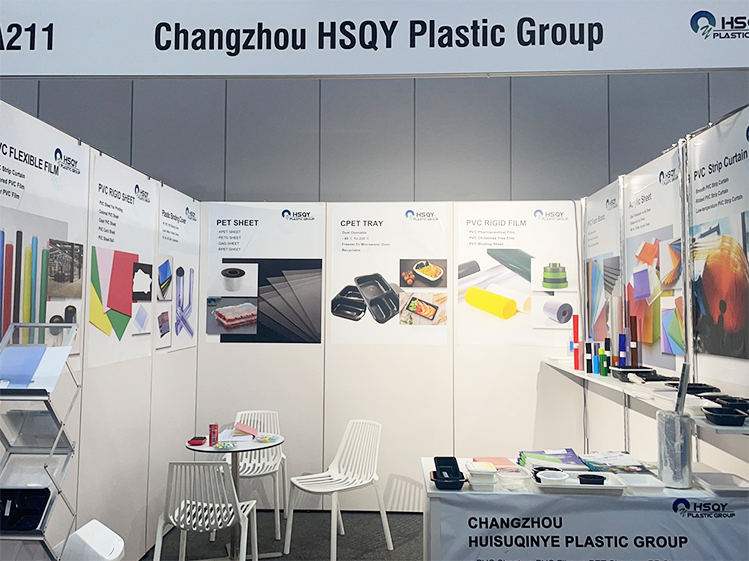
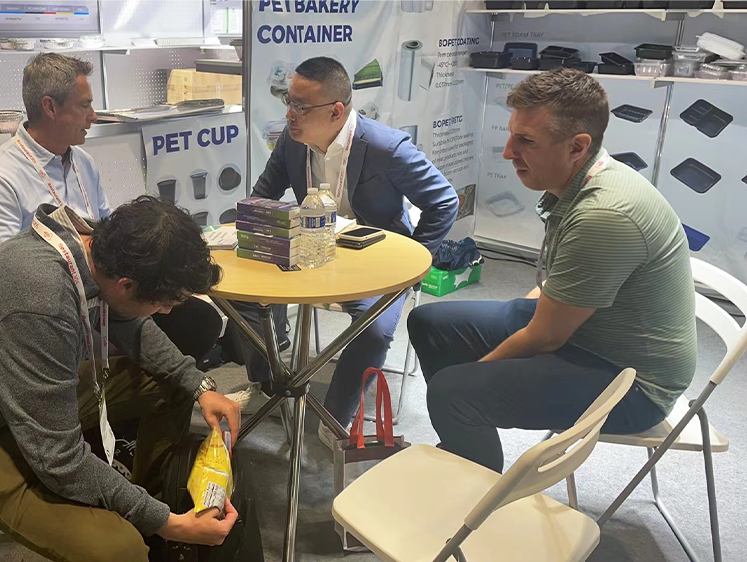
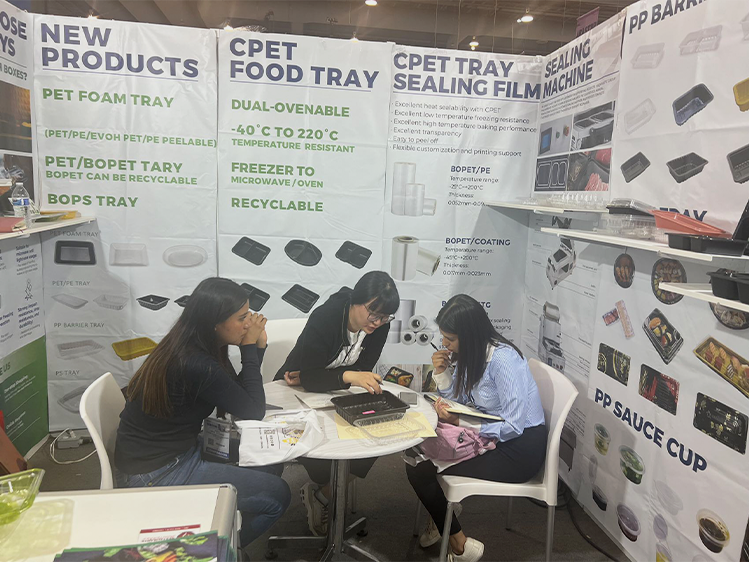
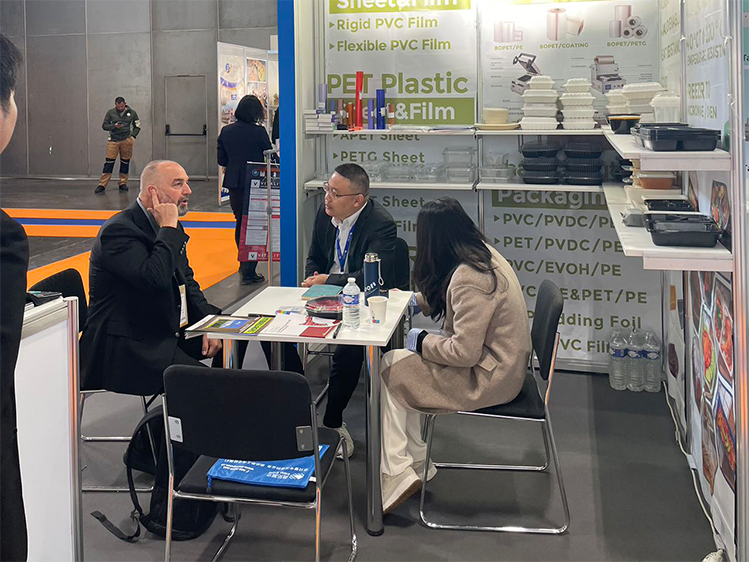
HSQY at Global Exhibitions

2017 Shanghai Exhibition

2018 Shanghai Exhibition

2023 Saudi Exhibition

2023 American Exhibition

2024 Australian Exhibition

2024 American Exhibition

2024 Mexico Exhibition

2024 Paris Exhibition
Frequently Asked Questions
What is the difference between rigid PVC sheet and flexible PVC film?
Rigid PVC contains little or no plasticizer, so it is stiffer and retains its shape. Flexible PVC contains more plasticizer and is used for soft curtains, table covers, bags and flexible products.
Is 0.1mm PVC still considered rigid?
Yes. “Rigid” describes the formulation rather than whether a thin web can bend or be rolled. A 0.1mm rigid PVC sheet is flexible because it is thin, but it is not soft plasticized PVC film.
Which thickness is best for printing?
All three core gauges can be printed. The correct choice depends on press feeding, finished stiffness, folding design and application. A 0.2mm sheet is often evaluated where balanced stiffness and convertibility are required.
Can transparent PVC sheet be UV offset printed?
Yes, compatible clear rigid PVC grades can support UV offset printing. Test ink adhesion, curing energy, heat buildup, static, stack blocking and post-print conversion before production.
Can the film be screen printed?
Yes. Use PVC-compatible ink and verify adhesion, solvent resistance, opacity, drying, flexibility and rub resistance on the exact sheet surface.
Can clear rigid PVC be folded into packaging boxes?
Yes. Rigid PVC is used for transparent folding cartons. Crease geometry, fold direction, sheet temperature, thickness and impact formulation should be tested to reduce cracking or whitening.
Can 0.1mm–0.3mm PVC roll be thermoformed?
Yes, suitable grades can be thermoformed into shallow blisters, trays and clamshells. Forming depth and wall strength depend on gauge, mold geometry and process settings.
Is recycled PVC suitable for clear printing applications?
It may be suitable for selected projects, but recycled content can affect tint, haze, black spots, odor and consistency. Premium transparent graphics generally require virgin or tightly controlled material.
Is this clear PVC food safe?
Food-contact approval cannot be assumed from the material name. Request a dedicated formulation and current compliance documentation for the destination market and contact conditions.
Can clear PVC sheet be used outdoors?
Standard clear PVC is generally intended for indoor or short-term use. Long-term sunlight and weather exposure may cause yellowing, haze or brittleness unless a stabilized grade is specified.
What custom widths are available?
The listed production program supports customized widths up to 1280mm. Final width, tolerance, core and roll diameter depend on the selected thickness and equipment.
Can I request a printing sample?
Available stock samples can be supplied for clarity, printing, folding and forming trials. Confirm thickness, size, freight and delivery method with HSQY.
What is the MOQ?
The current product listing states 1,000kg. MOQ may vary for stock material, mixed thicknesses, custom colors, recycled content and special packing.
How do I get an accurate quotation?
Send the thickness, width, roll diameter, core, color, printing method, converting process, resin option, quantity, compliance requirements and destination port.
Why Choose HSQY as Your Clear PVC Sheet Roll Supplier?
Changzhou Huisu Qinye Plastic Group Co., Ltd. has more than 20 years of experience in plastic-sheet manufacturing and international supply. HSQY supports printers, packaging converters, thermoformers, distributors and industrial manufacturers with custom gauges, roll widths, cut sheets, colors, samples and export packing.
For a matched recommendation, share the press type, ink system, package drawing, fold or forming requirements, roll dimensions, annual volume and required documents. HSQY can then determine whether the project needs printing-grade PVC, thermoforming-grade PVC, recycled-content PVC or another transparent plastic sheet.
Need a custom clear PVC sheet roll for printing?
Send your thickness, width, printing method, conversion process, quantity and destination to receive a sample plan and quotation.
Contact HSQY Plastic


 Download PVC Clear Sheet Data Sheet