Pharmaceutical Grade Rigid PVC Blister Film
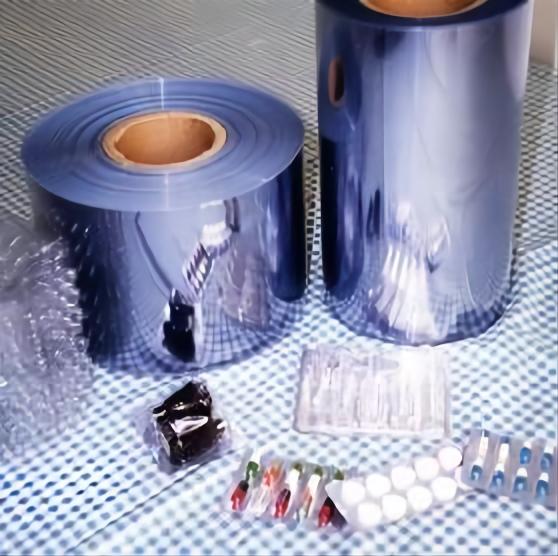
HSQY pharmaceutical rigid PVC film is a thermoformable forming web designed for blister packaging of tablets, capsules, pills and other stable solid-dose pharmaceutical products. The film provides clear appearance, controlled rigidity, consistent forming performance and compatibility with suitable aluminum push-through lidding foil.
HSQY supplies rigid pharmaceutical PVC film in thicknesses from 0.15mm to 0.5mm, widths up to 1000mm and roll diameters up to 600mm. Common reference widths include 130mm and 250mm, while slit width, thickness, roll diameter, core specification and packing can be customized according to the blister machine and approved packaging specification.
What Is Pharmaceutical Rigid PVC Blister Film?
Pharmaceutical rigid PVC film is a non-plasticized thermoplastic forming film used as the cavity-forming web in many thermoformed medicine blister packs. During packaging, the PVC web is heated, formed into cavities, filled with the dosage form and sealed to a compatible lidding material.
Clear PVC allows tablets and capsules to remain visible for inspection and presentation. Colored or opaque pharmaceutical grades may also be developed when identification, branding or light protection is required, subject to product-stability and regulatory evaluation.
Plain rigid PVC provides economical thermoforming performance and basic environmental protection, but it should not automatically be selected for highly moisture-sensitive or oxygen-sensitive medicines. Pharmaceutical package selection must be based on drug stability, target shelf life, distribution climate and the complete blister structure.
Rigid PVC Pharmaceutical Film Images

Pharmaceutical Rigid PVC Film

PVC Film for Tablet and Capsule Blisters

Rigid PVC Blister Forming Film
Pharmaceutical Rigid PVC Film Specifications
Roll dimensions should be matched to the blister machine, forming tooling, unwind system and production speed. Final specifications should be approved through line trials and pharmaceutical packaging qualification before commercial production.
| Property |
Details |
| Product Name |
Pharmaceutical Grade Rigid PVC Blister Film |
| Material |
Rigid PVC |
| Standard Color |
Clear; other colors subject to formulation and qualification |
| Thickness |
0.15mm - 0.5mm |
| Maximum Width |
Up to 1000mm |
| Common Reference Widths |
130mm and 250mm |
| Common Reference Gauge |
0.25mm - 0.33mm for selected existing specifications |
| Maximum Roll Diameter |
Up to 600mm |
| Supply Format |
Slit rolls and customized roll specifications |
| Forming Method |
Thermoforming on compatible pharmaceutical blister packaging equipment after line validation |
| Lidding Compatibility |
Compatible aluminum lidding foil with PVC-compatible heat-seal lacquer, subject to validation |
| Typical Application |
Tablet, capsule and other stable solid-dose pharmaceutical blister packs |
Key Requirements for Pharmaceutical PVC Blister Film
Consistent Thickness
Gauge consistency helps support uniform cavity formation, stable web handling and repeatable sealing conditions. Pharmaceutical buyers should define thickness and tolerance requirements as part of the approved specification.
Reliable Thermoforming
The PVC film should form consistent cavities without excessive thinning, distortion or web instability. Forming behavior depends on film grade, gauge, cavity geometry, heater design, line speed and forming pressure.
Clean Surface and Optical Quality
Clear pharmaceutical PVC should have controlled visual quality with minimal gels, crystal points, black spots, scratches, bubbles, flow lines and other defects that could affect appearance or machine performance.
Lay-Flat and Controlled Winding
Controlled flatness, winding tension, roll edges and surface slip help the forming web run consistently through the blister packaging machine.
Batch Traceability
Pharmaceutical packaging buyers should define requirements for lot identification, roll labels, inspection records, certificate documentation and change control within the approved supply specification.
Pharmaceutical Blister Packaging Process
In a typical thermoformed pharmaceutical blister process, the rigid PVC forming web is unwound and heated to a controlled forming temperature. The heated web is formed into cavities using vacuum, pressure or mechanical assistance depending on the packaging equipment.
Tablets or capsules are then loaded into the cavities. A compatible aluminum lidding foil is positioned over the formed web and sealed using controlled temperature, pressure and dwell time. The finished blister is then coded, perforated, cut and inspected according to the packaging process.
The forming web, lidding foil, heat-seal lacquer, cavity design and machine settings should be evaluated as one packaging system rather than as independent materials.
Plain PVC vs High-Barrier Pharmaceutical Blister Films
Plain rigid PVC is widely used for standard pharmaceutical blister packs, but it provides a lower moisture barrier than higher-barrier coated or laminated structures. The correct material should be selected from product-stability data rather than cost or forming performance alone.
| Structure |
Barrier Level |
Typical Selection |
| Rigid PVC |
Basic barrier |
Stable solid-dose products with moderate packaging-protection requirements |
| PVC / PVDC |
Higher moisture and oxygen barrier |
More moisture-sensitive or oxygen-sensitive products |
| PVC / PCTFE |
Very high moisture protection depending on laminate structure |
Highly moisture-sensitive products requiring transparent high-barrier packaging |
| Cold-Form Aluminum |
Very high barrier to moisture, oxygen and light when correctly formed and sealed |
Highly sensitive pharmaceutical products after package validation |
HSQY's pharmaceutical PVC packaging material range includes rigid PVC and related laminated or coated structures for different blister packaging requirements.
How to Select PVC Film Thickness for Blister Packaging
Film thickness should be selected according to cavity geometry, dosage-form dimensions, web width, required stiffness, forming depth and blister machine conditions. A deeper or more complex cavity can produce greater local thinning during thermoforming.
| Selection Factor |
Information to Confirm |
| Dosage Form |
Tablet, capsule or other solid dosage form |
| Cavity Geometry |
Cavity depth, diameter, corner radius and draw ratio |
| Machine Type |
Rotary, platen or other validated blister line |
| Production Speed |
Target line speed and heating time |
| Barrier Requirement |
Drug sensitivity, shelf life and storage climate |
Custom Roll Specifications for Blister Packaging Lines
Pharmaceutical blister-film buyers should specify more than width and thickness. Roll configuration directly affects unwind stability, changeover frequency and machine handling.
Film thickness and tolerance.
Slit width and width tolerance.
Core inside diameter and core material.
Maximum roll outside diameter.
Maximum roll weight accepted by the machine.
Winding direction.
Surface slip or blocking requirement.
Maximum permitted number of joints or splices.
Roll label and batch-traceability requirements.
Protective packaging and pallet specification.
Aluminum Lidding Foil Compatibility
Rigid PVC is commonly sealed to pharmaceutical aluminum push-through foil coated with a heat-seal lacquer compatible with PVC. Reliable sealing depends on the complete combination of forming film, lacquer, sealing temperature, pressure, dwell time and sealing-tool design.
Before commercial approval, the converter should validate seal strength, appearance, leak performance and package integrity under the specified production and stability conditions.
Applications of Pharmaceutical Rigid PVC Film
Plain rigid PVC is primarily used as a forming web for relatively stable solid-dose medicines where transparency, economical processing and standard thermoforming performance are required.
Tablet Blister Packaging: Clear or colored blister cavities for round, oval and other tablet formats.
Capsule Blister Packaging: Thermoformed cavities for hard capsules and other qualified capsule products.
Pill and Nutraceutical Packaging: Selected solid-dose healthcare and nutraceutical products after material and stability evaluation.
Veterinary Pharmaceutical Packaging: Selected veterinary tablets and capsules where the approved blister structure meets product requirements.
Liquid-dose, suppository and high-barrier applications may require specialized laminated or coated structures rather than standard mono rigid PVC.
Pharmaceutical Quality and Documentation Requirements
Pharmaceutical primary packaging requires material-specific qualification. General company certificates or third-party inspection reports should not be treated as sufficient proof that a particular PVC grade is approved for every medicine or every market.
Buyers should confirm the required documentation for the exact material grade, manufacturing site and destination market. Depending on the qualification program, the requested package may include:
Approved product specification.
Certificate of Analysis or Certificate of Conformance where applicable.
Batch and roll traceability.
Raw-material and restricted-substance information.
Applicable pharmaceutical packaging or pharmacopeial documentation where available.
Quality-management documents covering the relevant production site.
Change-control and notification requirements.
Storage, shelf-life and retest information where applicable.
Quality Inspection Items
| Inspection Area |
Typical Checks |
| Dimensions |
Thickness, thickness variation, slit width and width tolerance |
| Visual Quality |
Gels, black spots, fish eyes, scratches, flow lines, bubbles and contamination |
| Web Performance |
Lay-flat, curl, blocking, shrinkage, slip and static behavior |
| Roll Quality |
Winding, edge alignment, core condition, roll diameter and permitted joints |
| Identification |
Product code, batch number, roll number, production information and traceability label |
Storage and Handling of Pharmaceutical PVC Film
Keep pharmaceutical PVC rolls in their original protective packaging in a clean, dry and ventilated storage area away from direct sunlight, excessive heat, dust and contamination.
When rolls are moved from a cold warehouse into a warmer production area, allow sufficient conditioning time before opening the protective packaging to reduce the risk of condensation on the film surface.
Storage period, retest requirements and any environmental limitations should follow the approved product specification supplied for the exact grade.
Information Required for a Pharmaceutical PVC Film Quote
Required thickness and tolerance.
Slit roll width and tolerance.
Core inside diameter.
Maximum roll diameter or roll weight.
Clear, tinted or opaque color requirement.
Blister machine manufacturer and model where available.
Cavity dimensions or blister drawing.
Tablet, capsule or other dosage-form type.
Required lidding foil and sealing system.
Target market and pharmaceutical documentation requirements.
Initial quantity and estimated annual volume.
Packing requirement and destination port.
Certifications and Supporting Documents
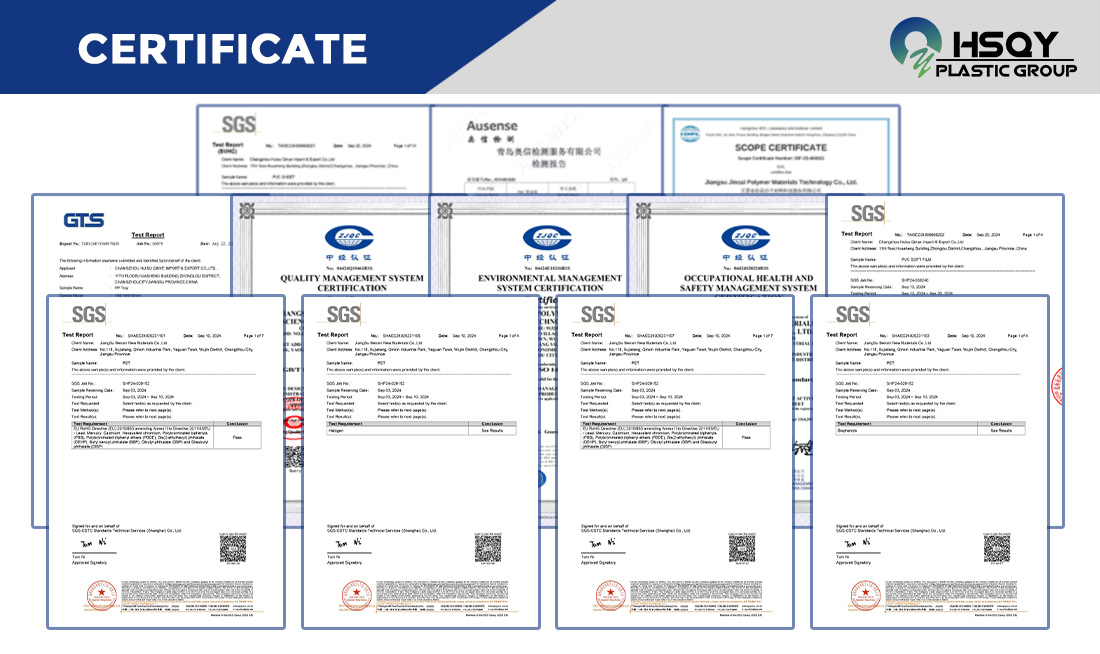
The certificate image below is retained from the original product page. Buyers should request current, material-specific documents for the exact pharmaceutical PVC grade and manufacturing site rather than relying only on a general certificate image.
If your qualification process requires specific pharmacopeial, regulatory, DMF, quality-system or restricted-substance documentation, provide the required document list before sample approval or commercial ordering.

HSQY Plastic Group Global Exhibitions
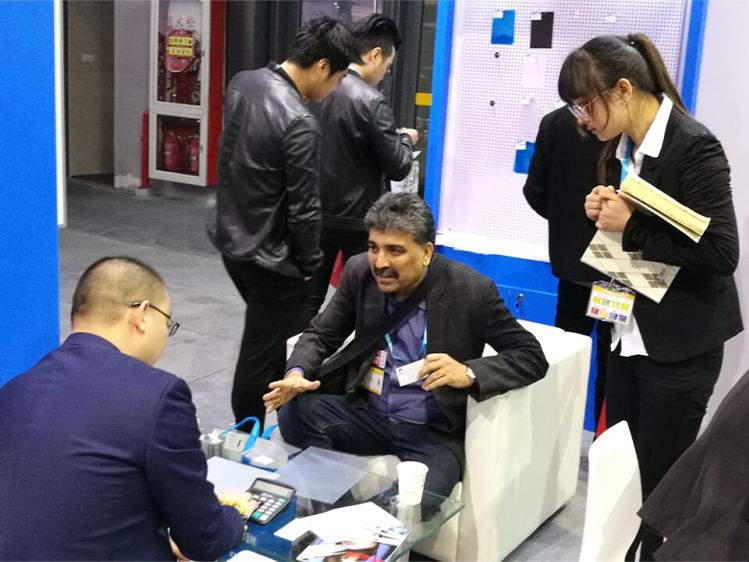
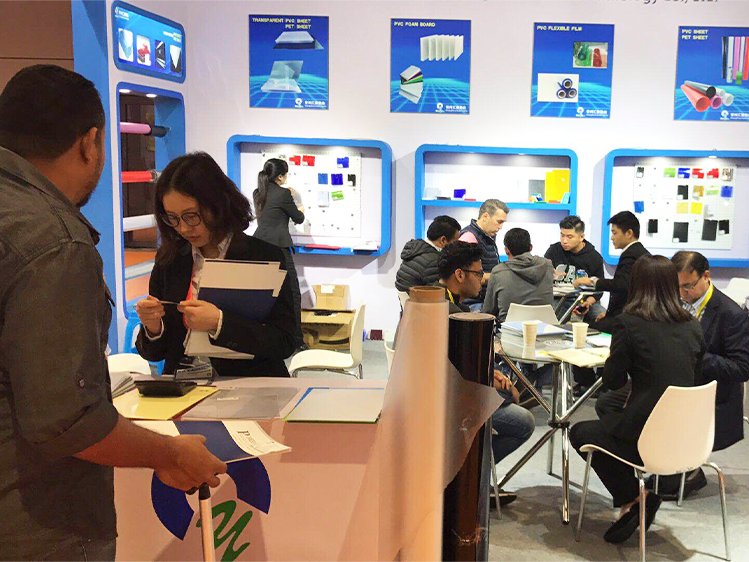
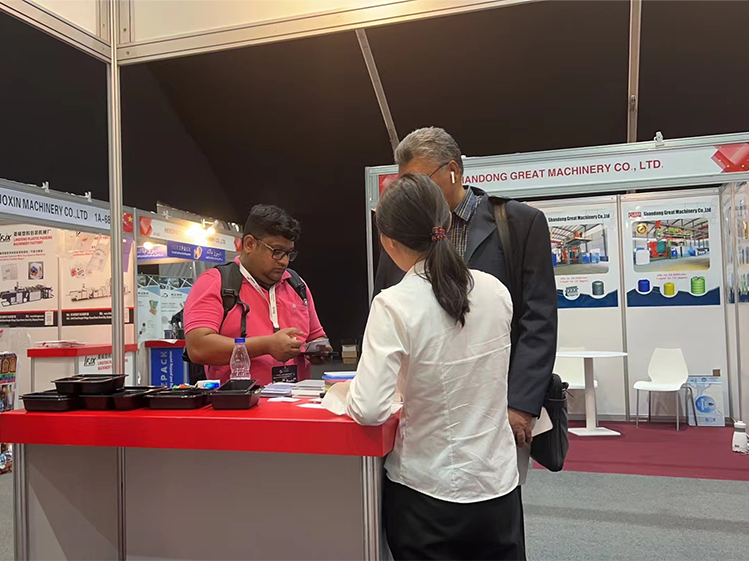
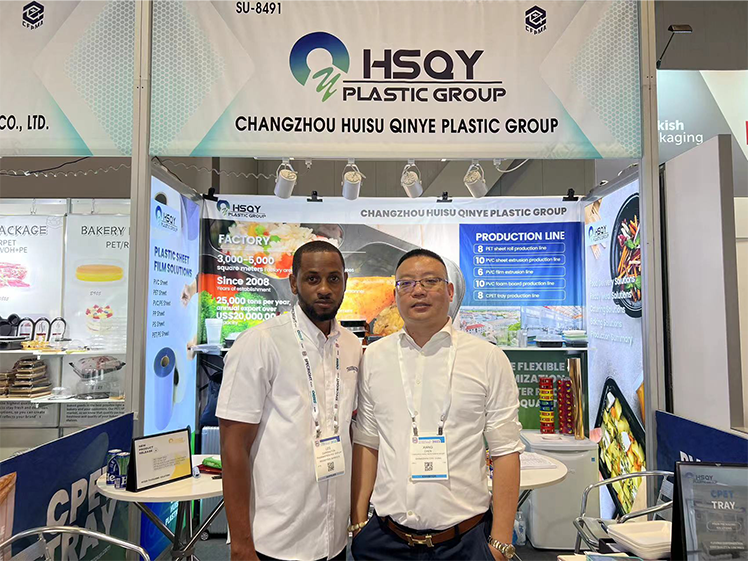
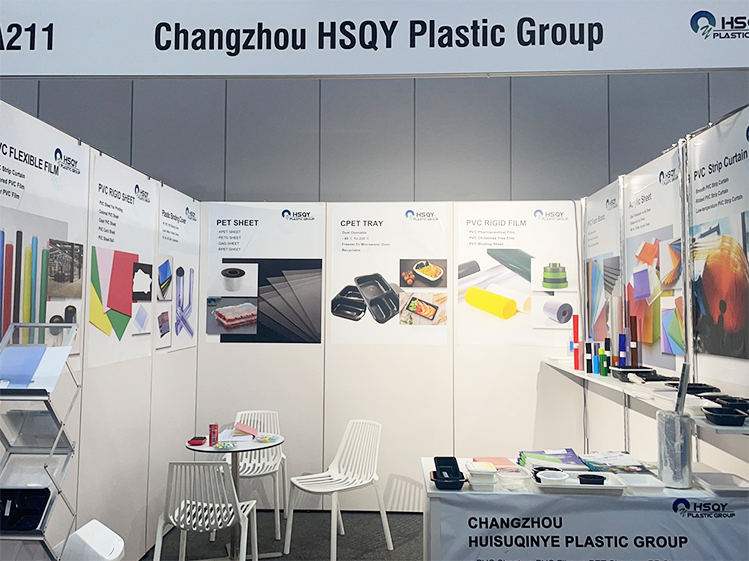
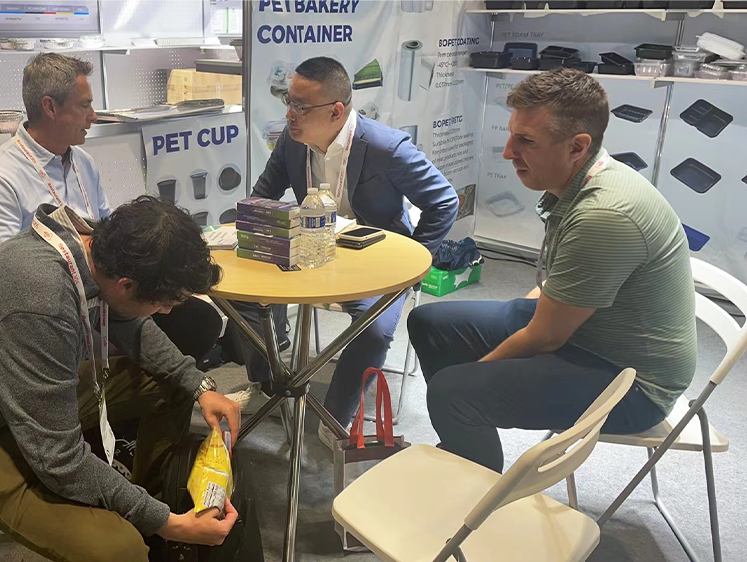
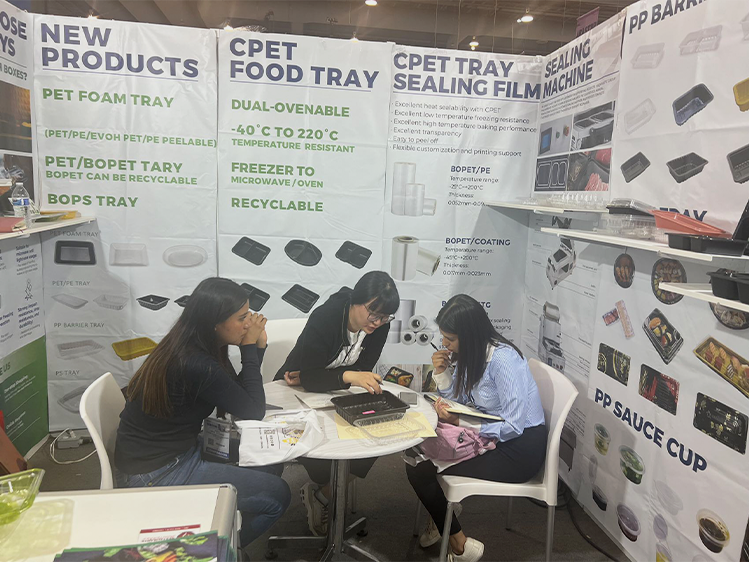
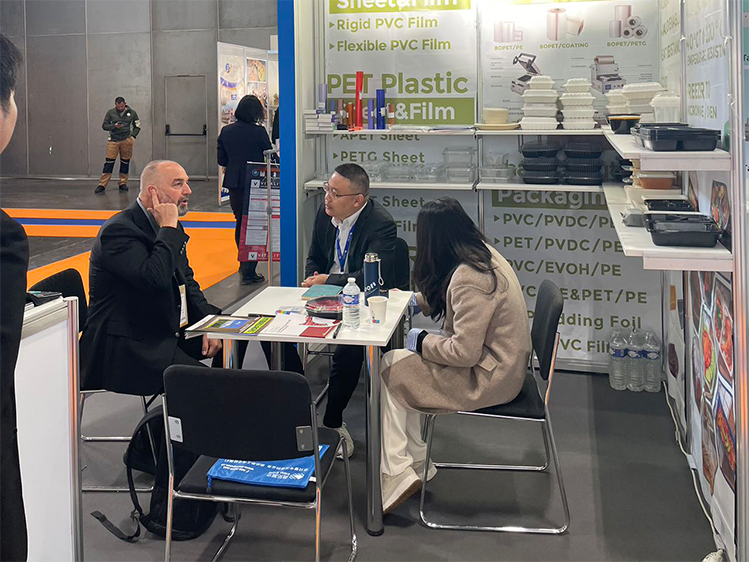
HSQY Plastic Group meets pharmaceutical packaging converters, distributors and industrial buyers at international exhibitions to discuss material structures, blister-machine specifications, trial rolls, quality requirements and long-term supply programs.

2017 Shanghai Exhibition

2018 Shanghai Exhibition

2023 Saudi Exhibition

2023 American Exhibition

2024 Australian Exhibition

2024 American Exhibition

2024 Mexico Exhibition

2024 Paris Exhibition
Frequently Asked Questions About Pharmaceutical PVC Film
What is pharmaceutical rigid PVC film?
Pharmaceutical rigid PVC film is a thermoformable forming web used to create cavities in blister packs for tablets, capsules and other qualified solid-dose products.
What thickness of PVC film is used for pharmaceutical blisters?
This HSQY product listing covers 0.15mm to 0.5mm. The correct gauge depends on cavity depth, dosage-form dimensions, blister tooling and production conditions.
Is 250 micron PVC commonly used for blister packaging?
Approximately 250 micron is a common reference gauge for pharmaceutical rigid PVC, but it should not be selected automatically. The approved gauge must match the cavity geometry, blister machine and drug-packaging validation.
What is the difference between PVC and PVC/PVDC blister film?
Plain PVC provides the forming base and basic barrier. PVC/PVDC adds a PVDC barrier layer that provides greater resistance to moisture and oxygen, making it more suitable for sensitive formulations.
Is plain PVC suitable for every medicine?
No. Plain PVC is generally selected for relatively stable formulations with moderate barrier requirements. Moisture-sensitive, oxygen-sensitive or light-sensitive medicines may require higher-barrier or light-protective packaging after stability evaluation.
Can HSQY customize the PVC film width?
Yes. HSQY can discuss customized slit widths up to the listed maximum web width of 1000mm. Provide the blister machine, tooling width and required tolerance when requesting a quotation.
What is the maximum roll diameter?
The current product information lists a maximum roll diameter of approximately 600mm. The final roll diameter and roll weight should be matched to the customer's unwind system.
Can rigid PVC film seal to aluminum blister foil?
Yes, when the aluminum lidding foil uses a heat-seal lacquer compatible with PVC and the sealing temperature, pressure and dwell time are correctly validated.
Can pharmaceutical PVC film be colored?
Colored or opaque grades can be discussed for identification, appearance or selected light-protection requirements. The formulation must be reviewed and qualified for the intended pharmaceutical application.
Is rigid PVC suitable for liquid or suppository packaging?
Standard mono rigid PVC should not automatically be specified for these applications. Liquid-dose and suppository packaging often requires specialized laminated structures selected for sealing, chemical compatibility, flexibility and filling conditions.
What documents should I request for pharmaceutical PVC film?
Documentation depends on the target market and qualification program. Buyers should request documents covering the exact product grade and manufacturing site, including the approved specification, batch documentation and applicable pharmaceutical or regulatory support documents.
Can I get samples for blister machine testing?
Sample availability can be confirmed according to thickness and width. A trial roll is preferable when evaluating web handling, forming, filling and sealing on a commercial blister line.
What information is needed for a quotation?
Please provide thickness, slit width, core size, roll diameter or roll weight, dosage form, blister machine, cavity dimensions, color, annual demand, regulatory market, documentation requirements, packing method and destination port.
Why Buy Pharmaceutical PVC Film from HSQY?
HSQY supplies rigid PVC film and related pharmaceutical blister packaging materials for medicine manufacturers, pharmaceutical packaging converters and distributors. Customers can discuss customized gauge, slit width, roll diameter, color, packing and trial material according to their blister lines.
Send HSQY your blister machine model, cavity drawing, dosage-form sensitivity, target market and annual purchasing volume. Our team can evaluate whether plain PVC or a higher-barrier blister structure should be considered for the project.