HSQY 1mm flexible polystyrene sheet is a lightweight plastic sheet for printing, displays, signage, vacuum forming and thermoforming applications. The thin 1mm gauge provides easier bending and forming than thicker rigid sheets while still offering useful panel stiffness for professional fabrication.
Polystyrene sheet can be supplied in different grades depending on the required performance. High Impact Polystyrene (HIPS) is generally selected when toughness, forming and fabrication are priorities, while General Purpose Polystyrene (GPPS) is more appropriate when transparency and visual clarity are important.
The broader HSQY product range currently lists 0.8–12mm thicknesses, standard 1220 × 2440mm and 1220 × 1830mm sheet sizes, multiple colors and surfaces, and printing or forming options. Buyers should confirm the exact HIPS or GPPS grade according to the finished application.
1mm Flexible Polystyrene Sheet Video
Polystyrene Sheet Images

Clear Polystyrene Sheet

Colored Polystyrene Sheet for Display Applications
1mm Polystyrene Sheet Specifications
| Property |
Details |
| Product Name |
1mm Flexible Polystyrene Sheet |
| Material |
Polystyrene (PS); HIPS or GPPS grade should be confirmed according to application |
| Featured Thickness |
1mm |
| Broader Listed Thickness Range |
0.8–12mm |
| Standard Sizes |
1220 × 2440mm, 1220 × 1830mm |
| Colors |
Clear, Frosted, Black, White, Red, Blue, Custom |
| Listed Printing Methods |
UV Offset, Screen Printing |
| Primary Applications |
Signage, Displays, Vacuum Forming, Thermoforming, Fabrication |
| MOQ |
1000kg |
| Listed Documentation |
SGS, ISO 9001:2008; confirm current scope and applicability to the exact grade |
What Is 1mm Flexible Polystyrene Sheet?
A 1mm polystyrene sheet is a thin-gauge rigid thermoplastic panel that can flex more easily than thicker PS boards while still providing sufficient stiffness for printing, display fabrication, vacuum forming and other converted products.
The term “flexible” on this page refers to the behavior of a thin 1mm sheet compared with thicker rigid plastic panels. It should not be confused with soft flexible PVC film or elastomeric sheet materials.
The exact behavior of the sheet depends on whether the selected material is HIPS or GPPS, as well as sheet thickness, surface, temperature and fabrication method.
HIPS vs. GPPS for 1mm PS Sheet
| Selection Factor |
HIPS |
GPPS |
| Material Type |
Rubber-modified polystyrene |
General-purpose polystyrene |
| Typical Appearance |
Usually opaque or colored |
Can provide clear or transparent appearance |
| Impact Resistance |
Improved toughness and crack resistance compared with standard GPPS |
More rigid but generally more brittle |
| Thermoforming |
Commonly selected for vacuum forming and thermoformed products |
Can be formed for suitable applications but requires application-specific evaluation |
| Typical Direction |
Displays, signage, thermoforming, packaging, fabricated parts |
Clear display panels, transparent packaging and visibility-focused applications |
If the project requires both high clarity and higher impact resistance, buyers should provide the complete performance requirements rather than assuming one standard PS grade will provide both characteristics.
Why Choose 1mm Polystyrene Sheet?
The 1mm gauge offers a useful balance between low material weight, flexibility during fabrication and sufficient rigidity for many signs, display inserts, formed parts and printed products.
Compared with much thicker PS sheet, 1mm material is easier to bend, cut and thermoform into lightweight parts. Compared with very thin film, it provides greater panel stiffness for handling and display applications.
1mm HIPS Sheet for Thermoforming
Where impact resistance and forming performance are priorities, a suitable 1mm HIPS grade can be evaluated for thermoforming into trays, display components, covers, inserts and other lightweight three-dimensional parts.
Thermoforming changes material thickness across the finished part, especially in corners and deep-draw areas. Buyers should provide mold dimensions, forming depth, corner radii and target finished wall thickness when selecting the starting sheet.
1mm PS Sheet for Vacuum Forming
Vacuum forming is one of the applications listed on the original product page. Thin-gauge PS can be heated and formed over or into a mold to produce lightweight three-dimensional components.
For production parts, verify heating profile, mold geometry, sheet sag, draw ratio, shrinkage and wall-thickness distribution using the actual selected PS grade.
1mm PS Sheet for Printing
UV offset and screen printing are listed among the current product capabilities. Printed PS sheet can be used for signs, promotional graphics, POP displays, retail inserts and other visual communication products.
Printing performance depends on surface condition, ink system, curing process and any required surface treatment. Test the intended production ink and print process on the actual sheet before large-volume conversion.
1mm PS Sheet for Signage and Displays
The lightweight 1mm sheet can be evaluated for indoor signs, retail graphics, hanging displays, point-of-purchase components, exhibition panels and display inserts where a thin plastic substrate is preferred.
For unsupported large panels, consider sheet dimensions, mounting points, expected flatness and handling conditions because thin 1mm sheet will flex more than thicker display board.
Clear PS Sheet for Display Applications
Clear material is listed among the current color options. Where high transparency is required, confirm whether the requested grade is GPPS or another appropriate clear polystyrene grade.
Do not assume a clear GPPS sheet provides the same impact resistance as HIPS. Optical clarity and impact performance should be specified separately where both are important.
Colored PS Sheet for Retail Displays
The current product range lists black, white, red, blue and customized colors in addition to clear and frosted options.
Colored PS sheet can reduce the need for full-surface printed background color in suitable display designs and can be used for layered displays, inserts, decorative panels and thermoformed components.
For repeat color orders, provide a color reference and approve a representative production sample where consistency is important.
Frosted Polystyrene Sheet
Frosted PS is included among the current surface and color directions. A frosted appearance can reduce direct visibility and glare compared with a high-clarity surface.
Where optical diffusion, haze or privacy performance is important, specify measurable requirements and approve an actual sample instead of relying only on the word “frosted.”
Cutting and Fabrication
The current product attributes list cutting as one of the intended processing methods. Thin PS sheet can be converted using suitable cutting, trimming and fabrication equipment according to the material grade and finished design.
For precision fabrication, provide finished dimensions, cut profiles, holes, tolerances and edge requirements when requesting a material recommendation.
Flexibility and Handling of 1mm PS Sheet
At 1mm thickness, PS sheet can flex during handling and fabrication. The actual bending behavior depends on material grade, sheet width, unsupported length and temperature.
Thin sheets should be supported during storage and transportation to reduce unwanted bending or distortion, especially in large formats.
Impact Resistance Considerations
Impact resistance varies significantly between HIPS and GPPS grades. HIPS is specifically modified to improve toughness and resistance to cracking compared with standard general-purpose polystyrene.
The original page contains a relative comparison with acrylic, but no specific test method or grade is stated. Projects requiring a defined impact value should request technical data for the exact PS grade and thickness being supplied.
Outdoor Use and UV Exposure
The original page states that UV-resistant grades are available. This should be treated as an application-specific grade option rather than a standard property of every PS sheet.
For outdoor signage, specify UV exposure, temperature, expected service period, color-retention requirements and installation conditions so an appropriate grade can be reviewed.
1mm PS Sheet vs. Acrylic Sheet
| Selection Factor |
Polystyrene Sheet |
Acrylic Sheet |
| Typical Strength |
HIPS offers improved toughness; GPPS provides higher clarity but lower impact resistance |
Selected for optical clarity, rigidity and durable visual applications |
| Thermoforming |
HIPS is widely used for economical thermoformed parts |
Can be thermoformed for suitable applications with controlled processing |
| Printing |
Widely used for signage, POP and printed display applications |
Also printable depending on surface preparation and ink system |
| Typical Purchasing Direction |
Economical displays, forming, packaging and lightweight fabrication |
Premium transparent displays, polished components and visual applications |
Application Examples

Polystyrene Sheet for Signage & Display Applications

Polystyrene Sheet for Vacuum Forming
Typical Applications for 1mm PS Sheet
Printing: UV offset and screen-printed graphics, promotional panels and retail communication materials.
Signage: Lightweight indoor signs, advertising panels, hanging graphics and display inserts.
POP Displays: Retail display components, point-of-purchase panels and promotional structures.
Vacuum Forming: Lightweight trays, covers, display components and converted parts using suitable HIPS grades.
Thermoforming: Three-dimensional formed products selected according to grade, mold and draw requirements.
Fabrication: Cut, trimmed and converted parts for display, prototype and general industrial applications.
How to Specify 1mm Polystyrene Sheet
| RFQ Item |
Information to Provide |
| Application |
Printing, signage, display, vacuum forming, thermoforming or fabrication |
| PS Grade |
HIPS, GPPS or required application-specific grade |
| Thickness |
1mm for this featured product or another required thickness in the broader listed range |
| Sheet Size |
1220 × 2440mm, 1220 × 1830mm or required dimensions to be confirmed |
| Color |
Clear, frosted, black, white, red, blue or required custom color |
| Transparency |
Specify required clarity, transparency or opacity where applicable |
| Surface |
Required smooth, frosted, matte or other surface appearance where applicable |
| Printing |
UV offset, screen printing or other process to be evaluated |
| Thermoforming |
Mold dimensions, forming depth, corner radius and target finished wall thickness |
| Fabrication |
Cutting, trimming, drilling or other converted-part requirements |
| Impact Requirement |
Specify required test method or minimum performance where impact is critical |
| Outdoor Use |
Specify UV exposure and expected service period if exterior use is required |
| Quantity |
Required quantity; current listed MOQ is 1000kg |
| Destination |
Destination country or port |
Certification and Documentation
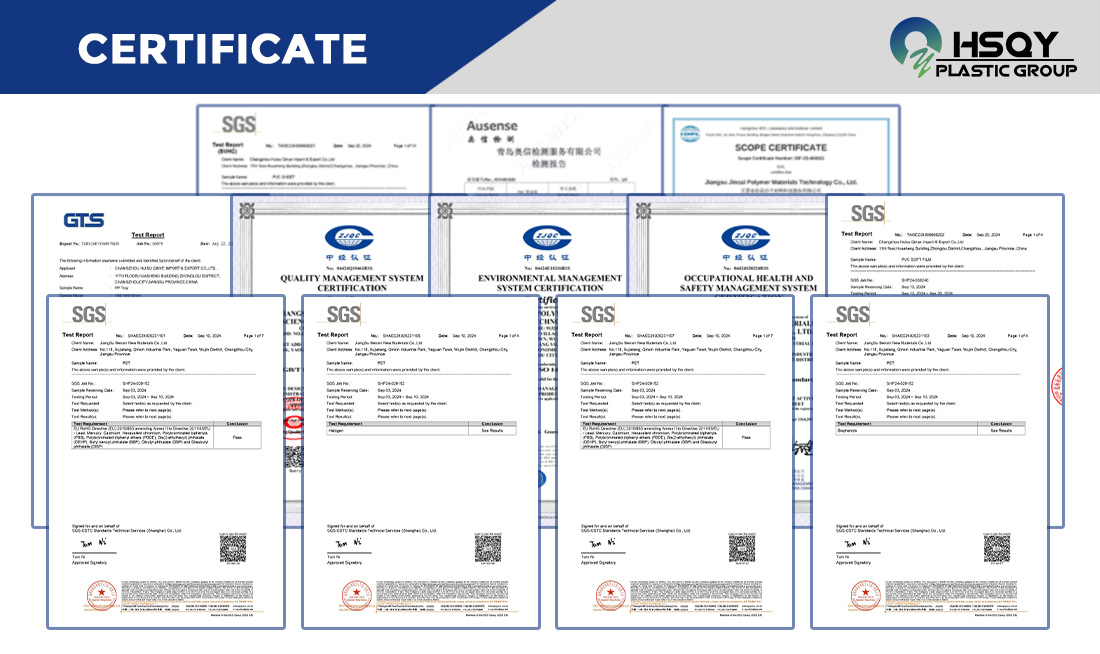
The current product page lists SGS and ISO 9001:2008. Buyers should request current copies and confirm the issuing organization, validity, scope and applicability to the exact HIPS or GPPS grade being purchased.

HSQY Certification Information
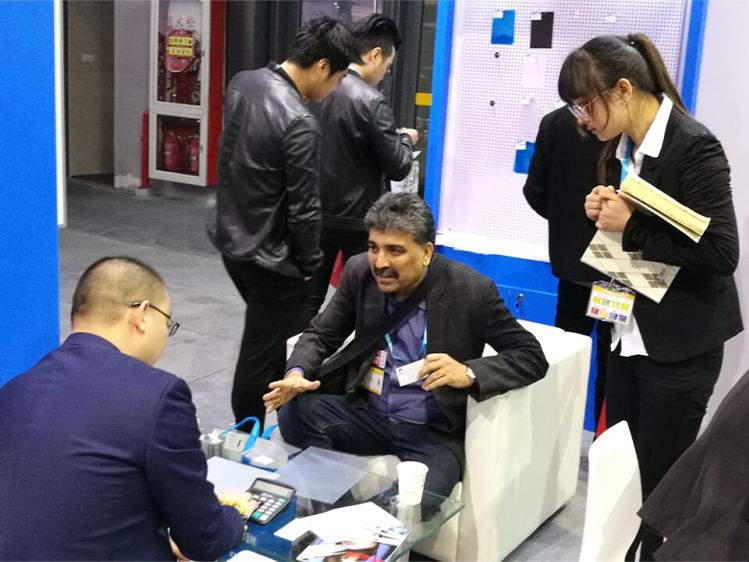
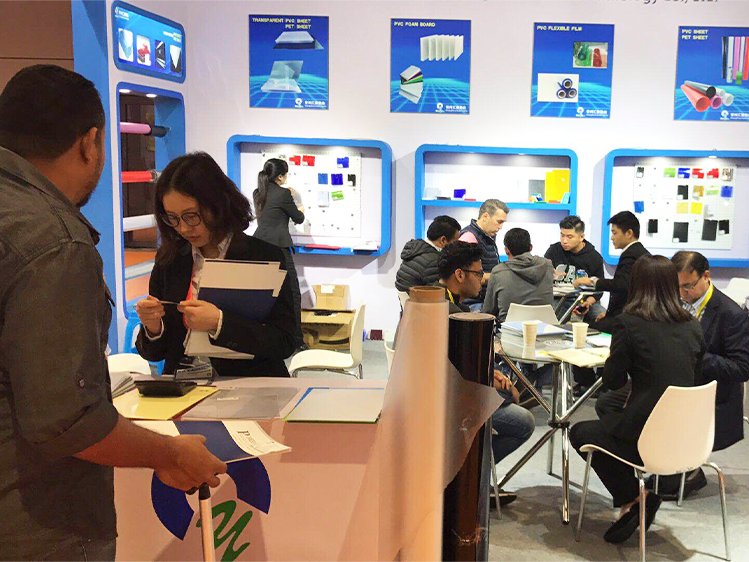
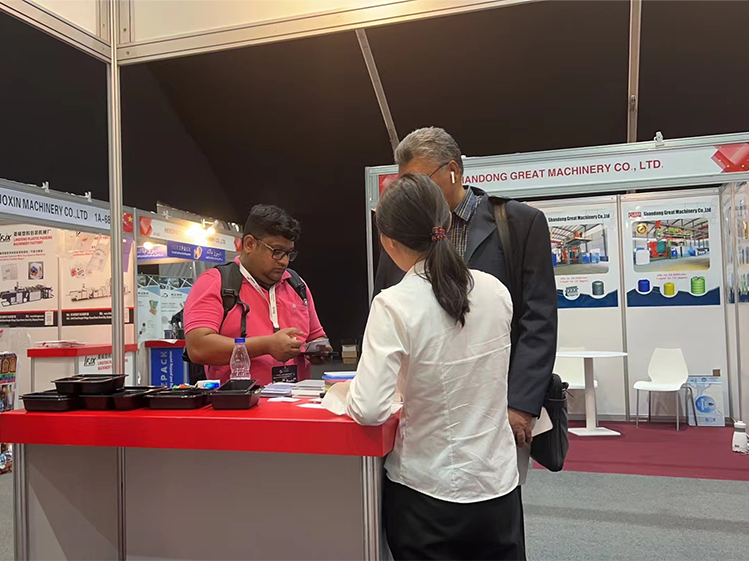
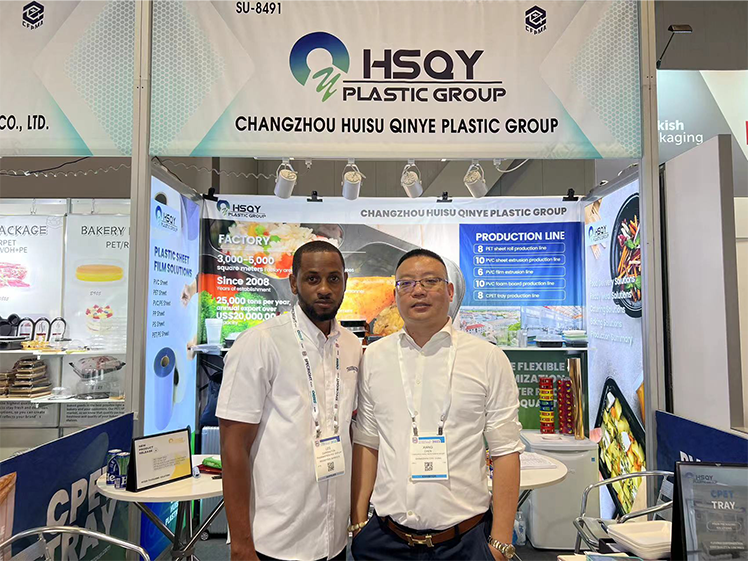
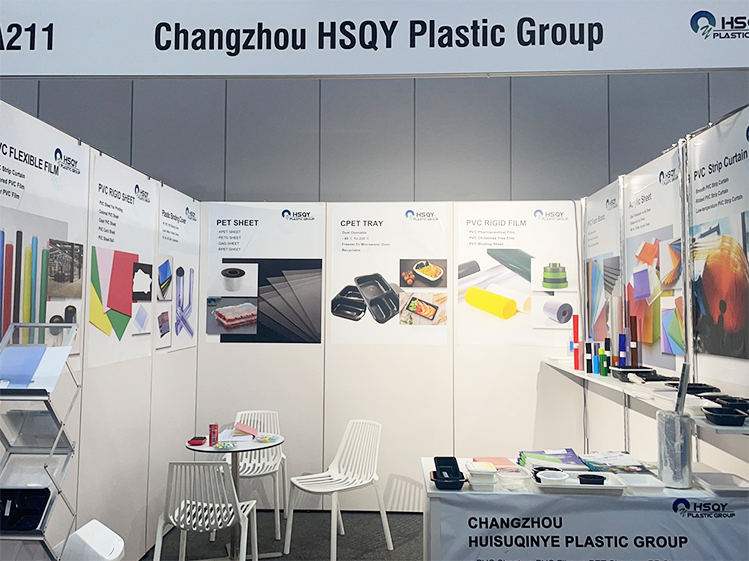
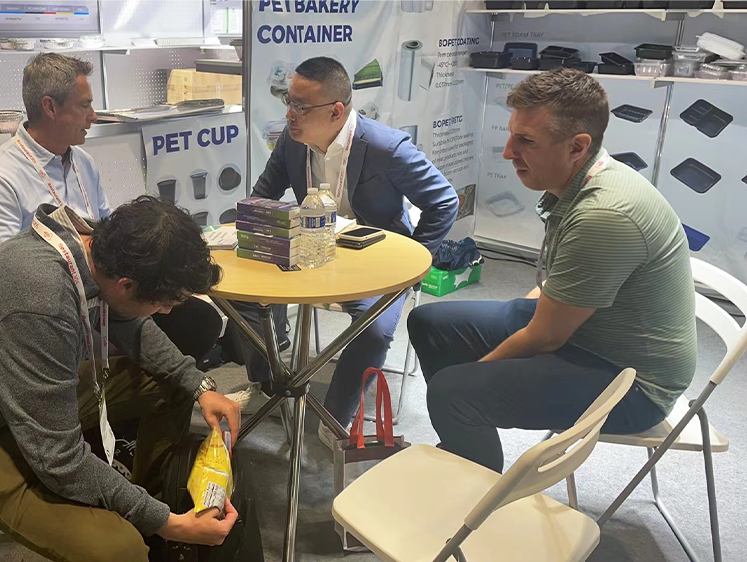
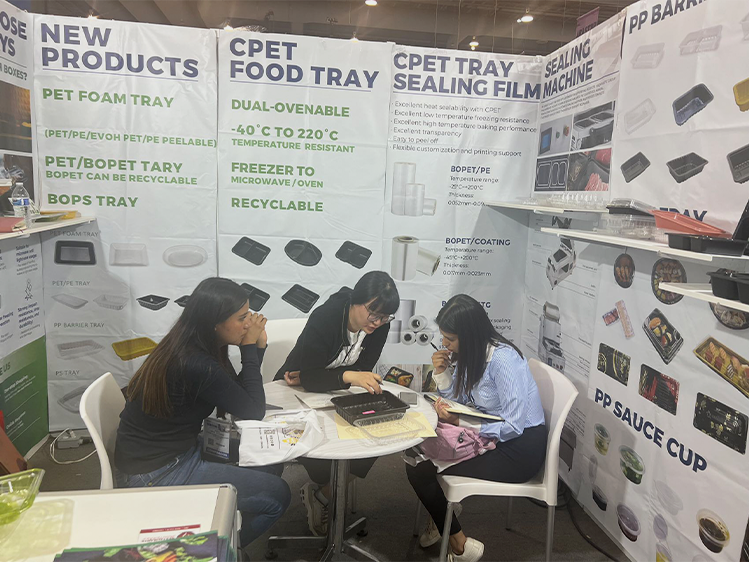
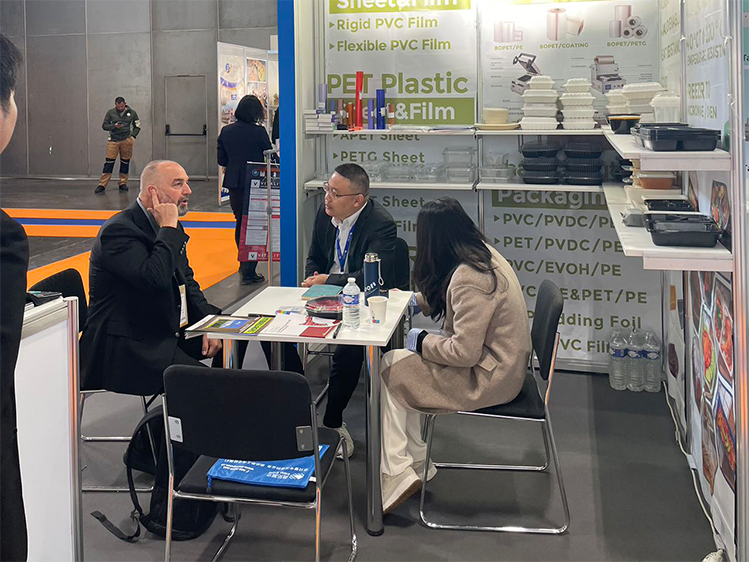
HSQY Global Exhibitions

2017 Shanghai Exhibition

2018 Shanghai Exhibition

2023 Saudi Exhibition

2023 American Exhibition

2024 Australian Exhibition

2024 American Exhibition

2024 Mexico Exhibition

2024 Paris Exhibition
Frequently Asked Questions About 1mm Polystyrene Sheet
Is 1mm polystyrene sheet flexible?
A 1mm PS sheet can flex more easily than thicker rigid plastic panels. It remains a semi-rigid sheet rather than a soft flexible film.
Is this product HIPS or GPPS?
The broader source page refers to both HIPS and GPPS. Buyers should confirm the exact grade according to whether impact resistance, forming or transparency is the priority.
What is the difference between HIPS and GPPS?
HIPS is rubber-modified polystyrene with improved toughness and crack resistance. GPPS is generally more rigid and can provide better transparency but is more brittle.
Can 1mm PS sheet be thermoformed?
Yes. Suitable PS grades can be thermoformed. HIPS is commonly selected for vacuum forming and lightweight formed products.
Can 1mm PS sheet be vacuum formed?
Yes. Vacuum forming is one of the listed applications. The actual sheet should be tested with the intended mold, heating profile and forming depth.
Can polystyrene sheet be printed?
Yes. UV offset and screen printing are currently listed. Ink and surface compatibility should be confirmed before volume production.
Can 1mm PS sheet be used for signage?
Yes. Signage and displays are listed applications. Thin 1mm sheet is particularly suitable for lightweight supported signs, inserts and promotional graphics.
Can the sheet be transparent?
Clear material is listed. Where transparency is important, confirm the exact GPPS or clear PS grade and required optical performance.
Is clear PS sheet the same as HIPS?
Not necessarily. HIPS is usually selected for improved impact resistance and is commonly opaque, while clear polystyrene is generally associated with GPPS or another transparency-focused PS grade.
What colors are available?
The current product range lists clear, frosted, black, white, red, blue and custom colors.
What standard sizes are available?
The current detailed specification lists 1220 × 2440mm and 1220 × 1830mm.
What other thicknesses are available?
The broader product page currently lists thicknesses from 0.8mm to 12mm.
Is HIPS stronger than acrylic?
Impact performance depends on the exact HIPS and acrylic grades, thickness and test method. Where numerical impact resistance is important, request grade-specific test data rather than relying on a general comparison.
Is polystyrene sheet unbreakable?
No plastic sheet should be described as universally unbreakable. HIPS provides improved toughness compared with GPPS, but actual breakage resistance depends on grade, thickness, temperature and loading.
Can PS sheet be used outdoors?
The current page states that UV-resistant grades are available. Specify exterior use and required service conditions so the correct grade can be confirmed.
Can I order custom colors?
Custom colors are listed as available. Provide the required color reference and confirm a production sample where accurate color matching is important.
What is the MOQ?
The current listed minimum order quantity is 1000kg.
Are samples available?
The current product information lists free A4 samples with freight collected from the buyer. Confirm grade, thickness, color and surface before requesting a sample.
What information should I provide for a quotation?
Provide the application, required HIPS or GPPS grade, thickness, sheet dimensions, color, transparency, printing or forming process, quantity and destination.
About HSQY Plastic Group
HSQY Plastic Group supplies polystyrene sheets and other plastic sheet materials to thermoformers, printing companies, display manufacturers, sign fabricators, packaging converters, distributors and industrial buyers.
For 1mm polystyrene sheet projects, provide the required grade, sheet dimensions, color, optical appearance, printing or thermoforming process, quantity and destination so the appropriate material specification can be reviewed.