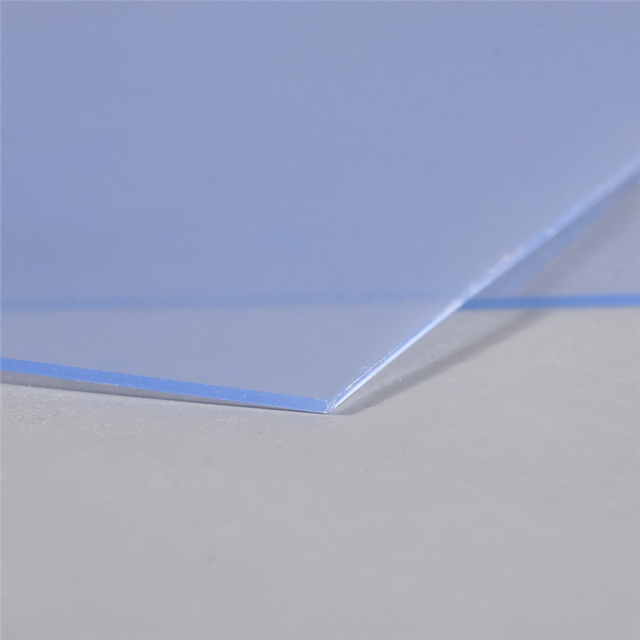
PVC Garment Template Sheet Manufacturer for Apparel Production
HSQY supplies rigid PVC garment template sheets for apparel pattern making, sewing-positioning templates, fabric cutting guides, collar and cuff templates, pocket-positioning jigs and repeated production layouts. These transparent or tinted plastic sheets provide better durability, moisture resistance and dimensional stability than disposable paper patterns.
Available options include clear, blue-tinted, white-tinted and custom-colored PVC sheets with glossy or matte surfaces, protective film, custom cutting and different rigidity levels. HSQY product series cover thin template sheets for tracing and positioning as well as thicker boards for long-term industrial pattern use.
Quick answer: A PVC garment sheet in this category is a rigid or semi-rigid plastic sheet used to make reusable clothing patterns and sewing templates. It is not the soft PVC film used for garment bags or clothing covers. The sheet is placed over fabric so operators can trace, position, mark or mechanically cut repeatable garment components.
What Is a PVC Garment Template Sheet?
A PVC garment template sheet is a clear or colored rigid polyvinyl chloride sheet converted into a reusable apparel pattern, sewing jig or cutting guide. The transparency allows operators to see fabric grain, printed motifs, stripes, checks, seam positions and reference marks beneath the template.
Unlike a paper sewing pattern, a PVC template can be used repeatedly in sampling rooms and production lines. It can be cut into shapes for collars, cuffs, pockets, sleeves, plackets, hems, quilting panels and other garment components where consistent positioning is required.
PVC Garment Template Sheet vs Soft PVC Garment Bag Film
| Selection Factor | Rigid PVC Garment Template Sheet | Soft PVC Garment Bag Film |
| Main Use | Pattern making, sewing positioning, tracing and cutting guides. | Garment covers, zipper bags, protective packaging and retail display. |
| Material Feel | Rigid or semi-rigid, flat and dimensionally stable. | Flexible, foldable and commonly plasticized. |
| Typical Processing | Mechanical cutting, punching, drilling, routing, printing and marking. | Heat sealing, stitching, zipper installation and bag conversion. |
| Primary Search Terms | PVC garment template sheet, plastic sewing pattern sheet, apparel cutting template. | Clear PVC garment bag film, clothing-cover film, soft PVC packaging sheet. |
PVC Garment Sheet Product Options
Different apparel factories use different template thicknesses, colors and surface treatments. The correct grade depends on template size, required stiffness, cutting method, number of reuse cycles and whether the operator needs to see fabric details through the sheet.
| Product Option | Main Characteristics | Typical Use |
| Clear PVC Template Sheet | High visibility of fabric grain, printed motifs and positioning marks. | General garment patterns, sewing guides and fabric alignment. |
| Blue-Tinted Transparent Sheet | Maintains transparency while making the template edge easier to identify on a worktable. | High-volume pattern rooms and production positioning. |
| White-Tinted or Colored Sheet | Provides stronger visual contrast and can help factories classify template families by color. | Template identification, departmental coding and specialized sewing jigs. |
| Glossy PVC Garment Sheet | Smooth surface with high clarity and easy cleaning. | Tracing, visual alignment and printed measurement templates. |
| Matte PVC Garment Sheet | Reduced glare under factory lighting and improved visibility of handwritten marks. | Pattern drafting, marking and production environments with strong overhead lighting. |
| Protective-Film PVC Sheet | Temporary surface film helps reduce scratches during transport and conversion. | High-clarity templates, precision conversion and export orders. |
| Virgin or Recycled PVC Options | Virgin material generally supports tighter appearance requirements; recycled-content options may support cost or material-efficiency targets. | Selected according to clarity, color, consistency, compliance and commercial requirements. |
HSQY product options include clear rigid PVC sheet for garment templates and transparent colored PVC garment template sheets. For other rigid sheet applications, browse the PVC sheet category.
Typical PVC Garment Template Sheet Specifications
HSQY has more than one garment-template sheet series. The table below summarizes published category and product-page ranges. Final thickness, size, tolerance, surface, color and certification must be confirmed for the selected grade.
| Specification | Typical HSQY Options |
| Material | Rigid PVC made from virgin or selected recycled raw material, depending on the grade |
| Published Thickness Range | Approximately 0.21–6.5 mm across selected product series; 0.5–1.5 mm is common in the dedicated colored garment-sheet series |
| Common Sheet Sizes | 500 × 765 mm, 610 × 915 mm, 700 × 1000 mm, 900 × 1200 mm, 900 × 1500 mm, 915 × 1830 mm and 1220 × 2400/2440 mm |
| Custom Dimensions | Custom sheet cutting is available; maximum width and length depend on the selected production line and thickness |
| Colors | Natural clear, transparent blue tint, white tint and custom colors |
| Surface | Glossy, matte or customized; protective film available for selected orders |
| Typical Density | Approximately 1.36–1.38 g/cm³ for selected clear rigid PVC grades |
| Printing and Marking | Screen printing, offset printing, compatible marker systems and mechanical engraving, subject to trial |
| Common MOQ | Approximately 1000 kg for published HSQY garment-template sheet models; custom grades may differ |
| Typical Lead Time | Approximately 7–14 days after specification and order confirmation for selected models |
How to Choose PVC Garment Sheet Thickness
Thickness affects stiffness, weight, cutting effort, template life and the minimum detail that can be produced. The recommendations below are general selection guidance. A sample should be tested with the actual template size and cutting process.
| Thickness Range | Typical Characteristics | Common Template Uses |
| 0.21–0.5 mm | Lightweight, relatively flexible and easy to cut with suitable hand or mechanical tools. | Tracing patterns, collar templates, small positioning pieces and short production runs. |
| 0.6–1.0 mm | Balanced rigidity and processability for repeated general-purpose use. | Pocket, cuff, placket, seam-positioning and medium-size garment patterns. |
| 1.2–1.5 mm | Higher stiffness, improved edge stability and longer service life. | Factory master patterns, repeated cutting guides and larger positioning templates. |
| 2.0–3.5 mm | Rigid, heavier and more resistant to bending during repeated production handling. | Large industrial templates, sewing fixtures and high-volume cutting guides. |
| Above 3.5 mm | Very rigid and normally requires powered mechanical conversion equipment. | Specialized jigs, industrial stencils and applications requiring substantial structural support. |
For large templates, stiffness depends on both thickness and unsupported span. A thin sheet may work for a small collar guide but bend excessively when used as a full garment panel. Send the pattern dimensions and intended processing method when requesting a recommendation.
Applications in Garment and Textile Manufacturing
Reusable garment master patterns
Fabric cutting and tracing guides
Pocket, collar, cuff and placket positioning templates
Seam allowance and stitching-line guides
Embroidery, printing and heat-transfer positioning jigs
Quilting, down-jacket and padded-panel templates
Leather-goods and footwear pattern templates
Home-textile, curtain, upholstery and bedding patterns
Industrial stencils and repeatable production layouts
Fashion sampling, grading reference and prototype development
Benefits of Rigid PVC for Garment Templates
Clear fabric alignment: Transparent grades allow operators to see grain direction, stripes, checks and printed motifs.
Dimensional stability: Rigid sheet maintains pattern geometry better than folded or moisture-affected paper.
Repeated use: Suitable for production templates that must be handled many times.
Moisture resistance: Does not absorb workshop humidity in the same way as paperboard templates.
Smooth marking surface: Supports measurements, reference lines, labels and selected printing systems.
Easy cleaning: Dust and many workshop marks can be removed using a compatible cleaning method.
Custom conversion: Can be mechanically cut, punched, drilled or routed into complex template shapes.
Cost-performance balance: Often provides a lower-cost reusable template solution than thick acrylic or machined metal.
PVC vs Paper, PET and Acrylic Garment Templates
| Material | Visibility | Durability | Processing | Best Fit |
| Rigid PVC | Clear and tinted grades available. | Good for repeated industrial use. | Mechanical cutting, punching, routing, printing and marking. | General apparel factories and reusable pattern systems. |
| Paper or Cardboard | Opaque unless cut with windows or reference holes. | Lower resistance to moisture, folding and repeated edge wear. | Easy to hand cut and revise. | Sampling, low-volume patterns and temporary designs. |
| PET or APET Sheet | Good transparency in suitable grades. | Good toughness and crease resistance. | Mechanical cutting and printing require grade-specific testing. | Projects prioritizing PET material characteristics or recycling-stream compatibility. |
| Acrylic | High optical clarity. | Rigid but can crack under impact or at sharp internal corners. | Usually needs suitable saws, routers or professional cutting equipment. | Thick master templates and highly rigid visual guides. |
| Metal | Opaque. | Very high service life and rigidity. | Requires specialized fabrication and edge finishing. | Permanent industrial jigs and very high-volume standardized production. |
Cutting, Punching, Printing and Marking Options
Rigid PVC garment sheets can be converted with mechanical tools selected for the sheet thickness and template geometry. Thin material may be cut with a suitable knife and straightedge, while thicker sheets generally require die cutting, guillotine cutting, CNC routing, sawing, drilling or other controlled mechanical processes.
Templates can include positioning holes, seam guides, notches, slots, reference windows and printed measurements. Screen printing and selected offset-printing systems can be used after confirming ink adhesion, drying conditions and resistance to factory handling.
Laser-cutting warning: Standard PVC must not be processed in conventional laser cutters. Heating PVC with a laser can generate hazardous and corrosive gases and may damage the equipment. Use approved mechanical cutting methods, or select a non-PVC laser-compatible template material after consulting the machine manufacturer.
How to Reduce Burrs and Edge Damage
Match blade geometry and cutting speed to sheet thickness.
Support the sheet on a flat surface during conversion.
Avoid excessive heat generated by blunt tools or high-speed friction.
Use adequate corner radii where repeated stress could initiate cracking.
Deburr and inspect edges before the template contacts delicate fabric.
Keep protective film in place until conversion is complete when surface clarity is critical.
How to Select the Correct PVC Garment Template Sheet
Define the template function: Tracing, sewing positioning, fabric cutting, printing alignment or a structural production jig.
Provide template dimensions: Large patterns require greater stiffness than small collar or pocket guides.
Select transparency: Use clear or tinted transparent sheet when fabric grain, motifs or previous marks must remain visible.
Choose thickness: Balance stiffness, cutting difficulty, total template weight and service-life expectations.
Confirm surface finish: Glossy grades maximize clarity; matte grades reduce glare and may improve marking visibility.
Confirm processing method: Specify hand cutting, die cutting, punching, routing, sawing, drilling or printing.
Define material requirements: State whether virgin PVC, recycled-content PVC, a specific color or protective film is required.
Test samples: Evaluate clarity, flatness, edge quality, marking adhesion and repeated-use performance before bulk production.
Virgin PVC vs Recycled PVC Garment Sheets
Virgin PVC is commonly selected when high clarity, color consistency, surface quality and tightly controlled physical properties are priorities. Recycled-content PVC can be suitable for applications where opacity, tint variation or minor visual variation is acceptable and the primary requirement is functional template performance.
Recycled-content level alone does not determine environmental performance or fitness for use. Buyers should define clarity, color, odor, flatness, mechanical strength, restricted-substance requirements and traceability. Samples from the proposed production formulation should be approved before bulk purchase.
Custom Sizes, Colors and Conversion Services
HSQY can support custom garment-template sheet projects for apparel factories, pattern-making suppliers, sewing-machine template integrators, textile manufacturers and plastic distributors. Available services depend on the grade, thickness and order volume.
| Customization | Information Required | Key Consideration |
| Custom Thickness | Target thickness, tolerance, rigidity and final template dimensions. | Non-standard gauges may require a higher MOQ. |
| Custom Sheet Size | Width, length, squareness and edge requirements. | Maximum dimensions depend on production-line width, thickness and packaging method. |
| Custom Color or Tint | Physical color reference, transparency target and order quantity. | Tint affects light transmission and fabric visibility. |
| Protective Film | One-side or two-side protection, peel strength and printing requirements. | Protective-film adhesive must release cleanly without residue. |
| Cut-to-Size Service | Final dimensions, quantity, tolerance and edge finish. | Complex finished template shapes require drawing review and process confirmation. |
| Printing or Marking | Artwork, line width, color, position and abrasion requirement. | Ink adhesion must be tested on the exact surface and grade. |
Quality Control for PVC Garment Template Sheets
A garment-template sheet should be evaluated according to measurable production requirements. Depending on the agreed specification, quality control may include:
Thickness and thickness tolerance
Sheet width, length, squareness and diagonal variation
Flatness, warpage and curl
Transparency, haze and tint consistency
Surface scratches, black spots, flow marks and visible inclusions
Rigidity, impact resistance and edge-crack behavior
Printing, marking and cleaning compatibility
Protective-film adhesion and clean removal
Cutting, punching and drilling performance
Packaging integrity and pallet protection
Common Problems and Corrective Actions
| Problem | Possible Causes | Recommended Checks |
| Template Bends or Shifts | Sheet too thin, template too large, uneven support or excessive workshop heat. | Increase thickness, add support points and confirm storage temperature. |
| Poor Fabric Visibility | High haze, dark tint, scratched surface or protective film still attached. | Select a clearer grade and review handling and protective-film removal. |
| Edges Chip or Crack | Blunt tool, excessive cutting speed, sharp internal corners, low temperature or unsuitable grade. | Optimize mechanical tooling, use corner radii and condition material before cutting. |
| Printed Lines Rub Off | Ink incompatibility, insufficient drying, contamination or unsuitable surface energy. | Run adhesion trials using the exact ink, surface and cleaning process. |
| Sheet Arrives Warped | Poor pallet support, high storage temperature, uneven strapping or unsupported overhang. | Review flat-sheet packaging, pallet dimensions, strap pressure and warehouse conditions. |
| Protective Film Leaves Residue | Excessive storage time, heat exposure or incompatible adhesive. | Specify storage limits and test film removal after the expected logistics cycle. |
Storage, Handling and Cleaning
Store sheets flat on a fully supported pallet or rack.
Keep away from heaters, direct sunlight and excessive warehouse temperatures.
Avoid unsupported overhang that can cause permanent curl or bending.
Use gloves when optical clarity is important to reduce fingerprints and scratches.
Separate finished templates with clean interleaving material when stacking.
Test cleaners on a small area before use; aggressive solvents may attack PVC or remove printed marks.
Do not iron, flame-treat or expose templates to uncontrolled high heat.
Packaging and Export Supply
PVC garment template sheets can be packed in protective bags, kraft paper, PE film, cartons or plywood pallets according to thickness, size and shipment method. Published HSQY options include sheet packs, pallet loads and container shipments for international buyers.
Before ordering, confirm sheets per pack, net weight, gross weight, pallet dimensions, maximum stacking height, edge protection and moisture protection. Large-format sheets should be fully supported to reduce corner damage and transport warpage.
Compliance and Sustainability Considerations
Selected HSQY product pages reference SGS, RoHS and quality-system documentation. Required documents should be confirmed for the exact formulation, color, recycled-content level and shipment batch. A general certificate for another PVC product should not be assumed to cover the ordered garment-template sheet.
Rigid PVC may be recyclable where a suitable collection and processing route exists, but actual recycling depends on local infrastructure, contamination, color, additives and whether the templates are collected separately. Avoid describing PVC as biodegradable. For projects with material-reduction targets, consider template service life, thickness optimization, production scrap recovery and take-back arrangements.
Why Choose HSQY as Your PVC Garment Sheet Supplier?
Rigid PVC sheet series developed for apparel patterns and sewing templates
Clear, blue-tinted, white-tinted and custom-color options
Multiple thicknesses for lightweight tracing sheets and rigid industrial templates
Glossy, matte and protective-film surface options
Custom sheet sizes and selected cut-to-size services
Virgin and selected recycled-material solutions
Sample support for clarity, cutting, printing and stiffness evaluation
Bulk pallet packaging and international export support
Request PVC Garment Template Sheet Samples and Pricing
To receive an accurate recommendation and quotation, provide:
Required thickness and tolerance
Sheet width, length and final template dimensions
Clear, blue tint, white tint or custom color
Glossy, matte or other surface requirement
Virgin or recycled-content material preference
Mechanical cutting, punching, routing, printing or marking method
Protective-film and cut-to-size requirements
Order quantity and annual forecast
Destination country and required compliance documents
Packing, pallet and shipping terms
Contact HSQY through the inquiry page to request samples, technical specifications, packing data and wholesale pricing.
FAQ About PVC Garment Template Sheets
What is a PVC garment template sheet?
It is a rigid or semi-rigid PVC plastic sheet used to create reusable garment patterns, sewing-positioning templates, fabric cutting guides and production jigs. Clear grades allow operators to align templates with fabric grain and printed motifs.
Is PVC garment sheet the same as PVC garment bag film?
No. Garment template sheet is rigid and used for pattern making and sewing production. Garment bag film is soft, flexible and used to manufacture clothing covers and packaging bags.
What thickness is best for garment templates?
Thin sheets around 0.3–0.5 mm are suitable for lightweight tracing and small templates. Approximately 0.6–1.5 mm is commonly used for reusable general-purpose patterns, while thicker sheets provide more rigidity for large or long-life industrial templates.
What sizes are available?
Common HSQY sizes include 610 × 915 mm, 700 × 1000 mm, 900 × 1200 mm, 900 × 1500 mm, 915 × 1830 mm and 1220 × 2400 or 2440 mm. Custom cutting is available within the selected production line's limits.
Why are some PVC garment sheets blue-tinted?
A light blue tint keeps the sheet transparent while making its outline easier to identify on fabric and work surfaces. It can also help distinguish PVC templates from clear protective sheets or other materials.
Can PVC garment template sheets be printed?
Yes. Selected rigid PVC surfaces support screen printing, offset printing and compatible marking systems. Ink adhesion, drying and abrasion resistance should be tested on the exact sheet grade before bulk production.
Can PVC garment sheets be laser cut?
Standard PVC should not be cut or engraved in conventional laser machines because hazardous and corrosive gases can be generated. Use suitable mechanical cutting, punching, sawing or routing methods, or choose a laser-compatible non-PVC material.
How are PVC garment templates cut?
Thin sheets can be cut with suitable knives or dies, while thicker sheets may require guillotine cutting, CNC routing, sawing, punching or drilling. Tool choice depends on thickness, shape complexity, tolerance and required edge finish.
Are PVC garment template sheets reusable?
Yes. Repeated use is one of their main advantages over paper patterns. Actual service life depends on thickness, cutting method, handling, storage, edge design and the number of production cycles.
Are matte PVC sheets available?
Yes. Matte surfaces can reduce glare and make handwritten or printed markings easier to see. Glossy surfaces generally provide higher visual clarity. Availability should be confirmed for the required thickness.
Can HSQY supply protective film on the sheet?
Protective film is available for selected grades and orders. Confirm whether protection is needed on one or both sides and test removal after the expected production and shipping period.
What is the difference between virgin and recycled PVC sheets?
Virgin PVC generally offers better control of clarity, tint and surface consistency. Recycled-content PVC may be appropriate for less appearance-sensitive templates, but the actual formulation must meet the required flatness, strength, color and compliance criteria.
Are PVC garment sheets waterproof?
Rigid PVC does not absorb water like paperboard and is resistant to normal workshop moisture. It should still be stored flat and away from heat, aggressive chemicals and direct sunlight.
Can PVC garment sheets be customized in color and size?
Yes. HSQY can evaluate custom thicknesses, sheet dimensions, transparent tints, opaque colors, surface finishes, protective film and cut-to-size requirements according to order volume.
What is the minimum order quantity?
Published HSQY garment-template sheet models commonly list an MOQ of approximately 1000 kg. Non-standard thicknesses, colors, protective films or custom production may require a different quantity.
Can I request samples before placing a bulk order?
Yes. Sample testing is recommended to verify clarity, tint, flatness, stiffness, cutting quality, printing adhesion and compatibility with the final garment-production process.
What information is needed for a quotation?
Provide thickness, dimensions, color, surface, material preference, protective-film requirements, conversion method, quantity, destination market, packaging requirements and required compliance documents.