915×1830mm Clear PVC Garment Template Sheet
HSQY 915×1830mm clear rigid PVC sheet is designed for garment pattern templates, apparel pattern making, sewing templates, fabric cutting guides and reusable production stencils in clothing factories and pattern rooms.
The transparent sheet allows pattern makers and cutting-room operators to see fabric markings, printed designs, grain direction, alignment points and cutting references beneath the template. Its rigid structure helps maintain pattern dimensions and edge shape during repeated tracing, marking and production use.
The current HSQY garment-template range includes thicknesses from 0.5mm to 1.5mm and standard dimensions including 610×915mm, 900×1500mm, 915×1830mm and 1220×2400mm. Customized cutting and sheet dimensions can also be discussed according to garment-factory requirements.
Virgin PVC and recycled-PVC options are listed in the current product information. Transparent blue-tint and white-tint options can also be selected according to pattern visibility, contrast, reuse requirements and purchasing targets.
Request Garment Template Sheet Quote
PVC Garment Template Sheet Video
What Is a PVC Garment Template Sheet?
A PVC garment template sheet is a rigid or semi-rigid plastic sheet used to convert approved clothing patterns into reusable production templates.
After a garment style has been developed and its paper pattern approved, the pattern can be transferred to a more durable PVC sheet. The resulting template can then be repeatedly used for tracing, fabric marking, cutting preparation, pocket positioning, collar and cuff templates, stitching guides and other apparel-production processes.
Compared with temporary paper or cardboard patterns, rigid PVC provides a more durable edge and better resistance to repeated handling. Transparent PVC is particularly useful when operators need to see fabric patterns, reference marks or alignment points through the template.
Clear PVC Garment Template Sheet Images
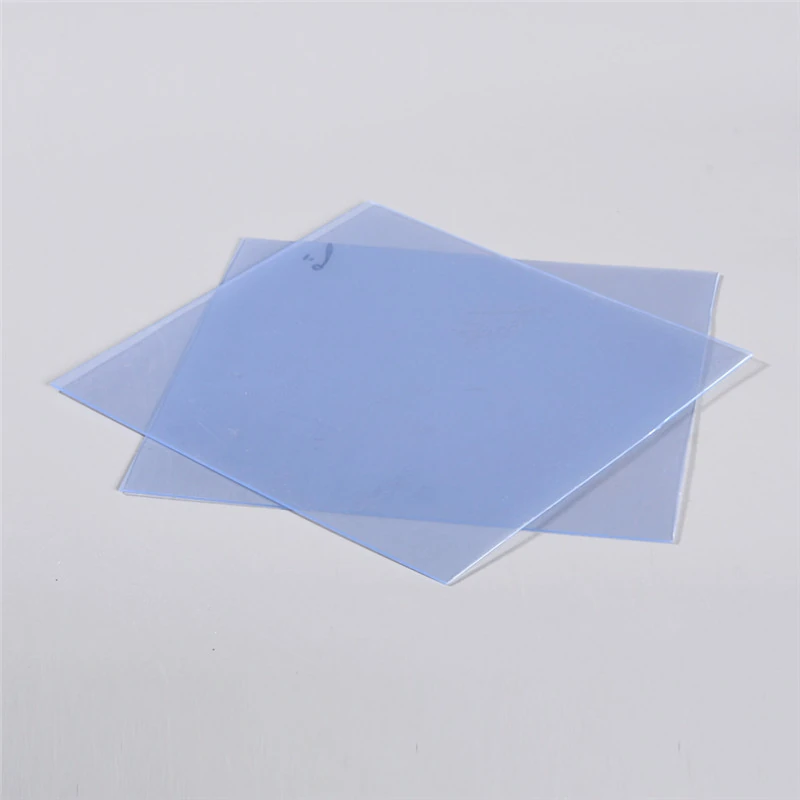
Clear Rigid PVC Garment Template Sheet

PVC Sheet for Garment Pattern Making
Clear PVC Garment Template Sheet Specifications
The following specifications are based on the current product information. Final thickness tolerance, transparency, hardness, color, surface quality, dimensions and functional requirements should be confirmed in the approved order specification.
| Property |
Current HSQY Specification |
Buyer Should Confirm |
| Product Name |
Clear Rigid PVC Sheet for Garment Templates |
Garment pattern, stencil or cutting-guide application |
| Main Size |
915×1830mm |
Final cutting tolerance |
| Other Standard Sizes |
610×915mm, 900×1500mm, 1220×2400mm |
Select according to pattern-room workflow |
| Custom Size |
Available |
Provide final width, length and tolerance |
| Thickness |
0.5–1.5mm |
Choose according to flexibility, rigidity and reuse frequency |
| Maximum Width |
1220mm |
Confirm actual usable production width |
| Maximum Length |
5000mm |
Subject to thickness and production specification |
| Material |
Virgin PVC or Recycled PVC According to Current Product Information |
Specify resin option and performance target |
| Color / Tint |
Transparent Blue Tint, White Tint |
Color sample and transparency requirement |
| Transparency |
Clear / Transparent Grade |
Specify transmission or haze if measurable optical control is required |
| Cutting Service |
Available |
Sheet dimensions, cutting method and dimensional tolerance |
| Typical Applications |
Garment Patterns, Sewing Templates, Fabric Cutting Guides, Reusable Stencils |
Specify marking, cutting and reuse conditions |
| Packing |
Pallet Packing |
Protective film, carton and pallet requirements |
| Payment Terms |
T/T, L/C at Sight |
Confirm in commercial quotation |
| After-Sales Service |
Current Source Lists Free Replacement |
Confirm applicable quality-claim terms in the sales contract |
| Documentation |
Current Source References ISO 9001:2008, SGS, RoHS, REACH, EN71-Part III, CPSIA, CHCC and ASTM F963 |
Request current product-specific applicable reports before relying on a compliance claim |
Why Use Clear PVC for Garment Pattern Templates?
Clear Visibility for Pattern Alignment
Transparent PVC allows operators to see fabric patterns, stripes, checks, printed motifs, grain lines and alignment marks below the template. This is useful when a pattern must be positioned accurately before marking or cutting.
Durable Reusable Pattern Edges
PVC provides a more durable edge than disposable paper patterns for repeated tracing and garment-production use. Actual template life depends on thickness, handling, cutting tools and storage conditions.
Dimensional Support
A rigid sheet helps preserve the approved pattern geometry during repeated production use, reducing deformation compared with flexible paper or thin temporary template materials.
Easy Marking and Processing
Suitable rigid PVC sheet can be marked, cut, drilled, punched or notched to create production patterns, registration holes, seam references and template identification marks.
Blue Tint for Improved Visual Contrast
A transparent blue tint can help operators distinguish the PVC template from light-colored work surfaces or fabrics while still allowing the underlying material to remain visible.
Custom Cutting for Pattern Rooms
Large master sheets can be supplied in standard formats or cut into customized sheet dimensions to suit apparel pattern rooms, clothing factories and specific cutting-machine formats.
Why Choose 915×1830mm Garment Template Sheets?
The 915×1830mm format provides a large working area for garment pattern development while remaining practical for manual sheet handling and pattern-room storage.
Large pattern components such as trouser legs, dress panels, jacket bodies and long garment sections can often be arranged on one sheet or cut from the sheet with fewer joins than smaller template formats.
Buyers should compare the sheet dimensions with pattern-room tables, cutting equipment, storage racks and the typical dimensions of the garments being produced before standardizing one sheet size.
Clear PVC vs Blue Tint PVC for Garment Templates
| Factor |
Natural / Clear PVC |
Transparent Blue Tint PVC |
| Visibility Through Template |
Maximum neutral visual appearance |
Maintains transparency with additional color contrast |
| Pattern Alignment |
Useful when accurate view of fabric color and printing is important |
Can make the template edge easier to distinguish on pale surfaces |
| Operator Preference |
Suitable for neutral clear-template workflows |
Common where operators prefer stronger visual identification |
| Selection Method |
Evaluate clarity, haze and surface quality |
Evaluate tint consistency and visibility through the sheet |
How to Choose PVC Garment Template Sheet Thickness
| Thickness |
General Handling Characteristic |
Typical Selection Logic |
| 0.5mm |
Lighter and more flexible |
Useful for large patterns, easier manual cutting and moderate reuse |
| 0.8mm |
Balanced flexibility and rigidity |
Useful general-purpose garment-template thickness where both handling and durability matter |
| 1.0mm |
Greater rigidity and edge stability |
Suitable for frequently reused production templates and cutting guides |
| 1.5mm |
Higher rigidity and weight |
Suitable for smaller durable stencils, guides or applications requiring additional stiffness |
These are general selection guidelines rather than universal guarantees. The best thickness should be validated according to template dimensions, cutting method, required flexibility, handling and expected reuse frequency.
Garment Template and Pattern-Making Applications
Apparel Master Patterns
Once a garment design has been approved, key paper patterns can be transferred to PVC to create durable master patterns for repeated production use.
Fabric Cutting Guides
PVC templates can serve as guides during fabric marking and manual cutting preparation, helping maintain consistent pattern geometry across production batches.
Sewing Templates
Smaller rigid templates can be created for collars, cuffs, pockets, plackets, decorative stitching, labels and other repeated sewing operations.
Pattern Alignment on Printed Fabrics
Transparent sheets allow operators to see checks, stripes, graphics and fabric motifs below the pattern, supporting more accurate positioning before tracing or cutting.
Industrial Reusable Stencils
The same material can also be evaluated for reusable marking and positioning stencils where a transparent rigid plastic guide is useful.
PVC Garment Template Application Images

Garment Pattern Template Application

Clear PVC Sheet for Garment Pattern Making
How to Make a Garment Template from Rigid PVC Sheet
1. Finalize the Garment Pattern
Complete fitting, grading and pattern corrections before transferring the design from temporary paper to a durable PVC production template.
2. Select the PVC Thickness
Choose a thickness that provides enough rigidity for accurate tracing without making large templates unnecessarily heavy or difficult to cut.
3. Transfer the Pattern
Place the approved pattern on or beneath the transparent PVC sheet and transfer the cutting line, grain line, notches, drill points and other production references.
4. Cut and Finish the Template
Cut the PVC using a compatible manual or mechanical process. Remove sharp edges or burrs where necessary so the finished template can be safely handled without damaging fabric.
5. Add Identification Marks
Add style number, size, component name, grain direction, seam information and other production references required by the garment factory.
6. Store Templates Flat or Properly Supported
Avoid excessive heat, unsupported bending or heavy point loading during storage, as these conditions can deform thin rigid-plastic templates over time.
Clear PVC vs Paper and Cardboard Garment Patterns
| Factor |
PVC Template |
Paper / Cardboard Pattern |
| Reuse |
Designed for repeated production use |
Better suited to development, temporary or limited-use patterns |
| Edge Durability |
More resistant to repeated tracing and handling |
Edges can wear, tear or become distorted |
| Transparency |
Clear grades allow visibility of fabric below |
Normally opaque |
| Moisture Sensitivity |
Less affected by routine workshop humidity |
Paper-based patterns can absorb moisture or become damaged |
| Initial Cost |
Higher than disposable paper patterns |
Lower initial material cost |
| Best Use |
Approved production patterns and reusable guides |
Pattern development, prototyping and temporary use |
How to Choose a PVC Garment Template Sheet
1. Choose the Required Sheet Size
Select 915×1830mm when a large-format garment template sheet fits your pattern sizes and production workflow. Other standard or custom sizes can be used to improve cutting yield.
2. Select the Thickness
Thinner sheets are lighter and easier to process, while thicker sheets provide greater rigidity. Select according to template dimensions, handling method and required reuse frequency.
3. Choose Natural Clear or Blue Tint
Natural clear material provides neutral transparency. A blue-tinted transparent sheet can improve visual distinction between the template and the working surface.
4. Decide Between Virgin and Recycled PVC
Select the resin option according to transparency, color consistency, cost target, mechanical requirement and applicable customer specifications. Do not assume recycled content will provide the same optical appearance as a virgin clear grade.
5. Define the Cutting Method
Tell HSQY whether the material will be manually cut, die-cut, punched, drilled, CNC processed or converted using another method so the appropriate thickness and sheet format can be evaluated.
6. Confirm Transparency Requirements
If optical clarity is important for fabric alignment, specify measurable light transmission or haze requirements rather than relying only on the word “clear.”
7. Request a Sample Before Bulk Production
Evaluate sample sheets for transparency, stiffness, cutting behavior, marking, drilling, edge quality and actual garment-template handling before confirming a bulk order.
Important Technical Parameters for Garment Template Buyers
| Parameter |
Why It Matters |
| Thickness Tolerance |
Affects sheet rigidity, cutting behavior and consistency between production batches |
| Sheet Size Tolerance |
Important for automatic cutting and material-yield planning |
| Light Transmission |
Defines visibility through the template |
| Haze |
Influences how clearly fabric markings can be seen below the sheet |
| Hardness / Rigidity |
Influences template stiffness and handling |
| Color Consistency |
Important when blue-tint or white-tint sheets are standardized across factories |
| Surface Quality |
Scratches, black spots, gels and surface defects can reduce visibility and template quality |
| Flatness |
Important when tracing or cutting large template pieces on flat worktables |
| Protective Film |
Can help protect clear surfaces from scratches during transport and processing when required |
Flame and Outdoor Performance
The original product description references self-extinguishing properties and a PVC flammability report. Flame performance should be stated according to the exact test method, thickness, formulation and rating shown in the applicable report rather than describing every rigid PVC grade as meeting one universal UL classification.
Standard clear garment-template PVC should also not automatically be described as a long-term outdoor weather-resistant or UV-stabilized sheet. If outdoor exposure is required, specify service life, UV exposure and environmental conditions and request a grade tested for that application.
Information Needed for a Garment Template Sheet Quote
To receive an accurate quotation, provide:
Required thickness: 0.5mm, 0.8mm, 1mm, 1.5mm or other specification
Required sheet size, such as 915×1830mm
Natural clear, blue tint, white tint or other color requirement
Virgin PVC or recycled-content requirement
Required transparency or haze target
Required hardness or flexibility
Garment pattern or stencil application
Manual cutting, die cutting, CNC or other processing method
Custom cutting requirement
Protective-film requirement
Required technical or restricted-substance documentation
Order quantity and annual consumption
Packing requirements
Destination country and port
Get PVC Garment Sheet Price & Samples
Packing and Delivery
Pallet Packing: The current product information lists pallet packing for rigid PVC garment-template sheets to help protect sheet edges and flatness during international transportation.
Custom Packaging: Packing, labeling and other customer-specific requirements can be discussed according to sheet dimensions, order quantity and destination.
Sample Shipping: Samples may be shipped by international express services according to the agreed sample and freight terms.

Pallet Packing

Secure Export Packaging
PVC Sheet Factory
HSQY supplies clear and colored rigid PVC sheets for garment-template, packaging, printing, thermoforming and other converting applications. Final production method, formulation and quality specification should be matched to the application.

Clear Rigid PVC Sheet Production
Technical Data and Test Reports
The original page includes the following PVC data sheets and reports. Some files are general PVC or other PVC-product documents rather than garment-template-specific reports, so buyers should confirm which document applies to the exact supplied grade.
![PDF]() Clear PVC Sheet Data Sheet
Clear PVC Sheet Data Sheet
![PDF]() Flammability of PVC Rigid Sheet
Flammability of PVC Rigid Sheet
![PDF]() PVC Gray Board Test Report
PVC Gray Board Test Report
![PDF]() Clear PVC Film Data Sheet
Clear PVC Film Data Sheet
![PDF]() PVC Sheet Test Report
PVC Sheet Test Report
![PDF]() 20mm Gray Board Test Report
20mm Gray Board Test Report
![PDF]() PVC Sheet for Offset Printing Test Report
PVC Sheet for Offset Printing Test Report
Quality and Compliance Documentation
The current source page references ISO 9001:2008, SGS, RoHS, REACH, EN71-Part III, CPSIA, CHCC and ASTM F963. These documents should not automatically be treated as universal certifications for every PVC formulation, thickness and application.
Request current applicable reports for the exact material grade and purchase order when restricted-substance, toy-safety, flammability or other compliance requirements are relevant.
ISO 9001 is a quality-management-system standard and should not by itself be interpreted as proof of compliance with a specific product-safety or restricted-substance requirement.
FAQ About PVC Garment Template Sheets
What is a PVC garment template sheet?
It is a rigid or semi-rigid PVC sheet used to make reusable garment patterns, sewing templates, fabric cutting guides and production stencils.
Why use clear PVC for garment patterns?
Clear PVC allows operators to see fabric prints, checks, stripes, grain lines and alignment marks beneath the template while retaining a reusable rigid edge.
What is the standard size of this PVC garment template sheet?
This product is focused on the 915×1830mm format. The current range also lists 610×915mm, 900×1500mm, 1220×2400mm and customized dimensions.
What thickness is best for garment templates?
The current range is 0.5–1.5mm. Thinner material is lighter and easier to cut, while thicker material provides greater rigidity. The best gauge depends on template size, handling and expected reuse.
Is 0.5mm PVC suitable for garment patterns?
A 0.5mm sheet can be useful for lightweight, larger or easier-to-cut templates. Sample testing is recommended where high rigidity or frequent reuse is required.
Is 1mm PVC suitable for reusable sewing templates?
A 1mm rigid PVC sheet can provide useful stiffness and edge durability for repeatedly used sewing and garment-production templates, subject to the size and cutting method.
What is the difference between clear and blue-tint garment template PVC?
Natural clear PVC provides a neutral transparent appearance. Blue-tint PVC remains transparent but can make the sheet and template edges easier to distinguish on light-colored work surfaces.
Can HSQY cut the PVC sheet to custom sizes?
Yes. The current product information lists cutting service and customized sheet dimensions. Provide the required width, length, quantity and dimensional tolerance.
Can garment template PVC be drilled or punched?
Suitable rigid PVC sheet can be drilled, punched, notched or otherwise fabricated for pattern identification and production references. Processing parameters should be matched to sheet thickness and tooling.
Can rigid PVC garment templates be reused?
Yes. Repeated use is one of the main reasons garment factories replace temporary paper patterns with rigid plastic production templates. Actual service life depends on thickness, handling, storage and cutting conditions.
Is virgin PVC better than recycled PVC for clear templates?
Virgin PVC is generally easier to control where high transparency and color consistency are priorities. Recycled-content material can be evaluated where cost or recycled-content objectives are more important and the required optical and mechanical properties are still achieved.
How should PVC garment templates be cleaned?
Use a soft cloth with mild soap and water for routine cleaning. Avoid abrasive pads and test any solvent or chemical cleaner on a sample before using it on the finished template.
Is standard clear PVC suitable for long-term outdoor use?
Standard garment-template PVC should not automatically be considered a long-term UV-stabilized outdoor material. Request an application-specific grade if outdoor exposure is required.
Is the PVC garment sheet flame retardant?
The original page contains a PVC rigid-sheet flammability report. Any flame-performance claim should be based on the exact grade, thickness, test method and rating shown in the applicable report.
Can I request samples before ordering?
Sample evaluation can be discussed so buyers can check transparency, thickness, rigidity, cutting performance, marking and suitability for their garment-template workflow before bulk production.
What information is needed for a quotation?
Provide thickness, sheet size, color or tint, resin preference, cutting method, transparency requirement, quantity, packing requirement, required documentation and destination country.
About HSQY Plastic Group
HSQY Plastic Group supplies clear and colored rigid PVC sheets for garment templates, apparel pattern making, packaging, printing, thermoforming and other plastic converting applications.
Garment-template projects can be discussed according to required thickness, sheet dimensions, transparency, blue tint, material formulation, cutting method, packing and purchasing volume.
Send your current garment-template sheet sample or specification together with thickness, dimensions, annual usage and cutting requirements so HSQY can evaluate the appropriate rigid PVC sheet configuration.
Get Garment Template Sheet Quote


 Clear PVC Sheet Data Sheet


