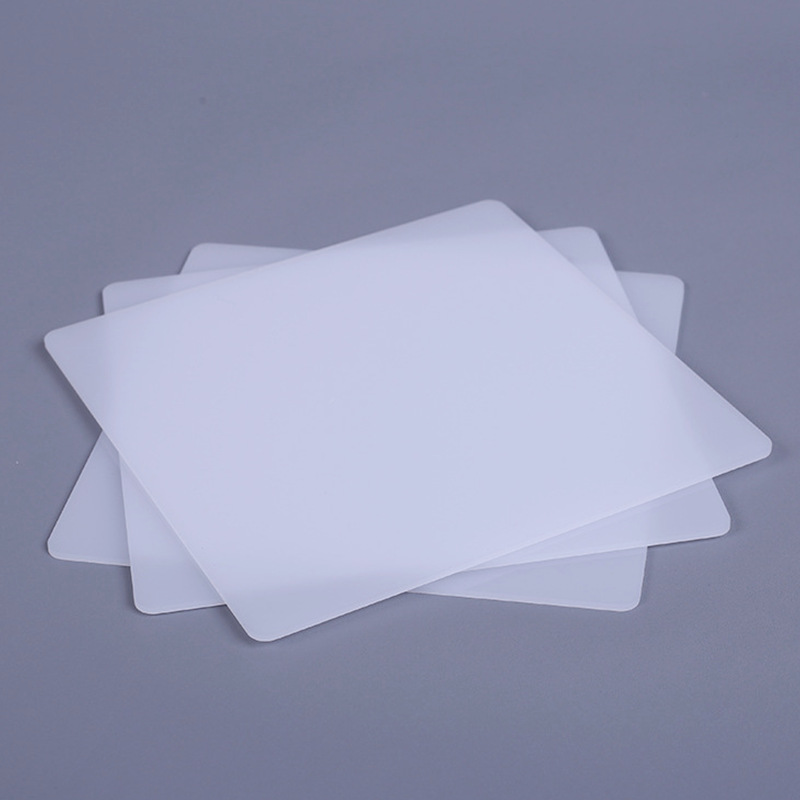
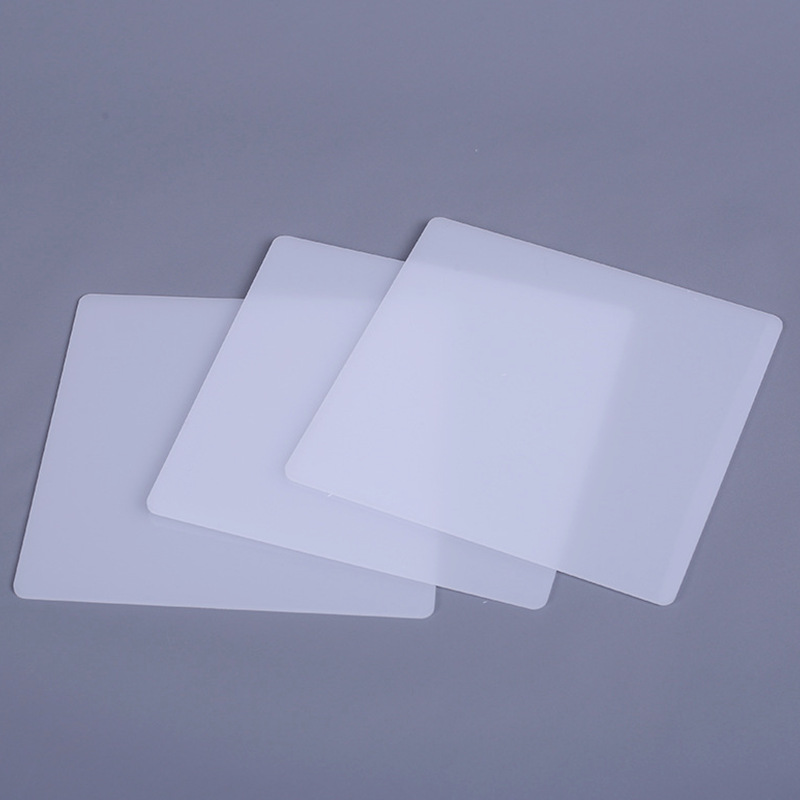
0.5mm and 1mm White Polycarbonate Diffuser Sheet
HSQY manufactures white and opal polycarbonate diffuser sheets for LED panel lights, linear luminaires, downlights, ceiling lights, office lighting, kitchen lighting, advertising light boxes, illuminated signs and backlit displays.
The featured thicknesses are 0.5mm and 1mm. Additional thicknesses from approximately 0.5mm to 12mm are available for lighting lenses, diffuser panels, formed light covers and customized lighting components.
Standard optical options provide approximately 82%–88% visible-light transmission and 90%–94% haze. These values should be confirmed for the exact thickness, color, surface texture, diffusion formulation and test method included in the order.
Polycarbonate combines light-diffusion performance with useful impact resistance, dimensional stability and heat resistance, making it suitable for lighting products that require greater durability than standard polystyrene or acrylic diffuser panels.
Available surfaces include matte/matte and glossy/matte. Opal white is standard, while customized white tones, diffusion levels, light-transmission levels, colors, dimensions and surface textures can be evaluated for bulk orders.
Final hotspot-hiding performance depends on the complete lighting design, including LED spacing, diffuser-to-LED distance, LED power, reflector design, panel thickness, transmission, haze and surface structure.
Explore the complete HSQY polycarbonate diffuser sheet range and additional polycarbonate sheet products.
Request Diffuser Sheet Pricing Request Optical Samples
Polycarbonate Diffuser Sheet Video
Watch the video below to learn more about HSQY polycarbonate diffuser sheets, available thicknesses, optical performance, surface options and LED-lighting applications.
What Is a Polycarbonate Diffuser Sheet?
A polycarbonate diffuser sheet is a translucent lighting material designed to scatter light passing through the sheet.
The diffusion effect converts concentrated LED point sources or linear light sources into a softer and more uniform illuminated surface.
Light diffusion can be produced by adding optical diffuser particles to the polycarbonate resin, applying a textured surface or combining internal diffusion with surface texture.
Internal diffusion helps scatter light throughout the material. Matte or frosted surface textures further reduce reflection and improve the appearance of the illuminated panel.
Polycarbonate diffuser sheets are normally opal white or translucent rather than transparent. Their purpose is not to provide a clear view through the sheet, but to balance brightness, diffusion and LED hiding power.
The terms PC diffuser sheet, LED diffuser panel, polycarbonate lighting lens, opal PC sheet and light-diffusing polycarbonate sheet are frequently used for related products.
Polycarbonate Diffuser Sheet Images

White Polycarbonate Diffuser Sheet

Opal Polycarbonate Light Diffuser Panel
Polycarbonate Diffuser Sheet Specifications
| Property |
Available Specification |
| Product Name |
White Polycarbonate Diffuser Sheet |
| Alternative Names |
PC Light Diffuser Sheet, LED Diffuser Panel, Opal Polycarbonate Sheet and Polycarbonate Lighting Lens |
| Material |
Polycarbonate / PC |
| Featured Thicknesses |
0.5mm and 1mm |
| Available Thicknesses |
0.5mm, 1mm, 1.5mm, 2mm, 2.5mm, 3mm, 4mm, 5mm, 6mm, 8mm, 10mm and 12mm |
| Custom Thickness |
Available subject to optical requirements, width, surface and production feasibility |
| Standard Widths |
1220mm, 1560mm, 1820mm and 2100mm |
| Custom Dimensions |
Customized width, length and cut-to-size panels |
| Supply Form |
Flat sheets, cut panels and selected thin-gauge rolls subject to specification |
| Standard Color |
Opal white |
| Custom Colors |
Customized white tone, translucent color and application-specific color subject to MOQ |
| Surface Options |
Matte/matte, glossy/matte, fine matte, frosted and customized texture |
| Light Transmittance |
Approximately 82%–88% for the listed optical grades |
| Haze |
Approximately 90%–94% for the listed optical grades |
| Optical Customization |
Customized transmission, haze, diffusion, hiding power and white tone subject to technical confirmation |
| Indoor Grade |
Available for indoor luminaires, panel lights, light boxes and displays |
| Outdoor Grade |
UV-stabilized grade available subject to weathering requirements |
| Flame-Retardant Grade |
Available only where the required formulation, thickness and test rating are specified |
| Processing Methods |
Cutting, CNC routing, drilling, punching, cold bending, thermoforming and printing after testing |
| Main Applications |
LED panel lights, linear lights, downlights, ceiling lights, light boxes, illuminated signs and backlit displays |
| Protective Film |
PE protective film available on one or both sides |
| Available Documents |
Product data, optical test information and available SGS-related documents subject to grade |
| Samples |
Small sheets and cut samples may be available for optical and fabrication testing |
| Typical Lead Time |
Approximately 7–15 days after specification, quantity, packing and payment confirmation |
| Delivery Terms |
EXW, FOB, CNF, CIF and other agreed commercial terms |
Light transmission and haze should be tested together on the exact production sheet. A value measured on a 0.5mm sheet should not automatically be applied to a 1mm, 3mm or 12mm sheet.
Understanding Light Transmission, Haze and Diffusion
Light Transmission
Light transmission indicates how much visible light passes through the diffuser sheet.
Higher transmission can improve luminaire efficiency, but excessive transmission without sufficient diffusion may leave individual LED points visible.
Haze
Haze measures the proportion of transmitted light that is scattered away from its original direction.
High haze normally produces a softer appearance and reduces direct visibility through the sheet, but haze alone does not fully describe LED hiding power or luminance uniformity.
Diffusion and Hiding Power
Diffusion describes how broadly and uniformly light is redistributed across the illuminated surface.
Hiding power describes the ability of the sheet to conceal visible LED points, bright lines and luminance variations.
Color and White Tone
The diffuser formulation can influence the apparent color temperature and color coordinates of the transmitted LED light.
Lighting projects with strict color requirements should test the diffuser using the actual LED spectrum and measure the complete luminaire rather than evaluating the sheet under ambient light only.
How to Select the Correct Diffusion Level
| Design Priority |
Recommended Direction |
Main Trade-Off |
| Maximum Luminous Efficiency |
Higher-transmission grade with sufficient diffusion for the LED layout |
LED points may become visible when the diffuser is too close to the light source |
| Maximum LED Hiding |
Higher-haze or stronger-diffusion grade |
Increased diffusion may reduce total transmitted light |
| Slim Light Box |
Strong hotspot-hiding grade designed for a shorter optical distance |
Requires careful matching of LED spacing, brightness and reflector design |
| Soft Decorative Lighting |
Opal white sheet with high haze and matte surfaces |
Lower transparency and reduced view of internal components |
| Outdoor Illuminated Sign |
UV-stabilized diffuser grade with application-specific weathering data |
Outdoor performance depends on UV exposure, temperature, installation and color |
LED Spacing and Diffuser Distance
A diffuser sheet cannot be selected using light transmission and haze alone.
The distance between the LED board and diffuser affects whether individual LED points remain visible.
A larger optical distance normally allows light from adjacent LEDs to overlap before reaching the diffuser, improving uniformity.
A thinner luminaire with a short optical distance may require stronger diffusion, closer LED spacing, a reflector film, secondary optics or a redesigned LED layout.
Buyers should provide the LED pitch, diffuser distance, LED type, wattage, target brightness, luminaire depth and required uniformity when requesting an optical recommendation.
Matte/Matte vs. Glossy/Matte Surface
| Surface Structure |
Main Characteristics |
Typical Selection |
| Matte/Matte |
Low reflection on both sides with a uniformly textured appearance |
LED panel lights, ceiling lights, office luminaires and low-glare lighting covers |
| Glossy/Matte |
One smoother side and one diffusing matte side |
Formed lenses, decorative light covers, printed components and products requiring a smoother exterior face |
| Fine Frosted |
Stronger surface diffusion with a soft translucent appearance |
Decorative lighting, privacy panels and illuminated display components |
0.5mm vs. 1mm Polycarbonate Diffuser Sheet
| Comparison |
0.5mm Diffuser Sheet |
1mm Diffuser Sheet |
| Rigidity |
Thinner and more flexible |
Greater rigidity and dimensional support |
| Weight |
Lower material weight |
Higher weight but improved panel stability |
| Typical Applications |
Thin luminaire covers, light-diffusing inserts, formed components and laminated assemblies |
LED panel covers, linear lights, light boxes and freestanding framed panels |
| Processing |
Easier to bend and form but requires support during handling |
Easier to keep flat during cutting, assembly and installation |
| Optical Performance |
Transmission, haze and hiding power must be tested independently for each thickness |
Polycarbonate vs. Acrylic and PS Diffuser Sheet
| Material |
Main Advantages |
Main Limitations |
Typical Applications |
| Polycarbonate / PC |
High impact resistance, good dimensional stability, forming capability and available flame-retardant grades |
Higher cost than PS and potentially lower scratch resistance than acrylic without a coating |
Commercial luminaires, transportation lighting, public-area lighting and durable signs |
| Acrylic / PMMA |
High optical clarity, good surface hardness and strong outdoor-weathering options |
Lower impact resistance and greater risk of cracking during handling or fabrication |
Indoor and outdoor light boxes, decorative lighting and applications prioritizing optical appearance |
| Polystyrene / PS |
Economical and widely used for standard indoor lighting panels |
Lower impact resistance and more limited heat and outdoor performance |
Cost-sensitive indoor panel lights, fluorescent fixtures and replaceable light covers |
Key Features of White PC Diffuser Sheet
Uniform Light Distribution
The diffuser formulation scatters light across the surface and helps reduce visible bright points, lines and luminance variation.
High Haze with Useful Transmission
The listed grades balance approximately 82%–88% light transmission with approximately 90%–94% haze.
Impact Resistance
Polycarbonate is selected for lighting applications requiring greater resistance to impact, handling and vibration than standard brittle diffuser materials.
Thin-Gauge Design
The strength of polycarbonate allows thin 0.5mm and 1mm panels to be considered for compact lighting products when the panel is correctly supported.
Processing Versatility
Suitable grades can be cut, drilled, routed, punched, cold bent, thermoformed and assembled into lighting components.
Custom Optical Performance
Transmission, haze, diffusion, surface texture and white tone can be adjusted to match different LED layouts and luminaire designs.
Applications of Polycarbonate Diffuser Sheet
LED Panel Lights
Polycarbonate diffuser sheets are used as the visible light-emitting surface of edge-lit and back-lit LED panels.
Linear and Office Luminaires
Applications include suspended lights, recessed ceiling lights, LED tubes, under-cabinet lighting and workplace luminaires.
Downlights and Ceiling Lights
Thin diffuser sheets can be cut or thermoformed into round, square and customized light covers.
Advertising Light Boxes
Opal diffuser panels help distribute backlighting across illuminated signs, menu boards, channel letters and commercial displays.
Backlit Displays
Applications include retail displays, exhibition panels, display shelving, control panels and decorative backlighting.
Transportation and Public-Area Lighting
Application-specific impact-resistant and flame-retardant grades can be evaluated for rail, elevator, station, school and other high-traffic lighting systems.
Polycarbonate Diffuser Sheet Application Images

LED Lighting Application

Advertising Light Box Application
Indoor and Outdoor Applications
Standard polycarbonate diffuser sheet is primarily recommended for indoor luminaires, office lighting, panel lights, ceiling fixtures, indoor light boxes and backlit displays.
Outdoor applications require a UV-stabilized grade designed to reduce yellowing, surface degradation and loss of impact performance during prolonged sunlight exposure.
The expected outdoor life depends on geographic location, UV intensity, temperature, sheet thickness, surface orientation, color, mounting system and cleaning chemicals.
Outdoor billboards, channel letters and illuminated signs should use an outdoor-grade sheet supported by appropriate technical data or a weathering warranty.
Flame-Retardant and Electrical Lighting Grades
Standard polycarbonate diffuser sheet should not automatically be described as UL 94 V-0, flameproof or suitable for every electrical luminaire.
Flame performance depends on resin grade, additives, color, thickness, test orientation and the applicable test method.
Customers requiring UL 94, glow-wire, railway, automotive, aircraft or another electrical standard should provide the exact rating and minimum finished thickness before material selection.
A test report must cover the exact grade and thickness being supplied. A rating achieved by a thicker sheet should not automatically be applied to a 0.5mm or 1mm sheet.
Cutting, Forming and Fabrication
Cutting and Routing
Polycarbonate sheets can be cut with panel saws, circular saws, CNC routers and suitable cutting tools.
Drilling and Punching
Holes, slots and mounting features can be produced using suitable drilling, punching or machining processes.
Cold Bending
Thin sheets can be cold bent within an appropriate radius. Sharp bends and excessive stress may produce whitening, permanent deformation or cracking.
Thermoforming
Forming-grade polycarbonate can be thermoformed into curved lighting lenses and covers after correct drying, heating and mold validation.
Printing and Decoration
Compatible screen, UV and digital-printing systems can be evaluated for logos, borders, symbols and decorative lighting components.
Recommended Optical and Quality Tests
Raw-material and diffuser-additive verification.
Sheet thickness and thickness tolerance.
Width, length, diagonal and cutting tolerance.
Visible-light transmission.
Haze and diffusion consistency.
LED hotspot-hiding performance.
Luminance uniformity across the illuminated area.
White tone, color coordinates and batch consistency.
Correlated color-temperature shift using the actual LED source.
Surface gloss and texture consistency.
Black spots, gels, scratches and contamination.
Flatness, curl and dimensional stability.
Impact, bending and fabrication performance.
Heat-aging and yellowing performance where required.
UV weathering for outdoor grades.
Flame and electrical tests where specified.
Finished-luminaire brightness, glare and thermal testing.
Custom Polycarbonate Diffuser Sheet Options
Featured 0.5mm and 1mm diffuser sheets.
Additional thicknesses from approximately 0.5mm to 12mm.
Widths of 1220mm, 1560mm, 1820mm and 2100mm.
Custom lengths and cut-to-size lighting panels.
Opal white and customized translucent colors.
Customized light transmission and haze.
Low, medium and high diffusion levels.
Matte/matte and glossy/matte surfaces.
Fine matte, frosted and customized textures.
Indoor and UV-stabilized outdoor grades.
Application-specific flame-retardant grades.
Protective film on one or both sides.
Cutting, drilling, CNC routing and forming support.
Samples for optical and finished-luminaire testing.
Information Required for a Diffuser Sheet Quotation
Required sheet thickness.
Width, length and cutting tolerance.
Opal white tone or customized color.
Required light transmission and haze.
Required LED hiding power and uniformity.
Matte/matte, glossy/matte or another surface.
LED type, power and color temperature.
LED pitch or spacing.
Distance between the LEDs and diffuser sheet.
Luminaire depth and reflector structure.
Indoor or outdoor application.
Required UV, flame or electrical rating.
Flat panel, cold-bent or thermoformed component.
Cutting, routing, drilling or printing requirements.
Protective-film and packaging requirements.
Sample quantity, initial order and annual demand.
Destination port and requested delivery date.
Send Your Diffuser Sheet Requirements
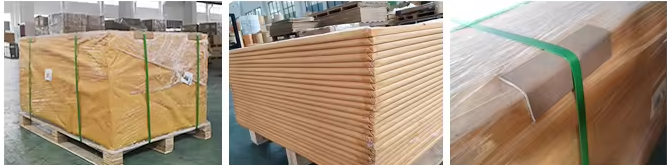
Packing and Delivery
Sample packing: Small diffuser sheets and cut samples can be protected with PE film, kraft paper and cartons.
Protective film: PE protective film can be applied to one or both surfaces to reduce scratches during cutting, shipping and assembly.
Sheet packing: Sheets can be wrapped with PE film or kraft paper and packed according to the required dimensions and gross weight.
Pallet packing: Approximately 500–2,000kg can be loaded on a plywood pallet, depending on sheet size, thickness and handling requirements.
Container loading: Reference loading is approximately 20 tons, subject to dimensions, pallet configuration, volume and legal weight limits.
Lead time: Standard production normally takes approximately 7–15 days after the specification, quantity, packaging and payment are confirmed.
Delivery terms: EXW, FOB, CNF, CIF and other agreed commercial terms are available.

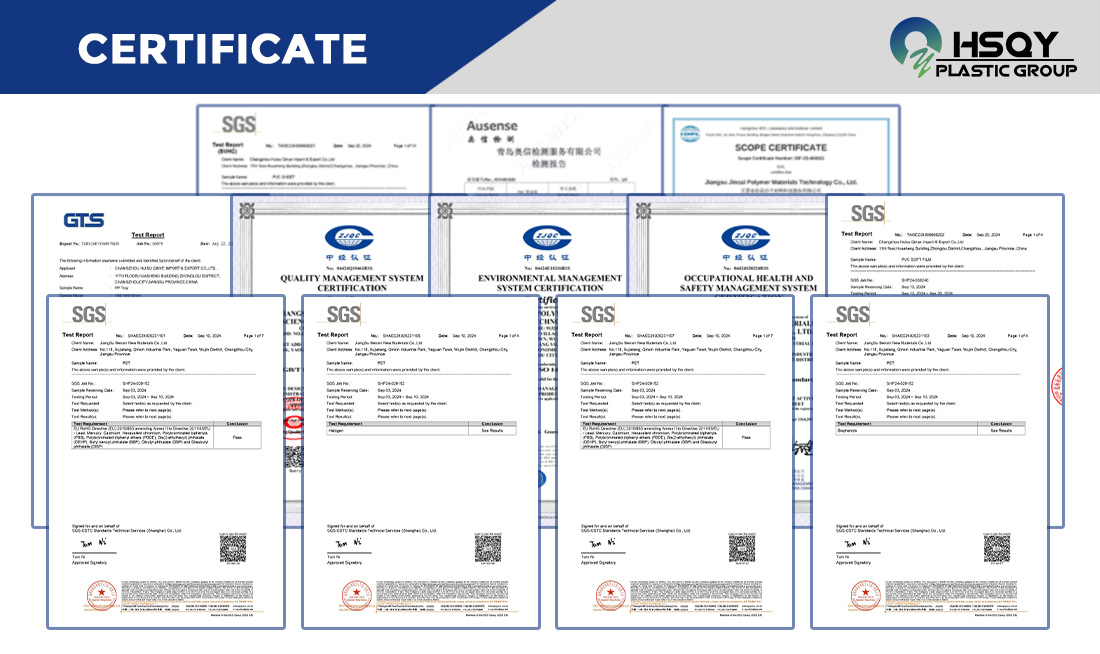
Certifications and Test Documents
Available documents may include optical test information, restricted-substance reports, product specifications and quality-management certificates.
SGS should be described according to the actual report or inspection scope. It should not be treated as a universal product-safety, flame-retardant, outdoor-weathering or electrical certification.
Buyers should confirm that each report applies to the exact polycarbonate grade, color, thickness, surface and production specification being purchased.

Why Choose HSQY as Your Polycarbonate Diffuser Supplier?
0.5mm and 1mm white PC diffuser sheet production.
Additional thicknesses up to approximately 12mm.
Widths up to approximately 2100mm.
Opal white and customized translucent colors.
Approximately 82%–88% transmission options.
Approximately 90%–94% haze options.
Matte/matte and glossy/matte surfaces.
Indoor and application-specific outdoor grades.
Customized optical performance and sheet dimensions.
Samples for LED hotspot and luminaire testing.
Cutting, forming and fabrication support.
Export packaging and international-delivery support.
Before bulk production, HSQY recommends testing the selected diffuser sheet in the customer's actual luminaire using the final LED board, optical distance, reflector, frame and power setting.
Contact HSQY for Samples and Pricing
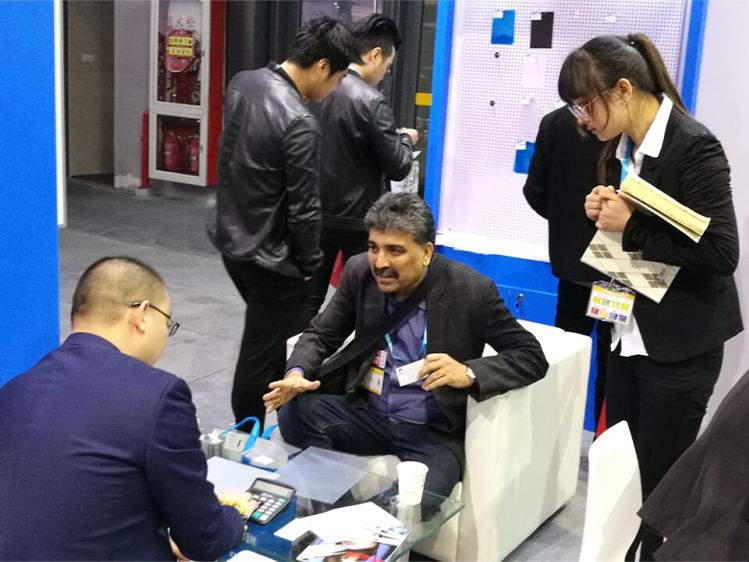
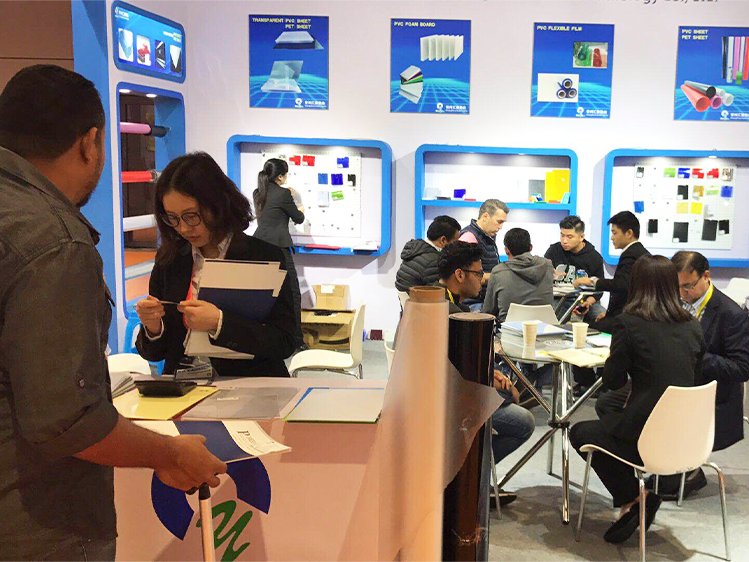
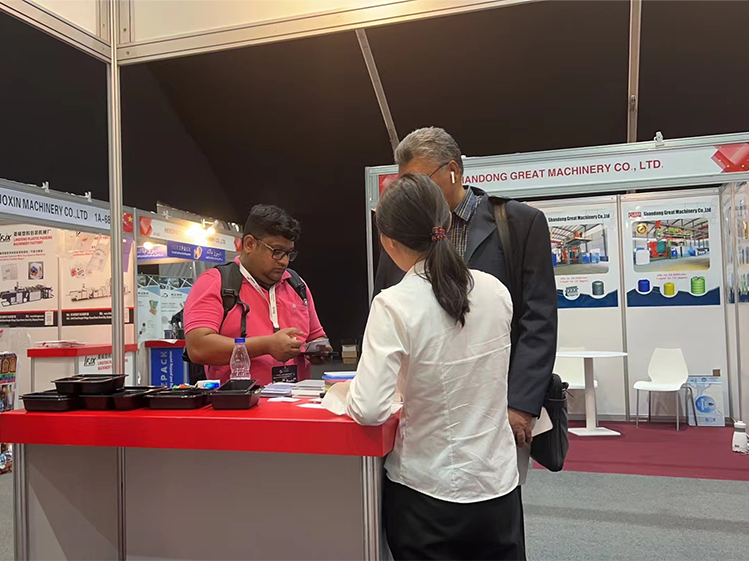
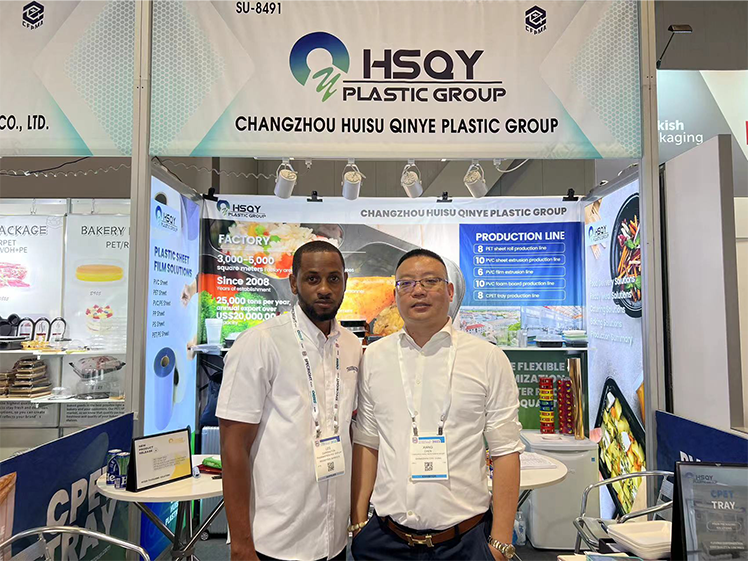
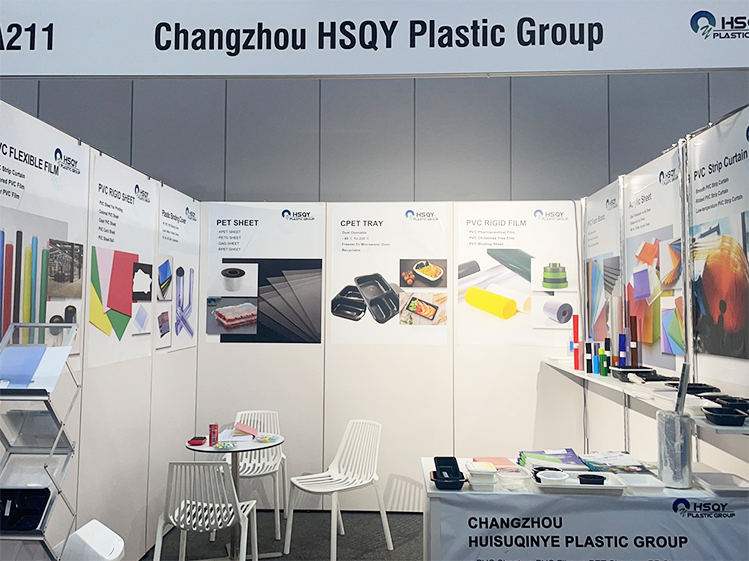
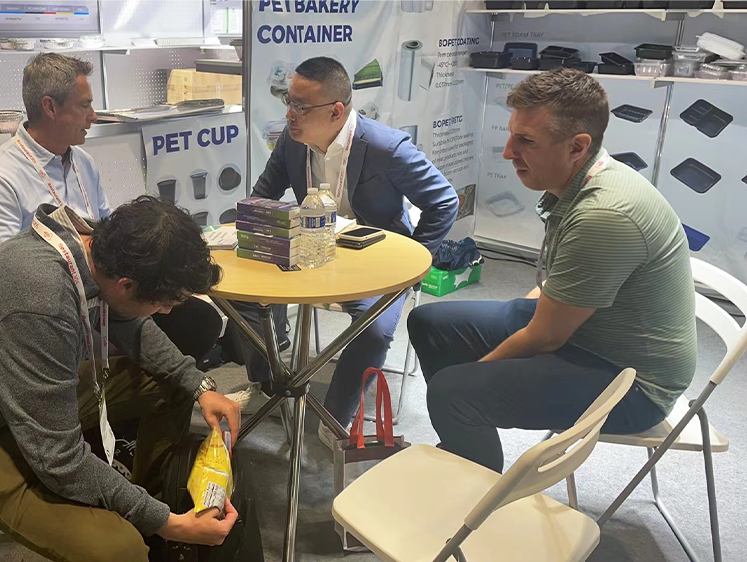
HSQY Global Exhibitions

2017 Shanghai Exhibition

2018 Shanghai Exhibition

2023 Saudi Exhibition

2023 American Exhibition

2024 Australian Exhibition

2024 American Exhibition
Frequently Asked Questions About Polycarbonate Diffuser Sheets
What is a polycarbonate diffuser sheet?
It is a translucent PC sheet formulated or textured to scatter light and create a more uniform illuminated surface.
What are the main applications?
Applications include LED panel lights, linear luminaires, downlights, ceiling lights, light boxes, illuminated signs and backlit displays.
What thicknesses are available?
Featured thicknesses are 0.5mm and 1mm. Additional options range from approximately 0.5mm to 12mm.
What widths are available?
Standard widths include 1220mm, 1560mm, 1820mm and 2100mm. Customized cutting is available.
What is the light transmission?
Listed optical grades provide approximately 82%–88% visible-light transmission. The exact result depends on thickness, color, surface and diffusion formulation.
What is the haze value?
Listed grades provide approximately 90%–94% haze. The applicable test method and sheet thickness should be confirmed.
Does high haze guarantee that LED points will not be visible?
No. LED hiding also depends on the LED pitch, optical distance, power, reflector structure, sheet thickness and diffusion technology.
What is the difference between transmission and haze?
Transmission measures how much light passes through. Haze measures how much of the transmitted light is scattered.
Is 0.5mm or 1mm better for an LED panel?
A 0.5mm sheet is lighter and more flexible. A 1mm sheet provides greater rigidity. The correct choice depends on the frame, panel dimensions and optical requirements.
What is the difference between matte/matte and glossy/matte?
Matte/matte has textured low-reflection surfaces on both sides. Glossy/matte combines one smoother side with one diffusing matte side.
Is polycarbonate better than acrylic for diffuser panels?
Polycarbonate normally provides higher impact resistance and greater forming flexibility. Acrylic can provide excellent optical appearance and surface hardness. Selection depends on the application.
Is PC diffuser sheet better than PS?
PC is generally selected for greater impact, heat and dimensional performance. PS is often selected for cost-sensitive indoor lighting panels.
Can the sheet be used outdoors?
An application-specific UV-stabilized grade is required for outdoor use. Standard indoor material should not automatically be used outdoors.
Is the diffuser sheet flame retardant?
Flame-retardant grades may be available, but the rating must be confirmed for the exact grade and thickness.
Can PC diffuser sheet be thermoformed?
Yes. Forming-grade sheets can be thermoformed after appropriate drying, heating and mold testing.
Can it be cold bent?
Thin polycarbonate sheets can be cold bent within an appropriate minimum radius. The finished design should be tested for stress and long-term deformation.
Can the diffuser sheet be cut to size?
Yes. Customized cutting, drilling, routing and other fabrication services can be discussed.
Can the optical performance be customized?
Transmission, haze, diffusion, white tone and surface texture can be customized subject to technical feasibility and order quantity.
Can the sheet change the LED color temperature?
A diffuser formulation can cause a small color or color-temperature shift. The finished luminaire should be tested using the final LED source.
Are samples available?
Small sheets and cut samples may be available for checking transmission, haze, LED hiding, color and fabrication. Courier freight should be confirmed with the sales team.
What is the production lead time?
Standard production normally takes approximately 7–15 days after specification, quantity, packaging and payment confirmation.
What information is required for a quotation?
Provide the thickness, dimensions, transmission, haze, LED pitch, optical distance, surface, application, quantity and required UV or flame rating.
Get a Custom Diffuser Sheet Quote
About HSQY Plastic Group
HSQY Plastic Group supplies polycarbonate diffuser sheets, solid PC sheets, PC films, PVC sheets, PET sheets and customized plastic materials to international B2B customers.
HSQY supports lighting manufacturers, sign producers, display companies, plastic fabricators, importers and distributors with optical samples, customized production, quality inspection, fabrication and export packaging.
Request a Quote and Sample