ABS Laminate Plastic Sheet with Decorative Surface
HSQY ABS laminate plastic sheet combines a tough ABS substrate with laminated surface materials such as PC and decorative carbon-fiber finishes for thermoformed panels, automotive interiors, appliance housings and industrial components.
ABS, or Acrylonitrile Butadiene Styrene, provides rigidity, impact resistance, dimensional stability and good thermoforming performance. A laminated surface layer can add a different appearance or functional surface according to the selected construction.
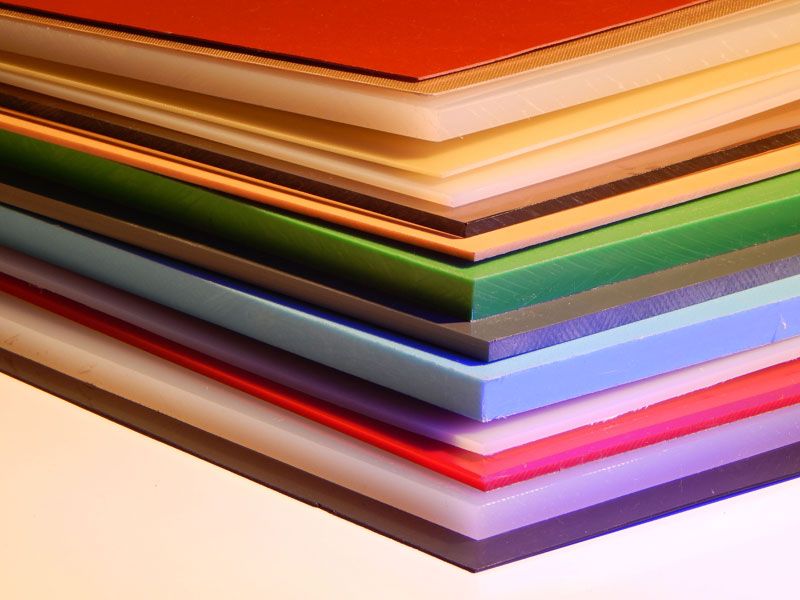
HSQY's current ABS laminate sheet range covers approximately 0.3mm to 6mm thickness, widths up to 1600mm and white, black or colored ABS substrates. PC and carbon-fiber type laminate options are listed for application-specific projects.
![ABS laminate plastic sheet]()
ABS Laminate Plastic Sheet
![ABS laminated sheet for thermoforming]()
ABS Laminated Sheet for Thermoforming
![Decorative ABS laminate sheet for automotive and industrial panels]()
Decorative ABS Laminate Sheet
ABS Laminate Sheet Specifications
| Property |
Specification |
| Product |
ABS Laminate Plastic Sheet |
| Base Material |
ABS – Acrylonitrile Butadiene Styrene |
| Color |
White, Black, Colored |
| Thickness |
0.3mm - 6mm |
| Maximum Width |
Up to approximately 1600mm |
| Lamination Options |
PC, Carbon Fiber and other application-specific laminate materials |
| Key Properties |
Rigidity, impact resistance, toughness, formability, dimensional stability and easy fabrication |
| Processing |
Thermoforming, vacuum forming, cutting, drilling, CNC routing, machining and other compatible fabrication processes |
| Applications |
Automotive interiors, appliance housings, electronics panels, equipment covers, decorative panels and industrial components |
Specification Note: The exact laminate construction, laminate thickness, surface finish, bonding method, forming capability and finished-part requirements should be confirmed for each project.
What Is ABS Laminate Sheet?
ABS laminate sheet uses ABS as the main substrate and combines it with another surface layer or decorative material to create a composite sheet with the processing advantages of ABS and an application-specific surface appearance.
The ABS substrate provides structural support, toughness and thermoforming capability, while the laminated surface can be selected according to appearance, surface feel, protection or downstream manufacturing requirements.
This type of material is especially useful where manufacturers want to create a finished decorative surface during sheet production rather than applying paint, printed film or another finishing process after thermoforming.
ABS Substrate + Laminated Surface Structure
| Layer |
General Function |
| ABS Substrate |
Provides rigidity, toughness, impact resistance, dimensional stability and thermoforming support |
| Laminated Surface Layer |
Provides the required surface appearance or additional application-specific surface characteristics |
| Interface |
Must remain compatible during cutting, forming and normal service conditions |
The exact layer construction should be defined before production because different laminate materials can require different heating, forming and trimming conditions.
PC-Laminated ABS Sheet
PC is listed as one of the lamination-material options for this ABS sheet. A PC-laminated ABS structure combines an ABS substrate with a polycarbonate layer or film according to the selected construction.
PC-laminated ABS should not be confused with a PC/ABS alloy. In a laminate, the materials remain as separate layers; in a PC/ABS alloy, polycarbonate and ABS are blended into a single polymer system.
Buyers considering a PC laminate should specify the intended surface function, laminate thickness, appearance, forming depth and required finished-part performance so the layer construction can be evaluated.
Carbon-Fiber Finish ABS Laminate Sheet
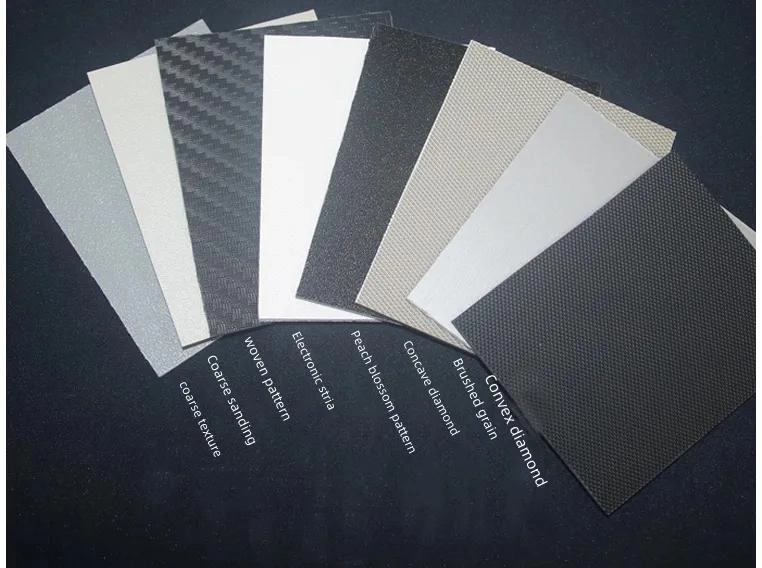
Carbon Fiber is also listed among the current lamination options. For decorative projects, carbon-fiber appearance can be used to create a technical or premium visual effect for automotive interiors, panels and equipment components.
Unless the construction is specifically confirmed as a structural carbon-fiber composite, a carbon-fiber surface should be treated as an appearance or laminate option rather than assumed to provide the mechanical performance of reinforced carbon-fiber composite materials.
For carbon-fiber appearance projects, provide the required weave pattern, surface gloss, color, finished-part shape and reference sample where possible.
ABS Laminate vs. PC/ABS Alloy Sheet
| Feature |
ABS Laminate Sheet |
PC/ABS Alloy |
| Construction |
ABS substrate with a separate laminated surface layer |
PC and ABS blended into one polymer alloy |
| Main Purpose |
Surface appearance, decoration or application-specific surface functionality |
Combined bulk material properties of PC and ABS |
| Surface Design |
Can incorporate decorative or protective surface materials |
Surface comes from the alloy sheet or an additional finishing process |
| Selection |
Specify whether the project requires a laminated surface or a PC/ABS alloy because the structures and processing behavior are different. |
Why Choose ABS Laminate Sheet?
Decorative surface options: Lamination allows a finished visual surface to be integrated with an ABS substrate.
Impact-resistant ABS base: ABS provides toughness for automotive, appliance and equipment components.
Good thermoformability: Suitable laminate constructions can be thermoformed into three-dimensional panels and housings.
Dimensional stability: ABS provides useful rigidity and shape retention for fabricated components.
Machinability: The material can be cut, drilled, routed and CNC machined with compatible tooling.
Integrated finishing: A laminated surface can reduce the need for some secondary decorative finishing operations.
Custom appearance: Color and laminate combinations can be discussed according to the finished product design.
Thermoforming ABS Laminate Sheet
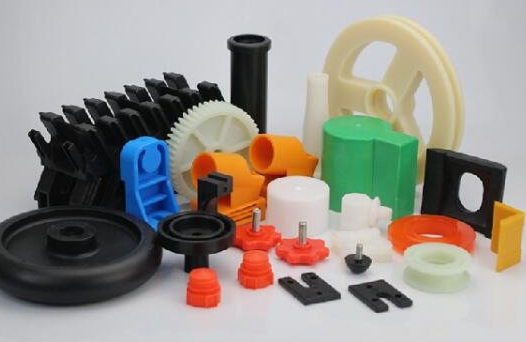
Thermoforming is an important application for laminated ABS sheet, particularly for automotive interior parts, equipment covers, appliance housings and decorative panels.
Unlike a single-layer ABS sheet, a laminate contains multiple materials that may soften and stretch differently during heating. The forming window must therefore be evaluated for the complete structure rather than the ABS substrate alone.
| Forming Factor |
Why It Matters |
| Total Thickness |
Controls heating time, sheet stiffness and material available during forming |
| Laminate Material |
Different surface layers can have different thermal and stretching behavior |
| Surface Orientation |
The decorative or functional laminate must remain on the correct finished side |
| Forming Depth |
Deep forming can stretch both ABS and laminated surface layers |
| Corner Radius |
Sharp corners can increase localized stretching and surface distortion |
| Surface Appearance |
Gloss, texture or decorative pattern may change in highly stretched areas |
| Layer Adhesion |
The laminate must remain bonded through heating, forming and cooling |
For cosmetic parts, forming trials should be performed using the intended mold because flat-sheet appearance alone cannot predict the final surface appearance after deep thermoforming.
ABS Laminate Sheet for Automotive Interiors
Laminated ABS can be evaluated for automotive interior trim, instrument panels, door panels, decorative components and other formed interior parts where both structural support and surface appearance are important.
Decorative laminate surfaces can reduce the need for post-forming paint or separate decorative treatment in suitable designs.
Automotive projects should separately specify heat resistance, impact performance, odor, emissions, flame requirements, color, surface finish and OEM-specific material requirements. Standard ABS laminate should not automatically be treated as automotive-qualified material.
ABS Laminate Sheet for Electronics Panels
ABS laminate sheets can be used for electronics housings, front panels, covers and equipment enclosures where the visible surface is an important part of the finished product design.
If flame-retardant, ESD, electrical insulation or another technical requirement is needed, provide the required standard or performance level before selecting the material structure.
ABS Laminate Sheet for Appliance Housings
Laminated ABS can be formed into appliance panels, covers, housings, liners and decorative surfaces where the ABS substrate provides toughness and the laminate provides the desired visible finish.
For kitchen, bathroom or household appliances, cleaning chemicals, heat exposure, moisture, surface appearance and impact requirements should be considered during material selection.
ABS Laminate Sheet for Industrial Equipment
ABS laminate sheet can be used for machine covers, instrument panels, equipment housings, non-structural enclosures and decorative industrial components.
For industrial applications, the laminate should be selected according to mechanical load, temperature, chemicals, cleaning methods, abrasion exposure and required surface appearance.
ABS Laminate Sheet for Decorative Panels
Decorative ABS laminates can be used where manufacturers require the forming capability of ABS together with a visible surface such as a carbon-fiber style, colored or application-specific finish.
The final laminate appearance should be approved using a physical sample because pattern, gloss and color can appear different under different lighting and after thermoforming.
ABS Laminate vs. Standard ABS Sheet
| Selection Factor |
ABS Laminate Sheet |
Standard ABS Sheet |
| Construction |
ABS plus additional laminated surface |
Single ABS sheet structure |
| Main Advantage |
Integrated surface appearance or functionality |
General-purpose fabrication and forming |
| Cosmetic Surface |
Can incorporate decorative laminate materials |
Based on the ABS sheet surface itself |
| Thermoforming |
Requires compatibility of the full multilayer structure |
Processing is based primarily on the selected ABS grade |
| Typical Use |
Visible automotive, appliance, equipment and decorative components |
General housings, panels, trays and fabricated ABS parts |
Choosing the Right ABS Laminate Thickness
The current ABS sheet specification covers approximately 0.3mm to 6mm. Total laminate thickness should be selected according to finished-part dimensions, forming depth, unsupported span and required rigidity.
| Thickness Direction |
General Application Direction |
| 0.3 - 1mm |
Thin decorative components, inserts and lightweight formed parts where the laminate structure is suitable |
| 1 - 2mm |
Interior trim, panels, covers and general thermoformed components |
| 2 - 4mm |
Automotive panels, equipment housings, appliance parts and medium-duty formed components |
| 4 - 6mm |
Larger covers, housings and heavy-gauge fabricated or thermoformed components |
These are general selection directions. Exact laminate construction and forming trials should determine the final thickness for the intended component.
CNC Machining & Fabrication
ABS laminate sheets can be cut, drilled, routed and CNC machined using suitable plastic-processing tools. Tool selection should consider both the ABS substrate and the laminated surface.
| Process |
Application |
| Saw Cutting |
Sheet sizing and straight blanks |
| CNC Routing |
Profiles, openings, slots and custom panel geometry |
| Drilling |
Mounting and assembly holes |
| Thermoforming |
Three-dimensional panels, housings, covers and interior components |
| Vacuum Forming |
Automotive trim, covers and formed decorative components |
Cutting parameters should minimize excessive heat and mechanical stress at the laminate edge. Where edge appearance is critical, fabrication trials are recommended before production.
Surface Durability & Chemical Compatibility
The original ABS specification lists chemical, corrosion and abrasion resistance among the material characteristics. For a laminated ABS structure, however, surface durability is also controlled by the laminate material itself.
Cleaning agents, oils, solvents, detergents or other chemicals should therefore be evaluated against both the ABS substrate and the laminated surface. Specific abrasion, scratch or chemical-resistance ratings should not be assumed unless tested for the selected construction.
UV & Outdoor Performance
A laminated surface does not automatically make ABS suitable for long-term outdoor use. UV and weathering performance depend on the ABS grade, laminate material, pigments and complete sheet construction.
For exterior automotive, marine, building or equipment applications, specify UV exposure, weathering requirements and expected service life so a suitable structure can be evaluated.
Flame, ESD & Special Performance Requirements
Standard ABS laminate sheet should not automatically be treated as flame-retardant, anti-static, conductive or compliant with a specific automotive, aviation or electrical standard.
If the project requires a defined flame classification, surface resistance, electrical property or industry-specific approval, provide the relevant standard before material selection.
What Information Should You Provide for a Quote?
| Requirement |
Information to Provide |
| Application |
Automotive interior, appliance, electronics, equipment housing, decorative panel or other use |
| ABS Thickness |
Required thickness within the current 0.3-6mm range |
| Sheet Size |
Required width × length; current maximum published width is approximately 1600mm |
| ABS Color |
White, black or required color |
| Lamination Material |
PC, carbon-fiber finish or other required laminate structure |
| Surface Appearance |
Gloss, matte, texture, carbon-fiber pattern or approved reference sample |
| Finished Side |
Identify which laminate surface will be visible on the finished component |
| Thermoforming |
Mold dimensions, forming depth and minimum finished wall thickness |
| Fabrication |
Cutting, drilling, CNC routing, trimming or other downstream processing |
| Chemical Exposure |
Cleaning agents, oils, solvents or other substances contacting the laminated surface |
| Special Requirement |
UV, flame, ESD, automotive, aviation or other specified requirement where applicable |
| Quantity |
Trial quantity, regular order quantity and estimated annual consumption |
| Destination |
Country and destination port |
Frequently Asked Questions About ABS Laminate Sheet
What is ABS laminate sheet?
ABS laminate sheet combines an ABS substrate with an additional surface material or decorative layer to provide the processing characteristics of ABS together with a different finished surface.
What lamination materials are available?
The current product specification lists PC, Carbon Fiber and other lamination materials. The exact construction and available surface options should be confirmed for the intended project.
Is carbon-fiber ABS laminate made from structural carbon fiber?
Not necessarily. A carbon-fiber appearance laminate can be decorative rather than a structural reinforced composite. If structural carbon fiber is required, specify the actual reinforcement construction and mechanical requirements separately.
Is PC-laminated ABS the same as PC/ABS?
No. PC-laminated ABS uses separate ABS and PC layers. PC/ABS is a polymer alloy where PC and ABS are blended together into the bulk material.
What thicknesses are available?
The current ABS sheet specification covers approximately 0.3mm to 6mm. Exact laminated construction and total thickness should be confirmed according to the selected surface material.
What is the maximum sheet width?
The current product specification lists widths up to approximately 1600mm.
Can ABS laminate sheet be thermoformed?
Suitable ABS laminate constructions can be thermoformed, but both the ABS substrate and laminate layer must remain compatible during heating and stretching.
Can ABS laminate sheet be vacuum formed?
Yes, for suitable constructions. Forming depth, surface stretch, heating profile and laminate adhesion should be evaluated using the intended mold.
Does the decorative surface remain unchanged after thermoforming?
Not always. Gloss, texture and decorative patterns can change in highly stretched areas. Cosmetic components should therefore be approved using a representative formed sample.
Can ABS laminate sheet be CNC machined?
Yes. ABS laminate sheet can be cut, drilled and CNC routed using suitable tooling. Processing parameters should protect the laminate edge from excessive heat or delamination.
Can it be used for automotive interiors?
ABS laminate can be evaluated for automotive interior trim and decorative panels. Automotive projects should separately define heat, impact, flame, odor, emissions and OEM-specific requirements.
Can it be used for electronics housings?
Yes, for suitable housings and panels. Applications requiring flame retardancy, ESD control or specific electrical properties require the corresponding material grade and documentation.
Is ABS laminate sheet UV resistant?
UV resistance depends on the ABS grade and laminate construction. A laminated surface should not automatically be assumed suitable for long-term outdoor exposure.
Is ABS laminate sheet flame retardant?
Not automatically. If flame performance is required, provide the applicable standard and required classification so an appropriate ABS and laminate structure can be evaluated.
What information should I provide for a quotation?
Please provide the application, ABS thickness, sheet dimensions, color, laminate material, required surface appearance, thermoforming or machining requirements, special performance requirements, quantity and destination.
Packing
ABS laminate sheets should be protected during handling, storage and international transportation to reduce scratching, contamination, edge damage and damage to the laminated surface.
![ABS laminate plastic sheet export packing]()
ABS Laminate Sheet Export Packing
HSQY Plastic Group Exhibitions
HSQY Plastic Group meets automotive suppliers, thermoformers, appliance manufacturers, distributors and industrial plastic-sheet buyers at international exhibitions.
![HSQY Plastic Group international exhibitions]()
HSQY Plastic Group International Exhibition Activities
Certificates & Documentation
Available certificates and technical documents should be confirmed for the exact ABS grade, laminate construction and intended application. Automotive, aviation, flame-retardant, UV-resistant, ESD or other specialized projects may require structure-specific documentation.
About HSQY Plastic Group
HSQY Plastic Group supplies ABS plastic sheets and laminated thermoplastic sheet materials for thermoformers, automotive suppliers, appliance manufacturers, electronics companies, distributors and industrial fabricators. Thickness, dimensions, color, laminate material and downstream processing requirements can be discussed according to the project.