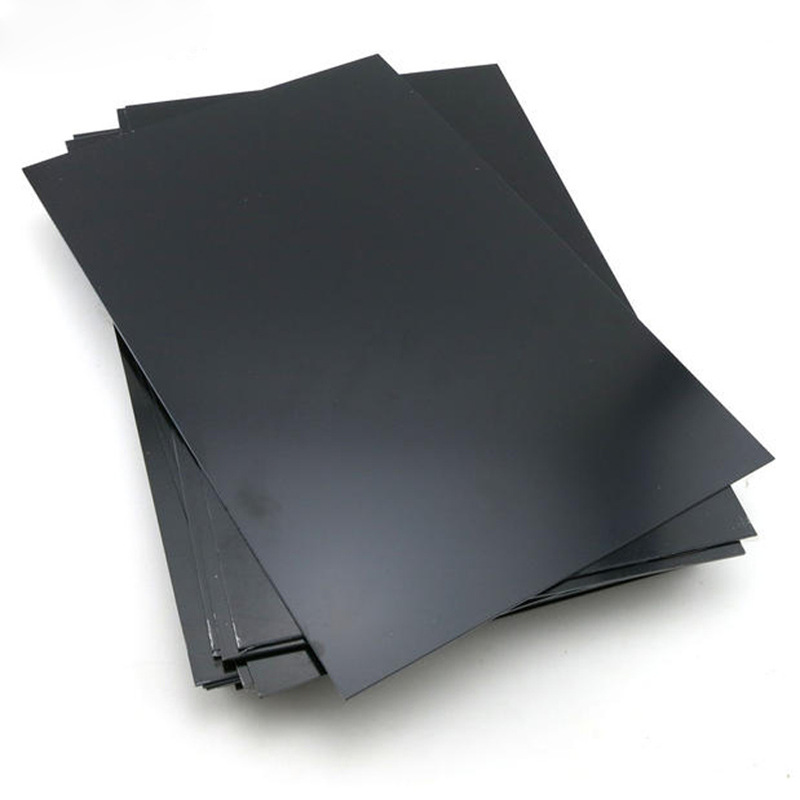
1mm 1.5mm Black ABS Plastic Sheet
HSQY 1mm and 1.5mm black ABS plastic sheet combines impact resistance, rigidity and good formability for thermoformed housings, automotive interiors, appliance parts, displays and industrial fabrication.
ABS, or Acrylonitrile Butadiene Styrene, is a tough engineering thermoplastic widely used for applications requiring a practical balance of stiffness, toughness, dimensional stability and easy processing.
This product page focuses on 1mm and 1.5mm black ABS sheet. HSQY's broader ABS sheet range covers approximately 0.3mm to 6mm thickness, widths up to 1600mm, and white, black or colored options.
![1mm 1.5mm black ABS plastic sheet]()
Black ABS Plastic Sheet
![Black ABS sheet for thermoforming and vacuum forming]()
Black ABS Sheet for Thermoforming
![Black ABS sheet for industrial fabrication]()
Black ABS Sheet for Fabrication
Black ABS Sheet Specifications
| Property |
Specification |
| Product |
Black ABS Plastic Sheet |
| Material |
ABS – Acrylonitrile Butadiene Styrene |
| Featured Thicknesses |
1mm, 1.5mm |
| Available Thickness Range |
0.3mm - 6mm |
| Maximum Width |
Up to approximately 1600mm |
| Color |
Black; broader ABS range also includes white and colored options |
| Surface |
Surface finish should be confirmed according to the selected ABS grade and application |
| Key Properties |
Rigidity, impact strength, toughness, formability, dimensional stability and easy fabrication |
| Processing |
Thermoforming, vacuum forming, cutting, drilling, routing and compatible machining processes |
| Applications |
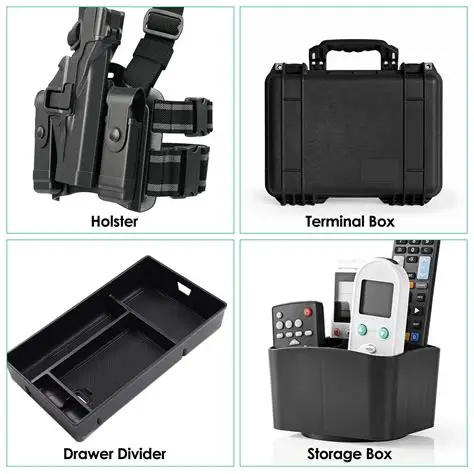
Automotive interiors, equipment housings, electronics panels, appliance parts, displays, trays and industrial components |
Specification Note: 1mm and 1.5mm are the featured thicknesses for this product. Exact sheet length, thickness tolerance, surface finish and production dimensions should be confirmed according to the order specification.
What Is Black ABS Plastic Sheet?
Black ABS sheet is an opaque ABS thermoplastic sheet produced with a black appearance for thermoformed, fabricated and machined plastic components.
The material combines the general benefits of ABS with a consistent dark appearance suitable for housings, panels, interior trim, equipment covers and finished components where black is part of the product design.
Black color by itself does not mean that the ABS is conductive, anti-static, flame retardant or UV resistant. Those functions require separately specified material grades.
Why Choose 1mm & 1.5mm Black ABS Sheet?
Thin-sheet formability: 1mm and 1.5mm gauges are useful for lightweight thermoformed covers, panels, trays and housings.
Impact resistance: ABS provides useful toughness for components exposed to handling and normal mechanical impact.
Good rigidity: Provides useful stiffness while remaining suitable for thermoforming and fabrication.
Opaque black appearance: Suitable for equipment housings, automotive interiors and finished panels requiring a dark surface.
Easy fabrication: ABS can be cut, drilled, routed and machined using appropriate plastic-working tools.
Thermoformable: Suitable grades can be formed into three-dimensional components.
Dimensional stability: Useful for fabricated panels and production components requiring repeatable geometry.
1mm Black ABS Sheet
1mm black ABS sheet is suited to applications where low weight and good formability are more important than high flat-sheet stiffness. It can be considered for lightweight covers, inserts, display parts, thin housings, formed trays and prototype components.
For thermoforming applications, the finished wall will normally be thinner than the original 1mm sheet in stretched areas. Mold depth, corner geometry and required minimum wall thickness should therefore be considered before selecting this gauge.
1.5mm Black ABS Sheet
1.5mm black ABS provides greater starting-sheet rigidity than 1mm while remaining suitable for many thermoforming and fabrication applications.
Typical selection directions include equipment housings, appliance components, interior panels, automotive trim, displays, covers and formed industrial parts requiring more stiffness than a thinner sheet.
1mm vs. 1.5mm Black ABS Sheet
| Selection Factor |
1mm Black ABS |
1.5mm Black ABS |
| Sheet Weight |
Lower |
Higher than 1mm for the same sheet area |
| Flat-Sheet Rigidity |
Lower |
Higher |
| Forming Direction |
Useful for lightweight and relatively shallow formed components |
Provides more starting material for components requiring additional stiffness |
| Typical Components |
Inserts, covers, display parts, thin housings and trays |
Housings, panels, appliance parts, automotive trim and equipment covers |
| Final Selection |
Choose according to part dimensions, forming depth, support structure, required wall thickness and impact requirements. |
Black ABS Sheet for Thermoforming
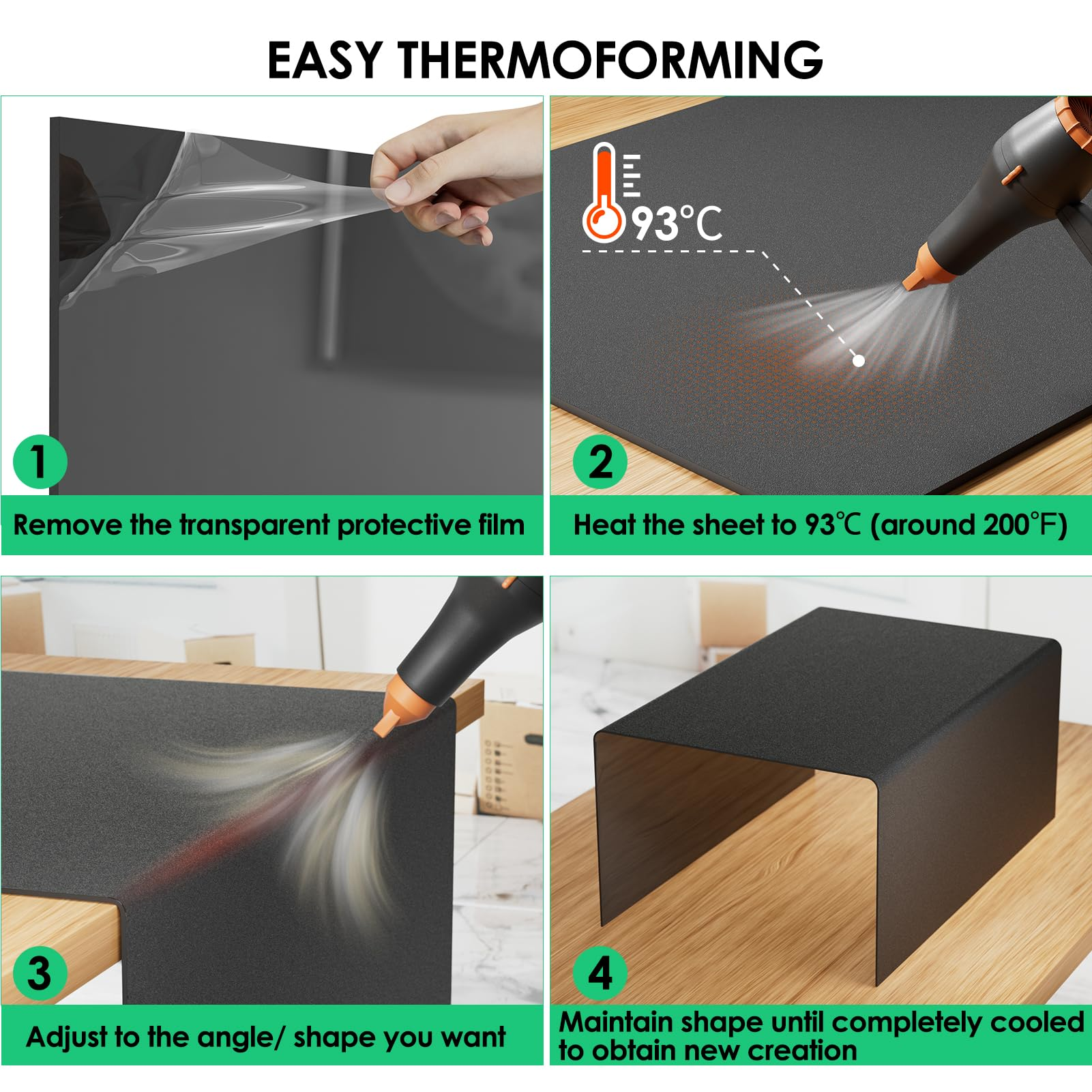
ABS is widely used for thermoforming because suitable grades can be heated and shaped into housings, covers, panels, trays and interior components while retaining useful toughness and rigidity.
For 1mm and 1.5mm black ABS, forming conditions should be matched to the mold geometry and required finished wall thickness. Thin sheets can respond quickly to heating and can also show greater wall-thickness reduction in highly stretched areas.
| Thermoforming Factor |
Why It Matters |
| Starting Thickness |
Controls how much material is available before the sheet stretches |
| Mold Size |
Large parts can require greater sheet stiffness and more material |
| Forming Depth |
Deeper parts generally create greater wall-thickness variation |
| Corner Radius |
Sharp corners can create localized thinning |
| Heating Uniformity |
Supports consistent forming across thin ABS sheet |
| Minimum Finished Wall |
Should be checked in critical regions after forming |
Black ABS Sheet for Vacuum Forming
Suitable black ABS sheets can be vacuum formed into lightweight housings, covers, trays, interior panels and other three-dimensional components.
When selecting between 1mm and 1.5mm, provide the mold dimensions and maximum forming depth. This makes it easier to evaluate whether the starting gauge can provide adequate wall thickness in the most heavily stretched regions.
Black ABS for Automotive Interior Parts
Black ABS can be evaluated for automotive interior trim, instrument-panel components, door-related panels, covers and decorative interior parts where a black appearance, toughness and formability are required.
Automotive applications should specify heat resistance, impact performance, flame requirements, odor, emissions and OEM-specific requirements. Standard black ABS should not automatically be treated as an automotive-qualified grade.
Black ABS for Appliance Housings
ABS is widely used for appliance housings, covers, trays, liners and decorative panels because it combines impact resistance with easy thermoforming and fabrication.
For appliance applications, buyers should specify operating temperature, cleaning-agent exposure, surface appearance and fastening requirements before selecting the final ABS grade and thickness.
Black ABS for Electronics Housings & Panels
1mm and 1.5mm black ABS can be considered for lightweight electronics housings, equipment covers, face panels and non-structural enclosures where ABS mechanical properties suit the design.
Black color does not make standard ABS conductive or ESD safe. Applications requiring anti-static, static-dissipative, conductive or flame-retardant performance need the corresponding specialized material grade.
Black ABS for Equipment Housings & Industrial Covers
Black ABS can be thermoformed or fabricated into machinery covers, control housings, guards, equipment panels and non-structural industrial enclosures.
For industrial components, thickness selection should consider panel dimensions, mounting points, unsupported span, impact loads, operating temperature and chemical exposure.
Black ABS for Displays & Interior Panels
Black ABS is also useful for display components, retail fixtures, exhibition panels and decorative interior parts where an opaque black appearance is preferred.
If printing, painting, coating or adhesive bonding is required, compatibility should be checked with the actual sheet surface and downstream production process.
Black ABS for Trays & Formed Components
The original ABS description lists trays among typical applications. 1mm and 1.5mm black ABS can be evaluated for formed trays, inserts and handling components where ABS toughness and rigidity are suitable.
For trays carrying defined loads, finished wall thickness, rib geometry, unsupported span and stacking requirements should be considered during design.
CNC Machining & Fabrication
ABS is easy to machine and fabricate using suitable plastic-processing tools. Black ABS sheet can be converted into flat or formed components according to the required production method.
| Process |
Typical Use |
| Cutting |
Sheet sizing, flat parts and fabrication blanks |
| Drilling |
Mounting holes and assembly points |
| CNC Routing |
Profiles, openings, slots and custom panel geometry |
| Thermoforming |
Housings, covers, panels and three-dimensional parts |
| Vacuum Forming |
Trays, covers, appliance parts and automotive interior components |
Black ABS vs. Black HIPS Sheet
| Selection Factor |
Black ABS |
Black HIPS |
| Typical Positioning |
Durable housings, automotive parts, appliances and industrial components |
Economical trays, packaging, displays and general thermoformed components |
| Fabrication |
Good machining and thermoforming performance |
Easy forming and fabrication for many general applications |
| Selection |
Select according to impact requirements, rigidity, heat exposure, forming behavior, appearance and project economics. |
Black ABS Is Not Automatically ESD or Conductive
A common purchasing mistake is to assume that black plastic is electrically conductive because carbon-based additives can also produce a black appearance.
Standard black ABS should not automatically be described as anti-static, static-dissipative or conductive. Electronic applications requiring ESD control should specify the required electrical-performance range and corresponding ABS grade.
Black ABS Is Not Automatically Flame Retardant
Standard black ABS should also not automatically be treated as flame-retardant. Fire performance requires a dedicated flame-retardant grade supported by the required test classification at the applicable thickness.
If the application requires both black color and flame retardancy, specify the required fire standard before material selection.
Black ABS for Indoor & Outdoor Use
Black color alone does not establish long-term UV or weathering resistance. Standard ABS is generally more suitable for indoor or controlled environments unless the selected grade is specifically designed and qualified for exterior exposure.
Outdoor projects should specify sunlight exposure, weathering requirement, service temperature and expected service conditions so a suitable UV-resistant or weatherable grade can be evaluated.
Chemical & Temperature Considerations
The original product information describes ABS as offering useful chemical resistance and high- and low-temperature performance. Actual performance depends on the specific grade, chemical exposure, temperature and duration.
The current source does not publish a defined continuous-use temperature, heat-deflection temperature or detailed chemical-resistance table. Applications with critical thermal or chemical requirements should therefore be checked against technical data for the exact ABS grade.
What Information Should You Provide for a Quote?
| Requirement |
Information to Provide |
| Application |
Automotive, appliance, electronics, equipment housing, display, tray or other application |
| Thickness |
1mm, 1.5mm or another thickness within the current 0.3-6mm range |
| Sheet Size |
Required width × length; current maximum published width approximately 1600mm |
| Color |
Black |
| Surface |
Required surface appearance or reference sample |
| Thermoforming |
Mold dimensions, forming depth and required minimum finished wall thickness |
| Fabrication |
Cutting, drilling, routing, CNC machining or other downstream processing |
| Operating Environment |
Temperature, chemical exposure, indoor or outdoor conditions |
| Special Grade |
Flame retardant, UV resistant, ESD, automotive or other special requirement where applicable |
| Quantity |
Trial quantity, regular order quantity and estimated annual demand |
| Destination |
Country and destination port |
Frequently Asked Questions About Black ABS Sheet
What is black ABS plastic sheet?
Black ABS sheet is opaque Acrylonitrile Butadiene Styrene sheet used for thermoforming, machining, housings, panels and other fabricated plastic components.
Do you supply 1mm black ABS sheet?
1mm is one of the featured thicknesses for this product. Exact sheet dimensions, tolerance and surface finish should be confirmed when requesting a quotation.
Do you supply 1.5mm black ABS sheet?
Yes, 1.5mm is another featured thickness on this product page. Confirm the required sheet dimensions, surface and production quantity with the order.
What other ABS thicknesses are available?
The current HSQY ABS specification covers approximately 0.3mm to 6mm.
What is the maximum sheet width?
The current product specification lists a maximum width of approximately 1600mm.
Which is better, 1mm or 1.5mm ABS?
Neither is universally better. 1mm provides lower material weight and good thin-sheet formability, while 1.5mm provides greater starting-sheet rigidity. Selection depends on the part design and forming requirements.
Can 1mm black ABS be thermoformed?
Suitable 1mm ABS can be thermoformed. Mold geometry, heating conditions, forming depth and minimum finished wall thickness should be considered before production.
Can 1.5mm black ABS be vacuum formed?
Suitable 1.5mm ABS can be vacuum formed into housings, covers, trays and panels. Provide the mold dimensions and forming depth for material evaluation.
Can black ABS be CNC machined?
Yes. ABS can be cut, drilled, routed and CNC machined using suitable tools and process conditions.
Can black ABS be used for automotive interiors?
Black ABS can be evaluated for automotive interior components, but automotive projects should specify heat, impact, flame, odor, emissions and OEM-specific requirements.
Can black ABS be used for electronics housings?
Yes, where standard ABS properties suit the application. Electrical projects requiring flame-retardant or ESD performance need the corresponding specialized grade.
Is black ABS conductive?
Not automatically. Standard black ABS should not be treated as conductive or static-dissipative unless the exact grade has defined electrical properties.
Is black ABS flame retardant?
Not automatically. Flame-retardant ABS is a dedicated material grade with defined fire-performance requirements.
Is black ABS UV resistant?
Black color alone does not guarantee long-term UV resistance. Outdoor projects should specify a UV-resistant or weatherable ABS grade where required.
Can black ABS be painted or printed?
ABS can be used with suitable printing, coating and decorating processes, but compatibility should be verified with the actual sheet surface and finishing system.
What information should I provide for a quotation?
Please provide the application, 1mm or 1.5mm thickness, required sheet dimensions, surface finish, thermoforming or machining requirements, special material requirements, quantity and destination.
Packing
Black ABS sheets should be protected during handling, storage and international transportation to reduce scratching, contamination, bending and edge damage before thermoforming or fabrication.
![Black ABS plastic sheet export packing]()
Black ABS Plastic Sheet Export Packing
HSQY Plastic Group Exhibitions
HSQY Plastic Group meets thermoformers, automotive suppliers, appliance manufacturers, electronics companies, distributors and industrial plastic-sheet buyers at international exhibitions.
![HSQY Plastic Group international exhibitions]()
HSQY Plastic Group International Exhibition Activities
Certificates & Technical Documentation
Available certificates and technical documents should be confirmed for the exact ABS grade and intended application. Automotive, aviation, flame-retardant, UV-resistant, ESD or other specialized projects may require grade-specific documentation.
About HSQY Plastic Group
HSQY Plastic Group supplies ABS plastic sheets for thermoformers, automotive suppliers, appliance manufacturers, electronics companies, distributors and industrial fabricators. Black ABS projects can be discussed according to thickness, dimensions, surface finish, forming process and application requirements.