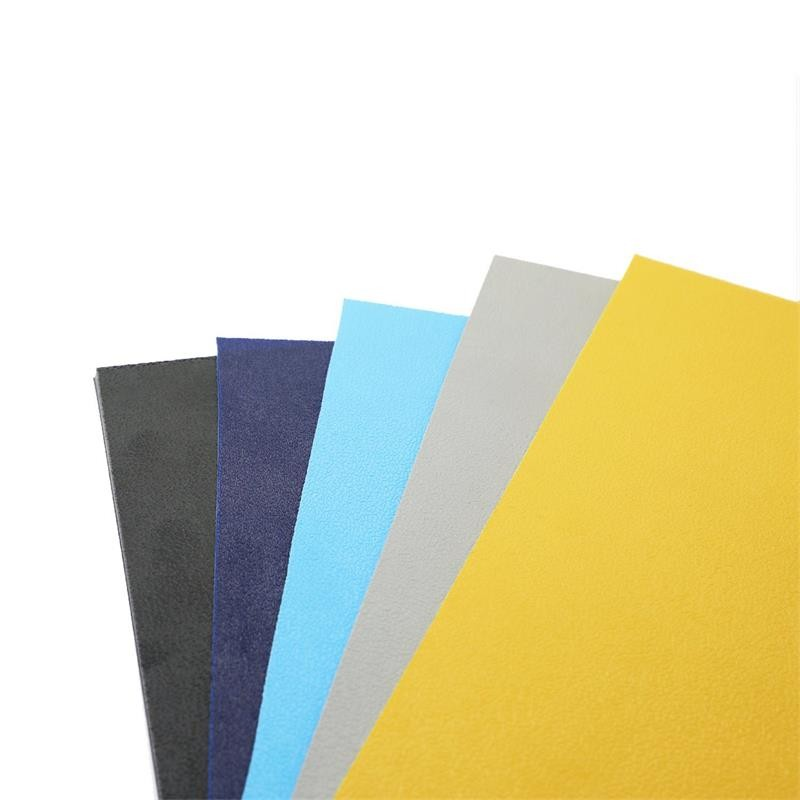
1200x600 ABS Plastic Sheet for Engraving & Fabrication
HSQY 1200x600 ABS plastic sheet combines impact resistance, rigidity, thermoformability and easy machining for engraving, signage, housings, appliance parts, automotive interiors and industrial fabrication.
ABS, or Acrylonitrile Butadiene Styrene, is a tough engineering thermoplastic widely used where buyers require a practical combination of stiffness, impact resistance, dimensional stability and fabrication performance.
This product is identified as a 1200×600mm engraving ABS sheet, while HSQY's broader ABS sheet specification covers thicknesses from approximately 0.3mm to 6mm, widths up to 1600mm and white, black or colored options for different industrial applications.
![1200x600 ABS plastic sheet for engraving and fabrication]()
ABS Plastic Sheet for Engraving
![ABS sheet for CNC machining and thermoforming]()
ABS Sheet for CNC Machining
![Colored ABS plastic sheet for industrial fabrication]()
Colored ABS Sheet for Fabrication
ABS Plastic Sheet Specifications
| Property |
Specification |
| Product |
ABS Plastic Sheet for Engraving & Fabrication |
| Material |
ABS – Acrylonitrile Butadiene Styrene |
| Featured Size |
1200 × 600mm according to the current product designation |
| Thickness |
0.3mm - 6mm |
| Maximum Width |
Up to approximately 1600mm |
| Color |
White, Black, Colored |
| Key Properties |
Rigidity, toughness, impact resistance, dimensional stability and good fabrication performance |
| Processing |
CNC machining, rotary engraving, drilling, routing, sawing, die cutting, thermoforming, vacuum forming and other compatible fabrication processes |
| Laser Processing |
Compatibility depends on the exact ABS grade, laser wavelength, machine settings and fume extraction; confirm before production |
| Applications |
Signage, engraved panels, appliance parts, automotive interiors, electronics housings, trays, industrial covers and fabricated components |
Specification Note: The current product detail lists 0.3-6mm thickness and maximum width up to 1600mm. Exact 1200×600mm availability, thickness tolerance, color, surface finish and processing compatibility should be confirmed with the quotation.
What Is ABS Plastic Sheet?
ABS is an engineering thermoplastic produced from acrylonitrile, butadiene and styrene. The combination gives ABS useful stiffness, surface hardness and dimensional stability together with greater toughness and impact resistance than many brittle rigid plastics.
ABS sheet is widely processed by cutting, drilling, routing, machining, thermoforming and other thermoplastic fabrication methods. These characteristics make it suitable for prototypes, panels, covers, housings and industrial components.
Different ABS grades can be formulated for different surface, heat, flame, UV, ESD, automotive or fabrication requirements, so buyers should match the specific grade to the final application rather than treating every ABS sheet as interchangeable.
Why Choose ABS Sheet for Engraving & Fabrication?
Good rigidity and stiffness: Provides useful structural stability for panels, covers and fabricated parts.
High impact strength: ABS provides useful toughness for applications exposed to handling and moderate mechanical impact.
Good machinability: Suitable for routing, drilling, milling, cutting and CNC fabrication using appropriate tools.
Thermoformability: Suitable ABS grades can be heated and formed into three-dimensional housings, liners and covers.
Dimensional stability: Useful for fabricated panels and industrial components where shape retention is important.
Surface options: White, black and colored sheets can support different appearance and identification requirements.
Secondary finishing: Suitable ABS surfaces can be painted, printed, labeled or bonded after compatibility testing.
ABS Sheet for CNC & Rotary Engraving
ABS can be machined using CNC routers and rotary engraving equipment to produce panels, identification plates, equipment components, openings, slots and custom profiles.
CNC and rotary processing are particularly useful when engraving depth, profile geometry or finished dimensions need to be mechanically controlled.
| Process |
Typical Application |
| CNC Routing |
Profiles, openings, equipment panels, housings and precision fabricated components |
| Rotary Engraving |
Text, symbols, identification marks and industrial panel engraving |
| Drilling |
Mounting holes, fastener locations and equipment-panel fabrication |
| Saw Cutting |
Sheet sizing and straight component blanks |
| Die Cutting |
Repeat-production components in suitable gauges |
Laser Engraving Compatibility of ABS Sheet
Laser engraving or marking performance depends on the specific ABS formulation, sheet color, laser wavelength, power, speed and equipment configuration.
Selected ABS materials can be laser engraved or marked, but buyers should not assume that every general-purpose ABS grade will produce the same engraving contrast or surface quality.
For laser projects, provide the laser type and wavelength, intended engraving depth or marking effect, ABS color and finished application. A representative sheet should be tested on the customer's actual laser system before commercial production.
Processing Safety: Laser processing of thermoplastics generates fumes and may create melted residue. Appropriate extraction, filtration, machine supervision and compliance with the laser equipment manufacturer's material-processing guidance are required.
Laser Engraving vs. Laser Cutting ABS
Laser engraving or marking should be distinguished from full-thickness laser cutting. A surface mark or shallow engraving requires less material removal than cutting completely through the ABS sheet.
| Process |
Selection Consideration |
| Laser Marking |
Creates a visible surface change; compatibility depends strongly on ABS formulation and laser wavelength |
| Laser Engraving |
Removes or modifies surface material; test engraving quality and fume extraction before production |
| Laser Cutting |
Can produce melted or discolored edges on some ABS grades and should not be treated as the default cutting method |
| CNC / Mechanical Cutting |
Often preferred when clean profile edges and predictable dimensional control are required |
Standard ABS Sheet vs. Double-Color Engraving Sheet
This general ABS sheet should not be confused with a dedicated two-color engraving laminate.
| Feature |
Standard ABS Sheet |
Double-Color Engraving Sheet |
| Structure |
General solid ABS sheet |
Layered face/core construction with contrasting colors |
| Primary Purpose |
Fabrication, machining, thermoforming and general engraving |
High-contrast text, labels, signs and nameplates |
| Engraving Effect |
Depends on sheet color and processing method |
Engraving removes the face layer to expose a contrasting core |
| Typical Application |
Panels, housings, automotive components, appliance parts and industrial fabrication |
Nameplates, control labels, wayfinding signs and identification plates |
If the project requires a face color to be engraved away to expose a different core color, specify a two-color engraving sheet rather than standard single-color ABS.
How to Choose ABS Sheet Thickness
HSQY's current product range covers approximately 0.3mm to 6mm. Thickness affects rigidity, machining behavior, thermoforming performance, weight and finished-part strength.
| Thickness Direction |
General Application Direction |
| 0.3 - 0.8mm |
Thin formed components, lightweight panels, inserts and thin fabricated parts |
| 1 - 2mm |
Signs, equipment panels, thermoformed covers, appliance components and general fabrication |
| 3 - 4mm |
Rigid panels, housings, industrial covers, automotive interior components and CNC parts |
| 5 - 6mm |
Thicker fabricated components, panels and parts requiring greater flat-sheet rigidity |
These are general selection directions. Finished dimensions, unsupported span, mounting method, impact requirement and fabrication process should be considered before specifying thickness.
ABS Sheet for Thermoforming
ABS is widely used in thermoforming because suitable extruded grades soften under controlled heating and can be formed into housings, covers, liners, trays and interior components.
Thermoforming performance depends on sheet thickness, grade, heating profile, forming depth, mold geometry and finished wall-thickness requirements.
| Forming Factor |
Why It Matters |
| Starting Thickness |
Determines material available before stretching |
| Heating Uniformity |
Supports more consistent sheet sag and forming |
| Forming Depth |
Deeper parts can create greater wall-thickness variation |
| Mold Geometry |
Corners and complex shapes affect material distribution |
| Finished Wall Thickness |
Critical areas should be checked after forming |
ABS Sheet for Automotive Interior Components
ABS sheet is widely evaluated for automotive interior panels, trim components, dashboard-related parts, door panels and decorative interior components because of its toughness, formability and surface appearance.
Automotive applications should specify heat resistance, impact performance, odor, emissions, flame requirements, color and OEM-specific material requirements. Standard general-purpose ABS should not automatically be treated as automotive-qualified material.
ABS Sheet for Electronics Housings & Panels
ABS can be machined or thermoformed into equipment panels, housings, faceplates, covers and brackets for electronics and electrical products.
Where flame retardancy, ESD control, electrical performance or specific certification is required, buyers should specify the exact requirement. Standard ABS should not automatically be substituted for flame-retardant or ESD ABS grades.
ABS Sheet for Appliances & Household Products
ABS is used in appliance panels, refrigerator components, trays, covers, storage parts and household-product housings where toughness, formability and surface appearance are useful.
For kitchen, bathroom or appliance applications, chemical exposure, cleaning agents, operating temperature and fastening design should be considered when selecting the ABS grade.
ABS Sheet for Industrial Equipment
ABS sheet can be converted into machine covers, guards, equipment panels, non-structural housings, trays and fabricated industrial components.
Machined industrial parts should be designed according to load, operating temperature, chemical exposure, tolerances and fastening method. Where very close machining tolerances are required, a suitable machine-grade or stress-relieved ABS should be evaluated.
ABS Sheet for Building & Interior Panels
ABS can be used for selected interior wall panels, partitions, decorative panels and fabricated architectural components where its appearance and impact performance suit the application.
Building applications should separately define flame, smoke, UV, weathering and regulatory requirements. General-purpose ABS should not automatically be presented as compliant with a specific building-code classification.
ABS Sheet for Aviation Interior Applications
The original product information lists aviation interiors among ABS application directions. Aviation projects require specialized material qualification and cannot rely on standard ABS specifications alone.
If the intended use is for an aircraft interior, provide the applicable flame, smoke, toxicity and aviation-industry requirements before selecting a material grade.
Chemical & Abrasion Resistance
ABS provides useful resistance to selected chemicals and normal handling wear, but chemical compatibility varies significantly with the substance, concentration, temperature and duration of exposure.
For applications involving cleaners, oils, fuels, solvents or industrial chemicals, provide the exposure conditions and test the actual ABS grade before commercial use.
Indoor & Outdoor Use
Standard ABS is primarily used indoors or in controlled environments. Long-term exterior exposure can require a specifically formulated UV-resistant ABS grade.
For outdoor signs, equipment covers or architectural components, specify UV exposure, temperature range, weathering conditions and expected service life before selecting a grade.
ABS vs. Acrylic for Engraving Applications
| Selection Factor |
ABS |
Acrylic / PMMA |
| Main Strength |
Toughness, impact resistance, machining and thermoforming |
Clarity, gloss and strong compatibility with many dedicated laser applications |
| Mechanical Engraving |
Well suited with appropriate tooling |
Also suitable with appropriate tooling |
| Laser Processing |
Requires grade and machine validation; cutting may produce melted edges or residue |
Dedicated laser-grade acrylic is widely selected for clean laser engraving and cutting |
| Thermoforming |
Widely used for tough formed housings and panels |
Can also be thermoformed depending on acrylic grade |
| Selection |
Choose according to impact requirement, appearance, fabrication method, laser system and finished-part performance. |
What Information Should You Provide for a Quote?
| Requirement |
Information to Provide |
| Application |
Engraving, signage, thermoforming, automotive, appliance, electronics, cover, housing or other application |
| Sheet Size |
1200×600mm or required custom dimensions |
| Thickness |
Required thickness within the current 0.3-6mm range |
| Color |
White, black or required custom color |
| Surface |
Required smoothness, gloss, matte or other surface requirement |
| Engraving Method |
CNC, rotary or laser engraving / marking |
| Laser Information |
Laser type, wavelength and intended engraving or marking effect where applicable |
| CNC Machining |
Routing, drilling, milling, profile cutting and tolerance requirements |
| Thermoforming |
Mold dimensions, forming depth and finished wall-thickness requirement where applicable |
| Special Grade |
UV, flame retardant, ESD, automotive or other specialized requirement where applicable |
| Quantity |
Trial quantity, regular order quantity and estimated annual demand |
| Destination |
Country and destination port |
Frequently Asked Questions About ABS Engraving Sheet
What is ABS plastic sheet?
ABS is Acrylonitrile Butadiene Styrene, a tough thermoplastic used for machining, thermoforming, housings, panels, automotive components and other fabricated products.
Is 1200x600mm ABS sheet available?
1200×600mm is the featured size in the current product designation. HSQY's broader specification lists widths up to approximately 1600mm. Exact sheet length and thickness availability should be confirmed with the order.
What thicknesses are available?
The current product specification lists ABS sheet thicknesses from approximately 0.3mm to 6mm.
What colors are available?
The current product specification lists white, black and colored ABS sheets.
Can ABS sheet be CNC engraved?
Yes. ABS can be processed using CNC routers and suitable engraving tools. Tool geometry, feed rate, spindle speed and sheet thickness should be matched to the application.
Can ABS sheet be laser engraved?
Selected ABS grades can be laser engraved or marked, but results depend on the formulation, sheet color, laser wavelength and machine settings. Test the exact sheet on the intended laser system before production.
Can ABS sheet be laser cut?
Laser cutting is not automatically the preferred process for general ABS. Some grades can melt, discolor or leave residue during laser cutting. Machine compatibility, extraction and edge quality should be evaluated before use; CNC routing or mechanical cutting may provide better results for many applications.
Is this a double-color engraving sheet?
The current specification describes a general ABS plastic sheet in white, black or colored grades. A dedicated double-color engraving sheet uses a layered face and contrasting core and should be specified separately where that engraving effect is required.
Can ABS sheet be thermoformed?
Yes. Suitable extruded ABS grades are widely used for thermoforming and vacuum forming into housings, liners, trays and covers.
Can ABS sheet be drilled and routed?
Yes. ABS is commonly drilled, routed, milled and cut using suitable plastic-fabrication tooling and controlled processing conditions.
Can ABS be used for automotive interiors?
ABS is used for automotive interior components, but automotive applications should define heat, impact, odor, emissions, flame and OEM-specific requirements before selecting a grade.
Can ABS be used for electronics housings?
Yes. ABS is commonly used for housings, covers and equipment panels. Applications requiring flame retardancy or ESD performance need a dedicated grade with defined specifications.
Is standard ABS UV resistant?
Standard ABS should not automatically be treated as suitable for long-term outdoor exposure. Exterior projects should specify a UV-resistant grade or another material suitable for the required environment.
Is standard ABS flame retardant?
Not necessarily. Flame-retardant ABS is a separate grade. Provide the required flame standard and classification if fire performance is part of the application.
What information should I provide for a quotation?
Please provide the application, sheet dimensions, thickness, color, surface finish, CNC or laser processing requirements, thermoforming requirements, special material grade, quantity and destination.
Packing
ABS sheets should be protected during storage and international transportation to reduce scratching, contamination, bending and edge damage.
![ABS plastic sheet export packing]()
ABS Plastic Sheet Export Packing
HSQY Plastic Group Exhibitions
HSQY Plastic Group meets distributors, thermoformers, automotive suppliers, appliance manufacturers, fabricators and other industrial plastic-sheet buyers at international exhibitions.
![HSQY Plastic Group international exhibitions]()
HSQY Plastic Group International Exhibition Activities
Certificates & Documentation
Available certificates and technical documentation should be confirmed for the exact ABS grade and application. Automotive, aviation, flame-retardant, ESD, UV-resistant and other specialized projects may require grade-specific documentation.
About HSQY Plastic Group
HSQY Plastic Group supplies ABS plastic sheet and other thermoplastic sheet materials for distributors, thermoformers, automotive suppliers, appliance manufacturers, signage companies and industrial fabricators. Thickness, dimensions, color, surface finish and downstream processing requirements can be discussed according to the project.