Polycarbonate Film for Luggage & Suitcase Applications
HSQY polycarbonate film for luggage combines impact resistance, low weight, color flexibility and textured surface options for suitcases, handbags, cosmetic cases and other durable luggage components.
The luggage-grade PC film is available in transparent, textured and colored series. Depending on the selected thickness, surface combinations include polished/polished, polished/brushed, polished/dull polish and polished/diamond for different visual, tactile and forming requirements.
Standard luggage-film thicknesses include 0.175mm and 0.2-0.5mm. Customized colors, widths and surface textures can be discussed for luggage manufacturers, converters, thermoformers and OEM projects.
![Polycarbonate film for luggage and suitcase applications]()
Polycarbonate Film for Luggage
![Colored textured polycarbonate luggage film]()
Colored & Textured PC Film
Polycarbonate Film for Luggage Specifications
| Property |
Specification |
| Product |
Polycarbonate Film for Luggage |
| Material |
Polycarbonate (PC) |
| Series |
Transparent, Textured, Colored |
| Color |
Natural / Customized |
| Thickness |
0.175mm; 0.2-0.5mm |
| Width |
Up to approximately 1200mm in the luggage-film data sheet; selected PC film specifications may be available up to 1220mm subject to production confirmation |
| 0.175mm Surface |
Polished / Polished |
| 0.2-0.5mm Surfaces |
Polished / Brushed, Polished / Dull Polish, Polished / Diamond |
| Typical Applications |
Suitcases, luggage components, shoulder bags, handbags, cosmetic bags and other formed or decorative luggage parts |
| Possible Processing |
Cutting, lamination, printing and thermoforming depending on grade, thickness and finished-product design |
Specification Note: Surface texture, thickness tolerance, color consistency and forming performance depend on the exact luggage-film grade. Final specifications should be confirmed against the applicable data sheet and approved sample before mass production.
Typical Technical Properties
| Property |
Typical Value |
Test Method |
| Specific Gravity |
≥1.2 g/cm³ |
ISO 1183 |
| Transparent Haze |
<0.5% |
ASTM D1003 |
| Textured Haze |
>60% |
ASTM D1003 |
| Transparent Light Transmission |
>89% |
ASTM D1003 |
| Frosted Light Transmission |
>80% |
ASTM D1003 |
| Equilibrium Water Absorption |
≤0.35% |
ASTM D570 |
| Thickness Tolerance |
0.25<T≤0.5mm: ±5%; 0.1≤T≤0.25mm: ±10% |
According to current luggage-film data sheet |
Technical Data Note: These are typical values from the current HSQY luggage polycarbonate film data sheet and should not be treated as guaranteed values for every custom color, surface or thickness. Confirm the exact production specification before engineering approval.
Why Use Polycarbonate Film for Luggage?
Polycarbonate is widely used in luggage applications because it combines toughness, relatively low weight, surface-design flexibility and good dimensional stability. These characteristics are useful for luggage components that experience repeated handling, compression and accidental impacts during transportation.
For thin film applications, material performance also depends on how the film is laminated, formed or integrated with the luggage structure. The finished suitcase or bag should therefore be evaluated as a complete product rather than assigning all drop or compression performance to the PC film alone.
Key Features of Luggage Polycarbonate Film
Lightweight: Thin PC film adds limited material weight while providing mechanical durability and surface-design flexibility.
Impact resistance: Polycarbonate is known for strong toughness and can support demanding luggage constructions when properly selected and processed.
Compression resistance: Suitable grades can contribute to luggage components designed to withstand repeated handling and external pressure.
Color flexibility: Natural and customized colors support different luggage collections and brand designs.
Surface texture options: Brushed, dull-polish and diamond-pattern surfaces provide different visual and tactile finishes.
Easy-clean surface: PC surfaces can be cleaned using suitable methods and compatible cleaning agents.
Good water resistance: The material has low equilibrium water absorption, although final luggage waterproofing depends on the complete product construction.
Formability: Suitable PC grades can be evaluated for thermoforming and other three-dimensional luggage components.
Transparent, Textured and Colored Luggage Film
| Series |
Main Characteristics |
Typical Selection Goal |
| Transparent Series |
High clarity and low haze |
Transparent or translucent luggage components and decorative effects |
| Textured Series |
Brushed, dull-polish, diamond and other tactile surfaces |
Surface differentiation, visual texture and reduced visibility of handling marks |
| Colored Series |
Customized appearance according to production requirements |
Brand colors, luggage collections and decorative design |
Surface Texture Options
| Surface Combination |
Available Thickness |
Typical Characteristic |
| Polished / Polished |
0.175mm |
Smooth appearance with higher transparency |
| Polished / Brushed |
0.2-0.5mm |
Decorative directional texture |
| Polished / Dull Polish |
0.2-0.5mm |
Lower-gloss surface appearance |
| Polished / Diamond |
0.2-0.5mm |
Patterned decorative surface for luggage design |
Polycarbonate Film for Suitcase Applications
In suitcase manufacturing, polycarbonate material can be used in decorative, laminated or formed components depending on the luggage construction. Thin luggage PC film provides color and surface-design flexibility while retaining the toughness associated with polycarbonate.
For projects where the film will be thermoformed, laminated to another substrate or used as part of a multilayer luggage structure, provide the complete material stack and forming process before ordering. This helps ensure the selected thickness and surface remain suitable after processing.
![Polycarbonate film for suitcase and luggage applications]()
Suitcase & Luggage Applications
![PC film for luggage shell and bag components]()
PC Film for Luggage Components
Thermoforming Considerations for Luggage Components
Polycarbonate can be thermoformed into three-dimensional parts when a suitable grade and process are used. In luggage manufacturing, heating uniformity, mold geometry, draw depth and material thickness can influence surface appearance and final wall thickness.
Deep draws can thin the material around corners and sidewalls. If the finished luggage component has minimum wall-thickness or drop-test requirements, these should be evaluated after forming rather than using only the starting flat-film thickness.
| Forming Factor |
Why It Matters |
| Starting Thickness |
Determines how much material is available before stretching |
| Heating Uniformity |
Helps reduce uneven forming, color variation and local thinning |
| Draw Depth |
Deeper shapes can create greater variation in final wall thickness |
| Surface Texture |
Texture appearance can change when the film stretches during forming |
| Color |
Color appearance should be evaluated after heating and forming |
| Finished-Part Testing |
Drop, compression and dimensional performance should be checked on the finished luggage assembly |
PC Film for Handbags, Cosmetic Cases & Specialty Bags
The same luggage PC film series can also be evaluated for shoulder bags, handbags, cosmetic bags and specialty cases where the design requires a rigid or semi-rigid plastic surface, decorative texture, transparency or custom color.
Material suitability depends on the finished construction. Bending radius, stitching, riveting, adhesive bonding, lamination and repeated flexing should be tested using the actual film thickness and surface.
Water Resistance and Cleaning
The luggage PC film data sheet lists equilibrium water absorption of ≤0.35%, supporting its use where good resistance to moisture is required. However, the final suitcase or bag should not automatically be described as waterproof solely because PC film is used.
Finished-product water resistance depends on seams, zippers, joints, hardware and the complete luggage construction. For cleaning, use compatible detergents and avoid aggressive solvents unless chemical compatibility has been validated for the exact PC grade.
Polycarbonate vs. ABS-Based Luggage Materials
| Factor |
Polycarbonate |
ABS / ABS-Based Material |
| Impact Performance |
Commonly selected for demanding luggage applications requiring high toughness |
Widely used for cost-effective rigid luggage constructions |
| Flexibility |
PC can flex under impact depending on grade and thickness |
Generally more rigid depending on formulation and construction |
| Surface Design |
Transparent, colored and textured film options available |
Wide color and surface-design options also available |
| Material Selection |
Often chosen where toughness and premium material positioning are important |
Often chosen where cost and rigid-shell processing are primary considerations |
The correct luggage material should be selected according to shell construction, product weight, drop-test requirement, target price, forming process and brand positioning rather than material name alone.
Color & Surface Customization
HSQY supports customized colors and surface textures for qualified luggage projects. Buyers should provide a physical color sample, Pantone reference or approved master standard where color consistency is important.
For textured grades, the finished surface should be evaluated after lamination or forming because heat and stretching can influence gloss, pattern definition and visual color.
What Information Should You Provide for a Quote?
| Requirement |
Information to Provide |
| Application |
Suitcase, luggage shell component, handbag, cosmetic case or other luggage product |
| Thickness |
0.175mm or required thickness within 0.2-0.5mm range |
| Width |
Required roll width or cut-sheet size |
| Surface |
Polished, brushed, dull polish, diamond or other required texture |
| Color |
Natural or custom color reference |
| Transparency |
Transparent, frosted, textured or opaque requirement |
| Processing |
Thermoforming, lamination, printing, cutting or another process |
| Finished-Part Test |
Drop, compression, bending or customer-specific test requirement where applicable |
| Quantity |
Sample quantity, trial order, regular order and annual demand |
| Destination |
Country and destination port |
Luggage Polycarbonate Film Data Sheet
![Luggage polycarbonate film data sheet PDF]() Luggage Polycarbonate Films Data Sheet.pdf
Frequently Asked Questions About Polycarbonate Film for Luggage
What is polycarbonate film for luggage?
Polycarbonate film for luggage is thin PC material designed for luggage and bag components requiring toughness, lightweight construction, custom colors and decorative surface textures.
What thicknesses are available?
The current HSQY luggage-film specification lists 0.175mm polished/polished film and 0.2-0.5mm textured film options.
What surface textures are available?
Current surface options include polished/polished, polished/brushed, polished/dull polish and polished/diamond. Other customized surfaces can be discussed according to production capability.
Can HSQY customize luggage film colors?
Yes. Customized colors can be discussed for qualified orders. A Pantone reference, physical sample or approved color standard is recommended for accurate color matching.
Is polycarbonate luggage film transparent?
Transparent, textured and colored series are available. The current luggage-film data sheet lists transparent light transmission above 89% and transparent haze below 0.5% as typical values.
Is textured luggage PC film transparent?
Textured surfaces scatter more light than polished transparent film. The current data sheet lists textured haze above 60%, while frosted light transmission is above 80% as a typical value.
Is PC luggage film waterproof?
PC film has good water resistance and the current data sheet lists equilibrium water absorption at ≤0.35%. However, the waterproof performance of finished luggage depends on zippers, seams, joints and overall construction.
Can polycarbonate luggage film be thermoformed?
Suitable polycarbonate grades can be thermoformed. Forming behavior depends on grade, thickness, heating profile, mold geometry and draw depth. Sample forming is recommended before bulk production.
Will the texture change after thermoforming?
It can. Stretching during thermoforming may alter gloss, texture depth and visual appearance, particularly in deep-draw areas. The finished component should therefore be evaluated after forming.
Is polycarbonate film suitable for drop-resistant luggage?
Polycarbonate provides strong impact resistance and is widely used in durable luggage constructions. Final drop resistance depends on material thickness, forming, shell design, frame, corners, hardware and the complete suitcase assembly.
Can the film be used for handbags and cosmetic cases?
Yes. The current HSQY application range includes suitcases, shoulder bags, handbags and cosmetic bags. Suitability should be checked according to bending, lamination, stitching and finished-product construction.
Can I request samples before ordering?
Yes. Sample testing is recommended for color, surface texture, transparency, forming and finished-luggage performance before a large production order.
What information should I provide for a quotation?
Please provide the luggage application, thickness, width, surface texture, color, transparency requirement, processing method, finished-product test requirements, quantity and destination.
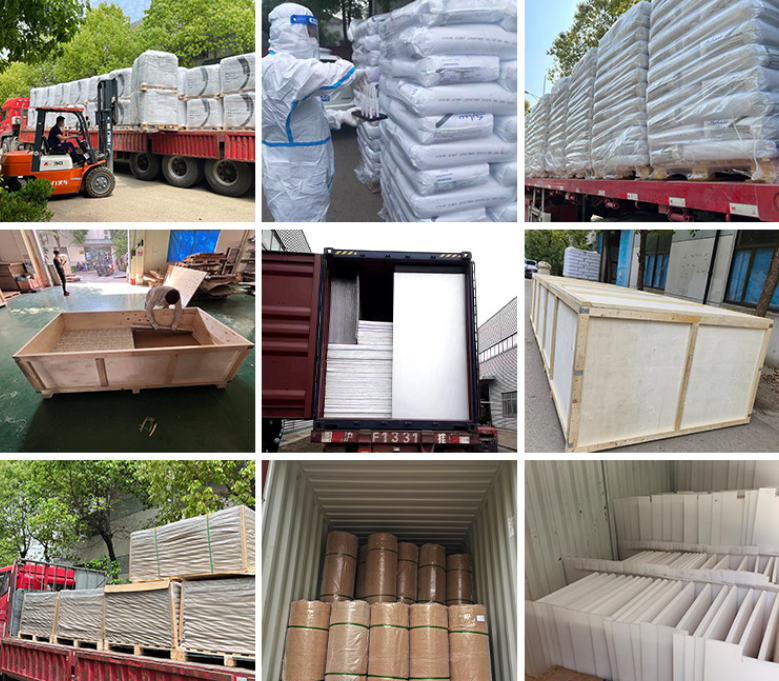
Packing & Delivery
Luggage polycarbonate film is packed according to film thickness, width, surface and export transportation requirements. Protective packaging helps reduce scratching, contamination, edge damage and deformation during storage and shipment.
![HSQY luggage polycarbonate film packing and delivery]()
Export Packing for Polycarbonate Film
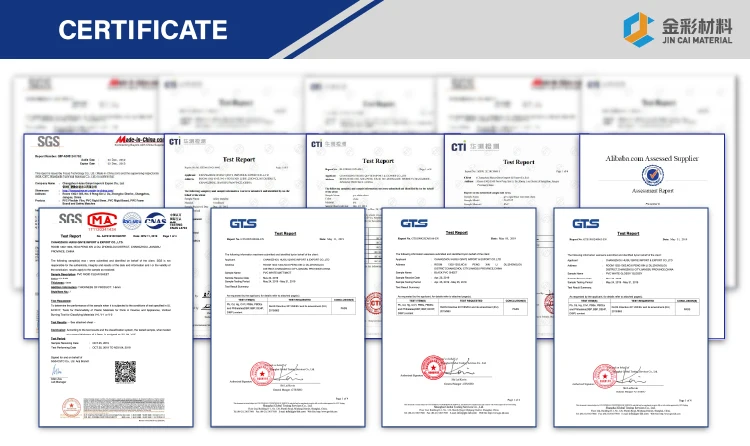
Certifications
Certification and compliance documentation should be confirmed for the exact luggage-film grade and customer requirement before approval.
About HSQY Plastic Group
HSQY Plastic Group supplies luggage-grade polycarbonate film and other functional PC film materials for luggage manufacturers, plastic converters, thermoformers, distributors and OEM customers. Different thicknesses, colors, surface textures and project-specific specifications can be discussed for B2B applications.
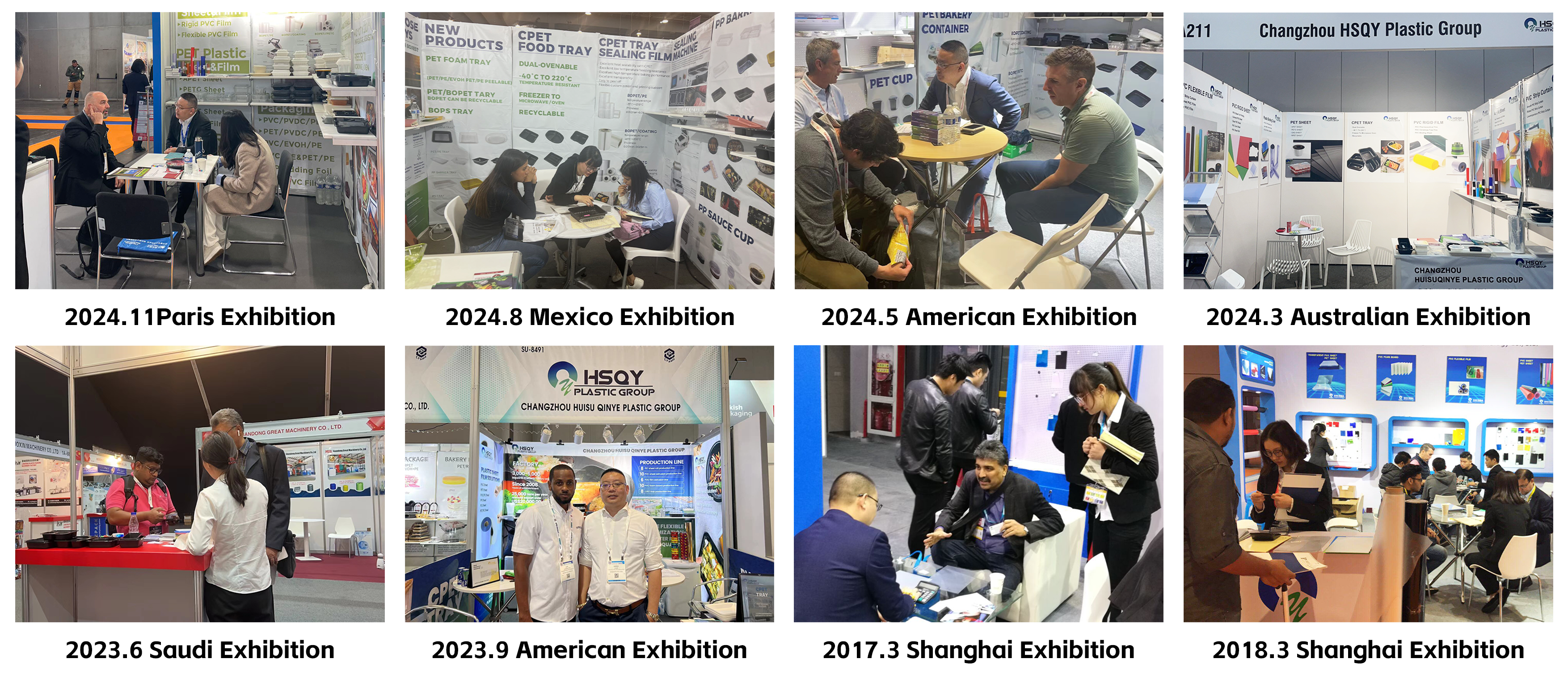
HSQY Plastic Group Exhibitions
![HSQY Plastic Group international exhibitions]()
HSQY Plastic Group meets international luggage manufacturers, converters, distributors and industrial buyers at global exhibitions.
·