Transparent Heat Resistant PP Sheet for Placemats
HSQY transparent heat resistant polypropylene sheet is designed for placemats, table mats, printed dining mats, reusable table protectors and other converted PP products that require lightweight construction, moisture resistance, practical heat performance and easy fabrication.
The current HSQY heat resistant PP sheet range covers approximately 0.125mm to 3mm in the published specification, with customized width, appearance and processing options available according to the application. The featured product is intended for transparent placemat applications, while colored PP grades can also be discussed.
For placemat manufacturers, important purchasing parameters include sheet thickness, transparency, surface finish, printing treatment, dimensional stability, die-cutting performance, heat exposure conditions and finished mat dimensions. These parameters should be confirmed before commercial production rather than selecting PP sheet only by nominal temperature rating.
Request Heat Resistant PP Sheet Quote
Heat Resistant PP Sheet Video
Transparent Heat Resistant PP Sheet Images

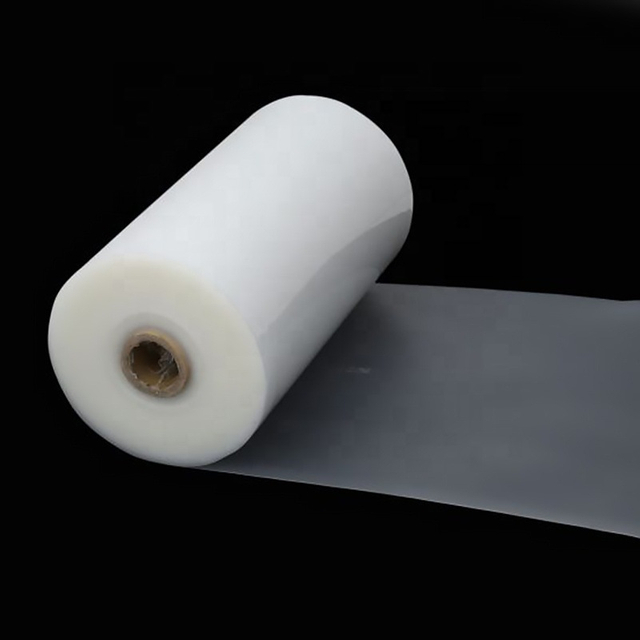
Transparent Heat Resistant PP Sheet

PP Sheet for Placemat Production

Heat Resistant PP Sheet Application
What Is Heat Resistant Polypropylene Sheet?
Heat resistant polypropylene sheet is a PP plastic sheet formulated or selected to provide suitable dimensional stability and mechanical performance when exposed to elevated temperatures.
Polypropylene is naturally lightweight, has very low moisture absorption and offers useful resistance to many acids, alkalis and aqueous chemicals. These characteristics make PP sheet useful for placemats, packaging, stationery, printing, fabricated components and selected industrial applications.
A heat resistant PP grade may use a specific resin, nucleation system, filler, stabilizer or other formulation approach to improve dimensional stability at elevated temperatures. Buyers should therefore evaluate the exact grade rather than assume every polypropylene sheet has identical heat resistance.
Heat Resistant PP Sheet Specifications
The following specifications are based on the current HSQY product information. Final values should be confirmed using the production specification or technical data sheet for the actual ordered grade.
| Property |
Current HSQY Specification |
Buyer Should Confirm |
| Product |
Heat Resistant Polypropylene Sheet |
Placemat, printing or other intended application |
| Material |
Polypropylene Plastic |
PP homopolymer, copolymer or modified formulation where relevant |
| Featured Appearance |
Transparent |
Transparency, haze and surface texture |
| Other Colors |
Current source also references colored PP |
Custom color and approved color sample |
| Published Thickness |
0.125mm–3mm |
Exact thickness and tolerance |
| Product Card Thickness |
Approximately 0.1mm–3mm |
Confirm minimum production thickness and unify specification |
| Width |
Customized |
Sheet width, roll width or cut dimensions |
| Published Temperature Range |
-30°C to 130°C (-22°F to 266°F) |
Confirm whether 130°C is short-term, contact temperature or continuous-use value for the exact grade |
| Placemat Conversion |
Cutting, printing and die cutting can be discussed |
Printing process, surface treatment and finished dimensions |
| Other Applications |
Food, Medical, Industrial, Electronics and Advertising |
Product-specific grade and regulatory documents |
Understanding the 130°C Heat Resistance Claim
The current HSQY specification lists a temperature range of -30°C to 130°C. This value should be interpreted together with the actual PP grade, exposure duration, mechanical load, sheet thickness and test method.
Continuous service temperature, short-term peak temperature and brief contact with a hot plate are different conditions. A PP sheet that tolerates short exposure to a hot object is not automatically suitable for continuous structural service at the same temperature.
For placemat applications, buyers should specify the expected surface temperature, hot-object contact time, mat thickness and acceptable deformation. A production sample should be tested using the actual plate, bowl or cookware temperature expected in service.
Continuous Heat vs Short-Term Heat Exposure
| Condition |
Meaning |
Placemat Relevance |
| Continuous Service Temperature |
Temperature maintained for long periods while the material must retain required properties |
Less common for normal dining mats but important for industrial PP applications |
| Short-Term Peak Temperature |
Higher temperature tolerated temporarily without unacceptable damage |
Relevant when hot items contact the mat for short periods |
| Hot-Object Contact |
Localized conductive heating from a plate, bowl or other hot object |
Should be tested using actual item temperature, contact area and duration |
| Heat Deflection |
Measures deformation under a specified load and temperature |
Useful when dimensional stability is important |
Why Use PP Sheet for Placemats?
Lightweight Material
Polypropylene has relatively low density compared with many common rigid plastics, helping manufacturers produce lightweight reusable placemats with efficient material usage.
Very Low Moisture Absorption
Solid PP absorbs very little moisture, which is advantageous for table mats that may be wiped or washed during normal use.
Wipe-Clean Surface
Smooth or appropriately textured PP placemats can be cleaned after food and beverage spills. Finished cleaning performance also depends on printing ink, coating, surface texture and edge design.
Good Flex Fatigue Performance
Polypropylene is widely selected for thin fabricated products because suitable grades provide useful flexibility and repeated bending performance.
Custom Printing Potential
PP sheet can be used for printed placemats, promotional mats and decorative table products when the correct printing process and surface treatment are selected.
Die-Cutting and Shape Customization
Thin PP sheet can be cut or die-cut into rectangular, round, oval and custom placemat shapes according to the finished-product design.
Transparent PP Sheet for Printed Placemats
Transparent PP sheet allows manufacturers to create clear, semi-transparent or printed placemat designs while retaining the lightweight characteristics of polypropylene.
Depending on the design, printed graphics may be applied directly to a treated PP surface or incorporated through another compatible printing and converting process.
Because untreated polypropylene has relatively low surface energy, printing adhesion should be validated. Corona treatment, flame treatment, primer or another suitable surface treatment may be required depending on the ink system.
PP Placemat Printing Options
| Printing Requirement |
Important Consideration |
| Screen Printing |
Ink adhesion and surface treatment should be tested |
| UV Printing |
Confirm ink compatibility, curing and adhesion to PP |
| Offset Printing |
Requires suitable printable PP grade or surface treatment |
| Full-Color Promotional Printing |
Color reproduction, rub resistance and cleaning resistance should be approved |
| Logo Printing |
Useful for restaurants, hotels, promotional products and private-label tableware |
Transparent vs Frosted vs Colored PP for Placemats
| PP Sheet Type |
Appearance |
Typical Placemat Design |
| Transparent PP |
Clear or translucent appearance depending on grade and thickness |
Minimalist clear mats, printed transparent mats and protective overlays |
| Frosted PP |
Diffused matte appearance |
Decorative table mats and lower-glare surfaces |
| Colored PP |
Opaque, translucent or custom colored depending on grade |
Branded, decorative and themed placemats |
| Textured PP |
Patterned or embossed surface |
Decorative placemats requiring a tactile surface |
How PP Placemats Are Manufactured
1. PP Sheet Extrusion
Polypropylene resin is processed into sheet or roll stock at the required nominal thickness, width, appearance and formulation.
2. Surface Treatment
Where printing is required, the PP surface may need corona, flame or another treatment to improve ink adhesion.
3. Printing and Decoration
Graphics, logos, decorative patterns or promotional information can be printed using a process compatible with the treated PP sheet.
4. Cutting or Die Cutting
The printed sheet is cut or die-cut into rectangular, round, oval or customized placemat shapes.
5. Final Quality Inspection
Finished products can be inspected for dimensions, thickness, color, print registration, surface quality, flatness and heat-performance requirements.
Applications of Heat Resistant PP Sheet
Dining Placemats
Transparent, printed, colored or textured PP sheet can be converted into reusable dining placemats for homes, restaurants, hotels and catering applications.
Restaurant Promotional Mats
Printable PP sheet can be used for branded table mats containing logos, promotions, menus, graphics or advertising information.
Table Protectors
Appropriate PP sheets can provide a lightweight protective surface against normal dining spills, stains and brief contact with warm tableware.
Coasters and Small Table Mats
PP sheet can be die-cut into smaller table accessories such as coasters, tray liners and promotional table products.
Packaging and Printing
Appropriate PP sheet grades are also used for printing, packaging, dividers, folders, protective covers and other converted plastic products.
Industrial Applications
Thicker or specially formulated PP sheet can also be evaluated for chemical-processing equipment, liners, guards, environmental systems and fabricated industrial parts. Industrial grades may differ significantly from thin placemat sheet and should be specified separately.
Chemical and Moisture Resistance
Polypropylene provides useful resistance to many acids, alkalis and aqueous chemicals and absorbs very little moisture.
However, PP should not be described as resistant to every solvent, oil or chemical. Chemical compatibility depends on the substance, concentration, temperature, exposure time and applied mechanical stress.
For ordinary placemat use, finished ink, coating and decorative layers must also be considered because their resistance to water, cleaners, oils and food stains may differ from the underlying PP sheet.
Is Heat Resistant PP Sheet Oven Safe?
Heat resistant PP sheet should not automatically be described as conventional-oven safe.
Oven temperatures can exceed normal PP service temperatures and can cause softening, warping or loss of mechanical strength. If an application involves oven exposure, a material specifically validated for the required temperature and duration must be selected.
A placemat grade designed to tolerate brief contact with hot dishes is not equivalent to an ovenable food-container grade.
Is Heat Resistant PP Sheet Microwave Safe?
Polypropylene is used in many microwave applications, but microwave suitability is product- and application-specific.
This placemat sheet should not be marketed as microwave safe unless the exact formulation, thickness, printing, additives and intended use conditions have been validated.
Food-Contact Requirements
Placemats generally function as table accessories rather than direct food-contact packaging, but some projects may require food-contact or restricted-substance documentation.
Buyers requiring direct food contact should specify the destination market, food type, contact temperature and contact duration and request documentation for the exact PP resin, additives, pigments, inks and finished construction.
General company certifications should not be treated as proof that every HSQY PP grade is approved for every food-contact application.
Important Technical Parameters for Placemat Manufacturers
| Parameter |
Why It Matters |
| Thickness Tolerance |
Influences stiffness, flatness, heat deformation and material cost |
| Sheet / Roll Width |
Should match printing and die-cutting equipment |
| Transparency / Haze |
Important for clear and translucent placemat designs |
| Surface Texture |
Influences appearance, cleaning and printing |
| Surface Energy |
Critical for reliable ink adhesion |
| Heat Deflection |
Helps evaluate dimensional stability under heat and load |
| Hot-Contact Performance |
Relevant when hot plates or serving bowls are placed on the finished mat |
| Shrinkage |
Important during heat exposure and conversion |
| Ink Adhesion |
Important for washable printed placemats |
| Rub Resistance |
Helps prevent printed graphics wearing during repeated use and cleaning |
| Color Consistency |
Important for large retail and private-label programs |
How to Choose PP Sheet for Placemats
1. Define the Finished Placemat Size
Provide final length, width, shape and corner design so the sheet width and die-cutting layout can be optimized.
2. Select the Sheet Thickness
Thinner sheet provides more flexibility and lower material weight, while thicker sheet provides greater stiffness. The correct thickness depends on the finished placemat design.
3. Choose Transparent, Frosted or Colored PP
Choose the material appearance according to branding, printing method and table-decoration requirements.
4. Define Surface Texture
Smooth, matte, frosted or patterned surfaces can produce different visual and tactile effects. The selected texture can also influence cleaning and print appearance.
5. Specify the Printing Process
Tell HSQY whether the converter will use screen, UV, offset or another printing method so the required surface treatment can be evaluated.
6. Define the Heat Requirement
Provide the maximum expected object temperature and contact duration. Do not specify only “130°C resistant” without defining the actual service condition.
7. Test the Finished Mat
Test dimensional stability, curling, staining, cleaning resistance, print adhesion and hot-object contact using the final printed placemat construction.
Information Needed for a PP Placemat Sheet Quote
To receive a more accurate quotation and material recommendation, provide:
Finished application: placemat, table mat or other PP product
Required thickness and tolerance
Required roll width or sheet size
Transparent, translucent, frosted or colored appearance
Surface texture
Printing method
Corona or other surface-treatment requirement
Final placemat dimensions and shape
Die-cutting or cutting method
Required heat-contact temperature
Required heat-contact duration
Cleaning and wipe-resistance requirement
Food-contact or restricted-substance documentation if required
Order quantity and annual demand
Destination country and port
Get PP Placemat Sheet Price & Sample
Packing
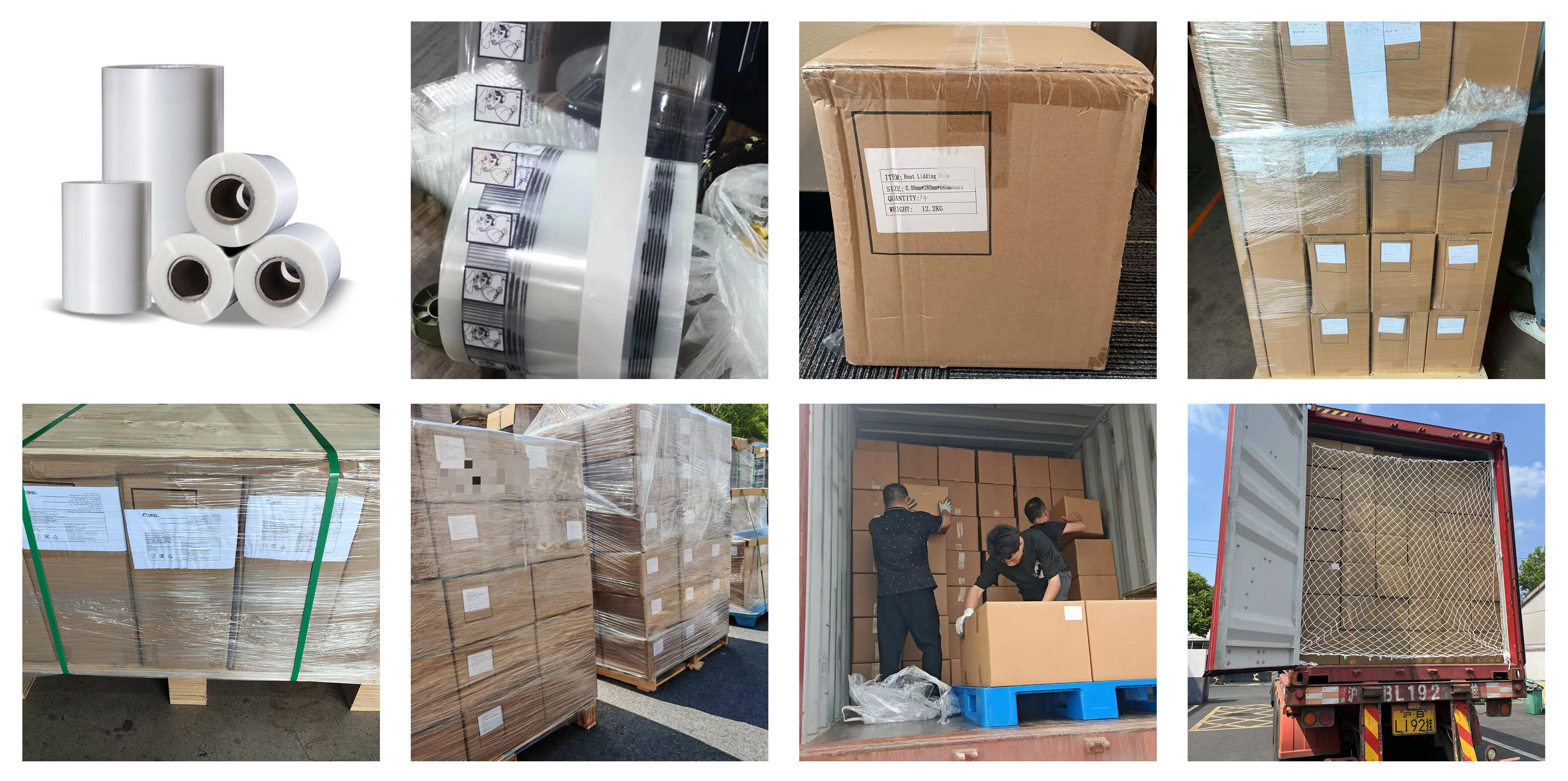
PP sheet can be packed according to roll or sheet format, thickness, width and export requirements. Packing should protect the sheet surface, edges and flatness during storage and international transportation.

HSQY Polypropylene Sheet Packing
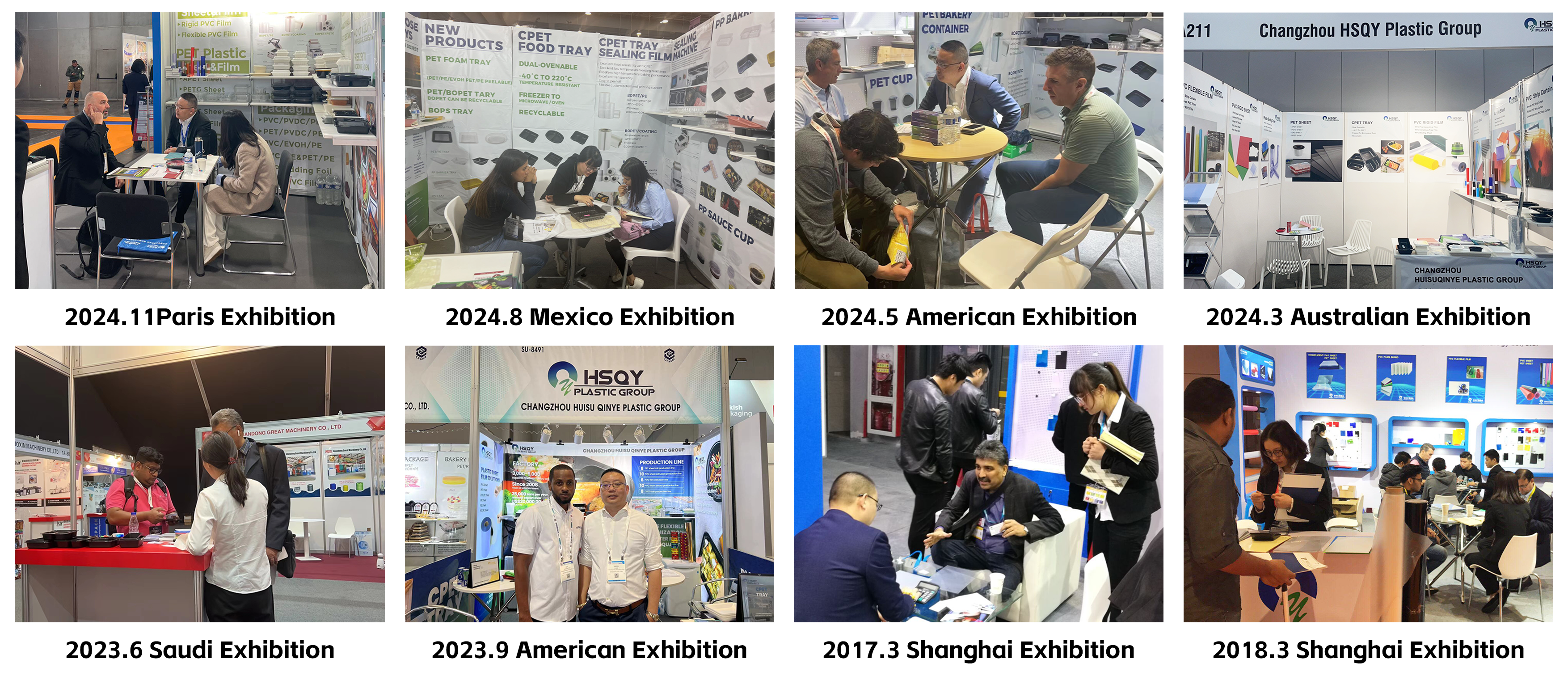
HSQY Global Exhibitions
HSQY meets international distributors, plastic converters, packaging manufacturers and industrial buyers through exhibitions in multiple global markets.

HSQY Plastic Group Global Exhibitions
Quality and Certification Documentation
The current product page contains certification imagery. Buyers should confirm which certificates and test reports apply specifically to the selected heat resistant PP formulation, color, thickness and application.
Temperature resistance, food contact, RoHS, REACH, flame retardancy and other functional claims should be supported by documentation applicable to the exact production grade where those requirements are part of the purchase specification.
FAQ About Heat Resistant PP Sheet for Placemats
What is heat resistant PP sheet used for?
Heat resistant PP sheet can be used for placemats, table mats, printed products, packaging, fabricated components and selected industrial applications where polypropylene's lightweight, moisture-resistant and chemical-resistant characteristics are useful.
Is polypropylene good for placemats?
Yes. PP is commonly used for plastic placemats because it is lightweight, has very low moisture absorption, can be printed and die-cut, and can provide practical resistance to normal dining spills and heat exposure when the correct grade and thickness are selected.
Is HSQY heat resistant PP sheet transparent?
This product is positioned as a transparent heat resistant PP sheet for placemat applications. The current source also references colored PP options, so appearance and transparency should be confirmed for the specific quotation.
What thickness of PP sheet is available?
The current body specification lists approximately 0.125mm to 3mm, while the product card lists approximately 0.1mm to 3mm. Confirm the exact minimum gauge and thickness tolerance for your required grade.
Can PP placemats withstand 130°C?
The current HSQY page lists a temperature range up to 130°C, but suitability depends on the exact material grade, exposure time, mechanical load and test conditions. Buyers should not interpret 130°C automatically as a continuous-use temperature.
What is the difference between short-term and continuous heat resistance?
Short-term heat resistance describes temporary exposure to an elevated temperature, while continuous-use temperature describes long-term service. A material may tolerate a higher short-term temperature than its recommended continuous operating temperature.
Can hot plates be placed on a PP placemat?
It depends on the plate temperature, mat thickness, PP grade and contact duration. The finished placemat should be tested using the actual hot tableware expected in service to check for warping, softening or permanent marks.
Is heat resistant PP sheet oven safe?
Not automatically. Conventional oven temperatures may exceed the suitable service range of PP. Oven use requires a product specifically validated for the required temperature and exposure time.
Is PP sheet microwave safe?
Some polypropylene products are designed for microwave applications, but microwave suitability depends on the exact formulation and finished product. This placemat sheet should only be marketed as microwave safe if the specific construction is validated.
Can transparent PP sheet be printed?
Yes. PP sheet can be printed using compatible printing systems, but corona treatment, flame treatment, primer or another surface-treatment method may be required to achieve reliable ink adhesion.
Can PP sheet be die-cut into custom placemat shapes?
Yes. Suitable thin PP sheet can be die-cut into rectangular, round, oval or customized placemat shapes. Die geometry and cutting clearance should be optimized for the selected thickness.
Are PP placemats waterproof?
Solid polypropylene has very low moisture absorption and is not damaged by ordinary water exposure. The finished printed placemat's cleaning and water resistance also depend on its ink, coating and construction.
Is polypropylene resistant to chemicals?
PP resists many acids, alkalis and aqueous chemicals, but it is not universally resistant to every solvent or chemical. Compatibility should be checked according to concentration, temperature and exposure time.
Can HSQY customize PP sheet color and width?
Yes. The current HSQY source lists customized width and colored PP options. Buyers should provide required width, thickness, transparency, color sample, surface and quantity.
Can I request samples before placing an order?
Sample testing is recommended before bulk production to verify thickness, transparency, surface, printing, die cutting, cleaning and hot-contact performance.
What information should I provide for a quotation?
Provide thickness, width, transparency or color, surface texture, printing method, final placemat dimensions, heat requirement, order quantity, compliance documents and destination port.
About HSQY Plastic Group
HSQY supplies polypropylene sheets for placemats, packaging, printing, stationery, thermoforming, electronics and industrial fabrication.
PP sheet projects can be developed according to thickness, transparency, color, surface texture, width, temperature requirement, printability, surface treatment and finished-product converting process.
For placemat manufacturers replacing an existing supplier, sending a current PP sheet sample or finished placemat is an efficient way to compare thickness, stiffness, transparency, texture, printing performance and heat deformation.
Contact HSQY for PP Placemat Sheet