BOPET Packaging Film for Printing and Lamination
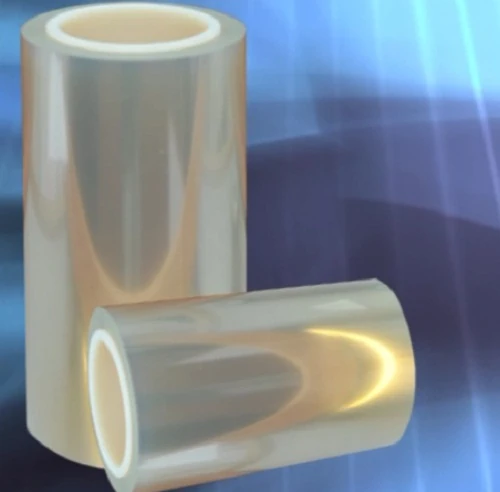
HSQY BOPET packaging film is a biaxially oriented polyester film designed for flexible packaging, printing, lamination and converting applications. Biaxial orientation provides a useful combination of tensile strength, stiffness, dimensional stability, clarity and surface consistency for high-speed packaging processes.
For printed flexible packaging, BOPET is commonly used as the outer structural and printable web of a laminate. It can provide a glossy or application-specific optical appearance while supporting reverse printing, adhesive lamination and subsequent conversion into pouches, sachets, wrappers and other packaging formats.
HSQY currently supplies BOPET film in thicknesses from 12μm to 75μm, with customized roll widths and clear, natural, hazy or colored options. Available surface configurations listed for this product include print-treated, slip-treated, hardcoat and untreated versions.
Printing, lamination, coefficient of friction, haze, shrinkage, treatment level, heat-sealing and barrier requirements should be specified separately for the intended packaging structure. Standard BOPET should not automatically be treated as a heat-sealable or high-barrier finished package without the appropriate coating, laminate or functional layer.
Request BOPET Packaging Film Quote
BOPET Packaging Film Video
What Is BOPET Packaging Film?
BOPET stands for biaxially oriented polyethylene terephthalate. During production, PET film is stretched in both the machine direction and transverse direction. This orientation improves mechanical strength, stiffness and dimensional stability compared with unoriented polyester film.
In flexible packaging, BOPET is frequently used as the outer web of a laminated packaging structure. Its role can include carrying printed graphics, providing mechanical strength, improving package stiffness and protecting the printed layer when reverse printing and lamination are used.
The final package normally combines BOPET with another functional material according to the required sealing, moisture-barrier, oxygen-barrier or puncture-performance target. Examples can include PE, CPP, metallized films, aluminum foil or other application-specific layers.
BOPET Polyester Film for Flexible Packaging
BOPET Film Packaging Applications

BOPET Film for Packaging Bags

BOPET Film for Candy Packaging
BOPET Packaging Film Specifications
The following table retains the current HSQY product specifications. Final guaranteed values for treatment level, haze, gloss, shrinkage, tensile properties, coefficient of friction and other technical parameters should be confirmed in the approved technical data sheet for the selected grade.
| Property |
Current HSQY Specification |
Buyer Should Confirm |
| Product Type |
Printed Polyester / BOPET Packaging Film |
Packaging structure and final converting process |
| Material |
Polyester Film / BOPET |
Exact grade and functional treatment |
| Thickness |
12μm–75μm |
Nominal gauge and thickness tolerance |
| Width |
Custom |
Slit width and width tolerance |
| Color / Appearance |
Clear, Natural, Hazy, Colored |
Required transparency, color, haze and optical appearance |
| Surface |
Gloss, High Haze |
Gloss target, haze target and which side requires the finish |
| Treatment |
Print Treated, Slip Treated, Hardcoat, Untreated |
Treatment side, surface-energy requirement and retention period |
| Printing |
Application-Specific Printable Grade |
Printing method, ink system, printing side and ink adhesion |
| Lamination |
Suitable Grade to Be Selected for Lamination Applications |
Adhesive system, laminate structure and bond-strength requirement |
| Heat Sealing |
Not Automatically Heat Sealable |
Specify dedicated heat-sealable grade or laminate sealant layer when required |
| Primary Applications |
Packaging, Printing, Lamination and Industrial Converting |
Final package format and end-use requirements |
| MOQ |
1000kg |
Confirm MOQ for special colors, treatments or slit widths |
Why BOPET Is Used in Flexible Packaging
High Mechanical Strength
Biaxial orientation provides high tensile strength and useful resistance to stretching during printing, lamination, slitting and packaging conversion.
Good Dimensional Stability
Dimensional stability helps maintain web control and printing registration during high-speed converting. Actual thermal shrinkage should be specified when the application is sensitive to heat.
Clear and Glossy Appearance
Clear BOPET can provide high product visibility and a glossy appearance for printed flexible packaging. Hazy and application-specific optical grades are also listed within the current HSQY range.
Printable Surface Options
Printing-grade BOPET can be supplied with a treated surface to improve ink or coating adhesion. Printing performance depends on surface treatment, treatment retention, ink chemistry and printing conditions.
Suitable for Laminated Packaging
BOPET is commonly laminated with sealant, barrier or structural layers to build packaging structures with the required sealing, moisture resistance, oxygen barrier and puncture performance.
Good Web Handling
Appropriate stiffness, surface roughness and slip properties help BOPET run through printing, lamination and packaging equipment. Coefficient of friction should be specified where machine performance is critical.
Print-Treated BOPET Film
A print-treated BOPET surface is designed to improve the adhesion of compatible inks, coatings or adhesives. Corona treatment or another application-specific treatment may be used depending on the selected film grade.
Buyers should specify which side of the film needs treatment and whether the film will be surface printed or reverse printed before lamination.
Do not specify only “printable BOPET.” A complete purchase specification should include the printing process, ink system, required surface energy, treatment side and any required treatment-retention period.
BOPET Film for Reverse Printing and Lamination
Reverse printing is commonly used in flexible packaging because the graphics are printed on the inside surface of the outer BOPET web and then protected by the laminate structure.
This structure can help protect graphics from abrasion and handling while maintaining a clean external film surface.
Lamination performance depends on BOPET surface treatment, adhesive chemistry, coating weight, curing conditions and the second web. Bond strength should be verified using the complete packaging structure.
Typical BOPET Flexible Packaging Structures
| Packaging Concept |
Role of BOPET |
Additional Layer Requirement |
| BOPET / PE Laminate |
Outer printing and structural web |
PE provides the sealing layer and additional moisture protection |
| BOPET / CPP Laminate |
Printable outer web with dimensional stability |
CPP provides application-specific sealing and converting properties |
| Printed BOPET / Barrier Layer / Sealant |
Carries printing and provides outer mechanical support |
Barrier and sealant layers are selected according to oxygen, moisture and seal requirements |
| Metallized BOPET Laminate |
Polyester substrate for a metallized functional layer |
Dedicated metallized grade should be selected where improved barrier or metallic appearance is required |
| Heat-Sealable BOPET |
Structural film with a specially developed sealing surface |
Requires a dedicated heat-sealable BOPET grade rather than assuming standard BOPET will seal |
These are general packaging concepts rather than guaranteed HSQY laminate constructions. The final structure should be selected according to the packed product, filling process, barrier target, heat-sealing requirements and converting equipment.
BOPET Packaging Film Applications
Snack Packaging
Printed BOPET can be used as an outer laminate web for snack-food bags where graphics, stiffness and high-speed converting performance are important.
Candy and Confectionery Packaging
Clear and printed BOPET films can be used in confectionery packaging structures for candy, chocolates and other packaged sweets when combined with appropriate sealing and barrier layers.
Dry Food Packaging
BOPET laminates can be evaluated for nuts, dried fruits, cereals, bakery ingredients and other dry foods according to the required moisture and oxygen protection.
Printed Pouches and Sachets
BOPET can provide the printed outer web in laminated stand-up pouches, three-side-seal pouches and sachets when paired with suitable inner layers.
Labels and Graphic Packaging
Selected polyester films can also serve as printable label, overlamination or graphic substrates where dimensional stability and surface quality are important.
Industrial Flexible Packaging
BOPET can be used as a structural layer in industrial laminates and protective packaging where the complete material structure is selected for the required mechanical and barrier performance.
Standard BOPET Is Not Automatically Heat Sealable
Standard packaging-grade BOPET is normally selected for mechanical strength, printing, optical properties and lamination. It should not automatically be treated as the heat-sealing layer of a flexible package.
When direct heat sealing is required, buyers should specify a dedicated heat-sealable polyester film or laminate the BOPET to a compatible sealant layer such as an application-specific PE or CPP structure.
Seal-initiation temperature, hot tack and final seal strength depend on the actual sealing layer and should not be inferred from the BOPET outer web alone.
BOPET Barrier Performance
BOPET provides useful general protection in flexible packaging, but standard clear BOPET should not automatically be marketed as an ultra-high oxygen- or moisture-barrier film.
If the packaged product requires a defined OTR or WVTR, the buyer should specify the target value and test conditions. A metallized, coated or multilayer high-barrier structure may be required depending on the shelf-life objective.
Shelf life should be validated using the complete printed and laminated package rather than being predicted from the BOPET layer alone.
BOPET Film Technical Parameters Buyers Should Specify
| Parameter |
Why It Matters |
| Thickness |
Affects stiffness, yield, laminate construction and converting behavior |
| Thickness Tolerance |
Influences consistent printing, lamination and roll build |
| Roll Width |
Must match printing, laminating or packaging equipment |
| Roll Length / Diameter |
Affects machine loading, run length and roll handling |
| Core ID |
Must match the converter's unwind system |
| Treatment Side |
Determines printing, coating or lamination orientation |
| Surface Tension |
Influences adhesion of inks, coatings and adhesives |
| COF |
Influences web feeding, winding and packaging-machine performance |
| Haze |
Determines transparency and visual appearance |
| Gloss |
Influences retail appearance and printed graphic presentation |
| Thermal Shrinkage MD / TD |
Important for registration, lamination and heat-exposure stability |
| Tensile Properties |
Important for web tension and mechanical performance |
| Ink Adhesion |
Should be tested using the actual ink system and printing process |
| Lamination Bond Strength |
Important for preventing delamination in the final packaging structure |
How to Choose BOPET Packaging Film
1. Define the Final Packaging Application
Specify whether the film will be used for snack packaging, candy wrapping, pouches, sachets, labels, industrial laminates or another converting application.
2. Select the Required Thickness
HSQY currently lists 12–75μm. The correct gauge depends on stiffness, yield, laminate structure, converting speed and finished-package requirements.
3. Define the Printing Process
Provide the printing process, ink type, number of colors, printing side and whether reverse printing is required.
4. Confirm Surface Treatment
Specify whether one side or both sides require treatment and provide the required surface-energy value when known.
5. Define the Laminate Structure
Tell HSQY which film or foil will be laminated to the BOPET and which adhesive or converting process is used.
6. Specify Optical Requirements
Confirm clear, natural, hazy or colored appearance and provide target haze, gloss or approved reference samples when visual consistency is important.
7. Confirm Slip and COF Requirements
For high-speed packaging lines, coefficient of friction can directly affect web feeding, bag forming, winding and machine stability.
8. Confirm Barrier and Heat-Seal Requirements Separately
If oxygen barrier, moisture barrier, metallization or direct heat sealing is required, include these functions in the specification so the correct BOPET grade or laminate structure can be selected.
Custom BOPET Packaging Film Options
12–75μm thickness range according to current product information
Custom slit widths
Clear, natural, hazy and colored options
Print-treated film
Slip-treated film
Hardcoat options according to current listed range
Untreated film
Application-specific roll length
Custom core and winding requirements
Packaging and labeling requirements
Information Needed for a BOPET Film Quote
To receive a more accurate film recommendation and quotation, please provide:
Final packaging or converting application
Required BOPET thickness
Required film width
Required roll length or roll weight
Core inside diameter
Maximum roll outside diameter
Clear, hazy, natural or colored appearance
Printing process and ink system
Surface or reverse printing
Treatment side and target surface energy
Target COF or slip requirement
Target haze and gloss when applicable
Lamination structure and adhesive type
Heat-seal requirement if applicable
OTR or WVTR requirement if applicable
Order quantity and annual consumption
Required product or destination-market documentation
Destination country and port
Get BOPET Packaging Film Price
BOPET Film Packing
BOPET rolls should be protected from contamination, moisture, edge damage, excessive pressure and physical deformation during handling, storage and international transport.

BOPET Film Roll Packing

BOPET Film Export Packing
Quality and Compliance Documentation
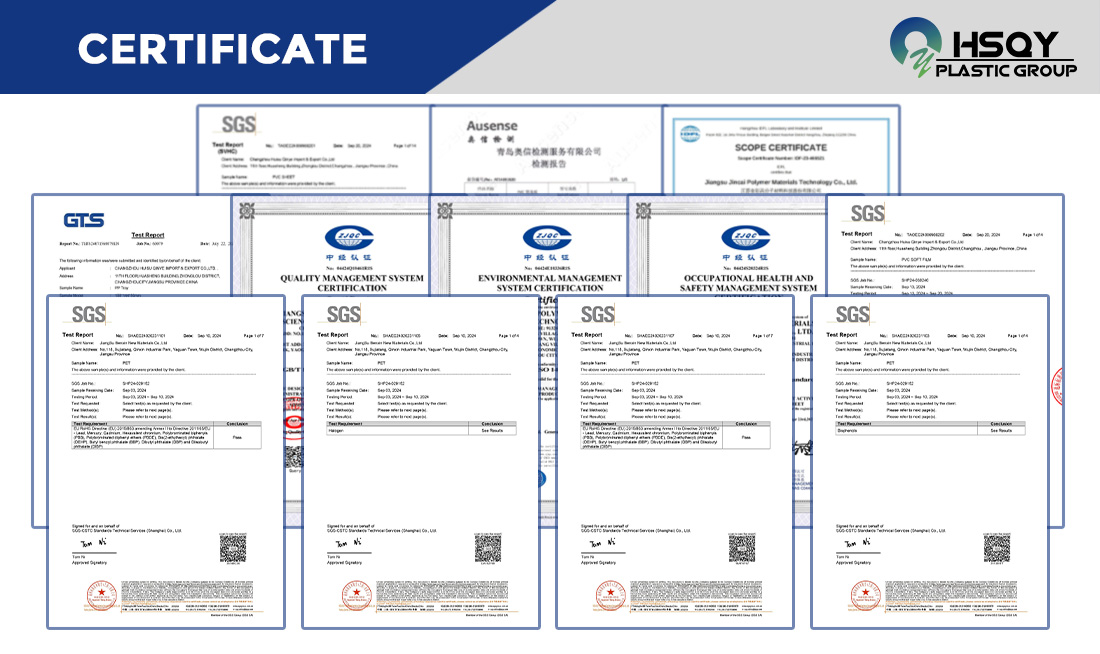
The current product page references food-contact, EU, RoHS and other compliance-related claims. Buyers should request current documentation applicable to the exact BOPET grade, complete packaging structure, intended use and destination market before relying on a compliance claim.
For packaging projects, useful documentation may include the technical data sheet, certificate of analysis, applicable food-contact declaration, migration information, treatment specification, thickness inspection, haze and gloss data, shrinkage values and other agreed test results.
Functional claims such as anti-static, UV resistance, heat sealing or special chemical resistance should only be used when the selected film grade has been specifically designed and documented for that function.
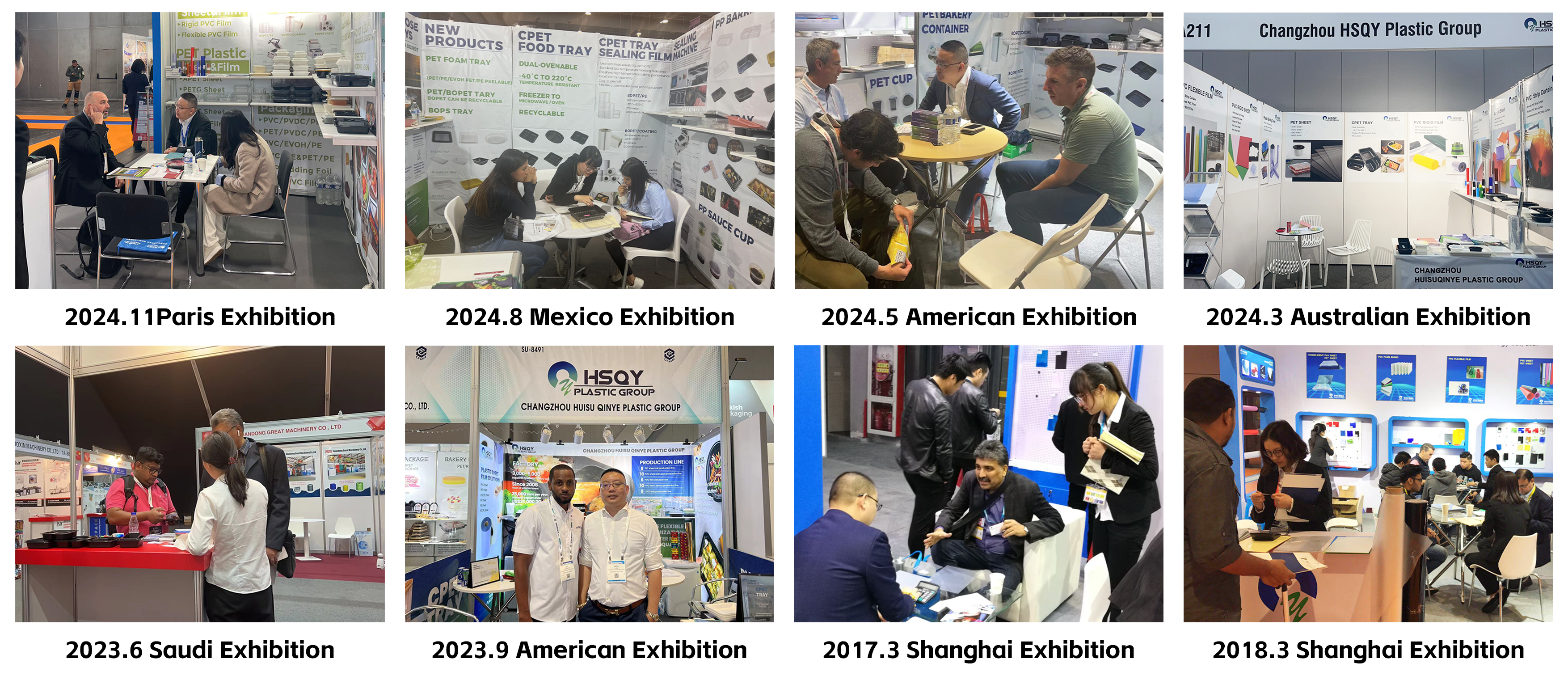
HSQY International Exhibition
HSQY participates in international plastics and packaging exhibitions to meet film converters, flexible-packaging manufacturers, distributors and other industrial customers.

HSQY International Exhibition
FAQ About BOPET Packaging Film
What is BOPET packaging film?
BOPET packaging film is biaxially oriented polyethylene terephthalate film used as a structural, printable or functional layer in flexible packaging and laminated packaging structures.
What is the difference between PET film and BOPET film?
PET describes the polyester polymer. BOPET is PET film that has been oriented in both the machine and transverse directions to improve mechanical and dimensional properties.
What thicknesses of BOPET film does HSQY supply?
The current HSQY product information lists thicknesses from 12μm to 75μm. Final availability depends on grade, surface treatment, width and order specification.
Can BOPET film be printed?
Yes. Printing-grade BOPET can be supplied with a treated surface designed to improve ink adhesion. The actual printing process, ink and required surface treatment should be specified before ordering.
Can BOPET be reverse printed?
Yes. Reverse printing followed by adhesive lamination is a common flexible-packaging construction because the printed graphics can be protected inside the laminate.
Can BOPET film be laminated?
Suitable BOPET grades can be laminated to PE, CPP and other films or functional substrates. Surface treatment and adhesive compatibility should be confirmed using the complete laminate.
Is standard BOPET film heat sealable?
Standard BOPET should not automatically be considered heat sealable. Direct sealing requires a dedicated heat-sealable BOPET grade or a laminate containing a compatible sealing layer.
Is BOPET film a high-barrier film?
Standard clear BOPET provides useful packaging performance but should not automatically be treated as an ultra-high-barrier film. Metallized, coated or multilayer barrier structures may be required when very low OTR or WVTR is specified.
What does corona-treated BOPET mean?
Corona treatment raises the surface energy of the film to improve adhesion of compatible inks, coatings or adhesives. The treatment level and treated side should be specified for the intended converting process.
What is COF in BOPET film?
COF means coefficient of friction. It affects how film surfaces slide against each other and can influence winding, web transport, pouch forming and packaging-machine performance.
Why are haze and gloss important?
Haze affects transparency and visual clarity, while gloss affects surface appearance and retail presentation. Both should be defined when optical consistency is important.
Why is thermal shrinkage important for BOPET packaging film?
Excessive shrinkage under heat can affect printing registration, lamination flatness and package dimensions. Buyers with heat-sensitive converting processes should specify acceptable MD and TD shrinkage.
What colors and appearances are available?
The current HSQY range lists clear, natural, hazy and colored options. Final availability should be confirmed according to thickness, quantity and product grade.
Can BOPET film be used for food packaging?
BOPET is widely used in food-packaging structures, but compliance depends on the exact film grade, coatings, inks, adhesives, laminate structure, food-contact side and intended conditions of use. Request documentation for the specific supplied grade and market.
Is BOPET recyclable?
BOPET is a PET-based material, but recyclability of a finished package depends on the complete packaging structure, inks, coatings, adhesives, other laminate layers and local collection and recycling infrastructure.
Can HSQY customize BOPET film width?
Yes. The current HSQY product information lists customized width. Buyers should provide the required slit width, tolerance, core and maximum roll diameter.
What surface treatments are available?
The current product page lists print-treated, slip-treated, hardcoat and untreated configurations. The exact treatment and functional performance should be confirmed for the selected grade.
What is the MOQ for BOPET packaging film?
The current HSQY product page lists an MOQ of 1000kg. Special widths, colors and treatments may have different production requirements.
Can I request BOPET film samples?
Sample evaluation can be discussed for checking print adhesion, lamination, optical appearance, COF, converting behavior and compatibility with the intended packaging process.
What information is required for a quotation?
Provide thickness, width, appearance, treatment side, printing process, laminate structure, surface-energy requirement, COF target, roll configuration, quantity and destination market.
About HSQY Plastic Group
HSQY Plastic Group supplies BOPET and polyester films for flexible packaging, printing, lamination and industrial converting applications to international B2B customers.
The HSQY BOPET range includes packaging, printing, matte, heat-sealable, metallized and other application-specific polyester film products. Buyers should select the film grade according to the actual printing, lamination, barrier, sealing and converting requirements.
Send your existing film specification, packaging structure, sample, printing method and annual volume to discuss a suitable BOPET packaging film.
Get BOPET Film Quote & Samples