Custom Acrylic Light Guide Panel Manufacturer
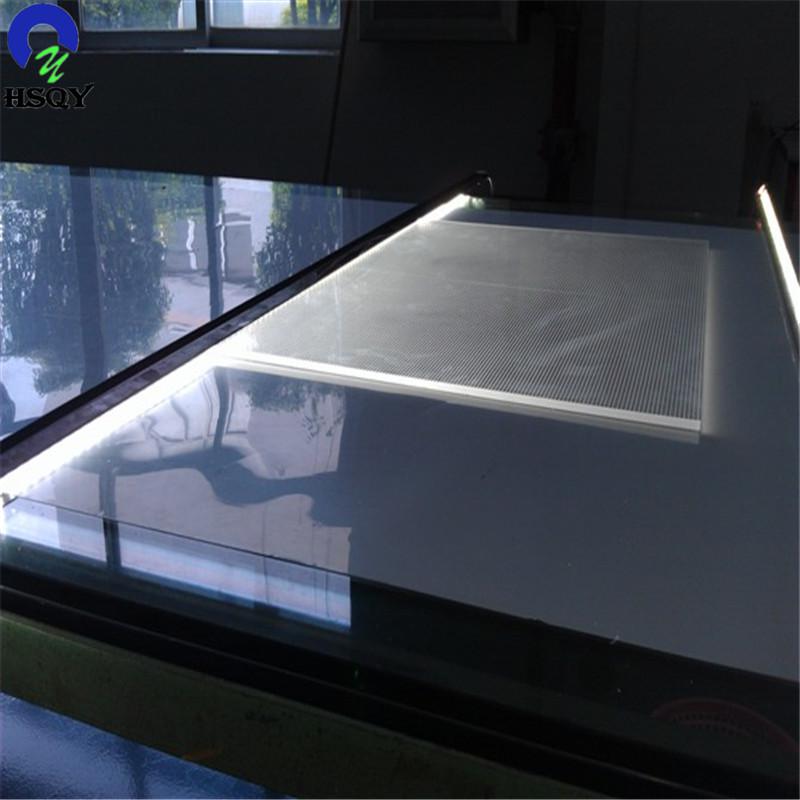
HSQY manufactures custom acrylic light guide panels for edge-lit LED panel lights, advertising light boxes, illuminated signs, display backlights, X-ray film viewers, control panels, decorative lighting and customized optical assemblies.
Each light guide panel is produced from high-transmission optical-grade PMMA and designed to distribute light from edge-mounted LEDs across the illuminated surface.
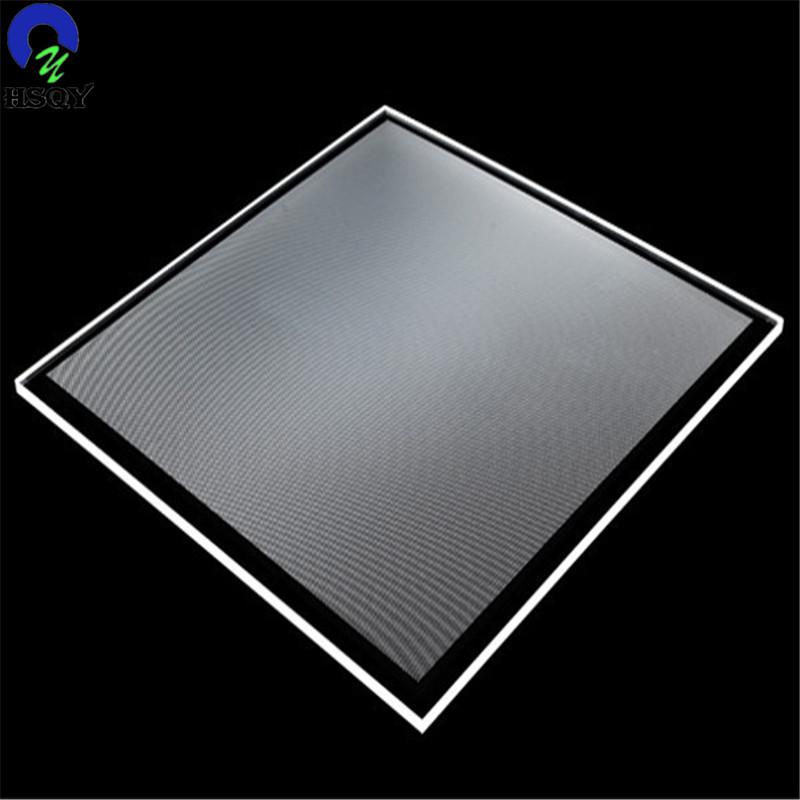
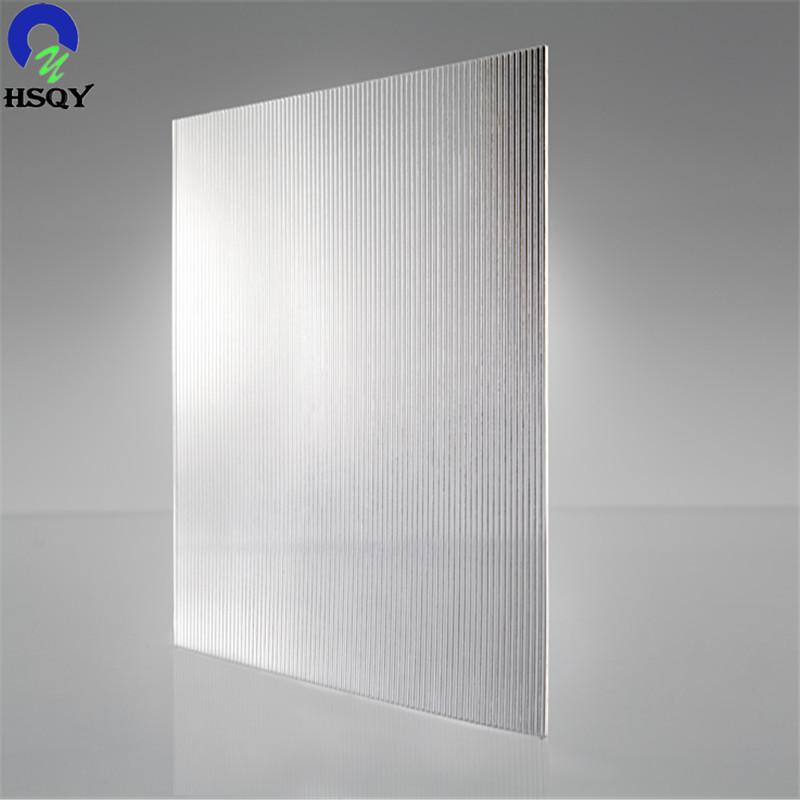
Light-extraction patterns can be produced by laser dotting, laser grid engraving, line engraving, UV printing or screen printing according to the panel dimensions, LED positions, light-input edges and required illumination area.
Custom thicknesses from approximately 1mm to 10mm are available. Panels can be manufactured as rectangles, squares, circles, ellipses, arcs, triangles, rings and customized CNC-cut shapes.
One-edge, two-edge and four-edge light-input designs are available. One-side or two-side light-emitting structures can also be developed according to the reflector, diffuser and housing configuration.
Final brightness, luminous efficiency and uniformity depend on the complete optical system, including the LED type, LED pitch, input-edge design, dot pattern, plate thickness, reflector, diffuser, edge finish, housing and thermal conditions.
Request an LGP Quote Request an LGP Prototype
Acrylic Light Guide Panel Video
Watch the video below to review HSQY acrylic light guide panels and related lighting applications.
Custom Acrylic LGP Product Image
What Is an Acrylic Light Guide Panel?
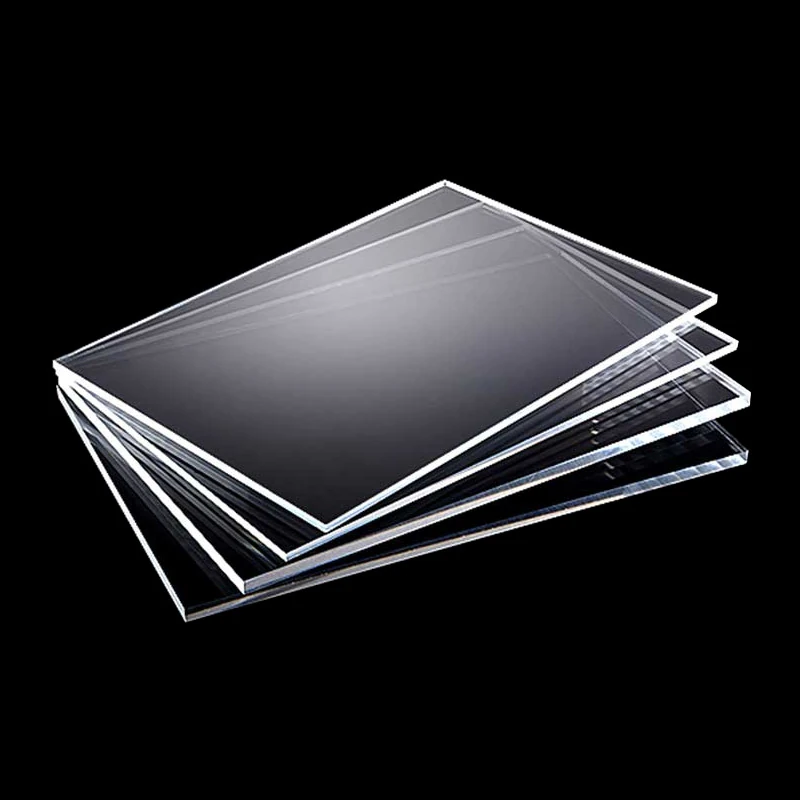
An acrylic light guide panel, also known as an LGP or light guide plate, is an optical PMMA sheet designed to convert light from edge-mounted LEDs into a larger illuminated surface.
Light enters through one or more polished edges and travels through the acrylic by internal reflection.
Laser-engraved dots, printed dots, grids, lines or optical particles interrupt the internal light path and direct controlled portions of light through the panel surface.
The dot size, depth, shape and spacing are adjusted across the plate to compensate for the changing distance from the LED source.
A complete edge-lit assembly normally combines the LGP with a bottom reflector, a front diffuser, LED strips, a frame, heat-dissipation components and a suitable power supply.
How an Edge-Lit Light Guide Panel Works
| Component |
Function |
Important Design Factors |
| LED Light Source |
Introduces light into one or more panel edges |
LED package height, pitch, beam angle, luminous flux, color temperature and current |
| Polished Input Edge |
Improves optical coupling between the LED and acrylic panel |
Edge flatness, polishing quality, LED distance and mechanical alignment |
| PMMA Light Guide Plate |
Transports light through the panel by internal reflection |
Optical grade, thickness, size, clarity, flatness and thermal expansion |
| Light-Extraction Pattern |
Redirects controlled light from the plate toward the viewing surface |
Dot diameter, depth, density, shape, spacing and distance from LEDs |
| Reflector Film |
Returns downward light toward the illuminated surface |
Reflectance, flatness, air gap, color and surface cleanliness |
| Diffuser Plate or Film |
Reduces visible dots, LED images, hotspots and brightness variation |
Transmission, haze, thickness, diffusion angle and spacing above the LGP |
| Frame and Heat Sink |
Supports the panel and removes heat from the LEDs |
Expansion allowance, ventilation, LED temperature and mechanical pressure |
Acrylic Light Guide Panel Specifications
| Property |
Available Specification |
| Product Name |
Custom Acrylic Light Guide Panel |
| Alternative Names |
Acrylic LGP, PMMA Light Guide Plate, LED Light Guide Panel and Edge-Lit Acrylic Panel |
| Brand |
HSQY Plastic |
| Material |
Optical-grade polymethyl methacrylate / PMMA |
| Thickness Range |
Approximately 1-10mm |
| Common Thicknesses |
2mm, 3mm, 4mm, 5mm, 6mm, 8mm and 10mm |
| Size |
Customized according to drawing, optical design and production feasibility |
| Shape Options |
Rectangle, square, circle, ellipse, arc, triangle, ring and custom contour |
| Light-Extraction Pattern |
Laser dots, laser grids, engraved lines, UV-printed dots or screen-printed reflective dots |
| Light-Input Edges |
One edge, two edges, three edges or four edges according to the optical design |
| Emission Direction |
One-side emission or two-side emission |
| LED Compatibility |
Edge-emitting LED strips, LED modules and selected linear light sources |
| Edge Finishing |
CNC-machined, polished input edge, polished perimeter or customized edge finish |
| Surface Protection |
Protective masking on one or both sides during manufacturing and transport |
| Reflector |
White PET reflector film or other project-specific reflective material |
| Diffuser |
PMMA, PC or optical diffuser film selected according to haze and transmission requirements |
| Optical Performance |
Brightness and uniformity confirmed using the agreed prototype and measurement method |
| Operating Environment |
Confirmed according to PMMA grade, LED temperature, ink, reflector, diffuser, adhesive and housing |
| Fabrication Methods |
Laser engraving, CNC cutting, drilling, routing, polishing, printing and heat bending where suitable |
| Main Applications |
LED light boxes, panel lights, illuminated signs, display backlights and inspection lighting |
| Prototype |
Recommended before mass production for customized optical designs |
| Drawing Formats |
PDF, DXF, DWG, AI, STEP or another agreed engineering format |
| Customization |
Dimensions, shape, holes, slots, notches, pattern, input edges and packaging |
How to Select Acrylic LGP Thickness
| Thickness |
General Characteristics |
Typical Applications |
| 1-2mm |
Thin and lightweight with limited edge-coupling area |
Small displays, symbols, keypads, compact backlights and decorative components |
| 3mm |
Common thin-profile LGP thickness |
LED signs, light boxes, display backlights and compact panel lights |
| 4-5mm |
Provides increased edge area and structural rigidity |
Advertising light boxes, panel lights, X-ray film viewers and retail displays |
| 6-8mm |
Greater stiffness for larger areas and customized shapes |
Large-format signs, decorative lighting and architectural illuminated panels |
| 10mm |
Heavy plate with increased weight and edge-light coupling area |
Special displays, thick decorative elements and structural illuminated components |
Thickness should be selected according to the LED package height, panel dimensions, required brightness, permitted weight, available frame depth and mechanical-support conditions.
Light-Input Edge Configurations
| Configuration |
Main Advantage |
Important Considerations |
| One-Edge Lighting |
Simpler wiring and lower LED quantity |
Requires stronger pattern compensation toward the far edge |
| Two-Opposite-Edge Lighting |
Improves light reach across long rectangular panels |
Both LED strips should be aligned and electrically matched |
| Two-Adjacent-Edge Lighting |
Useful for square or irregular panels |
Corner brightness and pattern overlap require optical adjustment |
| Three-Edge Lighting |
Supports asymmetric designs and restricted housing layouts |
Pattern must compensate for unequal LED input |
| Four-Edge Lighting |
Supports high brightness and large illuminated areas |
Higher LED count, power consumption, heat and wiring complexity |
Laser-Engraved vs. Printed Light Guide Panels
| Process |
Advantages |
Considerations |
| Laser Dotting |
Flexible pattern changes, no printing ink and suitable for prototypes |
Dot depth, heat marks, processing time and surface cleanliness must be controlled |
| Laser Grid or Line Engraving |
Can produce controlled linear extraction and decorative patterns |
Grid spacing and line depth influence visible pattern and uniformity |
| UV-Printed Dot Pattern |
Supports variable dot size and density with repeatable graphics |
Ink adhesion, reflectivity, curing and aging must be validated |
| Screen-Printed Reflective Dots |
Suitable for repeat production and high-opacity reflective patterns |
Screen precision, ink thickness, curing and registration affect performance |
| Optical-Particle PMMA |
Can provide surface illumination without separate engraving or printed dots |
Material grade must be selected according to light-travel distance and panel size |
Optical Performance Requirements
Optical performance should be evaluated using a complete prototype with the specified LEDs, reflector, diffuser, housing and power supply.
| Optical Parameter |
Purpose |
Required Project Definition |
| Average Luminance |
Defines the overall surface brightness |
Measurement distance, LED current, diffuser and warm-up time |
| Minimum Luminance |
Identifies dark areas and far-edge light loss |
Measurement grid and minimum acceptable value |
| Maximum Luminance |
Identifies hotspots and bright LED bands |
Measurement points and maximum allowable value |
| Luminance Uniformity |
Measures brightness consistency across the surface |
Formula such as minimum-to-average or minimum-to-maximum ratio |
| Color Uniformity |
Controls visible color differences across the panel |
Color temperature, chromaticity coordinates and tolerance |
| LED Image Visibility |
Evaluates visible bright spots near the input edge |
Viewing distance, diffuser, frame mask and acceptance sample |
| Light Leakage |
Controls light loss from unused edges and rear surfaces |
Edge reflector, tape, frame and rear reflector design |
Factors That Affect LGP Brightness and Uniformity
Panel size: Longer light-travel distances require more precise pattern compensation.
Panel thickness: Thickness affects LED coupling, weight, stiffness and optical path.
LED pitch: Large spacing can create visible bright and dark bands near the input edge.
LED package height: The emitting area should align with the light-guide edge.
Edge polishing: Rough or uneven edges can reduce light input and create irregular brightness.
Dot density: Dot density normally increases with distance from the LED source.
Dot depth and size: Excessive extraction near the LEDs can create bright areas and reduce far-edge brightness.
Reflector quality: A high-reflectance rear layer reduces light loss.
Diffuser selection: Higher diffusion can improve visual uniformity but may reduce transmitted brightness.
Frame design: Mechanical pressure, edge masking and expansion restrictions can affect flatness and output.
LED temperature: Excessive heat can accelerate LED light depreciation and affect color stability.
Applications of Acrylic Light Guide Panels
Advertising light boxes: Slim illuminated poster frames and retail promotional displays.
LED panel lights: Edge-lit commercial, office and decorative lighting fixtures.
Illuminated signs: Exit signs, wayfinding signs, traffic signs and branded signage.
X-ray film viewers: Uniform backlighting for film viewing and inspection devices.
LCD and display backlights: Customized backlighting for selected screens and instruments.
Control panels: Illuminated buttons, icons, operator interfaces and instrument panels.
Retail displays: Illuminated shelving, product stands, menu boards and promotional fixtures.
Decorative lighting: Circular, curved and custom-shaped architectural light features.
Automotive interiors: Illuminated trims, door-sill plates, symbols and display components.
Inspection lighting: Machine-vision, AOI and visual inspection illumination using an engineered optical system.

Acrylic LGP Application

Acrylic LGP for LED Lighting

Acrylic Light Guide Plate

OEM Acrylic LGP
Custom LGP Shapes and Fabrication
Rectangular and square panels.
Circular and elliptical panels.
Arc, ring and curved profiles.
Triangular and polygonal panels.
Custom CNC-cut contours.
Mounting holes, slots, notches and cable openings.
Polished LED input edges.
Reflective treatment on non-input edges.
Laser-engraved logos, symbols and decorative patterns.
One-side or two-side protective masking.
Heat-bent or curved components subject to optical validation.
Installation and Thermal Expansion Guidelines
Allow sufficient clearance for PMMA thermal expansion and humidity-related dimensional change.
Do not clamp large panels so tightly that expansion causes bowing or edge stress.
Use floating supports or appropriately sized mounting holes where necessary.
Keep the LED emitting surface aligned with the polished LGP input edge.
Minimize the optical gap between the LED and panel while preserving expansion clearance.
Avoid dust, fingerprints, adhesive residue and scratches on the optical surfaces.
Provide suitable heat sinking for LED strips and modules.
Prevent reflector and diffuser layers from creating unwanted optical bonding or pressure marks.
Use edge-reflective tape or frame treatment on non-input edges where required.
Test the complete assembly at the highest and lowest expected service temperatures.
Indoor and Outdoor Applications
Standard custom LGP assemblies are primarily designed for controlled indoor lighting and display environments unless outdoor requirements are specified.
Outdoor suitability depends on the PMMA grade, LED modules, printed pattern, reflector, diffuser, adhesive, frame, seal and electrical enclosure.
Outdoor projects should identify the UV exposure, temperature range, humidity, rainfall, ingress-protection requirement, operating hours and expected service period.
A fixed service-life claim should only be published when supported by the complete system design, component specifications, accelerated aging and warranty terms.
Medical and Inspection Lighting Applications
Acrylic light guide panels can be used as optical components in X-ray film viewers, inspection lights and selected medical-equipment backlights.
Use in a medical device may require additional control of luminance, uniformity, color temperature, flicker, electrical safety, cleaning resistance and traceability.
A light guide panel or material certificate does not independently establish certification of the complete medical device.
Recommended LGP Quality-Control Tests
PMMA material and optical-grade verification.
Panel thickness and thickness tolerance.
Length, width, diagonal and profile dimensions.
Hole, slot and notch position accuracy.
Panel flatness, bow and warpage.
Input-edge polishing and surface roughness.
Dot pattern size, depth, density and position.
Printed-dot adhesion and curing.
Surface scratches, contamination, bubbles and black spots.
Average, minimum and maximum luminance.
Luminance uniformity using the agreed measurement grid.
Color-temperature and chromaticity uniformity.
LED hotspot and input-edge bright-band inspection.
Far-edge dark-area inspection.
Light leakage from unused edges and rear surfaces.
Reflector and diffuser fit inspection.
Thermal cycling and dimensional-stability testing.
High-temperature and high-humidity aging where required.
UV aging for outdoor applications.
Protective-film, packing and shipping inspection.
Information Required for a Custom LGP Quote
Panel length, width, thickness and shape.
Engineering drawing and dimensional tolerance.
Required holes, slots, notches and edge treatments.
One-side or two-side light emission.
One-edge, two-edge, three-edge or four-edge LED input.
LED manufacturer and model number.
LED package dimensions and emitting-surface height.
LED pitch, quantity and distance from the LGP edge.
LED color temperature, CRI, beam angle and luminous flux.
LED voltage, current and power.
Reflector-film model and reflectance.
Diffuser material, thickness, transmission and haze.
Target average luminance and uniformity.
Required measurement method and acceptance standard.
Indoor or outdoor operating environment.
Minimum and maximum ambient temperature.
Required service life and daily operating hours.
Prototype quantity and mass-production quantity.
Packing, destination and required delivery date.
Send Your LGP Drawing and LED Data
Certificates and Project Documents
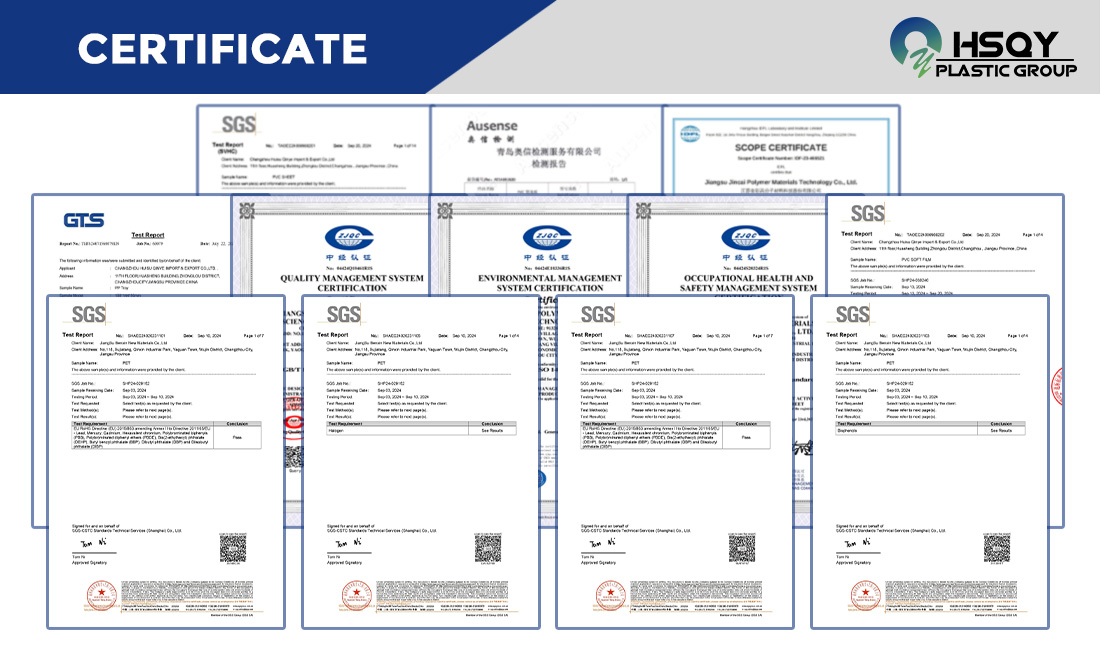
Available documents may include PMMA material data sheets, dimensional inspection reports, optical test reports, restricted-substance reports and quality-management certificates.
Optical performance reports should identify the panel dimensions, thickness, LED model, LED current, input edges, reflector, diffuser, measurement distance and test method.
A general material certificate should not be used as evidence of the luminance, uniformity, lifespan or outdoor performance of a complete assembled light panel.

Why Choose HSQY for Custom Acrylic LGPs?
Optical-grade PMMA light guide panels.
Customized thicknesses from approximately 1mm to 10mm.
Rectangular, circular, curved and irregular shapes.
Laser-dot, laser-grid and printed-dot patterns.
One-edge, two-edge, three-edge and four-edge light-input designs.
One-side and two-side emission structures.
CNC cutting, drilling, routing and edge polishing.
Prototype development before mass production.
Optical testing according to agreed project conditions.
Customized protective masking and export packaging.
Support for lighting, signage, display and equipment manufacturers.
Before mass production, HSQY recommends producing and testing a complete prototype using the customer's actual LEDs, reflector, diffuser, frame and electrical settings.
Request Custom LGP Samples and Pricing
Frequently Asked Questions About Acrylic Light Guide Panels
What is a custom acrylic light guide panel?
It is an optical-grade PMMA panel designed to distribute light from edge-mounted LEDs across a larger illuminated surface.
How does an acrylic light guide plate work?
Light enters through a polished panel edge, travels through the PMMA and is extracted through laser-engraved, printed or molded optical patterns.
What is the difference between an LGP and a diffuser plate?
An LGP transports and extracts edge light, while a diffuser plate spreads the emitted light and helps reduce visible dots, hotspots and brightness differences.
Does an LGP require a reflector?
Most one-side-emission systems use a rear reflector to return downward light toward the illuminated surface and reduce optical loss.
What thicknesses are available?
Custom acrylic LGPs are available in thicknesses from approximately 1mm to 10mm.
Which LGP thickness should I choose?
Thickness should be selected according to LED package height, panel size, light-travel distance, required brightness, weight and available installation space.
Can the panel size be customized?
Yes. Length, width, thickness, holes, slots, notches and edge treatments can be customized according to engineering drawings.
Can acrylic LGPs be made in custom shapes?
Yes. Circles, ellipses, arcs, triangles, rings and irregular CNC-cut shapes can be produced.
What is a laser-dot light guide panel?
It is a PMMA panel containing a computer-designed array of laser-engraved microdots that extract and distribute light.
What is a printed-dot LGP?
It uses UV-printed or screen-printed reflective dots on the PMMA surface to extract light from the panel.
Is laser engraving better than printed dots?
Neither method is universally better. The correct method depends on panel size, required brightness, production quantity, cost, pattern precision and environmental conditions.
Can one LGP be illuminated from one edge?
Yes. One-edge lighting is possible, but the extraction pattern must compensate for reduced light at the far side.
Can an LGP be illuminated from four edges?
Yes. Four-edge input can provide higher brightness for larger panels but requires more LEDs, power, wiring and heat management.
Can both sides of an acrylic LGP emit light?
Yes. Two-side-emission structures can be designed when the reflector and surface construction permit light output from both faces.
What LED information is required to design the dot pattern?
Provide the LED model, package size, emitting height, pitch, luminous flux, beam angle, color temperature, current and distance from the panel edge.
How is LGP uniformity measured?
Uniformity is measured using an agreed grid of luminance points and a defined formula such as minimum luminance divided by average or maximum luminance.
Why are LEDs visible as bright spots near the edge?
Visible LED images can result from excessive LED spacing, insufficient mixing distance, poor edge alignment, an unsuitable dot pattern or insufficient diffusion.
Why is the far side of the panel darker?
The far side may be darker when the light-travel distance is too long or the extraction pattern removes too much light near the LED edge.
Can the panel be used outdoors?
Outdoor use is possible only after the PMMA grade, LED modules, printed pattern, reflector, diffuser, seal, frame and ingress protection are validated.
What is the operating-temperature range?
The final operating range depends on the PMMA grade, LEDs, ink, adhesive, reflector, diffuser and housing. The complete assembly should be thermally tested.
How long does an acrylic light guide panel last?
Service life depends on LED temperature, operating hours, current, PMMA grade, printed pattern, moisture, UV exposure and the complete lighting assembly.
Can the LGP be used in an X-ray film viewer?
Yes. Customized LGPs can be used as optical components in X-ray film viewers, subject to the required luminance, uniformity, color temperature and device standards.
Does an acrylic LGP require expansion clearance?
Yes. PMMA expands and contracts with temperature and humidity, so large panels require suitable installation clearance.
Can an acrylic light guide panel be bent?
Selected PMMA panels can be heat bent, but the bend process may affect flatness, internal stress and optical uniformity and must be validated.
Is PMMA better than PS for light guide plates?
PMMA generally provides strong optical clarity and weathering performance, while PS may be selected for lower-cost indoor applications. The correct material depends on the optical, thermal, mechanical and cost requirements.
Is a prototype required before mass production?
A prototype is strongly recommended because optical performance depends on the actual LEDs, reflector, diffuser, frame and electrical settings.
What files are required for a custom LGP?
Provide a dimensioned PDF, DXF, DWG, AI or STEP file together with LED and optical-performance requirements.
What information is required for a quotation?
Provide the panel dimensions, thickness, shape, LED data, light-input edges, reflector, diffuser, target brightness, uniformity, quantity and destination.
Get a Custom Acrylic LGP Quote
About HSQY Plastic Group
HSQY Plastic Group supplies custom acrylic light guide panels, acrylic sheets, PVC sheets, PET sheets, PP sheets and customized plastic components to international B2B customers.
HSQY supports lighting manufacturers, sign companies, display manufacturers, equipment producers, importers and distributors with material selection, drawings, prototypes, customized production, inspection and export packaging.

Request a Quote and Prototype