Matte PET Film 50–400 μm for Printing and Packaging
HSQY Matte PET Film is a low-gloss polyethylene terephthalate material supplied in approximately 50–400 μm gauges for printing, folding boxes, stationery, binding covers, packaging windows, die cutting and other converting applications.
The matte surface reduces strong reflections compared with conventional glossy PET and provides a softer, more refined appearance for printed packaging, covers and display components. Depending on the selected grade, the material can be supplied in rolls or cut sheets with customized widths and dimensions.
This product occupies a different gauge range from conventional thin matte BOPET flexible film. Its published thickness range of 50–400 μm (0.05–0.4 mm) makes it suitable for printing and converting projects that require more body and stiffness than very thin flexible polyester film.
Printing adhesion, matte level, haze, transparency, folding performance and forming suitability vary with thickness, surface treatment and production grade. Buyers should specify the downstream process and approve representative samples before bulk production.
Product Highlights: 50–400 μm Matte PET | Low-Gloss Surface | Printing | Folding Boxes | Stationery | Binding Covers | Die Cutting | Packaging Windows | Roll & Sheet Supply | Custom Widths & Sizes
Request Matte PET Samples and Bulk Pricing
Matte PET Film Video
Matte PET Film Images
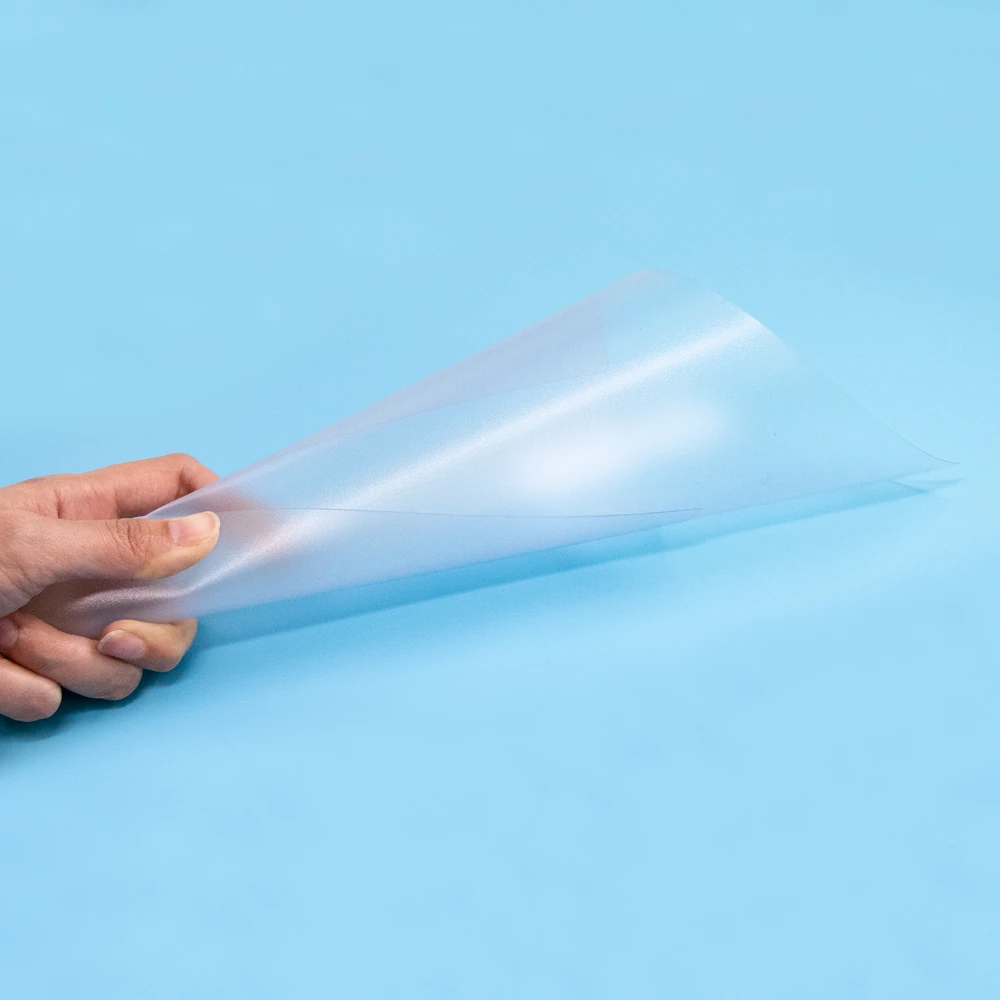
Matte surface texture for low-gloss printing, packaging and converted plastic applications.

Matte PET can be supplied in roll or cut-sheet formats according to printing and converting requirements.
Matte PET Film Specifications
The following specifications summarize the published information for this product. Exact thickness tolerance, roll width, matte appearance, surface treatment, roll configuration and functional properties should be confirmed in the current production specification.
| Property |
Details |
| Product Name |
Matte PET Film / Matte Polyester Film |
| Model |
PET Matt Sheet |
| Product Code |
PET-Matt |
| Material |
Polyethylene Terephthalate (PET) |
| Published Thickness Range |
50–400 μm (0.05–0.4 mm) |
| Published Roll Width |
Approximately 110–1280 mm |
| Published Sheet Sizes |
610 × 610 mm, 700 × 1000 mm, 915 × 1220 mm, 915 × 1830 mm, 1220 × 2440 mm and customized sizes |
| Supply Format |
Rollstock, slit rolls, standard sheets and customized cut sheets |
| Reference Density |
Approximately 1.35 g/cm³; confirm the exact value for the production grade |
| Surface |
Matte, low-gloss or frosted appearance according to grade |
| Surface Configuration |
Single-side matte, double-side matte or other surface combinations subject to production confirmation |
| Color / Appearance |
Transparent, translucent or colored options subject to specification |
| Printing |
Screen printing, UV printing, selected offset printing and other compatible systems after ink-adhesion testing |
| Surface Treatment |
Printing-compatible, corona-treated, chemically treated or untreated surfaces can be discussed according to application |
| Converting Processes |
Die cutting, slitting, scoring, folding, bending, lamination and other converting processes according to material grade |
| Forming |
Selected gauges may be evaluated for vacuum forming or thermoforming; forming suitability should be confirmed for the required thickness and geometry |
| Typical Applications |
Printing, folding boxes, stationery, binding covers, packaging windows, apparel packaging, displays and converted plastic components |
| Protective Film |
Available for selected specifications when additional surface protection is required |
| MOQ |
Confirm the current MOQ and unit with the quotation because published product information contains different MOQ values |
| Samples |
Sample material may be available for appearance, printing, folding and converting evaluation |
Thickness Note: The 50–400 μm product range covers materials with significantly different flexibility and stiffness. A 50 μm film should not be expected to behave the same way as a 400 μm semi-rigid PET sheet. Specify the intended process when selecting the gauge.
Request Current Matte PET Specifications
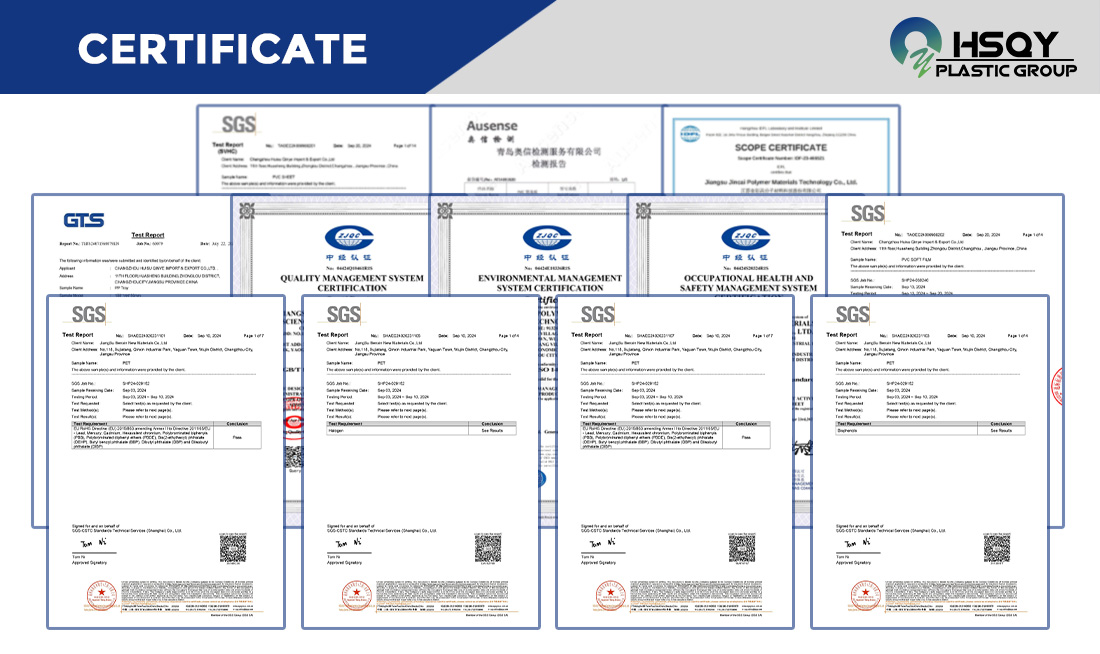
Matte PET Technical and Test Documents
The following documents are retained for preliminary material review. Commercial buyers should request current documents applicable to the exact PET grade, thickness, surface treatment and intended application.

HSQY quality and product documentation. Request current documents applicable to the exact matte PET product being purchased.
What Is Matte PET Film?
Matte PET film is a polyester material with a low-gloss, frosted or textured surface designed to reduce strong reflections compared with conventional glossy PET.
The matte appearance may be created through surface texture, special PET formulation, coating, treatment or another production method. Different manufacturing routes can produce different gloss, haze, transparency, roughness and printing characteristics.
For printing and packaging projects, the most important selection criteria are not only thickness and width but also the required matte level, printing side, surface treatment, ink system and downstream converting process.
50–400 μm Matte PET vs. Thin Matte BOPET Film
| Comparison |
50–400 μm Matte PET |
Conventional Thin Matte BOPET |
| Gauge Range |
Thin through semi-rigid PET gauges |
Typically thinner flexible polyester film |
| Material Behavior |
Flexibility varies significantly by gauge; thicker grades provide greater body and stiffness |
Flexible web designed primarily for roll-to-roll converting |
| Common Applications |
Printing, covers, stationery, folding boxes, windows and semi-rigid converted products |
Flexible packaging, labels, lamination, thermal transfer and hot-stamping applications |
| Typical Converting |
Sheet or roll printing, die cutting, folding, slitting and selected forming applications |
High-speed web printing, lamination, coating and flexible-film converting |
| Buyer Specification |
Gauge, stiffness, matte appearance, width, sheet size and downstream processing |
Micron gauge, corona treatment, dyne level, COF, roll length, core and lamination performance |
Matte PET Film for Printing
Matte PET is commonly selected for printed packaging, covers and promotional components where a low-reflection surface is preferred over a high-gloss finish.
The matte texture can influence ink wetting and adhesion, so the actual production ink and printing process should be tested on the selected PET surface.
Screen Printing
Suitable matte PET grades can be screen printed using PET-compatible inks. Evaluate ink adhesion, opacity, curing, flexibility and rub resistance before production approval.
UV Printing
For UV printing, test surface wetting, ink adhesion, curing, color density, blocking and downstream folding or die cutting using the actual production system.
Offset Printing
Selected PET grades can be evaluated for offset printing. Compatibility depends on material gauge, surface treatment, ink chemistry, feeding conditions and curing process.
Corona or Chemical Treatment
Printing-compatible surface treatment can improve adhesion for some ink and coating systems. Corona treatment is not automatically required for every application, so specify the actual printing process and ink system when requesting a quotation.
Single-Side vs. Double-Side Matte PET
| Surface Configuration |
Typical Characteristics |
Typical Applications |
| Single-Side Matte |
Matte appearance on one surface with a different reverse-side finish |
Printed covers, packaging windows, folding boxes and laminated products |
| Double-Side Matte |
Low-gloss finish on both sides |
Stationery, binding covers, dividers, printed sheets and decorative components |
| Matte / Gloss |
Low-reflection finish on one side with a smoother reverse side |
Projects requiring different visual or printing functions on each surface |
Key Features of Matte PET Film
Low-Gloss Surface
The matte finish reduces strong reflections and provides a softer visual appearance than polished clear PET.
Controlled Transparency
Depending on the matte texture and gauge, the material can provide transparent or translucent appearance while diffusing reflected light. Buyers with optical requirements should specify acceptable haze and transparency or approve a reference sample.
Dimensional Stability
PET provides useful dimensional stability for printing, die cutting, folding and converted plastic products.
Mechanical Strength
The polyester structure provides practical tensile and handling performance. Actual stiffness and mechanical behavior vary substantially across the 50–400 μm gauge range.
Moisture Resistance
PET has low moisture absorption and can be used in many packaging and stationery applications. Finished-product suitability should still be tested under the actual humidity and storage conditions.
Chemical Resistance
PET provides resistance to many common substances, but compatibility with solvents, cleaners, adhesives, oils or process chemicals should be tested under the actual concentration, temperature and contact time.
Recyclable PET Material
PET is a recyclable thermoplastic where suitable collection and recycling infrastructure exists. Conventional PET should not be described as naturally biodegradable under normal disposal conditions.
Applications of Matte PET Film
Printed Packaging
Matte PET can provide a low-reflection surface for printed packaging components where a softer, premium appearance is preferred.
Folding Boxes
Suitable thicker gauges can be die cut, scored and folded into transparent or translucent retail packaging. Crease design should be tested to control stress whitening, cracking and spring-back.
Binding Covers
Matte PET is suitable for document covers, notebook covers, report covers, menus, folders and other stationery products requiring a low-glare plastic surface.
Stationery and Office Products
Applications can include dividers, folders, protective covers, presentation sheets and other printed or die-cut stationery components.
Packaging Windows
Transparent or translucent matte PET can be used as carton windows where reduced glare and a distinctive surface appearance are required.
Apparel Packaging
Suitable gauges can be used for shirt packaging, apparel covers and clear or translucent packaging components.
Vacuum Forming and Thermoforming
Selected gauges and PET structures may be evaluated for shallow vacuum forming or thermoforming. Not every 50–400 μm grade is equally suitable for forming, so buyers should provide mold geometry, draw depth, heating conditions and desired surface appearance before material selection.
Matte PET Application Images

Matte PET can be used for stationery, folders, dividers and other printed plastic products.

Low-gloss PET is suitable for binding covers, document covers, menus and presentation materials.
How to Select 50–400 μm Matte PET Film
Thickness: Specify the exact gauge and tolerance required for printing, folding, stiffness, handling and downstream converting.
Roll width: Provide the required web width and slitting tolerance according to the printing or converting machine.
Sheet size: For sheet-fed processing, provide finished dimensions and cutting tolerance.
Matte appearance: Specify fine matte, coarse matte, frosted or another approved visual reference.
Matte side: Confirm whether one side or both sides require the matte finish.
Transparency: State whether the finished product should remain transparent, translucent or more heavily diffused.
Printing method: Specify screen, UV, offset or another printing system and provide the ink type where possible.
Surface treatment: State whether corona treatment, chemical treatment or another printing-compatible surface is required.
Downstream process: Identify die cutting, folding, scoring, lamination, gluing, thermal transfer, vacuum forming or other converting operations.
Roll configuration: For roll material, provide required core diameter, maximum roll outside diameter, roll length or weight and winding direction.
Surface protection: State whether protective film, interleaf or other protection is required during transport and converting.
Documentation: Provide any food-contact, restricted-substance or destination-market documentation requirements before production approval.
Send Your Matte PET Film Requirements
How to Validate Matte PET Before Bulk Production
Approve the Matte Appearance
Inspect matte uniformity, gloss, haze, transparency, color and surface texture under consistent lighting. When appearance is critical, approve a physical reference sample before bulk production.
Test Ink Adhesion
Print the actual production ink on the selected PET surface and evaluate adhesion after the intended drying or curing process.
Check Color Density
Matte texture can influence apparent color, ink coverage and contrast. Evaluate the actual printed artwork rather than relying only on material samples without printing.
Test Rub Resistance
Evaluate the printed surface after handling, stacking and rubbing. If higher abrasion resistance is required, define the ink, coating or protective-film system accordingly.
Run Die-Cutting and Folding Trials
Use the actual production tooling to evaluate edge quality, dimensional accuracy, cracking, crease quality, fold whitening and spring-back.
Test Lamination or Adhesive Bonding
For laminated or glued products, test the selected adhesive, tape or laminate on the actual PET surface. Matte texture and surface treatment can affect effective bond area and adhesion.
Validate Forming Where Required
If the selected gauge will be vacuum formed or thermoformed, test the actual mold and assess stretching, surface appearance, whitening, wall distribution and retention of the matte finish.
Food-Contact and Sustainability Considerations
Where matte PET is intended for direct food-contact packaging, buyers should request current product-specific documentation covering the exact PET resin, matte treatment, additives, food type, contact temperature, contact duration and destination market.
An SGS test report should be reviewed according to the exact tested material, report scope and issue date. ISO 9001 is a quality-management-system standard and should not be interpreted as food-contact approval for a specific film.
PET is recyclable where suitable collection and recycling systems exist. The recyclability of the finished product may be affected by inks, coatings, adhesives, laminates, colors and other converted components.
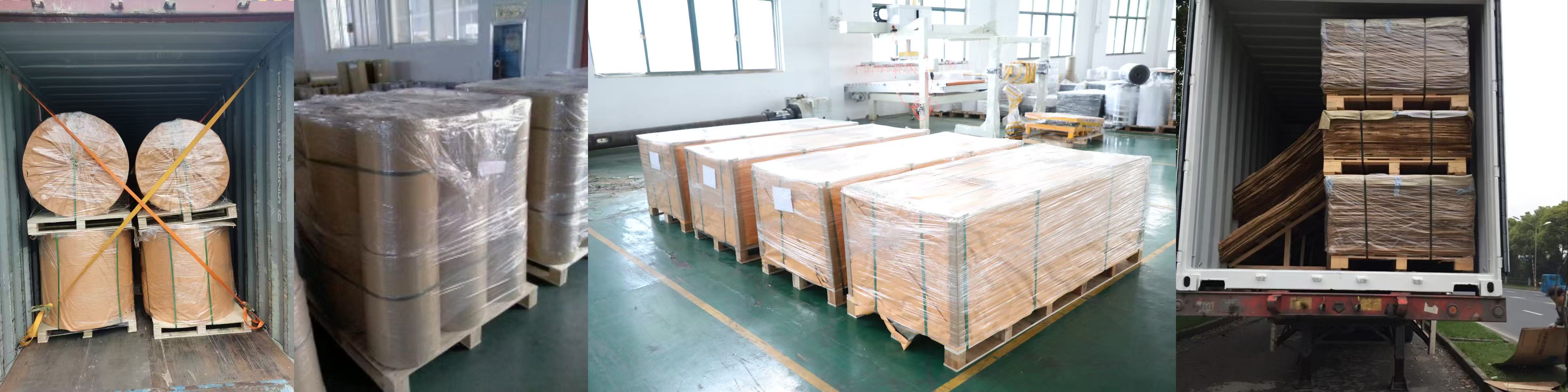
Matte PET Film Packing and Delivery
Sample Packing: Published information references A4-size samples packed in PP bags or cartons. Confirm sample size and freight arrangement before shipment.
Sheet Packing: Older published information references approximately 30 kg per bag for some specifications, protected with PE film or kraft paper. Actual packing depends on thickness and dimensions.
Roll Packing: For roll supply, buyers should define core diameter, roll width, outside diameter, roll length or weight, winding direction and protective wrapping.
Pallet Packing: Older published information references approximately 500–2000 kg per plywood pallet. Current loading should be confirmed according to product format and transport limitations.
Container Loading: Older published information references approximately 20 tons for some shipments. Actual loading depends on product dimensions, pallet configuration, container type and applicable weight restrictions.
Delivery Terms: Published commercial options include EXW, FOB, CNF and DDU. Confirm available terms with the current quotation.
Lead Time: Published information references approximately 7–15 days for some orders. Actual production time depends on gauge, width, surface treatment, quantity and production schedule.

PET packing for commercial orders and international bulk shipments.
Request Current Packing and Shipping Details
Frequently Asked Questions About Matte PET Film
What is matte PET film?
Matte PET film is polyethylene terephthalate material with a low-gloss, frosted or textured surface that reduces strong reflections compared with conventional glossy PET.
What thicknesses are available?
This product page publishes approximately 50–400 μm, equivalent to 0.05–0.4 mm. Confirm exact gauge availability and tolerance before ordering.
Is 50–400 μm matte PET the same as matte BOPET?
Not necessarily. Conventional matte BOPET is a biaxially oriented flexible polyester film commonly supplied in thinner gauges. This 50–400 μm product range extends into thicker and more semi-rigid PET applications, so the exact production structure should be confirmed.
What roll widths are available?
The detailed product information publishes roll widths from approximately 110 mm to 1280 mm. Confirm width tolerance, core size, roll diameter and roll weight for your machine.
Can matte PET film be screen printed?
Yes, suitable matte PET grades can be screen printed. Use PET-compatible inks and test adhesion, curing, color density and rub resistance on the selected surface.
Can matte PET film be UV printed?
Suitable grades can be evaluated for UV printing. Confirm surface treatment and test ink adhesion, curing, blocking and downstream folding or cutting.
Can matte PET film be offset printed?
Selected PET surfaces can be evaluated for offset printing. Compatibility depends on the gauge, ink chemistry, surface treatment and curing system.
Does matte PET need corona treatment?
Not every application requires corona treatment. Specify the printing ink, coating, lamination or adhesive system so the correct surface treatment can be evaluated.
Can matte PET film be die cut?
Yes. Appropriate gauges can be die cut for covers, stationery, packaging windows, folding boxes and other converted components. Tooling should be optimized for the selected thickness.
Can matte PET be folded?
Suitable semi-rigid gauges can be scored and folded. Test the actual crease design to control whitening, cracking and spring-back.
Can matte PET film be thermoformed?
Selected gauges and PET structures may be suitable for vacuum forming or thermoforming, but forming performance should not be assumed across the entire 50–400 μm range. Test the actual gauge and mold before bulk production.
Can one side be matte and the other side smooth?
Single-side matte or matte/smooth surface combinations can be discussed depending on production feasibility and downstream printing or converting requirements.
Is double-side matte PET available?
Double-side matte configurations can be discussed for products requiring a low-gloss appearance on both surfaces.
Is matte PET film biodegradable?
Conventional PET is not normally biodegradable under standard disposal conditions. PET is a recyclable thermoplastic where appropriate collection and recycling systems are available.
Can matte PET be used for food packaging?
Selected grades may be evaluated for food packaging when the exact PET resin, matte treatment, additives and current food-contact documentation have been confirmed for the intended conditions and destination market.
Does an SGS report mean the film is approved for every application?
No. An SGS report applies to the specific material and test scope stated in that report. Buyers should review the current report for the exact product being purchased.
What is the MOQ?
Published information on this product page currently contains different MOQ values. Confirm the applicable minimum quantity and unit for the required gauge, width and surface treatment when requesting a quotation.
Can I request samples?
Yes. Sample material can be discussed for checking matte appearance, printing, folding, die cutting, lamination and other downstream processes. Confirm available dimensions and freight terms with HSQY.
What should I test before bulk ordering?
Check thickness, dimensions, matte uniformity, haze, transparency, ink adhesion, curing, rub resistance, folding, die cutting, lamination and forming performance where applicable.
What information should I provide for a quotation?
Provide thickness and tolerance, roll width or sheet size, matte surface requirement, single-side or double-side matte, transparency or color, printing process, surface treatment, downstream converting process, roll configuration, quantity, destination and required documentation.
About HSQY Plastic Group
HSQY Plastic Group supplies matte PET film, matte PET sheet, APET, RPET, BOPET and other polyester materials to printers, packaging converters, stationery manufacturers, thermoforming companies, distributors and international commercial buyers.
Buyers can discuss customized thickness, roll width, cut-sheet size, matte surface, surface treatment, color, samples, roll configuration, packing and bulk supply according to the intended converting process.
HSQY at Industry Exhibitions

HSQY meets printers, packaging converters, distributors and industrial buyers through plastics and packaging industry exhibitions.
Request a Quote for Matte PET Film
Looking for 50–400 μm matte PET for printing, folding boxes, stationery, binding covers, packaging windows or converting? Send HSQY your required thickness, width, matte appearance, surface treatment, printing process, converting requirements, quantity and destination.
Contact HSQY for Samples and Bulk Pricing


 PET Data Sheet