Twill Clear Polypropylene Sheet
HSQY twill clear polypropylene sheet combines a transparent PP base with a woven surface texture for binding covers, folders, packaging and printing, available in 0.08-3mm thickness with custom widths.
Twill polypropylene sheet is an extruded PP plastic sheet with a diagonal or woven-style embossed surface. The texture adds visual depth and a tactile surface while retaining the lightweight, moisture-resistant and flexible characteristics of polypropylene.
This product is particularly suitable for notebook covers, binding covers, folders, document products, transparent packaging boxes, decorative plastic sheets and other applications where a plain smooth surface is not preferred.
Twill Clear PP Sheet Images
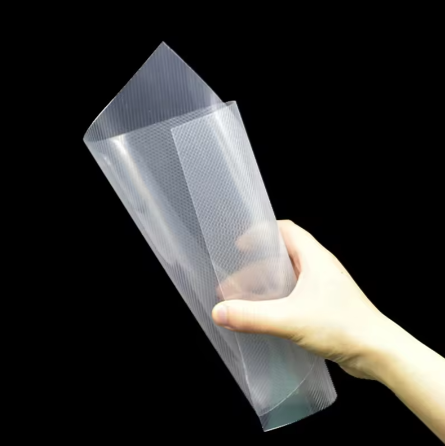
![Twill clear polypropylene sheet]()
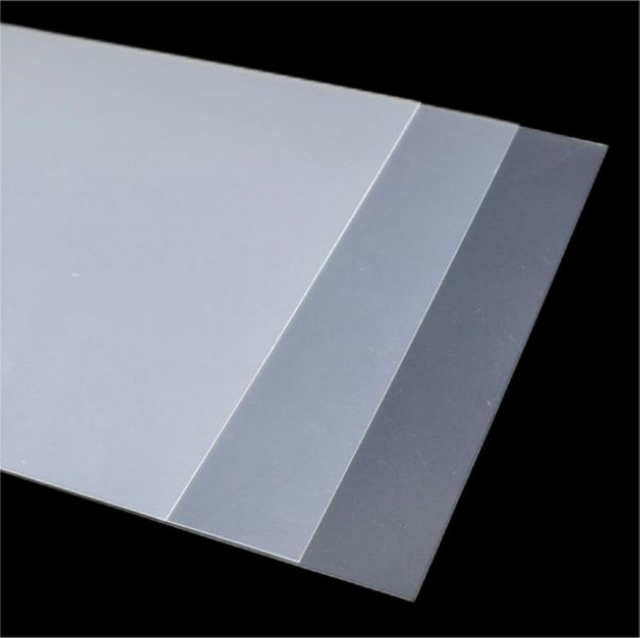
Twill Clear Polypropylene Sheet
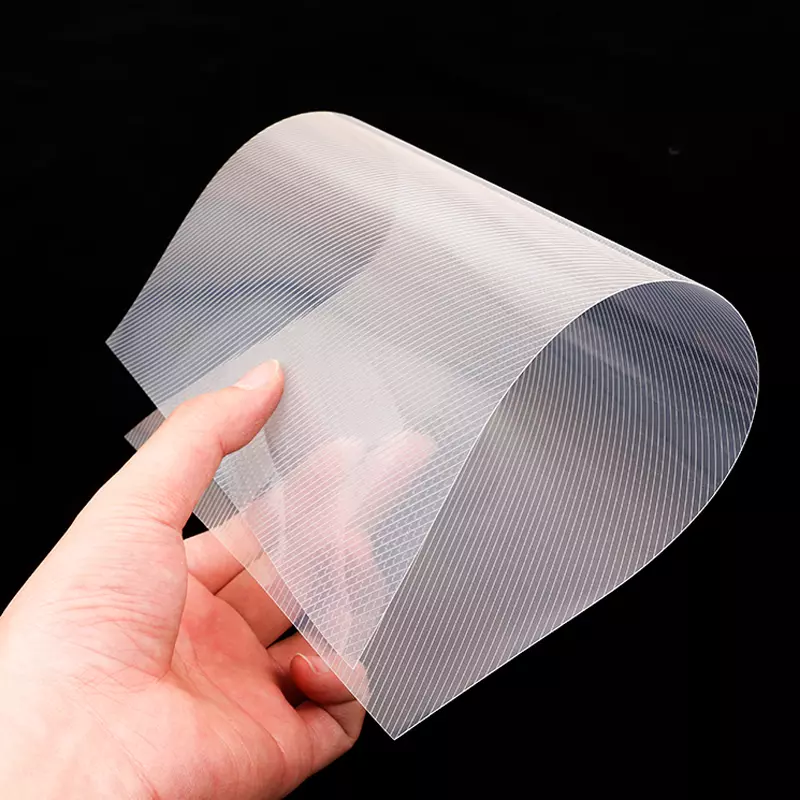
![Clear twill textured polypropylene sheet]()
Clear Twill Textured PP Sheet
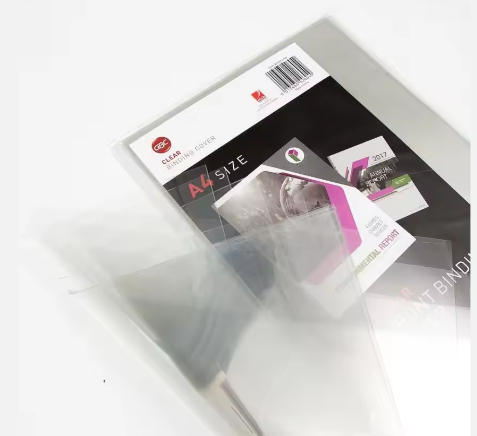
![Polypropylene sheet for binding covers]()
Polypropylene Sheet for Binding Covers
Twill Clear Polypropylene Sheet Specifications
| Property |
Specification |
| Product |
Twill Clear Polypropylene Sheet |
| Material |
Polypropylene Plastic (PP) |
| Appearance |
Clear / Translucent depending on thickness, resin grade and twill texture |
| Surface |
Twill / Diagonal / Woven-Style Embossed Texture |
| Thickness |
0.08mm-3mm |
| Width |
Customized |
| Production Type |
Extruded |
| Typical Processing |
Cutting, punching, die cutting, folding, creasing, printing and fabrication according to project requirements |
| Primary Applications |
Binding covers, notebook covers, folders, stationery, transparent packaging boxes, decorative packaging and printing applications |
| Other Application Directions |
Packaging, industrial, electronics and other applications subject to the appropriate PP grade and performance requirements |
Specification Note: Twill pattern depth, transparency, haze, surface gloss, thickness tolerance, maximum width and supply format can affect the final product appearance and converting performance. Confirm these parameters in the approved sample and quotation before mass production.
What Is Twill Polypropylene Sheet?
Twill polypropylene sheet is a textured PP sheet with a repeating diagonal or woven visual pattern embossed into the sheet surface.
The texture changes both the appearance and feel of the material compared with a completely smooth polypropylene sheet. It can create a more decorative surface, reduce direct reflections and make the material easier to distinguish in stationery and packaging products.
Twill PP is also sometimes described by buyers as diagonal PP sheet, textured polypropylene sheet or embossed polypropylene sheet. Exact texture geometry should be confirmed using a physical sample because different suppliers may use these terms for different surface patterns.
Why Choose a Twill Texture?
| Twill Surface Feature |
Buyer Benefit |
| Woven Visual Pattern |
Creates a differentiated decorative appearance compared with smooth PP |
| Textured Feel |
Provides a tactile surface for covers, folders and handled products |
| Reduced Direct Reflection |
The embossed surface can reduce mirror-like reflection compared with a high-gloss smooth sheet |
| Visual Masking |
Texture can make minor handling marks less visually prominent than on a perfectly smooth glossy surface |
| Product Differentiation |
Useful for branded stationery, notebook covers, folders and decorative packaging |
A twill texture should not automatically be described as an abrasion-resistant hard coating. If a project requires a quantified scratch or abrasion rating, request a dedicated test specification for the selected sheet.
Twill vs. Smooth vs. Matte vs. Frosted PP Sheet
| Surface Type |
Appearance |
Typical Selection Direction |
| Twill |
Visible diagonal or woven embossed pattern |
Notebook covers, folders, decorative packaging and stationery |
| Smooth |
Flat surface with no intentional texture |
Printing, packaging and applications where a uniform smooth appearance is preferred |
| Matte |
Low-reflection surface |
Folders, covers, labels and presentation materials requiring reduced glare |
| Frosted |
Diffuse translucent appearance |
Privacy covers, document products and decorative packaging where full visibility is not required |
| High Gloss |
Smooth, bright and reflective surface |
Applications emphasizing gloss, visual brightness and smooth printing surfaces |
Clear vs. Translucent Appearance
The current product is identified as clear polypropylene, but the twill texture itself changes how light passes through the sheet. Depending on texture depth, thickness and resin grade, the finished material may appear clear, semi-clear or translucent rather than optically transparent like glass.
The original content describes near-glass transparency. For purchasing purposes, it is more accurate to define the required visibility, haze or approved appearance because textured polypropylene is not normally selected for optical glazing.
If product visibility is critical, provide a target transparency level or approve an actual twill PP sample before mass production.
0.08mm to 3mm Twill PP Sheet
HSQY currently lists a broad thickness range from 0.08mm to 3mm. The appropriate thickness depends on whether the sheet is used for a flexible document cover, folder, packaging box, divider or more rigid fabricated component.
| Thickness Direction |
General Application Direction |
| 0.08-0.2mm |
Thin flexible covers, inserts and lightweight converting applications subject to production capability |
| 0.25-0.5mm |
Folders, notebook covers, report covers, dividers and lightweight packaging |
| 0.6-1mm |
More rigid stationery, boxes, displays, covers and converted components |
| Above 1mm |
Rigid or semi-rigid fabricated products where the required texture and thickness are production-compatible |
These are general selection directions rather than fixed manufacturing limits. Confirm texture quality, flexibility, stiffness and processing performance using the intended production thickness.
Twill PP Sheet for Binding Covers
Binding covers are one of the most natural applications for twill clear polypropylene sheet. The embossed texture provides a differentiated appearance while the PP base offers flexibility and moisture resistance for frequent handling.
The material can be evaluated for front covers, back covers, manuals, reports, presentation documents and custom stationery products.
For binding-cover orders, provide finished size, sheet thickness, texture orientation, punching method and required transparency before production.
Twill PP Sheet for Notebook Covers
Twill polypropylene is commonly used for notebook, diary, planner and document covers because the textured surface creates a more distinctive appearance than a completely smooth plastic cover.
Notebook manufacturers should specify the finished cover size, required stiffness, punching pattern, corner design, printing process and whether the twill direction must follow a particular orientation.
Twill PP Sheet for Folders & Stationery
Twill PP can be converted into file folders, document wallets, dividers, covers, organizers and other stationery products.
For products requiring repeated folding, riveting or snap-button assembly, the sheet should be tested in the actual thickness and production configuration before bulk manufacturing.
Twill PP Sheet for Transparent Packaging Boxes
Transparent or translucent twill PP can be used for selected reusable packaging boxes, shoe boxes, gift packaging, protective sleeves and decorative packaging where a textured appearance is preferred.
For folding-box applications, evaluate die cutting, scoring, crease quality, hinge performance and closure design. The embossed texture can affect printing, folding and bonding differently from a smooth PP surface.
Twill PP for Printing & Decorative Products
Twill polypropylene can provide a distinctive background texture for printed folders, notebook covers, promotional products, displays and decorative packaging.
Because polypropylene has relatively low surface energy, direct printing may require corona treatment, flame treatment, primer or an ink system designed for PP.
The embossed surface can also influence ink coverage and fine graphic detail. If printing quality is critical, test the actual ink and printing process on the selected twill texture before mass production.
Processing Twill Polypropylene Sheet
| Process |
Buyer Consideration |
| Cutting |
Specify finished dimensions, dimensional tolerance and edge quality |
| Die Cutting |
Evaluate cutting edge quality using the actual thickness |
| Punching |
Important for binding covers, notebook covers and folders |
| Creasing & Folding |
Confirm crease quality and repeated-flex performance for boxes and folders |
| Printing |
Confirm surface treatment, ink compatibility and effect of the texture on graphic detail |
| Thermoforming |
Possible with suitable PP grades, but heating and forming can alter the twill appearance |
Twill Pattern Direction & Texture Consistency
For many stationery and decorative applications, the direction and consistency of the twill pattern are important visual quality parameters.
Buyers should confirm whether the pattern direction needs to run parallel to the sheet length, width or finished product edge. This is particularly relevant for notebook covers, folders and branded packaging where multiple pieces must have a consistent appearance.
Texture depth and surface appearance should also be approved against a reference sample before a repeat production program.
Surface Quality Checks for B2B Buyers
| Quality Item |
Recommended Check |
| Twill Pattern |
Pattern direction, depth and visual consistency |
| Transparency |
Clear, translucent or required visual transmission level |
| Thickness |
Nominal gauge and required tolerance |
| Surface Defects |
Scratches, black spots, gels, contamination and other visible defects according to agreed inspection criteria |
| Flatness |
Important for cutting, printing, punching and automated converting |
| Cut Dimensions |
Finished width, length and dimensional tolerance for custom-cut pieces |
| Print Adhesion |
Test actual ink on the textured surface where printing is required |
| Folding Performance |
Check crease quality and repeated flexing for folders or boxes |
Moisture Resistance
Polypropylene has very low moisture absorption, which makes twill PP useful for folders, notebook covers and packaging that may be exposed to normal humidity or occasional moisture.
The original page describes the material as having zero water absorption. For technical purchasing, describing PP as having very low moisture absorption is more appropriate unless a standardized test value is available for the exact supplied grade.
Chemical Resistance
Polypropylene provides useful resistance to many acids, alkalis and chemicals, which can be beneficial for general stationery, packaging and industrial applications.
Chemical compatibility depends on the specific chemical, concentration, temperature, contact time and mechanical stress. The original broad solvent-resistance statement should therefore not be interpreted as universal resistance to every solvent.
Impact & Flexibility
PP provides useful toughness and flexibility for folders, document covers, notebooks and reusable packaging products that are handled repeatedly.
Actual impact and repeated-flex performance depend on sheet thickness, resin formulation, temperature, crease geometry and finished-product design. Applications requiring a quantified impact or fatigue rating should specify the relevant test requirement.
Food-Contact Applications
The original HSQY page lists food applications and references FDA food-contact compliance. For direct food-contact packaging, confirm that the exact PP formulation and finished sheet are covered by the required documentation for the destination market.
A food-contact claim should not automatically be applied to every twill PP configuration, pigment, additive or surface treatment.
Medical & Electronics Applications
The original page also lists medical and electronics applications. These uses require application-specific PP grades when regulatory, cleanliness, sterilization or electrical-performance requirements apply.
Standard clear twill PP should not automatically be described as sterile, medical-grade or antistatic. Electronics applications requiring ESD control should specify a defined antistatic, static-dissipative or conductive grade and the required resistance range.
UV-Stabilized PP Options
The original product information states that UV-stabilized PP options can be supplied for outdoor use. UV stabilization should be treated as an optional functional grade rather than a standard property of every twill clear PP sheet.
For outdoor applications, provide the expected sunlight exposure, service environment and weathering requirement before grade selection.
Recyclability Considerations
Polypropylene is a thermoplastic that can be mechanically recycled where suitable collection, sorting and recycling infrastructure exists.
The original page describes PP as 100% recyclable. In practice, recyclability of a finished folder, notebook cover or package also depends on inks, labels, adhesives, metal components, coatings, contamination and the local recycling system.
Other Twill Clear PP Applications
| Application |
Selection Consideration |
| Binding Covers |
Specify finished size, thickness, texture direction and punching method |
| Notebook Covers |
Confirm stiffness, flexibility, punching and surface appearance |
| Folders & Dividers |
Check folding, creasing, riveting and repeated-flex requirements |
| Packaging Boxes |
Evaluate scoring, die cutting, closure design and product visibility |
| Printing & Advertising |
Confirm printing method, surface treatment and ink adhesion |
| Retail Displays |
Specify texture, clarity and dimensional requirements |
| Industrial Components |
Evaluate mechanical load, thickness, temperature and chemical exposure separately |
What Information Should You Provide for a Quote?
| Requirement |
Information to Provide |
| Application |
Binding cover, notebook cover, folder, packaging box, display or other product |
| Thickness |
Required gauge within the listed 0.08-3mm range |
| Dimensions |
Required width, length or roll specification |
| Texture |
Twill pattern reference, texture depth and required orientation where important |
| Transparency |
Clear, translucent or approved visual reference |
| Processing |
Cutting, punching, creasing, folding, die cutting, printing or thermoforming |
| Printing |
Printing method, ink system and surface-treatment requirement where applicable |
| Functional Grade |
Food-contact, antistatic, UV-stabilized or another special requirement if needed |
| Quality Requirement |
Thickness tolerance, dimensional tolerance, allowable surface defects and appearance standard |
| Quantity |
Trial quantity and expected bulk purchasing volume |
| Destination |
Country and destination port |
Frequently Asked Questions About Twill Clear PP Sheet
What is twill polypropylene sheet?
Twill polypropylene sheet is an embossed PP plastic sheet with a diagonal or woven-style surface pattern. It is commonly used for notebook covers, folders, binding covers, packaging and decorative products.
Is twill PP the same as diagonal PP sheet?
The terms are often used for similar diagonal textured surfaces, but texture geometry can vary by supplier. Confirm the actual pattern using a physical sample.
What thicknesses are available?
The current HSQY product specification lists 0.08mm to 3mm.
Can the width be customized?
Yes. The current product specification lists customized width. Provide the required finished dimensions or converting-machine width when requesting a quotation.
Is twill PP completely transparent?
The material can provide clear or translucent product visibility, but the embossed texture changes light transmission and haze. It should not automatically be described as optically transparent like glass.
What is the difference between twill PP and frosted PP?
Twill PP has a visible diagonal or woven embossed pattern. Frosted PP has a more uniformly diffused surface without the same directional twill pattern.
What is the difference between twill PP and matte PP?
Matte describes a low-gloss surface appearance, while twill describes a specific embossed pattern. A textured sheet can have different gloss levels depending on its production specification.
Is twill PP suitable for notebook covers?
Yes. Notebook and document covers are key applications for twill PP because the texture provides a decorative surface while the PP material remains lightweight and flexible.
Can twill PP be used for binding covers?
Yes. Suitable thicknesses can be used for report covers and document binding. Confirm finished size, punching process and required stiffness before production.
Can twill PP be used for folders?
Yes. Twill PP can be processed into file folders, document wallets, dividers and similar stationery products. Folding and repeated-flex performance should be tested using the actual thickness.
Can twill PP be used for transparent shoe boxes?
Twill or translucent PP can be evaluated for reusable shoe boxes and similar folding packaging products. Required stiffness, transparency, crease performance and closure design should be confirmed for the finished box.
Does the twill texture make the sheet scratch resistant?
The texture can make minor handling marks less visually obvious than on a smooth glossy surface, but it should not be treated as a quantified abrasion-resistant hard coating unless specific test data is available.
Can twill PP sheet be printed?
Yes, but PP has relatively low surface energy. Corona treatment, flame treatment, primer or an appropriate PP-compatible ink system may be required depending on the printing method.
Does the twill texture affect printing?
It can. The embossed pattern changes the surface profile, which can affect ink coverage and fine graphic detail. Test printing on the actual texture before bulk production.
Can twill PP be die cut and punched?
Suitable PP sheets can be die cut, punched and converted for folders, covers and packaging. Processing performance depends on thickness, tooling and finished-part design.
Can twill PP be folded?
Yes, suitable PP grades can be folded and creased. For reusable folders or boxes, evaluate crease quality and repeated-flex performance using the intended thickness.
Is twill PP moisture resistant?
Polypropylene has very low moisture absorption and is suitable for many stationery and packaging applications exposed to normal humidity.
Is twill polypropylene chemically resistant?
PP offers useful resistance to many acids, alkalis and chemicals. Compatibility should still be checked for the specific substance, concentration, temperature and exposure time.
Is food-contact twill PP available?
The original product page references food applications and FDA food-contact compliance. For a food-contact order, confirm that the exact PP formulation and finished sheet are covered by the required document for the destination market.
Is standard twill PP antistatic?
No defined antistatic performance should be assumed for standard clear twill PP. Electronics applications requiring ESD protection should specify an antistatic or dissipative PP grade and required resistance range.
Are UV-stabilized grades available?
The original HSQY product information references UV-stabilized options. Outdoor requirements should be specified separately because UV resistance is not automatically included in every standard twill PP grade.
Is twill PP recyclable?
Polypropylene can be mechanically recycled where suitable recycling infrastructure exists. Finished-product recyclability depends on inks, labels, adhesives, accessories and local collection systems.
What should I provide for a quotation?
Provide the application, thickness, dimensions, required twill texture and direction, transparency level, processing method, printing requirements, functional grade, quantity and destination.
Packing
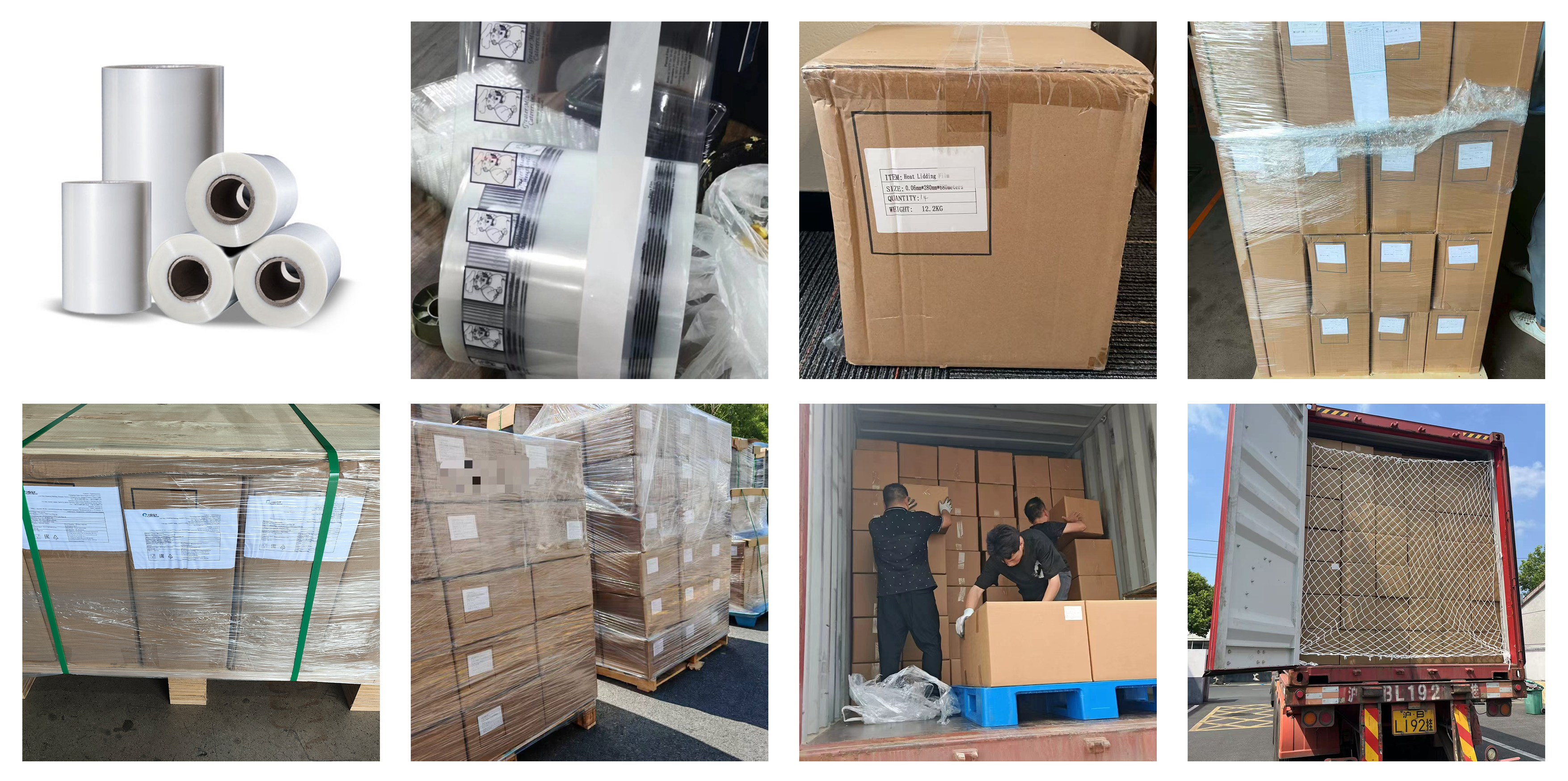
Packing should protect the twill surface, sheet edges and transparency from contamination, abrasion and handling damage during storage and transportation. Final packing can be confirmed according to sheet size, thickness and order format.
![Twill clear polypropylene sheet packing]()
Twill Clear Polypropylene Sheet Packing
Global Exhibitions
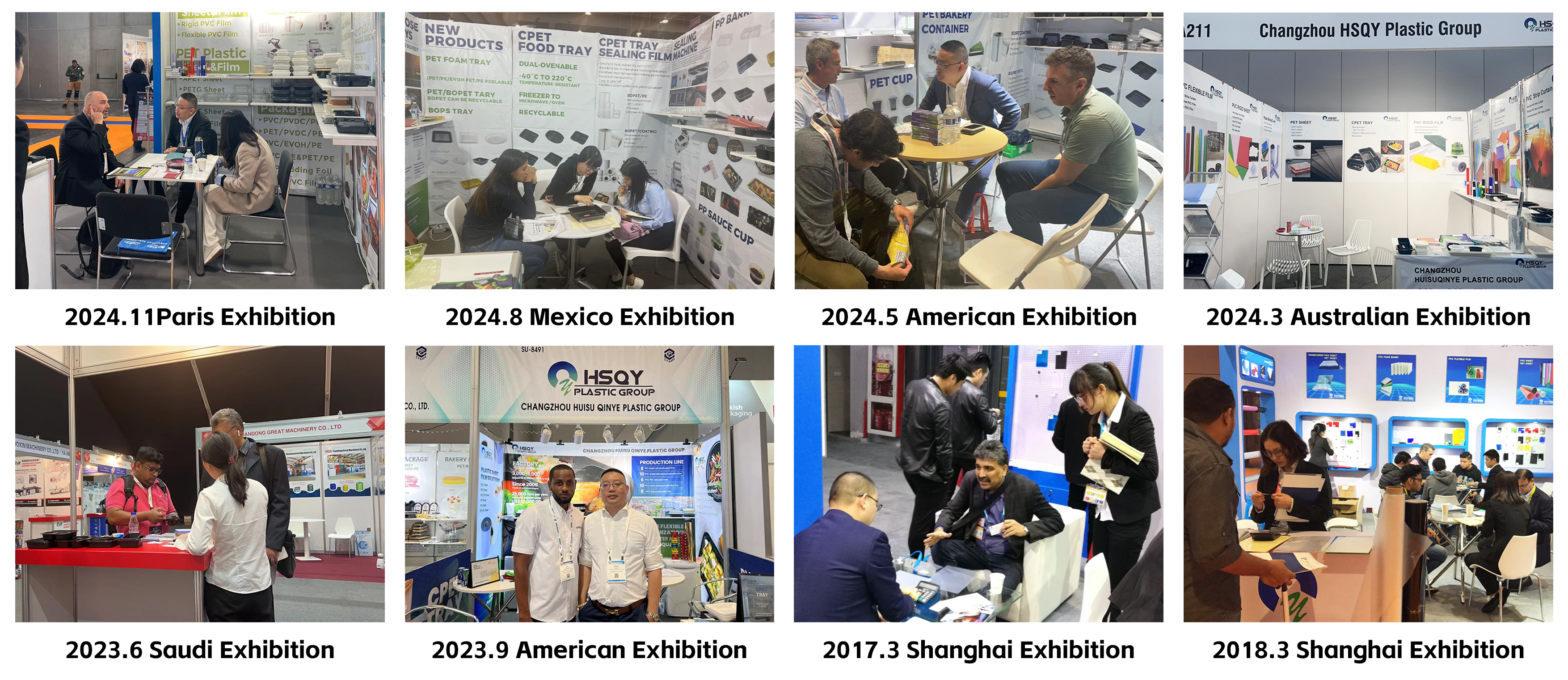
HSQY Plastic Group participates in international plastics, packaging and related industry exhibitions, meeting distributors, converters and industrial buyers from different markets.
![HSQY Plastic Group global exhibitions]()
HSQY Plastic Group International Exhibition Activities
Certification & Documentation
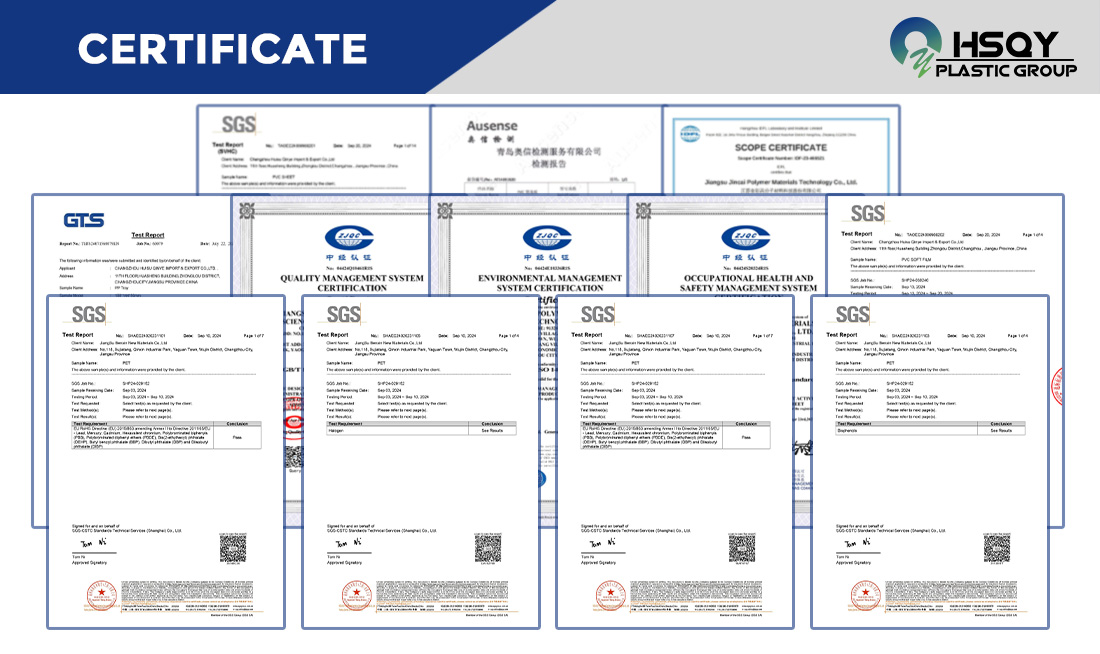
Available certifications and supporting documents should be confirmed according to the exact polypropylene grade and intended application.
Food-contact, medical, antistatic, UV-stabilized and other functional applications may require product-specific documentation in addition to general quality-system certificates.
Why Source Twill PP Sheet from HSQY?
HSQY supplies polypropylene sheet products in different thicknesses, surfaces and customized dimensions for stationery, packaging, printing and industrial converting applications.
For twill polypropylene projects, buyers can provide the target thickness, dimensions, texture reference, pattern direction, transparency requirement, converting process and order volume so the sheet can be evaluated around the actual finished product.