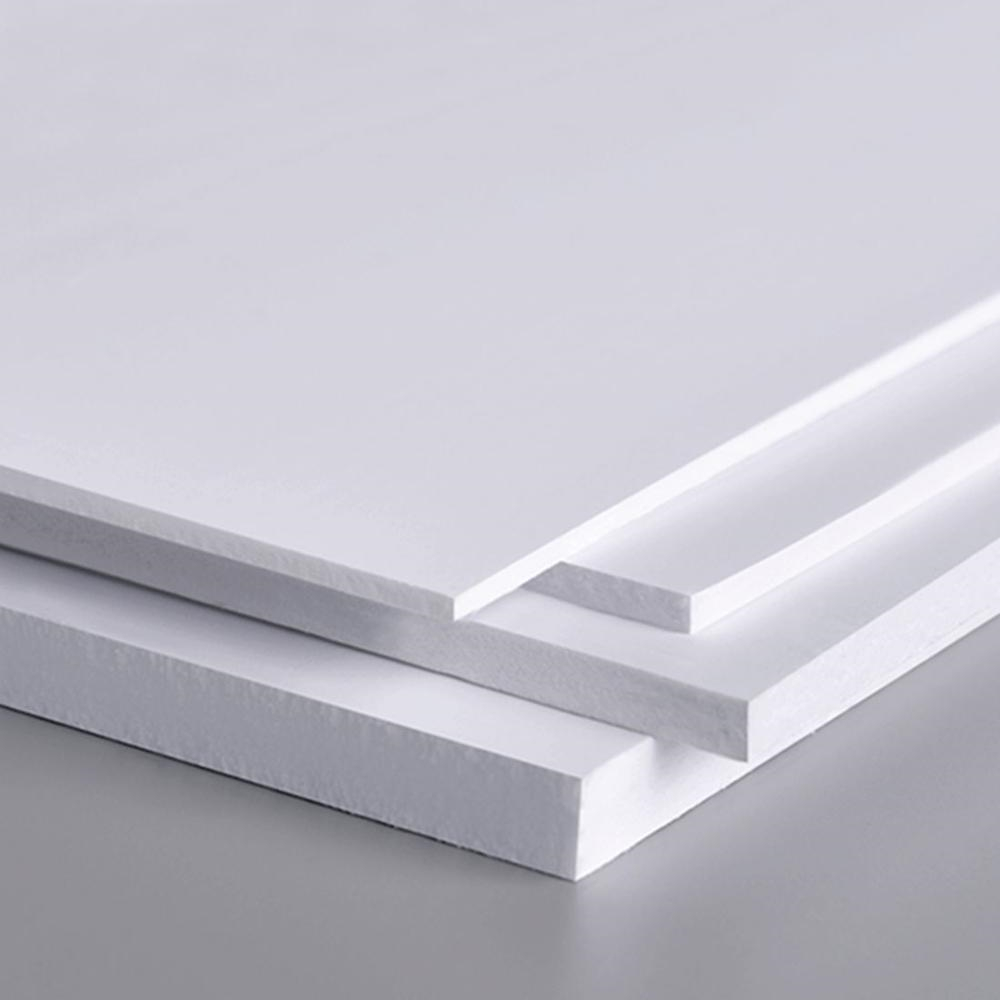
High Density Rigid PVC Foam Board Manufacturer
HSQY manufactures rigid PVC foam boards for signage, digital printing, furniture, kitchen and bathroom cabinets, interior panels, partitions, exhibition displays, CNC-machined components and general plastic fabrication.
Available thicknesses range from approximately 1mm to 35mm, with density options from approximately 0.35 to 1.0g/cm³. Standard sheet sizes include 1220 × 2440mm, 915 × 1830mm, 1560 × 3050mm and 2050 × 3050mm.
White is the standard color for printing, signage, cabinets and interior decoration. Black, red, yellow, blue, green and other customized colors can also be produced according to the required density, thickness and minimum order quantity.
The featured product listing is an 18mm rigid PVC foam board in white or customized colors, with a standard size of 1220 × 2440mm. Other thicknesses, dimensions, densities and surface finishes are available for bulk orders.
The available density range includes lightweight, medium-density and high-density grades. Buyers should specify the exact density required instead of relying only on the general description “high density PVC foam board.”
Explore the complete HSQY PVC foam board range for free-foam, high-density and customized sheet options.
Request PVC Foam Board Pricing Request Board Samples
PVC Foam Board Product Video
Watch the video below to learn more about HSQY rigid PVC foam boards, available thicknesses, sheet sizes, surface quality, fabrication methods and application options.
What Is High Density Rigid PVC Foam Board?
High-density rigid PVC foam board is an expanded polyvinyl chloride sheet with a fine cellular core and a rigid outer surface.
Its cellular structure reduces weight compared with solid rigid PVC while retaining useful stiffness, surface hardness, moisture resistance and fabrication performance.
The material is also commonly called expanded PVC sheet, PVC foam sheet, foamed PVC board, rigid PVC foam panel, Forex board or PVC sign board.
Higher-density grades generally provide greater rigidity, surface hardness, impact resistance, screw retention and machining stability than lightweight display grades.
Density requirements are not standardized across every manufacturer. An order should therefore identify the exact density in g/cm³, together with the required thickness, tolerance and application.
PVC foam board is not automatically a structural building panel. Shelves, cabinets, partitions and load-bearing components should be designed and tested according to board thickness, density, span, fasteners and expected load.
Rigid PVC Foam Board Product Images

High-Density Rigid PVC Foam Board Sheets

Rigid Expanded PVC Sheet with Smooth Surface
Rigid PVC Foam Board Specifications
| Property |
Available Specification |
| Product Name |
High-Density Rigid PVC Foam Board |
| Alternative Names |
Expanded PVC Sheet, PVC Foam Sheet, Foamed PVC Board, Forex Board and PVC Sign Board |
| Model |
PVC Foam Board |
| Product Code |
PVC Foam Board-01 |
| Material |
Expanded rigid polyvinyl chloride |
| Featured Thickness |
18mm |
| Available Thickness |
Approximately 1-35mm |
| Density Range |
Approximately 0.35-1.0g/cm³ |
| Featured Sheet Size |
1220 × 2440mm |
| Standard Sheet Sizes |
915 × 1830mm, 1220 × 2440mm, 1560 × 3050mm and 2050 × 3050mm |
| Custom Sizes |
Customized length, width and cut dimensions subject to production feasibility |
| Standard Color |
White |
| Custom Colors |
Black, red, yellow, blue, green and customized colors |
| Surface Finish |
Matte, satin, smooth or glossy according to grade |
| Surface Protection |
Protective film available for selected surfaces and applications |
| Production Options |
Free-foam, skinned or application-specific PVC foam board subject to confirmation |
| Printing Methods |
Flatbed UV printing, screen printing, painting, vinyl application and lamination after compatibility testing |
| Fabrication Methods |
Sawing, cutting, drilling, CNC routing, engraving, milling, die cutting, bonding and mechanical fastening |
| Main Applications |
Signage, printing, displays, cabinets, furniture, partitions, wall panels and fabricated components |
| Outdoor Option |
UV-stabilized grade available subject to exposure and color requirements |
| Flame-Retardant Option |
Available only where a defined grade, thickness and test standard are confirmed |
| Minimum Order Quantity |
Approximately 3 metric tons |
| Samples |
Free stock samples may be available; courier freight is normally paid by the buyer |
| Typical Lead Time |
Approximately 15-20 days after specification and deposit confirmation |
| Packaging |
PE bags, kraft paper, protective corners, cartons and export pallets |
Final thickness tolerance, density tolerance, dimensions, color, surface, protective film, outdoor performance and mechanical properties should be confirmed in an approved written specification.
Free-Foam, Celuka and Co-Extruded PVC Foam Board
| Board Type |
Surface and Structure |
Main Advantages |
Typical Applications |
| Free-Foam PVC Board |
Relatively uniform cellular structure with a fine matte or satin surface |
Lightweight, printable and easy to cut, route and fabricate |
Signs, displays, printing panels, exhibition graphics and decorative parts |
| Celuka or Skinned PVC Board |
Foamed core with a denser, harder outer skin |
Greater surface hardness, rigidity and screw-holding potential |
Cabinets, furniture, interior panels, partitions and CNC components |
| Co-Extruded PVC Foam Board |
Foamed core between two harder solid or high-density PVC surface layers |
Hard, smooth faces with improved scratch and fabrication performance |
Premium furniture, decorative panels, displays and assembled components |
The three production methods should not be treated as identical products. Buyers should specify whether the priority is print quality, low weight, hard skin, screw holding, lamination or CNC edge quality.
How to Choose PVC Foam Board Density
Density affects sheet weight, rigidity, bending resistance, surface hardness, screw retention, machining stability and material cost.
| Indicative Density |
General Characteristics |
Typical Applications |
| 0.35-0.50g/cm³ |
Lightweight and economical |
Temporary signs, lightweight displays, printed panels and mounting boards |
| 0.50-0.65g/cm³ |
Balanced weight, rigidity and cost |
Permanent signs, interior panels, cabinet backs and general fabrication |
| 0.65-0.80g/cm³ |
Higher rigidity, surface hardness and machining stability |
Furniture components, partitions, CNC parts and thicker interior panels |
| 0.80-1.0g/cm³ |
High-density customized grade with increased weight and material content |
Demanding machined parts, high-rigidity furniture components and specialized fabrication |
These density ranges are selection guidelines rather than universal industry classifications. Final performance depends on formulation, production method, thickness, skin structure and testing.
PVC Foam Board Thickness Guide
| Thickness Range |
General Characteristics |
Typical Applications |
| 1-3mm |
Thin, lightweight and relatively flexible |
Printed panels, signs, mounting sheets, decorative layers and model making |
| 4-6mm |
Balanced stiffness and weight |
Advertising boards, exhibition graphics, displays and wall decoration |
| 8-12mm |
Increased rigidity and dimensional support |
Partitions, cabinet backs, interior panels and CNC-routed lettering |
| 15-20mm |
Thick board suitable for furniture and assembled components |
Cabinet bodies, shelves, doors, partitions and furniture panels |
| 25-35mm |
Extra-thick board for customized high-rigidity applications |
Thick fabricated parts, work surfaces, display structures and specialty panels |
Thickness alone does not determine strength. Board density, unsupported span, edge design, fastening method, temperature and expected load must also be considered.
Key Benefits of Rigid PVC Foam Sheet
Lightweight with Useful Rigidity
The expanded cellular core reduces board weight compared with an equivalent solid PVC sheet, helping reduce handling and transportation requirements.
Low Water Absorption
PVC foam board has low water absorption and does not swell or rot in the same way as many untreated wood-based panels.
Smooth Printable Surface
White matte, satin and smooth surfaces can support flatbed UV printing, screen printing, vinyl graphics, painting and lamination after compatibility testing.
Easy CNC and Mechanical Fabrication
The board can be sawed, drilled, routed, engraved, milled, die cut and mechanically fastened using suitable tools and processing parameters.
Moisture and Corrosion Resistance
PVC foam sheet is suitable for many humid indoor environments and applications exposed to common cleaning agents or corrosive conditions.
Custom Density and Color
Buyers can specify density, thickness, sheet size, color, surface finish, protective film, packaging and labeling according to production feasibility.
Physical Properties of Rigid PVC Foam Board
| Testing Item |
Unit |
Reference Result |
| Density |
g/cm³ |
0.35-1.0 |
| Tensile Strength |
MPa |
12-20 |
| Bending Strength |
MPa |
12-18 |
| Bending Elasticity Modulus |
MPa |
800-900 |
| Impact Strength |
kJ/m² |
8-15 |
| Elongation at Break |
% |
15-20 |
| Shore Hardness |
Shore D |
45-50 |
| Water Absorption |
% |
≤1.5 |
| Vicat Softening Point |
°C |
73-76 |
| Burning Performance |
- |
Must be confirmed using the required grade, thickness and fire-test standard |
These are reference values from the existing product information. Actual results may vary with density, thickness, formulation, test temperature, sample direction and test method.
Vicat softening temperature is a laboratory material indicator and should not be interpreted as the recommended continuous service temperature of a fabricated component.
PVC Foam Board for Printing and Signage
White rigid PVC foam board is widely used as a substrate for signs, point-of-purchase displays, menu boards, exhibition graphics and printed decorative panels.
Printing-grade board should provide controlled white point, consistent thickness, stable flatness and a surface suitable for the selected ink system.
| Printing or Finishing Method |
Typical Application |
Important Checks |
| Flatbed UV Printing |
Signs, retail graphics, exhibition boards and decorative panels |
Ink adhesion, curing energy, surface cleanliness and heat distortion |
| Screen Printing |
Logos, text, solid colors and durable commercial graphics |
Ink chemistry, drying, adhesion and scratch resistance |
| Vinyl Application |
Cut lettering, vehicle-related displays and temporary graphics |
Adhesive compatibility, surface energy and outdoor exposure |
| Painting |
Decorative components, props, models and fabricated displays |
Primer, solvent compatibility, drying and surface preparation |
| Lamination |
Decorative films, printed graphics and protective surface layers |
Adhesive, pressure, temperature, board flatness and long-term bonding |
PVC Foam Board for Cabinets and Furniture
Medium- and high-density PVC foam boards can be used for kitchen cabinets, bathroom vanities, wardrobes, shelves, doors, drawer components and decorative furniture panels.
Compared with untreated MDF or particleboard, PVC foam board does not absorb moisture and swell in the same manner. It is therefore frequently selected for humid indoor environments.
Furniture applications should evaluate screw pull-out strength, hinge retention, bending, creep, surface hardness and long-term loading.
High-density PVC foam board should not automatically be treated as a direct structural replacement for plywood. Panel span, supporting frame, fasteners and expected load must be validated.
Applications of PVC Foam Board and PVC Sheet
Advertising and signage: Printed signs, billboards, menu boards, retail displays, exhibition graphics and point-of-purchase panels.
Furniture and cabinets: Kitchen cabinets, bathroom vanities, wardrobes, shelving and furniture components.
Interior decoration: Wall panels, ceiling elements, partitions, decorative panels and exhibition structures.
CNC fabrication: Routed lettering, templates, models, prototypes, machined parts and display components.
Printing and mounting: UV-print substrates, photograph mounting, vinyl graphics and laminated displays.
Industrial uses: Protective panels, corrosion-resistant components, templates and non-load-bearing fabricated parts.

PVC Foam Board for Furniture and Cabinets

PVC Foam Board for Signage and Interior Decoration
Cutting, CNC Routing and Fabrication
Rigid PVC foam board can be processed using many woodworking and plastic-fabrication tools.
Saw Cutting
Circular saws, panel saws and jigsaws can be used with suitable fine-tooth blades. The sheet should be fully supported to reduce vibration and edge damage.
CNC Routing and Engraving
Router speed, feed rate, cutter geometry and depth per pass should be adjusted to the board density and thickness to produce clean edges and reduce heat buildup.
Drilling and Mechanical Fastening
The board can be drilled and fastened with screws, rivets or bolts. Pilot-hole size, edge distance, washer size and expected load should be validated.
Adhesive Bonding
Compatible PVC solvent cements, contact adhesives or structural adhesives can be selected according to the joint design and bonded materials.
Laser Cutting
Conventional laser cutting of PVC is generally not recommended because heating PVC can release corrosive chlorine-containing fumes that may harm personnel and equipment.
Mechanical cutting, routing or die cutting should normally be used unless specialized PVC-processing equipment and appropriate extraction systems are available.
Water Resistance and Humid Environments
PVC foam board has low water absorption and is commonly used in bathrooms, kitchens, washrooms, basements and other humid interior environments.
The board itself does not rot or swell like untreated wood-based panels, but the completed installation is not automatically waterproof.
Joints, screw holes, supporting frames, adhesives and wall interfaces should be designed for the expected moisture exposure.
Outdoor Use and UV Resistance
Standard white PVC foam board is primarily recommended for indoor signage, printing, furniture and interior applications unless an outdoor grade is specifically confirmed.
Outdoor exposure can cause color change, chalking, warping or reduced mechanical performance depending on climate, sheet color, thickness, fastening and installation orientation.
Long-term exterior projects should specify a UV-stabilized grade, expected exposure period, geographic location, sheet thickness and fastening method.
Thermal expansion should be considered by providing appropriate installation clearance and avoiding excessive restraint of large panels.
Fire Performance and Safety
PVC foam board should not be described generally as fireproof.
Burning behavior depends on formulation, density, thickness, sample orientation, conditioning and test method.
Claims such as self-extinguishing, UL 94, Class A or another fire classification should only be used when a valid report covers the exact product grade and thickness.
Heating, burning or uncontrolled hot-working of PVC can release hazardous and corrosive fumes. Fabrication areas should use suitable ventilation, dust extraction and occupational-safety procedures.
PVC Foam Board vs. Solid PVC Sheet and MDF
| Material |
Weight and Structure |
Moisture Performance |
Typical Uses |
| PVC Foam Board |
Lightweight cellular PVC with useful rigidity |
Low water absorption |
Signage, cabinets, interior panels, displays and fabricated parts |
| Solid Rigid PVC Sheet |
Dense, non-foamed and heavier |
Low water absorption and strong chemical resistance |
Chemical tanks, industrial guards, fabrication and technical components |
| MDF |
Compressed wood-fiber panel |
Standard grades can swell after moisture exposure |
Indoor furniture, cabinets, decorative panels and woodworking |
Quality Control for PVC Foam Board
PVC resin and raw-material verification.
Sheet thickness and thickness tolerance.
Density and density tolerance.
Sheet length, width, diagonal and squareness.
Surface smoothness, gloss and texture.
White point, color difference and batch consistency.
Flatness, bowing and warpage.
Cell structure and edge appearance.
Black spots, impurities, pits and surface damage.
Printing, adhesion and lamination performance.
CNC routing, drilling and cutting performance.
Screw retention and mechanical testing where required.
Water absorption, Vicat and fire testing where specified.
Protective film, labels, packing and pallet inspection.
Custom PVC Foam Board Options
Thicknesses from approximately 1mm to 35mm.
Densities from approximately 0.35 to 1.0g/cm³.
915 × 1830mm, 1220 × 2440mm, 1560 × 3050mm and 2050 × 3050mm sheets.
Customized sheet and cut-piece dimensions.
White, black, red, yellow, blue, green and customized colors.
Matte, satin, smooth and glossy surfaces.
Printing, signage, furniture and CNC grades.
Free-foam and application-specific skinned options.
UV-stabilized outdoor formulations.
Protective film and customized sheet labels.
PE bag, kraft paper, carton and export-pallet packaging.
Packaging and Export Delivery
Sample packing: Small cut samples can be protected with film, kraft paper or cartons.
Sheet protection: PE bags, protective film, kraft paper and corner protection can be used according to surface and transport requirements.
Pallet packing: Sheets can be stacked on plywood or export pallets with straps and protective panels.
Private labeling: Customized sheet labels, pallet labels, carton marks and packing lists can be provided.
Container loading: Loading quantity depends on thickness, density, sheet dimensions, pallet design and legal weight restrictions.
Lead time: Standard production normally takes approximately 15-20 days after the specification, quantity, packaging and deposit are confirmed.
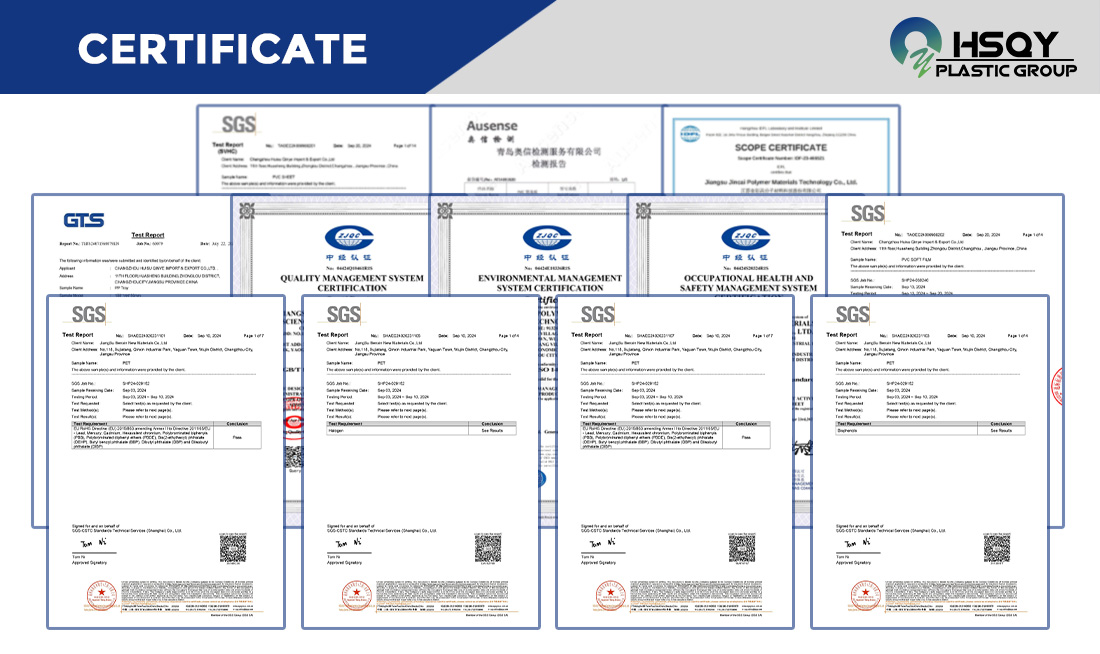
PVC Foam Board SGS Document
Download the available SGS document for reference. Confirm that the report covers the exact density, thickness, color, formulation and application included in the order.
![Rigid PVC foam board SGS PDF icon]() Download PVC Foam Board SGS Document
Download PVC Foam Board SGS Document
Information Required for a PVC Foam Board Quote
Final application: signage, printing, cabinet, furniture, partition, wall panel or CNC part.
Required thickness and thickness tolerance.
Required density and density tolerance.
Sheet length, width and cutting tolerance.
White, black or customized color.
Matte, satin, smooth or glossy finish.
Free-foam, skinned or other required structure.
Printing, laminating, CNC routing or fastening process.
Indoor or outdoor installation.
UV, fire, chemical or mechanical test requirements.
Protective film and labeling requirements.
Order quantity and estimated annual volume.
Packing method and destination port.
Required delivery date and trade terms.
Send Your PVC Foam Board Requirements
Why Choose HSQY as Your PVC Foam Board Supplier?
Rigid PVC foam sheets from approximately 1mm to 35mm.
Density options from approximately 0.35 to 1.0g/cm³.
Standard and large-format sheet dimensions.
Printing, signage, furniture and CNC grades.
White and customized color production.
Customized surface finish and protective film.
Samples for printing, cutting, routing and fastening tests.
Quality inspection against approved specifications.
Export packaging, labeling and international-delivery support.
Before bulk production, HSQY recommends evaluating a sample using the customer's actual printer, CNC router, adhesive, fastener, cabinet hardware or installation system.
Contact HSQY for Samples and Pricing
HSQY Certificates and Global Exhibitions
Available certificates and test reports should be checked against the exact PVC foam board grade, thickness, density, color and intended market.

HSQY Certificates and Quality Documents

HSQY International Exhibitions
Frequently Asked Questions About Rigid PVC Foam Board
What is high-density rigid PVC foam board?
It is an expanded rigid PVC sheet with a cellular core. Higher-density grades provide increased rigidity, surface hardness and machining stability for furniture, cabinets, CNC parts, signs and interior panels.
What density is considered high-density PVC foam board?
There is no single universal threshold. Within the HSQY range, grades near the upper part of the 0.35-1.0g/cm³ range provide greater density, but the exact density must be written into the order specification.
What is the difference between PVC foam board and solid PVC sheet?
PVC foam board has a cellular structure and is lighter. Solid rigid PVC sheet is non-foamed, denser and normally selected when higher chemical resistance or a solid structure is required.
What is the difference between free-foam and Celuka PVC board?
Free-foam board generally has a more uniform cellular structure and is widely used for printing and signage. Celuka board has a denser outer skin and is commonly selected for cabinets, furniture and applications requiring greater surface hardness.
What is co-extruded PVC foam board?
Co-extruded board has a foamed core between harder PVC surface layers, providing a smooth surface and increased resistance to scratches and mechanical damage.
What thicknesses are available?
HSQY supplies rigid PVC foam boards from approximately 1mm to 35mm. Final availability depends on density, sheet size, color and production method.
What sheet sizes are available?
Standard sizes include 915 × 1830mm, 1220 × 2440mm, 1560 × 3050mm and 2050 × 3050mm. Customized cut dimensions can also be evaluated.
Is 18mm PVC foam board suitable for cabinets?
An appropriate 18mm medium- or high-density grade can be used for cabinet components. Screw retention, hinges, span, loading and supporting structure should be tested.
Is PVC foam board waterproof?
The board has low water absorption and does not swell like untreated MDF. The completed cabinet, wall or panel installation is only waterproof when joints, fasteners and interfaces are correctly designed.
Can PVC foam board be used outdoors?
Selected UV-stabilized grades can be used outdoors. Standard indoor board should not automatically be described as suitable for long-term exterior exposure.
Can PVC foam board be printed directly?
Yes. Suitable grades can support flatbed UV and screen printing. Ink adhesion, curing, color reproduction and surface compatibility should be tested first.
Can PVC foam board be CNC routed?
Yes. It can be CNC routed, engraved and milled. Cutter geometry, spindle speed, feed rate and depth per pass should be matched to the board density and thickness.
Can PVC foam board be drilled and screwed?
Yes. Higher-density grades generally provide improved screw retention. Pilot holes, edge distance, washers and expected loads should be tested.
What adhesive can be used for PVC foam board?
Compatible PVC cement, contact adhesive or structural adhesive may be used depending on the joint and bonded material. Adhesion should be tested on a production sample.
Can PVC foam board be laser cut?
Conventional laser cutting is generally not recommended because heated PVC can release corrosive chlorine-containing fumes. Mechanical cutting or CNC routing is normally preferred.
Is PVC foam board fireproof?
No general PVC foam board should be described as fireproof. Fire performance must be supported by a test report covering the exact grade, density and thickness.
Does PVC foam board contain formaldehyde?
PVC foam board is not manufactured from formaldehyde-bonded wood fibers. Any specific restricted-substance claim should still be confirmed using documentation for the exact formulation.
Is PVC foam board recyclable?
PVC foam board can technically be recycled, but actual recyclability depends on local collection, sorting, formulation, surface film, printing, adhesive and contamination.
Can recycled PVC be used in foam board?
Selected board structures may contain recycled material. Recycled content can affect color, density, surface quality, mechanical consistency and regulated applications.
What is the minimum order quantity?
The standard MOQ for this product is approximately 3 metric tons. Customized colors, densities, large sizes or mixed specifications may require different quantities.
Are free samples available?
Free stock samples may be available for checking thickness, density, surface, printing and machining. Courier freight is normally paid by the buyer.
What is the production lead time?
Standard production normally takes approximately 15-20 days after the specification, quantity, packaging and deposit are confirmed.
What information is required for a quotation?
Provide the application, thickness, density, sheet size, color, finish, printing or machining method, quantity, packaging, destination port and required test standards.
Get a Custom PVC Foam Board Quote
About HSQY Plastic Group
Changzhou Huisu Qinye Plastic Group Co., Ltd. supplies rigid PVC foam boards and other plastic sheets for signage, printing, cabinets, furniture, interior decoration and industrial fabrication.
HSQY supports distributors, sign makers, furniture manufacturers, construction-material suppliers and plastic fabricators with sample evaluation, customized production, inspection and export packaging.
Request a Quote and Sample