6mm Twinwall Polycarbonate Greenhouse Panel
HSQY 6mm twinwall polycarbonate greenhouse panel combines a lightweight hollow structure, impact resistance, insulation and light transmission for greenhouse roofs, walls, skylights and agricultural glazing.
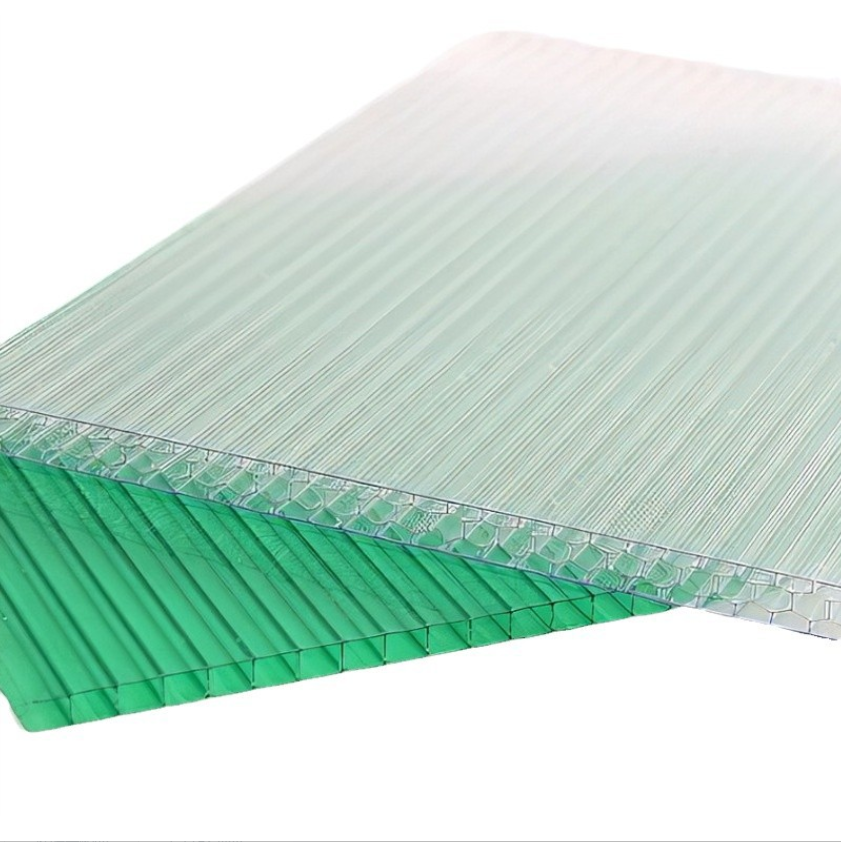
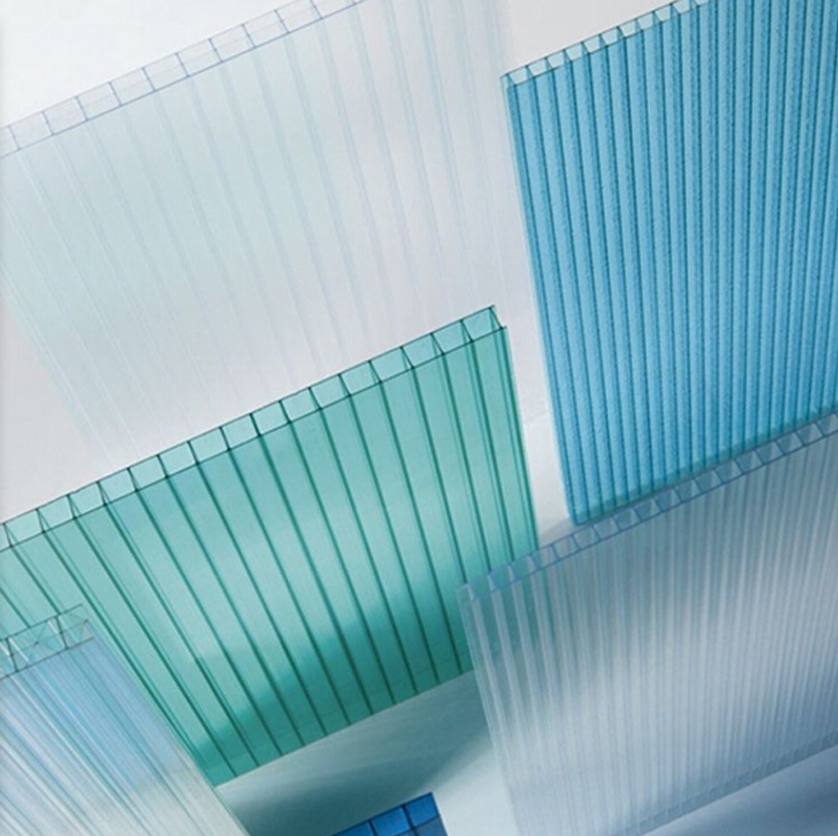
Twinwall polycarbonate sheet, also called hollow polycarbonate sheet or double-wall polycarbonate panel, consists of two polycarbonate skins connected by internal ribs. The enclosed air channels reduce panel weight while improving thermal insulation compared with a single solid layer.
This product page focuses on the 6mm twinwall structure for greenhouse and agricultural glazing. HSQY's current multiwall range also includes other 2RS and 3RS thicknesses for projects requiring different levels of rigidity and insulation.
![6mm twinwall polycarbonate greenhouse panel]()
6mm Twinwall Polycarbonate Greenhouse Panel
![Polycarbonate hollow sheet for greenhouse glazing]()
Polycarbonate Hollow Sheet for Greenhouse Glazing
6mm Polycarbonate Greenhouse Panel Specifications
| Property |
Specification |
| Product |
6mm Twinwall Polycarbonate Greenhouse Panel |
| Material |
Polycarbonate Plastic |
| Raw Material |
100% Virgin Polycarbonate Resin |
| Structure |
Twinwall / 2RS Hollow Structure |
| Featured Thickness |
6mm |
| Other Listed 2RS Thicknesses |
4mm, 5mm, 8mm, 10mm |
| Listed 3RS Thicknesses |
10mm, 12mm, 16mm |
| Listed Width |
2100mm |
| Colors |
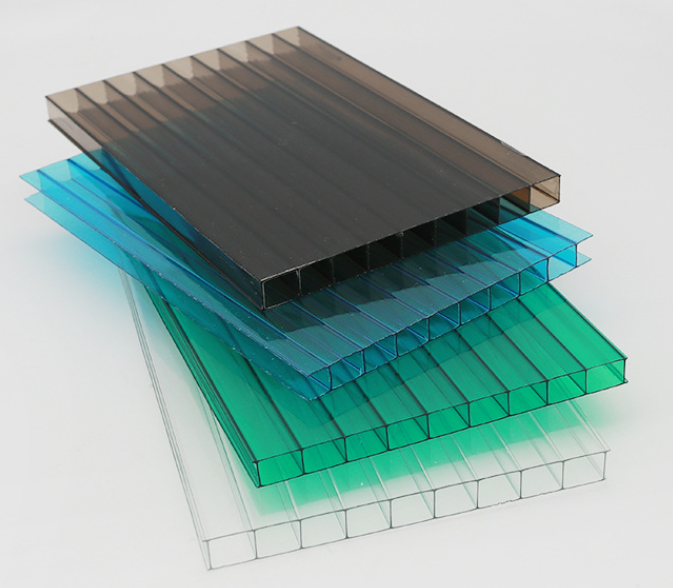
Clear, Green, Lake Blue, Blue, Emerald, Brown, Grass Green, Opal, Grey, Custom |
| UV Protection |
Co-extruded UV protection listed in the current product information |
| Main Applications |
Greenhouses, agricultural glazing, roofing, skylights, canopies and architectural projects |
Specification Note: Exact sheet length, weight per square meter, light transmission, U-value, UV-layer configuration, dimensional tolerance and structural span should be confirmed for the selected 6mm panel before project approval.
What Is a 6mm Twinwall Polycarbonate Greenhouse Panel?
A 6mm twinwall polycarbonate panel has two exterior polycarbonate skins connected by internal ribs, producing hollow channels through the thickness of the sheet.
These air channels reduce material weight and help limit heat transfer, making twinwall panels useful for greenhouse walls and roofs where growers need a practical balance between transmitted daylight, thermal insulation, impact resistance and panel weight.
At 6mm overall thickness, the panel provides more starting rigidity and insulating air space than thinner 4mm twinwall sheet while remaining relatively lightweight for greenhouse installation.
Why Use 6mm Twinwall Polycarbonate for Greenhouses?
Hollow insulating structure: The air channels help reduce heat transfer through the greenhouse glazing.
Natural light: Multiwall polycarbonate allows useful daylight into the greenhouse while its ribbed structure can diffuse incoming light.
Impact resistance: Polycarbonate provides useful resistance to normal handling impact and weather-related debris compared with brittle glazing materials.
Lower panel weight: Hollow construction reduces weight compared with solid glazing of similar overall thickness.
UV-protected surface: The current product information lists co-extruded UV protection for sunlight-exposed applications.
Easy fabrication: Panels can be cut and drilled using suitable tools during greenhouse fabrication and installation.
Multiple colors: Clear, opal and tinted colors support different agricultural and architectural requirements.
Light Transmission & Diffusion for Greenhouses
Light transmission is one of the most important parameters when selecting greenhouse glazing because the panel controls how much solar radiation reaches the crop canopy.
The current HSQY multiwall product information states that the product family can provide up to approximately 80% natural-light diffusion. This is a general multiwall-sheet statement rather than a verified light-transmission value for every 6mm color.
For commercial greenhouse projects, request the actual visible-light transmission and diffusion data for the selected 6mm clear, opal or colored panel. Different colors can produce substantially different optical performance.
Thermal Insulation of 6mm Twinwall Polycarbonate
The enclosed air channels in twinwall polycarbonate provide thermal insulation that is not present in a single solid glazing layer.
HSQY's original multiwall information describes the product family as providing substantially better insulation than single-pane glass. The exact thermal performance of a 6mm panel should be evaluated using its actual U-value or R-value rather than applying a generic multiwall comparison to every configuration.
For heated greenhouses or projects in cold climates, U-value is particularly important because it affects overnight heat loss and heating demand.
6mm Polycarbonate vs. Greenhouse Glass
| Selection Factor |
6mm Twinwall Polycarbonate |
Single-Layer Glass |
| Structure |
Hollow twinwall with insulating air channels |
Solid glass pane |
| Weight |
Lightweight |
Heavier |
| Impact Behavior |
Polycarbonate is more impact tolerant than brittle glass |
Can break under sufficient impact |
| Light Appearance |
Ribbed structure can provide more diffused light |
More direct optical transmission depending on glass type |
| Insulation |
Internal air channel improves thermal performance |
Single pane has no internal insulating air cavity |
| Installation |
Can be cut and drilled using suitable tools |
Requires glass-specific handling and installation |
6mm vs. 4mm Twinwall Polycarbonate for Greenhouses
| Selection Factor |
4mm Twinwall |
6mm Twinwall |
| Panel Weight |
Generally lower |
Generally higher |
| Rigidity |
Suitable for lighter-duty, well-supported structures |
Provides greater overall thickness and generally greater panel rigidity |
| Insulating Air Space |
Smaller |
Greater overall panel depth |
| Typical Direction |
Small, lightweight greenhouse structures |
Greenhouses where additional rigidity and insulation are desired |
| Final Selection |
Select according to greenhouse size, frame spacing, wind load, snow load, climate and required thermal performance. |
6mm vs. 8mm Twinwall Polycarbonate
| Selection Factor |
6mm Twinwall |
8mm Twinwall |
| Panel Thickness |
Moderate |
Greater |
| Weight |
Generally lower |
Generally higher |
| Insulation Direction |
Suitable for many standard greenhouse projects |
Generally selected when additional insulation is required |
| Structural Direction |
Suitable with appropriate framing and support spacing |
Greater thickness can provide increased rigidity depending on panel design |
Clear vs. Colored Greenhouse Polycarbonate Panels
The current HSQY range includes clear, green, lake blue, blue, emerald, brown, grass green, opal, grey and custom colors.
| Color |
General Selection Consideration |
| Clear |
Typically selected when maximum useful natural light is a priority |
| Opal |
Can provide a more diffused appearance and reduced visual glare |
| Green / Emerald / Grass Green |
Decorative tinted options; actual crop-light suitability should be based on optical data |
| Blue / Lake Blue |
Tinted appearance for architectural or selected agricultural applications |
| Grey / Brown |
Useful where lower visible brightness or architectural tint is preferred |
| Custom |
Confirm color reference and required optical performance before production |
For crop-production greenhouses, color should not be selected only by visual preference. Request the actual light-transmission data for the selected panel because tint can change the quantity and spectrum of light entering the greenhouse.
UV Protection for Greenhouse Polycarbonate
The current product information states that HSQY multiwall polycarbonate uses co-extruded UV protection to help reduce sunlight-related yellowing and degradation.
Before installation, confirm whether the selected panel has one UV-protected side or another UV configuration. If protection is provided on one side, the protected side must face outward toward sunlight.
Do not remove the protective film until panel cutting, drilling and positioning are substantially complete, and follow the orientation markings supplied with the sheet.
Condensation Considerations for Greenhouses
Condensation is common inside greenhouses because warm humid air contacts cooler glazing surfaces. Droplets can reduce transmitted light and may fall onto crops.
The original HSQY page describes the panel as helping with greenhouse condensation, but it does not publish a dedicated anti-drip or anti-condensation coating specification.
If commercial greenhouse production requires an anti-condensation surface, specify that requirement separately and confirm whether the exact 6mm grade includes a dedicated condensation-control treatment.
Greenhouse & Architectural Applications
![6mm twinwall polycarbonate greenhouse application]()
Greenhouse Application
![Multiwall polycarbonate architectural application]()
Architectural Application
Greenhouse Roof Panels
6mm twinwall polycarbonate can be used for greenhouse roof glazing where its lightweight structure, transmitted daylight and hollow insulation provide a practical alternative to single-pane glazing.
Roof suitability depends on rafter spacing, purlin spacing, roof slope, sheet orientation, wind pressure, snow load and fastening design. The current source does not publish a universal span table for the 6mm product.
Greenhouse Wall Panels
Twinwall panels can also be used for greenhouse sidewalls and end walls where natural light, impact resistance and thermal insulation are required.
Vertical panels should be installed with the internal channels oriented vertically where practical so any internal condensation can drain toward the lower edge.
Skylights, Canopies & Covered Walkways
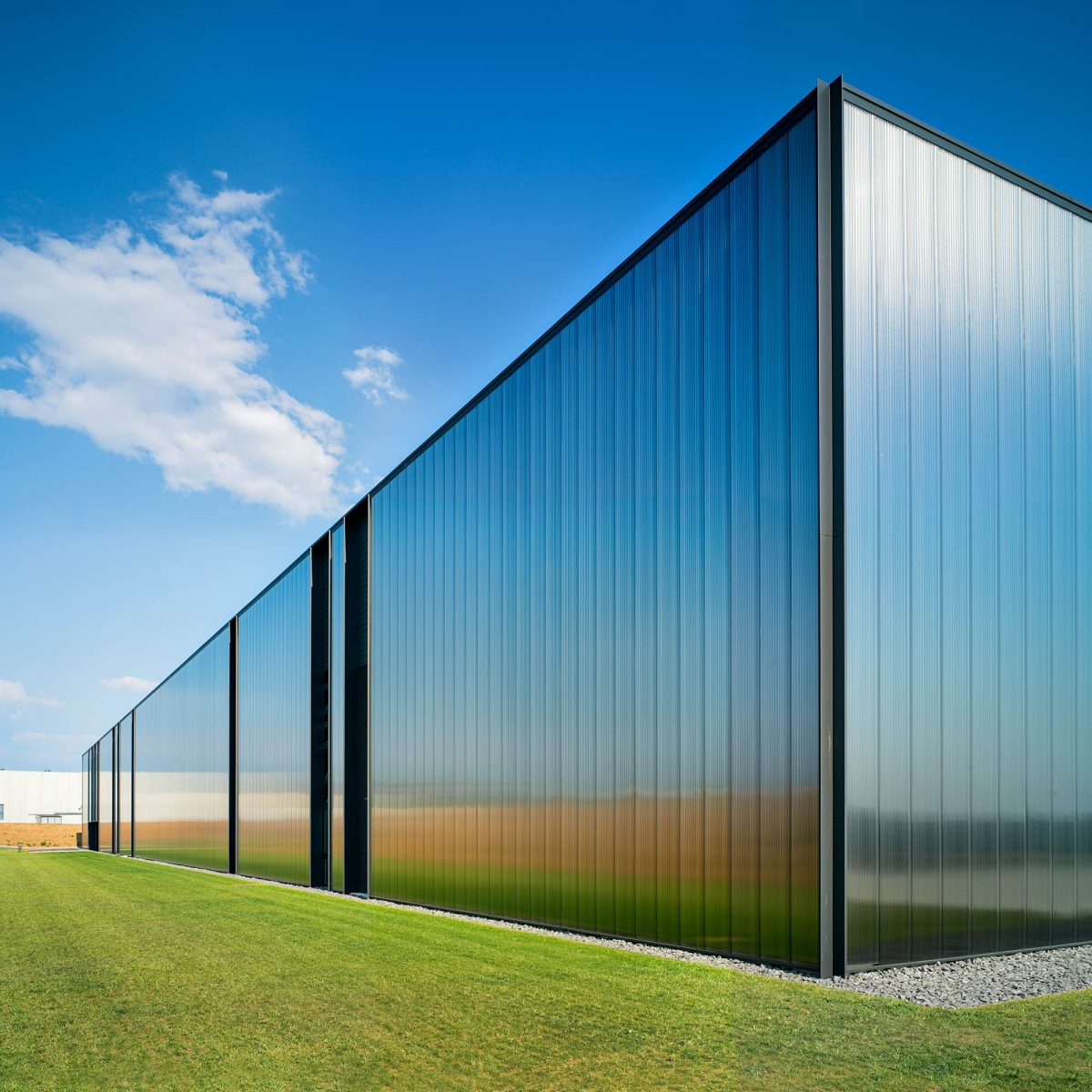
The same lightweight hollow structure makes multiwall polycarbonate useful for selected skylights, canopies, covered walkways and translucent roof sections.
For architectural applications, panel thickness and framing must be selected from project loads rather than assuming that a 6mm greenhouse panel is suitable for every roof span.
Swimming Pool Enclosures
The original product information lists swimming-pool enclosures as another multiwall-polycarbonate application. Projects in humid or chemically treated environments should consider framing design, ventilation, sealant compatibility and exposure to pool-treatment chemicals.
Noise Barriers & Industrial Panels
Noise barriers are listed among the original application directions. However, a specific sound-reduction value should not be assumed without acoustic test data for the exact panel structure and installed system.
Storm & Protective Applications
Polycarbonate provides useful impact resistance, and the original source mentions storm panels and flying-debris protection.
A 6mm hollow sheet should not automatically be described as hurricane-rated or code-approved. Hurricane, cyclone or windborne-debris protection requires the relevant tested panel system, framing, fasteners and installation approval.
How to Install 6mm Twinwall Polycarbonate Panels
Keep the Flutes in the Drainage Direction
For sloped greenhouse roofs, install the internal channels in the direction of the slope. For walls, orient the channels vertically where practical. This helps moisture drain from the hollow structure.
Install the UV-Protected Side Toward the Sun
Where UV protection is provided on one side, that side must face the exterior. Follow the printing or marking on the protective film supplied with the panel.
Allow for Thermal Expansion
Polycarbonate expands and contracts as temperature changes. Glazing profiles, fastening holes and framing should allow suitable movement instead of rigidly clamping the panel.
Seal the Hollow Channels Correctly
After cutting, remove chips and dust from the channels. Use suitable sealing or ventilation tapes and edge profiles to help reduce dust, insects and excessive moisture entering the sheet.
Use Compatible Fasteners & Sealants
Fasteners, washers, profiles and sealants should be compatible with polycarbonate and designed to accommodate thermal movement without creating excessive localized pressure.
Confirm Support Spacing
Do not use a universal support spacing without checking the project. Span depends on panel structure, wind pressure, snow load, roof pitch, framing and local requirements.
Cutting & Drilling 6mm Polycarbonate Sheet
The current product information states that multiwall polycarbonate can be cut and drilled on site. Suitable plastic-working tools and correct panel support should be used to reduce rough edges, cracking and contamination of the internal channels.
| Operation |
Recommended Consideration |
| Cutting |
Support the panel securely and use suitable cutting equipment |
| Channel Cleaning |
Remove cutting debris from the hollow channels before sealing |
| Drilling |
Avoid excessive pressure and provide appropriate clearance for thermal movement |
| Edge Protection |
Use compatible tape and edge profiles after trimming |
| Cold Curving |
Confirm the minimum permitted bending radius for the exact 6mm panel before curved installation |
What Information Should You Provide for a Quote?
| Requirement |
Information to Provide |
| Application |
Greenhouse roof, wall, skylight, canopy or other glazing project |
| Thickness |
6mm twinwall or another required multiwall thickness |
| Panel Size |
Required width × length; current detail table lists 2100mm width |
| Color |
Clear, green, lake blue, blue, emerald, brown, grass green, opal, grey or custom |
| Light Requirement |
Required light transmission or diffusion where important |
| Thermal Requirement |
Required U-value or insulation target for heated or cold-climate greenhouses |
| Condensation Control |
Specify whether a dedicated anti-condensation treatment is required |
| UV Protection |
Confirm required UV-protected surface configuration |
| Greenhouse Frame |
Support spacing, roof slope, panel span and framing material |
| Climate |
Project location, wind, snow, hail and temperature conditions where relevant |
| Accessories |
Profiles, tapes, fasteners, washers or other required installation components |
| Quantity |
Project quantity and expected repeat demand |
| Destination |
Country and destination port |
Frequently Asked Questions About 6mm Greenhouse Polycarbonate
What is a 6mm twinwall polycarbonate panel?
It is a 6mm-thick hollow polycarbonate panel with two outer skins connected by internal ribs, creating insulating air channels between the surfaces.
Is 6mm twinwall polycarbonate good for greenhouses?
6mm twinwall polycarbonate can be suitable for greenhouse walls and roofs where its light transmission, insulation, low weight and impact resistance meet the project requirements. Frame spacing and local loads must also be considered.
Is 6mm better than 4mm polycarbonate for a greenhouse?
6mm generally provides greater overall thickness and rigidity than 4mm and can offer better insulation. The best choice depends on greenhouse size, climate, support spacing and budget.
Should I choose 6mm or 8mm twinwall polycarbonate?
6mm is suitable for many greenhouse applications with appropriate framing, while 8mm may be considered when additional panel rigidity or insulation is required. Confirm actual performance data for both structures before final selection.
How much light does 6mm twinwall polycarbonate transmit?
The current HSQY source gives a general multiwall statement of up to approximately 80% natural-light diffusion. Exact 6mm light-transmission data should be requested for the selected color and structure.
What is the U-value of HSQY 6mm twinwall sheet?
The current product source does not publish a specific U-value for this 6mm panel. Request the thermal data for the exact structure when insulation performance is part of the project specification.
Does the panel have UV protection?
The current product information states that co-extruded UV protection is used. Confirm the UV-protected side or exact UV configuration before installation.
Which side of the polycarbonate panel faces outside?
If the panel has UV protection on one side, the protected side should face the sun. Follow the marking on the supplied protective film and product documentation.
Do the hollow channels run vertically or horizontally?
For greenhouse walls, channels should generally run vertically. On sloped roofs, they should normally follow the roof slope so moisture can drain toward the lower edge.
Does HSQY 6mm greenhouse sheet have anti-condensation coating?
The current source mentions condensation performance but does not publish a dedicated anti-drip coating specification. Specify anti-condensation treatment separately if it is required.
What colors are available?
The current product information lists clear, green, lake blue, blue, emerald, brown, grass green, opal, grey and custom colors.
What width is available?
The detailed product specification currently lists 2100mm width. Exact dimensions and tolerances should be confirmed for the order.
Can 6mm polycarbonate be cut on site?
Yes. The current product information states that multiwall polycarbonate can be cut and drilled on site using suitable tools and installation practices.
How should the hollow ends be sealed?
Use suitable sealing or ventilation tapes and edge profiles according to panel orientation. This helps limit dust, insects and excessive moisture entering the channels.
Do polycarbonate panels need expansion clearance?
Yes. Polycarbonate changes dimension as temperature changes, so profiles and fastener holes should allow appropriate thermal movement.
Can 6mm panels handle snow and hail?
Polycarbonate provides useful impact resistance, but project suitability depends on snow load, hail conditions, panel span, frame spacing, roof slope and installation system. Do not select the panel from thickness alone.
Is 6mm polycarbonate hurricane resistant?
A general 6mm hollow panel should not automatically be considered hurricane rated. Windborne-debris and hurricane applications require a tested complete system including sheet, framing and fasteners.
What information should I provide for a greenhouse quotation?
Please provide greenhouse dimensions, panel thickness, sheet size, color, required light and thermal performance, frame spacing, climate conditions, anti-condensation requirement, accessories, quantity and destination.
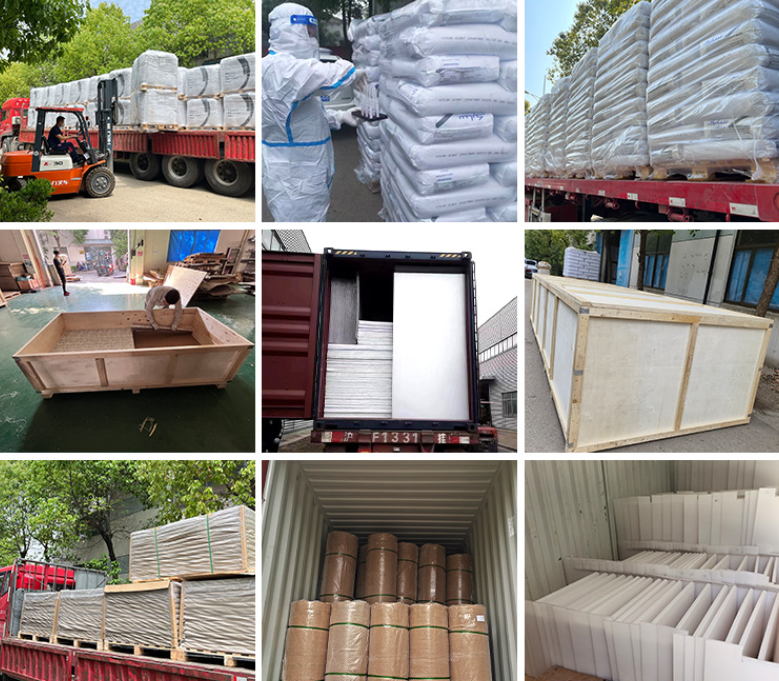
Packaging & Delivery
Sample Packaging: Sheets in protective PE bags, packed in cartons.
Sheet Packaging: 30kg per bag with PE film, or as required.
Pallet Packaging: 500-2000kg per plywood pallet.
Container Loading: 20 tons, optimized for 20ft/40ft containers.
Delivery Terms: FOB, CIF, EXW.
Lead Time: 7-15 days after deposit, depending on order volume.
![6mm polycarbonate greenhouse panel packaging and delivery]()
Polycarbonate Greenhouse Panel Packaging
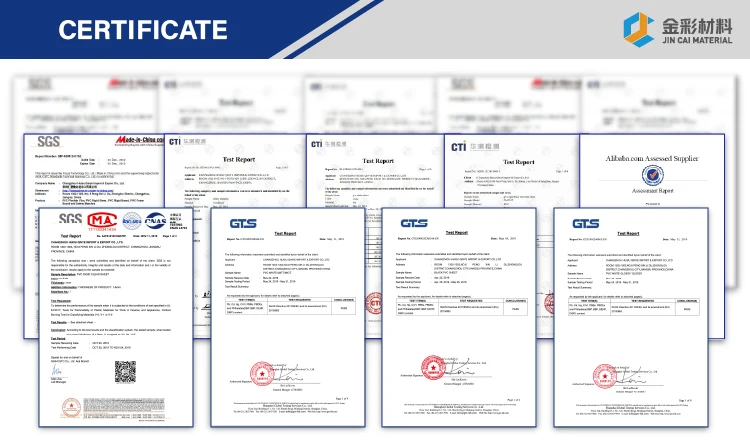
Certifications
The current product information references SGS and ISO 9001:2008. Project-specific certificates, physical-property reports and compliance documents should be confirmed for the exact polycarbonate sheet, thickness, color and destination-market requirement.
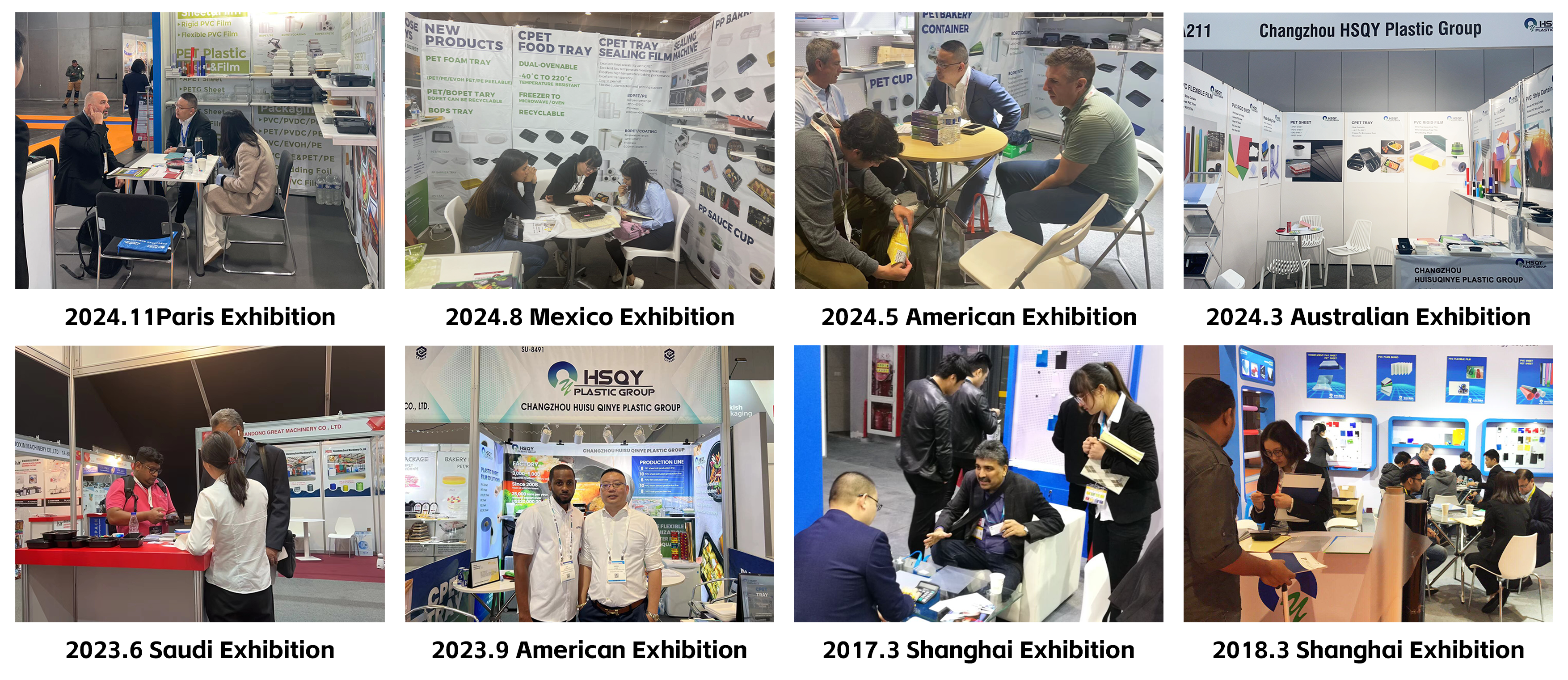
About HSQY Plastic Group
HSQY Plastic Group states more than 20 years of experience and operates 8 factories, supplying plastic materials for packaging, construction, medical and industrial applications.
For greenhouse projects, HSQY can discuss multiwall structure, panel thickness, dimensions, color, UV protection, optical requirements, climate conditions, packaging and international delivery requirements.