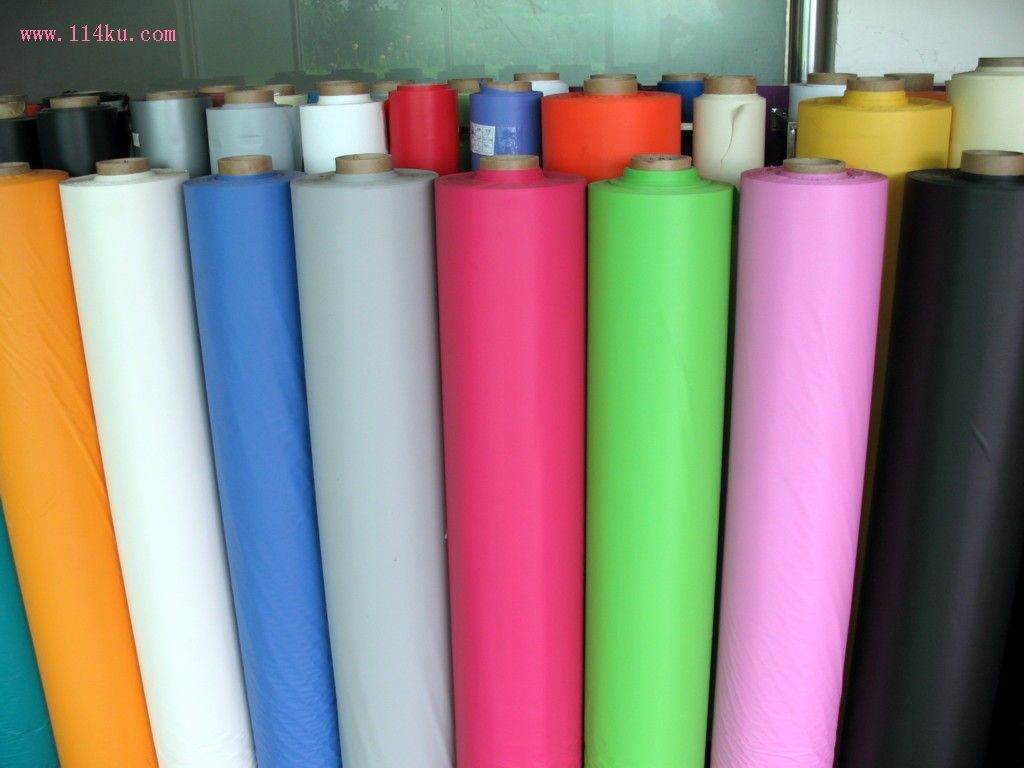
Printable Flexible PVC Film for Packaging & Bags
HSQY Printable Flexible PVC Film is a soft vinyl roll material for industrial packaging, clear bags, zipper pouches, printed packaging components and other converted products that require both flexible handling and printable surfaces.
Typical industrial packaging grades are approximately 0.20mm to 1.50mm thick, with customized roll widths, softness, transparency, colors and surface finishes. Thinner printing-film specifications can also be evaluated according to the printing process and finished application.
For printed packaging projects, buyers should provide the printing method, ink system, required film thickness, roll width, softness, bag structure and downstream welding, heat-sealing, sewing or cutting process before the final PVC grade is approved.
Request Printable Packaging Film Quote
Flexible PVC Film Video
Printable PVC Packaging Film Images
![Clear flexible PVC film roll for printed packaging]() Clear PVC Packaging Film Roll |
![Clear flexible PVC film used for printed packaging bags]() PVC Clear Packaging Bag |
![Flexible PVC film converted product application]() Flexible PVC Converted Application |
Printable PVC Packaging Film Specifications
| Property |
Specification |
| Product Name |
Printable Flexible PVC Film for Packaging & Bags |
| Material |
Flexible PVC |
| Typical Packaging Thickness |
Approximately 0.20mm–1.50mm; thinner printing-film specifications can be evaluated according to application |
| Width |
Custom roll widths according to printing and converting requirements; production width up to approximately 2300mm depending on specification |
| Density |
Approximately 1.28–1.40 g/cm³ according to formulation |
| Softness |
Selected according to bag structure, printing, folding, welding and handling requirements |
| Transparency |
Normal Clear / Super Clear / Translucent / Colored |
| Color |
Clear / Transparent Color / Translucent Color / Custom Solid Color |
| Surface |
Smooth / Glossy / Matte / Selected Embossed Surfaces |
| Printing Processes |
Screen Printing / UV Printing / Digital Printing / Offset Printing subject to exact film and ink validation |
| Other Printing Processes |
Flexographic, gravure, solvent or other systems should be evaluated using the actual ink and equipment |
| Ink Compatibility |
Confirm ink chemistry, curing or drying process and required adhesion before production |
| HF Welding |
Compatibility should be confirmed using the exact film thickness, formulation and bag construction |
| Heat Sealing |
Temperature, pressure and dwell time should be established through production testing |
| Sewing |
Compatibility depends on film thickness, softness, needle, thread and finished construction |
| Supply Format |
Master Roll / Slit Roll / Sheet / Converted Size subject to specification |
| Typical Applications |
Printed PVC Bags / Zipper Bags / Promotional Pouches / Printed Packaging Components / Document Bags / Accessory Bags / Flexible Printed Products |
| Quality Documents |
EN71-3 / REACH / Non-Phthalate related documentation subject to exact formulation and current report scope |
| MOQ |
1,000kg |
What Is Printable PVC Film for Packaging?
Printable PVC packaging film is a flexible vinyl material supplied in rolls or sheets for manufacturing printed bags, pouches, protective packaging and other flexible converted products.
The material combines flexible handling with the ability to accept suitable printing inks and can subsequently be cut, folded, welded, sealed or sewn according to the finished packaging design.
The correct PVC specification should be selected together with the printing system and converting process because film formulation, surface condition and ink coverage can influence downstream fabrication.
Printed PVC Bag Applications
| Application |
Typical Purchasing Priority |
| Printed Clear PVC Bags |
Clarity, ink adhesion, film softness and weld performance |
| Zipper Bags |
Film flexibility, printing, zipper compatibility and seam quality |
| Promotional Pouches |
Graphic appearance, color reproduction and repeated handling |
| Accessory Packaging |
Visibility, size consistency, printing and closing method |
| Document Bags |
Clarity, printed identification and flexible construction |
| Tool & Component Bags |
Film thickness, printed information and fabricated seam design |
| OEM Printed Packaging |
Thickness tolerance, ink adhesion, color consistency and repeat-order control |
Printing and Bag Converting as One Production Process
Printed packaging production should be evaluated as a complete process rather than treating printing and bag fabrication separately.
A typical production sequence can include roll unwinding, printing, drying or curing, slitting, cutting, folding, zipper attachment, HF welding, heat sealing or sewing.
The position of printed areas should be considered during the bag design because heavy ink coverage can influence welding, sealing or folding performance.
Printing Processes for PVC Packaging Film
| Printing Process |
Typical Packaging Use |
What to Confirm |
| Screen Printing |
Logos, text and spot graphics on bags and pouches |
Ink chemistry, curing, coverage and required adhesion |
| UV Printing |
Graphics, logos and short-run customized packaging |
Printer model, UV ink, curing energy and flexibility after curing |
| Digital Printing |
Customized graphics and variable printed packaging |
Printer model, ink system, roll feeding and surface condition |
| Offset Printing |
Selected sheet or converted printed components |
Film gauge, ink system, drying and dimensional stability |
| Flexographic / Gravure |
High-volume printed packaging where compatible |
Ink chemistry, web tension, drying conditions and exact material grade |
Ink Compatibility and Adhesion
Different printing processes use different ink chemistries, solvents, curing systems and surface-energy requirements.
A PVC film that performs well with one ink system should not automatically be assumed to provide the same adhesion with another printing system.
For new printed packaging programs, use the production ink and actual curing or drying process to evaluate ink adhesion before approving the film for mass production.
Surface Treatment for Printing
Printing performance depends partly on the condition and surface energy of the PVC film.
If the selected ink requires a defined surface-energy level, primer, corona treatment or another surface treatment, provide that requirement before the material is manufactured.
The target treatment level should be determined using the actual ink system rather than applying one universal value to every printing process.
Printing on Clear PVC Packaging
Clear PVC packaging allows the packed product to remain visible while logos, instructions, branding or decorative graphics are added to selected areas.
Projects using transparent film should specify whether white ink, reverse printing or multiple ink layers are required because these choices can significantly affect the finished visual appearance.
Where high transparency is important, clarity, haze and surface-defect requirements should also be included in the material specification.
Printing on Colored PVC Packaging
Transparent-color, translucent and solid-color PVC can be used for packaging where the base-film color forms part of the finished product design.
The PVC background color can influence printed color appearance, particularly when transparent or partially opaque inks are used.
For repeat branded packaging programs, an approved film color and printed production sample should be retained as the reference for future orders.
How to Select Printed Packaging Film Thickness
Typical HSQY industrial packaging grades are approximately 0.20mm to 1.50mm. The correct gauge depends on bag dimensions, required flexibility, printing process and finished packaging structure.
Lightweight Printed Pouches
Smaller bags and flexible pouches generally place greater emphasis on easy folding, low material weight and efficient roll converting.
Structured Packaging Bags
Larger bags or packaging requiring more material body can use a thicker grade depending on the load, dimensions and seam construction.
Matching an Existing Printed Bag
When replacing an existing printed packaging material, provide the current film thickness, softness, surface, printing process and a finished sample where possible.
Softness and PHR Requirements
Softness affects film handling, printing stability, bag folding, welding and the finished feel of the packaging.
Two films with the same thickness can behave differently if their formulations have different plasticizer levels or hardness values.
For repeat OEM packaging programs, provide a PHR, Shore A hardness requirement or approved reference film when precise softness control is required.
HF Welding After Printing
High-frequency welding can be evaluated for joining compatible PVC film layers when manufacturing bags and pouches.
Printed areas should be positioned carefully because some ink systems can affect weld formation if the printed layer is located directly inside the welding zone.
For new packaging designs, print the actual artwork, cure or dry it under production conditions and then complete the welding test using the intended electrode and machine settings.
Heat Sealing and Printed Film
Suitable PVC grades can be evaluated for heat sealing after printing.
Seal performance depends on film formulation, thickness, ink location, temperature, pressure and dwell time.
The complete printed packaging structure should be tested rather than evaluating the unprinted film alone.
Zippers, Sewing and Bag Components
Printed PVC packaging bags can incorporate zipper closures, sewn edges, fabric trim, handles, eyelets and other components depending on the finished design.
The selected film thickness and softness should be evaluated together with zipper tape, needle, thread, stitch spacing and reinforcement design.
Provide an existing finished bag or construction drawing where possible when matching an established packaging program.
Roll Width and Printing Efficiency
Roll width should be selected according to the printing machine, artwork repeat and downstream bag-cutting layout.
A suitable slit-roll width can reduce trim waste, simplify printing registration and improve material utilization during bag production.
For quotation, provide the required roll width, roll length or roll weight, core diameter, maximum roll diameter and unwind direction where applicable.
Anti-Blocking and Printed Roll Handling
Flexible PVC surfaces remain in close contact when wound into rolls, so blocking behavior can affect unwinding and continuous printing.
Printed rolls also require sufficient curing or drying before rewinding to reduce the risk of ink transfer or surface marking.
If high-speed printing or automatic feeding is required, provide the roll-handling and anti-blocking expectations before approving the material.
Dimensional Stability and Shrinkage
Printing and curing can expose flexible PVC film to web tension and heat, while later welding or sealing can introduce additional thermal exposure.
Where print registration, bag dimensions or repeated artwork spacing are critical, provide the acceptable dimensional tolerance and process temperature.
Printed samples should be checked after curing and subsequent converting where dimensional accuracy is important.
Important Quality Parameters for Printed Packaging Converters
| Parameter |
Why It Matters |
| Thickness Tolerance |
Supports stable printing, bag feel and consistent welding conditions |
| PHR / Shore A Hardness |
Controls softness, folding and bag-handling performance |
| Surface Energy / Treatment |
Relevant to ink wetting and adhesion |
| Ink Adhesion |
Critical for printed graphics during bag conversion and handling |
| Clarity / Haze |
Important for transparent printed packaging |
| Color Consistency |
Important for colored substrate and repeat branded programs |
| Anti-Blocking |
Supports roll unwinding and continuous printing |
| Width Tolerance |
Supports stable printing registration and cutting efficiency |
| Roll Length / Weight |
Affects printer handling and production changeovers |
| Core ID |
Must match printing and converting equipment |
| HF Weld Performance |
Important for welded bag and pouch seams |
| Heat-Seal Performance |
Relevant where thermal sealing is used after printing |
| Shrinkage / Dimensional Stability |
Important for registration and finished bag dimensions |
Functional Requirements Should Be Specified Separately
Standard printable flexible PVC should not automatically be assumed to provide anti-static, flame-retardant, UV-resistant, cold-resistant or chemical-resistant performance.
If a printed packaging project requires a defined functional property, provide the target value, test method and service conditions before the PVC formulation is selected.
Food-contact or medical packaging suitability should also be evaluated separately using the applicable destination-market requirements.
Information Required for a Printed Packaging Film Quote
Please specify the finished packaging product, such as clear bag, zipper bag, pouch, document bag, accessory bag or another converted PVC product.
Provide the printing method, printer model where applicable, ink system, drying or curing process and artwork coverage.
Specify the required film thickness, roll width, roll length or weight, core diameter, softness or hardness, clarity, color and surface finish.
Provide the finished bag dimensions and any HF welding, heat sealing, sewing, zipper attachment, cutting or laminating requirements.
Also provide the estimated order quantity, annual consumption, required technical documents and destination country or port.
Send Printed Packaging Film Requirements
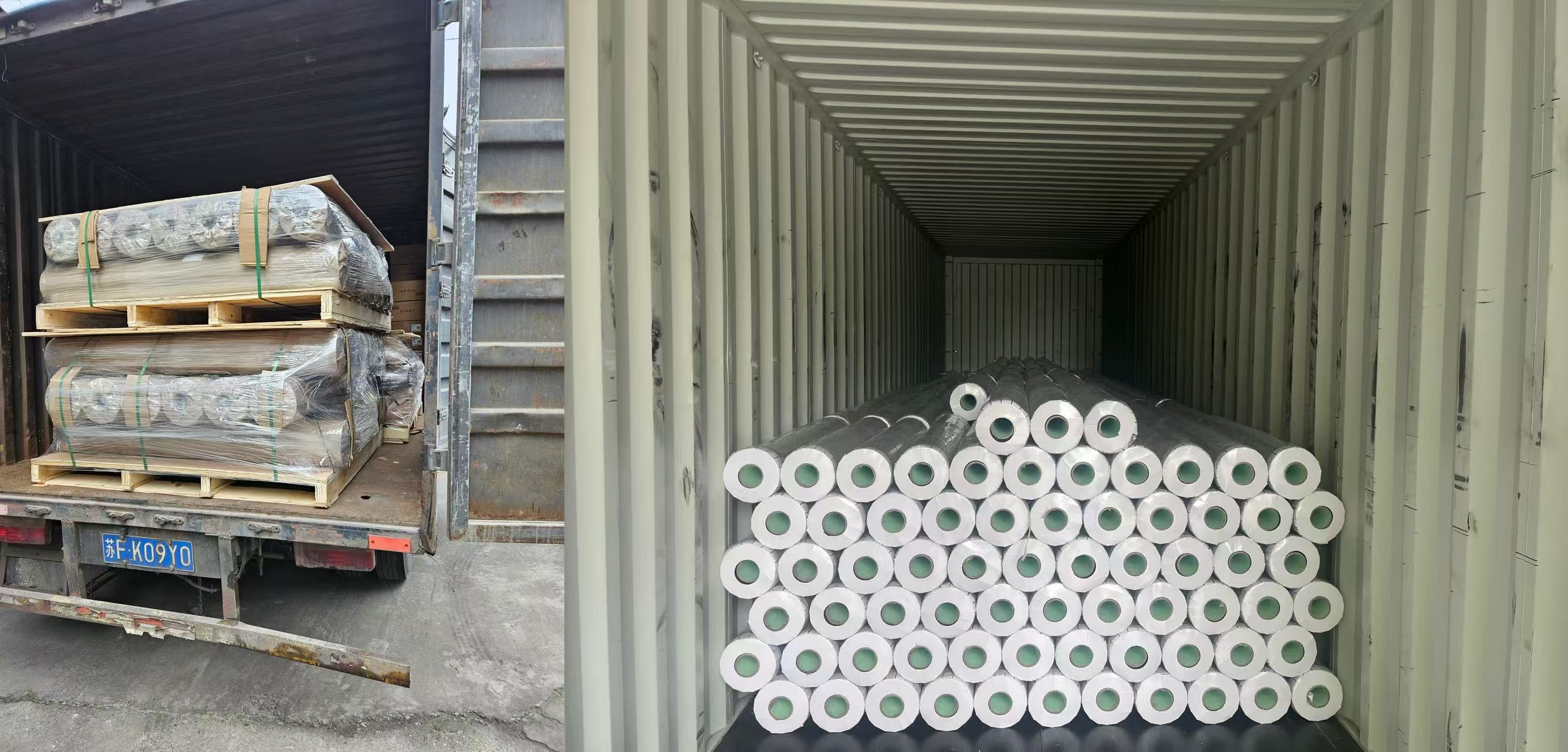
Packaging
Printable flexible PVC film can be supplied in roll format according to the confirmed thickness, width, surface, softness and printing specification. Protective roll packaging can be arranged according to roll dimensions, weight, core requirements and export transportation conditions.
![Printable flexible PVC packaging film roll packaging]()
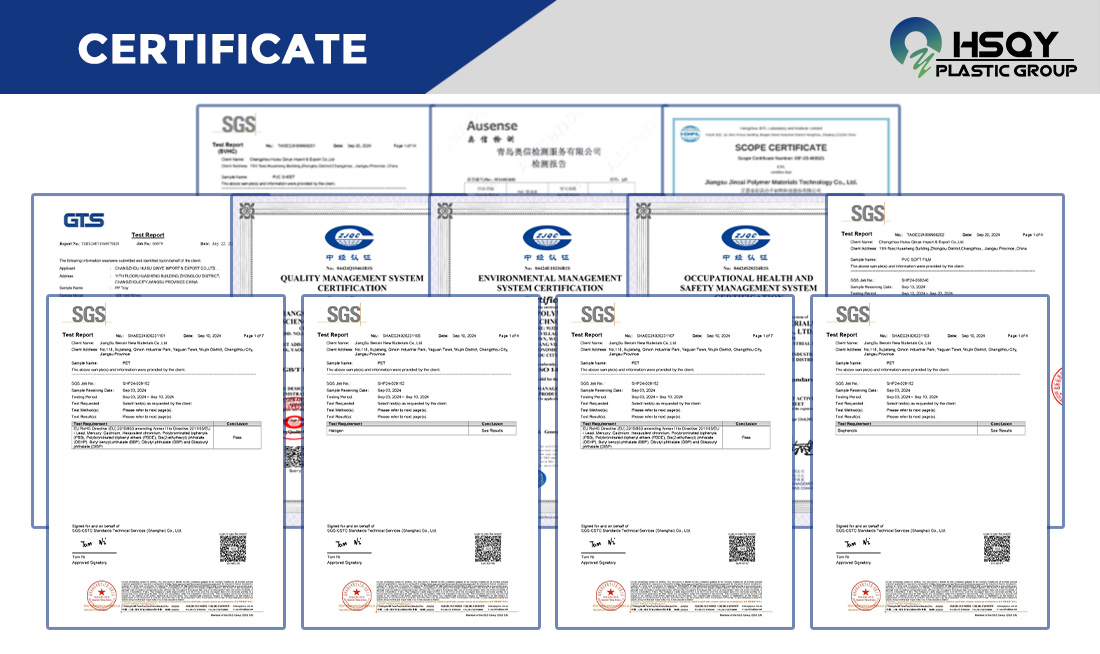
Quality and Compliance Documents
Current product information references EN71-3, REACH and non-phthalate related documentation. Buyers should verify that available documents apply to the exact PVC formulation, thickness, color and destination market.
These general documents should not automatically be interpreted as confirmation of ink compatibility, food-contact suitability, medical packaging suitability, flame performance or another application-specific requirement.
![HSQY printable PVC packaging film quality and compliance documents]()
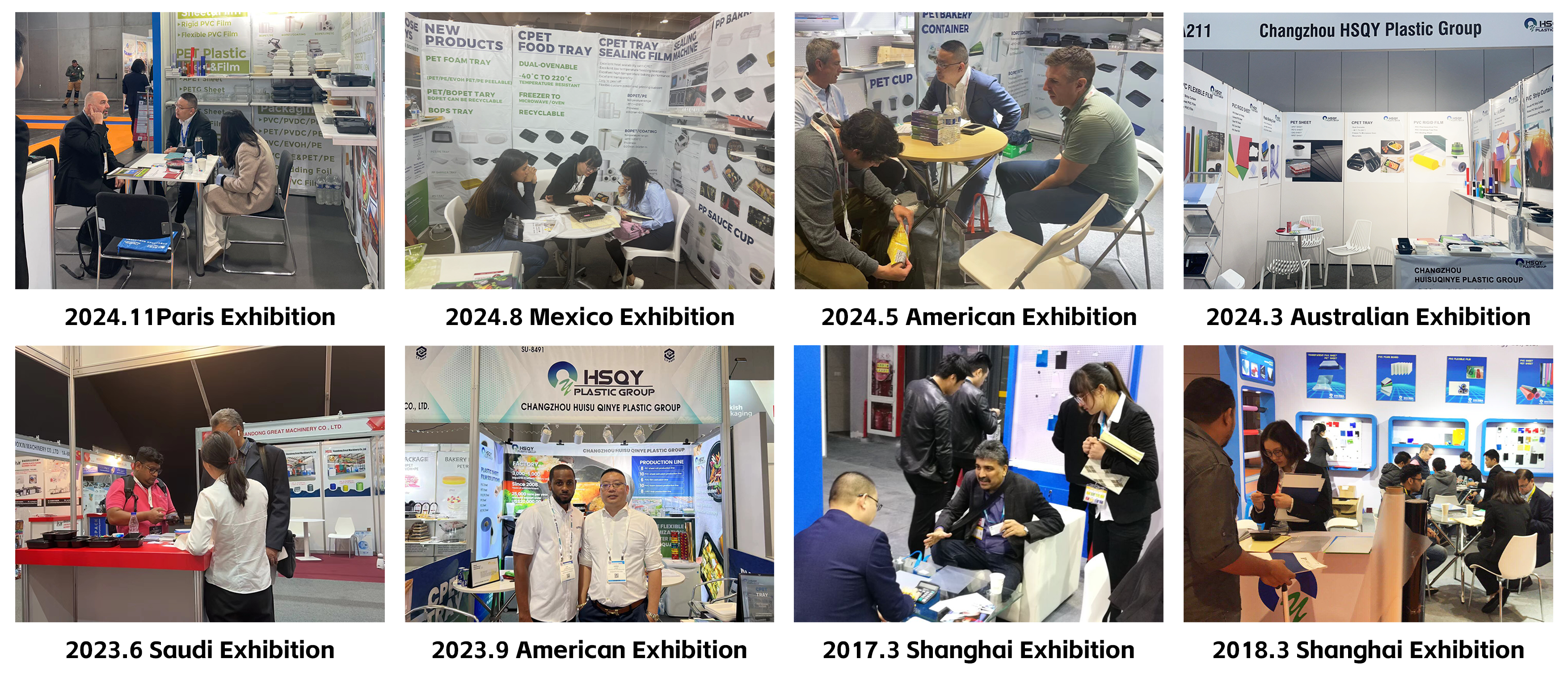
HSQY Global Exhibitions
HSQY participates in international exhibitions and meets printing converters, PVC bag manufacturers, packaging companies, industrial suppliers, distributors and importers from global markets.
![HSQY Plastic Group global exhibition activities]()
HSQY Plastic Group – Global Exhibition Activities
Frequently Asked Questions About Printable PVC Packaging Film
1. What is printable PVC packaging film?
It is flexible PVC film used for printed bags, pouches, packaging components and other converted products where both printing and flexible fabrication are required.
2. What thickness is commonly used for industrial packaging?
HSQY's industrial packaging range is typically approximately 0.20mm to 1.50mm. The correct thickness depends on bag dimensions, flexibility, printing method and finished construction.
3. Can thinner PVC film be supplied for printing?
Thinner printing-film specifications can be evaluated according to the printer, web handling and finished application. Provide the target gauge and printing process for review.
4. Can PVC packaging film be screen printed?
Screen-printing applications can be evaluated using the intended ink system and curing process. Ink adhesion should be tested before mass production.
5. Can the film be UV printed?
UV printing can be evaluated using the actual UV ink and curing system. Ink adhesion and flexibility after curing should be confirmed before bulk production.
6. Can the film be digitally printed?
Digital printing can be evaluated according to printer model, ink chemistry, media feeding and required PVC surface condition.
7. Can PVC film be flexographically or gravure printed?
Flexographic or gravure printing can be evaluated when the exact ink, drying process, web tension and selected PVC grade are provided for testing.
8. Can clear PVC bags be printed?
Yes. Clear PVC can be evaluated for printed packaging where the contents need to remain visible. White ink and reverse printing requirements should be specified where applicable.
9. Can colored PVC film be printed?
Colored PVC can be used for printed packaging, but the base-film color can influence the appearance of the printed inks.
10. Does the film need surface treatment before printing?
The required surface condition depends on the ink system. Primer, corona treatment or a defined surface-energy level should be specified when required by the printing process.
11. Can printed PVC film be HF welded?
HF welding can be evaluated, but printed areas may affect weld performance. The actual printed construction should be tested before mass production.
12. Can printed PVC film be heat sealed?
Heat sealing can be evaluated according to the PVC formulation, film thickness, ink location, temperature, pressure and dwell time.
13. Can the film be used with zipper closures?
PVC film can be used in zipper-bag constructions when the film thickness, softness, zipper tape and attachment process are compatible.
14. Can the softness be customized?
Softness can be selected according to printing, folding and bag-converting requirements. Provide a PHR, Shore A hardness or approved sample when precise matching is required.
15. Can roll width and core size be customized?
Custom roll widths, roll lengths, weights and core sizes can be discussed according to printing and converting equipment requirements.
16. Is this film suitable for food packaging?
Food-contact suitability should not be assumed from a standard industrial packaging grade. Provide the destination market and applicable food-contact requirement for separate evaluation.
17. What is the MOQ?
The current standard MOQ is 1,000kg. Customized colors, surfaces, printing treatments or special formulations may have different production requirements.
18. What information should I provide for a quotation?
Please provide the finished packaging product, printing process, ink system, film thickness, roll width, roll length or weight, core size, softness, clarity, color, surface finish, bag dimensions, welding or sealing process, quantity and destination country or port.
Request a Printable PVC Packaging Film Quote
HSQY supplies printable flexible PVC film for industrial packaging, clear bags, zipper pouches, promotional packaging and professional printing converters.
Typical packaging grades cover approximately 0.20–1.50mm thickness with custom roll widths, adjustable softness, clear or colored grades and multiple surface options.
Send your printing process, ink system, packaging dimensions, converting method and expected quantity so our team can review the appropriate PVC film specification and quotation.
Contact HSQY for Pricing and Samples