Blue Corrugated Polycarbonate Roofing Sheet for Greenhouse
HSQY blue corrugated polycarbonate roofing sheet combines light transmission, impact resistance, UV weather protection and lightweight installation for greenhouses, skylights, canopies and agricultural roofs.
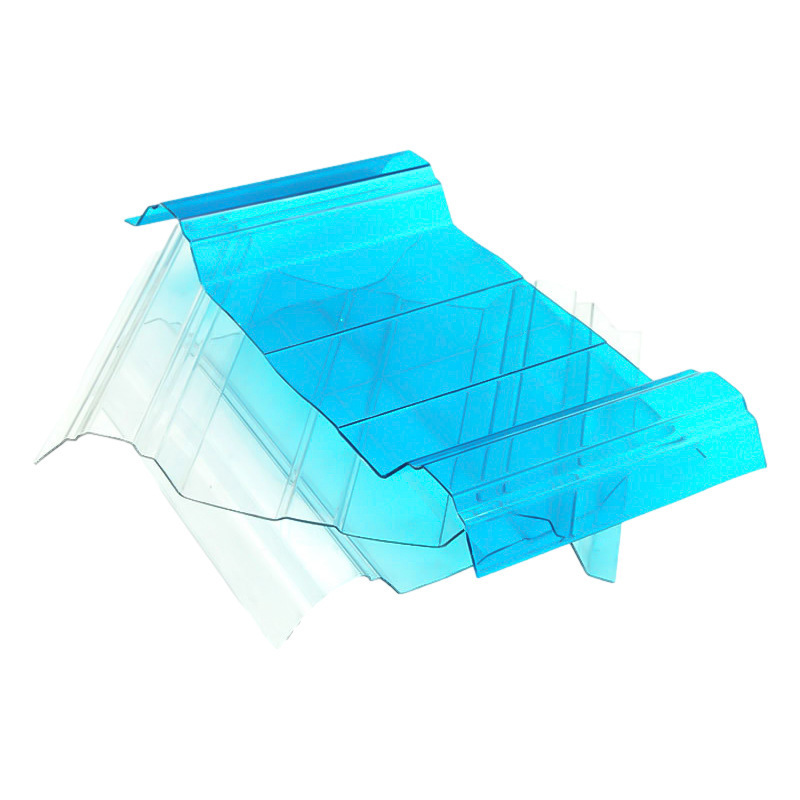
Corrugated polycarbonate sheet is a profiled plastic roofing material made from polycarbonate. The wave or ribbed profile increases sheet rigidity while allowing natural daylight to pass through the roofing system.
This page focuses on blue and clear-blue corrugated polycarbonate for greenhouse and daylight roofing projects. HSQY's current product information lists 0.7mm to 3.0mm thicknesses, customized widths and multiple corrugated profile options for different roofing structures.
![Blue corrugated polycarbonate roofing sheet]()
Corrugated Polycarbonate Roofing Sheet
![Blue polycarbonate corrugated roof panel for greenhouse]()
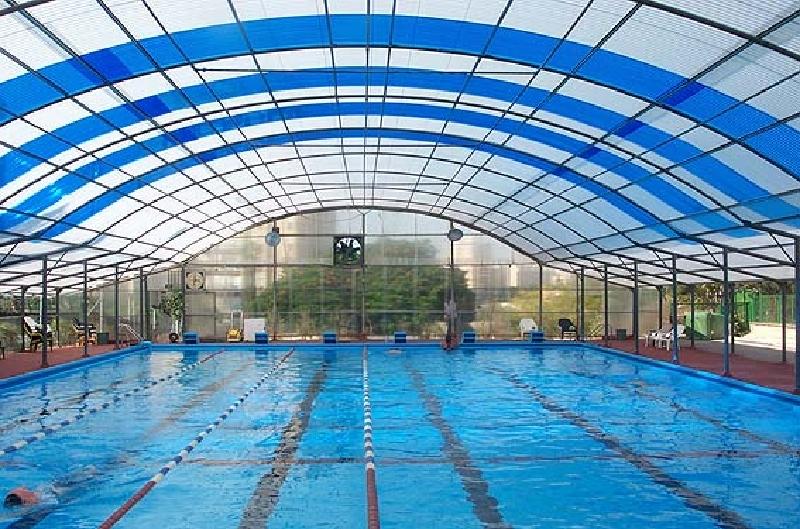
Blue Polycarbonate Corrugated Roof Panel
Blue Corrugated Polycarbonate Sheet Specifications
| Property |
Specification |
| Product |
Blue Corrugated Polycarbonate Roofing Sheet |
| Material |
Polycarbonate Plastic |
| Sheet Type |
Corrugated / Wave / Profiled Polycarbonate Sheet |
| Featured Color |
Clear Blue / Blue |
| Other Colors |
Clear, Clear Green, Brown, Silver, Milk-White, Custom |
| Thickness |
0.7mm, 1.0mm, 1.2mm, 1.5mm, 2.0mm, 2.5mm, 3.0mm, Custom |
| Width |
Customized according to profile and roofing requirements |
| Profile |
Multiple corrugated cross-sectional shapes; customized profiles can be discussed |
| UV Protection |
UV-resistant weathering surface treatment listed in the current product information |
| Light Transmission |
Current product family information states more than 85% for suitable grades; exact blue-sheet value should be confirmed separately |
| Temperature Range |
Current source states -40°C to +120°C |
| Applications |
Greenhouses, agricultural roofs, skylights, canopies, commercial sheds, corridor roofs and public-facility roofing |
Important: Because this page focuses on blue corrugated polycarbonate, do not assume that the original more-than-85% light-transmission statement applies to every blue tint. Exact light transmission depends on color, pigment level, thickness, profile and material grade and should be confirmed for the selected product.
What Is Blue Corrugated Polycarbonate Roofing Sheet?
Blue corrugated polycarbonate roofing sheet is a tinted, profiled polycarbonate panel designed for roofs and daylighting systems where natural light, weather resistance and a blue architectural appearance are required.
Unlike flat solid polycarbonate, corrugated sheet is formed into waves or ribs. This profile increases stiffness in the sheet direction and allows overlapping roof installation with compatible profiles, fasteners and sealing systems.
The blue tint can reduce visible brightness compared with clear polycarbonate while giving greenhouse, canopy and commercial roofing projects a distinctive appearance. Exact optical performance should be evaluated using the actual blue grade.
Why Choose Blue Corrugated Polycarbonate?
| Feature |
Buyer Benefit |
| Blue Tinted Daylight |
Creates a colored daylight effect while reducing visual brightness compared with a clear sheet |
| Corrugated Profile |
Provides greater profile rigidity than a completely flat thin sheet |
| Impact Resistance |
Polycarbonate provides useful resistance to normal hail, handling and roofing impact conditions |
| UV Weather Protection |
Surface treatment helps reduce sunlight-related yellowing and degradation |
| Lightweight |
Simplifies transportation, lifting, cutting and roof installation compared with heavier glazing materials |
| Custom Profiles |
Different wave shapes can be discussed according to the roof structure or existing roofing profile |
Blue vs. Clear Corrugated Polycarbonate Roofing
| Selection Factor |
Blue / Clear Blue |
Clear |
| Appearance |
Blue-tinted architectural appearance |
Neutral transparent appearance |
| Visible Light |
Normally lower than an equivalent clear sheet; confirm exact transmission |
Typically selected when maximum daylight is the priority |
| Glare |
Tint can help reduce perceived brightness depending on grade |
Provides brighter daylight conditions |
| Typical Use |
Canopies, agricultural roofs, walkways, architectural roofs and selected greenhouse projects |
Greenhouses, skylights and daylight roofing requiring maximum natural light |
Blue Polycarbonate Roofing for Greenhouses
Corrugated polycarbonate is widely used for greenhouse roofs because it combines natural daylight, low panel weight and outdoor impact resistance.
For plant-growing greenhouses, however, blue color should be selected carefully. Tint changes the quantity and spectral distribution of light entering the greenhouse, so crop-production projects should request the actual transmission data of the blue grade instead of selecting the sheet by color alone.
If maximum photosynthetically useful daylight is the priority, clear material may be more appropriate. If shading, appearance or a specific light environment is required, a blue grade can be evaluated against the crop and greenhouse design.
Light Transmission of Blue Corrugated Polycarbonate
The original HSQY information states that corrugated polycarbonate can reach more than 85% light transmission. This figure should be treated as a product-family capability and not as a verified value for every color.
Blue pigment absorbs or modifies part of the visible spectrum, so a blue sheet normally has different light-transmission characteristics from clear sheet. Buyers should request the actual transmission percentage for the exact blue color, thickness and corrugated profile.
UV & Weather Resistance
The current product information states that the polycarbonate surface receives UV-resistant weathering treatment designed to reduce resin yellowing caused by prolonged UV exposure.
For outdoor roofing, confirm whether the UV-protected layer is applied to one side or both sides. If protection is provided on only one side, the marked protected surface should face outward toward sunlight.
Weather durability also depends on material grade, sheet thickness, installation, fastener spacing, roof slope and exposure conditions.
Impact Resistance for Outdoor Roofing
The original HSQY page states that the sheet's impact strength is approximately 10 times that of ordinary glass, 3-5 times that of ordinary corrugated sheet and 2 times that of tempered glass.
For engineering specifications, impact performance should be confirmed using the applicable test method and technical data for the exact corrugated polycarbonate grade and thickness. General impact resistance should not be treated as a hurricane, cyclone or windborne-debris certification.
Temperature Performance
The current HSQY source states that the product maintains its form within a temperature range of approximately -40°C to +120°C.
For projects involving continuous high temperatures, large temperature cycles or specific structural loads, confirm the applicable service-temperature data and thermal-expansion allowance for the exact grade.
Fire Performance
The original product information references Class I flame-retardant performance. However, the current page does not identify the exact test standard, specimen thickness, report number or classification system associated with that statement.
Building projects requiring a specific fire classification should request the applicable fire-test report for the exact polycarbonate grade, thickness and destination-market standard before approval.
Corrugated Profile & Roof Matching
Corrugated roofing sheets are not selected by thickness and color alone. The wave pitch, wave height, profile geometry and overall sheet width must also match the support frame or adjacent roofing sheets.
HSQY's source information states that several cross-sectional shapes are available and customized profiles can be produced. For replacement roofing or integration with metal sheets, provide a profile drawing or physical dimensions before production.
| Profile Information |
Why It Matters |
| Wave Pitch |
Determines alignment with adjacent corrugations |
| Wave Height |
Affects overlap geometry and profile stiffness |
| Overall Width |
Used for shipping and roof-layout calculations |
| Effective Cover Width |
Determines actual roof coverage after side overlap |
| Length |
Should match roof slope and minimize unnecessary end joints where practical |
| Existing Roof Profile |
Important when polycarbonate rooflights must match metal roofing sheets |
0.7mm to 3mm Corrugated Polycarbonate Thicknesses
| Thickness |
General Selection Direction |
| 0.7mm |
Lightweight roofing applications with appropriate profile and close structural support |
| 1.0mm |
Greenhouse, canopy and general daylight roofing applications |
| 1.2mm |
Projects requiring additional sheet thickness over lighter gauges |
| 1.5mm |
Commercial and agricultural roofing requiring increased material thickness |
| 2.0mm |
Heavier-duty roofing and daylight panels subject to project-specific structural verification |
| 2.5mm / 3.0mm |
Applications requiring greater sheet thickness, subject to profile availability and structural design |
These are general selection directions rather than span or load ratings. Final thickness must be evaluated together with corrugated profile, purlin spacing, wind pressure, snow load and fixing system.
Greenhouse, Roofing & Daylighting Applications
The original HSQY product information lists gardens, greenhouses, indoor fish sheds, skylights, basements, vaulted roofs, commercial sheds, railway stations, airport waiting rooms, corridor roofs, bus stations, ferry terminals and other public-facility sunshade applications.
![Blue corrugated polycarbonate roofing application]()
Roof
![Corrugated polycarbonate roof sheet application]()
Roof
Corrugated Polycarbonate for Greenhouse Roofs
Corrugated polycarbonate can be used as greenhouse roofing where a lightweight profile and natural daylight are required. The corrugated geometry also makes the sheet suitable for conventional purlin-supported roof construction.
For commercial growing structures, confirm blue-sheet light transmission, crop-light requirements, roof slope, purlin spacing, ventilation, condensation conditions and local wind and snow loads.
Corrugated Polycarbonate for Skylights & Rooflights
Corrugated polycarbonate sheets can be integrated into suitable commercial, agricultural and industrial roofs to introduce natural daylight.
For rooflights installed next to metal roofing, profile matching is especially important. Provide the metal roofing cross-section, effective cover width, wave pitch and wave height when requesting a matching polycarbonate panel.
Corrugated Polycarbonate for Canopies & Walkways
Blue corrugated polycarbonate is suitable for evaluation in entrance canopies, pedestrian walkways, corridor roofs, shelters and other outdoor covered spaces where tinted daylight and weather protection are preferred.
Roof structure, drainage, overlap, fastening and thermal expansion must be considered together to reduce leakage and sheet stress.
Agricultural & Farm Roofing
The original application list includes gardens, greenhouses and indoor fish sheds. Corrugated PC panels can also be considered for agricultural shelters and daylight roof sections where natural light and weather protection are required.
For livestock, aquaculture or crop applications, evaluate light level, heat gain, ventilation, humidity and chemical exposure before selecting the final color and grade.
Public Facilities & Commercial Roofing
Corrugated polycarbonate can be used in compatible roofing systems for railway stations, airport waiting areas, bus stations, ferry terminals and covered public spaces.
Public-building projects may require documented fire, structural, wind-load and building-code performance. These requirements should be confirmed separately for the exact sheet and roofing system.
How to Install Corrugated Polycarbonate Roofing
Match the Correct Corrugated Profile
Before installation, confirm that the wave profile matches the roof framing, adjoining sheets or metal roofing system. Similar-looking profiles are not necessarily interchangeable.
Install the UV-Protected Side Outward
Where the sheet has a single UV-protected side, install the marked protected side toward the sun. Follow the protective-film markings supplied with the material.
Allow for Thermal Expansion
Polycarbonate expands and contracts with temperature. Fastener holes and roofing connections should provide appropriate movement clearance rather than tightly restraining the sheet.
Use Suitable Fasteners & Washers
Use roofing fasteners, washers and seals compatible with polycarbonate. Avoid overtightening because excessive compression can restrict thermal movement or damage the panel around fixing points.
Provide Sufficient Side & End Overlap
Side and end overlap should follow the corrugated profile, roof slope and installation system. The current product source does not publish one universal overlap dimension for every customized profile.
Confirm Roof Slope & Purlin Spacing
Roof slope should provide adequate drainage. Purlin spacing should be selected from the actual sheet profile, thickness, wind pressure, snow load and project requirements rather than using one spacing for all corrugated sheets.
Cutting & Drilling Corrugated Polycarbonate
The original product information states that corrugated polycarbonate is lightweight and easy to carry, drill, construct and process.
| Operation |
Consideration |
| Cutting |
Support the corrugated profile and use suitable plastic-cutting tools |
| Drilling |
Use suitable bits and allow hole clearance where required for thermal expansion |
| Fastening |
Use compatible washers and avoid excessive tightening |
| Storage |
Protect sheets from damage and excessive heat before installation |
Corrugated Polycarbonate vs. Corrugated PVC vs. Metal Roofing
| Factor |
Corrugated Polycarbonate |
Corrugated PVC |
Metal Roofing |
| Natural Light |
Clear and tinted transparent/translucent options available |
Transparent and opaque grades available depending on formulation |
Typically opaque |
| Impact Direction |
High impact resistance is a key polycarbonate characteristic |
Depends strongly on PVC formulation and temperature |
Strong but can dent depending on metal gauge |
| Weight |
Lightweight |
Lightweight |
Depends on metal and gauge |
| Typical Role |
Daylight roofing, greenhouse roofs, skylights and canopies |
Economical roofing, cladding and chemical-environment applications depending on grade |
Primary opaque roofing and cladding |
What Information Should You Provide for a Quote?
| Requirement |
Information to Provide |
| Application |
Greenhouse, agricultural roof, skylight, canopy, walkway or other roofing project |
| Color |
Clear blue, blue or required custom color |
| Thickness |
0.7mm, 1.0mm, 1.2mm, 1.5mm, 2.0mm, 2.5mm, 3.0mm or custom |
| Corrugated Profile |
Wave pitch, wave height, profile drawing or existing roof-sheet sample |
| Width |
Required overall and effective cover width |
| Length |
Required sheet length according to roof slope |
| Light Transmission |
Required blue-sheet transmission where daylight performance is important |
| UV Protection |
Required one-side or two-side configuration where applicable |
| Roof Structure |
Roof slope, purlin spacing, panel span and supporting material |
| Project Loads |
Wind, snow, hail and other structural conditions where applicable |
| Documentation |
Required fire, UV, impact, quality or building-material documents |
| Quantity |
Project quantity and expected repeat demand |
| Destination |
Country and destination port |
Frequently Asked Questions About Blue Corrugated Polycarbonate Roofing
What is blue corrugated polycarbonate roofing sheet?
It is a blue-tinted profiled polycarbonate sheet designed for roofing, greenhouse glazing, skylights, canopies and other daylight roofing applications.
Can blue corrugated polycarbonate be used for greenhouses?
Yes, it can be evaluated for greenhouse roofing. Commercial crop projects should confirm the actual blue-sheet light transmission and spectral requirements before final material selection.
How much light does blue polycarbonate transmit?
The exact value depends on blue tint, thickness and profile. The original HSQY product family information references more than 85% for suitable grades, but this should not be assumed for blue sheet without product-specific optical data.
What thicknesses are available?
The current specification lists 0.7mm, 1.0mm, 1.2mm, 1.5mm, 2.0mm, 2.5mm and 3.0mm, with customized requirements also listed.
Can the sheet width be customized?
Yes. The current product information lists customized width. Width availability also depends on the selected corrugated profile.
Can HSQY customize the corrugated profile?
The current source states that HSQY supplies several corrugated cross-sectional shapes and can discuss customized shapes. Provide a profile drawing, dimensions or reference sample.
Can the polycarbonate profile match metal roofing?
A compatible profile can be evaluated when the required wave pitch, wave height and roofing cross-section are provided. Profile compatibility should be confirmed before production.
Does blue corrugated polycarbonate have UV protection?
The current product information states that a UV-resistant weathering treatment is used to help reduce sunlight-related yellowing and degradation.
Which side should face the sun?
If the product has UV protection on one side, install the marked UV-protected side outward toward the sun. Confirm the UV configuration for the exact sheet.
What temperature range is listed?
The current product source states a range of approximately -40°C to +120°C. Critical engineering applications should confirm the applicable technical data for the exact grade.
Is corrugated polycarbonate resistant to hail?
Polycarbonate has useful impact resistance and is commonly used for roofing exposed to hail. Required sheet thickness, profile and support spacing should still be selected according to local conditions.
Is the sheet hurricane resistant?
Impact resistance alone does not establish hurricane-rated performance. Hurricane or windborne-debris applications require tested performance for the complete roofing system including sheet, profile, framing and fasteners.
Is this a flame-retardant sheet?
The original page references Class I flame-retardant performance, but the exact standard and report are not identified. Buyers requiring fire compliance should confirm the applicable test documentation for the exact sheet.
Can corrugated polycarbonate be cut and drilled?
Yes. The current product information states that the sheet can be cut, drilled and processed using suitable tools and installation practices.
How should corrugated polycarbonate sheets overlap?
Overlap depends on corrugated profile, roof slope and project conditions. Because HSQY offers different and customized profiles, the applicable overlap detail should be confirmed for the selected sheet.
Do I need to allow for thermal expansion?
Yes. Polycarbonate expands and contracts with temperature, so fixing holes and connections should allow suitable movement.
What other colors are available?
The current specification lists clear, clear blue, clear green, brown, silver, milk-white and custom colors.
What information should I provide for a quotation?
Please provide the application, blue color requirement, thickness, corrugated profile dimensions, sheet width and length, light-transmission requirement, roof slope, purlin spacing, project loads, quantity and destination.
Packaging & Delivery
Sample Packaging: Sheets in protective PE bags, packed in cartons.
Sheet Packaging: 30kg per bag with PE film, or as required.
Pallet Packaging: 500-2000kg per plywood pallet.
Container Loading: 20 tons, optimized for 20ft/40ft containers.
Delivery Terms: FOB, CIF, EXW.
Lead Time: 7-15 days after deposit, depending on order volume.
![Blue corrugated polycarbonate roofing sheet packaging]()
Corrugated Polycarbonate Sheet Export Packaging
Certifications
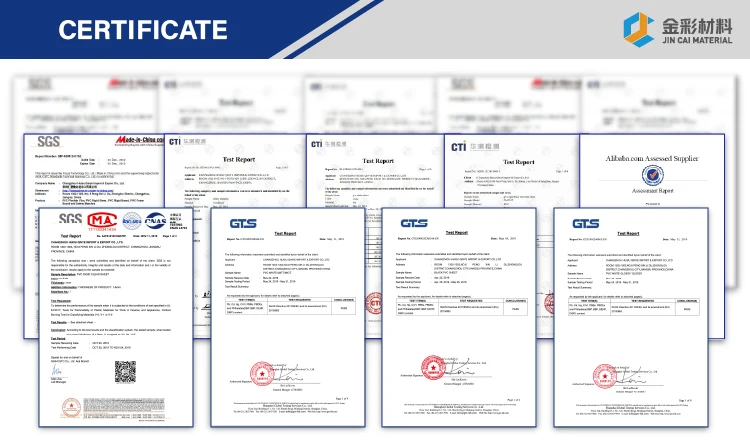
The current product information references SGS and ISO 9001:2008. The scope, validity and applicability of available certificates should be confirmed for the exact corrugated polycarbonate grade, thickness, profile and destination-market requirement.
About HSQY Plastic Group
HSQY Plastic Group states more than 20 years of experience and operates 8 factories, supplying plastic materials for packaging, construction, medical and industrial applications.
Corrugated polycarbonate roofing projects can be discussed according to color, thickness, corrugated profile, sheet dimensions, UV requirement, light transmission, roof structure, project loads, packaging and destination.